
A fall home tour is the seasonal walkthrough of a home decorated for autumn, and the version that holds up through Thanksgiving starts with a strict limit on warm colors.
Three per room is the ceiling; four reads like craft-store clearance. The palette that survived repeated testing was terracotta, forest green, and warm cream, with rust allowed in exactly one small piece.
Warm Colors
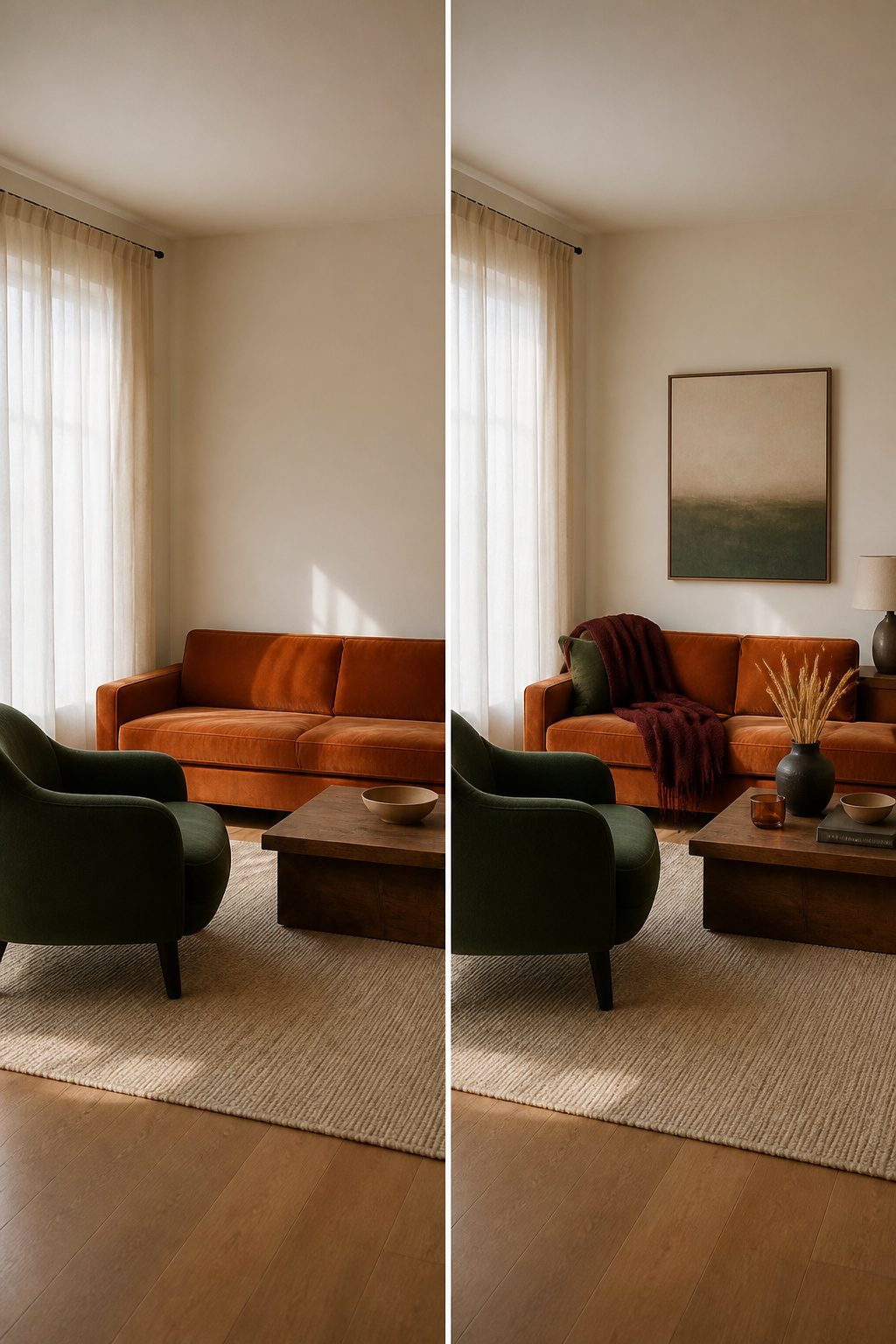
Deep reds and oranges read as intentional only when you give them a ceiling. Three warm colors in a single room is the limit; four starts to look like a clearance rack at the craft store.
Last year I tried terracotta, rust, and camel together in the bedroom, and the camel cooled the other two just enough that the room felt pulled together rather than loud.
Forest green and deep burgundy work the same way, but they need breathing room.
A burgundy throw against a warm cream wall carries more weight than the same throw tossed onto a forest green sofa where the two colors fight for attention. The wall wins by default because it stays still.
Yellow is the one that betrays you fastest.
Mustard reads as autumn; bright yellow reads as caution tape. If you already own a yellow piece, camel or warm cream next to it will drag it toward ochre without your having to buy anything new.
The palette that survived my own trial and error was terracotta, forest green, and warm cream, with rust appearing only in one small piece. That third accent color, used once, signals that you chose the combination rather than accumulating it.
Natural Elements
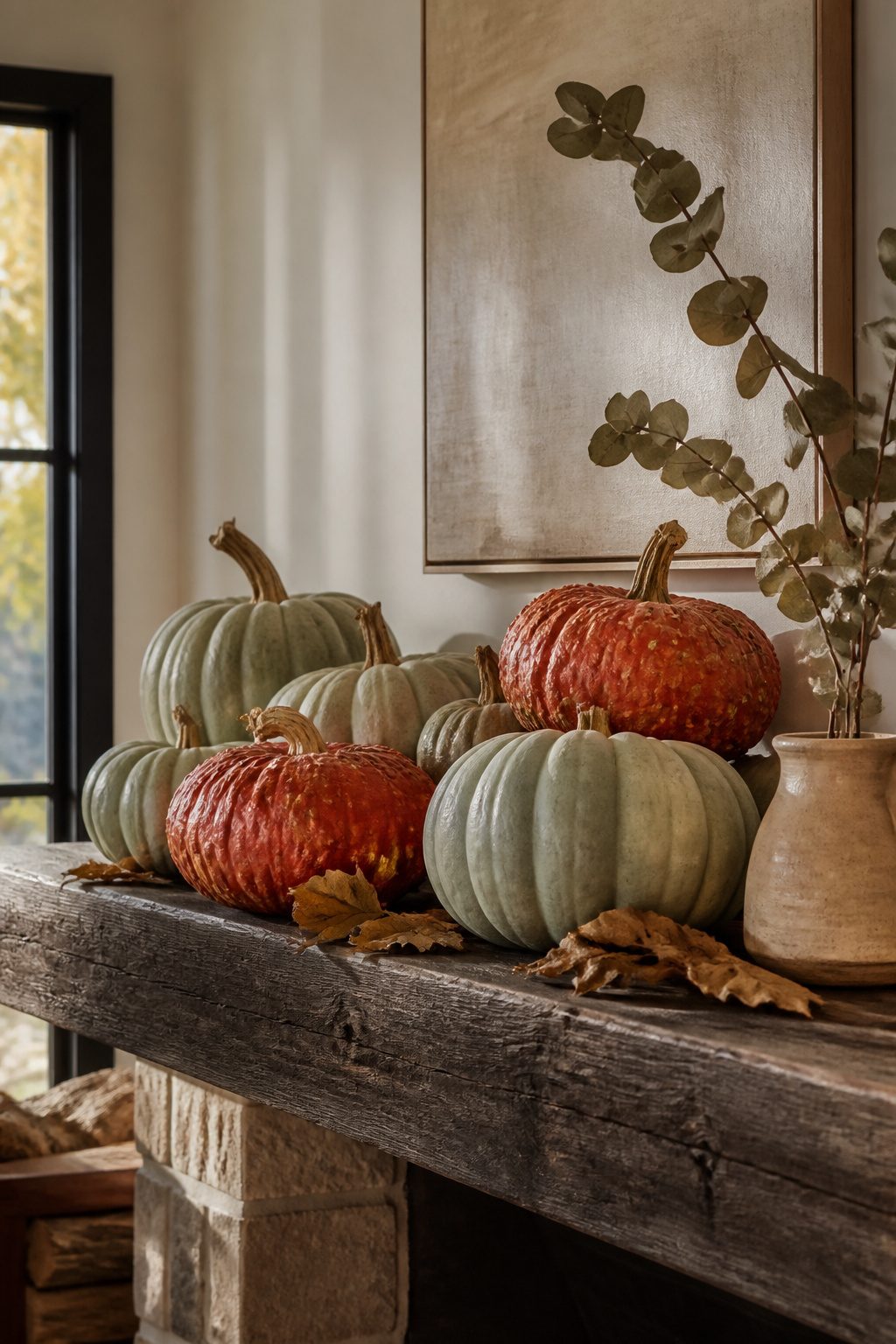
Heirloom pumpkins changed how I think about fall displays.
The first year I tried them, I stacked a few pale-blue Jarrahdales and warty orange-red Cinderellas on the mantel and suddenly had color that no plastic bin at the craft store could match.
The shapes matter as much as the color: the flattened Long Island Cheese, the deeply ribbed Musquee de Provence.
A tight cluster of three or four, nothing else around them, reads intentional where a pile of identical orange globes looks like a supermarket endcap.
Branches and leaves are trickier.
Oak leaves look beautiful for about forty-eight hours, then curl and drop brown confetti. Drying time is the detail that separates decoration from yard debris.
Branches that fell in a storm need a week or two in the garage before they come inside; sap still wet will seep onto floors and attract dust like a magnet.
I learned that after a birch branch left a sticky ring on the entry table that outlasted Thanksgiving.
The cheap move that still works: one good tray or vessel from a thrift store, filled with whatever is actually growing within a mile of your house.
Wheat stems, a few late apples, dried eucalyptus if you want something that reads fresh without the water. Edit as you add.
For every stem or gourd you bring in, something already sitting there should go back to the closet. The surfaces around your cluster stay clear, and the eye has room to rest.
Cozy Textiles
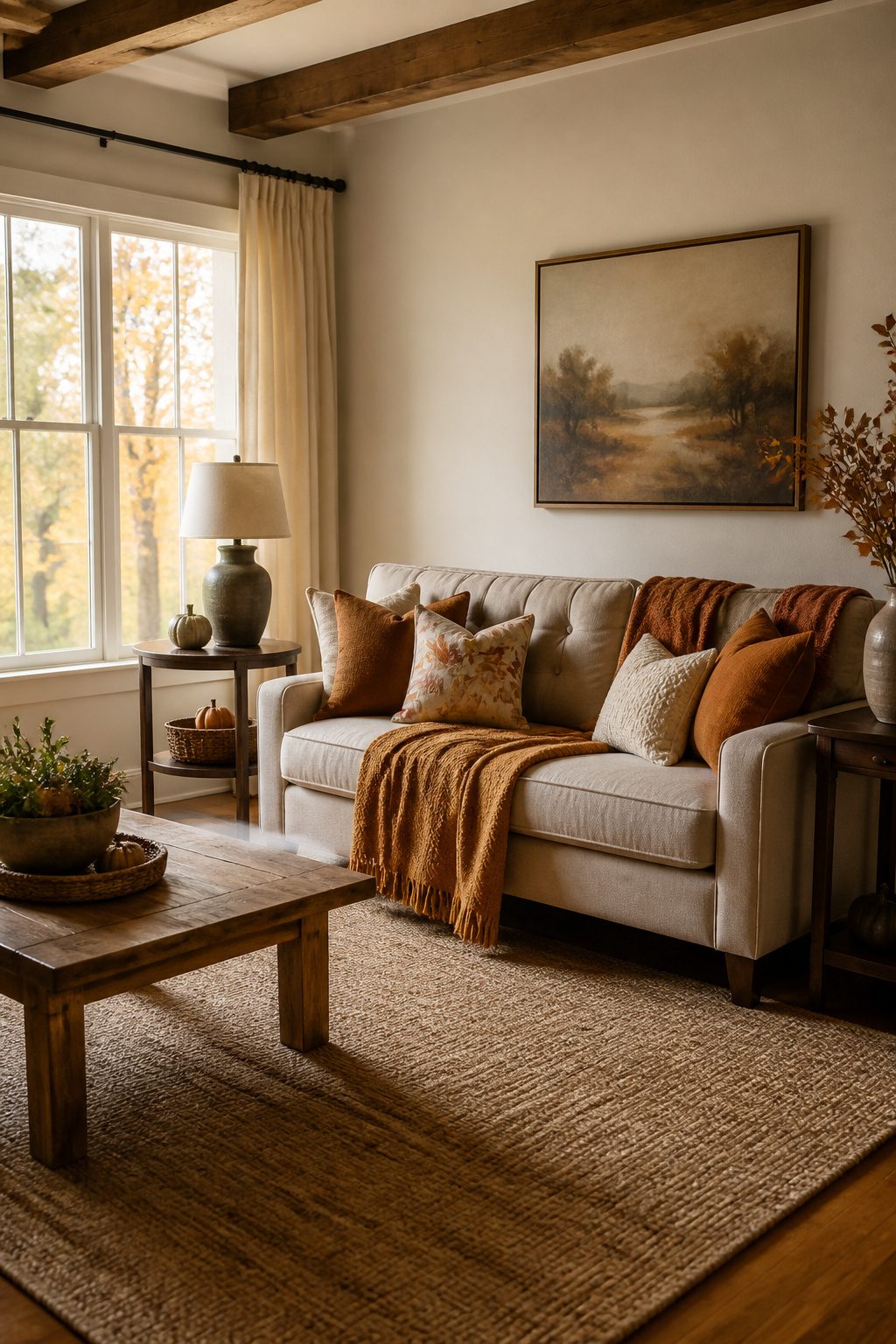
Cotton and linen blends survive the rental-grade washing machine without turning into felt. The two throws on my couch right now cost under $40 each three years ago, and the weave still opens up when you shake them out.
A synthetic chenille blend I bought for $22 pilled into a sweater-like texture after one season and became a dog blanket. For pillows, down-alternative fill holds its shape longer than shredded foam, which migrates to the corners and stays there.
A flatwoven wool rug layered over existing carpet adds warmth without the bulk of a high-pile piece you’ll trip on. The trick is buying textiles you can actually wash where you live, not where you hope to live someday.
Seasonal Centerpieces
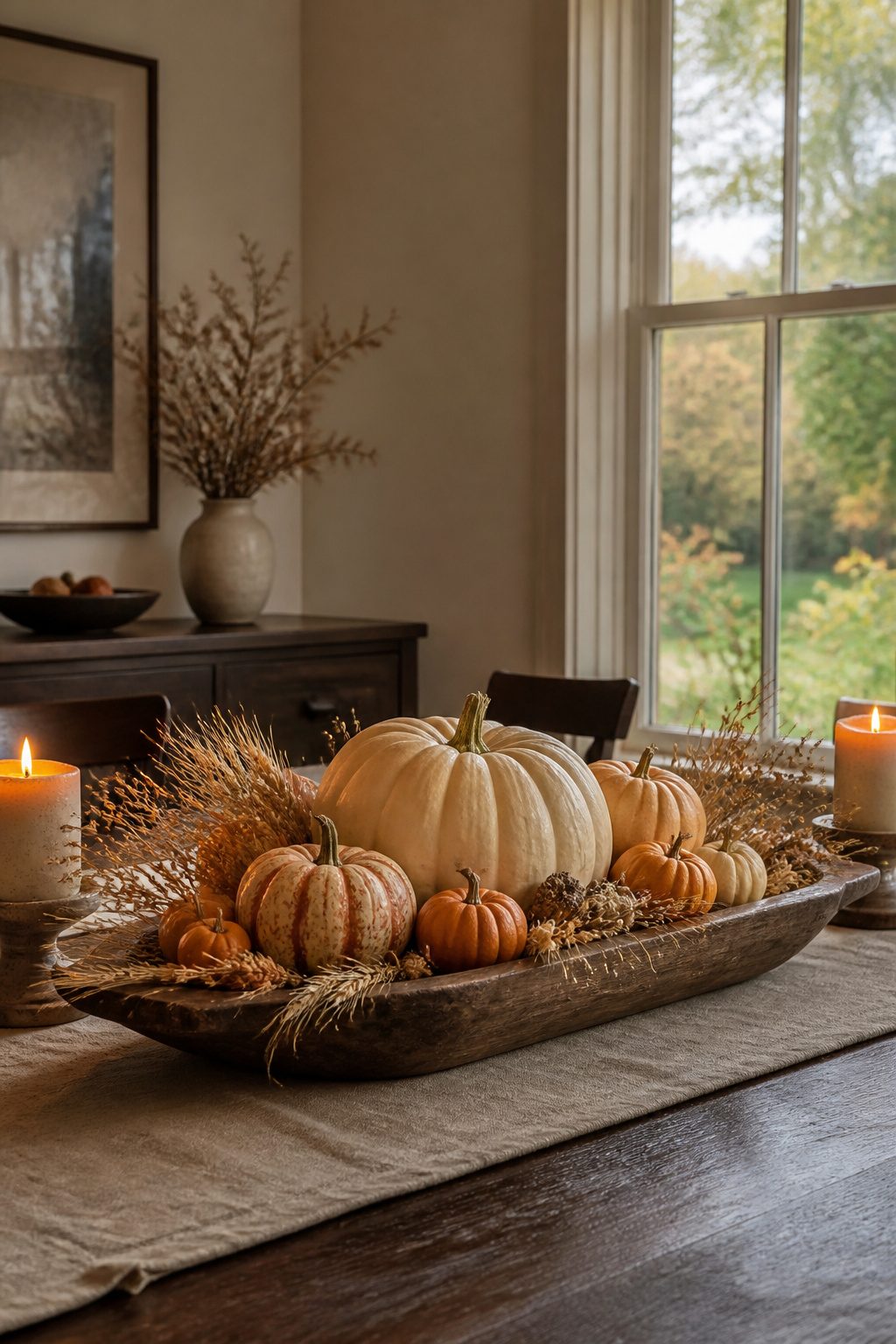
A centerpiece that blocks sightlines across the table is a centerpiece you end up moving before dinner even starts.
I learned this the hard way with a stacked pumpkin arrangement that stood maybe fourteen inches tall; guests spent the evening craning necks to talk around it.
Keep the height under ten inches or go wide and low instead, and the piece stays where you put it.
Real pumpkins look richer than most faux versions, but they start softening after three to four weeks, so timing matters if you are buying early.
Faux pumpkins and dried florals carry the full season and often into winter if humidity stays low, which makes them the better bet for a piece you want to set and forget.
Last year I split the difference: a $14 grocery store bouquet of mums and dried grasses outlasted a $60 arrangement from a local florist by nearly two weeks.
The florist piece had height and drama, but the stems were already fading when the grocery bunch was just hitting its stride.
Wheat, dried grasses, and faux eucalyptus layer in texture without competing for attention.
Pile heirloom pumpkins at varying heights on a tray, or set a single low bowl with dried florals where the light from a 2200K to 2700K bulb catches the warm tones.
Scent does as much work as the visuals; a candle in the same space means the centerpiece does not have to carry the whole atmosphere alone.
Decorative Accents
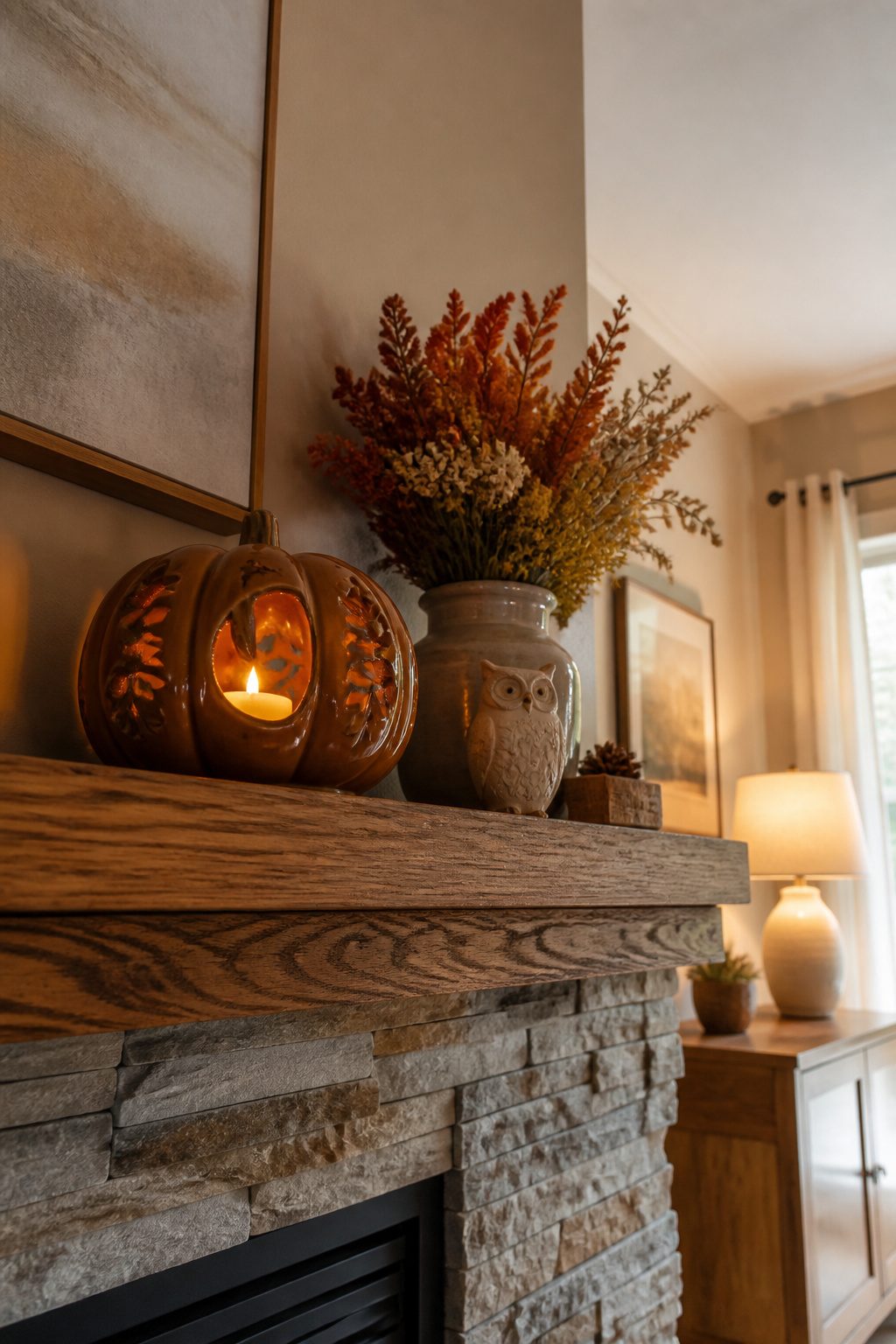
The smallest accents do the heaviest lifting in a fall home tour.
A ceramic pumpkin with a candle inside, set on a chest near a window, throws a better glow than most table lamps because the flame sits low and the glaze catches it.
I swapped my overhead bulbs to 2200K to 2700K warm-toned light bulbs last year after noticing every photo I took looked cold and flat.
The difference in real life is just as stark: maple tones read richer, cream looks intentional instead of dingy, and nothing needs filtering.
Lanterns were my weakness until one tipped on the mantel with a live candle inside.
The metal base scorched the finish before I smelled smoke. I replaced it with the same ceramic pumpkin style, which holds a candle safely and gives the same vertical presence without the glass and fuel.
Dried florals last the full season and into winter if you keep them away from humidity, so a small arrangement beside the pumpkin covers the weeks real stems would not survive.
Wall art stays simpler than I expected.
A single owl figurine, an orange candle, and two candlesticks in matching tones fill a mantel without crowding it. The restraint reads as confidence; the room feels finished rather than decorated.
DIY Projects
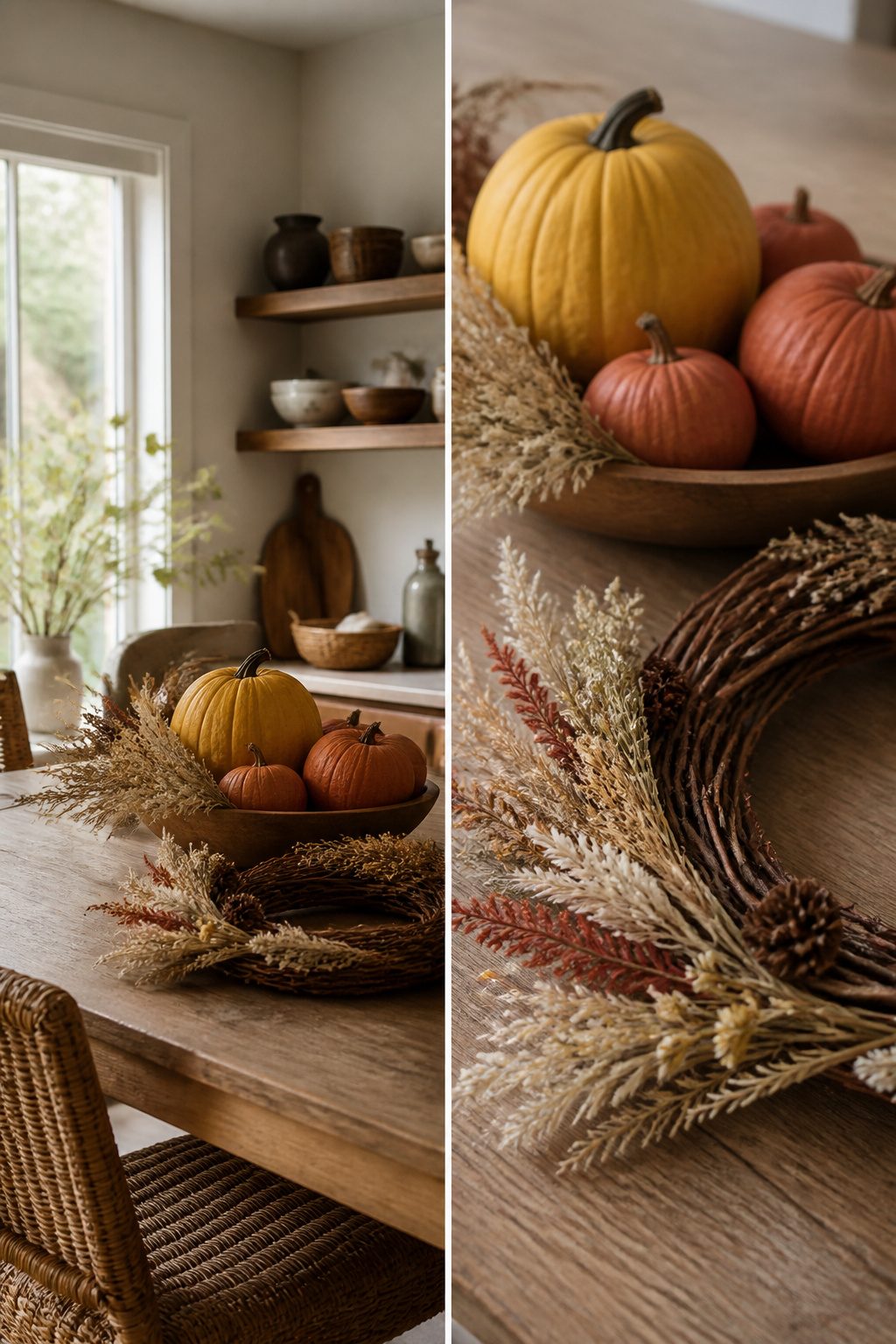
Painted pumpkins and a simple wreath will fill a mantel or a dining table for about $30 in supplies and one Saturday afternoon.
The shortcut, a can of matte chalk paint in rust or deep yellow, covers real pumpkins from the grocery store and dries in an hour.
I tried the longer route once: three weekends shaping foam forms, layering joint compound for texture, and hand-painting every vein.
The result photographed better, but sitting on my table the grocery-store version won every time. Nobody picks them up.
The wreath that actually stayed on my door used a grapevine base, dried grasses, and a few pinecones my kids collected.
Wool throws and wooden accents from what I already owned filled the gaps in the dining room without extra spending.
I abandoned a second wreath halfway through, a seagrass rush project I saw on Pinterest that needed more patience than wire and hot glue could fix.
The materials list matters more than the tutorial: if the supply run passes $50 or the steps need a third weekend, the project stops being fall decorating and becomes a hobby with a deadline.
Entryway
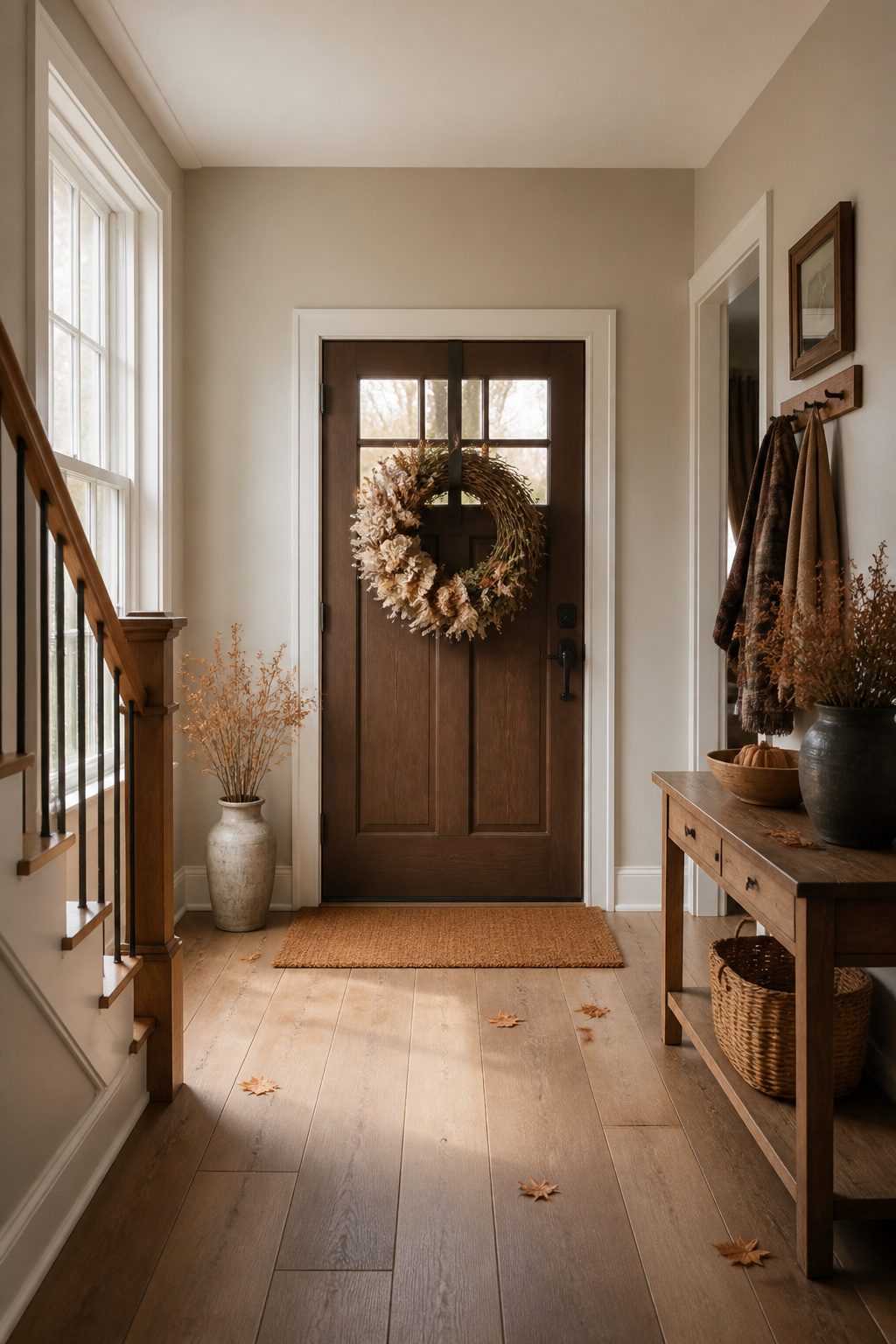
A rental entryway means working around whatever the landlord installed, so the fall shift has to happen with pressure-mounted rods, over-the-door hardware, and hooks that actually release when the lease ends.
I tried a Command hook for a dried-grapevine wreath last October, and the adhesive pad held for three days before the humidity from a rainy week peeled it straight off the painted door.
The hook still works on interior drywall, but exterior-facing surfaces in older buildings need something mechanical.
An over-the-door wreath hanger, the kind with a thin metal plate that slips over the top edge, leaves no residue and costs about six dollars at any hardware store.
The trick is keeping the profile low enough that the door still opens fully; measure your clearance before you buy, because a bulky hanger will nick the frame or stop the swing.
A wreath between fourteen and eighteen inches hits the sweet spot for most apartment doors: visible from the hallway, not so wide that it brushes your shoulder every time you walk through.
If the door opens inward, hang the wreath on the outside face; if it opens out, the inside wall beside the frame works better than the door itself.
For the floor, a coir mat in a plain stripe or a single autumn color sets the tone without the clutter of a full scene.
The mat catches leaves and grit, and at the end of the season you shake it out and roll it into a closet shelf. No storage bin needed, no permanent change made.
Living Room
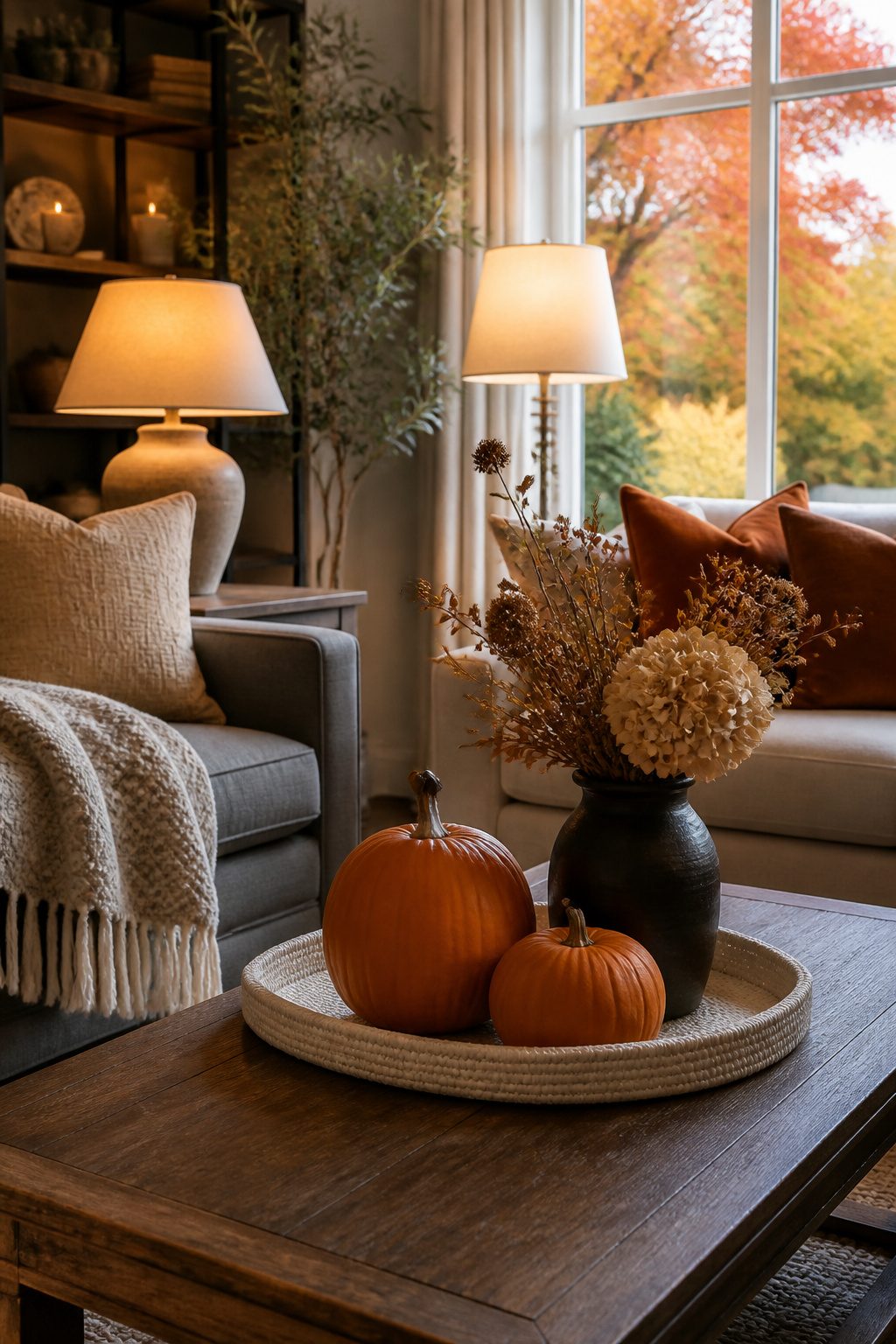
The living room is where the hours actually go, so the fall home tour stops here first.
Real pumpkins look better than faux ones on a coffee table, but they only last three to four weeks before deteriorating, so time that purchase for when you will actually be home to enjoy them.
Dried florals hold their look through the full season and often into winter if you keep them away from humidity, which makes them the safer bet for a centerpiece you do not want to babysit.
Warm-toned light bulbs, 2200K to 2700K, make fall decor look significantly better in photos and in real life.
I moved the same lamp three times before the light landed right: too close to the wall and it washed everything out, too far into the room and it competed with the overhead fixture.
The spot that worked was the one where the throw on the armchair caught the glow without turning the pillow pile into a flat staging shot.
That distinction matters. The arrangement that photographs well often stacks pillows too high to lean against, and the throw draped just-so across the back of the sofa ends up on the floor the first time someone sits.
Leave one seat actually usable, with the throw folded within reach and the pillows limited to what backs still need.
A candle or diffuser in a fall scent does as much work as any visual element, and it costs less than replacing those short-lived pumpkins twice in one season.
Kitchen
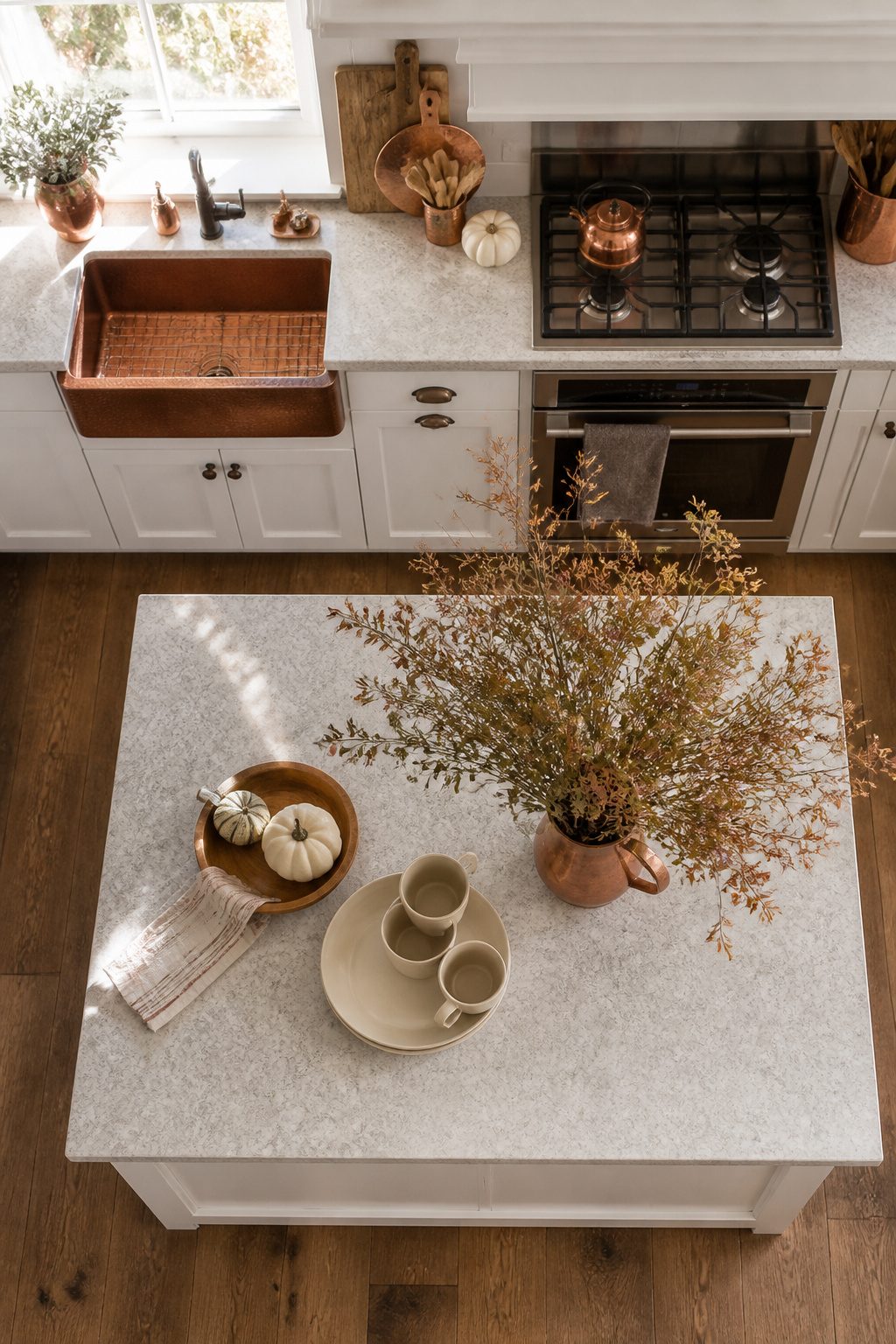
The kitchen gets heavy traffic from October straight through Thanksgiving, which is exactly why my fall decorating here collapsed into a mess two years ago.
I had swapped in themed dishware, copper mugs, leaf-printed plates, the works. By mid-November the cabinets felt like a gift shop clearance rack and the daily work of finding a cereal bowl became a seasonal ordeal.
Now I keep it to one sign and one swap.
The "Give Thanks" sign above my stove has survived three years because it reads as warm rather than wordy, and it plays well against white cabinets and dark grout without screaming for attention.
Everything else rotates back to normal dishware after the photo.
For the single swap, dried branches in an oversized pitcher on the island give that copper tone without the storage headache of themed serveware.
Faux fall branches hold up to actual cooking grease and daily sink splashes in a way a dried hops wreath over the window simply couldn’t; the wreath looked lovely for two weeks, then collected moisture and sagged.
If your kitchen is compact, the island or a single shelf is your whole stage. Add the sign, add the branches, and stop before the countertops start narrating.
Outdoor Spaces

Mums last about three to four weeks once set out, which is roughly the window real pumpkins hold before they start to deteriorate.
I time the purchase so both go in together and come out together, rather than staging an early September porch that looks tired by mid-October.
The seating mistake I made was placing two chairs where the sun dropped behind the roofline by 4 p.m. in October. The spot looked inviting in morning photos; by evening, it was shadow and chill.
Now I set chairs on the east-facing side where the light lingers, and I check the time of sunset for late October, not early September, before I decide what faces where.
Real pumpkins draw squirrels. Last year I lost three to chewing before I learned that the ceramic pumpkin with a candle inside survives the season intact and gives the same glow at night.
For texture, dried florals hold through humidity better than I expected and often carry into winter if I keep them under the porch overhang.
A lumbar throw pillow with a seasonal phrase and a plaid blanket across the chair back do more work than I would have guessed.
Warm-toned bulbs at 2200K to 2700K make the whole arrangement look intentional after dark, in photos and in person.
I do not redecorate the whole outdoor area. Three touches where people actually sit are enough.
Frequently Asked Questions
When should I start decorating for fall?
Most people start transitioning their home to fall decor in early to mid-September.
If you live somewhere that gets cool weather sooner, like the Pacific Northwest or the Northeast, late August works just as well. The key is to let the actual season outside guide your timing.
How do I make fall decor look expensive on a budget?
Stick to a tight color palette and prioritize natural textures over plastic or cheap synthetic materials.
Shopping at thrift stores for trays and vessels, then filling them with real pumpkins or dried grasses, almost always looks better than buying an entire seasonal collection from a craft chain.
Can I mix fall and Halloween decor without it looking chaotic?
Yes, but keep Halloween elements subtle and stylized rather than novelty-focused. Think black candles, deep purple accents, or gothic botanical prints rather than plastic skeletons or orange string lights.