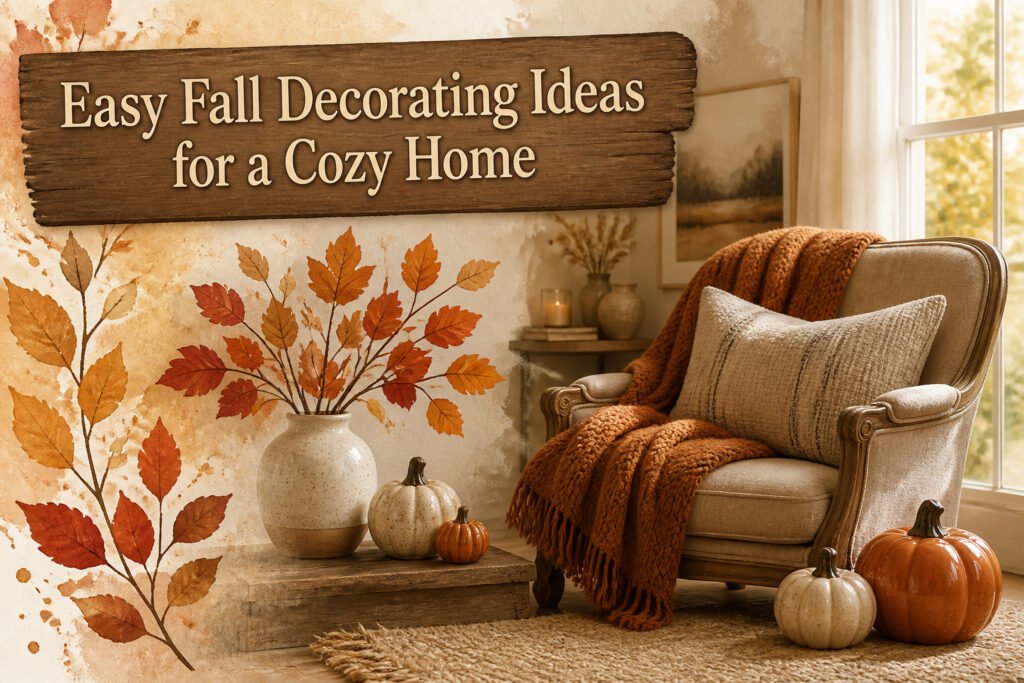
Easy fall decorating ideas span from free branches gathered on a walk to $40 ceramic pumpkins that underperform against the zero-dollar alternative. What separates the keepers from the clutter is knowing which pieces earn their shelf space past the first weekend.
Pressed redbud leaves hold color longer than wet ones stuffed into vases; faux pumpkins beat real ones for anything sitting indoors beyond ten days; two textures per surface is the ceiling before a room starts fighting itself.
1. Natural Elements
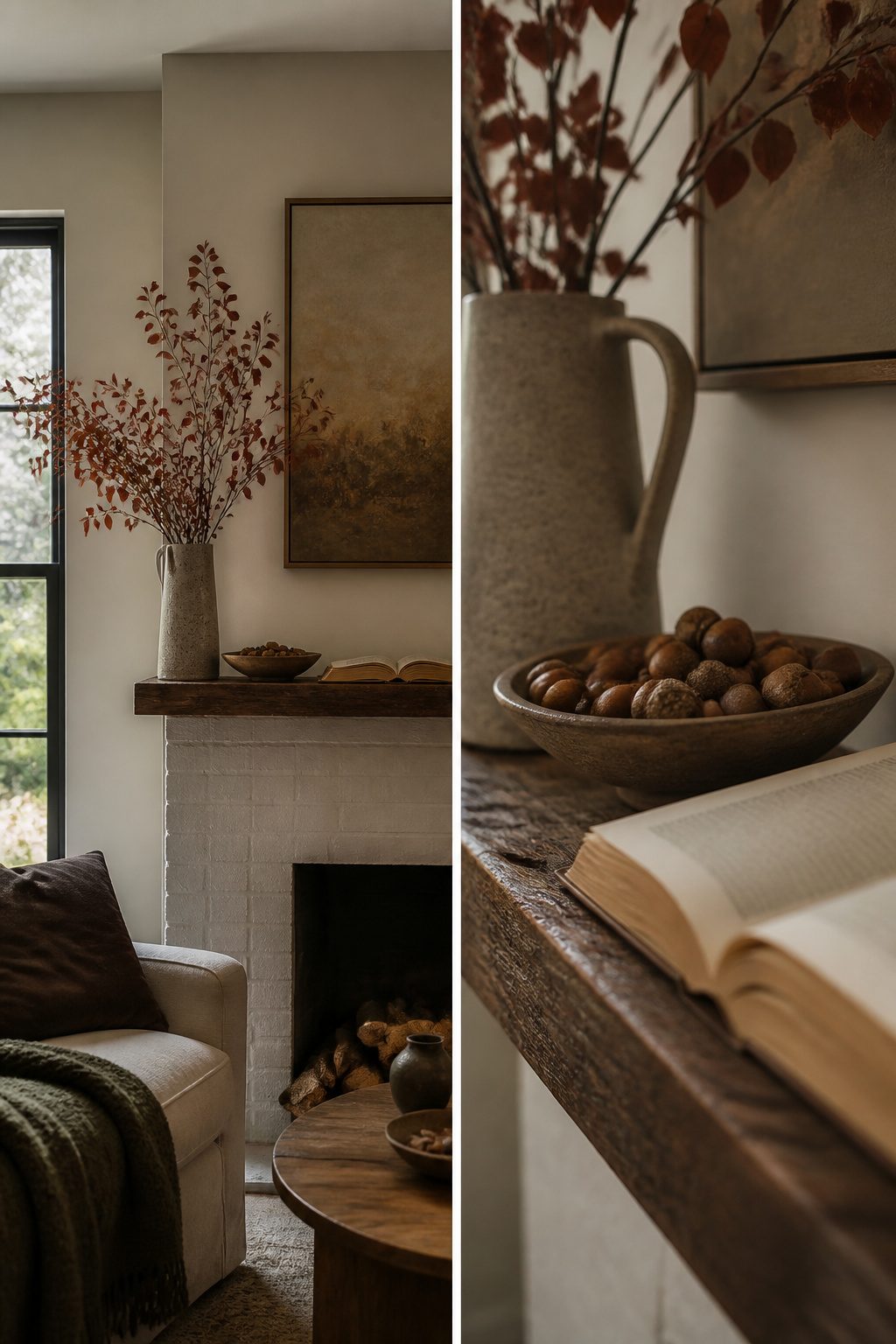
A walk around the block in late September usually turns up everything needed for a mantel or coffee table. Branches from a redbud tree dry well indoors, and the leaves hold their color longer than you’d expect.
Pinecones and acorns fill the gaps in a bowl arrangement without looking like filler, though the cones need a night in the freezer first to kill anything still living inside. Skip the gold spray paint.
The copper finish reads elegant in catalogs and grade-school in person; natural browns and grays mix better with whatever else is already on the shelf.
Leaves work best when they’re pressed flat for a few days between newspaper, not stuffed wet into a vase where they’ll mold.
Bittersweet branches, if they grow near you, add that sharp pop of orange, though some states list it as invasive and you may prefer to pass.
The overall move is restraint: one branch in a pitcher, a handful of acorns scattered in a ceramic bowl, maybe a few pinecones tucked into a bookshelf.
Mixing these finds with a couple of faux berries or a small gourd stretches the free stuff further and keeps the whole thing from looking too collected.
2. DIY Decorations
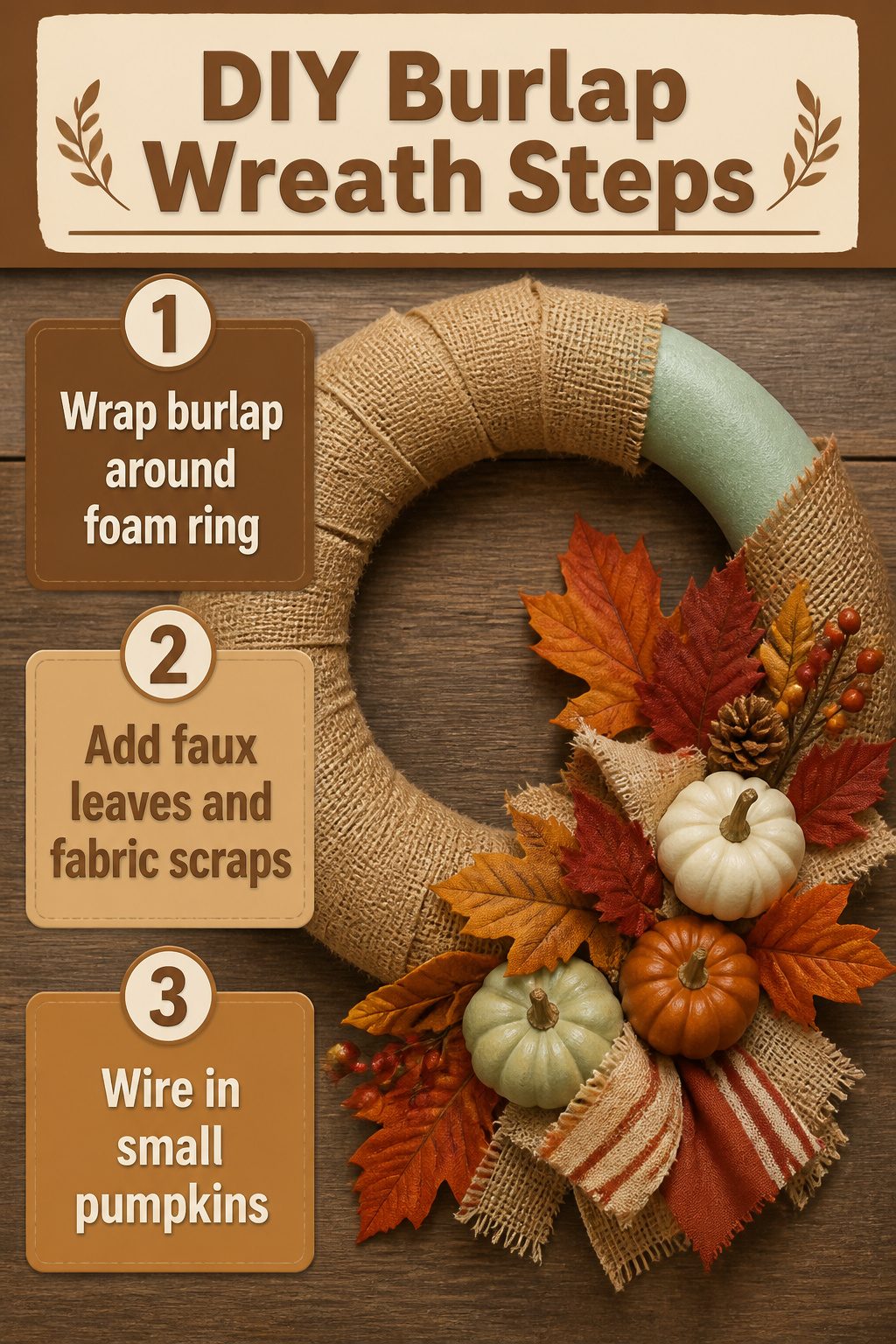
A burlap wreath forms the base for almost any fall look, and the weave hides the hot-glue sins that paper or satin would expose.
I start with a 14-inch foam ring, wrap it in wide burlap ribbon, and pin the loose end with florist wire before the glue goes down.
Faux leaves and a few fabric scraps in rust or cream fill the gaps; small pumpkins from the dollar store get wired in last.
The whole thing takes about two hours and costs under $15 if you already own a glue gun.
The centerpieces follow the same rule. A low bowl of paper leaves, pinecones, and a single faux gourd works for a coffee table you still need to use.
I tried stacking real mini pumpkins on burlap once, and the stem rot set in by day four. Faux is the safer bet for anything that sits indoors longer than a weekend.
Wreath placement matters more than the wreath itself. The front door is obvious, but a pantry door or a hook above the stove hood keeps the color where you actually see it.
I hung one on a vintage shutter propped against the entry wall last year, and it drew more comments than the door piece ever did.
Paper acorns are the project that always runs long. Cutting, curling, and gluing enough to matter takes closer to three evenings than one Saturday.
The result is charming, but the time-to-impact ratio is weak compared with the burlap wrap.
3. Thrift Store Finds
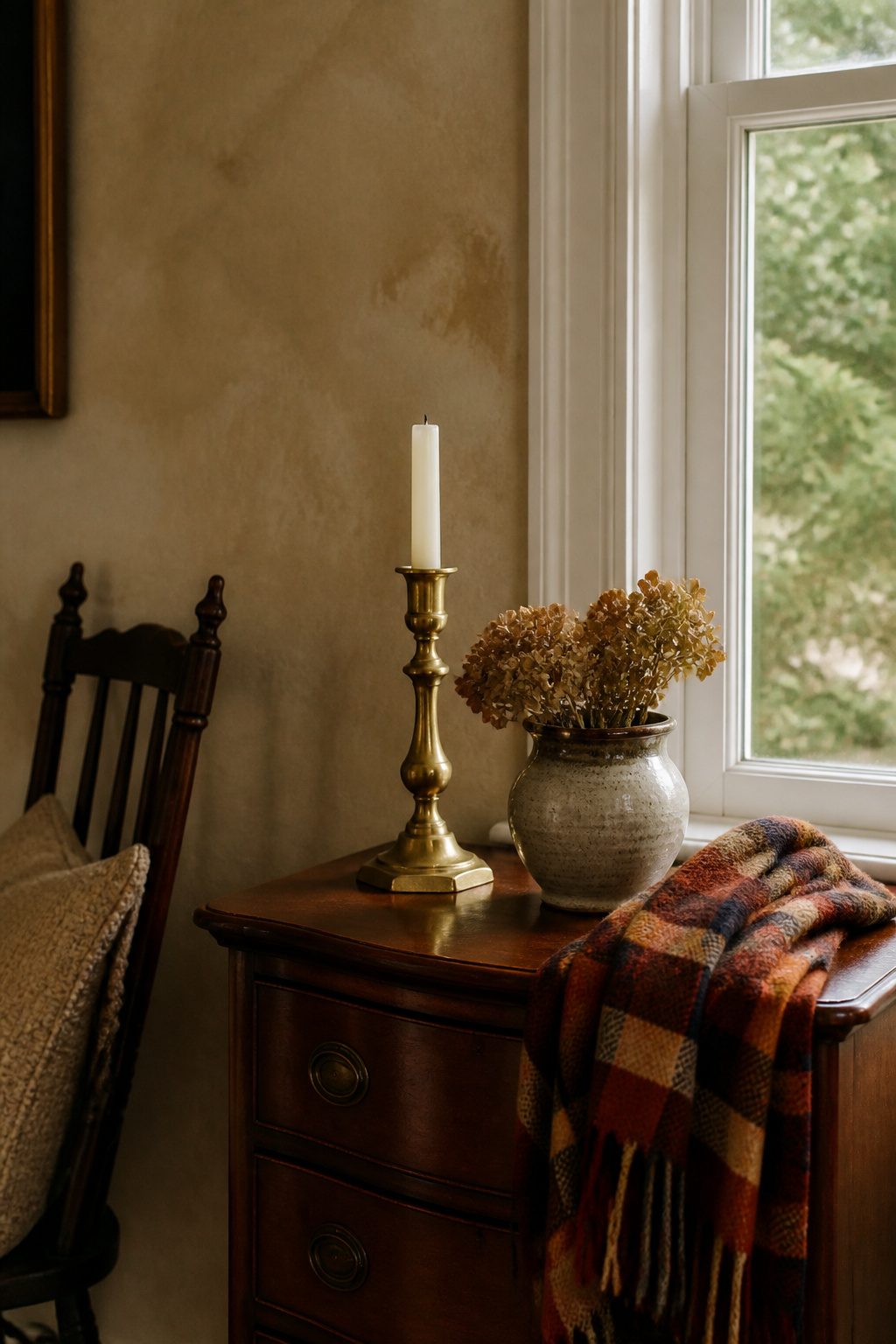
The brass candlestick I almost left on the shelf last October still sits on my mantel. It was $1, the same price as a scratched glass votive two bins over, and the difference came down to weight.
A solid candlestick that bottoms out at $1–$2 in most thrift stores will feel cold and heavy in your hand; the hollow ones rattle when you tap them and tip over once a taper burns halfway down.
I look for three things now: heft, finish, and whether the shape competes with the candle flame itself. Handmade pottery holders and vintage brass win because the surface catches low autumn light without shouting for attention.
I skip anything with a painted seasonal motif, the ceramic pumpkins and stenciled leaves that read as craft-store leftovers. Those are the pieces that make a shelf look cluttered rather than collected.
Textiles follow the same filter. A plaid wool scarf hung over an entryway hook reads fall because of the weave, not because a tag says "harvest."
I have passed on thin acrylic knits that would sag by November and held out for the heavier weaves that keep their fold.
The scarves and the occasional flannel shirt work as decor because they were built to last a decade of actual wear; a few months on a hook is nothing to the fiber.
The blue candles I found for $1.50 were a lucky outlier. White tapers and anything copper-toned are the reliable thrift scores, and copper reads autumn without needing any explanation.
4. Seasonal Textiles
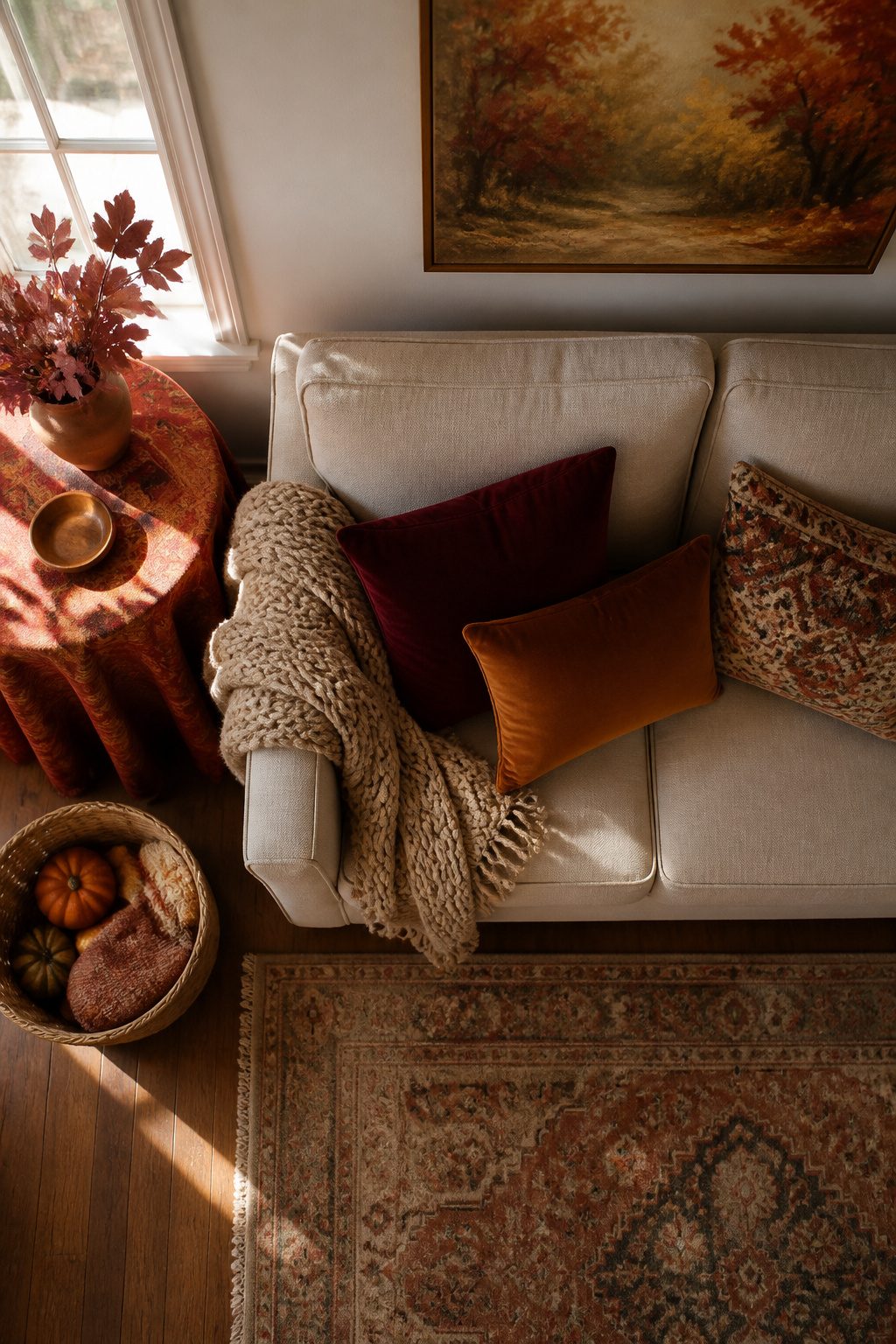
The fastest way to shift a room from July to October is to swap the textiles: pillows, throws, table linens. Deep red, burnt orange, and earthy browns replace the cool blues and whites that read summer.
I look for cozier textures, too, something with a little weight to it.
Craft stores and off-price shops like TJ Maxx or Marshalls usually have throws in the $15–$20 range. Thrift stores are worth checking.
I once found a new Target blanket at Goodwill for about half retail, and the texture was exactly what I wanted for the sofa.
The off-season set goes into a single bin, labeled, so I am not hunting through summer cottons in November. What has lasted past one season: the heavier knits and woven textures.
The thin, printed polyester ones pilled or faded by year two.
5. Pumpkins and Gourds
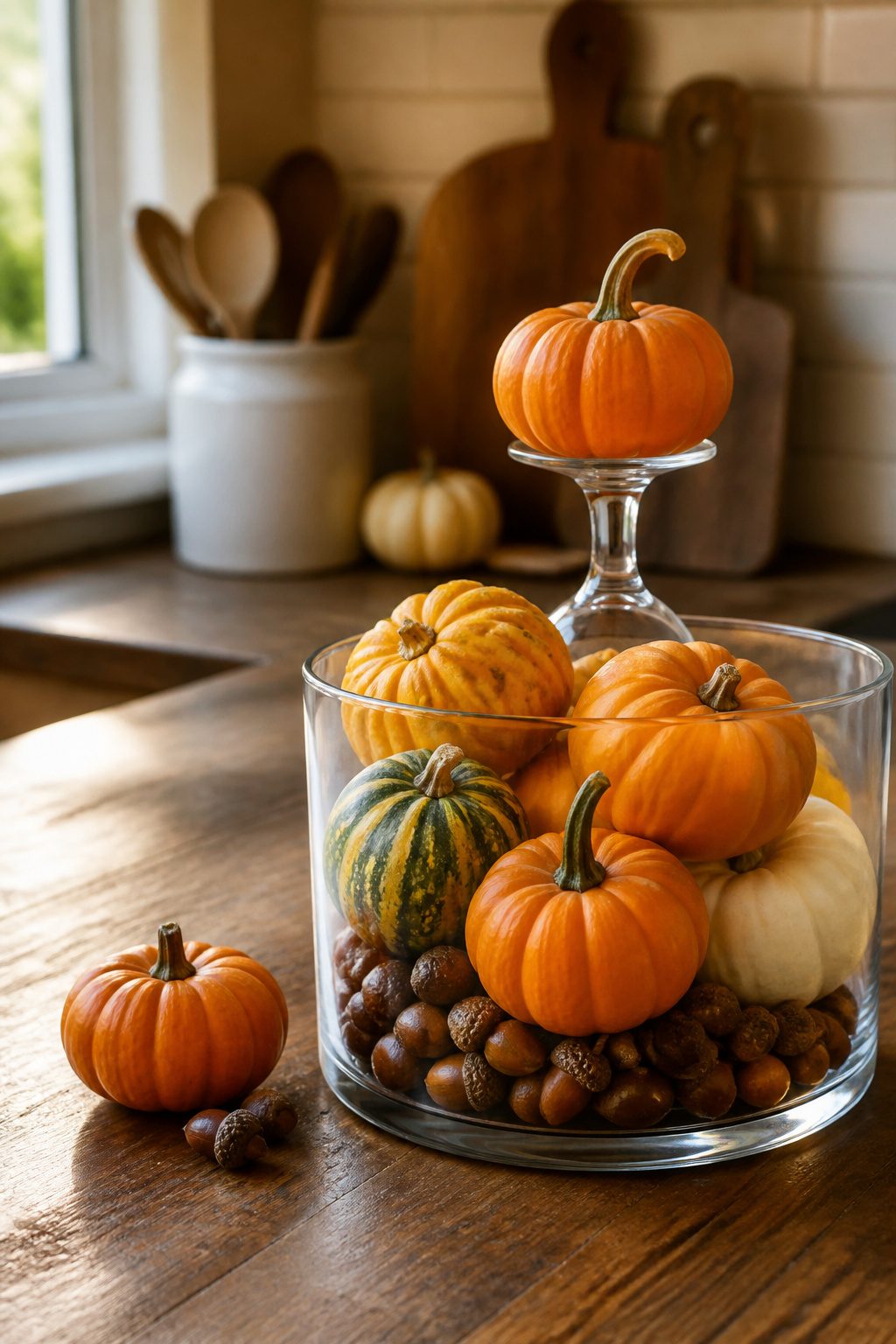
Real pumpkins on the counter look great for about ten days, then the spot underneath goes soft and the whole thing collapses into itself.
That timeline is what pushes most people toward faux, but the cheap ones read as plastic from across the room.
The ones that work are the heavier, matte-finish varieties now stocked in craft sections, sometimes mixed in with dried gourds at thrift stores for a dollar a bag.
Mini pumpkins and gourds do the heavy lifting in small arrangements. A few dropped into a glass vase with acorns or nuts in the shell fill a windowsill without the height problem of full-size squash.
Elevate one on a pedestal dish or an inverted wine glass and the whole grouping gains structure without costing centerpiece money.
I have used both real minis from the grocery store and the artificial wooden acorns sold at Target; the real ones last roughly two weeks, the fakes last until you lose them in a box.
The cost gap is real. A single large decorative faux pumpkin can run what a whole sack of real minis costs, but spread across two months of display, the per-week price flattens out.
My rule: buy real for anything that sits outside where the cold buys you time, go faux for indoor bowls and anything that needs to survive a dinner party and Thanksgiving both.
6. Scented Candles and Potpourri
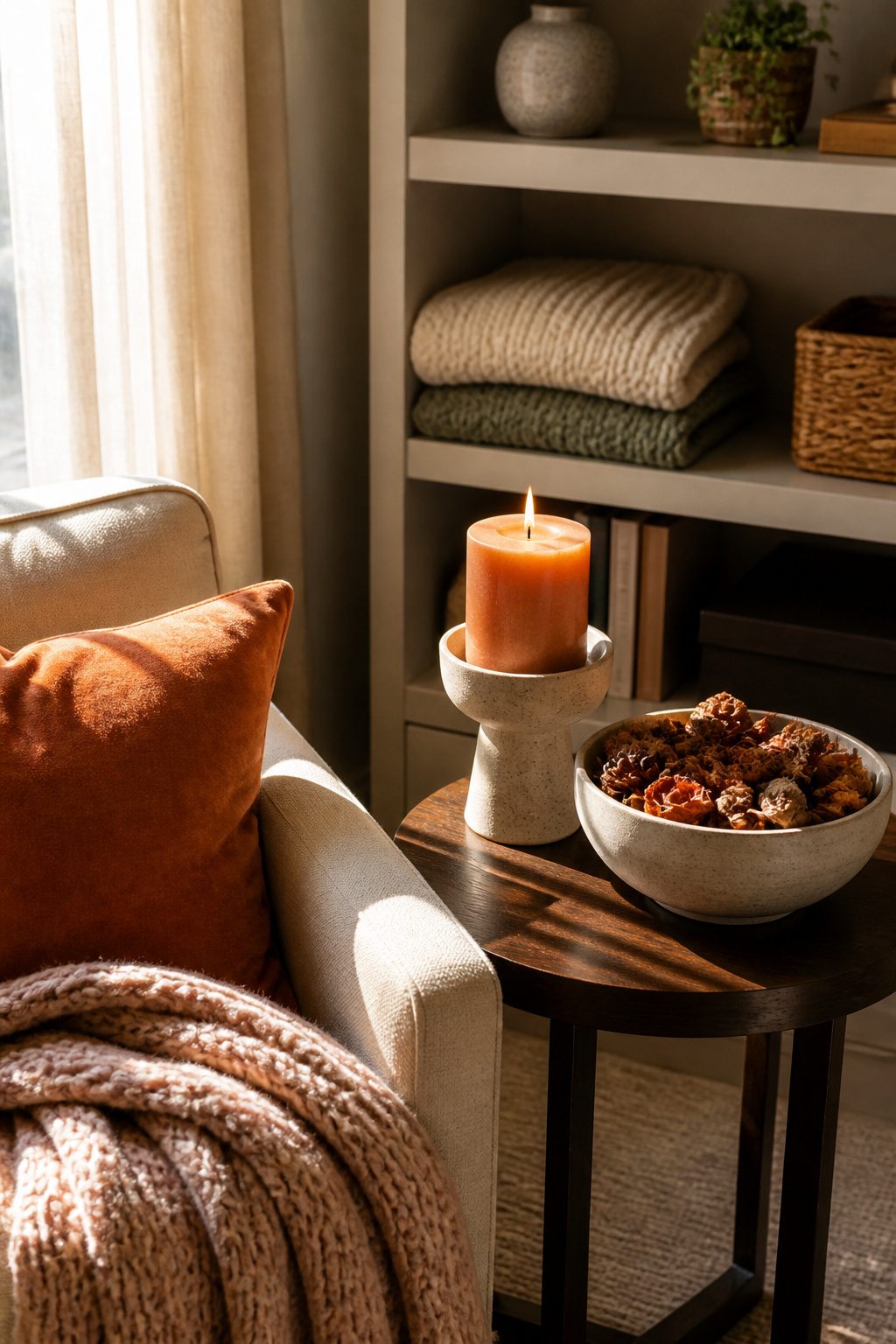
Pumpkin spice and apple pie candles look right on the mantel, but the ones that actually fill a room are the exception, not the rule.
Most of the pumpkin spice jars I’ve brought home smell rich when I lean over the wick and barely register from the sofa.
The apple pie versions tend to do a little better, maybe because the cinnamon note carries farther, but I stop at one scented candle per open area; two competing fragrances in the same room just cancel each other out and leave a vague sweetness that isn’t fall and isn’t anything else.
Potpourri works better for background scent if you find the harvest bags with orange, brown, and green pieces that blend into a bowl of decorative fruit.
The fragrance is quieter than a candle but it travels, and at a couple of dollars a bag the cost is low enough to refresh it once the oils fade.
I keep one bowl near the entry and call it done; anything more and the house starts smelling like a craft store aisle.
7. Color Palette
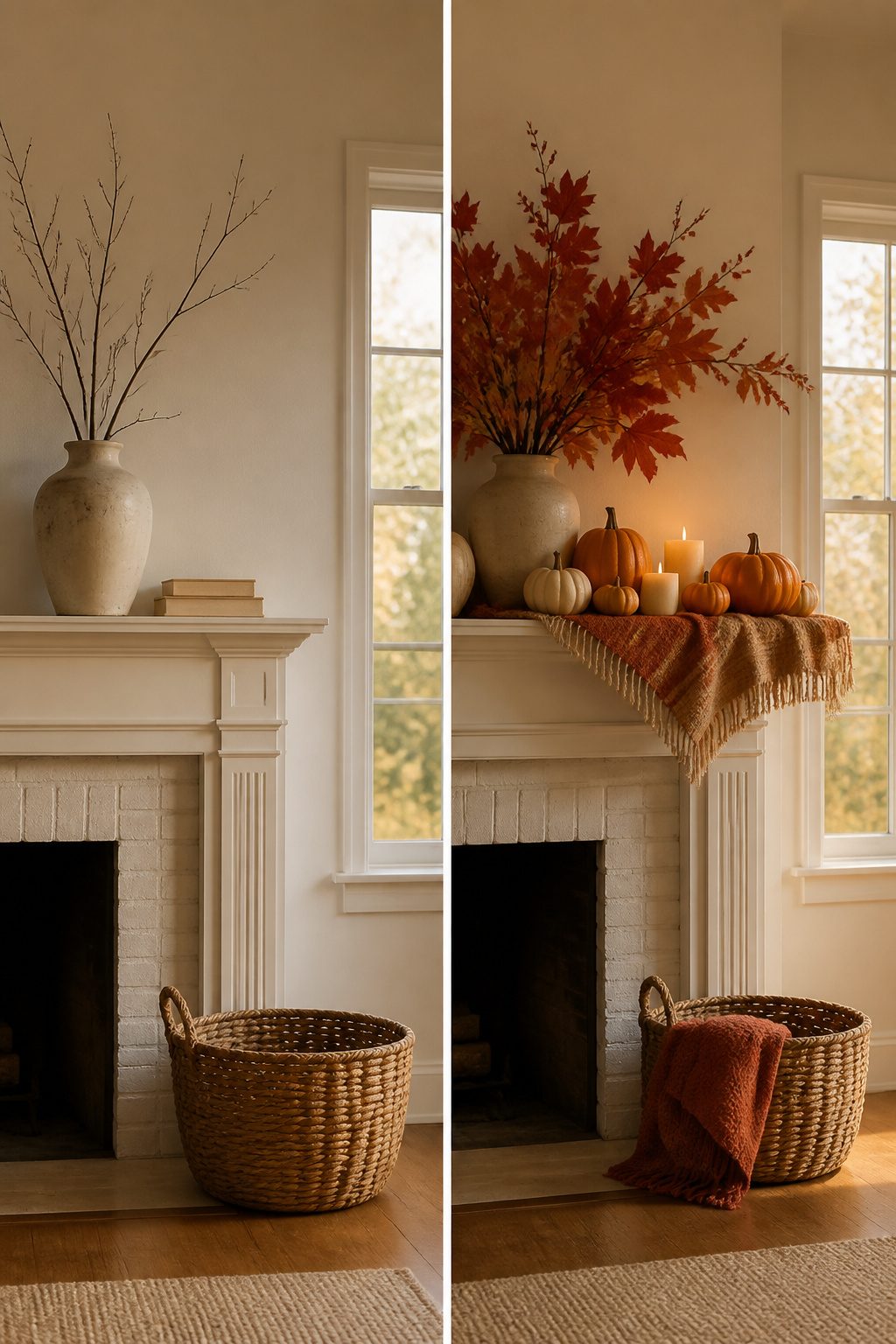
A palette of two or three fall colors added to what you already own is enough. More than that, and the room starts to look like a craft store exploded.
Last year I tried to force deep red, burnt orange, and honey yellow together on the same shelf. The red and orange fought each other; nothing looked intentional.
Beige and brown, which I had dismissed as boring, turned out to be what let the warm colors breathe.
Now I test everything on the mantel first: the throw, the candle, the small pumpkin, all lined up for a week before I buy a second of anything. If the grouping still feels calm after five days, the palette stays.
The connected look means you can reuse pieces year to year instead of starting over.
8. Centerpieces
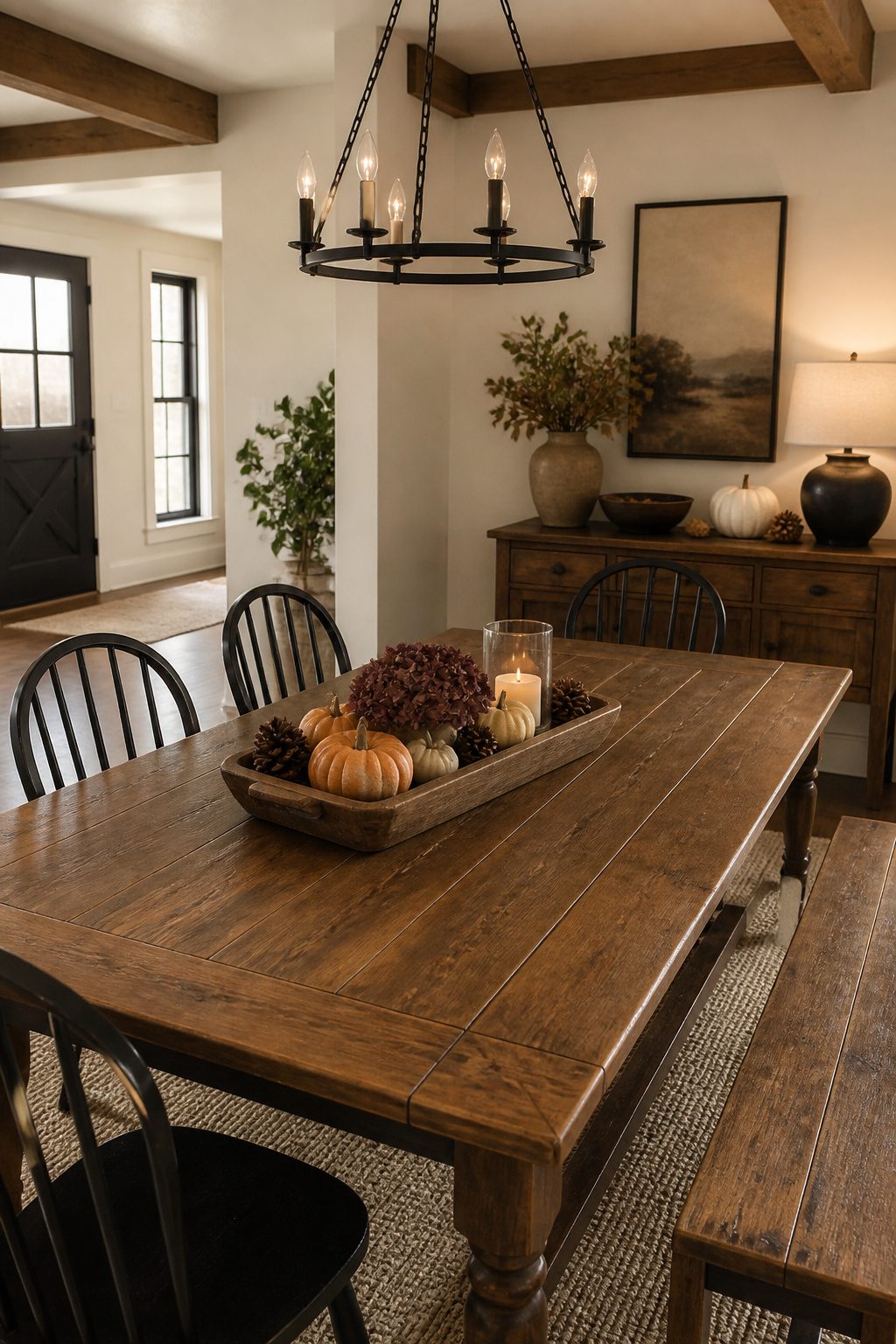
A dough bowl or a simple wooden tray is the base I keep coming back to, because it reads as intentional without looking like you tried too hard.
The balance sits somewhere between arranged and accidental: a cluster of mini pumpkins, a few pinecones, maybe a candle off-center so the eye travels.
Last year I cut hydrangeas from the yard and let them dry right in the bowl; they cost nothing and lasted weeks past anything store-bought.
The real test comes when people actually sit down to eat. I clear the whole thing to a sideboard in under a minute, because a centerpiece that fights the serving dishes defeats the point.
A tray makes this easy; one lift and the table belongs to dinner again. Rotating the same bowl through the seasons, swapping apples for pumpkins or bare branches for hydrangeas, keeps the look fresh without another purchase.
Budget-Friendly Tips
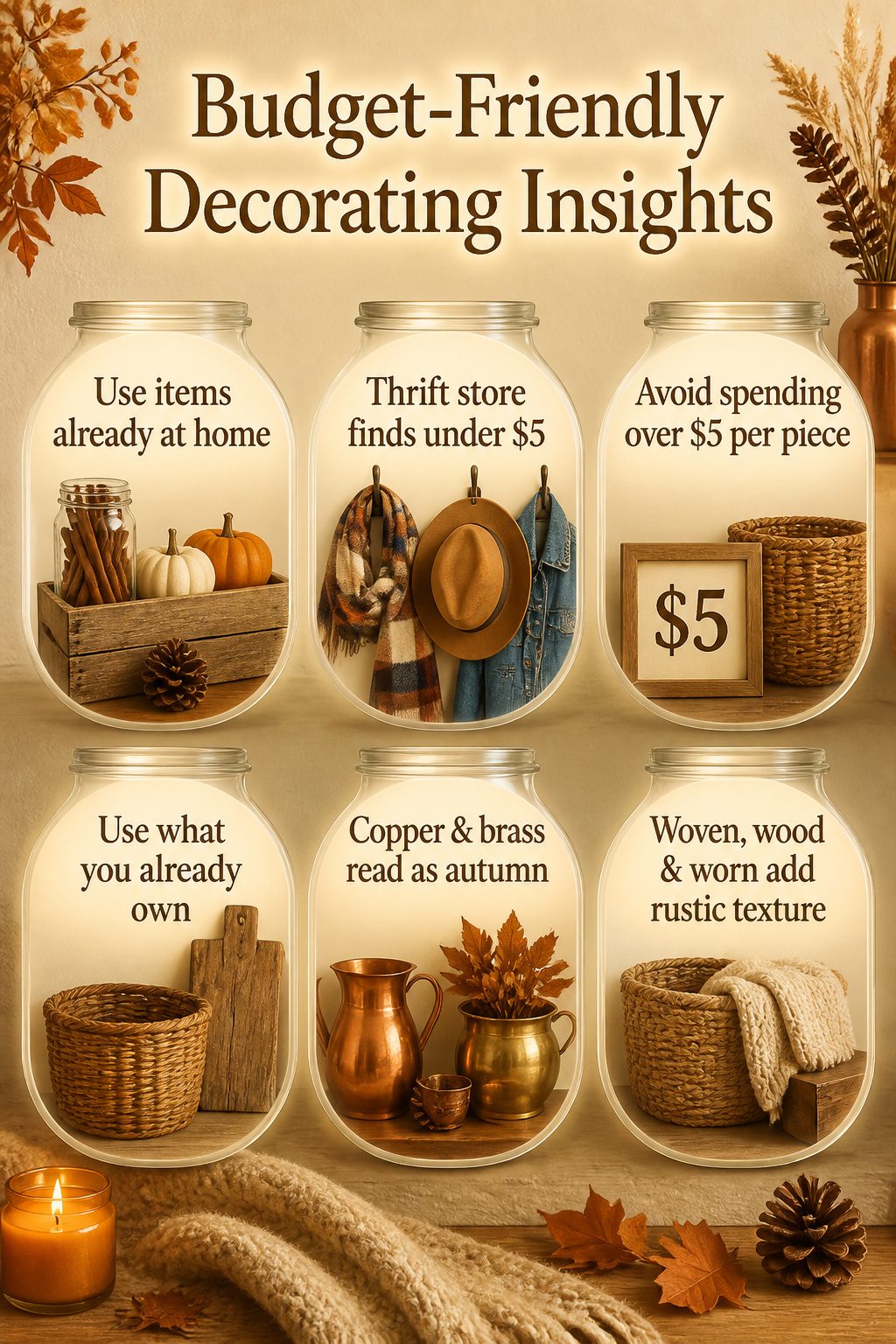
The first place to look for easy fall decorating ideas is already inside your own home. Mason jars, glass vases, and wooden crates you have sitting around can hold small pumpkins, pinecones, or cinnamon sticks for an instant autumn shift.
I spent exactly zero dollars on that approach last year, and it looked warmer than the $40 ceramic pumpkin I almost bought at a big-box store.
Thrift stores are where the real numbers get interesting. Both plaid scarves I hung on my entryway hooks, swapping out summer hats and a jean jacket, were thrifted.
The price on each was under $5, and the texture they add beats anything I have found new at that price. A flannel shirt works the same way if you spot one in autumn colors.
The ceiling I set for any single thrift piece is $5. Past that, I start comparing to what I could pull from a dollar store or my own closet.
Woven baskets and worn wood pieces already in your home add the same rustic fall texture without a second purchase.
Copper and brass items you own, even if they live in the kitchen the rest of the year, read as autumn when you group them on a shelf or mantel.
Personal Touches
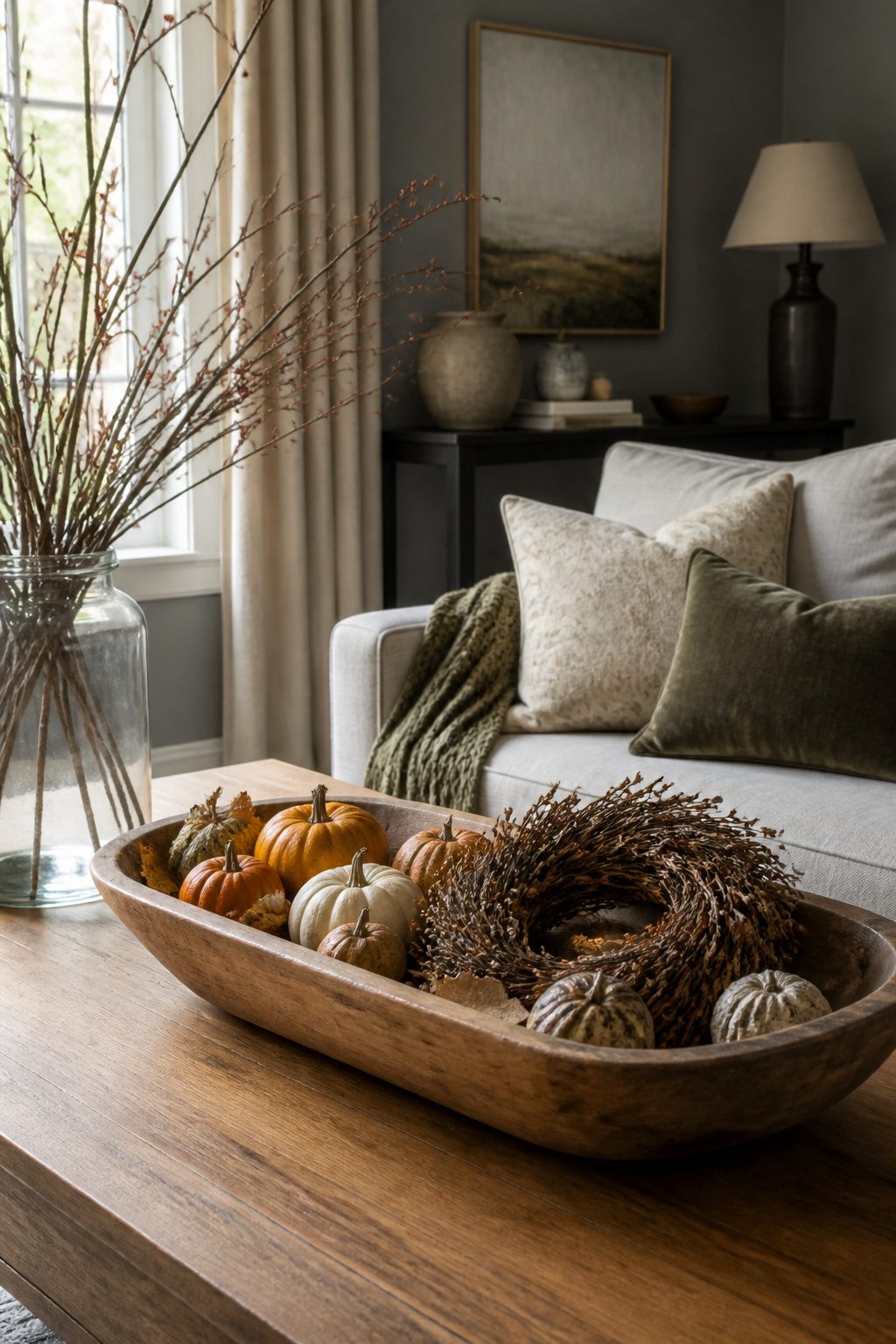
The wooden dough bowl my grandmother brought from Tennessee sits on my coffee table every October, even though its warm oak tone clashes with the cooler gray I painted the walls two years ago.
The mismatch matters less than the story it carries. Guests lean in to ask about it, and that conversation does more to make the room feel lived-in than any perfectly coordinated tray ever could.
Before I shop for anything new, I walk through each room and gather what already works for fall.
Baskets hold small pumpkins, glass jars get filled with branches from the yard, and that sweet gum ball wreath I made three years ago comes out of storage to become either a door piece or a candle ring, depending on what the season needs.
The wreath cost nothing but an afternoon, and it serves both fall and Christmas without looking out of place in either.
A handmade piece earns its keep when you use it year after year. The dough bowl stays out until Thanksgiving because my grandmother filled it with pecans every autumn, and now I do the same.
The repetition turns a decorating choice into something closer to tradition, which is what easy fall decorating ideas are actually after: a house that feels warm because it holds memory, not just color.
Layering Textures
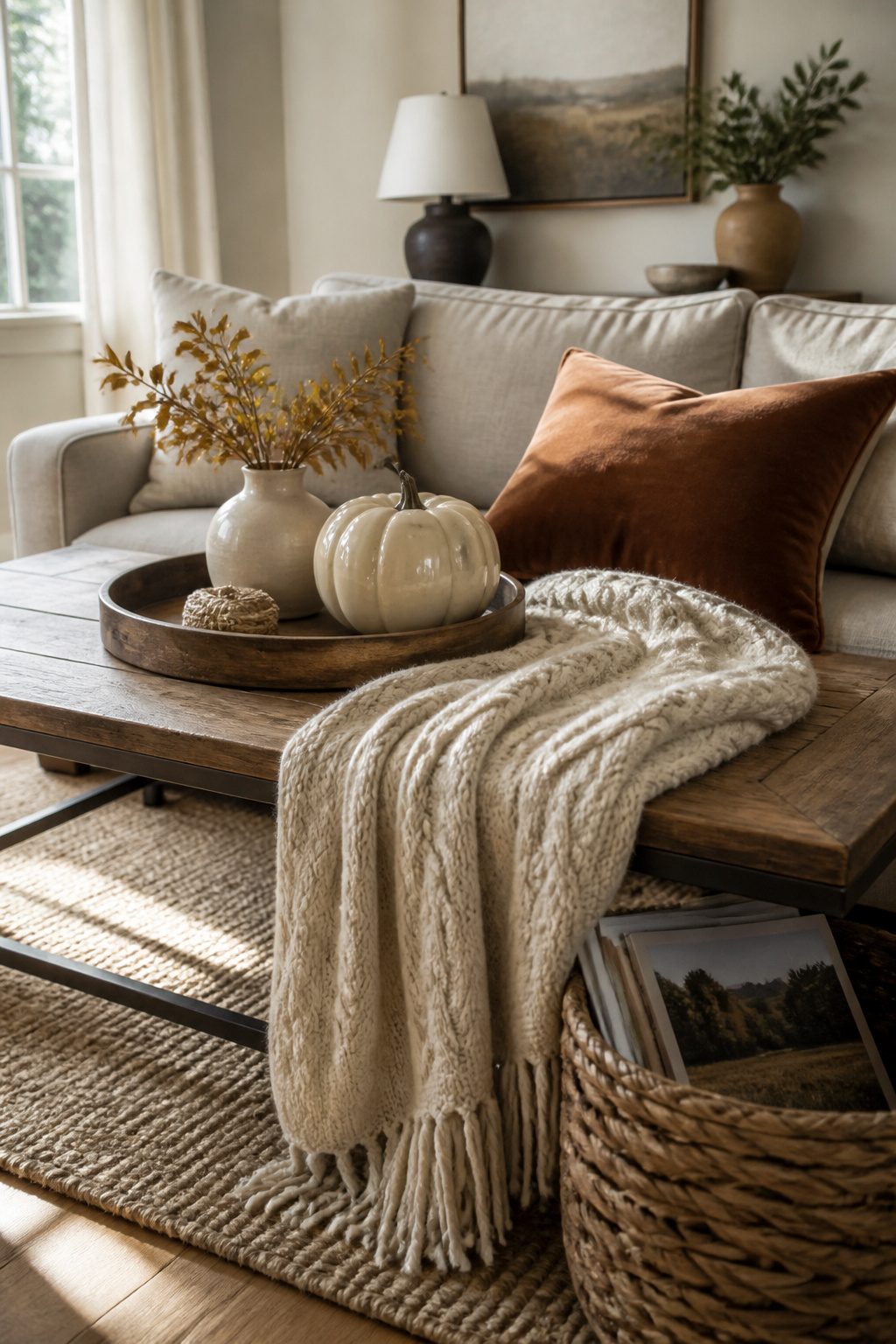
Soft throws in cable-knit or faux fur land on the sofa first, then a woven basket tucks beside them for the magazines that otherwise drift across the coffee table.
The basket matters more than I expected: without it, the throw reads as clutter, not comfort. I learned that last October, piling on a chunky knit, a smooth velvet pillow, and a woven tray all within arm’s reach.
The textures fought instead of layering; the eye had nowhere to rest. Two textures per surface is the ceiling, three only if one of them is small and hard, like a ceramic pumpkin or a glass jar of cinnamon sticks.
Natural elements bridge the gap between fabric and wood. A few branches in a pitcher, pinecones in a shallow bowl, or hydrangeas dried to a muted purple pull the room together without adding another competing weave.
The craft-store throws run $15–20, and the baskets cost nothing if you shop your own closets first.
Thrift stores turn up the better finds anyway; a Target blanket with real texture shows up at Goodwill for half the tag more often than you’d think.
Frequently Asked Questions
How can I decorate for fall on a budget?
Start with what you already own. Mason jars, glass vases, and wooden crates can hold small pumpkins, pinecones, or cinnamon sticks for no cost at all.
Thrift stores fill the gaps for under $5 per piece, and a walk around the block in late September usually supplies branches, pinecones, and acorns for free. The $40 ceramic pumpkin at the big-box store is rarely worth it against these approaches.
What are some easy DIY fall decorations?
A burlap wreath takes about two hours and costs under $15 if you own a glue gun: wrap a foam ring in wide burlap ribbon, add faux leaves, fabric scraps, and dollar-store mini pumpkins wired in last.
A low bowl of paper leaves, pinecones, and a single faux gourd works for a coffee table you still need to use. Paper acorns are charming but run long, so weigh the time against the impact.
What colors are best for fall decorating?
Two or three fall colors added to what you already own is enough; more than that and the room starts to look like a craft store exploded. Deep red, burnt orange, and earthy browns replace summer’s cool blues and whites.
Beige and brown, easy to dismiss as boring, are what let the warm colors breathe and keep the grouping calm after five days on the mantel.