
Simple Christmas decorating for 2026 runs from free foraged pine cones to a forty-dollar tabletop spruce, with the real decision being how much quiet effort you want behind the finished look. The dried orange garland that bakes for two to three hours at 200°F asks for oven time, not attention, while a bowl of plain wooden beads on a two-foot tree asks for nothing at all.
1. Dried Orange Garland
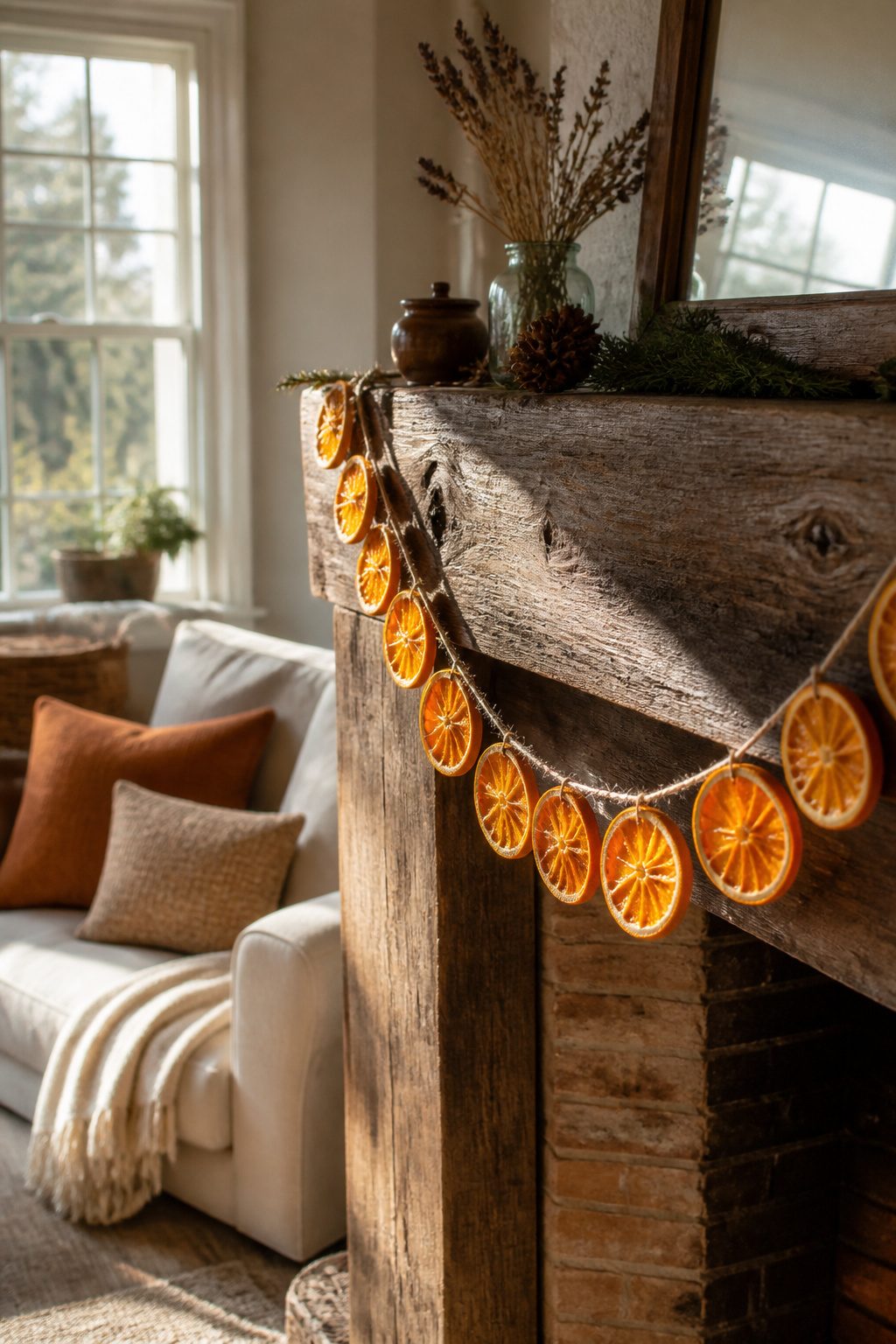
Dried orange slices look like stained glass when the light hits them, and the whole house smells like a bakery while they bake. I set the oven to 200°F and leave the slices in for roughly two to three hours, flipping them once around the halfway mark. Thinner cuts dry faster; anything much over a quarter inch and the centers stay rubbery no matter how long you wait.
A standard navel orange yields about fifteen to twenty slices, enough for a six-foot strand when you leave a couple of inches between each piece. String them with baker’s twine or thin ribbon, nothing heavier or the slices tear where the hole meets the flesh. The garland dries harder as the days pass, so hang it within a day or two of assembly while the rind still has some give.
Cost runs about four dollars for the fruit and string if you already own a baking sheet and parchment. The oven time is the real investment, though it is passive enough that I usually batch it while I am wrapping gifts in the same room.
2. Pomanders
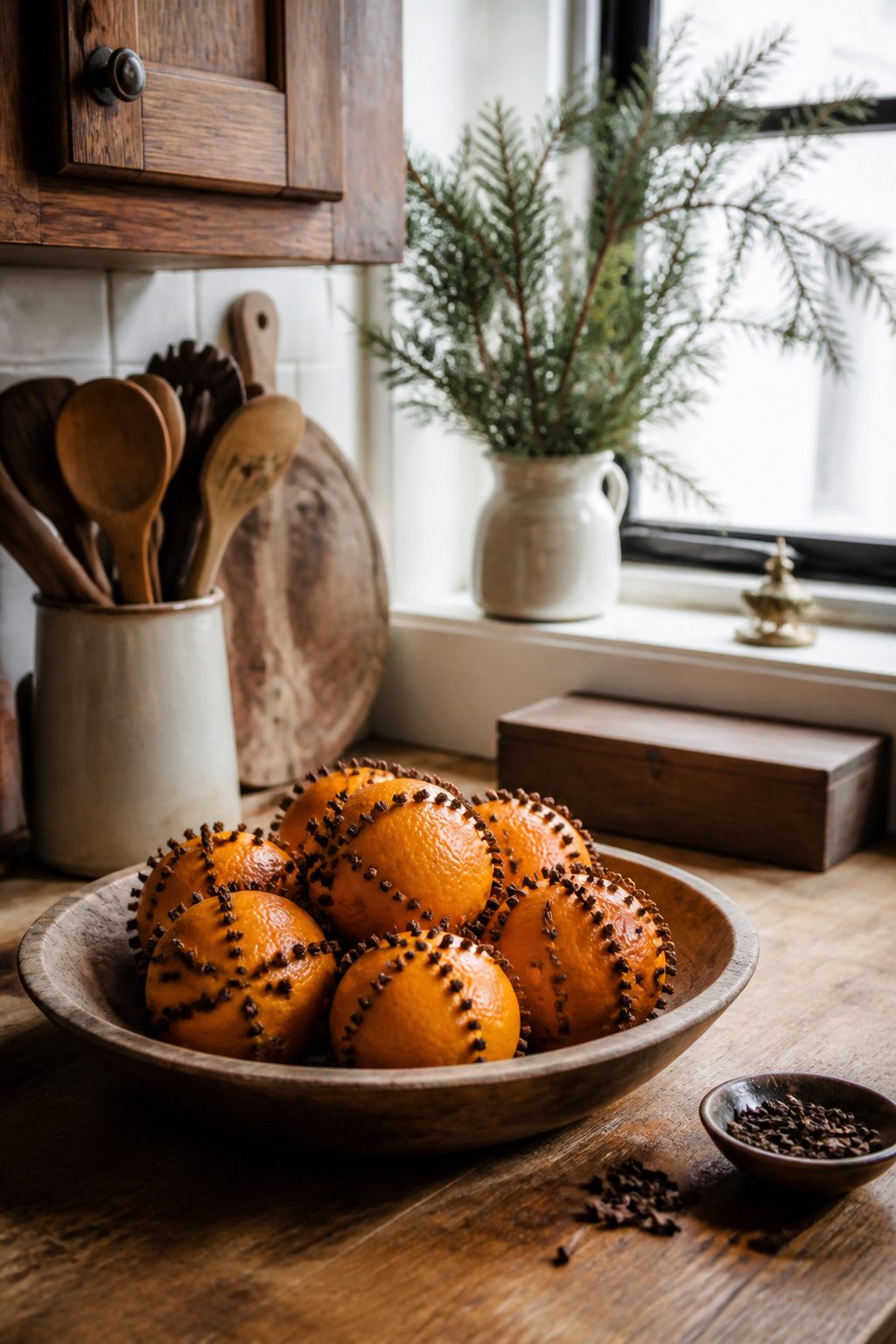
A pomander is just an orange studded with whole cloves, and the smell is exactly what you picture when someone says "Christmas." The cloves draw out the citrus oils as they dry, so the fruit shrinks into a hard, fragrant ball that lasts weeks. Making one takes maybe ten minutes. A whole orange and a paper clip or a pin are enough: poke holes in a pattern or at random, then press a clove into each hole until the head sits flush with the peel. The closer you space them, the longer the scent holds, but even a loose pattern works.
These do best in spots where someone brushes past and releases the smell. A bowl on the mantel, a line along a windowsill, or a few tucked into a guest bathroom all work. The kitchen counter is obvious, but the heat there speeds drying and shortens the life. A cooler room gives you more weeks. Once the orange is fully dry and hard, the scent fades, though some people keep them for years as ornaments. The first few days are the strongest, so I usually make a fresh batch mid-December if I want the house to smell sharp for guests.
3. Pine Cone Displays
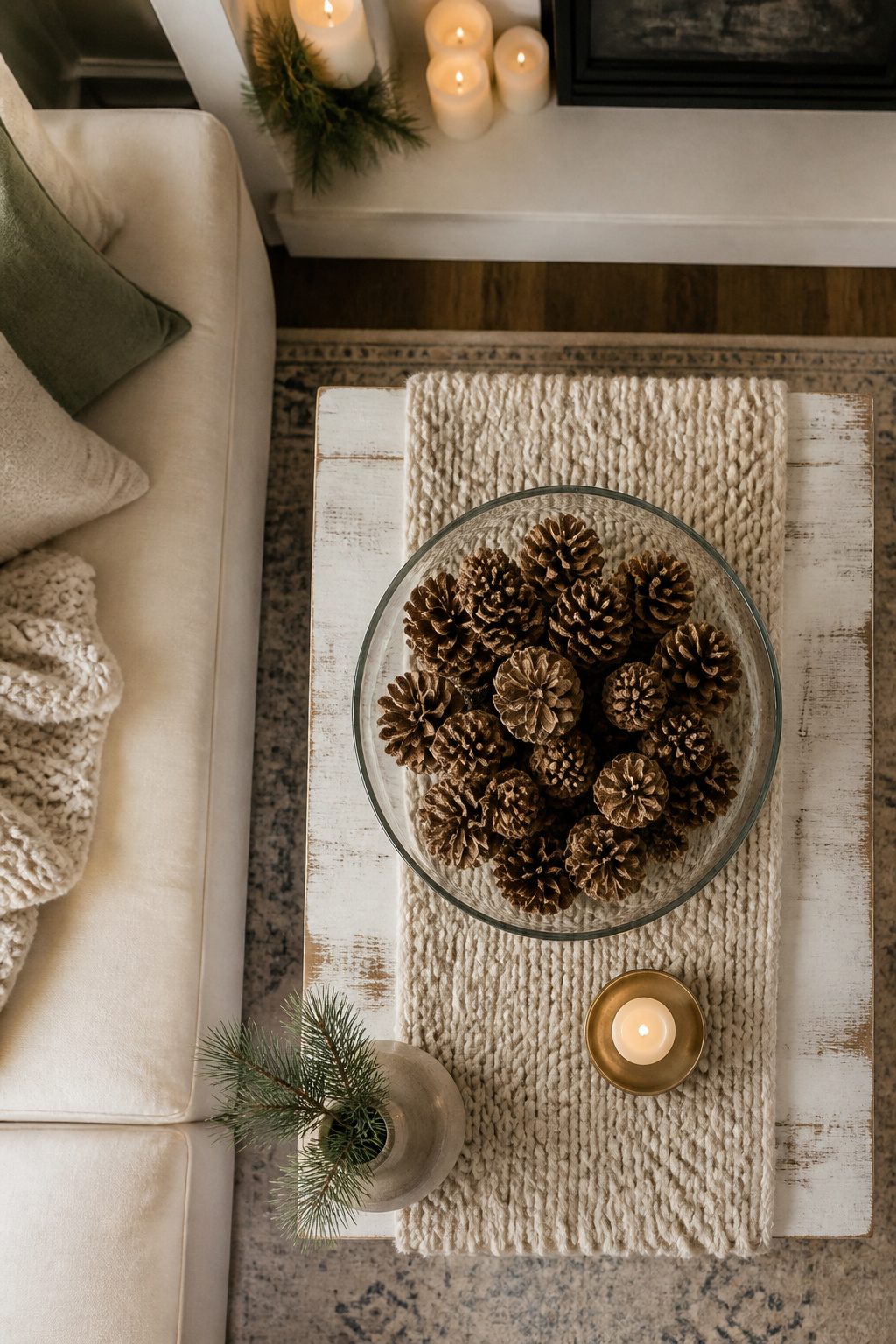
Pine cones work because they already look like small ornaments, and you can gather them for nothing if you live near any conifers. The only step between the ground and the mantel is baking them clean. Set the oven to 400°F and leave them on a sheet pan for 30 minutes. That heat opens the scales back up and kills any insects or sap you do not want indoors.
After they cool, they go almost anywhere. A bowl on the coffee table takes about two minutes to arrange. A few tucked into a wreath fill the gaps between pricier elements. The scale is what makes them useful: a single pine cone reads as rustic, a pile of them reads as intentional, and either way the cost is zero if you foraged. I have left mine bare, but spraying them with cheap gold paint from the craft store is the upgrade that costs under five dollars and an afternoon.
4. Evergreen Runners
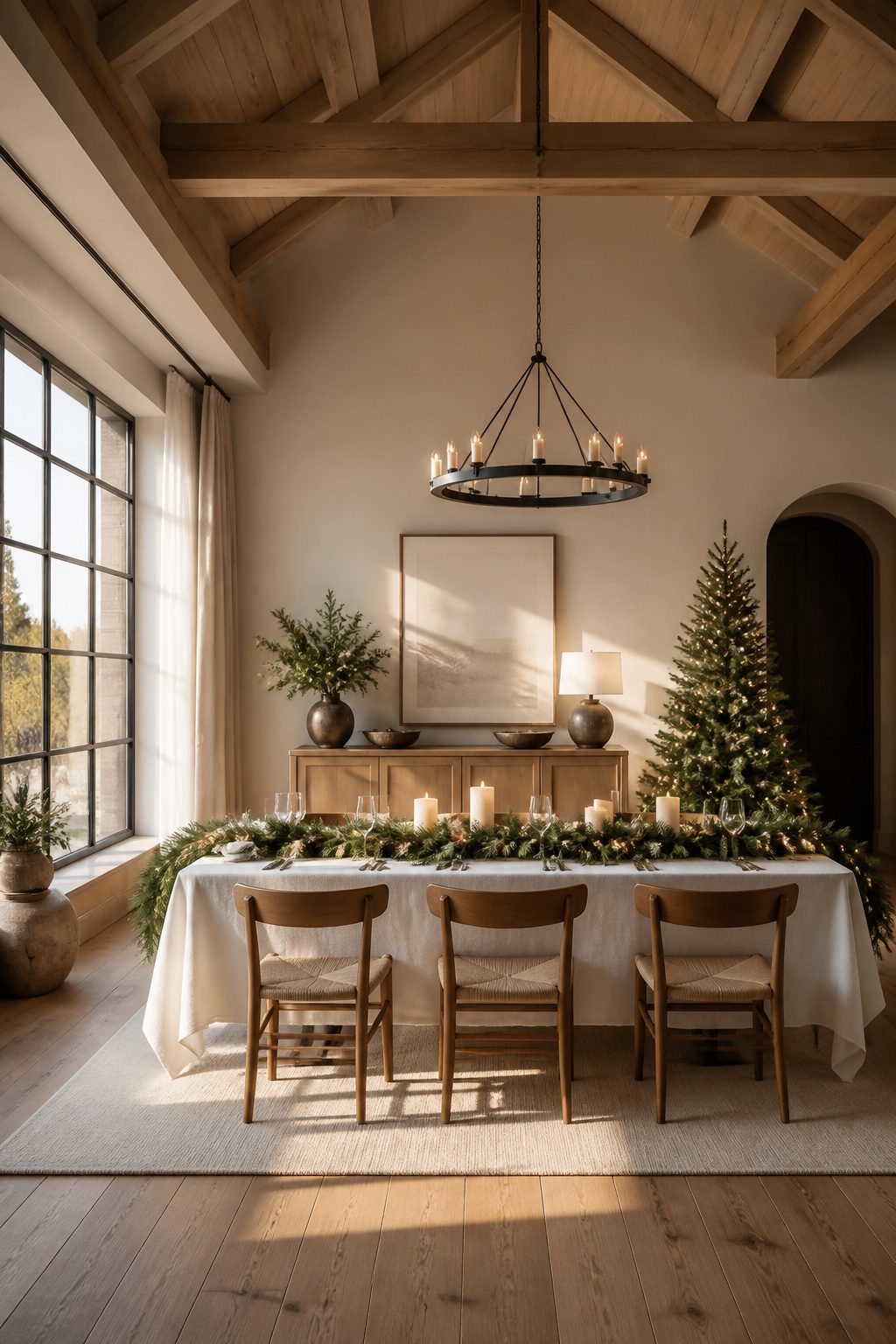
Cedar garland at 9 ft drapes well across a standard six- to eight-seat table without pooling on the floor, and Norfolk garland at 15 ft carries enough length for a mantel plus the vertical drops at each end that make the look feel finished. Both read as real greenery up close, which matters more than you’d think: the cheap stuff photographs fine but turns plastic-shiny under dining room lights.
For tables, lay the runner first, then set your candles or objects on top to pin it in place. No adhesive needed, and nothing touches the finish. Mantels are trickier in a rental. Command hooks work if your lease allows them; otherwise, a few clear fishing lines looped around the garland and tied to the mantel edge, hidden behind the greenery, keeps it from sliding forward. I learned that the sliding-forward part the hard way after a dinner party last year. Battery-operated fairy lights woven through add the twinkle after dark without cords to manage, and the greenery hides the wire completely.
5. Tabletop Trees
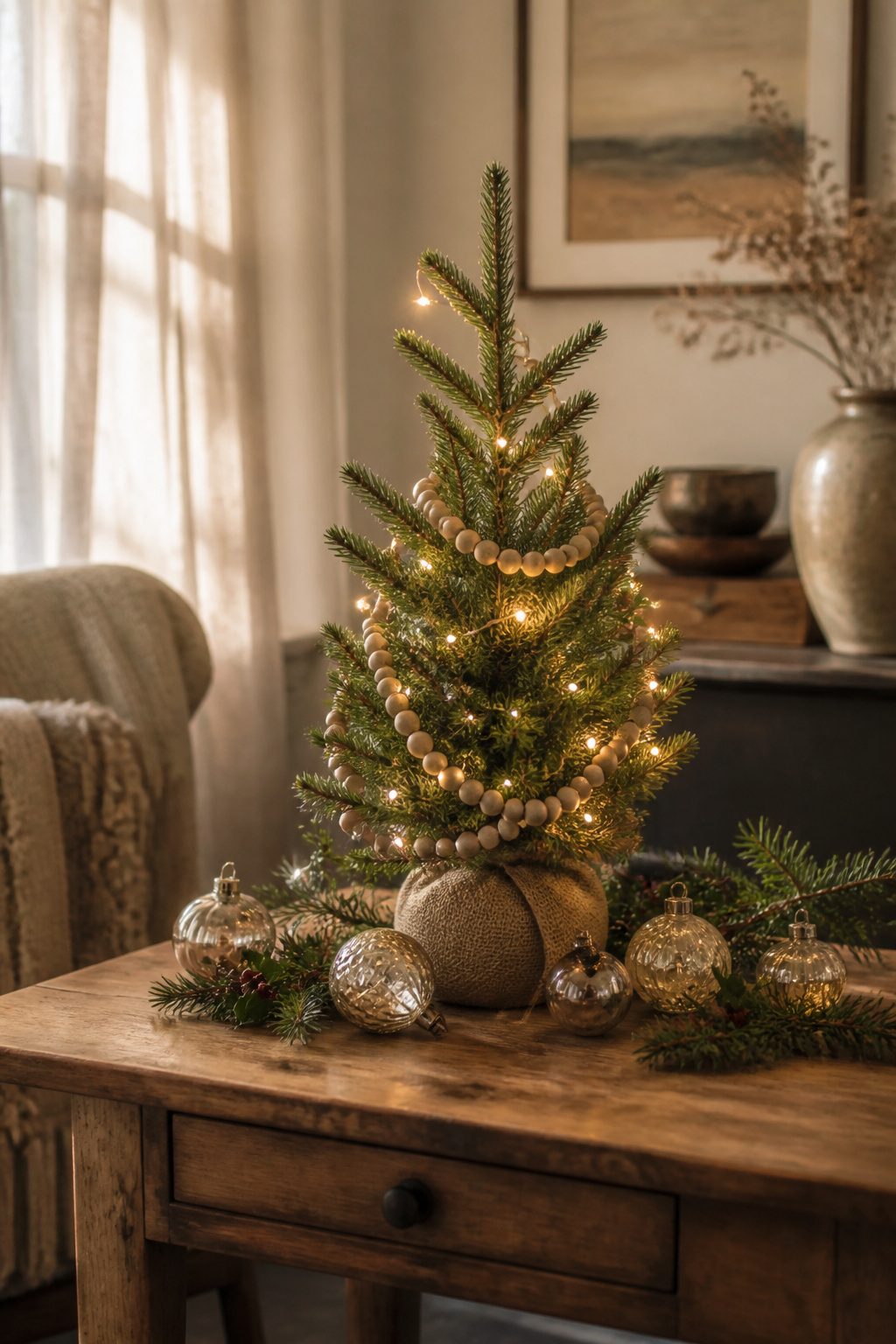
A two-foot spruce on the kitchen table still reads as Christmas in a studio apartment where a seven-footer would block the fire exit. Most big-box stores and garden centers carry potted Alberta spruces or Norfolk Island pines in the 18–30 inch range for somewhere between fifteen and forty dollars, depending on whether you catch the early-season shipment or the week-before markup.
The styling is where renters save money. A single strand of battery lights, maybe twenty-five small bulbs, wraps the whole tree without fighting for an outlet. Last year’s ornaments look oversized and clownish on branches this short; a bowl of plain wooden beads or a clipped sprig of real holly reads better and costs nothing if you already own string lights. I tried hanging my standard glass balls one December and they dragged the branches to the table like a dog with too heavy a collar. Small paper stars, a few cinnamon sticks wired in, or even nothing but warm light all work better than forcing full-size decorations onto a miniature frame.
Water the pot every three days if your heat runs dry; needle drop in week two is almost always thirst, not disease. After January, the spruce can move to a balcony or cold stairwell until spring planting, though in practice most apartment dwellers treat them as a six-week seasonal expense and compost once the tips brown.
6. Wreaths
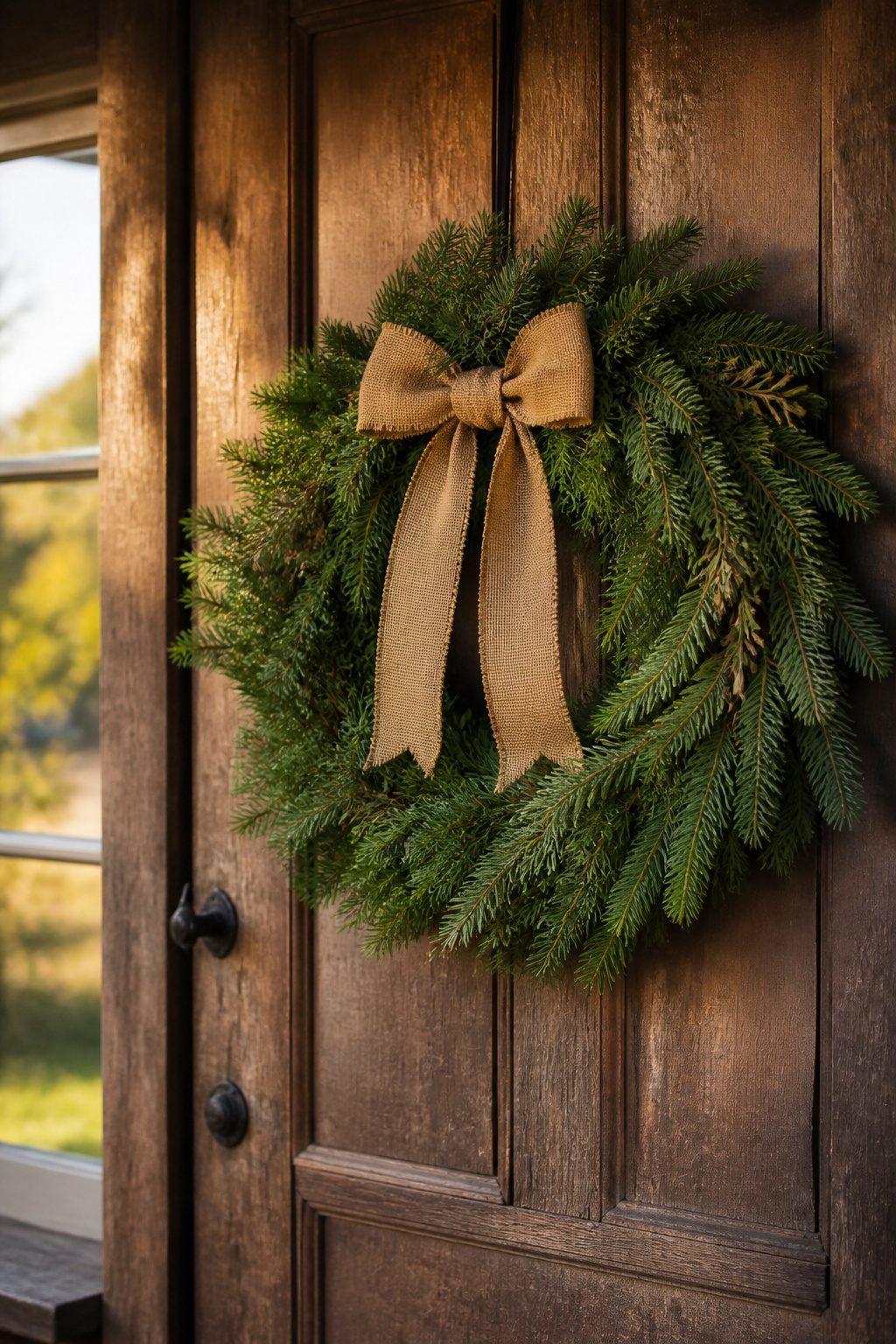
A plain evergreen wreath, the kind you can keep up all winter, gives you the most mileage for the money. I buy mine unadorned and add ribbon or dried fruit from year to year, which keeps the look from going stale without another $40 outlay.
For renters, the hanging problem is real. A standard over-the-door wreath hook works on most entry doors without touching the frame, and interior doors take the same hook reversed. I have also draped wreaths over tall cabinet doors and the inside of windows using nothing but the cabinet pull or a tension rod as a rest. One year I layered a spare outdoor magnolia wreath on a bedroom mirror; the weight of the foliage held it in place without any fastener at all.
The hook that slips over the top of a door, not the frame, is the one that leaves zero evidence behind.
Unexpected spots make a wreath feel less expected. The back of a dining chair, hung with a short ribbon loop, turns seating into greenery. Mini wreaths dropped into bowls read as centerpiece filler without the work of arranging. If you own only one, move it around across the season rather than buying multiples.
7. Battery-Operated and Real Candles
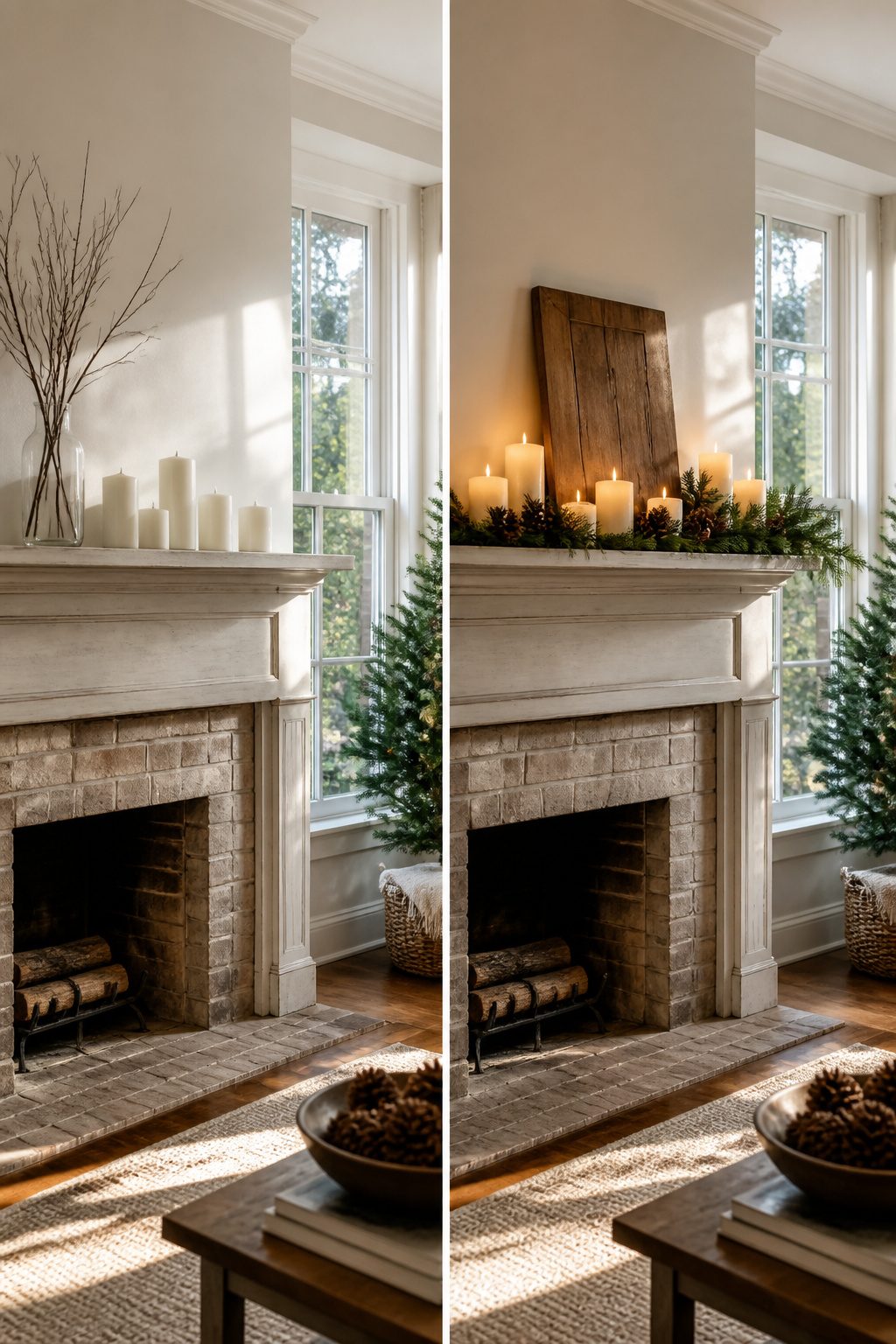
Battery-operated candles have become the workhorse of my holiday setup, and the safety edge matters more than I expected when I first switched. A cream-colored pillar or taper with a flicker bulb now sits on my mantel, in wall sconces, and on the kitchen counter without me hovering to check the wick. The ones with a dawn-to-dusk sensor are worth the slight cost bump: they click on at dark and off at sunrise, so the windowsill glow is one less evening task during the busiest weeks.
I still keep a few real candles in the mix for the scent and the soft melt of wax down a taper, but the placement is deliberate. The coffee table centerpiece, the bathroom ledge, the wreath on the door: those stay battery-powered. A single real flame on the dining table during dinner is enough.
For a full room, three to five battery-operated candles grouped at varied heights does more than a dozen scattered thin. The upfront cost runs higher than a bag of tea lights, but the reusability closes the gap fast. A set of four decent pillars often costs about the same as two or three rounds of real candles burned through a season, and you are not replacing scorched window sills or melted garland.
8. Decorative Pillows and Blankets

Textiles do more to shift a room into holiday mode than almost anything else you can buy for under twenty dollars. A plaid wool blanket thrown over the arm of a neutral sofa reads as Christmas without a single red figurine in sight. The trick is buying natural fibers at thrift stores, where heavy cotton, wool, and linen blends hide among the polyester because nobody wants to dry-clean them. I look for visible weave, muted colors that lean burgundy or forest green, and weight you notice when you lift the corner. Synthetic fleece feels lighter and pills faster; it will not last three seasons.
Storage is what breaks most people. I keep holiday textiles in a single under-bed bin, rolled rather than folded so creases fall out by December. Cedar blocks from the hardware store cost a few dollars and keep the musty smell out of wool that sits ten months a year. If space is tighter, vacuum bags work for cotton but compress wool into permanent dents, so I skip them for anything with loft.
Post-Christmas sales are when I actually spend. Retailers mark down seasonal textiles hard in the first week of January, and thrift stores get flooded with donations once people realize they bought too much. The best inventory hits shelves around January 10, early enough that the good stuff has not been picked over, late enough that stores have processed the holiday backlog.
9. Ornaments Beyond the Tree
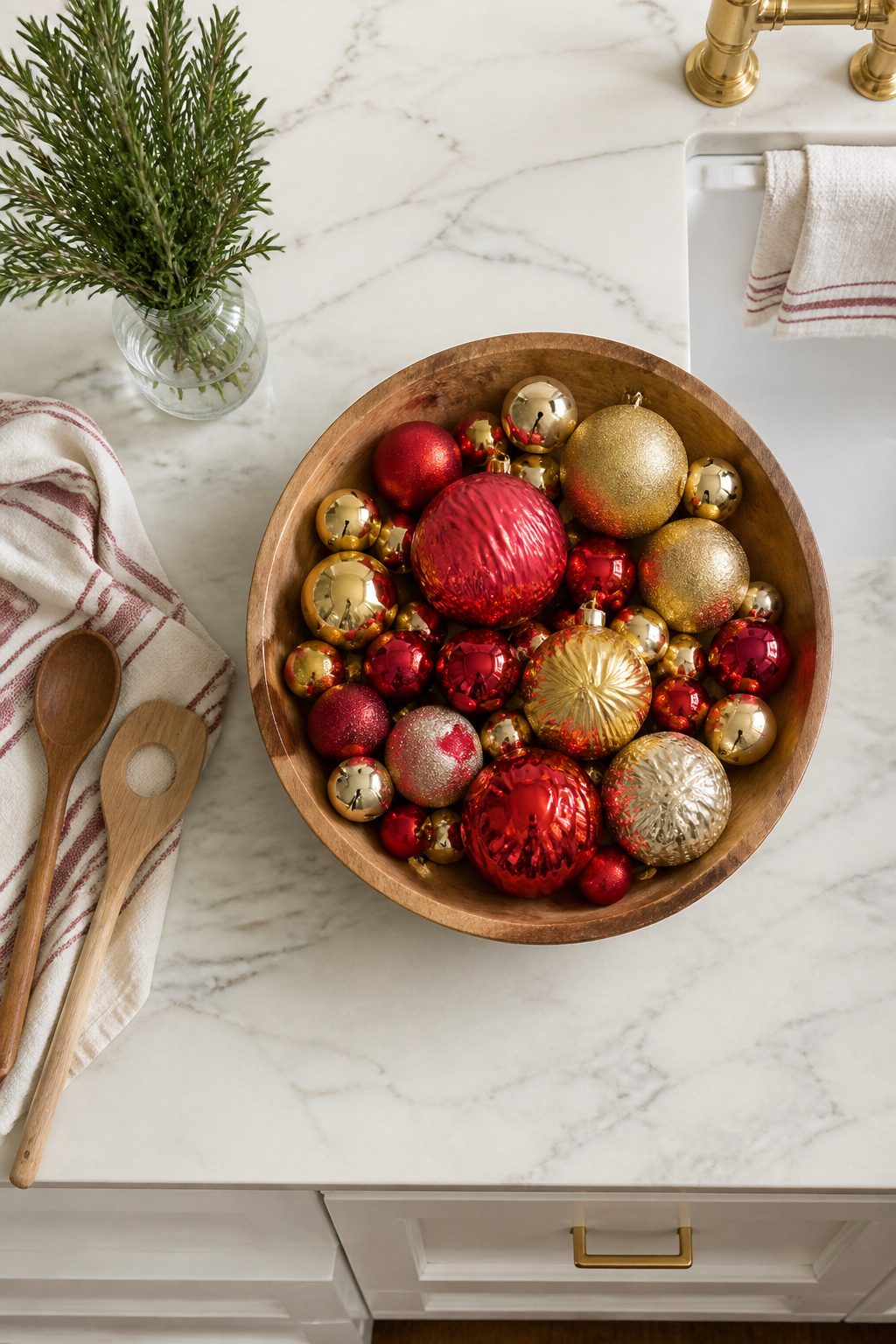
The ornaments already in your storage bins are the cheapest Christmas decor you own, and most of us never use half of them. A few years back I ran out of patience with a tree that swallowed ornaments whole and still looked half-empty. The extras went into a ceramic bowl on the kitchen island with a handful of jingle bells mixed in, and that was the end of buying filler for that spot.
Three to five ornaments in a shallow bowl reads as intentional; a dozen looks like you gave up. Vary the sizes if you have them, or let one oversized piece anchor the rest. Hooks matter here too: a single ornament on a wall hook by the door, or a pair flanking a window, fills vertical space without the commitment of a tree. The same hooks you use for keys in January will hold a bauble in December.
A tree-free year, or a tree too small for the collection, is actually an opportunity. Grouping complementary ornaments in a sculptural bowl, as some designers do with neutral palettes, turns the overflow into a vignette rather than a storage problem. The pomegranates I set beside them one year, nature’s own ball ornaments, held up for two weeks and cost less than a strand of lights. Use what you already own first. The bowls, the hooks, the fruit bowl you forgot about: they are already there.
10. Garland Varieties
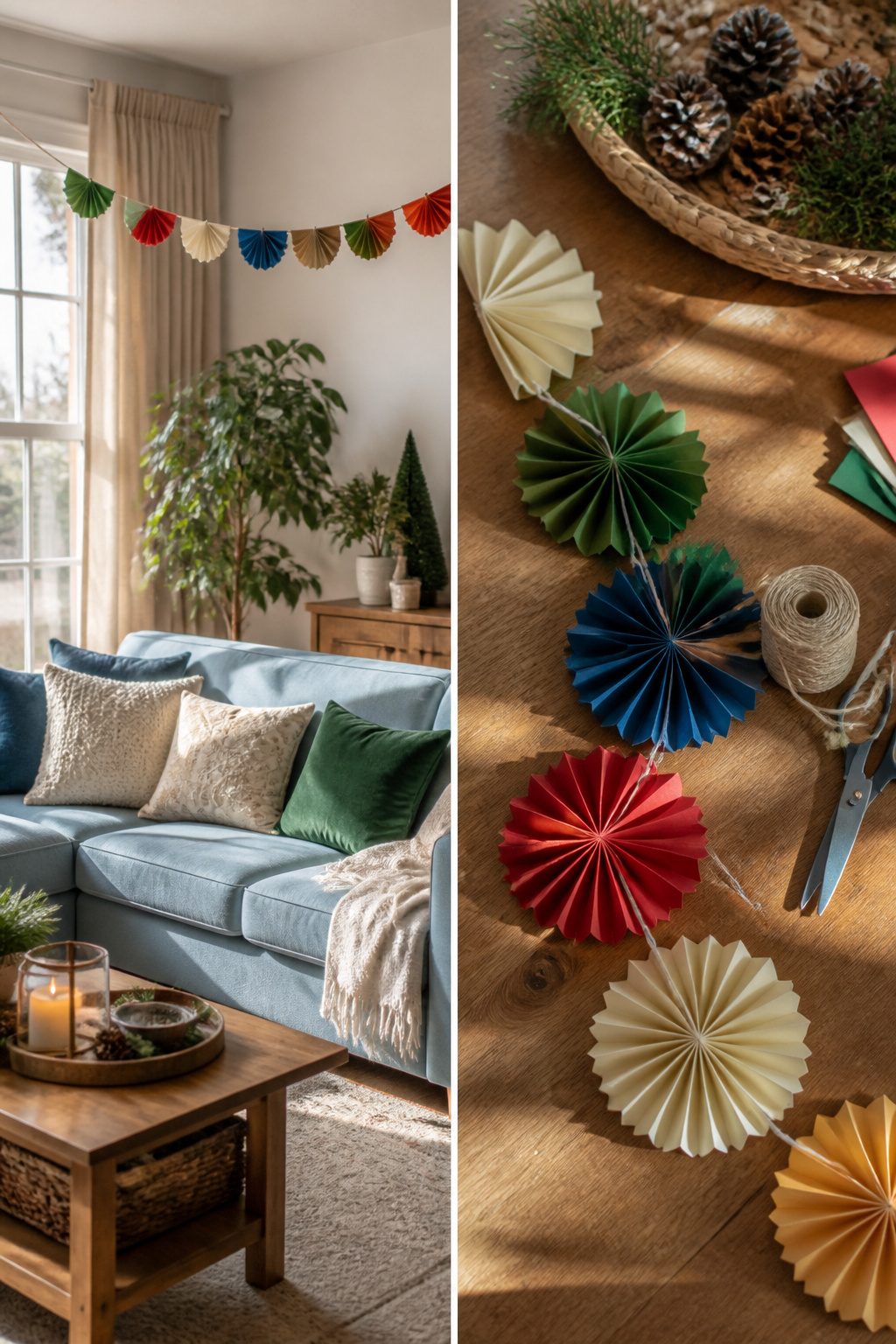
Evergreen garlands dominate storefront displays, but paper, fabric, beaded, and even popcorn strands hold up longer in dry rooms and cost less to replace if a cat or toddler takes an interest. Paper garlands cut from wrapping paper or wallpaper samples let you match whatever palette the rest of your living room already settled on. Fabric versions, like the sweater-print garlands that have circulated the last few seasons, work best strung where hands won’t brush them constantly; the paper backing softens and tears after too much contact. Beaded garlands add weight that paper can’t, which matters if you’re draping them across a wide doorway and need them to hang straight without sagging.
The real question in a rental is what you anchor them with. Command hooks pressed to the top of a door frame carry most lightweight garlands without leaving residue the landlord can charge for. For heavier strands, wire wrapped around an existing fixture, a stair banister, or even a light fitting holds firm and disappears visually. I have also looped garland over the top edge of a frame or mirror, letting gravity do the work and skipping hardware entirely. Fresh garland sprayed with Wilt Stop lasts through the season without browning, but it sheds; artificial or paper garlands make less mess above carpet you don’t own. Battery-operated fairy lights woven through any of these types add the twinkle that makes a doorway feel finished, and the battery pack hides behind the strand itself or tucks over the frame with a second hook.
11. Themed Figurines
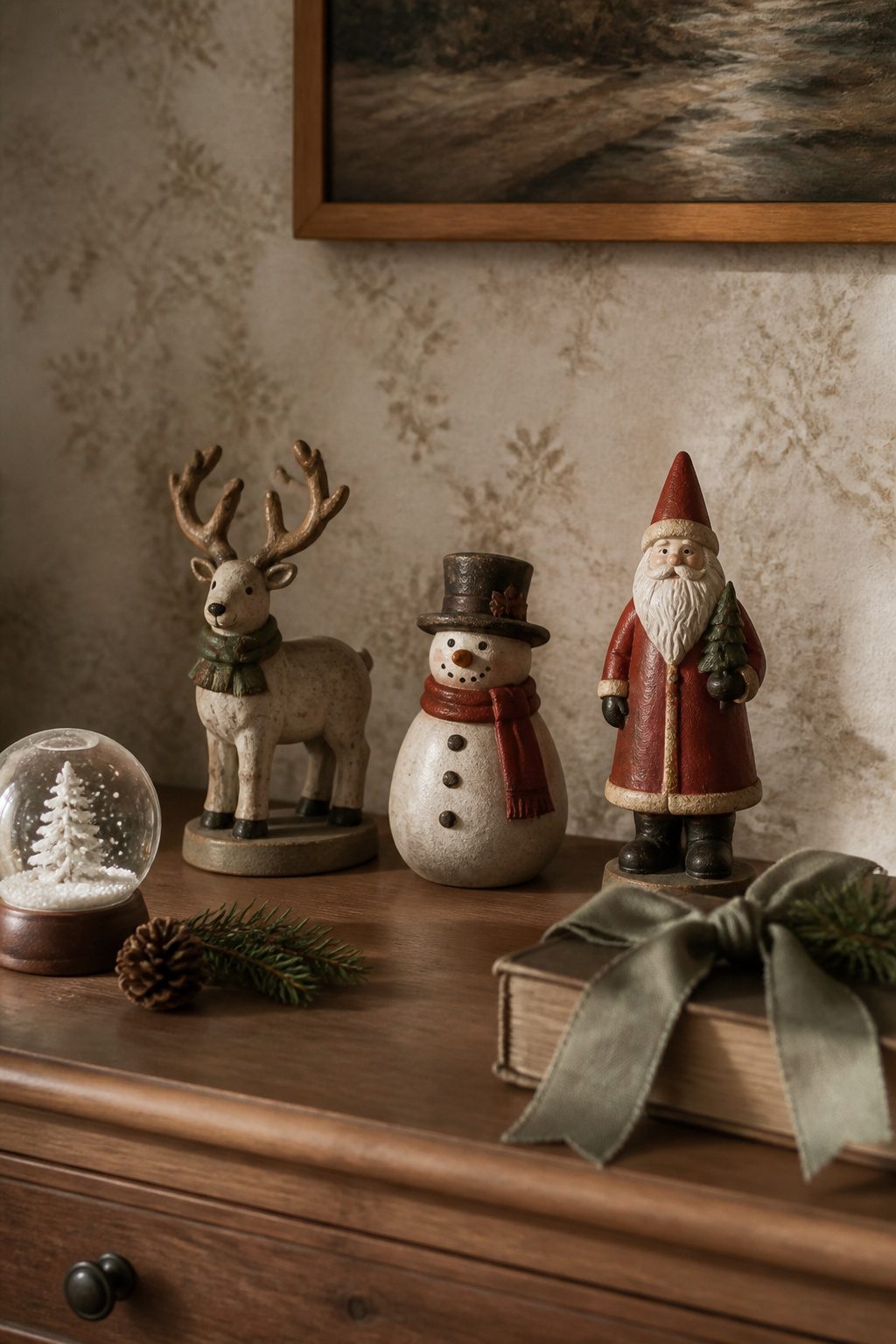
Ceramic Santas and resin reindeer pile up fast, and the thrift store is where most of mine came from. Half of them arrived with chipped paint or missing antlers, which drops the price to a dollar or two and matters less once you dim the lights. Three figurines on a shelf reads intentional; seven reads like a gift shop exploded. I keep the count low by choosing one scale, nothing taller than a coffee mug, so they relate to each other instead of competing.
The off-season problem is real. Mine live in a labeled shoebox inside the hall closet, stacked where the Halloween bin used to sit. Paper tissue between pieces keeps the paint from flaking. If storage space is tight, smaller figurines that fit inside a lidded jar double as January-to-November shelf decor; the jar just looks like a collected thing instead of a hiding place.
12. Holiday Cards Display
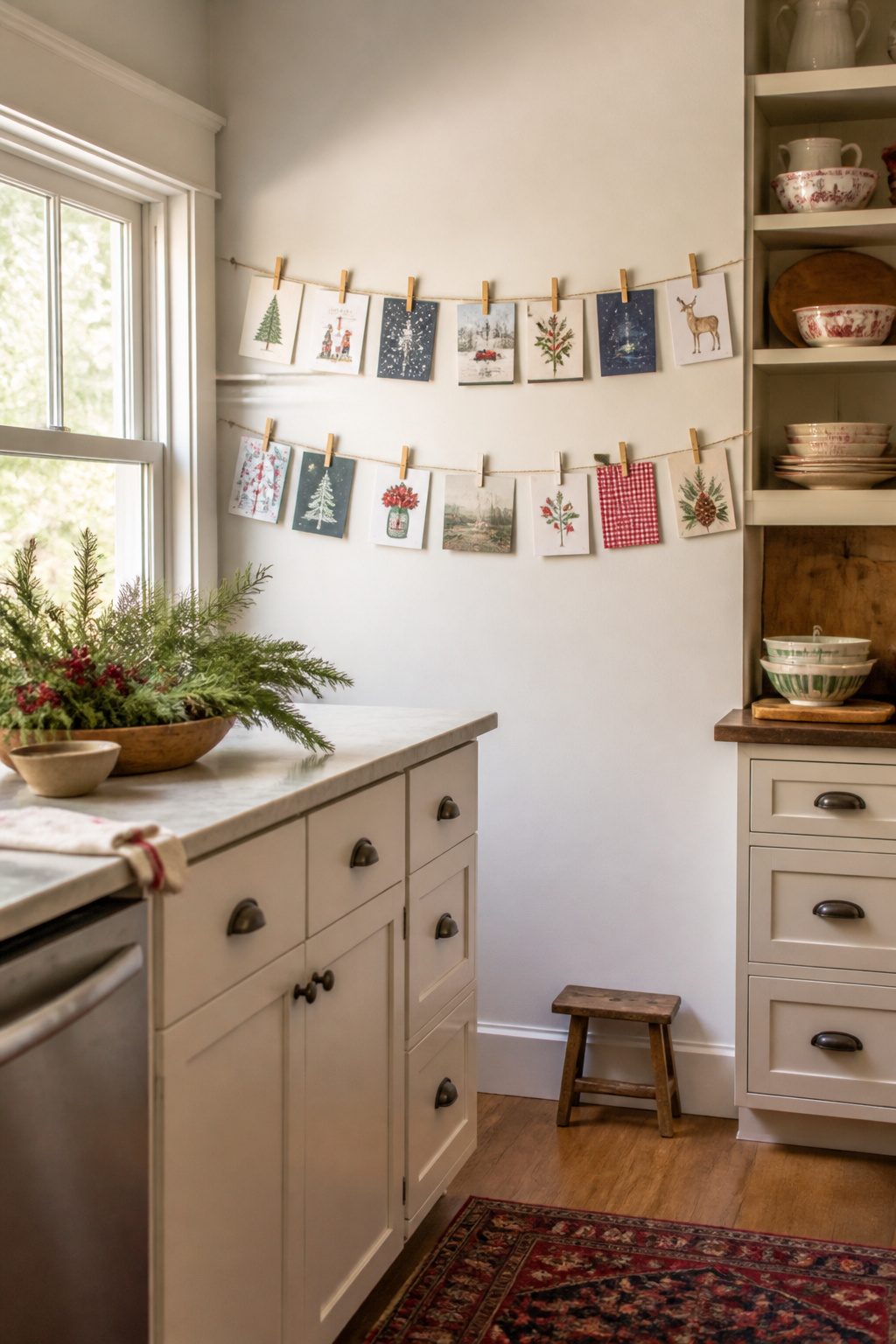
Holiday cards pile up fast by mid-December, and the stack on the counter starts to feel more like clutter than cheer. A few years back I punched a hole in the corner of each card and slipped them onto a metal ring with a bow and a year tag; the whole bundle sat on the coffee table and people actually flipped through it. These days I keep mine in the kitchen, tucked beside a planter with faux magnolia branches, frosted pinecones, and faux white peonies. The cards become part of the scene instead of a mess to clear.
String and clips solve the same problem for less. A length of twine and a handful of clothespins across a window frame or along a blank wall turns the mail into a gallery that grows as the season does. For a thicker stack, a decorative ladder wrapped with garland and string lights gives you rungs to clip cards onto; the vertical space keeps counters clear and the lights make the photos glow after dark. The mantel works too, just lean cards against the wall in overlapping rows like a casual collage. When the pile gets truly deep, rotate: new arrivals up front, older ones shifted behind so nothing hides completely. No special holder required, and nothing to store come January.
13. Edible Decorations
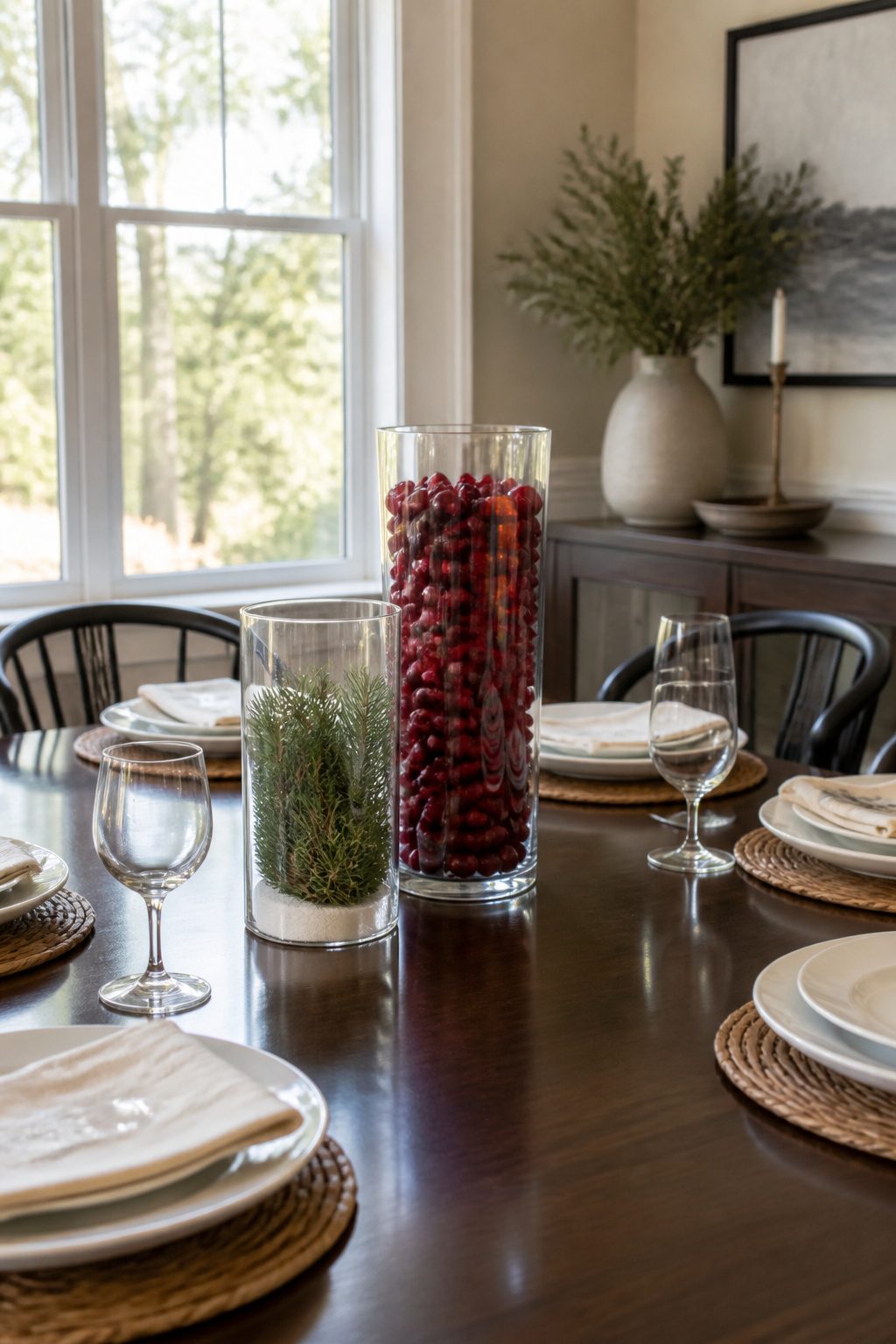
Cranberries in a clear vase give holiday color without any craft skill. The method is simple: a smaller cylinder vase sits inside a larger hurricane, and cranberries fill the gap between the two. Water goes in the inner vase for greenery or berry branches, and the whole thing reads as a centerpiece that took ten minutes. The berries stay firm about a week before softening and turning the water cloudy, so this is a setup for the days right before guests arrive, not something to arrange at Thanksgiving and forget.
A sangria bar uses the same principle of edible color. Bowls of cranberries, orange slices, pomegranate seeds, and cinnamon sticks sit out for guests to build their own drinks. The decor is the cocktail, and what sits in the bowl at 6 PM gets poured by 8 PM, so nothing lingers long enough to spoil. Between the vase trick and the bar setup, the choice is whether you want the color to last an evening or a week.
14. DIY Paper Chains and Fabric Wreaths
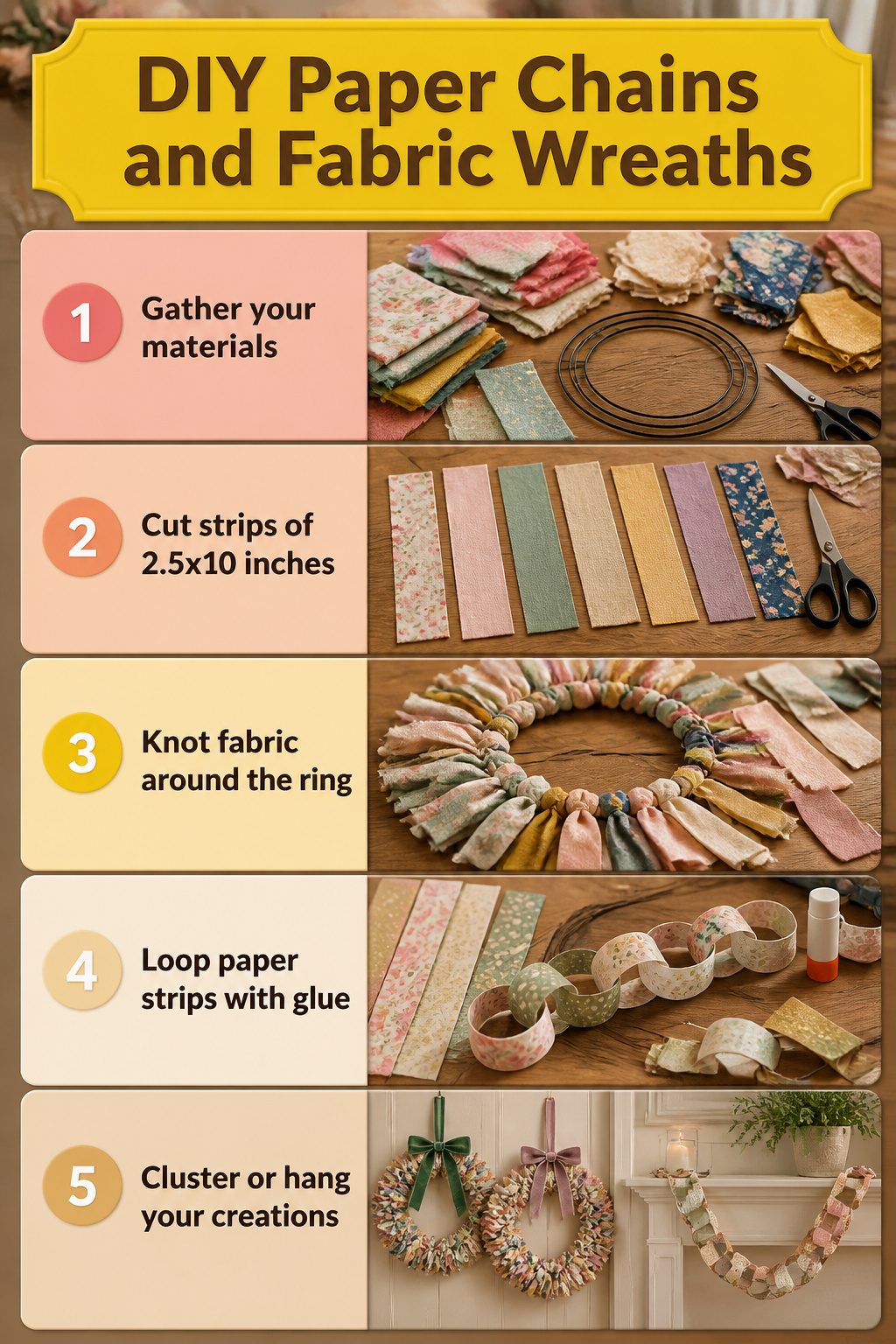
Fabric wreaths are the kind of project that clears out the bin under your sewing table and still looks intentional. Cotton, linen, and wool scraps about 10 inches by 2.5 inches knot best around a 10- or 12-inch ring, eighty to a hundred strips for a full, fluffy shape. I have used an old wire frame I kept from a wreath that fell apart years ago; the rings cost nothing if you save them.
A thinner material works for smaller wreaths. Printed silk scarves or chiffon you already own, or the kind thrift shops heap in bargain baskets, wrap neatly around something round. I have seen these finished with a velvet ribbon bow and hung beside a fireplace or on a door hook at about 20 centimeters across, small enough to cluster in groups.
Paper chains belong in the same afternoon. Wrapping paper, wallpaper samples, or any illustrated paper you have on hand cut into strips and looped with glue or tape. The work is low enough effort that children can manage their own strands, and the color is already in the paper so you are not buying paint or dye.
The materials are already in the apartment, which is the only budget that matters for this kind of decorating.
15. Vintage and Thrifted Items
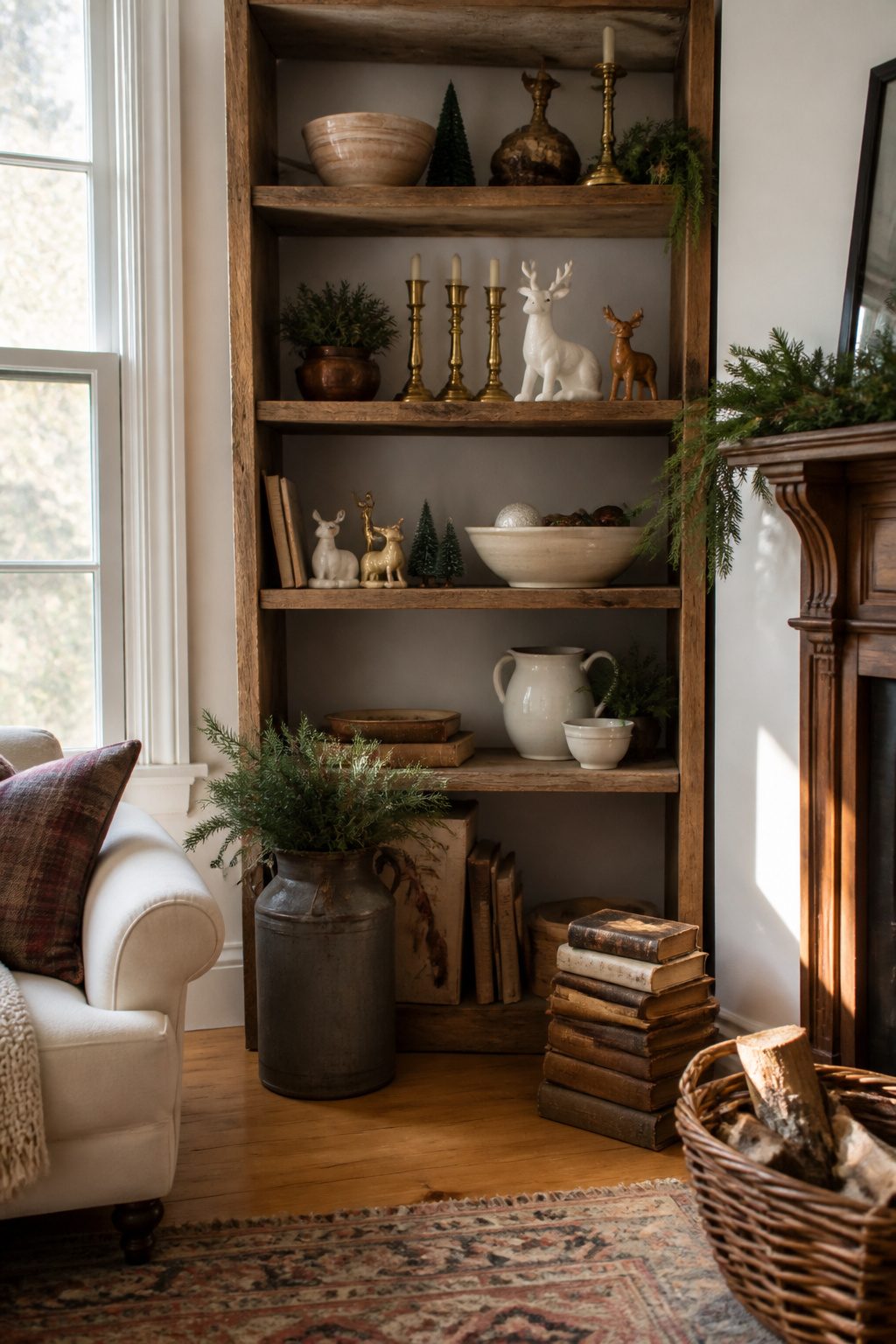
The best pieces usually turn up where you are not looking for Christmas at all. Estate sales and church rummage sales move fast, so arrive early on the first day if you want the Advent candleholders and brass bells. Thrift stores reward patience: a ceramic reindeer with chipped paint sits on the shelf for weeks because nobody sees the base that hides a $3 price tag. Etsy works if you search by era rather than by holiday, though shipping a heavy cast-iron piece can double the cost.
What to avoid is anything with glued-on glitter or battery compartments that have corroded shut. Mold on fabric wreaths does not wash out, and the musty smell lingers in apartment air. Metal tarnish is fine; flaking silverplate is not, unless you want green marks on the mantel.
Cleaning is simpler than people expect. A paste of baking soda and water lifts decades of wax from brass candleholders. Glass baubles soak in warm vinegar water for ten minutes, then dry upside down on a towel. Skip the dishwasher for anything with painted details; the heat strips the patina that made the piece interesting in the first place. I refresh fabric stockings with a hand-wash in the sink, then stuff them with grocery bags while they dry so the shape holds. The goal is not showroom perfection. A little wear reads as history, and that is the whole point of bringing these pieces into a holiday that already has enough shiny new things.
Natural Elements
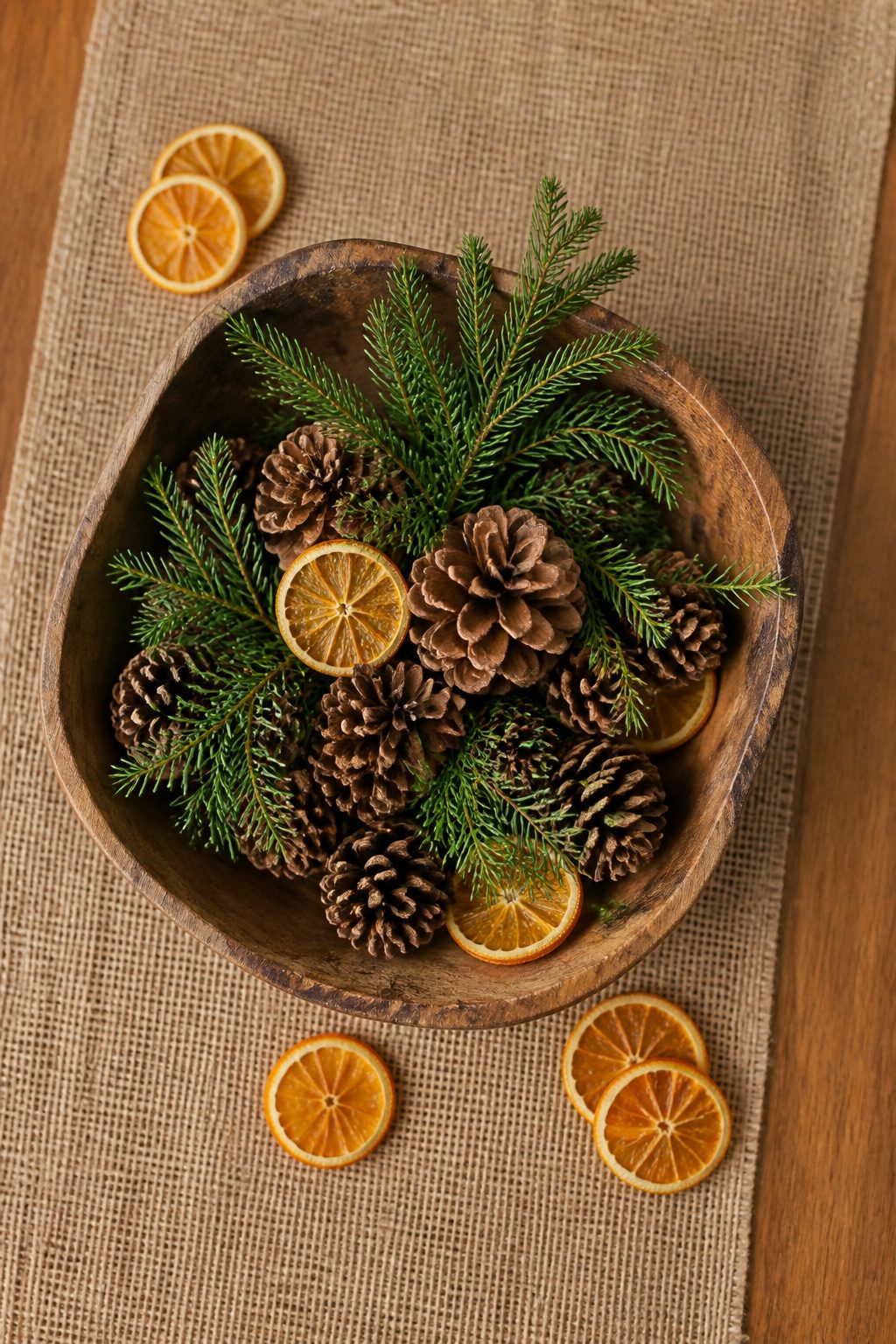
Pine cones are the easiest natural element to forage, and a quick bake at 400 degrees Fahrenheit for 30 minutes kills any insects hiding inside before they end up on your mantel. That half-hour in the oven is non-negotiable if you do not want surprises later.
Greenery follows the same rule: bring it in fresh, but expect it to dry out within a couple of weeks. Evergreen stems fill gaps in garlands nicely while they last, and Norfolk pine branches drape well over kitchen shelves or a console table. When they crisp up, swap them out or go straight to faux versions; the smaller, more upright Norfolk pine stems cost less and hold their shape longer if you are on a budget.
Dried fruit is the third piece. Oranges, apples, and cranberries dry in a low oven and string into garlands or nestle into bowls. The house smells better for it, and everything composts after the holiday. Just dry the fruit thoroughly or it molds, and keep it away from heat registers or it rehydrates and sags.
DIY Projects
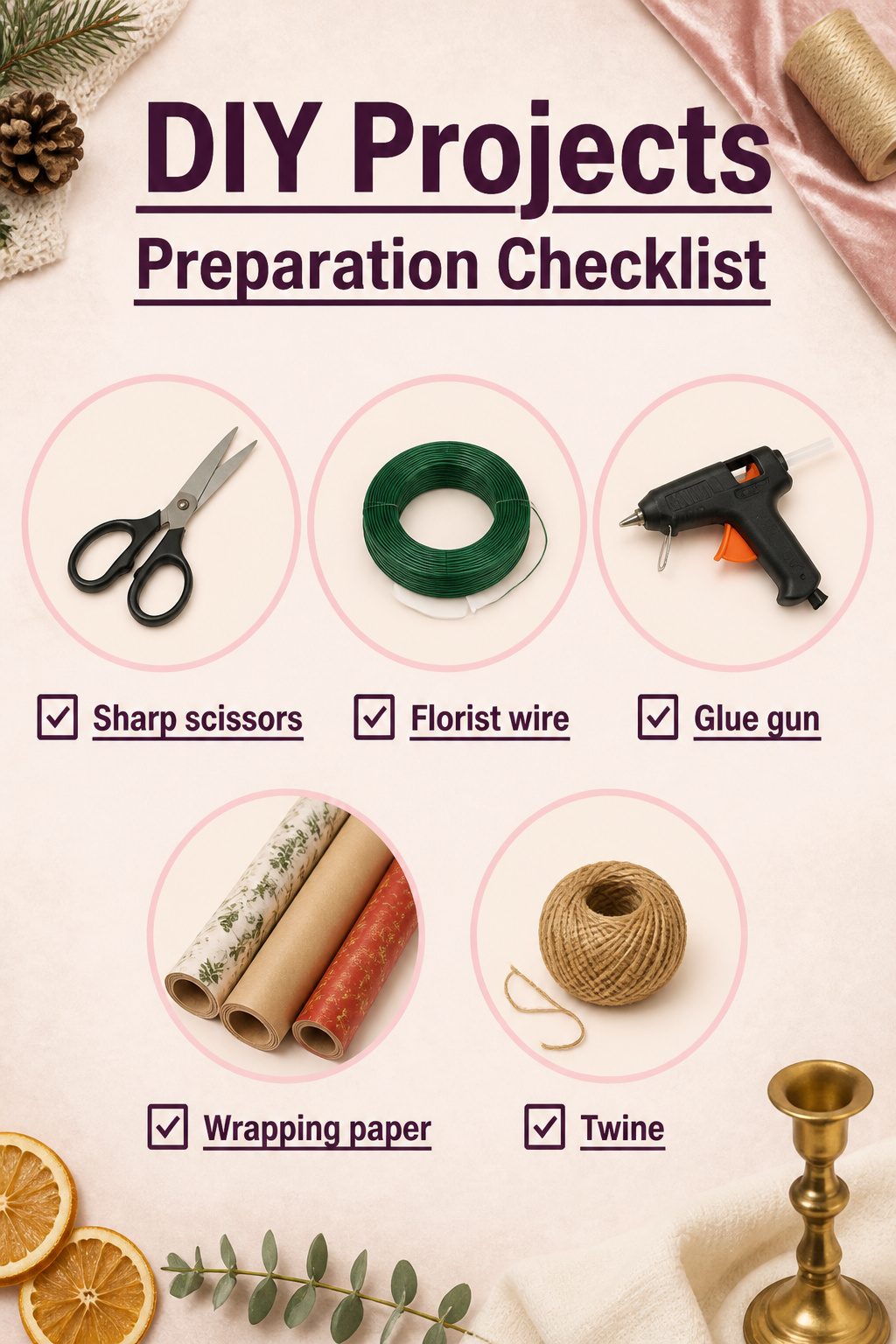
Making your own decorations from what you already have at home sounds virtuous until you are three hours into a project that is supposed to take twenty minutes. The ones that actually finish in a weekend need almost no tools: sharp scissors, florist wire, and a glue gun cover most of what the sources describe. Wrapping paper or wallpaper samples become ornaments with just folding and twine. A glue gun turns loose greenery and a cheap garland into something that reads as custom.
The projects that fail tend to fail the same way. Fresh leaves woven into fake garland look magical for about four days, then curl and drop unless you preserved them first in glycerin or hit them with Wilt Stop. Most of us skip that step, which means the garland looks worse than if we had left it fake. Budget two hours for preservation, or skip the fresh greenery entirely. Fabric stockings from velvet scraps or tea towels hold up for years, but only if you finish the seams; raw edges fray into a mess by December 26. Bottle brush trees on candlesticks and dried citrus centerpieces work because they ask nothing of you after assembly. The oval-frame centerpiece base, the brass candlesticks from the back of a cabinet: these projects reward shopping your own house, not buying new craft supplies.
Sustainable Practices
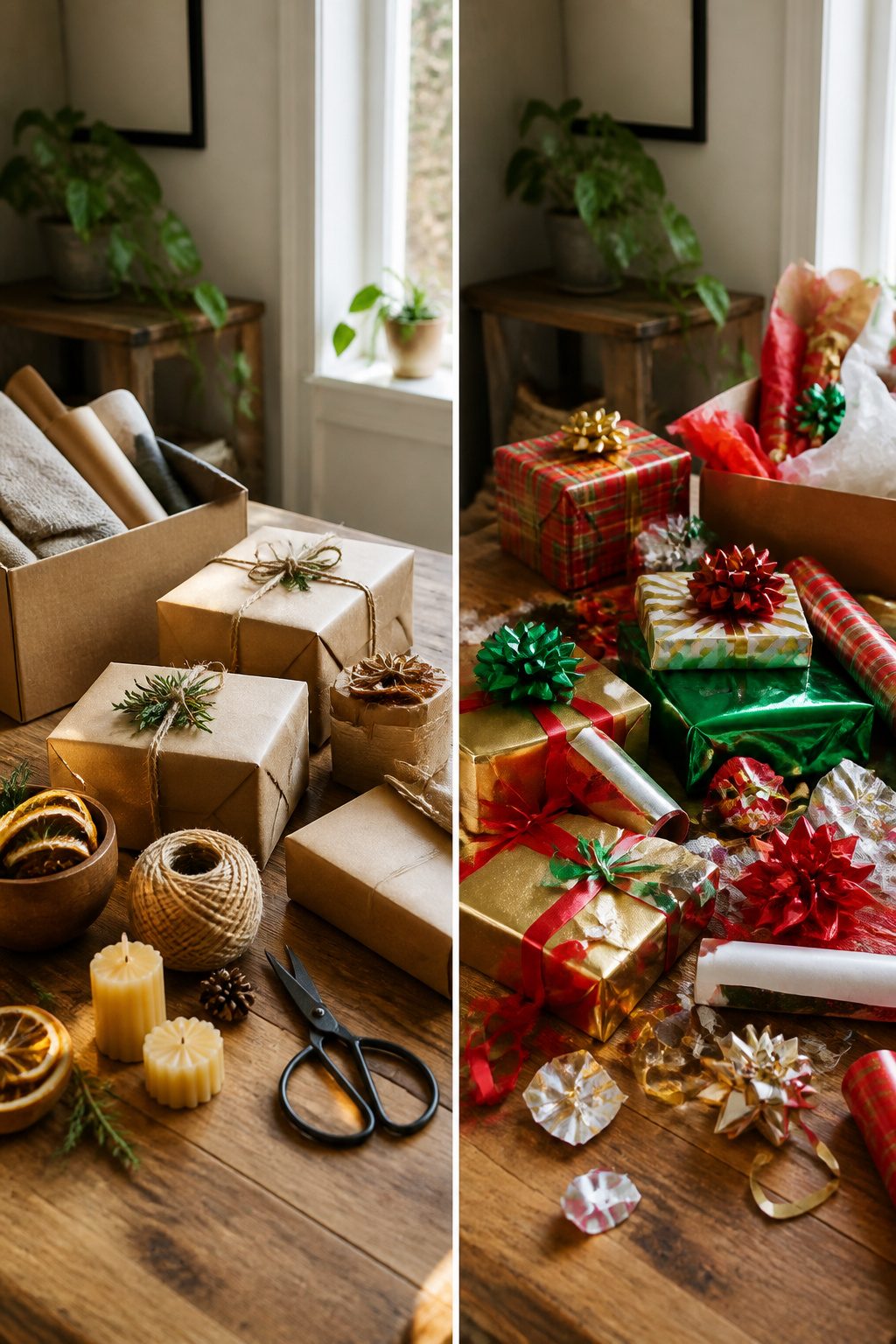
Biodegradable sounds better than it usually is. The kraft paper ribbon I bought last year advertised itself as earth-friendly, but the wire edge inside meant the whole roll went to landfill. Real biodegradability means every part breaks down: plain paper, undyed cotton twine, raw wood, and uncoated beeswax candles. Anything with a plastic coating, metallic paint, or synthetic fragrance is green theater, and Christmas markets are full of it.
Repurposing costs more time than money, which is the trade. An old wool sweater shrinks into a tree skirt in an afternoon of cutting and blanket-stitching. The sweater was free, already in the house, but the afternoon was real. Foraged pine branches dry out and needle-drop after two weeks; plan to sweep, or plan to replace them. The branches cost nothing, the broom costs nothing, the patience is what you spend.
Cozy Atmosphere

The fastest warmth comes from what you already own, rearranged. Two years ago I pulled every cream and oatmeal throw from the linen closet and stacked them where the light hits in late afternoon. That pile cost nothing and got more compliments than the garland.
Layer in stages, not all at once. Start with textiles you use January through March anyway, then add one holiday piece. A single minky blanket in a neutral cream, bought in 2020 and washed dozens of times, still carries that silky weight that makes a room feel finished. One seasonal pillow against two year-round ones reads intentional; a sofa full of red and green reads like a clearance rack.
For light, mix the sources. Battery-operated pillars and tapers in cream go anywhere, even window sills and bathroom counters where flame would be reckless. The dawn-to-dusk ones switch themselves on at dark and off at morning, so the glow is there when you walk in with groceries and gone when you leave for work. A few real candles scattered through for scent and the occasional drip complete it.
The mistake is buying the whole mood at once. The warmth builds when the pieces have history, even if that history is only three weekends of gradual placement.
Budget-Friendly Options

The $50 tier is where you improvise hardest. A $15 canvas with a hand-lettered carol lyric, oversized so it reads from across the room, eats up nearly a third of the budget, but it fills wall space that would otherwise need three smaller pieces. The remaining $35 goes to candles, a few pinecones, and whatever clippings the tree lot hands over when you ask. Ask. They often give the trimmings away. At $100, you still lean on free greenery, but you can add mason jar gifts as decor that doubles as presents, and spring for a couple of printables in real frames rather than taped-up paper. The $300 tier changes where the money goes: half on reusable storage and frames, half on fresh evergreen for the table and a few candlesticks that survive past January. The mistake is blowing the middle budget on one statement piece and having nothing left for the surfaces you actually live around.
| Budget | Best spent on | Improvise instead |
|---|---|---|
| $50 | One oversized lyric canvas ($15), candles | Greenery, frames, table runner |
| $100 | Mason jar gifts, framed printables, candlesticks | Evergreen from tree lots |
| $300 | Reusable frames and storage, quality candlesticks | Nothing; this is where you buy the keepers |
Frequently Asked Questions
What are some simple Christmas decoration ideas?
Start with dried orange garlands, pine cone displays, or battery-operated candles grouped at varied heights. Pomanders take about ten minutes to make and smell like Christmas for weeks. A plaid wool blanket thrown over a sofa arm shifts the whole room into holiday mode for under twenty dollars.
How can I decorate my home for Christmas on a budget?
Forage pine cones and bake them at 400°F for 30 minutes to kill insects, then display them in a bowl or spray with gold paint for under five dollars. Thrift stores sell natural fiber blankets and figurines for a dollar or two. Shop your own ornament collection and pile three to five in a shallow bowl instead of buying filler.
What are some DIY Christmas decoration ideas?
Cut wrapping paper or wallpaper samples into strips and loop them into paper chains with glue or tape. Knot cotton or linen scraps around a wire ring for a fabric wreath. Stud an orange with whole cloves for a pomander that takes ten minutes and lasts weeks.
How can I use natural elements in my Christmas decor?
Bake foraged pine cones at 400°F for 30 minutes before bringing them indoors. Dry orange slices at 200°F for two to three hours and string them with baker’s twine. Fill a clear vase with cranberries by nesting a smaller cylinder inside a larger hurricane, with berries in the gap and water in the center for greenery.