
The right mirror mantel decor idea depends on whether you are hanging it or leaning it, because weight changes everything. A 33-inch round mirror can hit 75 lbs, which ordinary picture hooks will not hold, and that load means toggle locks instead of simple anchors. In a rental, the same weight problem pushes you toward layered mirrors that sit on the shelf instead of drilling into the wall at all.
1. Large Oversized Mirror
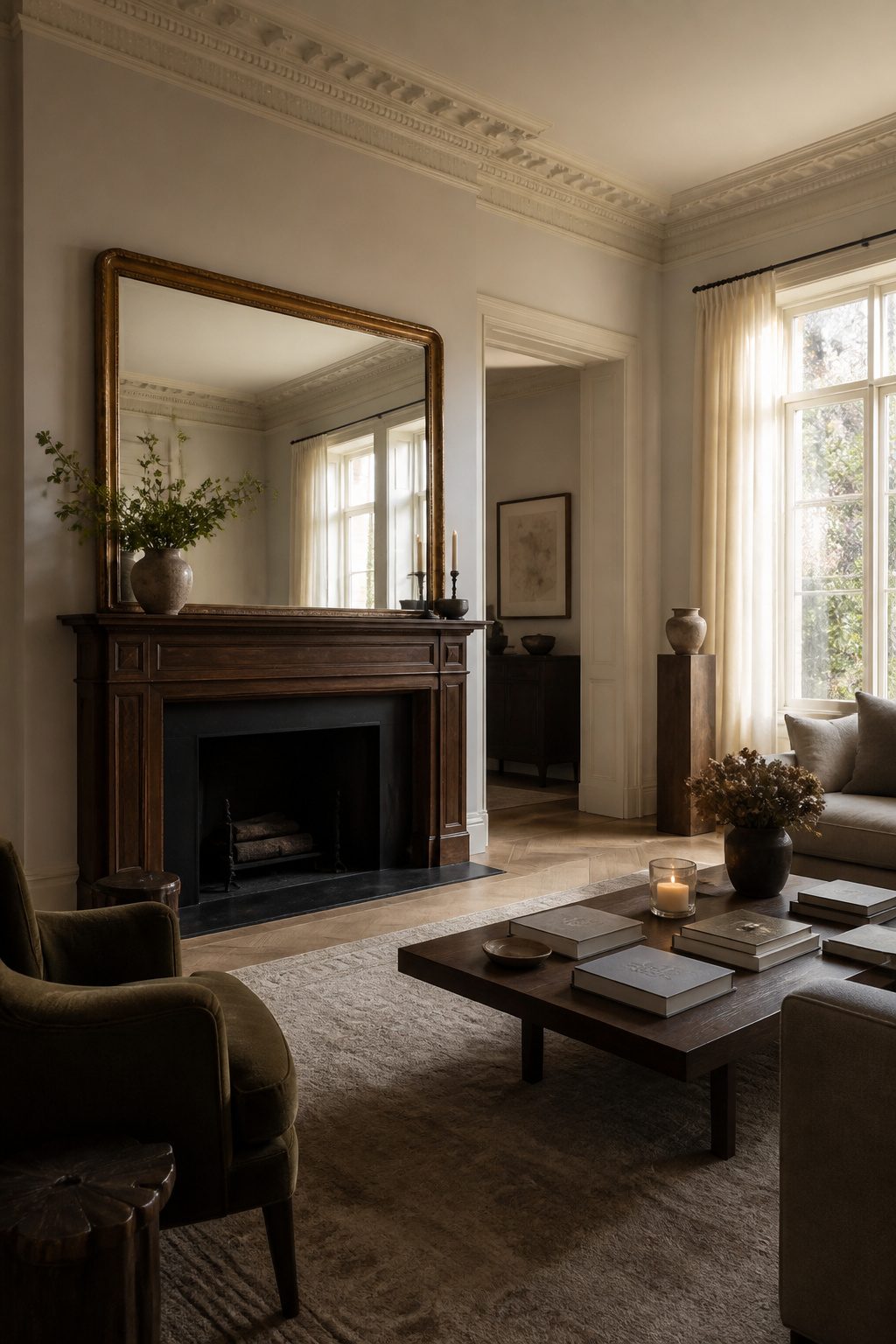
A single oversized mirror above the mantel pulls the whole wall into focus, but the proportion has to land right or the fireplace looks either swallowed or stranded. The mirror should sit between two-thirds and three-quarters the width of the mantel itself, a range that keeps the fireplace visually anchored without letting the glass dominate the room. In a space with tall ceilings, that scale matters even more; anything smaller tends to disappear against the height, while the oversized piece reads as intentional architecture rather than an afterthought.
Weight is the part that can turn a weekend project into a drywall disaster. A substantial mirror can run about 75 lbs, which ordinary picture hooks were never built to hold. E-Z Ancor Toggle Locks are the hardware that actually matches the load, and they are stocked at most hardware stores. The alternative is the 3 a.m. thought of that much glass tilting forward, which is enough to make anyone check the anchors twice.
2. Arched Mirror
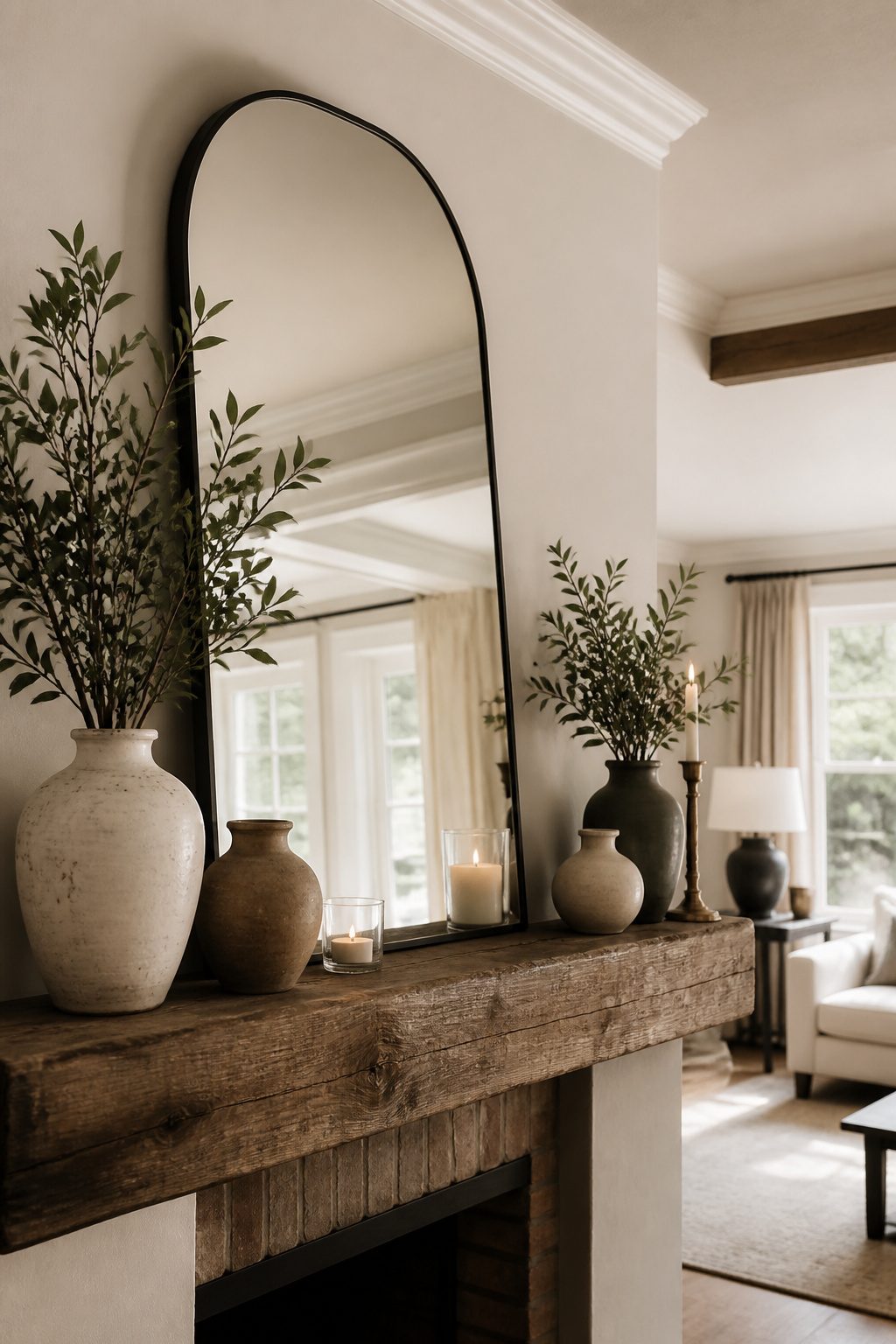
The arch above a mantel mirror does something a flat top cannot: it breaks the long horizontal line of the shelf itself, which keeps the whole wall from reading like a stripe. In a traditional room, that curve echoes crown molding and arched doorways without demanding any extra ornament. In transitional spaces, the same shape softens cleaner furniture lines just enough so the fireplace does not feel like the only old-fashioned element in the room.
I have watched friends lean an arched mirror on the mantel instead of hanging it, and the effect works surprisingly well if the base is deep enough to sit flat. The lean gives you a few inches of play to raise or lower the curve relative to the mantel height, which matters more than people expect. Too high and the arch floats; too low and the shelf line cuts the reflection awkwardly. Aim the peak of the arch roughly one hand-width above your tallest mantel object, whether that is a vase or a stack of books, so the shapes talk to each other instead of competing.
Metal frames in thin brass or black iron tend to suit transitional rooms. Wood with visible grain leans traditional. The wrong frame weight is the usual mistake: a heavy carved surround on a simple white mantel looks like it wandered in from another house.
3. Round Mirror
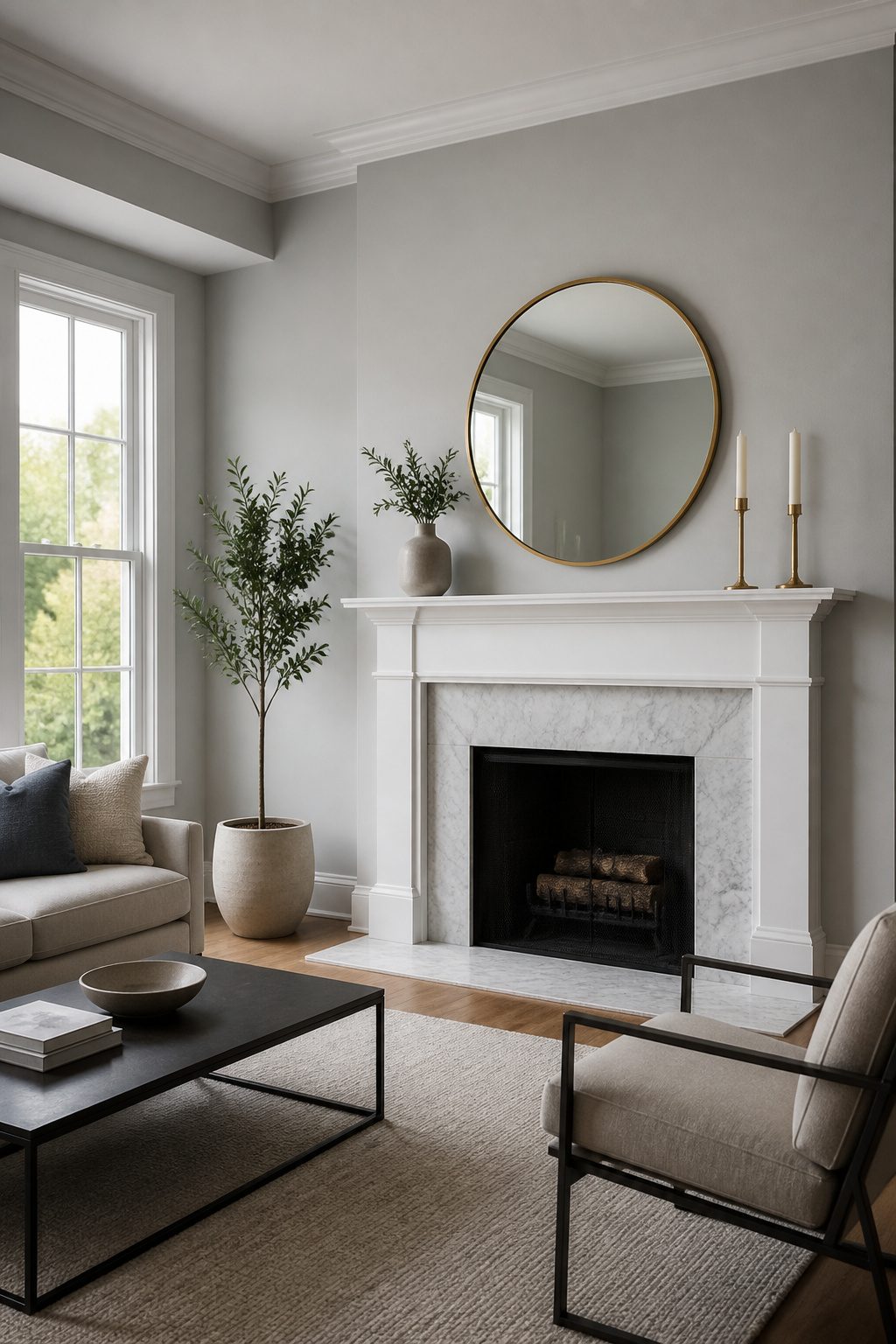
A round mirror above a mantel tends to spark the same argument every time: too small and it looks like a forgotten porthole, too large and it swallows the whole wall. The sweet spot for most standard mantels, which run 48 to 60 inches wide, is a mirror diameter of roughly 30 to 36 inches. That leaves enough breathing room on either side for candlesticks or a small vase without crowding the circle.
What sold me on the shape was watching it break up the boxiness of a typical fireplace setup. Fireplaces are rectangles stacked on rectangles: the box, the surround, the mantel shelf itself. A circle cuts across all those straight lines and softens the whole assembly in a way a rectangular mirror just repeats. The sources I trust on this point to geometric or round mirrors with sleek frames for modern rooms, though an unframed edge works if the wall color already carries enough weight.
If you inherit a round mirror that feels off-scale, layer it. Lean a smaller framed piece or even an empty vintage frame in front so the circle reads as part of a grouping rather than a solo act. A 24-inch mirror on a 60-inch mantel needs that backup; alone, the proportions look accidental. The layered route also means you can shop your own closet instead of buying new.
4. Vintage Mirror
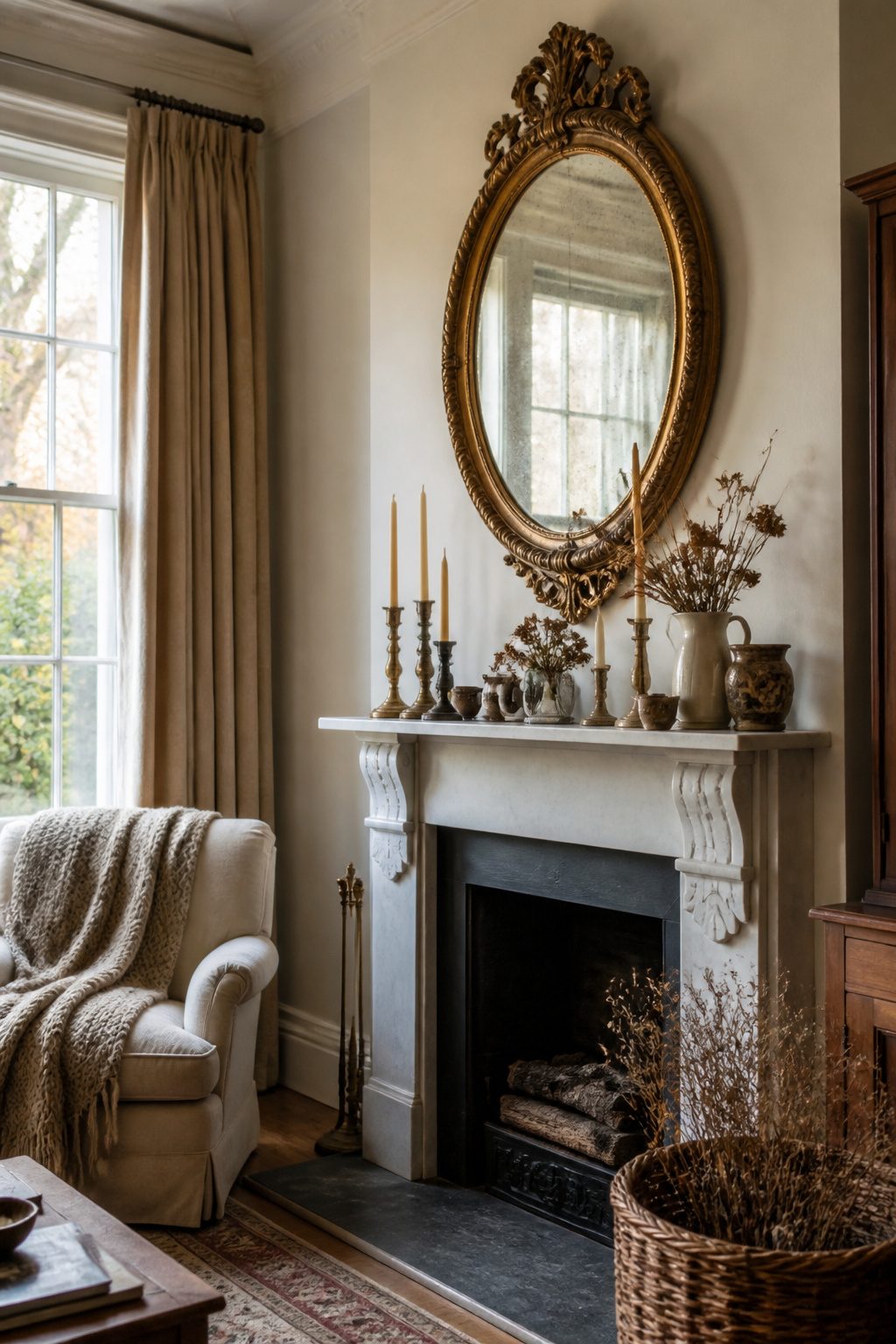
Aged glass does more than reflect light; it softens the whole room. The slight foxing and uneven silvering you find in a real vintage mirror catches the eye without demanding perfect symmetry from everything around it. That patina becomes the excuse to relax: a candlestick an inch off-center, a vase with a tilted stem, both look intentional against glass that already tells a story.
Ornate frames help this along. The oval gilt mirrors that turn up at flea markets carry enough weight that they anchor the mantel alone, no matching pair of sconces required. One large piece above the fireplace reads as collected, not decorated, which is the difference between a mantel that looks finished in an afternoon and one that looks labored over for weeks.
Layering helps when the proportions feel wrong. A smaller vintage mirror propped inside a larger empty frame, or overlapping with a landscape painting, breaks up the rectangle and adds depth without extra cost. The trick is letting the oldest piece read as the accidental center, not the planned one. Aged glass forgives clutter that new mirror would turn into mess.
5. Layered Mirrors
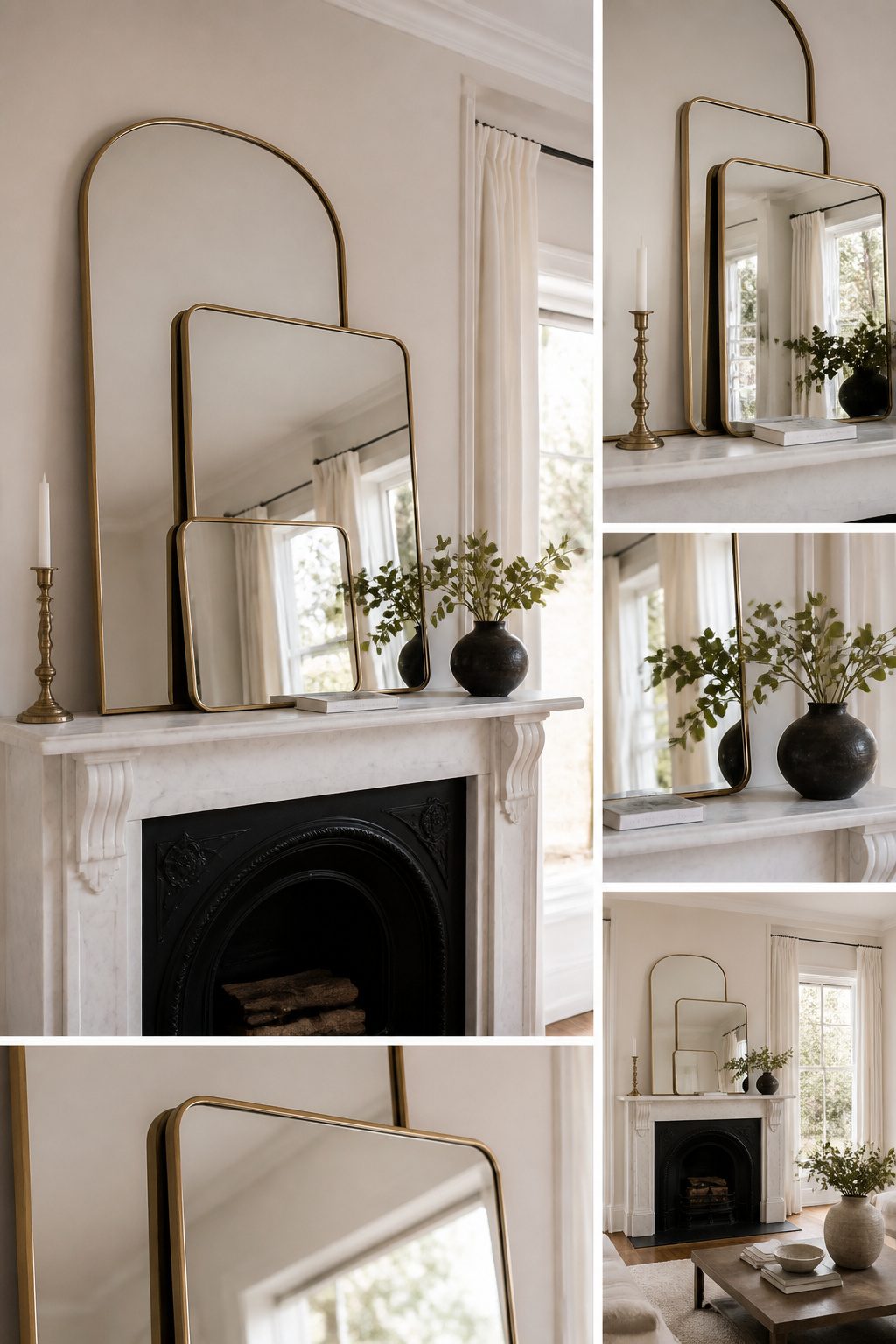
Stacking two or three mirrors against the wall behind your mantel builds depth without drilling extra holes, which matters when you’re renting and the deposit is on your mind. I learned this after trying to prop one large mirror and watching it read as flat as a poster. The trick is treating the group like a loose pyramid: the tallest piece sits slightly off-center, a medium mirror overlaps it by four to six inches, and a small one tucks in at the base where the eye lands last.
Mixing frames is where most mantels go wrong. My rule now is one finish has to repeat, even faintly. A thin brass edge on a modern round mirror echoes the ornate gold of a vintage rectangle just enough to keep them from looking like yard-sale neighbors. Keep the glass shapes different too: a tall arch, a wide rectangle, and a small square give the eye three places to travel without competing for the same silhouette.
The surface itself needs breathing room. I leave at least a hand’s width between the lowest mirror and any candles or objects in front, otherwise the layering collapses into a single cluttered plane. Leaning works best on deep mantels; if yours is shallow, a small easel behind the back mirror or a strip of museum putty at the base keeps the stack from sliding on you.
6. Gallery Wall of Mirrors
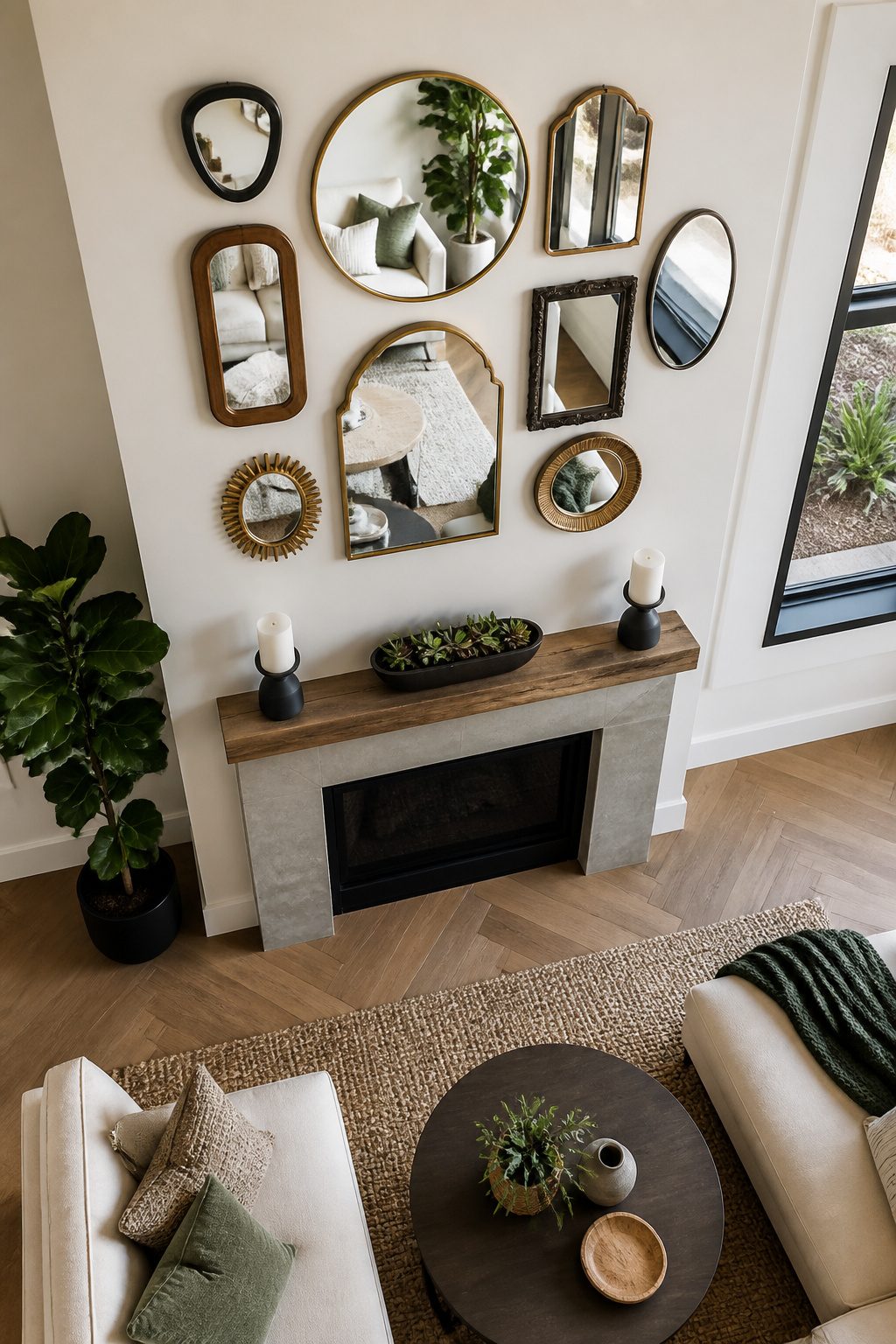
A single mirror above the mantel is the safe choice, but grouping several smaller ones gives you more flexibility with what you already own. The trick is treating the whole cluster as one rectangle when you size it for the wall. Measure your mantel, then build a grouping that fills roughly the same width a single large mirror would, usually two-thirds to three-quarters of the mantel length. Keep two to three inches between frames, no more, or the eye reads them as separate objects instead of one unit.
Frame coordination matters less than you might think. The sources that rank for this lean two ways: matching finishes for a gallery feel, or deliberate contrast for something more collected. What breaks the look is the middle ground, where frames are almost the same but not quite. Pick a lane. I have seen both work, but the mismatched route needs one anchor, like a dominant size or a repeated metal tone, to keep it from looking accidental.
For spacing, start with the center mirror and build outward so the weight stays balanced. If your mantel is asymmetrical, offset the grouping slightly toward the visual center, not the physical one. The wall above a fireplace rarely is the focal point you expect; the firebox draws the eye first, and the mirror arrangement has to account for that pull.
7. Decorative Framed Mirrors
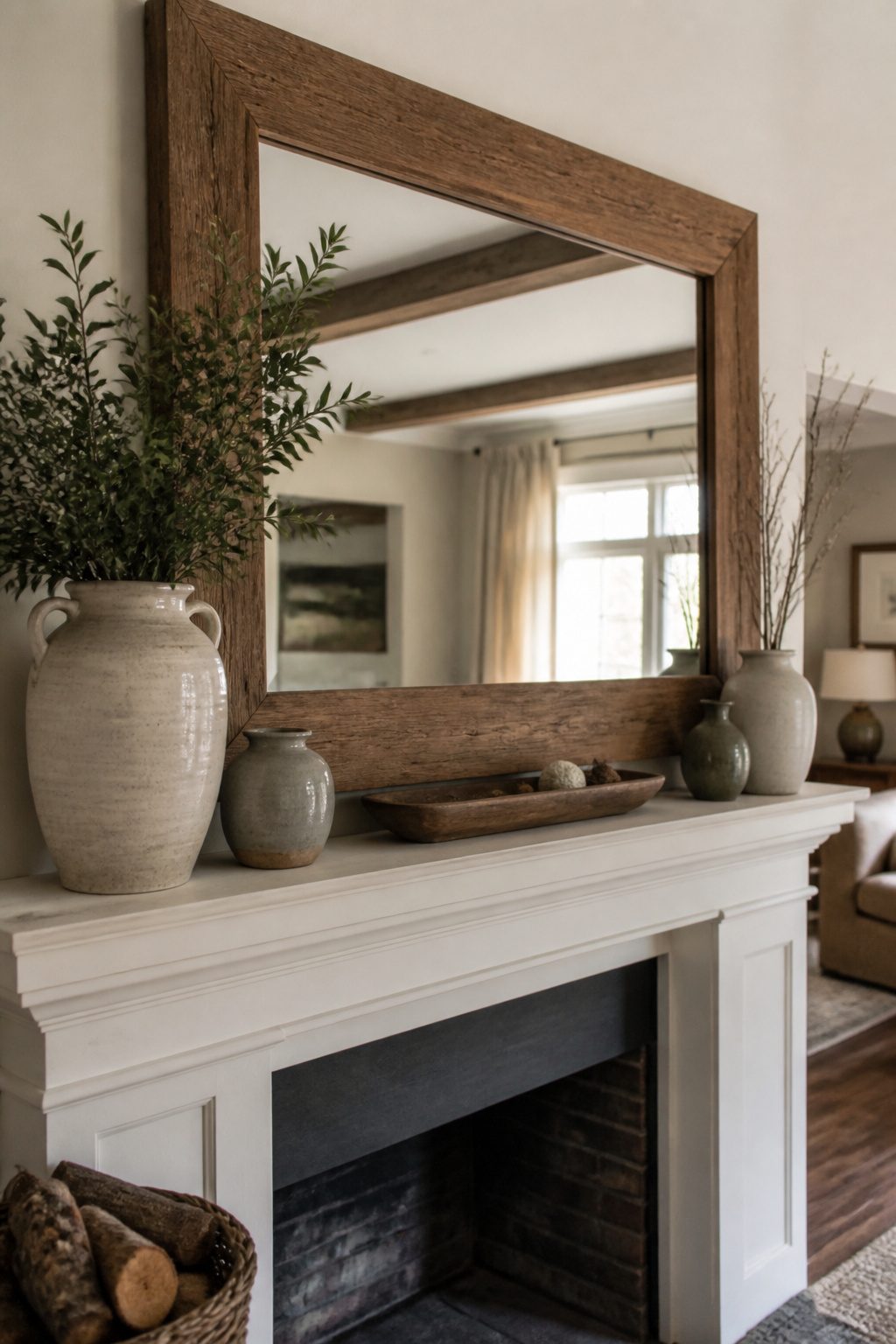
A mirror’s frame does more work than the glass itself. I learned this after swapping a thin metal frame for a wide oak one and watching the same living room shift from cold to grounded.
Wood frames carry warmth that metal usually doesn’t. Pine or oak in a simple, flat profile reads modern farmhouse without trying; the same width with carved corners turns traditional fast. Metal frames, especially iron or brushed brass, lean industrial or art deco depending on the finish. The material sets the temperature of the whole wall.
Ornate frames demand space. A heavy, gilded baroque frame above a small mantel looks like it landed there by accident; it needs crown molding or tall ceilings to feel intentional. Simple frames forgive more. A thin black metal rectangle or an unadorned wood lip sits quietly above most fireplaces and lets the mantel objects do the talking.
The frame should be about one-third the visual weight of the mantel below it. Too delicate and the mirror floats; too heavy and the fireplace disappears. I held up cardboard cutouts before committing to a 3-inch walnut frame, and the proportion saved me from a return.
8. Geometric Mirrors
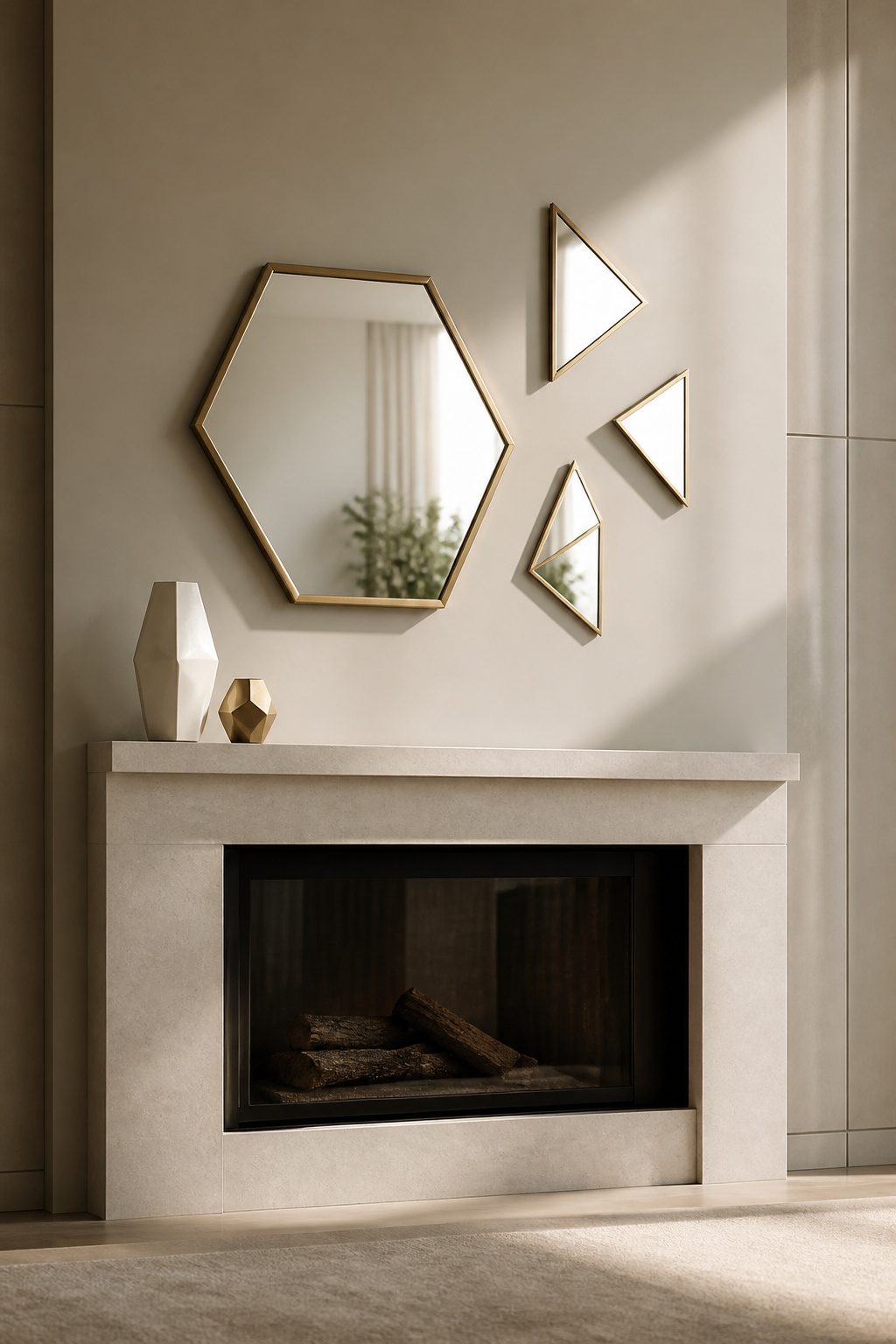
A hexagonal mirror above the mantel catches light in six directions instead of one, which softens the geometry without losing the structure. I hung one in a rental with a 1920s brick fireplace last winter; the angles echoed the original tile work in a way a rectangle never would. Sunburst shapes do something similar for Art Deco or mid-century surrounds, though the rays can compete with busy stone, so keep the frame thin if your mantel already has heavy carving.
Angular forms, trapezoids and asymmetric polygons especially, work best when you treat them as art first and mirror second. Lean one on the mantel rather than centering it, and let the wall show. For occasional whimsy, a heart or clover shape reads as personal rather than cutesy if the scale stays large, 24 inches or more, and the color stays restrained. I would skip the clover entirely in a room with green walls; the shape becomes theme instead of accent.
What Size Mirror Fits
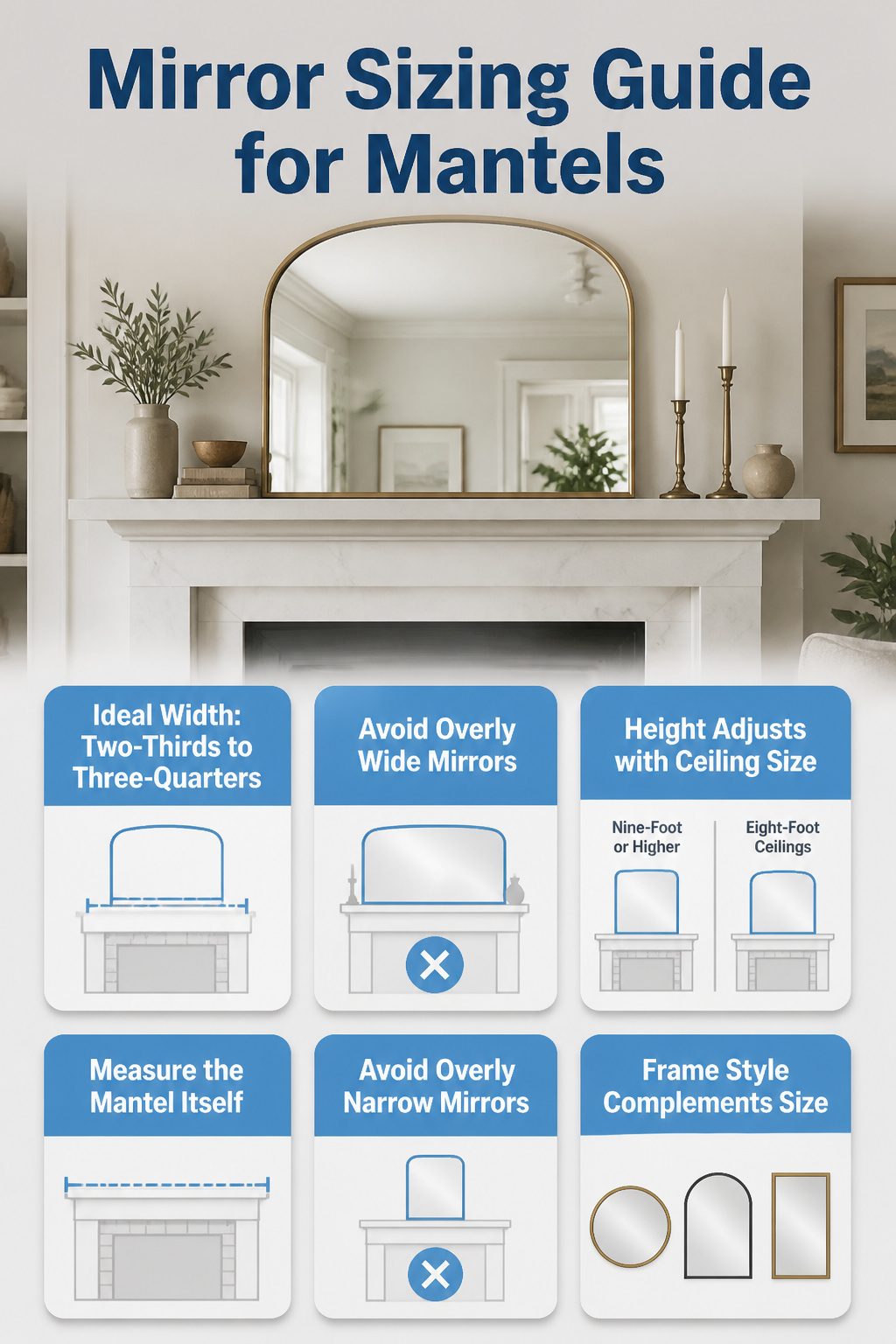
A mirror that spans two-thirds to three-quarters of the mantel width sits right where the eye wants it: centered enough to anchor the fireplace, narrow enough to leave breathing room on both sides. Measure the mantel itself, not the firebox, and work from that number.
Go wider than three-quarters and the mirror starts to swallow the wall. The frame crowds any candle or vase you set beside it, and the whole fireplace starts to look like a frame inside a frame. Too narrow, under two-thirds, and the mirror floats like an afterthought, especially on a broad Craftsman or mid-century slab.
Height depends on what the ceiling gives you. In a tall room with nine-foot ceilings or higher, an oversized mirror draws the eye upward and balances the vertical space. Smaller rooms with standard eight-foot ceilings call for a medium height that keeps the proportion grounded without pressing down. The width rule stays fixed either way; height is where you adjust for the room’s own scale.
Shape and frame come after the numbers are right. A round mirror or an arched top can soften the lines of a very rectangular fireplace, but only if the size is already locked in.
Arranging Objects Around the Mirror
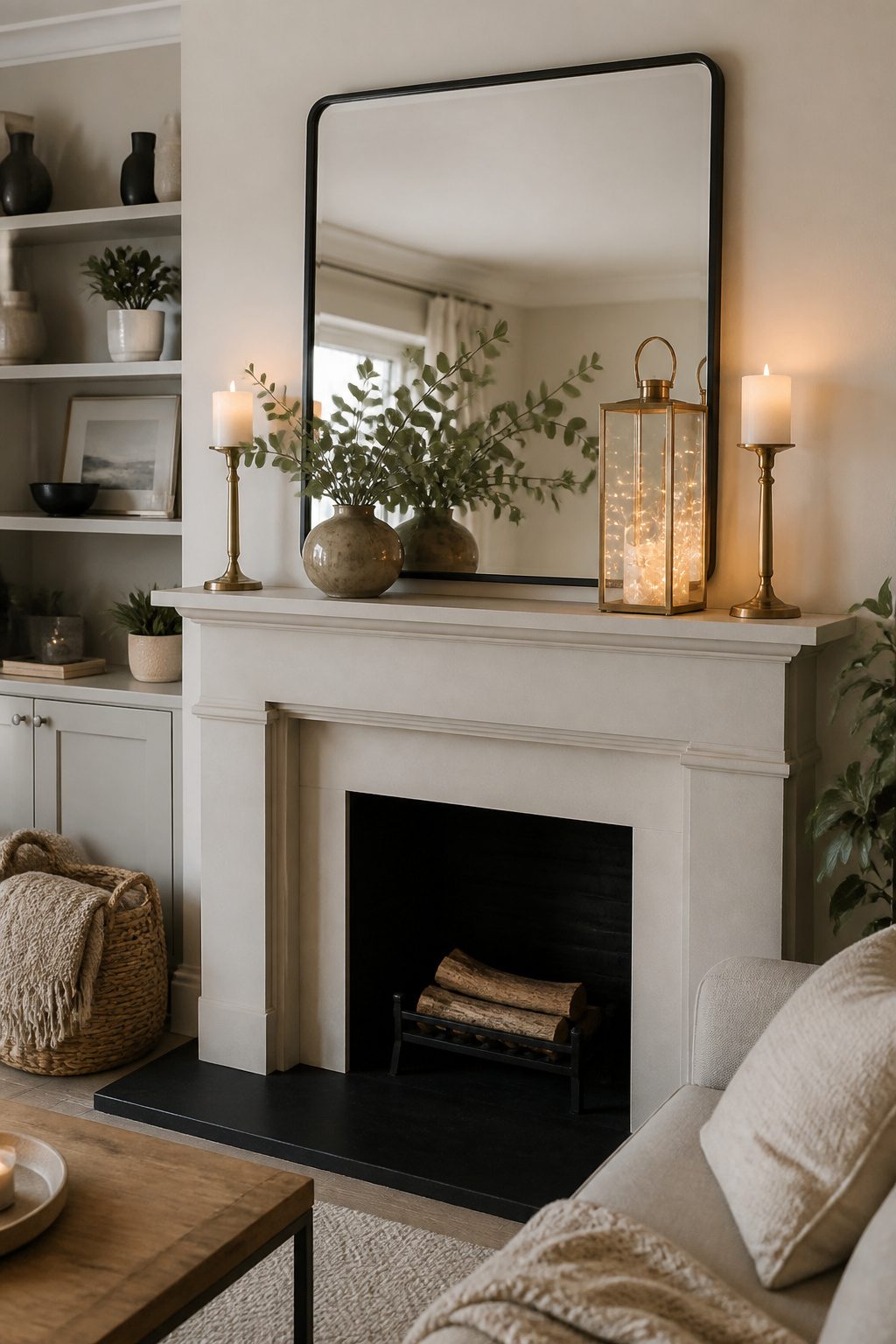
The objects flanking a mirror matter less than the breathing room you leave them. Candles, ceramic vases, and greenery all work, but keep the tallest pieces at least a few inches below the mirror’s bottom edge so the reflection stays open and the wall doesn’t feel chopped in half.
- Symmetrical arrangements read as formal: two matching candle holders at either end, a low ceramic vase centered in front. This frames the mirror neatly but can feel stiff in a casual living room.
- Asymmetrical setups move the eye better. A tall eucalyptus branch on the left, a cluster of three votives stepped in height on the right, nothing dead center. The mirror still anchors it all because the reflection doubles whatever you place.
- Candlelight bounces hard off glass. One lantern with fairy lights becomes two in the mirror, which is the point until it isn’t. Check sightlines from the sofa: a reflected kitchen trash can undoes the whole mood.
- Fresh or faux greenery adds the texture candles and ceramics lack. Simple branches or eucalyptus keep the palette quiet so the mirror stays the focal point rather than competing with it.
A single grocery-store bouquet, placed slightly off-center, reads as lush in the reflection without demanding a second trip to the florist.
Seasonal Mirror Backdrops
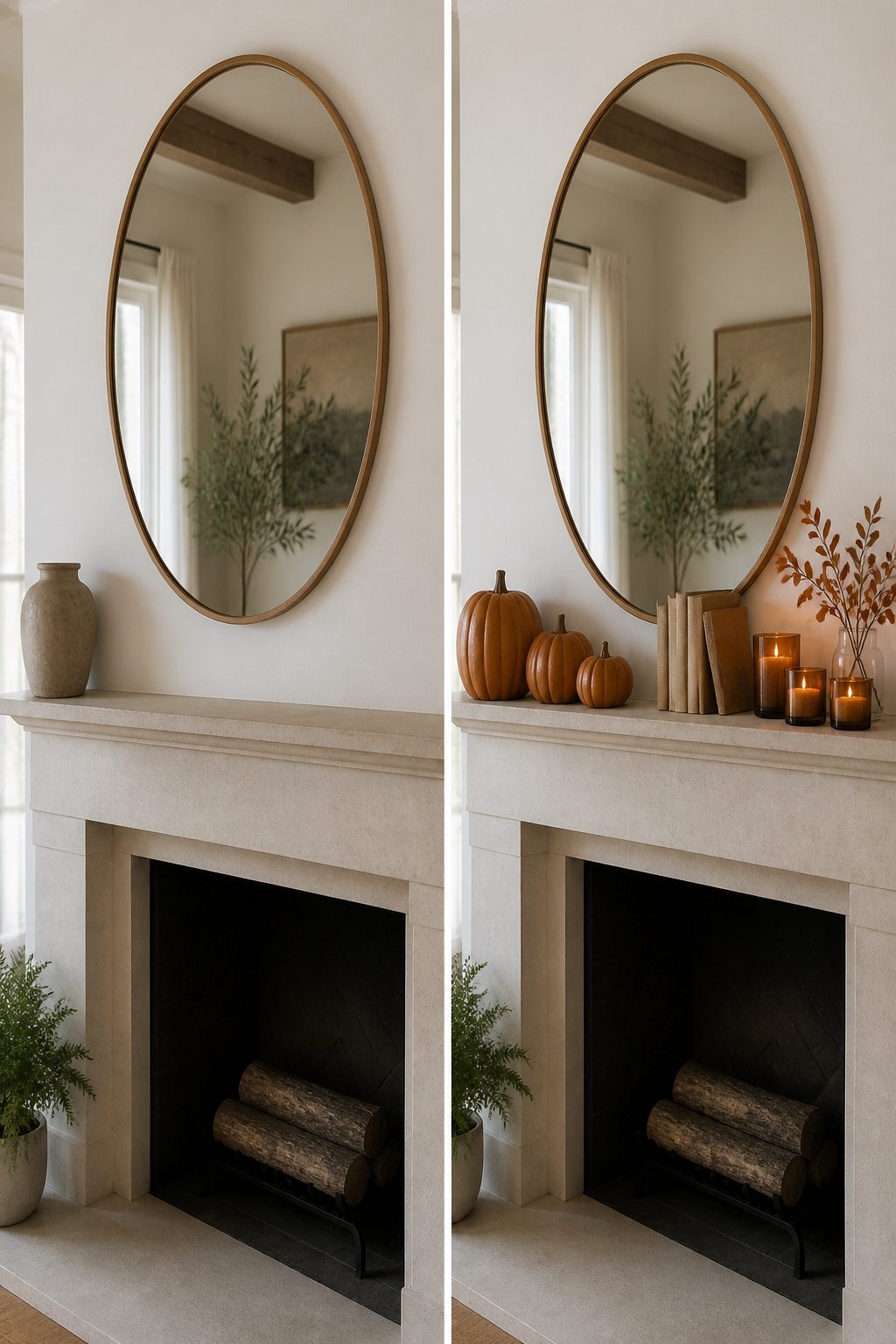
A mirror above the mantel stays put while everything in front of it rotates through the year, which is the single best argument for choosing a neutral frame and simple shape. My fall palette of dried wheat and rust candles reads completely differently against the same glass than summer’s stack of blue-spined books and a small framed seascape leaned against it. The mirror catches whatever color you stage in front of it, so the seasonal shift costs you maybe $30 in thrifted objects instead of a new wall hanging each quarter.
Size and proportion matter more than the mirror’s own style. A mantel mirror that is too small leaves awkward wall space that demands constant filling; one that runs nearly the width of the mantel itself becomes the whole backdrop and swallows narrow seasonal pieces. The better balance leaves six to twelve inches of mantel surface on each side for layering. That is where the seasonal work happens: a low ceramic pumpkin in October, a cluster of bud vases in March, a leaning print swapped in July. The mirror handles the visual weight so those smaller pieces do not have to carry the whole wall.
What fails is treating the mirror as decoration itself rather than as the constant. Ornate gilded frames fight every palette except their own. My own early mistake was a distressed black frame that looked sharp at Christmas with greenery and red berries, then sat heavy and funereal come May. The frame you keep year-round should quiet down; let the objects in front of it make the noise.
Hanging Heavy Mirrors Right
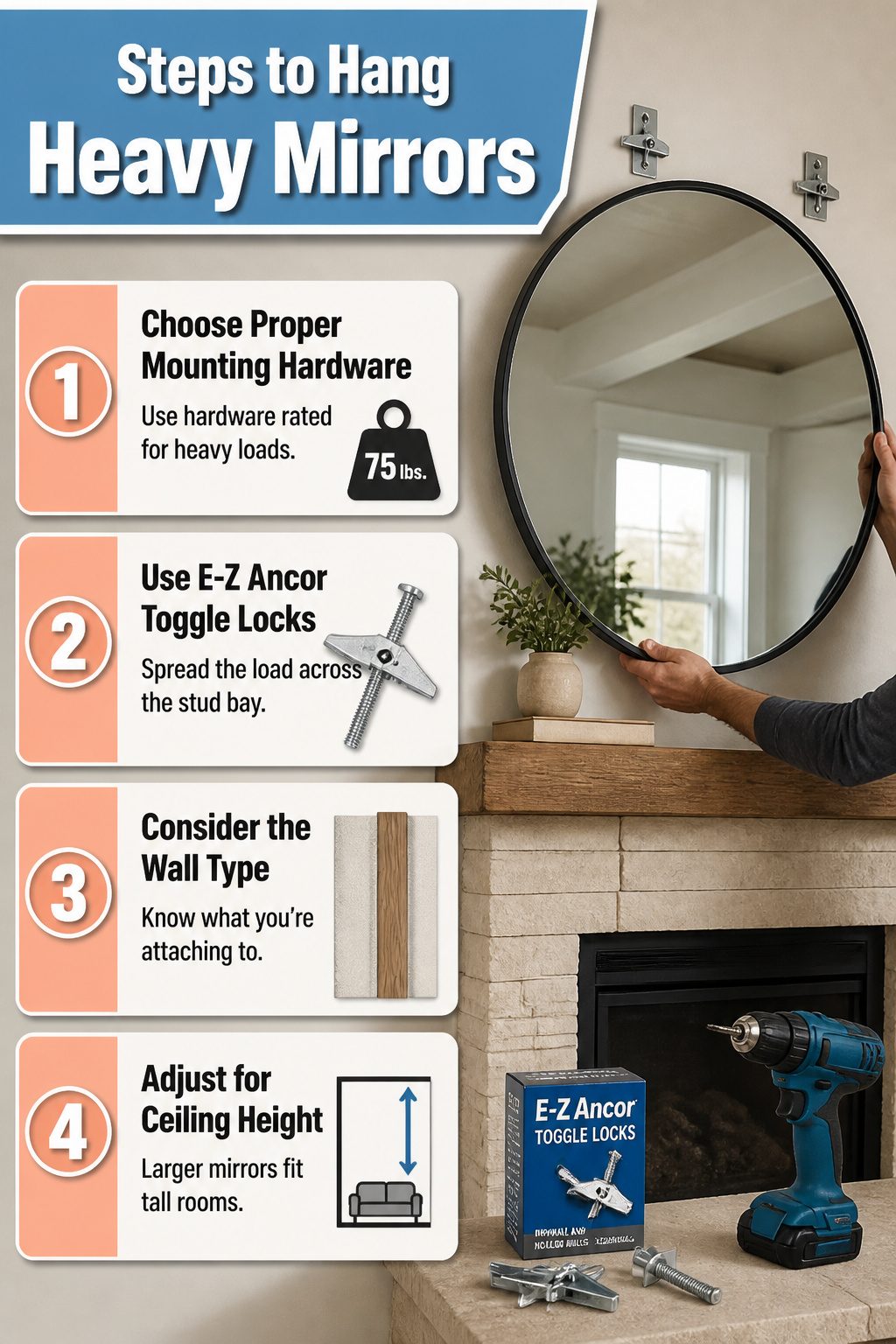
A mirror above a mantel lives or dies by the mount you put behind it. Drywall over a fireplace is not the place for a picture hook rated for twenty pounds. The piece that convinced me, reading through a dozen of these installs, was a 33-inch round that the owner clocked at 75 lbs. That is furniture weight, not decor weight.
E-Z Ancor Toggle Locks are the hardware that keeps coming up for this job. They spread the load across the stud bay instead of counting on the paper face of the drywall. Standard expansion anchors or basic threaded toggles do not give the same distributed grip.
The wall type matters more than the mirror style. Standard drywall with no backing behind it means you are hanging all 75 lbs. on two or maybe four points. If you are lucky enough to hit a stud, a lag bolt changes the math entirely. Most fireplaces are not stud-friendly where you want the mirror centered, so toggles become the realistic path.
Ceiling height is the other variable. Tall rooms swallow small mirrors. That 33-inch round the owner first tried looked like a porthole on a submarine against a high wall. Scale up the mirror, and the weight climbs with it. The mount has to grow with the visual weight, not just the physical one.
Frequently Asked Questions
What size mirror should I choose for my mantel?
The mirror should be two-thirds to three-quarters the width of the mantel itself. That range keeps the fireplace visually anchored without letting the glass dominate the room. Go wider than three-quarters and the mirror starts to swallow the wall; too narrow and it floats like an afterthought.
What shape of mirror works best above a fireplace?
Round mirrors soften the boxiness of all those fireplace rectangles, arched mirrors break up long horizontal lines with a curve, and rectangular mirrors keep a structured, timeless feel. Match the shape to your room style: arches for traditional spaces, circles for modern ones, and geometric forms when you want the mirror to read as art first.
How do I arrange decor around a mirror on my mantel?
Keep the tallest pieces at least a few inches below the mirror’s bottom edge so the reflection stays open. Symmetrical arrangements with matching candle holders read formal; asymmetrical setups with varied heights move the eye better. Candlelight bounces hard off glass, so check sightlines from the sofa to avoid reflecting something like a kitchen trash can.