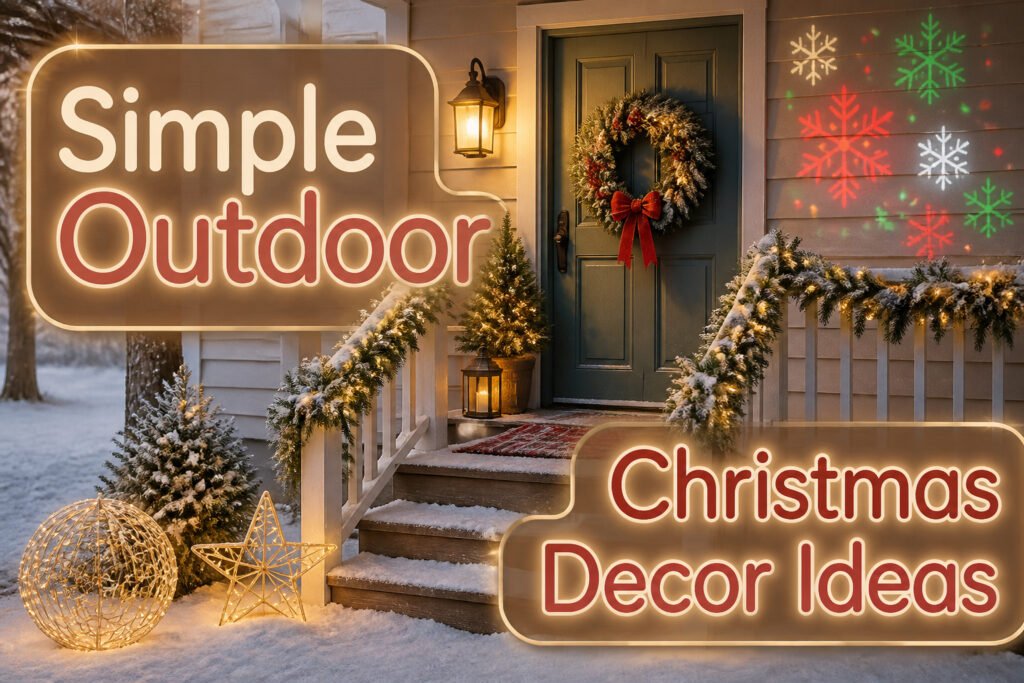
Simple outdoor Christmas decor runs from a $6 doubled grocery-store wreath to a $199 folding LED tree, and the single difference is how long you are willing to spend on setup. The light ball I built from chicken wire looked right until I set it down and watched it sag into an egg; uneven tension collapses the sphere, and store-bought folding versions flatten to nothing in January. That tradeoff between time saved and money spent repeats across every option below.
1. Christmas Light Balls
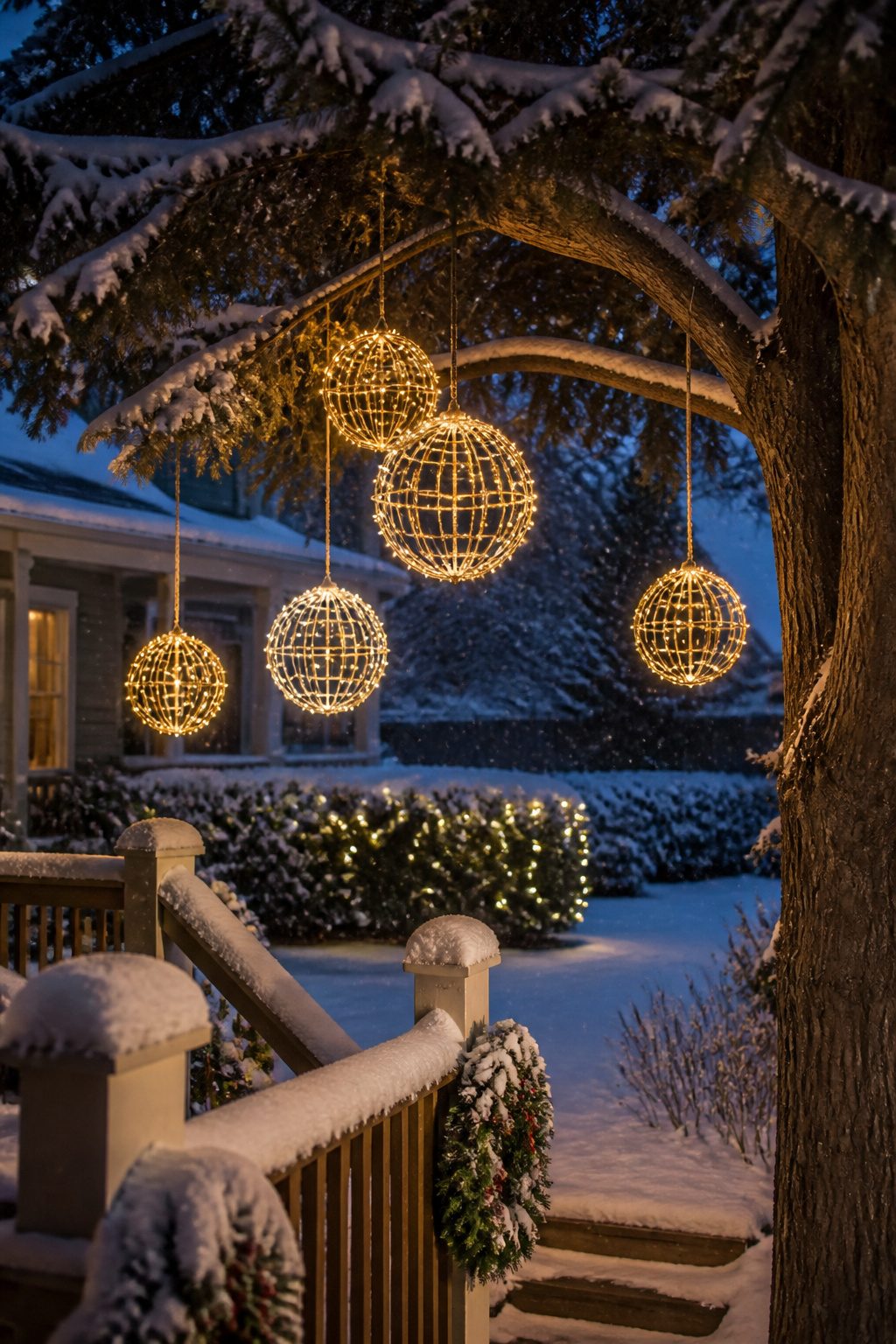
Chicken wire and a string of LED mini lights are all it takes to build a light ball from scratch, though folding versions in solid colors and mixed strands now come ready-made from 8-inch ornament size up to 37-inch commercial grade. I tried the DIY route two seasons back and learned the hard way that uneven tension collapses the sphere; my first attempt looked fine until I set it down, then it sagged into an egg. The fix was simple once I read closer: clip the wire in even sections, not freehand. Store-bought folding balls solve this entirely and flatten to almost nothing in January. For renters especially, that matters more than the $10 you save building your own. Hang them from low branches or line the porch rail; at ground level they read as oversized ornaments without the tree they usually need.
2. Pathway Lights
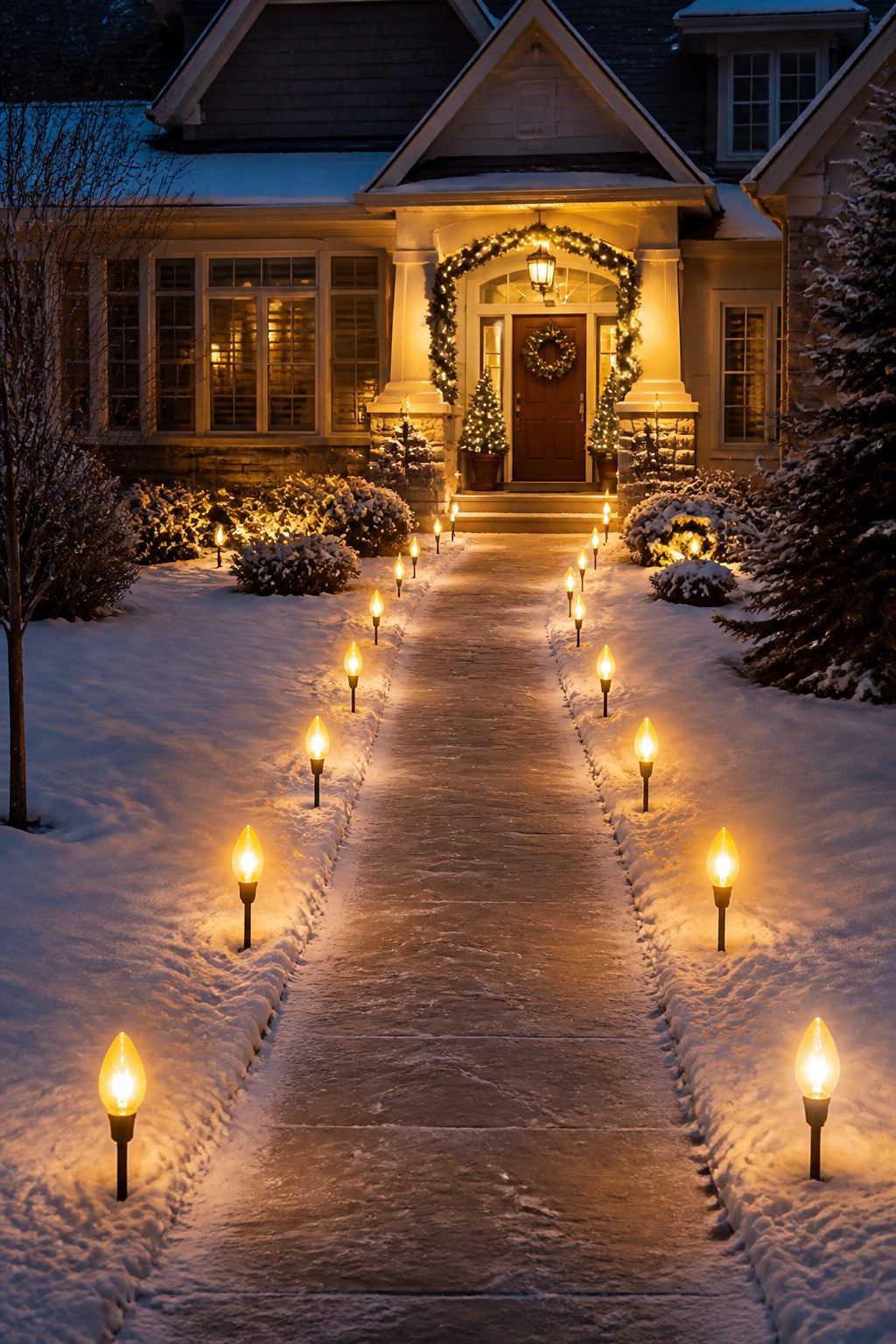
C7 and C9 bulbs are the ones that actually read as Christmas from the curb, not the pale blue-white of cheap hardware-store stakes. I learned that the hard way after a set of cool-white LEDs made my walkway look like a loading dock for two Decembers running. The C7s run a little smaller, the C9s throw more light, and both come in LED stringer kits with stakes included.
Fifteen-inch stakes are what you want if snow is even a possibility where you live; anything less and your lights spend January buried. No-snow yards get away with 4.5-inch stakes, which are easier to press in and less likely to wobble on thawed ground. I swapped mine over after moving from Michigan to North Carolina, and the shorter stakes were one of those small wins that made the whole setup feel less precarious.
The LED lifespan runs past 100,000 hours, which in practical terms means the bulbs die of old age sometime in the 2040s while the plastic stakes have already cracked. My placement rule, arrived at through several evenings of repositioning: face the bulbs slightly toward the house, not straight up. You want the light to pool on the walk surface, not blind whoever is actually using it.
3. Outdoor Christmas Trees
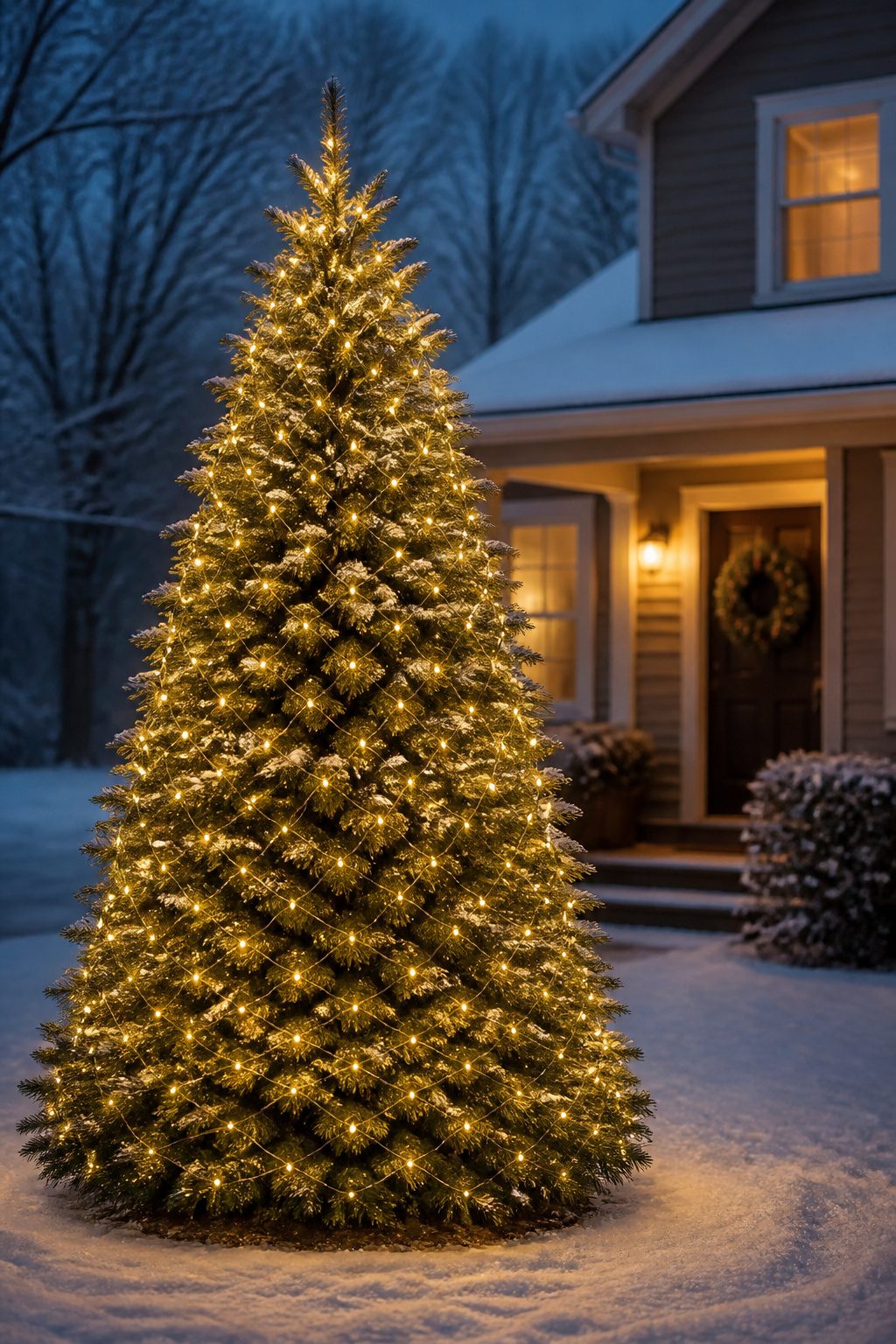
An outdoor Christmas tree does not have to be the living one by your front door. A few years back, I tried wrapping a Norway spruce in the yard with mini string lights the old way: ball up the strand, start at the base, weave around the trunk and up each branch, filling gaps on the way back down. The look was custom, but the process ate a full Saturday and the result was patchy where I ran short.
StretchNet Pro tree wrap lights changed how I handle this. The 12′ by 5′ net stretches to fit trunks large or small, and the loop clasps snap closed without knot-tying. Warm white and multicolor LED versions both run waterproof, which matters when rain turns to freeze before New Year’s.
For something even faster, the LED light show trees that have been showing up the last few seasons stand on their own. The Brite Star 7-foot cone tree I watched go up at a neighbor’s place last year ran multicolor LEDs with a white glitter star topper, no wrapping at all. At $199 it sits above a string-light budget, but the setup time is maybe twenty minutes versus most of an afternoon.
Weather is the real judge. Net wraps handle wet branches better than loose strings that slip and pool at the base. If you rent and your outdoor outlet is on a porch with no cover, that waterproof rating on the StretchNet Pro is not a nice extra; it is the difference between a display that lasts and one that trips the GFCI by Boxing Day.
4. Wreaths
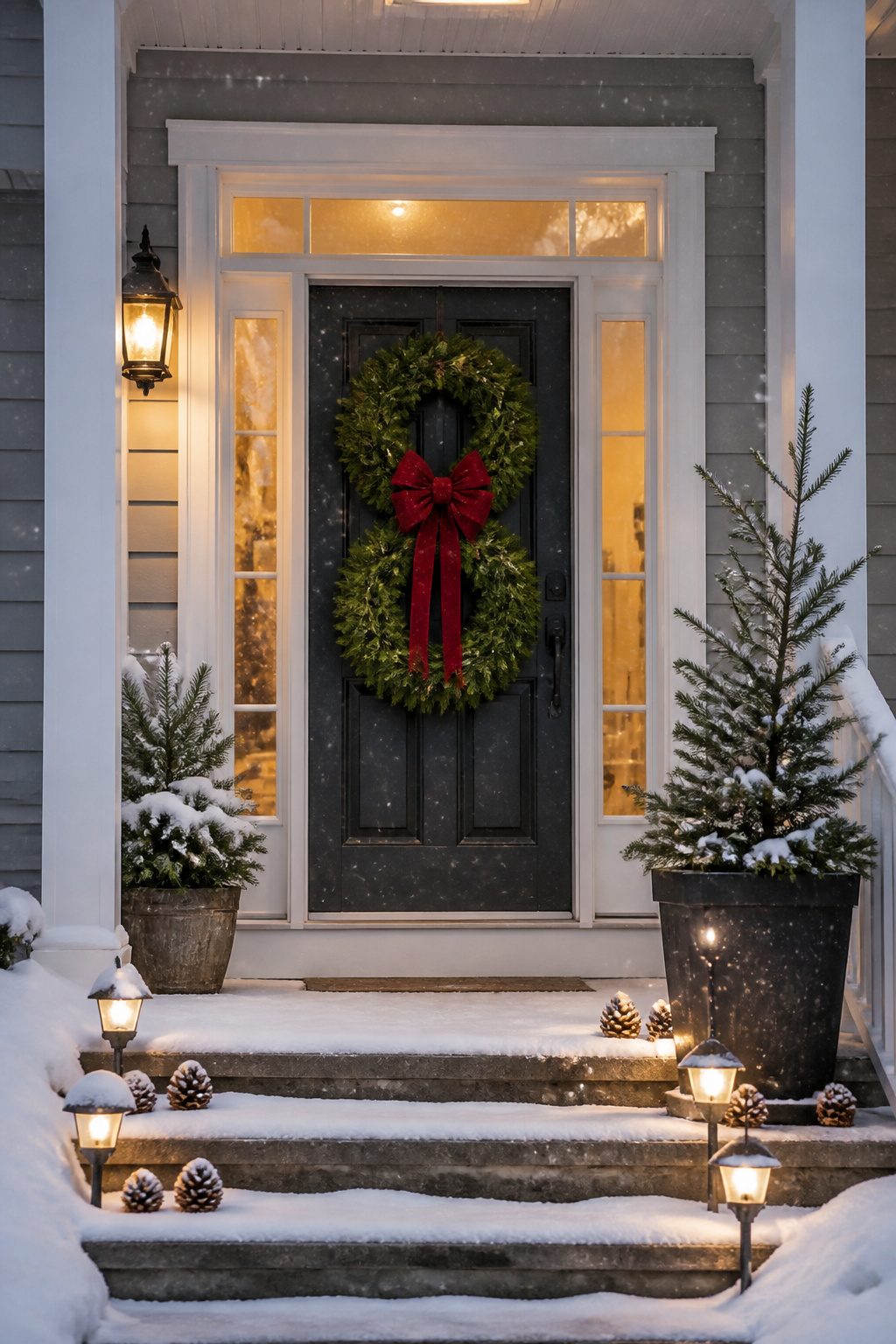
A single wreath on the front door reads as an afterthought from the street. Two cheap Canadian pine wreaths wired together fill the whole door window without reading dinky, and they hold up through weather that turns fancier greens brown. I change the bow each year, this season layering bright red ribbon over last year’s for visibility from the curb. The picks matter more than the base: red and silver balls pop against pine at twenty feet.
Grocery store greenery works if you treat it as filler, not the main event. I’ve doubled wreaths with mixed greens from the supermarket floral section, but they dry out faster than the Canadian pine and shed needles onto the porch by New Year’s. The candy cane stripe bows and plastic snowflakes from the dollar store tie the whole entry together for about six dollars plus fishing line. Those snowflakes have lasted years and move between the door center and the dining table without looking tired.
The third-floor balcony wreath is the same doubled-pine trick. Quality on the base wreaths scales with how long you need them to last: two weeks, grocery greens are fine; six weeks, spend the few dollars more on the pine that can take freeze and thaw.
5. Snowflake and Star Motifs
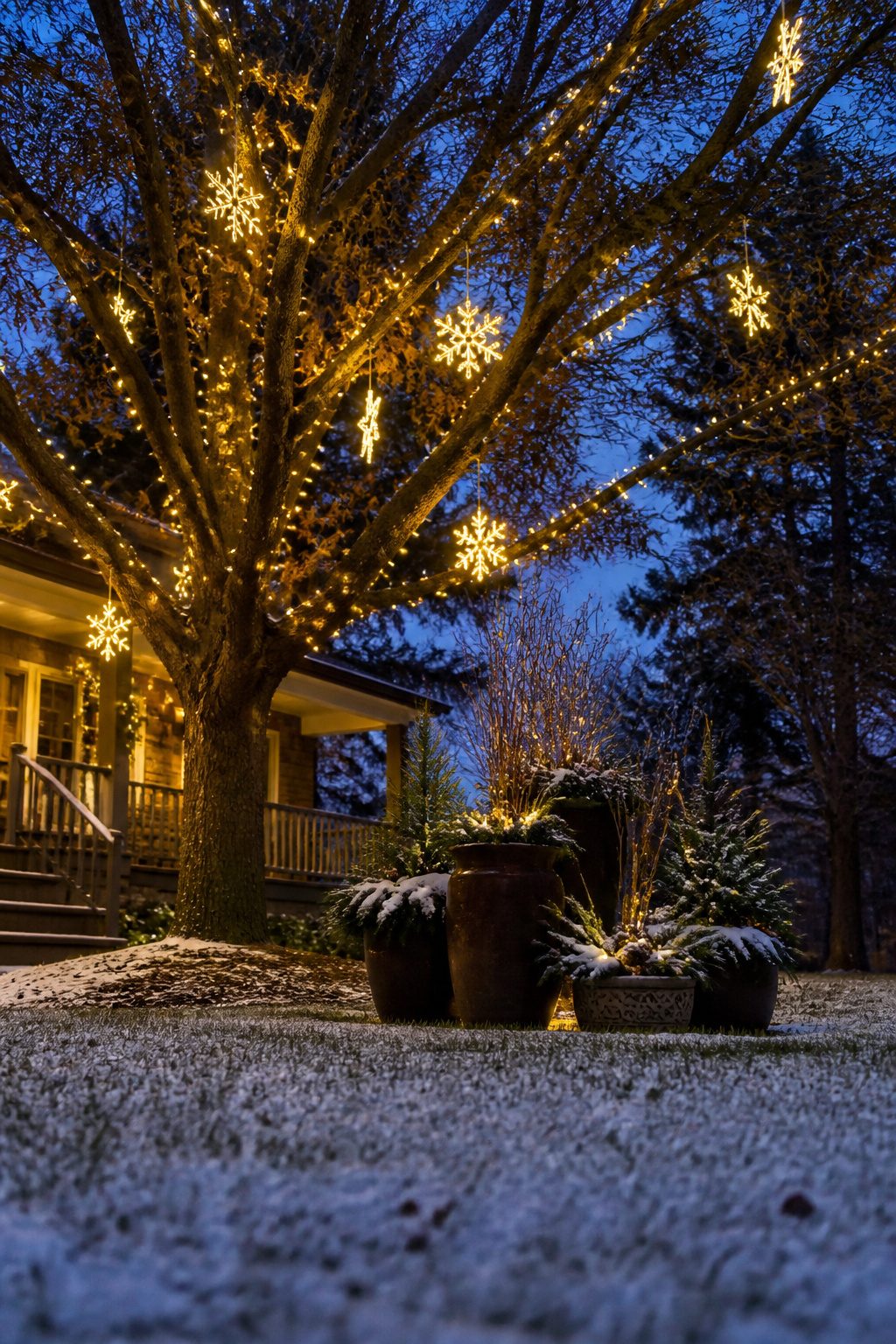
Lighted snowflakes and stars hung from tree branches or a gate arch read differently depending on where you stand. From the street, they register as bright punctuation marks against dark foliage; up close, the wiring and plastic frame show, so ten to twelve feet of height keeps the illusion intact. I space mine about four feet apart along the lower branches of a front-yard maple, far enough that each shape reads individually but close enough that the eye travels between them.
The dollar-store plastic snowflakes I tried years back cost six dollars plus fishing line, and they lasted exactly two winters before the finish dulled. For anything meant to stay up through rain and freeze-thaw cycles, weather resistance matters more than the package claims. Warm white LEDs tend to look inviting from a distance; cool white reads sharper, almost icy, which suits stars better than snowflakes in my view. I skip the twinkle functions on these, since a blinking star overhead turns from charming to distracting faster than you’d expect.
6. Garland
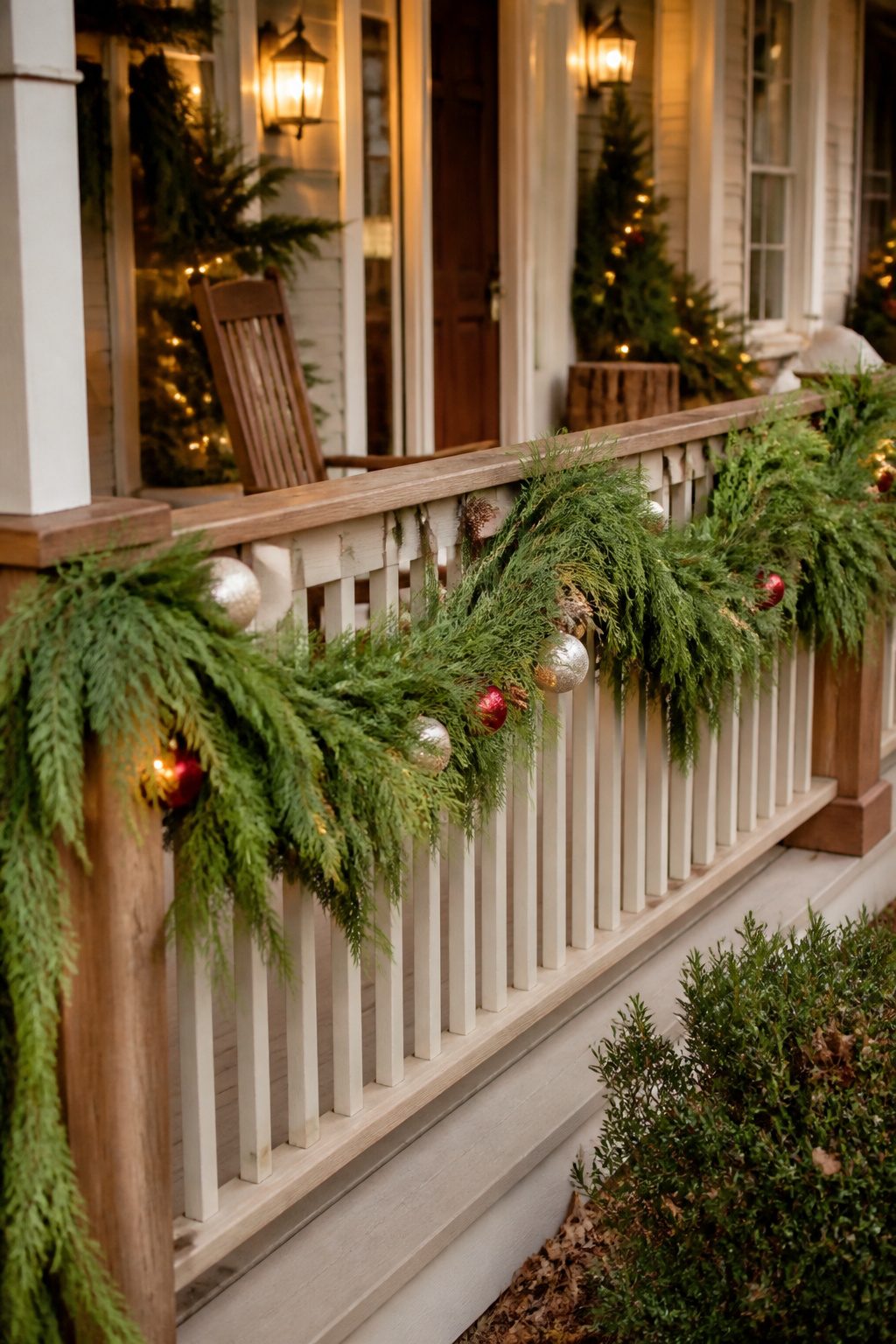
Garland along a railing or fence line reads as effort without much actual effort. I buy mine from the grocery store floral section, usually a mix of cedar and fir that holds up better than it has any right to. The natural stuff costs about what two cups of coffee do and smells like something happened.
Attachment is where I learned the hard way. Zip ties work on metal railings but chew the greenery if you pull them tight. Now I use brown floral wire, the kind that comes on a paddle for three or four dollars. Twist it loosely at two-foot intervals and the garland stays put through wind that knocked my old light clips into the bushes.
Rain is less the enemy than sun. Three days of December rain, the cedar goes a little bronze but stays full. A week of dry cold, and the needles start dropping like confetti. Plan on a mid-season walkthrough to tuck in loose ends, especially where the wire meets wood; the expansion from morning frost to afternoon thaw loosens everything. I replace mine once between Thanksgiving and Christmas, which still puts the total spend under twenty dollars for forty feet of coverage.
7. Inflatable Decorations
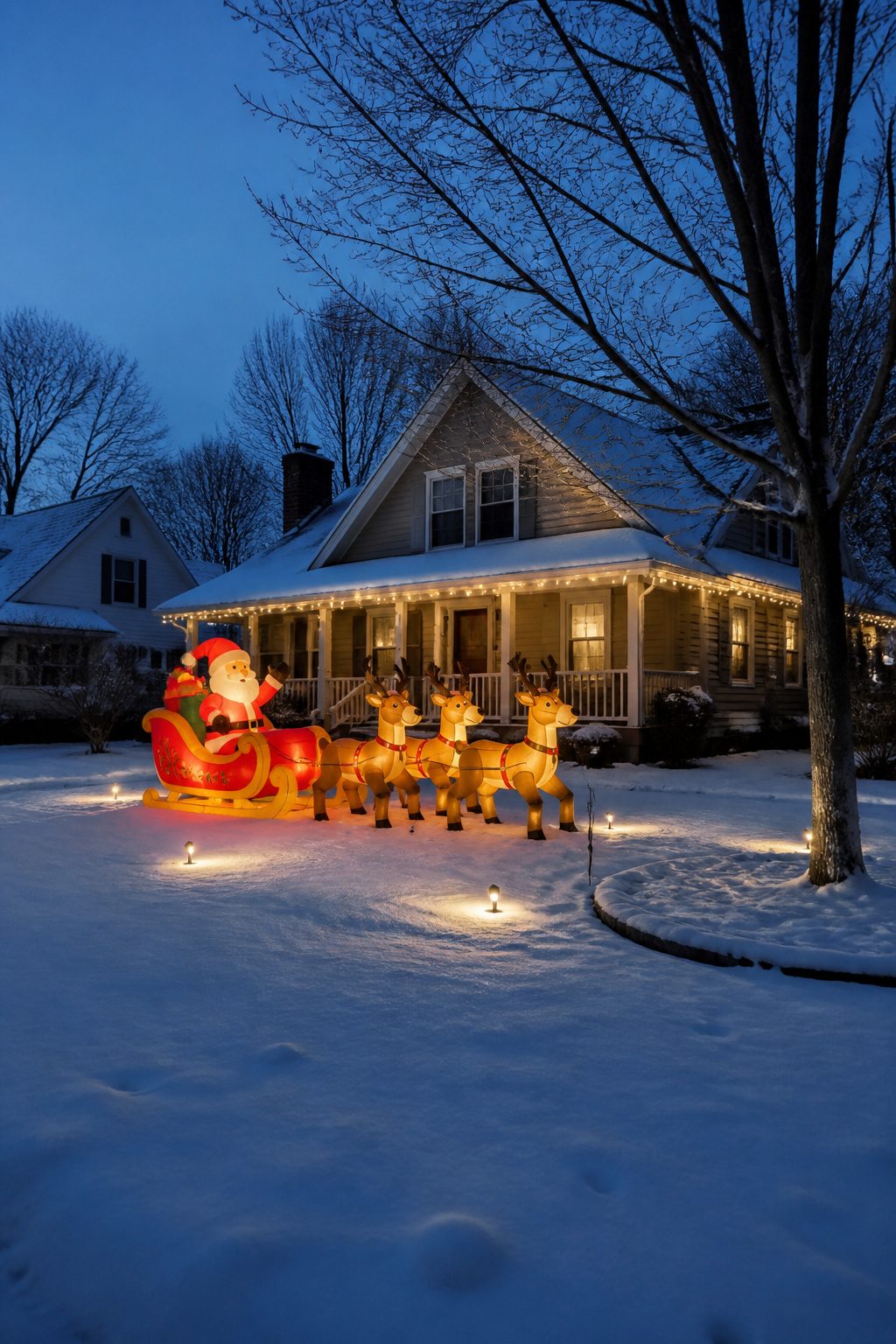
Large inflatables have become the default for yard decoration because the setup really is that simple: unroll, plug in, and the built-in fan does the rest. A six-foot Santa in sleigh with reindeer runs about $89 and stakes down in five minutes, which makes it one of the faster ways to get a whole scene visible from the street.
The catch is wind. I’ve watched neighbors chase a deflated snowman across the lawn after skimping on the tethers, and the stakes that come in the box are usually plastic pegs that pull free from wet ground. Doubling the anchor points with longer landscape staples takes another ten minutes but saves the morning-after headache.
Storage is the longer-term cost. A collapsed inflatable still fills a 30-gallon tote, and the fan housing needs careful packing so nothing cracks in the off-season. For something that stores flatter, wireframe sculptures trade the motion for reliability. The LED lighted feeding doe with 150 clear white LED lights sits at $142, lights up a smaller footprint, and folds to roughly the depth of a folding chair. No fan to fail, no midnight reinflation if the zipper seal loosens.
8. Spotlights
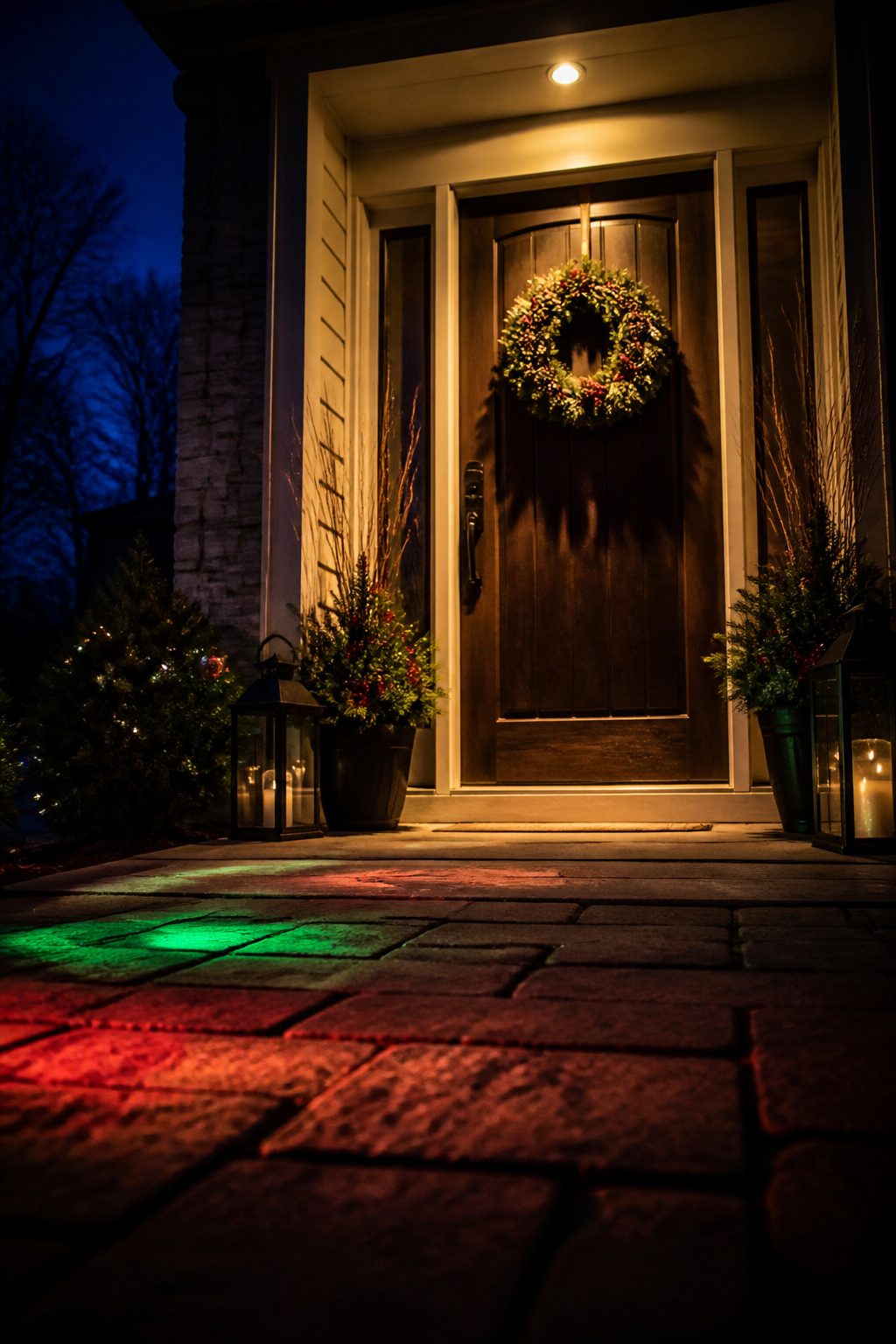
Colored spotlights do more of the work than the decorations they hit. Two years back, I aimed a warm white LED at the front door wreath and another at the reindeer by the walk. The wreath looked fine; the reindeer, from the street, turned into a flat silhouette against the garage. The angle was too low, so the light grazed across the figure instead of catching the front face. I moved the stake back about six feet and raised the head maybe thirty degrees, and suddenly the cutout had depth again. The solar-powered spots I used needed a full day of winter sun to run past 9 p.m., so the north-facing reindeer stayed dark by Christmas week. Now I keep those on a low-voltage line with the others and save the solar units for spots that catch midday light.
Color choice is the other place where expectation drifts from reality. I tried the multi-color setting once, cycling red and green across the facade. From the curb it looked like a rental-hall dance floor, not a house. Warm white stays my default for anything architectural; the colored modes work better on a single accent, like one spotlight on a wreath or a small tree, where the saturation reads as intentional rather than accidental. The fixtures I have switch with a remote, so the same hardware works for Halloween if you swap to orange or purple. That dual use is worth factoring into the price, since the season is short and storage space is real. A single well-placed warm spotlight beats three colored ones aimed wrong.
Budget-Friendly Shopping
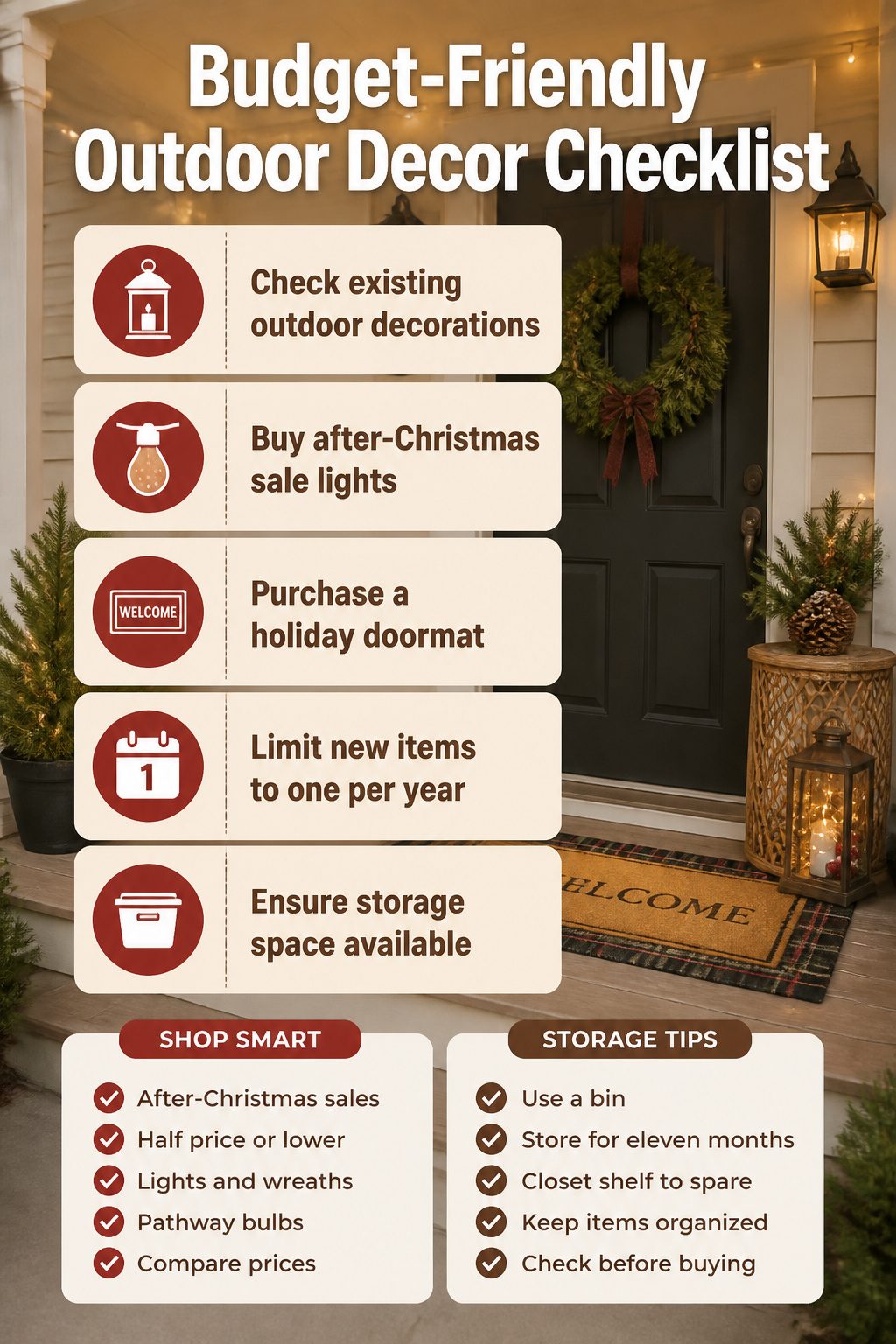
The outdoor pieces I already own get the first look every year. A couple of lanterns that live on the porch in summer just need a handful of shatterproof ornaments dropped on top, and an upside-down basket becomes a side table with a sprig of greenery and some pine cones. That trick cost me nothing but the five minutes to gather what was in the yard.
When I do buy, the after-Christmas sales in January are where I pick up lights and wreaths, usually at half price or lower. I spent maybe $25 last year on a string of pathway bulbs that would have run $50 in November. The catch is storage: they sit in a bin for eleven months, so the deal only works if you have a closet shelf to spare.
A holiday doormat is the one purchase I make at full price when the season starts, because the good ones sell out fast. The large size for double doors runs a little more, and I still haven’t pulled the trigger on that upgrade; the standard mat works fine for now. The rule I stick to is one new item a year, max. Anything more and the porch starts looking like a clearance rack, not a front door.
Lighting Techniques That Actually Work
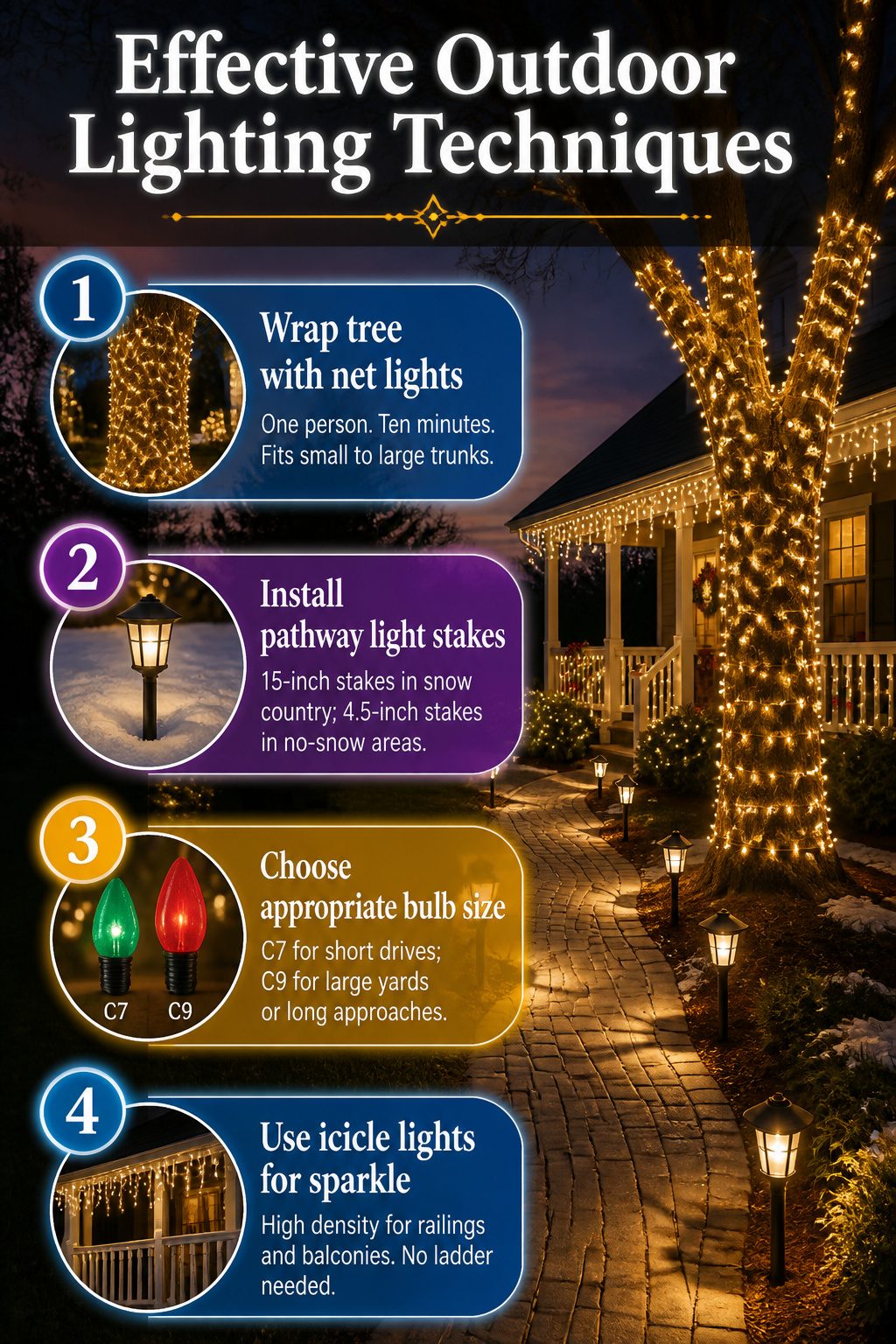
Wrapping a tree with string lights sounds straightforward until the third pass around the trunk, when the cord tangles or the spacing goes random. Net lights fix this. StretchNet Pro wraps use a stretchable cord woven into the net itself, with simple loop clasps at the ends. One person can get a small trunk done in about ten minutes, and the same net expands to cover a larger one without buying a second set. Warm white LEDs read as classic; multicolor works if the rest of your yard already leans that way.
Pathway lights do more than mark the walk. C7 bulbs, roughly the size of a night-light bulb, give enough glow for a short driveway or a house set close to the road. C9s, about an inch taller and wider, carry farther across large yards or long approaches. In snow country, 15-inch stakes keep the sockets above the drift line; no-snow areas get by with 4.5-inch stakes. Globe bulbs on stakes trade tradition for something closer to patio string lights, which suits renters who already own a set and want dual use.
Icicle lights pack roughly four times the bulb count of a standard string into the same horizontal run. That density matters on balconies, fence rails, or anywhere you want sparkle without climbing to the roofline. I string them along the top rail of our porch and let the drops hang free; no ladder, no gutter clips, and the effect carries to the sidewalk.
Natural Elements and Greenery
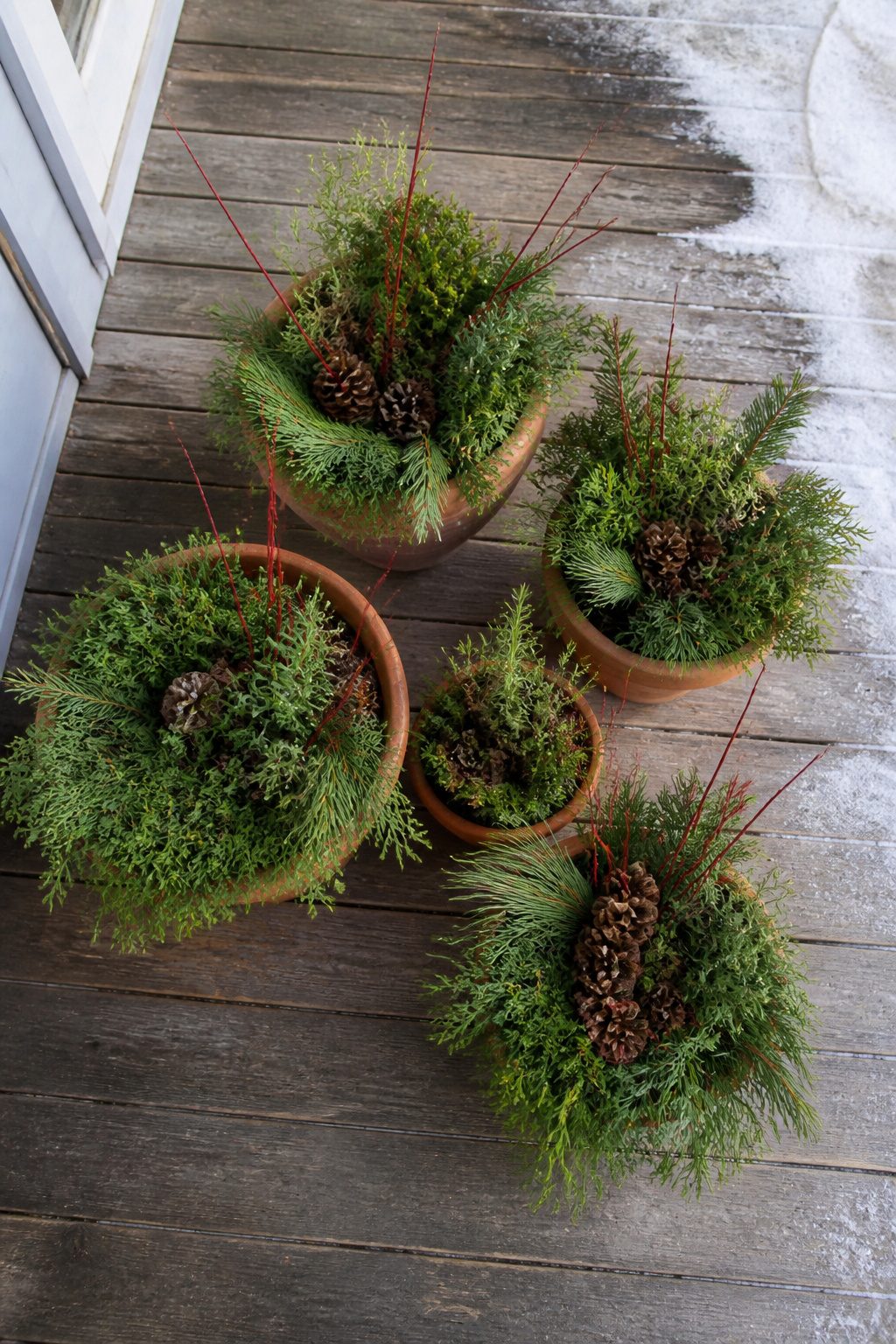
Potted plants you already own make the easiest base for outdoor Christmas color. A few weeks before the holiday, I cluster the pots I moved inside for winter, set them on the porch steps, and tuck grocery-store spruce tips or cedar clippings around the soil line. The living root ball keeps everything fresh through January, and when the season ends, the clippings go to compost and the pots go back to their summer spots.
For filler, grocery-store herb bunches work better than florist greenery if you are watching cost. Thyme and rosemary stems hold their shape in cold air, and the scent carries when you brush past them on a dark walkway. Yard clippings fill the gaps: red-twig dogwood branches, pine cones, anything with winter structure. I learned the hard way that magnolia leaves brown at the edges below twenty degrees, so they stay in sheltered corners now.
The whole arrangement reads as intentional because it repeats the same materials you will see in wreaths and garland, just rooted in soil instead of wire. That repetition is what makes a small porch feel decorated rather than cluttered.
DIY Builds That Survived the Weekend
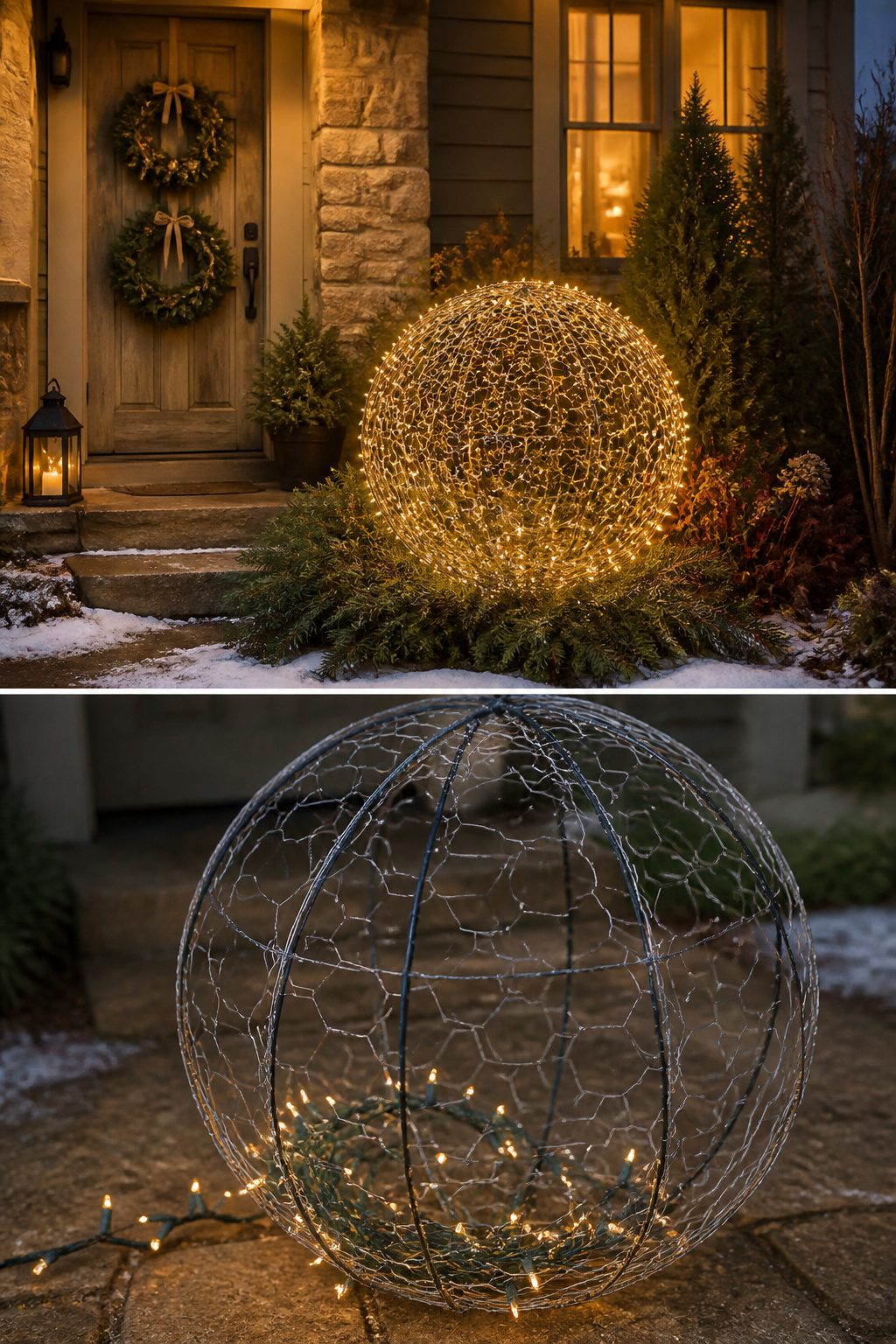
Chicken wire light balls sound harder than they are. The first time I tried, I spent twenty minutes wrestling a cylinder shape before realizing the frame folds into a sphere on its own if you just keep the tension even. A 37-inch ball takes about three hours from unrolling the wire to the last bulb tucked in, and that includes the forty minutes I lost to a collapsed first attempt. The trick is clipping the wire every six inches so the lights have something to bite.
Wreaths were the opposite: easy start, endless tweaking. Doubling two cheap Canadian pine wreaths with wire gives the bulk that reads from the street, but the real time sink is the bow. I have changed mine every year for visibility, and each swap eats an hour of standing back, squinting, adjusting. The wreaths that cover a full door window need higher-quality greens underneath or the doubling looks lumpy up close. Budget for that upgrade, or keep them to spots no guest examines from arm’s length.
Beer-bottle path lights were a clear miss here. The shape is charming in photos, but stuffing string lights down narrow necks took nearly two hours for a dozen bottles, and two cracked in the first freeze. Electric candles in the same spots lasted the whole season with no reset.
Frequently Asked Questions
What are some budget-friendly outdoor decoration ideas?
Start with pieces you already own, like summer lanterns filled with shatterproof ornaments or an upside-down basket topped with greenery and pine cones. Buy lights and wreaths during after-Christmas sales in January, typically at half price or lower. Limit yourself to one new full-price item per year so the porch does not start looking like a clearance rack.
How can I use lights effectively for outdoor decor?
Wrap trees with net lights rather than loose strings; StretchNet Pro wraps handle wet branches better and one person can finish a small trunk in about ten minutes. For pathways, face C7 or C9 bulbs slightly toward the house so light pools on the walk surface instead of shining straight up. Hang icicle lights along porch rails or balcony edges to get roughly four times the bulb count without climbing a ladder.
What types of outdoor decorations are easy to set up?
Inflatables stake down in about five minutes, though you should double the anchor points with longer landscape staples to hold against wind. Folding light balls flatten to almost nothing for storage and hang from branches or porch rails with no shaping required. LED light show trees stand on their own and run through setup in roughly twenty minutes.