
Rustic front porch Christmas decor ranges from a $10 grapevine wreath wired with yard clippings to a $90 LED reindeer family that carries the whole display, and the single factor that decides which end you land on is how much weather your porch actually sees.
Fresh cedar browns in two to three weeks of cold rain; resin birch logs and a $39 faux garland stay crisp through February freeze-thaw cycles without a mid-season swap.
1. Wreaths
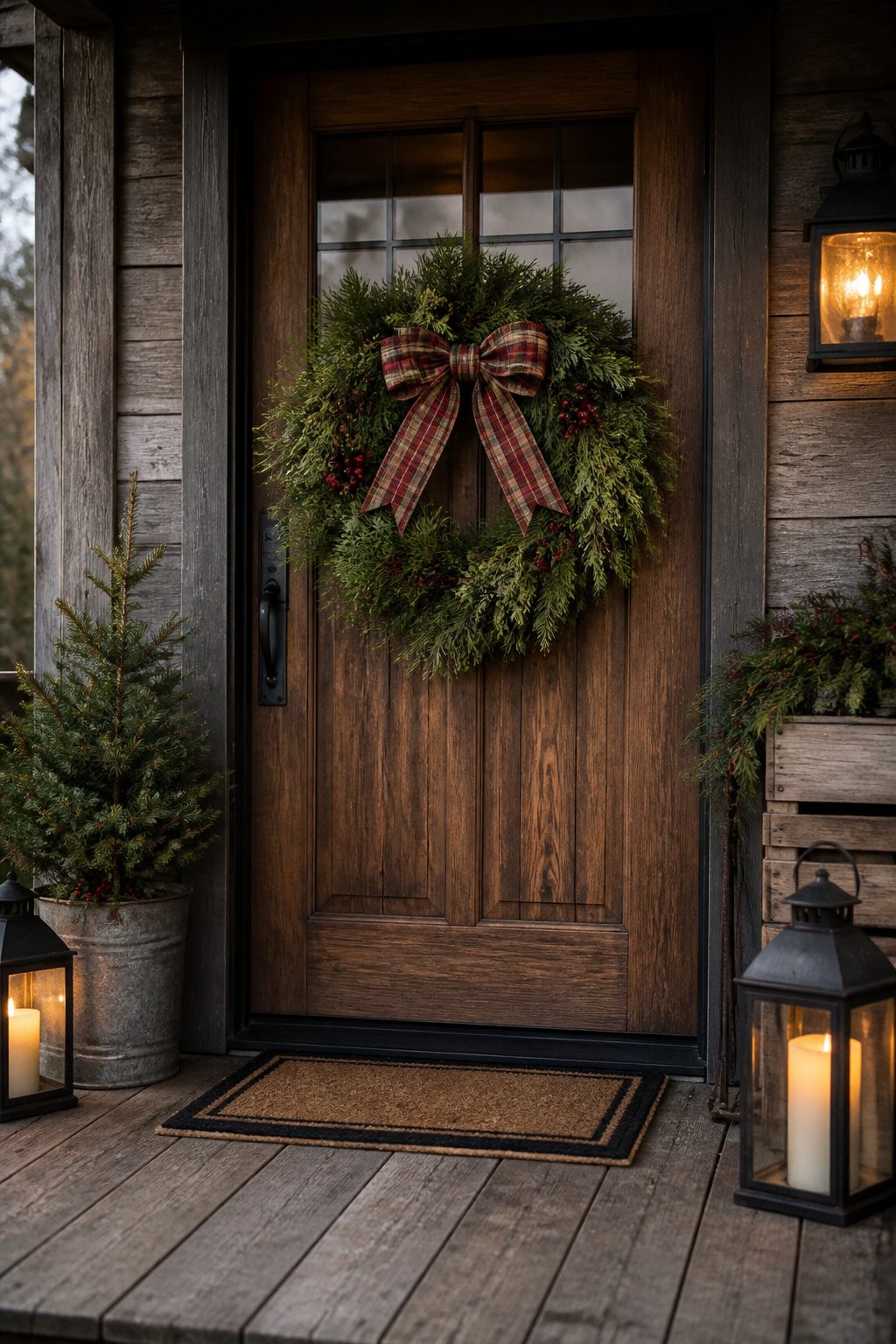
A wreath on the front door does the heavy lifting for rustic front porch Christmas decor before anyone steps onto the porch itself.
The material matters more than the ribbon: pine, cedar, or fresh greens read rustic because they look like they came from somewhere with dirt on the ground, not a warehouse shelf.
Magnolia and boxwood work too, especially if you want something that leans more minimalist or vintage than standard holly.
Hang the wreath about two-thirds the width of your door, or a little larger. Too small and it looks like a dinner plate floating in empty space; too large and the door becomes an afterthought.
I learned that the hard way with a 36-inch wreath on a 32-inch door one year. The overlap looked accidental, not abundant.
What pushes a wreath from conventional to rustic is usually what you add, or what you leave off. Skip the high-gloss ornaments.
A plaid bow, a few pinecones, or a sprig of red berries keeps the texture rough. LED lights can work if they are warm and sparse, not a full chase pattern.
If you have a wooden sign or a vintage piece, lean it beside the door rather than crowding the wreath itself. The wreath should still feel like the main event, not one item in a cluster fighting for attention.
2. Mini Trees
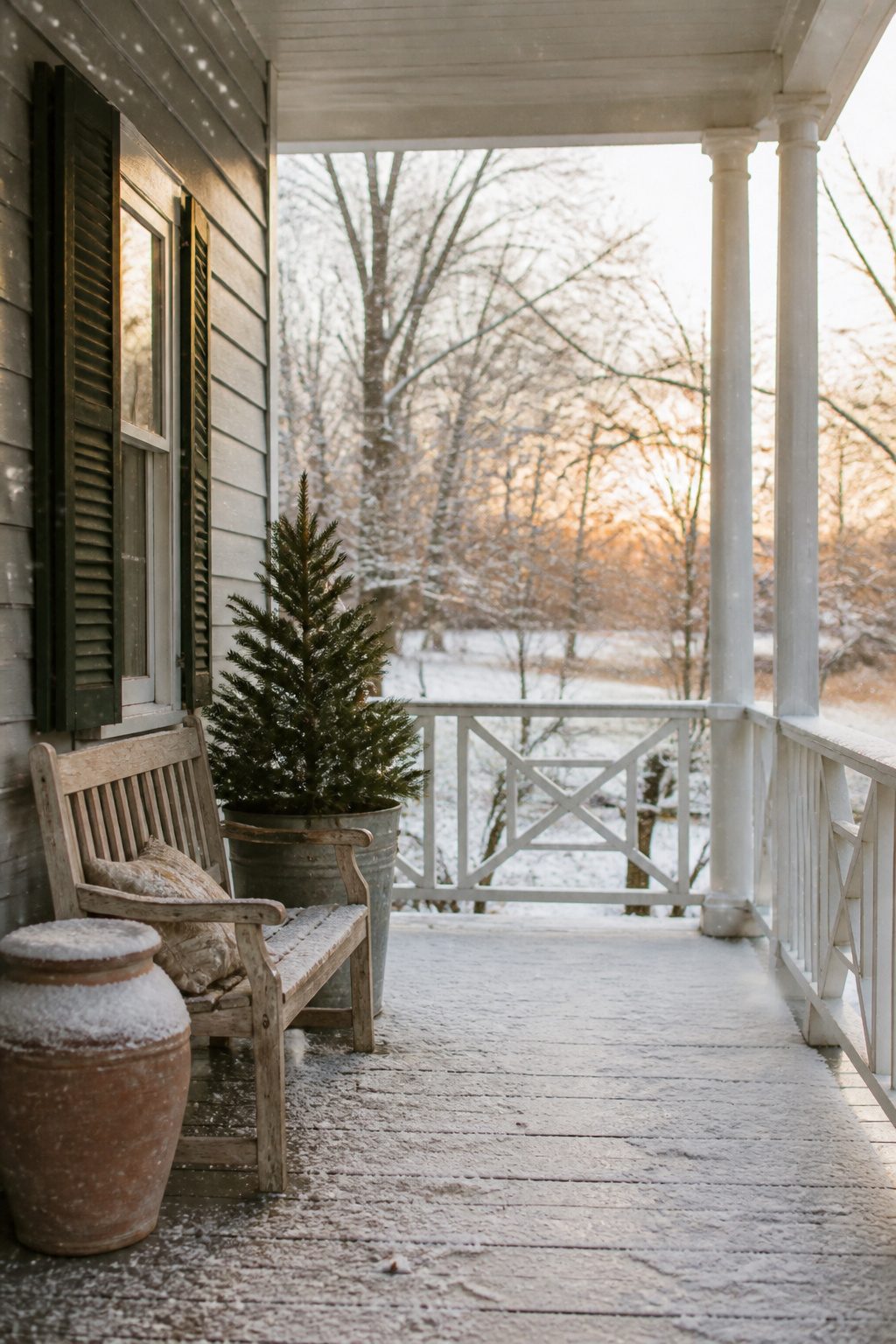
A three-foot faux tree in a galvanized bucket reads as a shrub from the curb, which is exactly the point.
Scale on a porch works backward from inside: the same mini tree that fills a corner of your living room disappears against siding and railings.
The sources that stuck with me all cluster in the two-to-four-foot range, and they treat the container as half the decoration.
Galvanized buckets carry the farmhouse note without trying, clay pots warm the tone, and a red-painted thrift-store wagon turns the whole thing into a found object rather than a bought one.
The recycled twig-covered tin can I kept seeing is worth copying. A fall craft that holds a mini faux Christmas tree through winter is the kind of reuse that keeps a porch from looking like a catalog spread.
One source wraps a vintage chicken feeder with garland and calls it a tree holder; another stands a tree on a chippy white stool beside candles. The common thread is the container should look like it lived somewhere else first.
Placement matters more than count. Tuck one by the door, another on a step, a third near a bench if you have the width.
Too many and the porch becomes a forest, too few and the eye skips them. My own threshold is two on a standard stoop, three only if the landing is deep enough that guests pass between them.
3. Vintage Decor
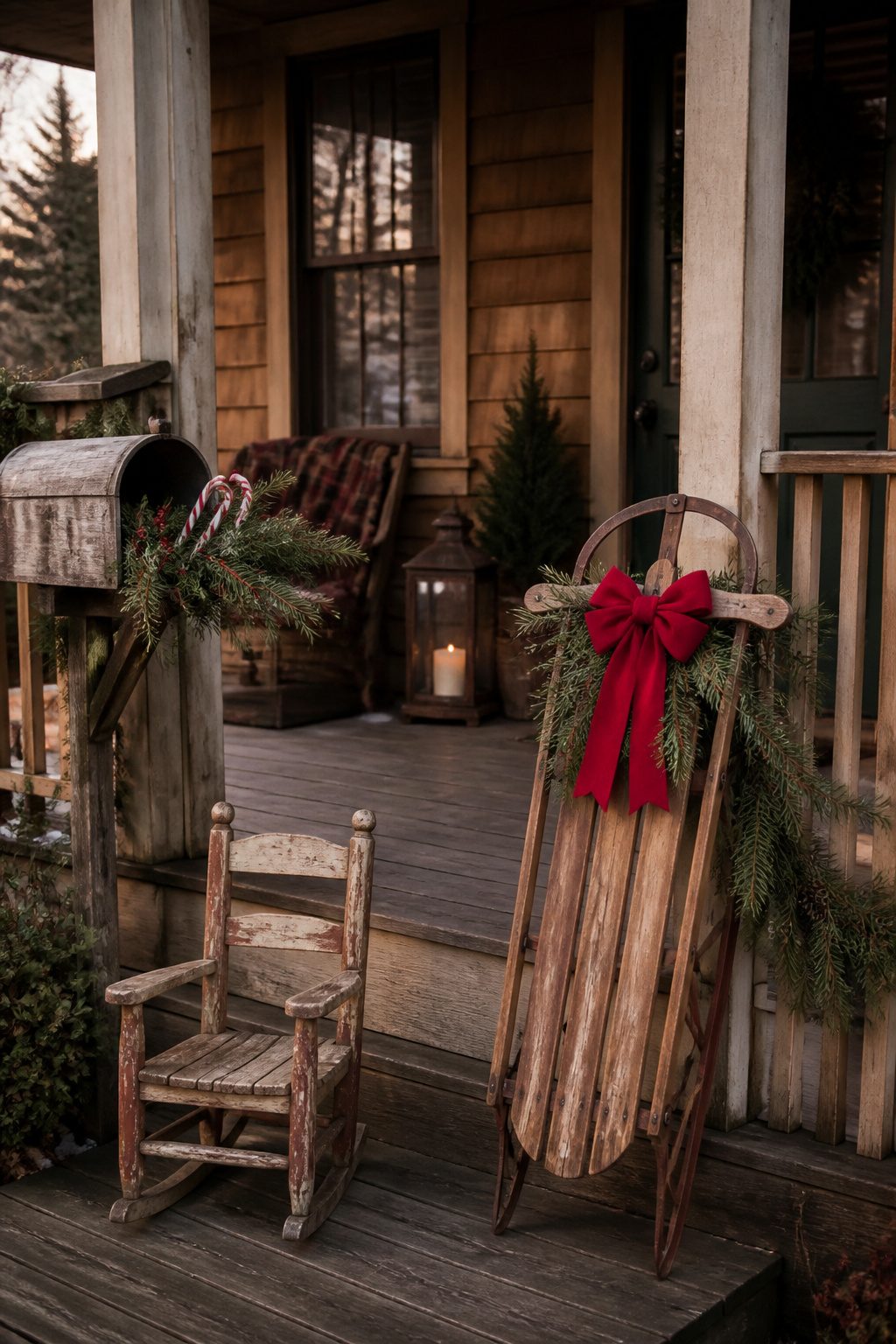
A vintage sled leans against the porch railing with a red ribbon and a sprig of greenery, and that single piece does more work than any department-store display.
The one I keep an eye out for is the 24-inch outdoor retro plastic Santa, the molded kind lit from within with a UL-certified plug. It reads as childhood memory rather than lawn inflatables, and it survives actual weather.
Ice skates hung by the door, maybe on a simple command hook, add the sound of sleigh bells when someone walks through.
Galvanized buckets, a weathered mailbox stuffed with greenery and candy canes, a child-size chair pulled up next to the rocker: these fill gaps without competing.
The mistake is collecting too many. Three vintage pieces read as character; seven read as costume shop.
My rule is one per sight line. The sled stays because it fills the dead space beside the steps; the Santa stays because it faces the street.
Everything else gets rotated back inside before the porch starts looking like a set.
4. Natural Elements
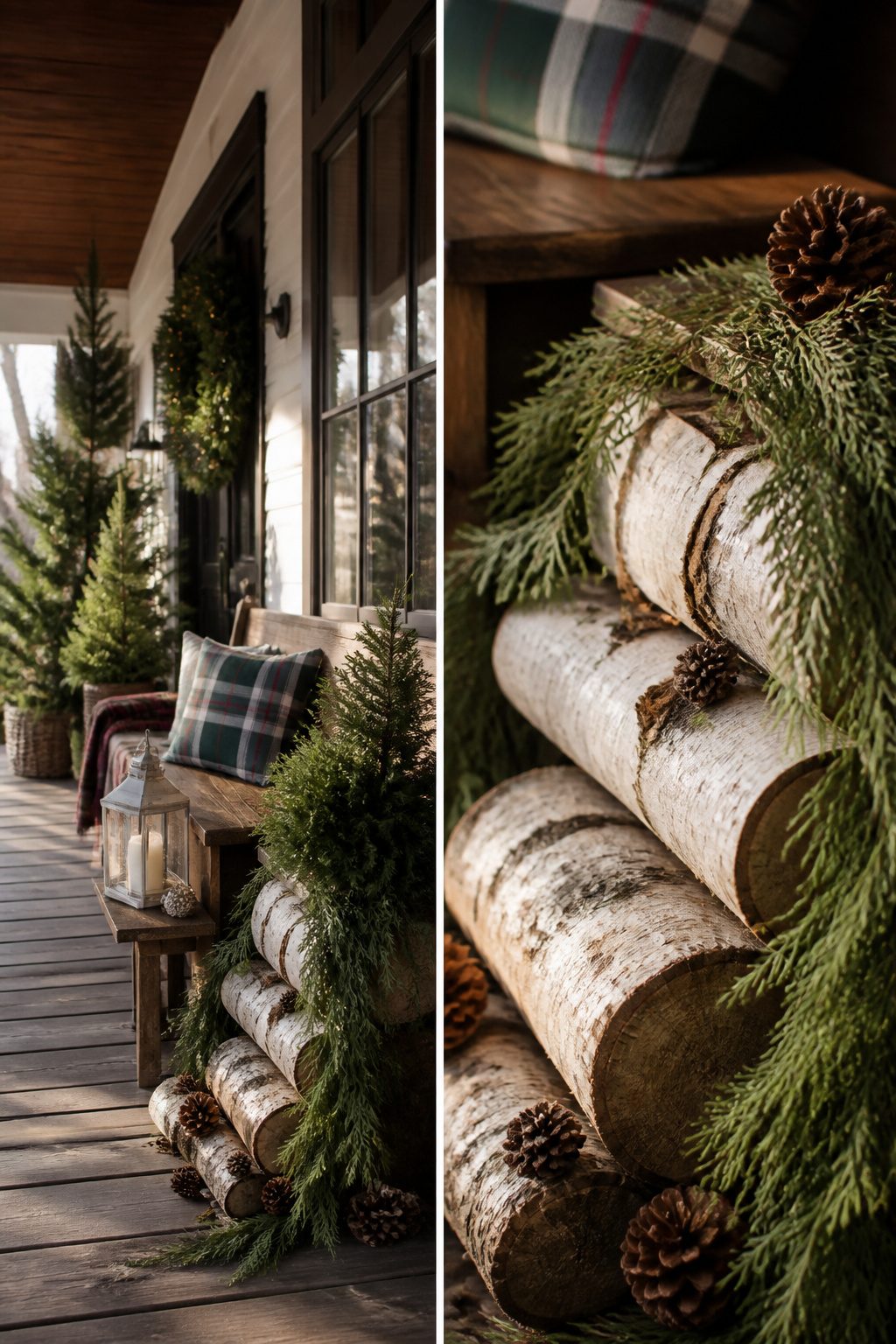
Pinecones, birch logs, and fresh greenery give a porch that lived-in, woodshed quality no factory finish can quite copy. The trick is knowing what survives December weather and what turns into a soggy mess by New Year’s.
Fresh cedar or pine branches last about two to three weeks in cold, dry air before browning and dropping needles. A decorative woodland cedar garland, at $39, buys you that same dense, draping look without the replacement schedule.
The timber versus plastic distinction matters more than most people think: real birch logs and pinecones absorb moisture, freeze, and crack if left out in rain, so they either need a sheltered spot or a plan to swap them mid-season.
Treated timber holds shape; resin casts of the same shapes look identical from the curb but weather identically year after year with no change at all, which some find convenient and others find dead.
I lean toward mixing both. Fresh greenery in a protected corner where I see it coming home, timber or high-grade resin logs in the spots that take direct snow.
The garlands go up after Thanksgiving and come down dry enough to burn, which feels like getting away with something.
5. Cozy Textiles
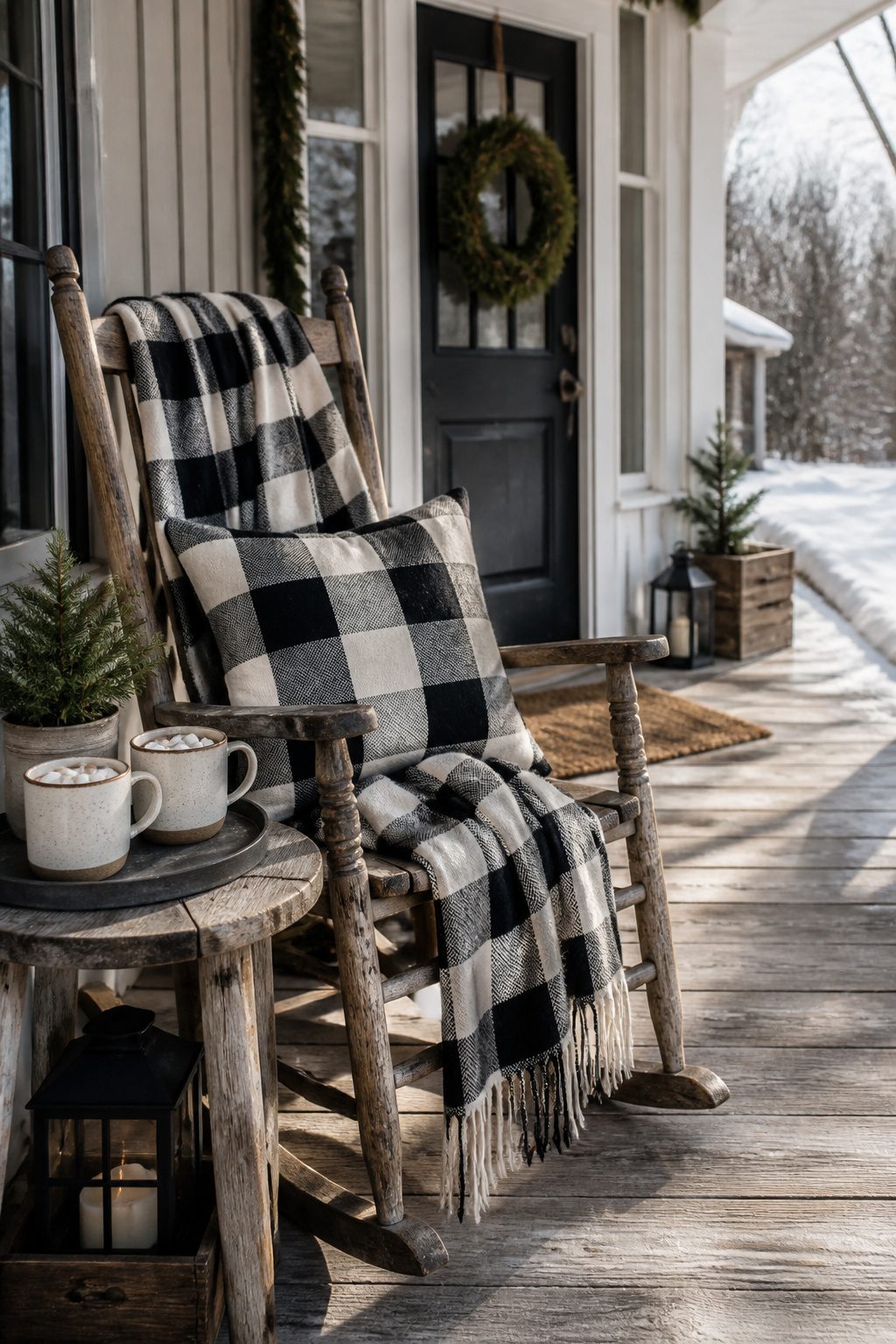
Buffalo check pillows do more heavy lifting on a rustic porch than almost anything else you can buy.
The black-and-white pattern reads farmhouse instantly, and paired with a matching throw, it ties together lanterns, greens, and whatever ribbon you have on the wreath without any planning.
I have seen setups where the pillows and blankets carry the whole color story while everything else stays neutral year-round.
The real decision is fabric. Outdoor-rated polyester or solution-dyed acrylic survives December rain and won’t mildew if you forget them overnight.
Regular cotton or linen blends feel better against your cheek but need hauling inside after every use, and one damp week ruins them.
For a weekend project budget, two outdoor pillows and a single acrylic throw soften the rockers or bench enough that the porch quits feeling like a landing pad and starts feeling like a room.
6. Lighting
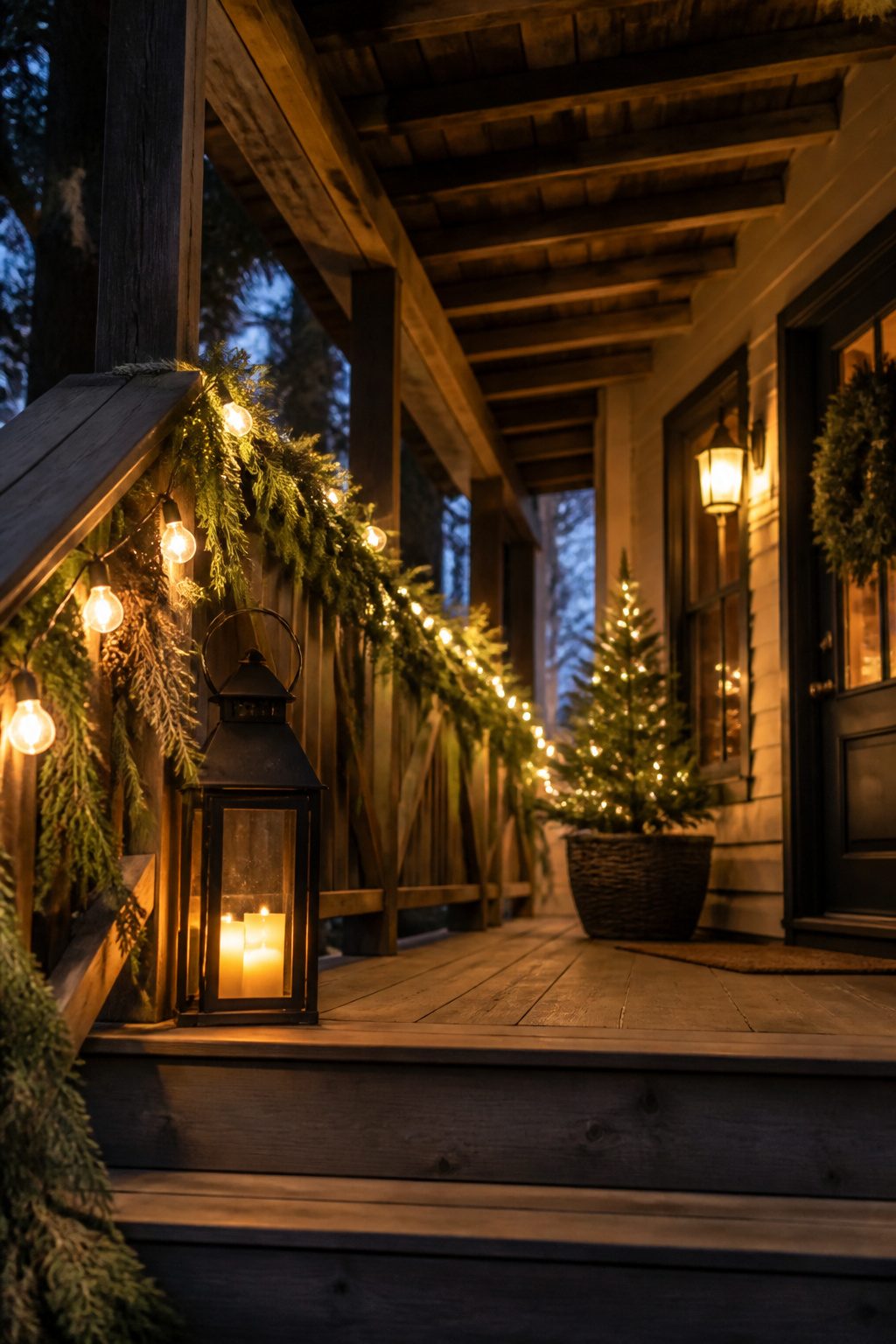
Warm white bulbs make the difference between a porch that glows and one that looks like a parking lot. The sources I read all pushed toward 2700K or lower; anything labeled "daylight" fights every rustic texture you have out there.
Fairy lights and twinkle lights do the heavy lifting on a budget. Battery-powered strands run about $6–$12 per set, which matters when you are wrapping railing or tucking them into garland.
Solar works if your porch gets direct afternoon sun; otherwise the dim output by 8 p.m. wastes the effort. A simple outlet timer set to 5 p.m.–11 p.m. keeps the show running without the bill climbing.
Lanterns layered in between the strands give the eye somewhere to rest.
The black iron candelabra at $84 from Antique Farmhouse sits heavy enough that wind does not tip it, and the height draws attention up toward door height where you want guests looking.
I would fill it with flameless candles; real ones gutter in December drafts and leave wax on iron that is not fun to chip off in January.
The move that costs nothing extra: plug everything into one timer so the whole porch snaps on together. A single warm wash beats chasing down which strand failed.
7. Signs
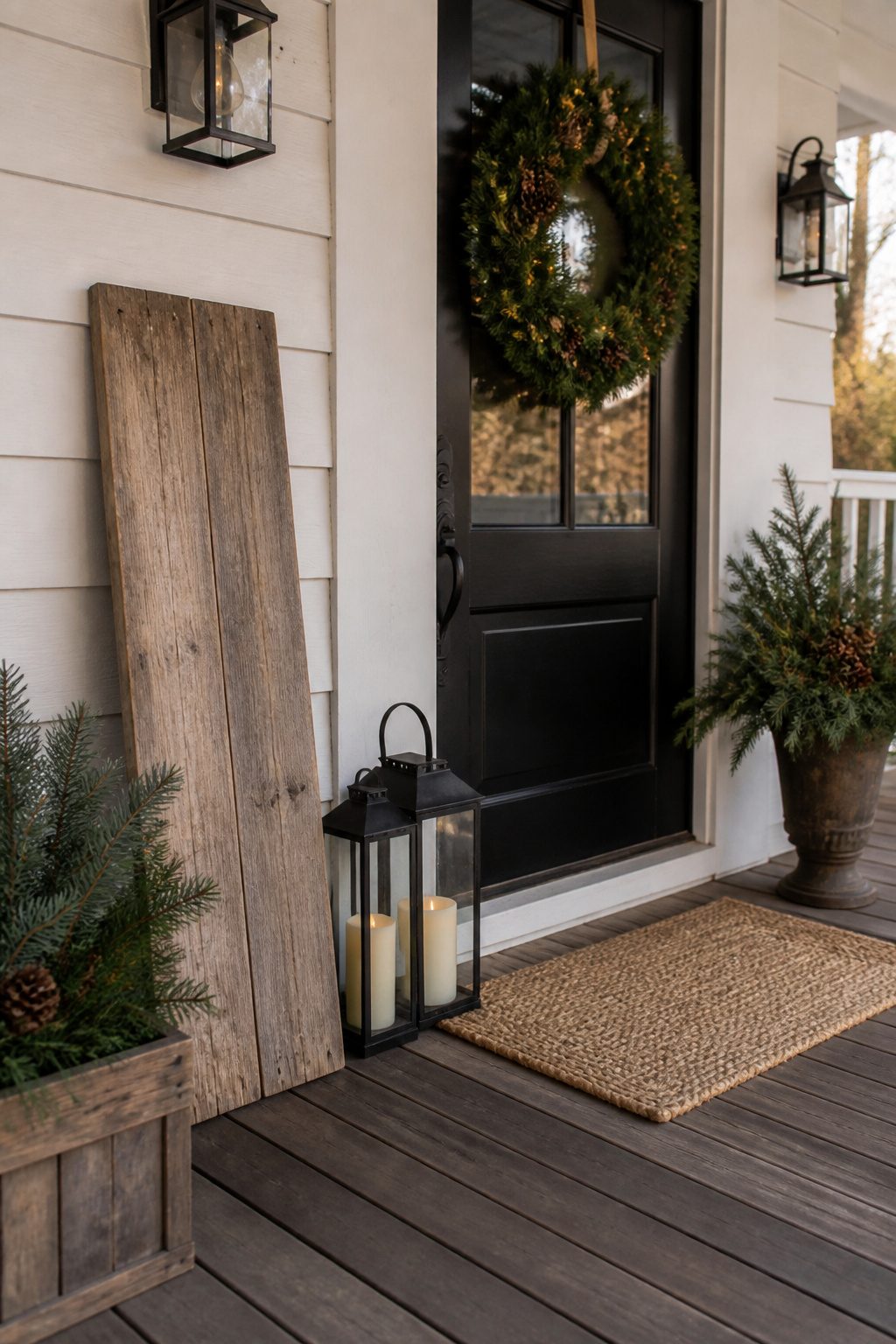
A wooden sign leaning against the siding beside the door adds that hand-me-down farmhouse feel without blocking the wreath or competing for attention where guests actually knock.
The sweet spot is six to twelve inches of clearance from the door frame, low enough to read from the walkway but tucked enough that it reads as a found object, not a billboard.
Hand-lettering wins over printed vinyl if you want the rustic front porch christmas decor look to hold up in person. Paint or a wood-burned message weathers more honestly than a laminated print, which peels at the corners by New Year’s.
Pine and cedar boards take moisture better than MDF, and a quick coat of exterior poly on the face keeps the lettering from bloating in rain.
I skip the "Joy" plaques that dominate every craft fair; a simple "Come In, It’s Warm" or even a house number with a small evergreen sprig painted in one corner feels less like a department store set.
Placement matters more than the message.
If your wreath is oversized or your door a bold color, the sign should sit on the opposite side of the stoop or lean against a nearby planter, not mirror the wreath in a forced symmetry.
Two competing focal points at eye level make the porch feel staged rather than lived in.
8. Planters
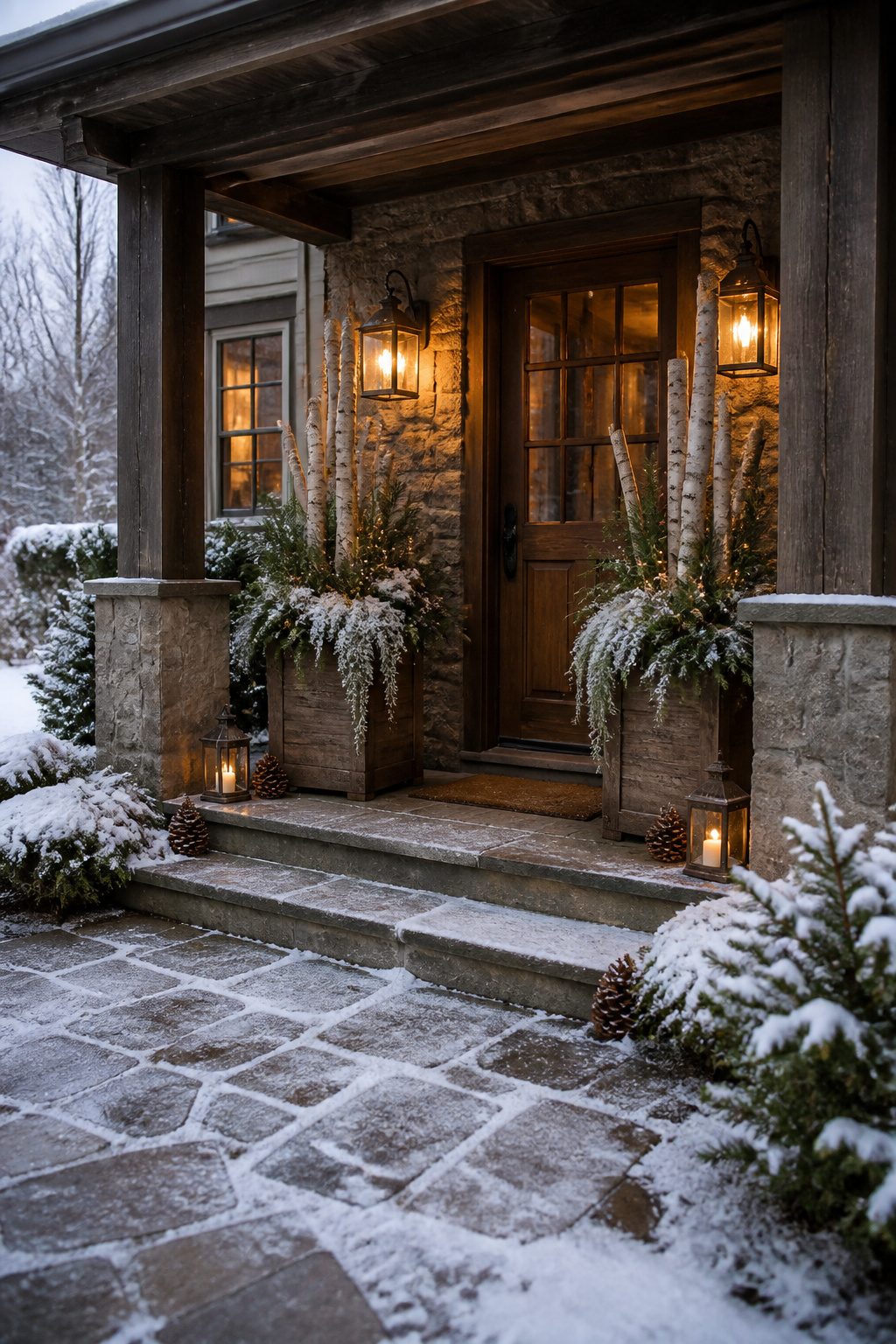
The planters flanking my door last December held cypress greens and birch poles I’d cut from a neighbor’s fallen tree after a windstorm.
Flocked garland draped over the rim buys you another six weeks once the red berries and plaid ribbon come down in January; the winter-woods look does not depend on Christmas color at all.
A wooden planter box, even a cheap cedar one from the hardware store, carries that farmhouse porch feel without asking for lights or signs. Pine cones fill gaps where soil shows, and they cost nothing if you collect them yourself.
The whole arrangement runs under $15 if you already own the container, and the evergreen elements stay crisp through February cold snaps where I live.
Transitioning to pure winter decor means stripping out anything red or gold, leaving the greens and birch to stand alone.
That shift takes ten minutes on New Year’s weekend, which matters when the porch is already freezing and motivation is low.
Color Schemes That Hold Together
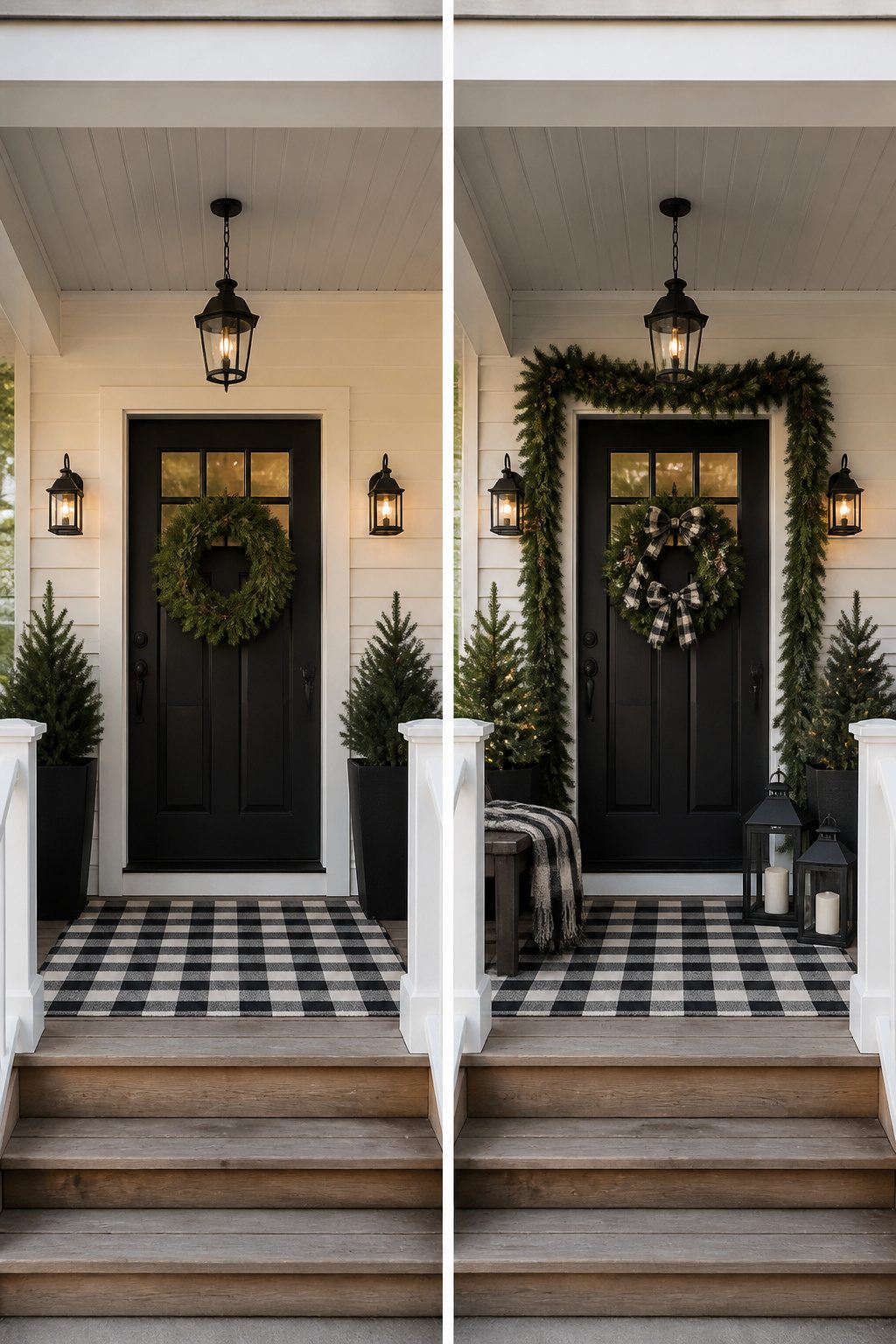
Red and green still reads Christmas, but three colors is the ceiling before a porch starts looking like a department store display. The combinations that actually hold together are narrower than you’d think.
A black, white, and green palette ties directly to a black door, with buffalo check and burlap doing the work of pattern without extra color. Green, black, and white in a small alcove stays streamlined without losing the warmth.
If your house already runs blue, a mixture of red and blue keeps the holiday feel without fighting the siding or the cushions you’ve already got.
The rug is where this starts. A rosy red rug anchors red-and-white buckets and striped ribbon; a black and natural rug bridges blue cushions to red trucks and vintage pieces.
Your existing exterior colors choose the palette for you. Work with the door, the trim, and whatever seating cushions you already own rather than buying new ones to match the decor.
The wreath ribbon, the garland accents, and one textile piece carry the scheme across the whole porch.
Layering Textures Without Clutter
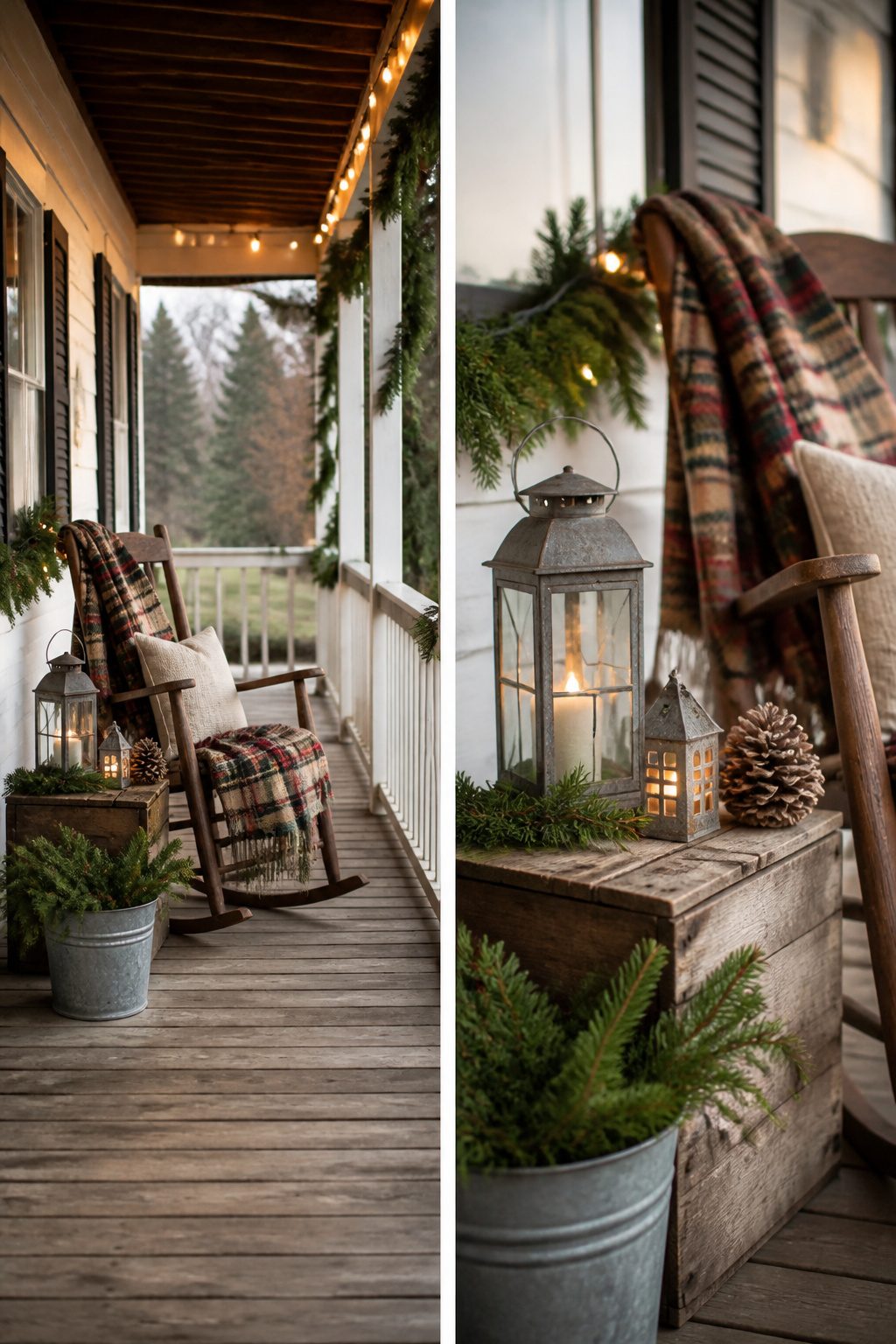
Three textures on a porch is usually the ceiling before it starts looking like a yard sale.
On my last place, a four-by-six landing with a railing, I kept to one wood tone, one metal finish, and one fabric and still had enough variation that the space felt finished.
The wood came from a crate I turned on its side for a stand, the metal from a galvanized bucket holding birch twigs, and the fabric from a single plaid throw draped so it caught the light from the door.
The step back matters more than the shopping. I stand at the sidewalk before I add anything else.
If my eye lands on a fourth texture before it finds the door, something has to move inside.
For small porches, that usually means the fabric goes first; a pillow or a throw reads as clutter faster than a solid object with a clear shape. The metal and wood can carry the season without it.
DIY Elements That Save Money
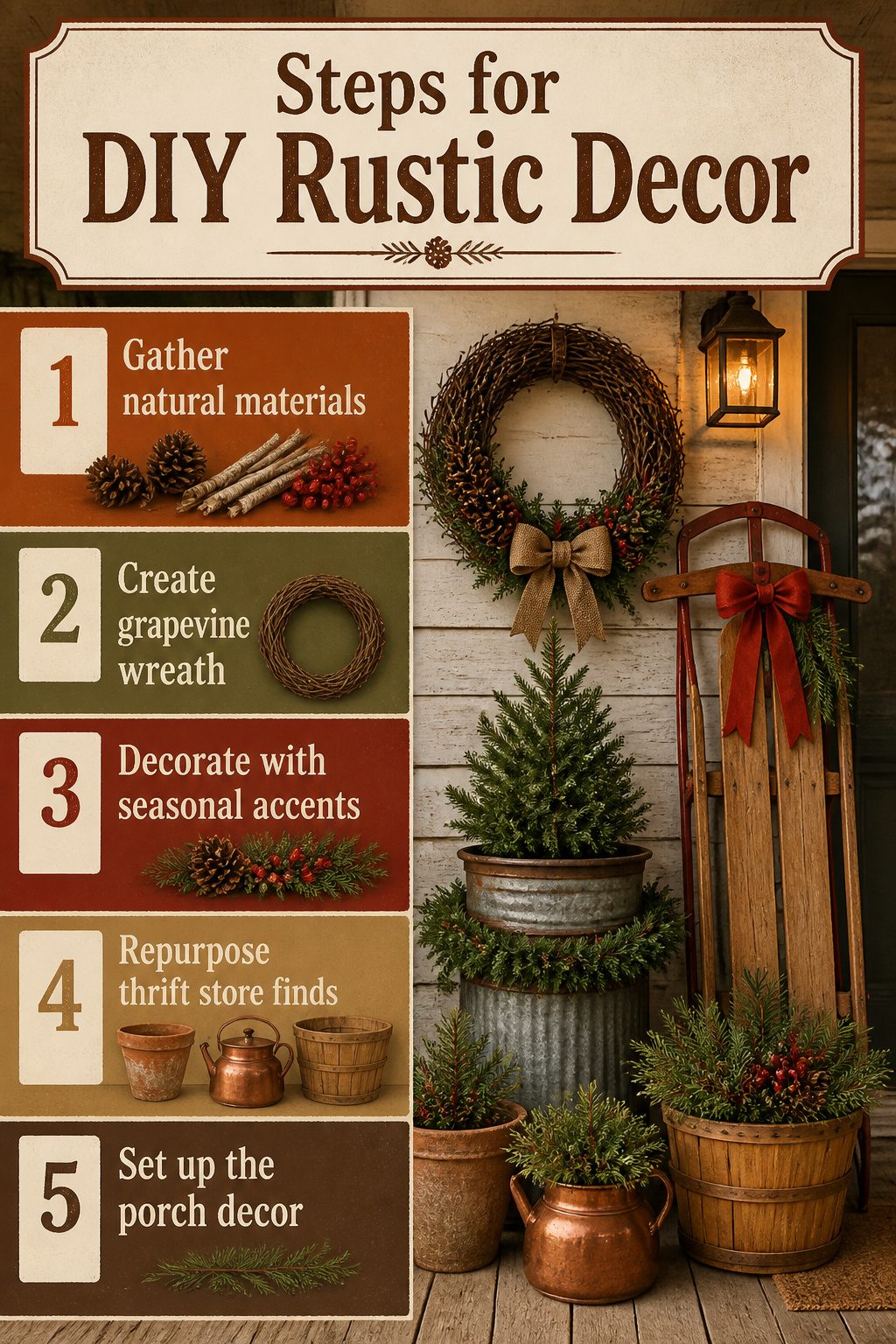
A grapevine wreath base from the craft store runs about eight dollars, and a walk through the yard or a nearby park supplies the rest. Pine cones, birch twigs, and a handful of red berries wire together in twenty minutes.
The whole project sits in the $10 to $15 range and holds up through January if you mist it lightly on dry days.
Thrift stores are where the rustic front porch christmas decor look actually comes together. Last year I found a galvanized chicken feeder that now serves as a mini tree stand, wrapped with leftover garland.
Clay pots, copper pieces, and bushel baskets from the same aisles fill with fresh greens and sit by the door. Each piece takes maybe an hour to clean and stage, and the cost stays under five dollars per container.
The vintage sled propped beside the feeder came from a estate sale for twelve dollars. A red ribbon and a sprig of greenery turned it into the piece neighbors ask about.
These projects are weekend-sized, not month-long productions. One morning for gathering, one afternoon for assembly, and the porch reads as intentional rather than assembled from leftovers.
What I Spend and Where I Cut
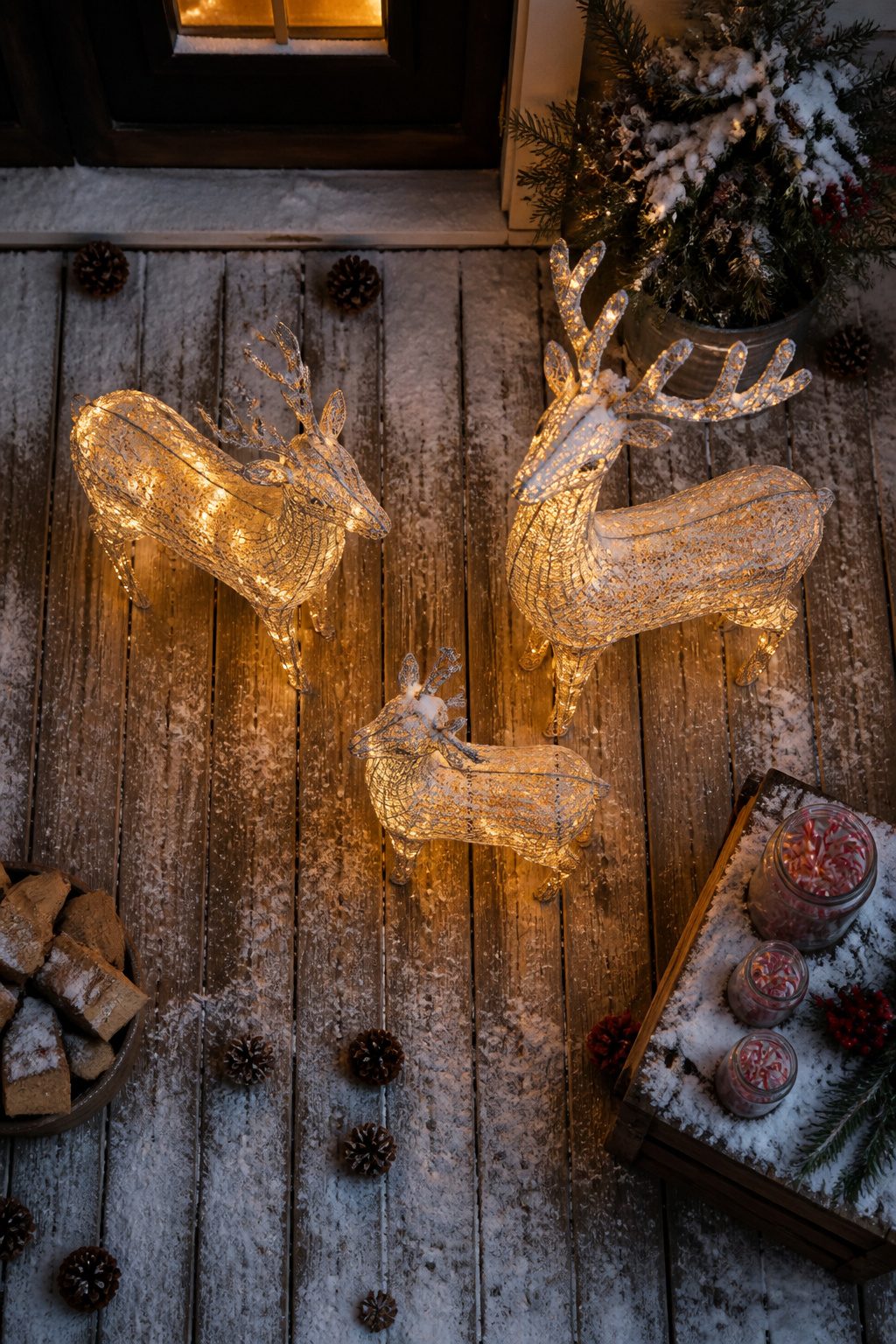
A full rustic front porch christmas decor setup can run past $200 fast if you buy everything at once, so I split mine into under-$50 accent collections and one bigger piece that carries the scene.
The 3-piece 5-foot champagne reindeer family with LED lights eats most of the budget at roughly $90 with free 2-day delivery, but those 290 warm white LEDs and weather-resistant mesh fabric mean I do not replace them yearly.
The reindeer stand 5 feet tall, which reads as substantial from the street without blocking the door.
For the rest, I stay under $50 total: a mason jar of candy canes, a few buffalo check pillows I rotate from fall, and pine cones from the yard stuffed into a lantern I already owned.
The wrapped gift boxes and greenery clippings cost maybe $15 in craft paper and wire. The reindeer do the heavy lifting; everything else just fills the frame so the porch does not look sparse beside them.
Frequently Asked Questions
What are some budget-friendly Christmas decorating ideas?
A full rustic front porch Christmas decor setup can stay under $50 for accents if you split the budget wisely. DIY a grapevine wreath base with yard-collected pine cones and twigs for about $10–$15.
Thrift stores yield galvanized containers, clay pots, and vintage pieces under $5 each. One bigger item, like a 5-foot LED reindeer family at roughly $90, can carry the whole scene while the rest fills in around it.
How can I make my Christmas decorations look cohesive?
Match your porch palette to your home’s existing exterior colors, not the other way around. Three colors is the ceiling before the porch reads as cluttered.
The wreath ribbon, garland accents, and one textile piece carry the scheme across the whole space. Work with your door color, trim, and any cushions you already own rather than buying new ones to match the holiday decor.
What are popular Christmas decorating trends?
Vintage Christmas decor is making a comeback, with tartan or plaid, gold, red, and wooden elements leading the look. On a rustic front porch, this translates to hand-lettered wooden signs, galvanized metal containers, weathered sleds, and retro molded figures.
Warm white LED lights at 2700K or lower preserve the nostalgic feel better than daylight-toned bulbs.