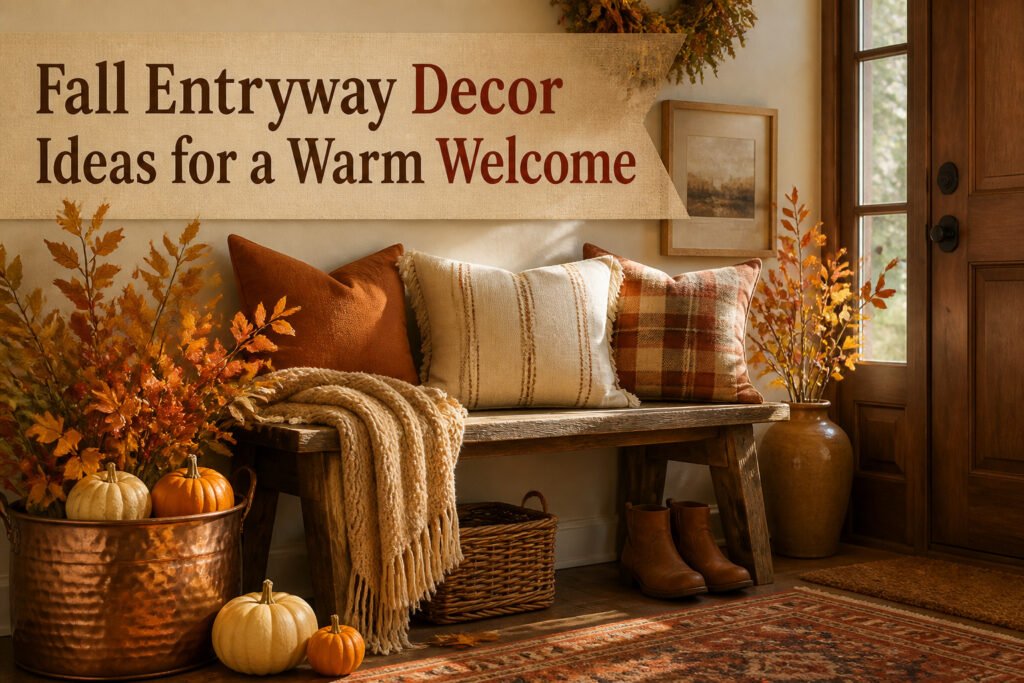
Fall entryway decor runs from a single $8 bundle of seasonal picks swapped into a three-year-old wreath to a full console layered with copper vases and cloche-covered pumpkins.
What separates the setups that last until Thanksgiving from the ones that feel tired by mid-October is whether the styling accounts for how the space actually gets used: the mail, the keys, the boots kicked off at the door.
1. Wreaths and Door Decor
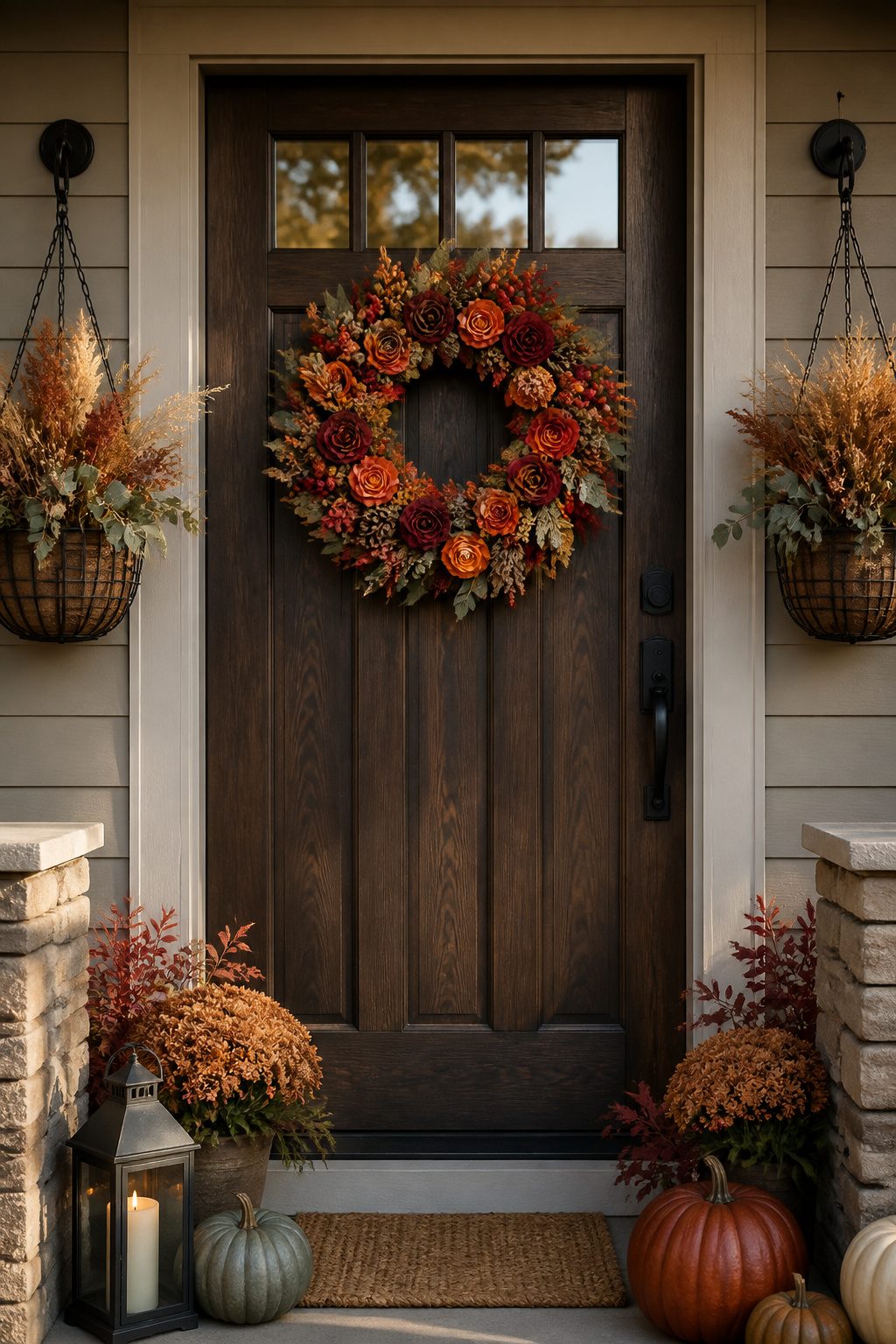
A 22" wreath of faux roses, berries, and pinecones hung at standard door height fills the frame without crowding the hardware, and that proportion is what makes the entrance read as finished rather than cluttered.
I learned the hard way that anything under 18" disappears against a Craftsman-style door, while anything over 24" starts scraping shoulders and collecting door-swing damage by mid-October.
Wire-hanging baskets flanking the door with dried oat grass and a few preserved eucalyptus stems carry the same palette lower, which matters because most visitors see your entryway from the sidewalk or the top of your steps before they ever reach the mat.
The wreath sets the expectation; the baskets confirm it.
If you rent, over-door hooks rated for 15 lb or more spare you any drilling, and the baskets can sit on a narrow ledge or even a pair of matching plant stands instead.
I have reused the same base wreath for three years now, swapping in a $8 bundle of seasonal picks from the craft store when the old ones fade, which keeps the whole setup under $40 and takes about twenty minutes the first Saturday of October.
2. Console Table Styling
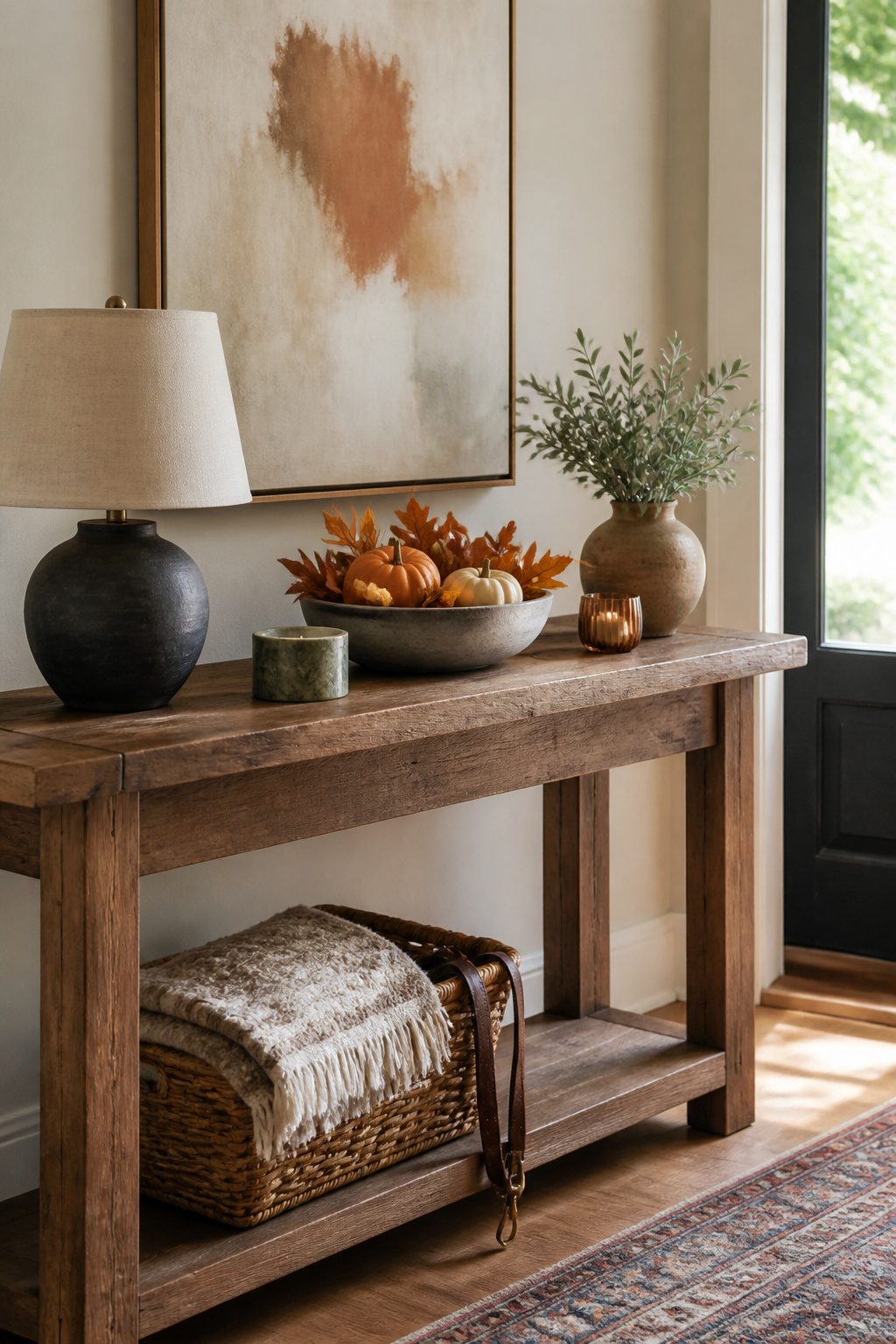
The console table in my entryway collects mail, keys, and whatever else empties from pockets on the way in, so any fall styling has to survive that reality.
Bowls, baskets, and other containers are the practical answer: a ceramic bowl or wooden tray corrals mini pumpkins and faux leaves without losing the surface to clutter.
A wicker basket underneath handles the overflow, whether that’s real pumpkins, a stack of folded throws, or the dog leash that otherwise lives on the floor.
Leave at least a foot of open surface near the door for the daily drop zone.
Everything else can layer up: a copper vase with cotton branches, a small crate of pinecones, maybe a cloche over a single white pumpkin if the space feels too busy. The seasonal pieces work because they sit inside boundaries.
Without the bowl or basket, the same objects read as mess.
I skip the heirloom gourds on the console itself. They roll, they bruise, and one knocked-over pumpkin means seeds in the rug.
Faux ones in a container solve that, or real pumpkins go in the basket on the floor where a bump won’t matter.
The textiles come in through a folded throw draped over the edge or a pillow tucked into that lower basket, not piled across the working surface.
The look lasts until Thanksgiving because the system accounts for how the table actually gets used.
3. Seating Area Accents
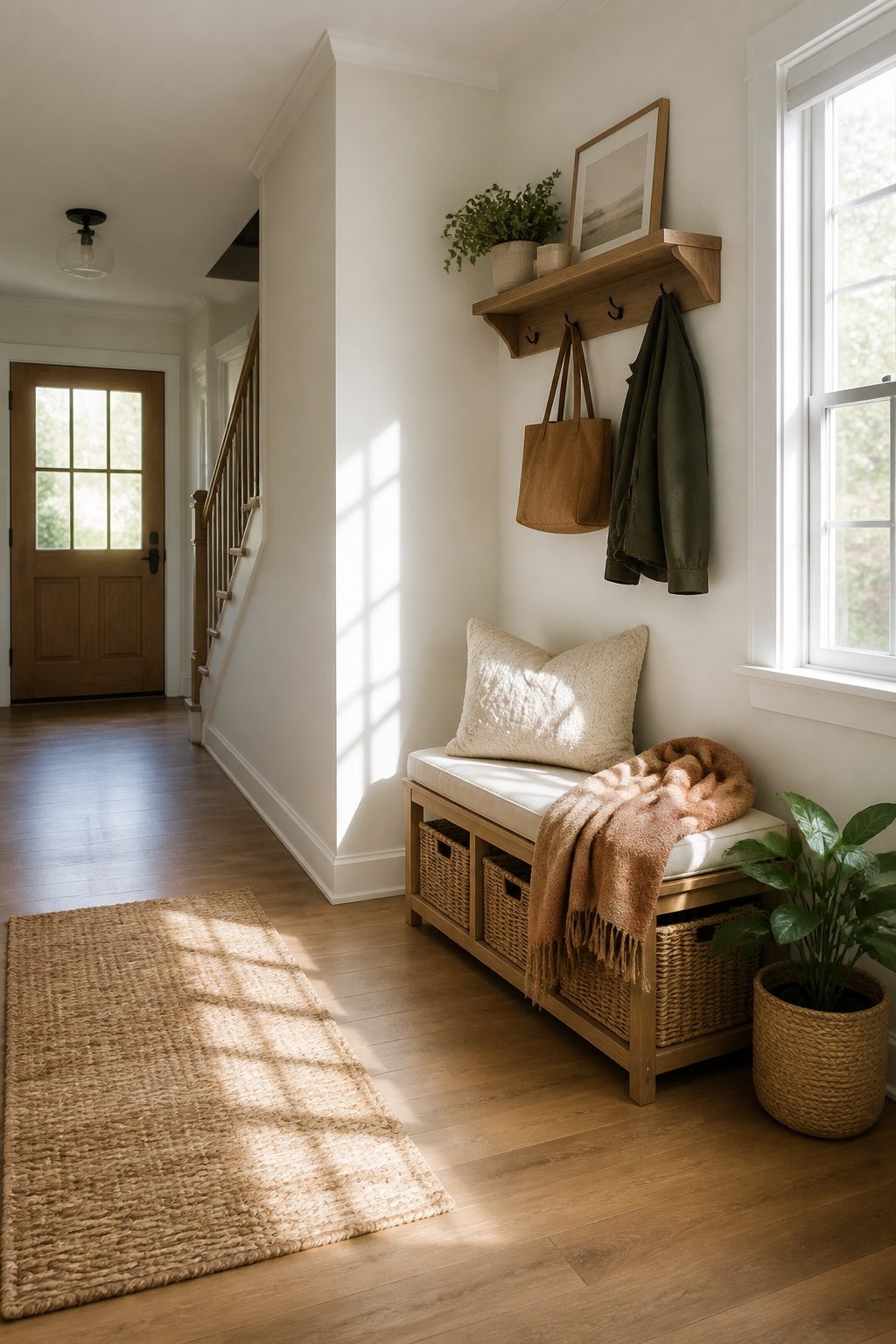
A bench in the entryway lives two lives. In the morning it holds a grocery bag while you lace up boots; by evening it catches the mail and tomorrow’s returns.
Fall pillows and a throw blanket can keep it from becoming a pure drop zone, but the trick is leaving the seat itself usable.
In my own narrow rental foyer, a bench with storage underneath solved more problems than a wider one would have. Wicker crates slid under for shoes, a nubby knit pillow and a tossed scarf on top.
The seat stayed clear for sitting, and the textiles signaled autumn without blocking the door swing. A chair works the same way if that is what fits; the point is the layering, not the furniture type.
Change the pillow covers and the throw, and the space reads entirely different by Thanksgiving. That is the budget win: the bench stays, the season moves on.
4. Seasonal Textiles
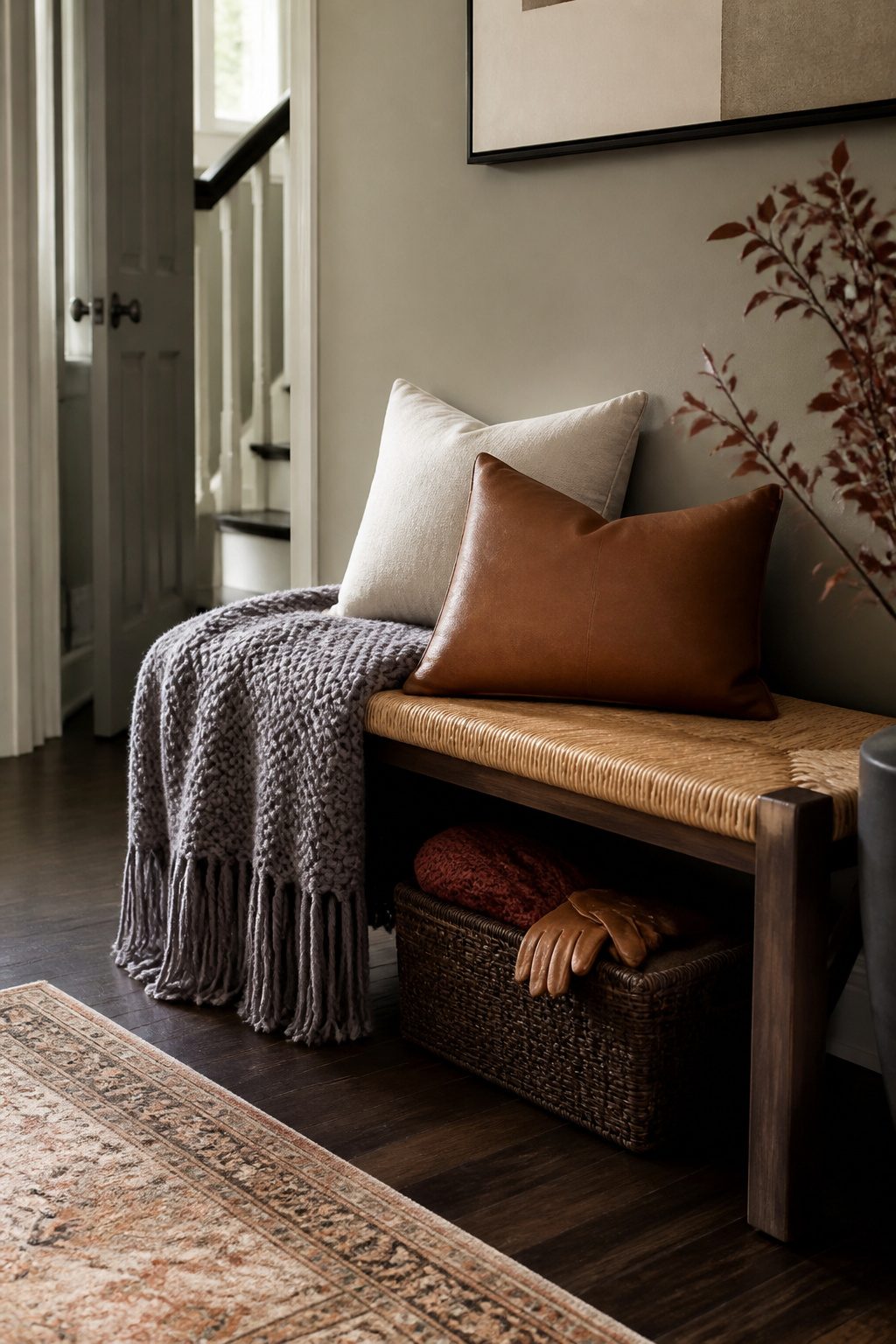
Fall textiles should feel like a weight change you notice when you walk in.
Last year I swapped the linen throw on our entryway bench for a chunky knit blanket from JOANN, and the difference was immediate: the same space suddenly read as October instead of August.
The grey version of that knit is back this season, and either color works as an anchor against lighter pieces.
The trick is pairing that softness with something sharper. Faux leather pillows on the bench do this, popping hard against cream neighbors without the maintenance real hide demands in a high-traffic spot.
I keep the leather to two pillows max; more and the bench starts looking staged rather than used.
Layering without clutter means every textile has to earn its place by touch or by sight, not both.
The knit blanket adds texture you want to grab, so I fold it narrow and let it hang off one side rather than piling it. The pillows handle the pattern.
A darker seagrass basket underneath corrals the loose ends: gloves, a spare scarf, the dog leash. The basket reads as storage, not decoration, which keeps the whole arrangement from feeling like a display you’re afraid to disturb.
5. Natural Elements
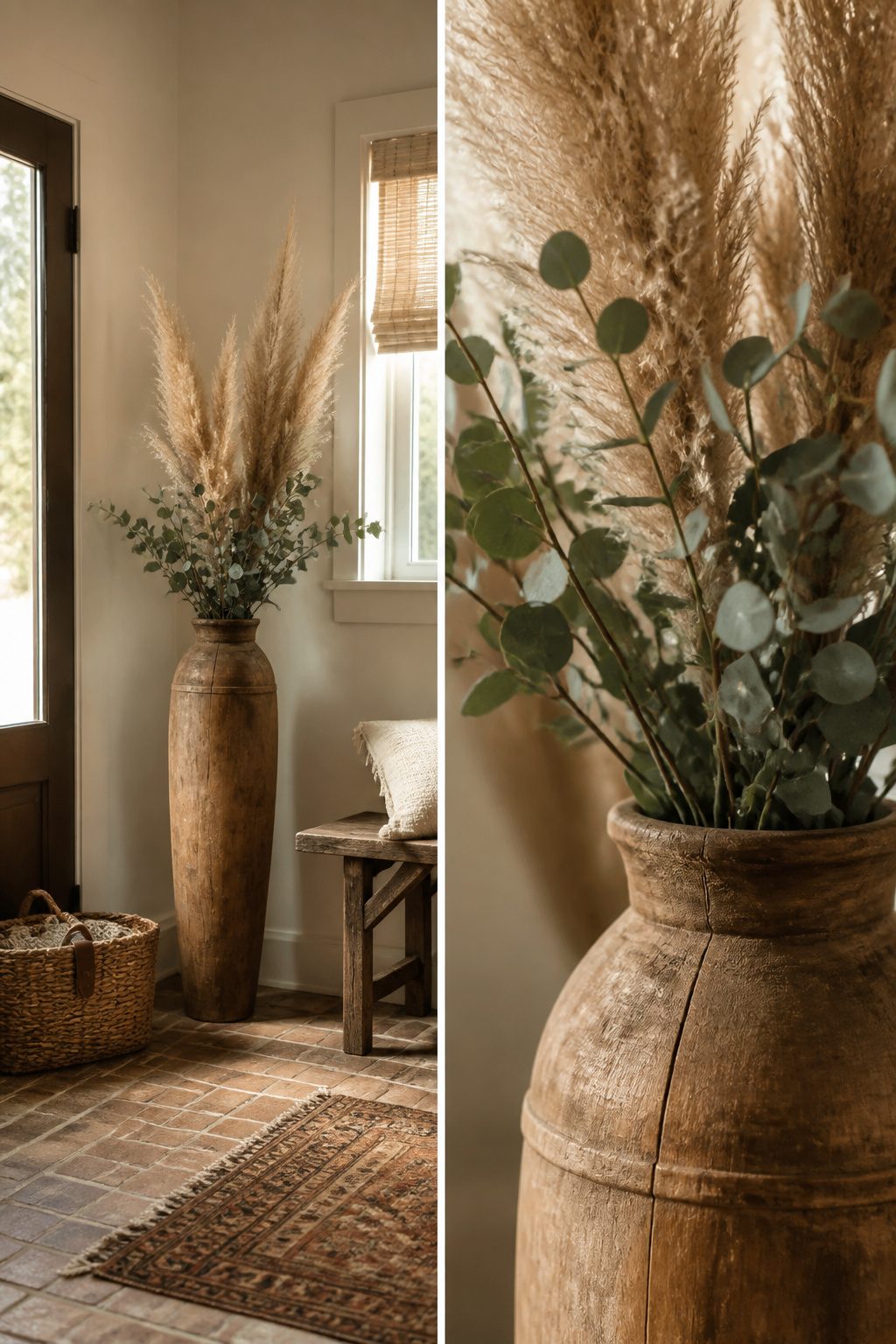
Branches and dried florals are the fastest way to bring fall texture into an entryway, but not all greenery survives a weekend project intact.
Eucalyptus and natural grasses hold their shape for weeks without shedding, which makes them the safer bet for a vase on the console or a cluster in a rattan basket by the door.
Fall leaves and berry branches look richer at first, yet by week three you are sweeping needles off the floor every morning, a lesson I learned after trying to keep a spray of oak leaves looking crisp past Thanksgiving.
A tall floor vase, especially one in rattan or raw wood, does more than hold stems; it warms the corner itself.
Pampas feathers and pussy willows add height without the maintenance, and a vintage metal bucket can handle a heavier bundle if your space leans more utilitarian. Dried hydrangeas work well for fall too, though they read softer than grasses.
The real choice is between drama and durability. Fresh-cut branches and fall leaves give you that peak-autumn look for about ten days.
Dried eucalyptus and pampas settle in for the season. For a renter swapping decor twice a year, the dried route saves both the weekend and the broom.
6. Pumpkins and Gourds
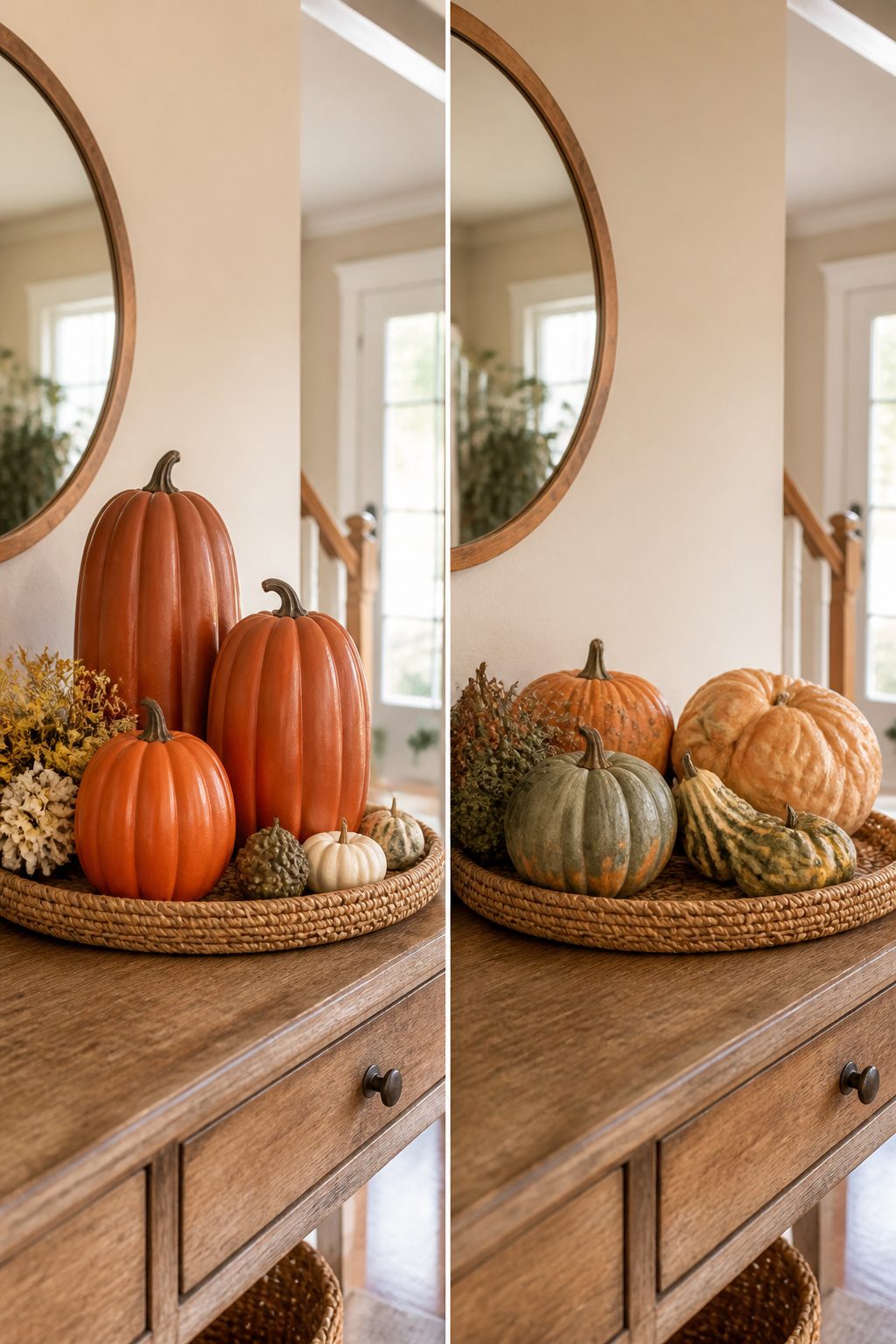
Pumpkins carry the season so hard that skipping them feels like skipping the wreath.
Real ones bring that matte, dusty orange and the satisfying heft of something grown, but an entryway is often warmer and more humid than the porch where they belong.
The mold starts at the blossom end, and in a closed foyer with heating vents nearby, a real pumpkin can soften in two weeks. Gourds dry better and last year to year, though they read more rustic than festive.
Faux pumpkins solve the timeline. The white and green ones JOANN stocks now look convincingly stem-heavy and waxy, not the hollow orange plastic of a decade ago.
A cluster of three on a console, mixed heights, reads collected rather than placed. Real for October parties, faux for the two-month haul.
Budget-wise, one decent faux pumpkin runs about what two real ones cost, but the math flips if you’re replacing gourds twice.
7. Lighting
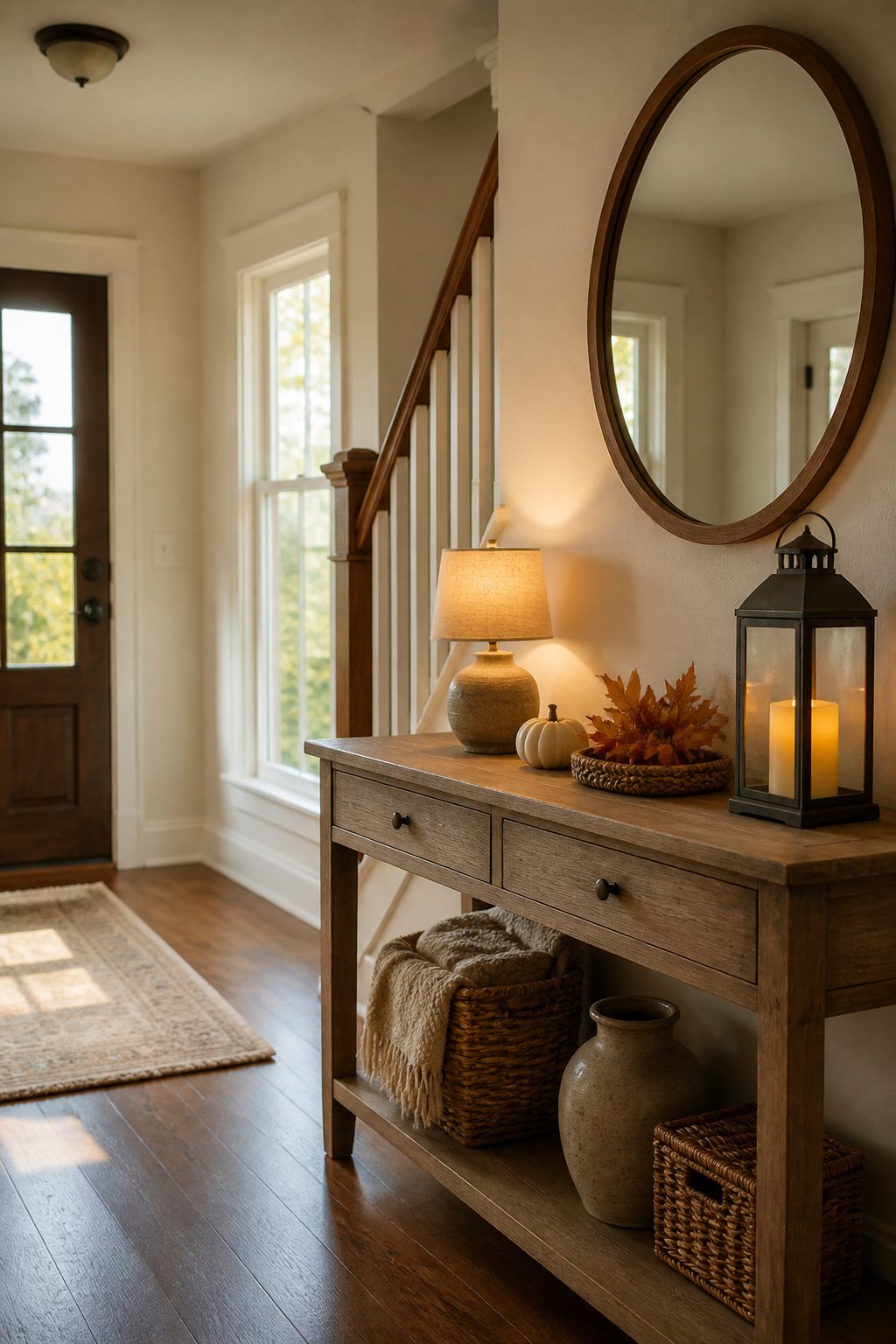
The ceiling fixture in my last rental was a single flush-mount that threw the kind of blue-white light you notice mostly when it’s gone.
For fall, I wanted the opposite: something that pooled downward and warmed the walls without rewiring anything.
A small table lamp on the console solved it. I ran a cord behind the table, used a warm bulb around 2700K, and put the whole thing on a basic plug-in timer so it clicked on before I got home.
The glow reached just far enough to make the entryway feel occupied, not staged.
Battery-operated flameless candles did the rest. I set two in a lantern on the floor, the kind with a wax body and a flickering plastic flame that tilts when you breathe on it.
They run on a timer cycle, six hours on and eighteen off, so the batteries last most of the season.
No open flame meant no landlord conversation, and no cord meant I could move them to the step when I wanted the light visible from the street.
The mistake I made first was buying cool-toned LEDs for the lamp. They looked fine in the package and wrong everywhere else.
Swapping for warm bulbs cost maybe eight dollars and changed the entire wall color after dark.
8. Art and Mirrors
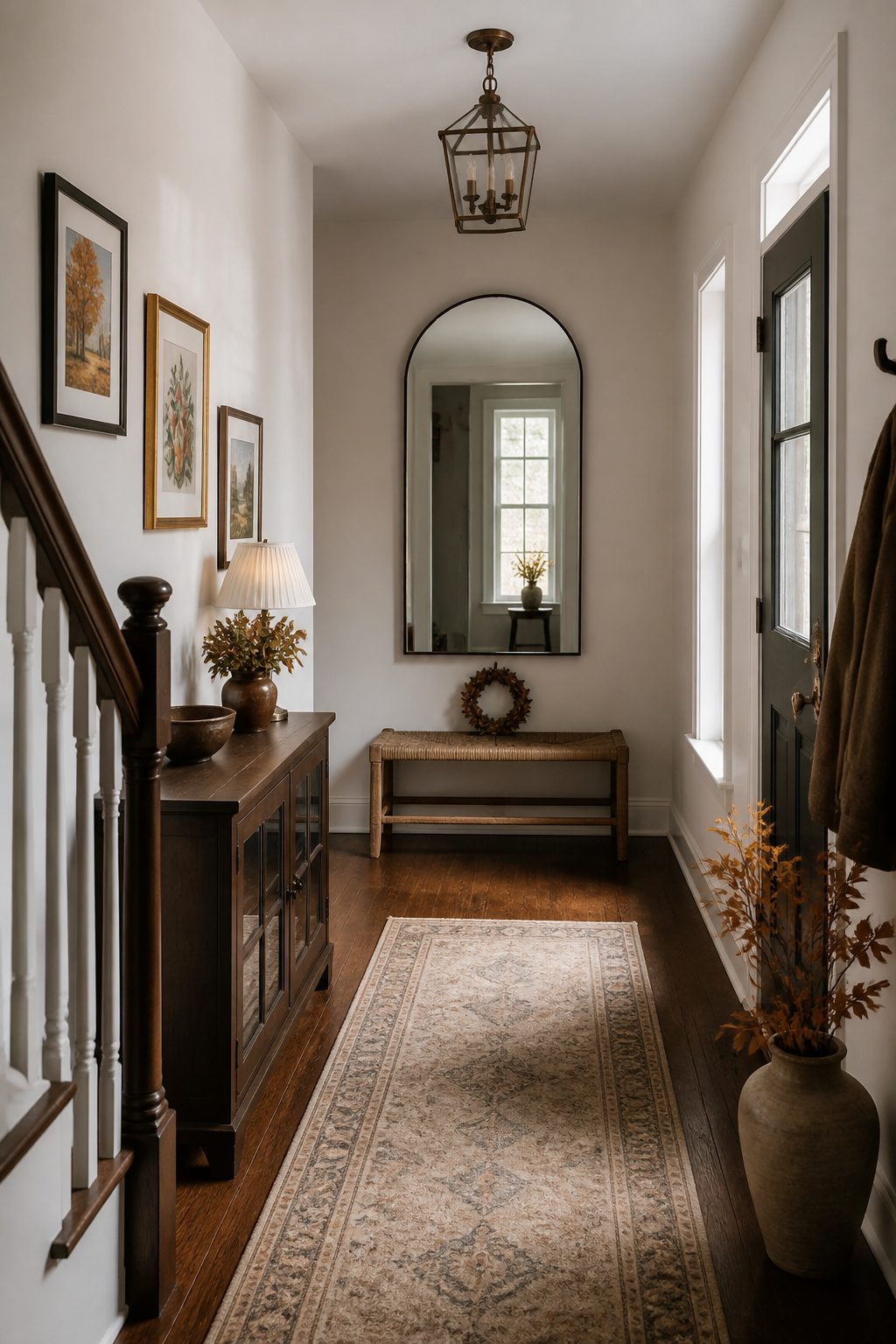
A narrow rental entryway needs one oversized mirror more than it needs art, and the mirror does not have to be expensive.
Thrifted frames and a $25 arched mirror from a big-box store have carried me through three apartments; the trick is hanging it where it catches window light or a lamp, because a mirror in shadow just hangs there.
For seasonal art, a trio of fall watercolors in mismatched thrifted frames layers well on a shelf or above a console, and swapping the prints costs less than swapping the frames.
I have leaned a small wreath over an arched mirror in October and called it done.
A mirror opposite the door, with a bench pulled close, makes the wall feel twice as deep; art works better on the side wall, where you see it coming in rather than walking past.
If the budget is tight, start with the mirror and add one framed print. The rest can wait for next weekend.
Warm Color Palette
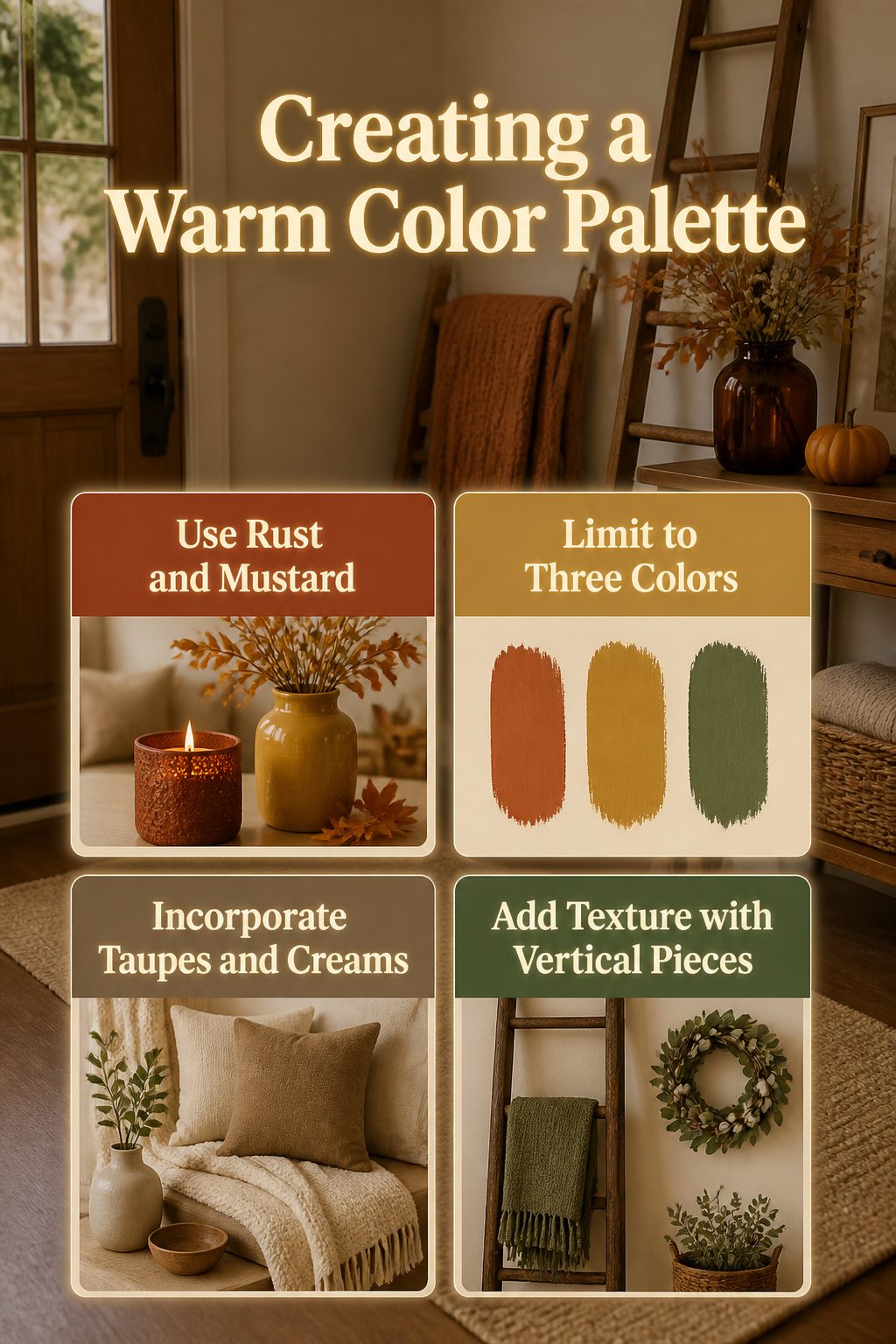
Rust, mustard, and olive green read as fall the instant they hit an entryway, but the mistake most of us make is stopping there and collecting every orange thing in sight.
The result feels like a craft store exploded, not like a room someone actually lives in.
What changed my own approach was adding taupes, creams, browns, greens, and whites as the base, then threading the brighter autumn colors through as accents rather than anchors.
Three colors, not five. That is the limit that keeps a small space from turning chaotic.
I pull a cream throw from the living room, a brown leather pillow from the bedroom, a green glass vase I already own, and suddenly the rust candle or mustard stem I bought for six dollars at JOANN has somewhere to land that makes sense.
The amber vase I use in summer, clear or blue then, swaps in for fall and echoes the same warmth without demanding new storage.
The vertical piece matters more than the objects themselves. A wood ladder against the wall, even bare, draws the eye up and gives blankets a place to live that reads intentional rather than piled.
Faux stems, cotton branches, or a wreath in those restrained tones finish it, but the palette does the work before any of that arrives.
Personal Touches
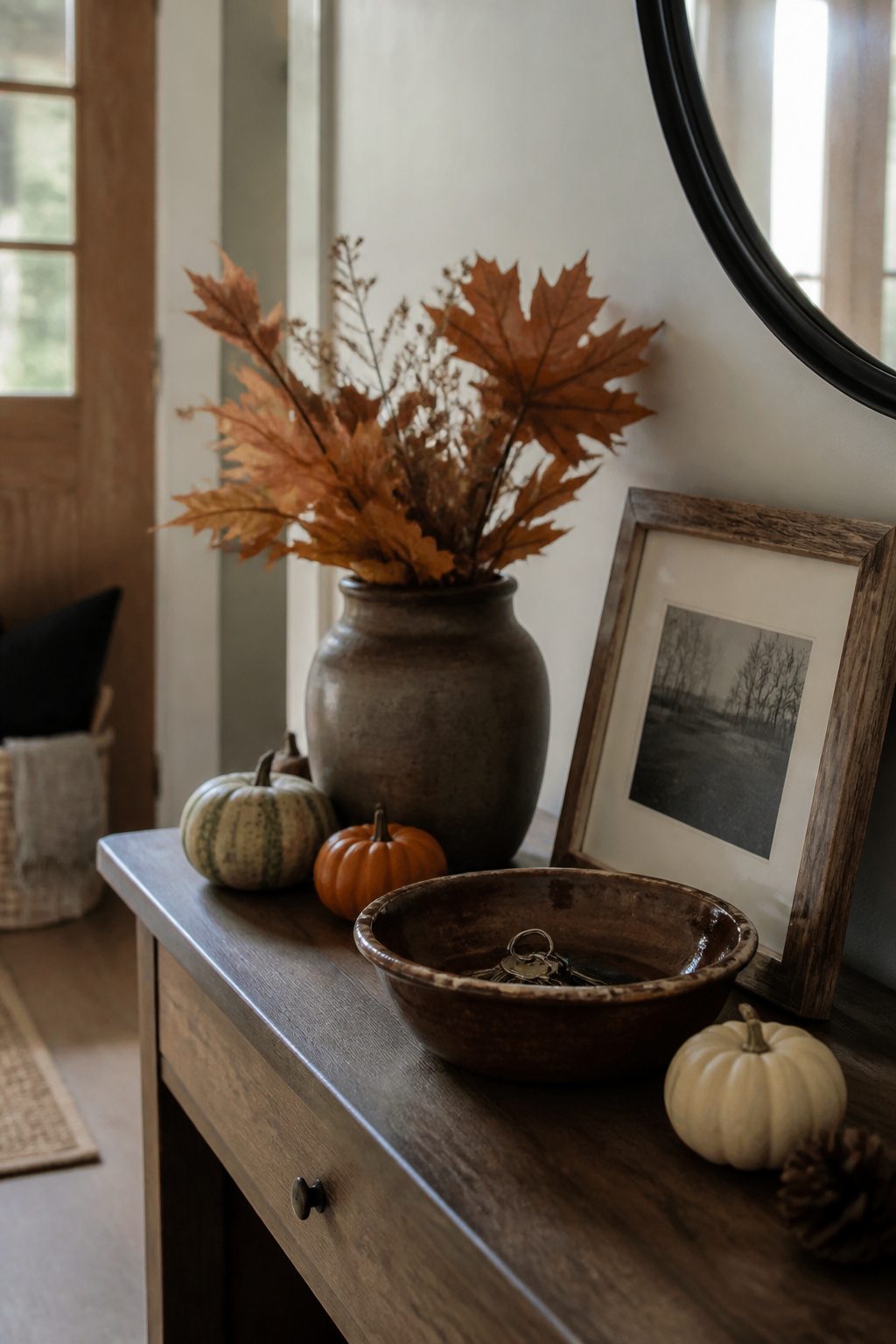
The bowl on my console table came from my grandmother’s kitchen, and the chip on its rim is exactly why it works for fall.
A heavy ceramic piece in warm brown glaze holds keys and mail without looking staged, and the imperfection means I never worry about dropping a pumpkin on it.
A single framed photograph can do the same job if the frame itself carries weight.
I reframed a black-and-white of my parents’ first house in a thrifted oak frame with visible wear, and the combination of personal image and aged wood reads as autumn without needing any orange around it.
The frame cost four dollars; the feeling it gives the space is the point.
Collections build over years, not weekends, and the entryway is where they earn their keep. My sister keeps beach stones she gathered as a teenager in a shallow brass tray.
In October she tucks a few dried seed heads among them, and the contrast between her gray stones and the spiky brown shapes is more specific than any store display.
Your own objects already carry the warmth this season asks for. The trick is choosing one or two and letting them sit where people actually pause, not clustering them into a museum case that no one touches.
Function Over Display
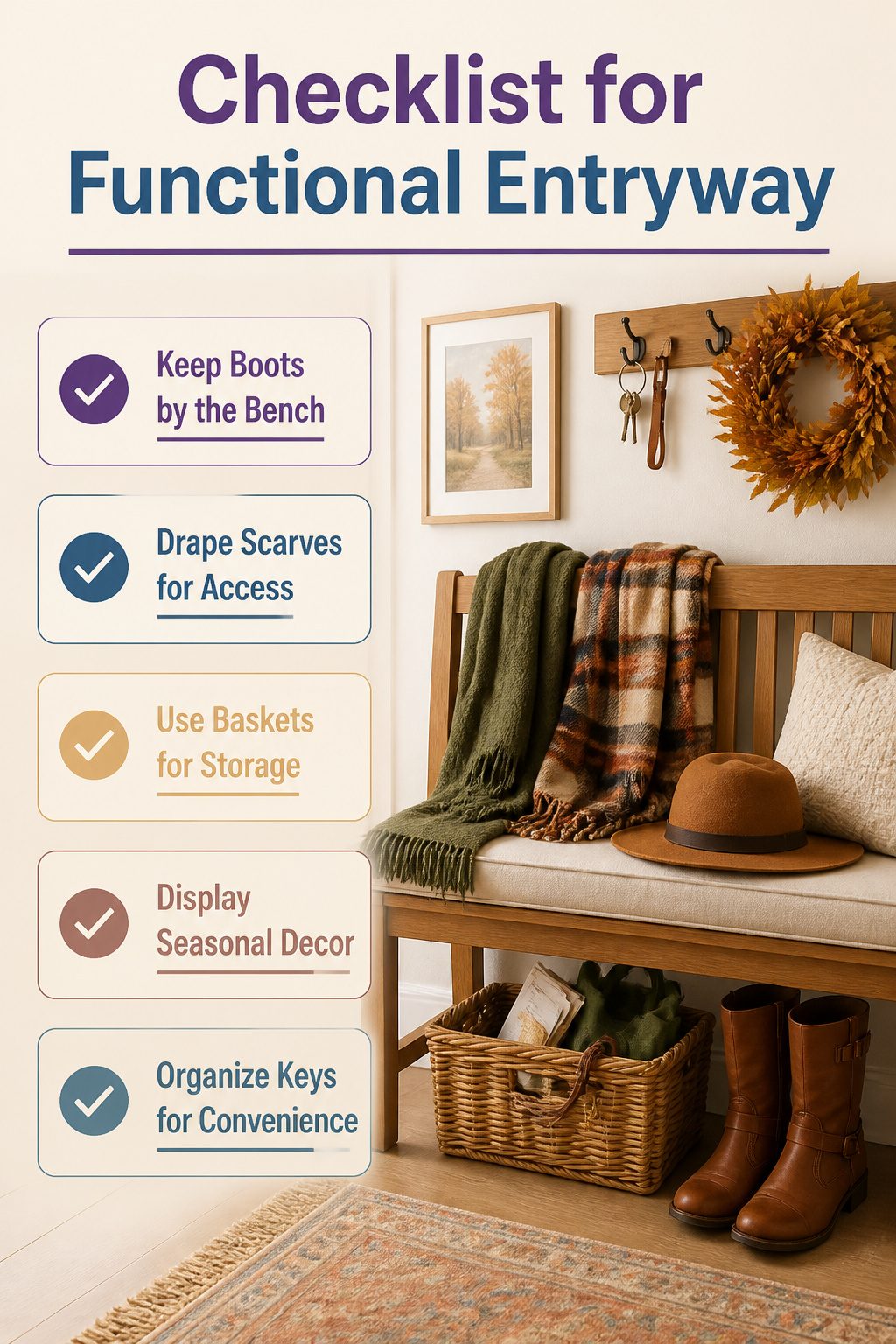
A bench in the entryway looks inviting until it becomes the landing strip for everything you carried in the door. The trick is giving the fall layer a home that does not fight your morning routine.
Tuck a pair of boots at the end and you get the casual, lived-in look without adding a second drop zone; the boots stay where you left them because the bench is already where you sit to put them on.
Scarves and small throw blankets do the same double work. An oversized scarf draped over the back reads as color and texture, but it is also what you grab on the way out.
The same goes for a felt hat tossed onto the seat: seasonal, handy, and easier to reach than if it were hidden in a closet.
Wicker crates or a simple basket slid underneath handle the uglier stuff. Mail, reusable bags, the dog leash: out of sight but not out of the room.
The bench still photographs well for the season, and you still find your keys.
Layering Textures Done Simply
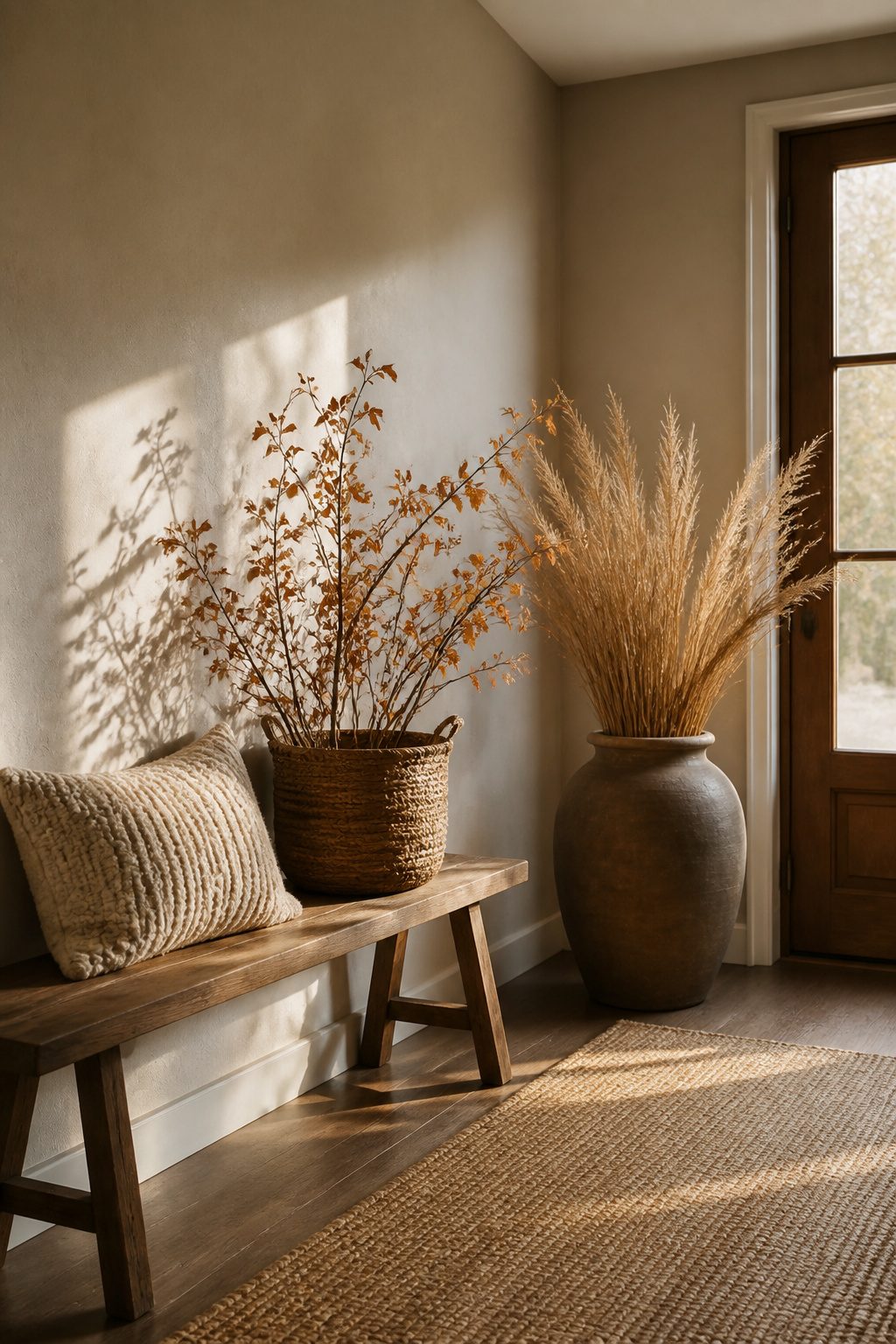
Chunky knits, seagrass, and faux leather read as fall because they catch light differently than summer’s flat cottons. The trick is limiting yourself to three textures in one sightline, and keeping two of them quiet.
In my entryway last year, I paired a nubby knit pillow with a darker seagrass basket underneath the bench and called it done.
The faux leather pillows I tested alongside them fought for attention; everything looked busy, and the space felt smaller. Two soft textures plus one hard or rough one is the safer rule.
A woven basket holding branches or a wooden tray under a cloche gives you that rough element without adding another fabric to the mix. If your bench already has a blanket, the pillow should be simpler, not another cable-knit.
The cost stays low because you are not buying a whole set; one $13 pillow cover and a basket you already own is often enough.
Frequently Asked Questions
How do you make a stunning entryway?
Start with a warm, proportional wreath at standard door height, around 22 inches, paired with matching baskets or planters at knee level so the whole entrance reads as finished from the sidewalk.
Add a mirror opposite the door to double the visual depth, then layer in one or two textured textiles like a chunky knit throw or a nubby pillow.
Keep the palette restrained to three colors so the space feels collected rather than crowded.
What should I hang in my entryway?
A mirror does more work than art in a narrow entryway, especially hung where it catches window light or a lamp.
For seasonal variation, lean a small wreath over an arched mirror in October, or layer a trio of fall watercolors in mismatched thrifted frames on a shelf above a console.
Tall fall stems reflected in a mirror also add height without taking up floor space.
How can I decorate my entryway for fall?
Keep it simple by adding key pieces for color, pattern, and texture: a wreath and flanking baskets outside, a ceramic bowl or wooden tray with mini pumpkins on the console, and one chunky knit throw or faux leather pillow on a bench.
Bring in natural elements like dried eucalyptus or pampas that hold their shape without shedding, and use warm bulbs around 2700K rather than cool LEDs.
The overall look should stay casual and inviting, with enough open surface left for keys and mail.