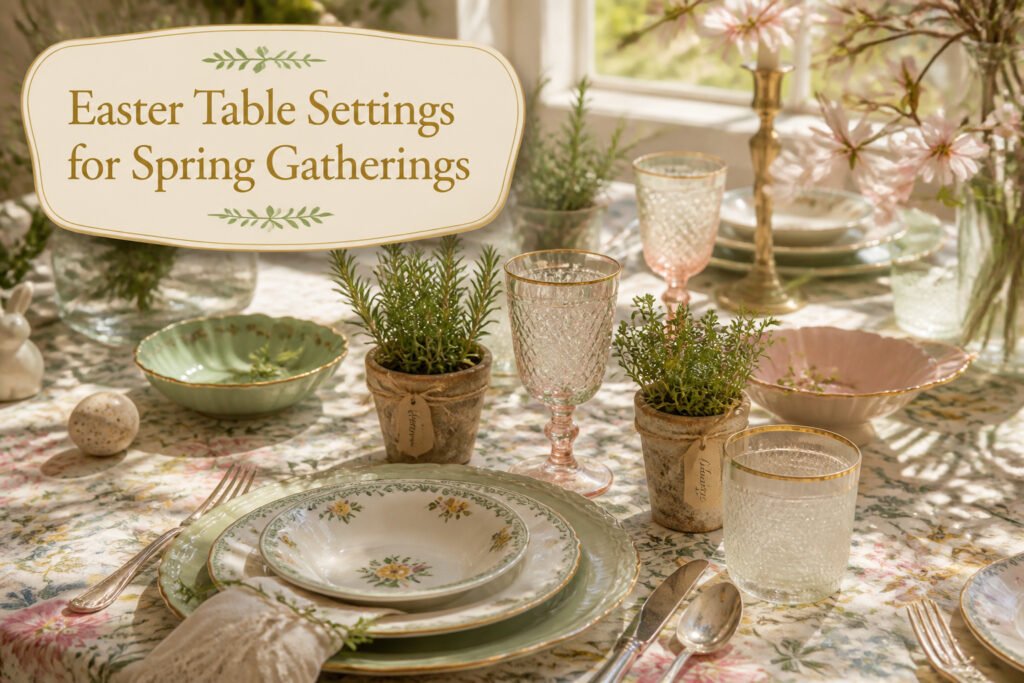
Easter table settings in 2026 run from a single lace runner pulled from a drawer to a full Annieglass spread, and the deciding factor is not budget but how much of Sunday you want to spend washing rather than visiting. The frosted glass bowls with gold edges that work for backyard brunch share space with antique silver that needs polishing the night before, so the real question is which jobs you will delegate to Thursday. A two-and-a-half-inch herb pot at each place doubles as a favor guests can carry home, provided you skip basil and its two-day guilt trip.
1. Frosted Glass Poppy Bowls
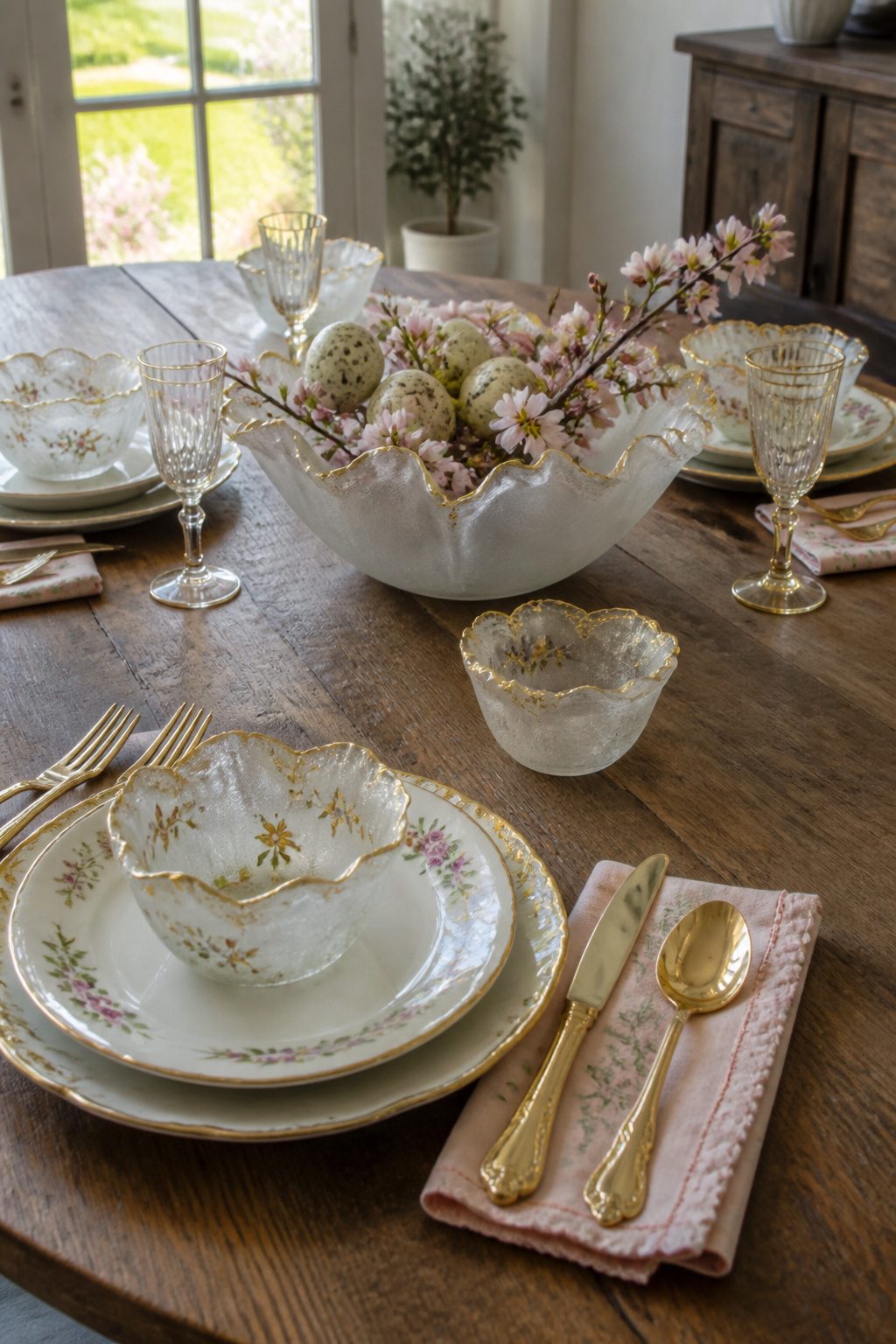
Frosted glass poppy bowls with 24k gold accents catch morning light in a way that reads festive without demanding a full formal setup. The gold sits on curled edges, not across the whole surface, so the piece stays casual enough for a backyard brunch where paper napkins might still be in play.
I have seen the Annieglass versions used two ways that work for Easter. The larger sizes hold their own as a centerpiece, filled with speckled eggs or scattered with cherry blossoms to stretch the look past Sunday into the rest of spring. Smaller ones set at each place work for individual fruit or salad service, and the frosted finish hides water spots better than clear crystal would.
The gilding ties neatly to vintage Limoges or any other gold-rimmed plates you already own. If the Annieglass price sits outside your project budget, frosted glass bowls with metallic edges turn up regularly at estate sales and secondhand shops; the finish is what matters, not the maker. Look for the matte texture that diffuses light rather than reflecting it straight back.
2. Layered Pastel Plate Stack
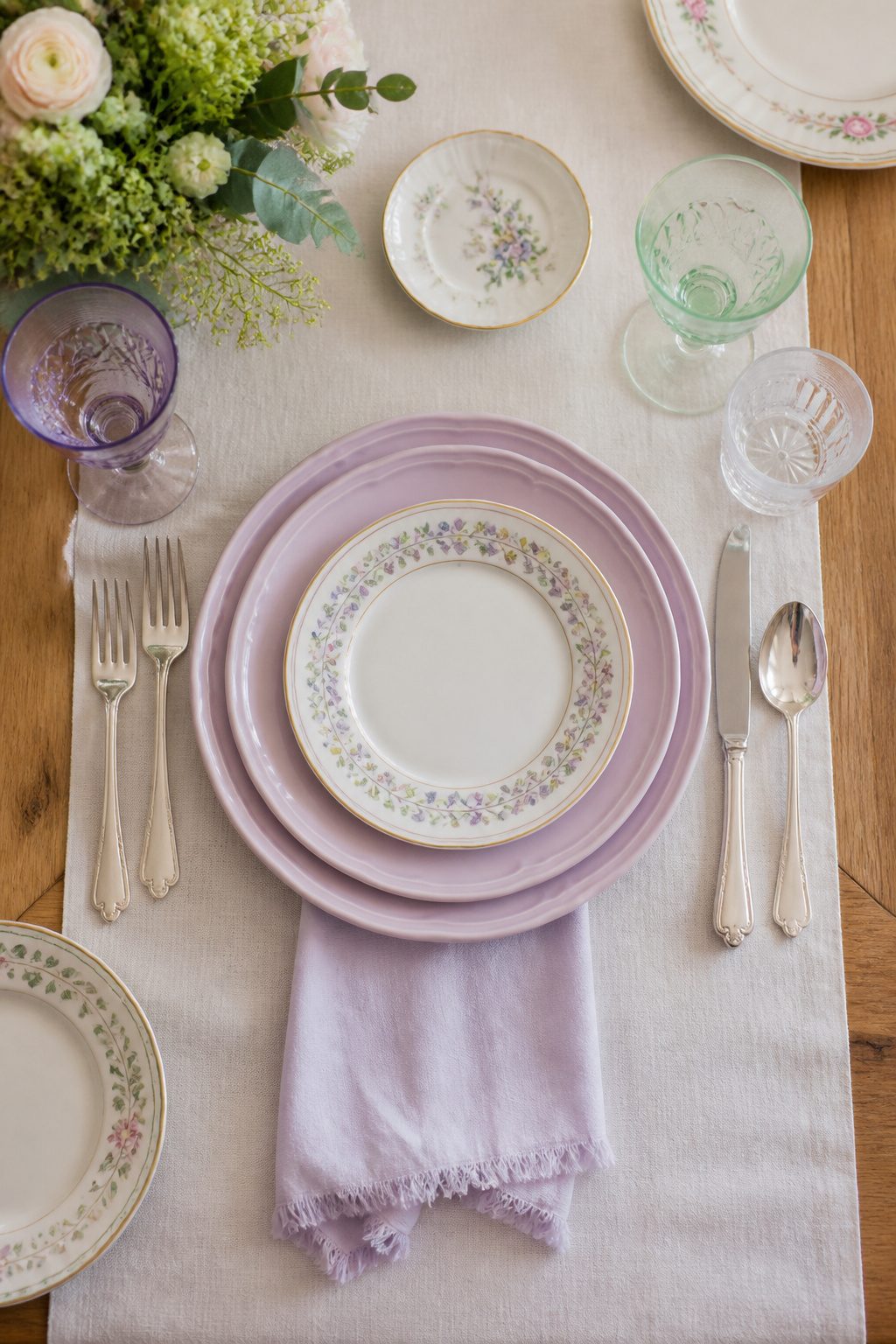
A stack of plates can do the centerpiece’s job if you let it. I started layering pastel dinner plates with floral salad plates on top after noticing how the height carried the eye down the table without anything in the middle blocking conversation. The salad plate pattern should read from across the table, so small florals or a wide border work better than a tiny center medallion that disappears.
Vintage Limoges dinner plates turn up at estate sales for less than a full set of new china, though chips are common and the hunt takes patience. A modern equivalent with the same soft color works just as well; the point is the contrast between the muted base and the brighter pattern on top. I keep the stack to two plates for a brunch where people actually need room to cut, or add a third bread plate if the menu is lighter. The height builds from the outside in: charger or placemat, dinner plate, salad plate, with the napkin tucked under the salad plate so the stack stays neat until someone sits down. No centerpiece means glasses and the shared dishes become the visual rhythm instead, and passing food is easier without a cloche or urn in the way.
3. Linen Napkins in Blush or Sage
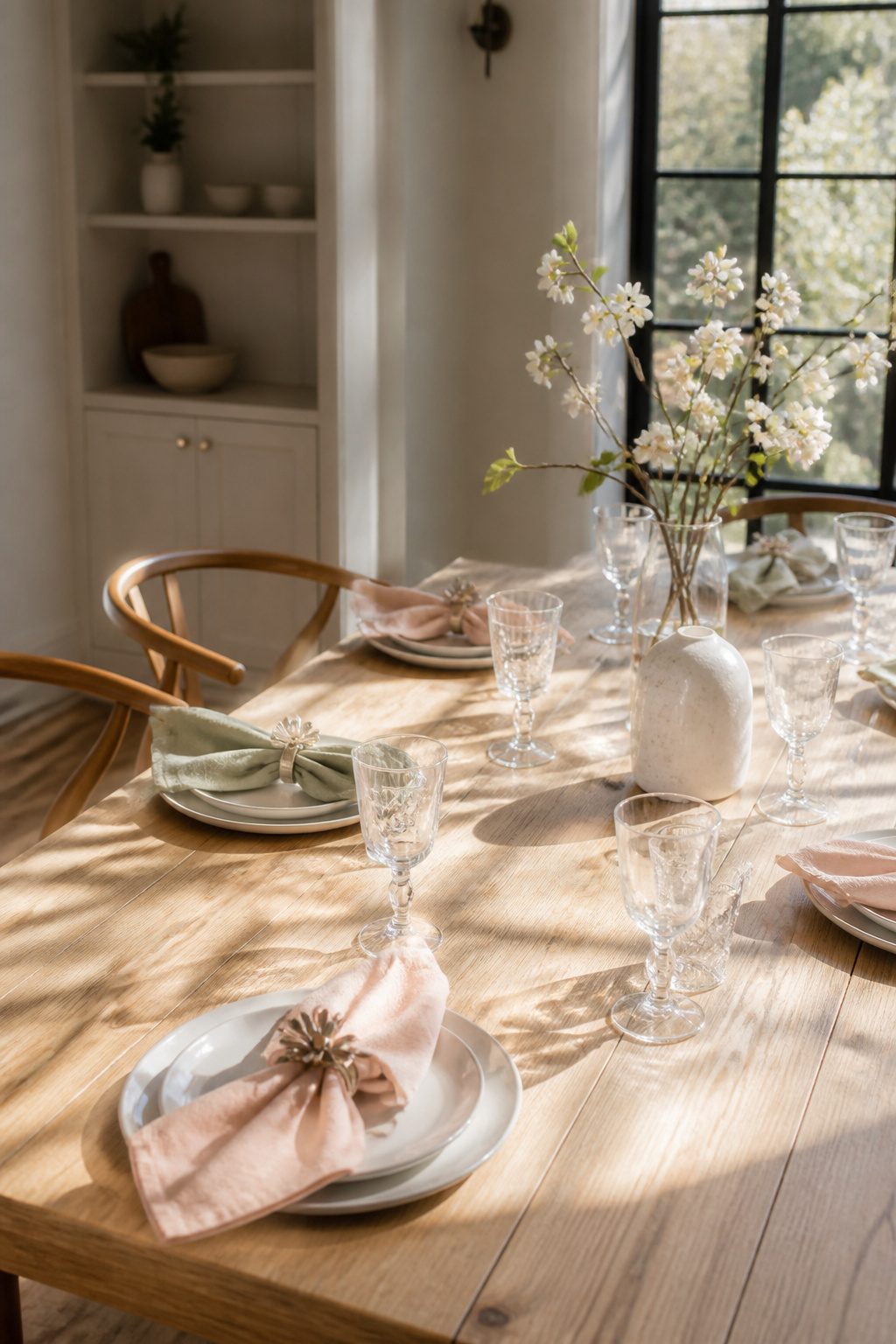
Linen napkins in blush or sage read softer against a white table than paper ever does, and the cost gap closes faster than most people guess. A basic cotton-linen blend napkin runs about three to four dollars if you buy a set of twelve; paper in that weight and finish costs nearly the same per use if you are setting the table more than twice a year. The linen pays off by the third or fourth wash, and it keeps paying.
I use a simple blooming ring, the kind with a wire stem that loops through a folded napkin and fans out into a small metal flower. No clasp to break, no glue to fail in the dryer. The napkin folds into a loose rectangle, the stem slides through, and the bloom sits where a guest can actually see it. After dinner, the rings go in a bowl, the napkins go in the wash on cold with the rest of the table linens, and neither comes out worse for it. The blush shade I have fades slightly toward terracotta over maybe two years of regular washing; the sage goes a little grey. Both shifts look intentional, which is the only reason I have not replaced them.
4. Hand-Painted Egg Place Cards
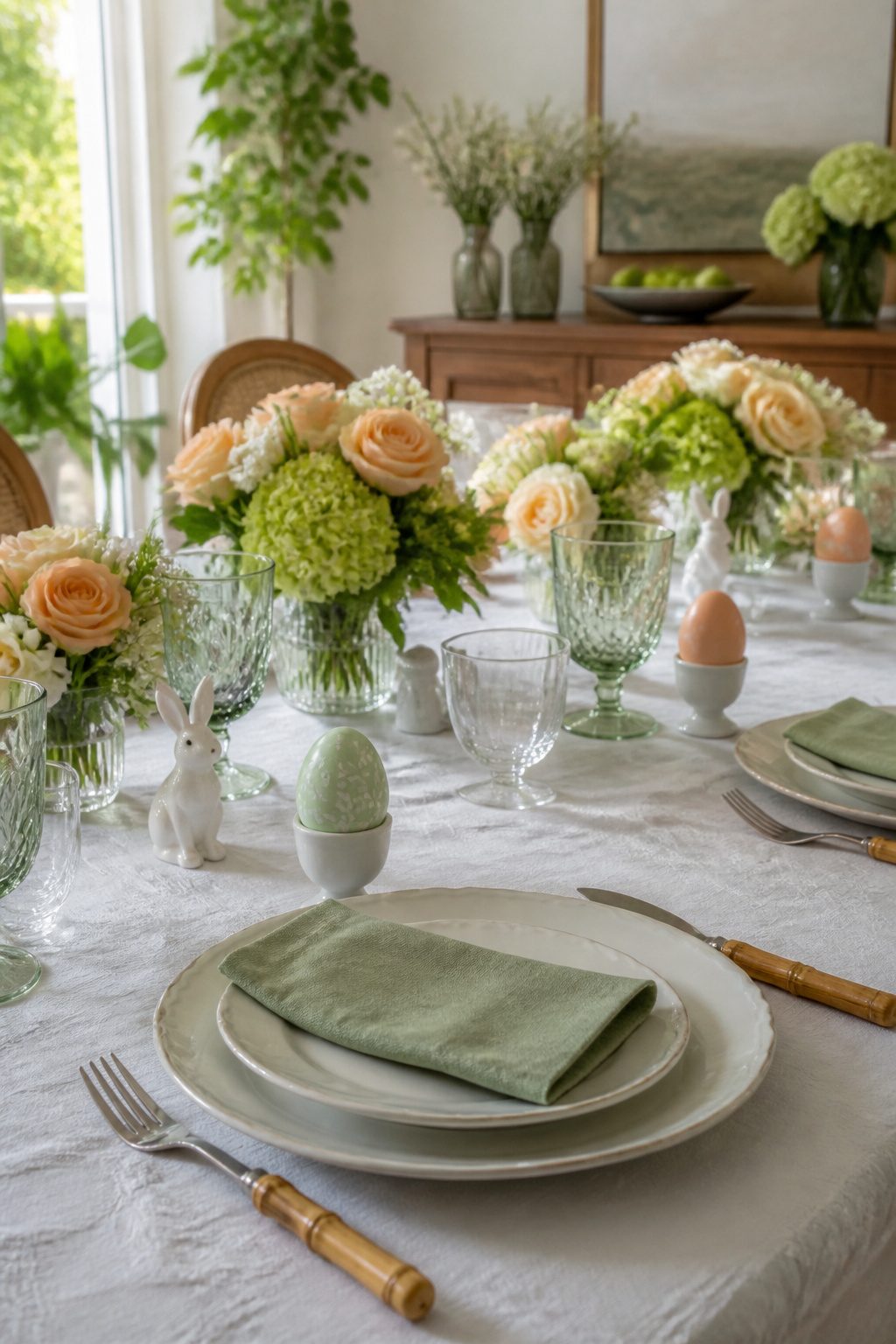
Sharpie on a dyed egg looks crisp for about ten minutes. The first place card I set at the head of the table was already smudged by the time guests sat down; oil from fingertips dissolves the ink, and the porous shell drinks it into a gray bloom. Acrylic craft paint, thinned with a drop of water and sealed with matte Mod Podge, survives an evening of passing and handling. I use a size 2 flat brush for names, which takes roughly forty minutes to paint a dozen eggs plus drying time between coats. The ceramic egg cups that hold them run small, so the egg itself should sit no taller than two and a half inches or it will list. Pastel-dyed shells show the lettering best; robin’s egg blue against white paint reads clean from across the table without competing with the plates.
5. Petite Bud Vases With Spring Blooms
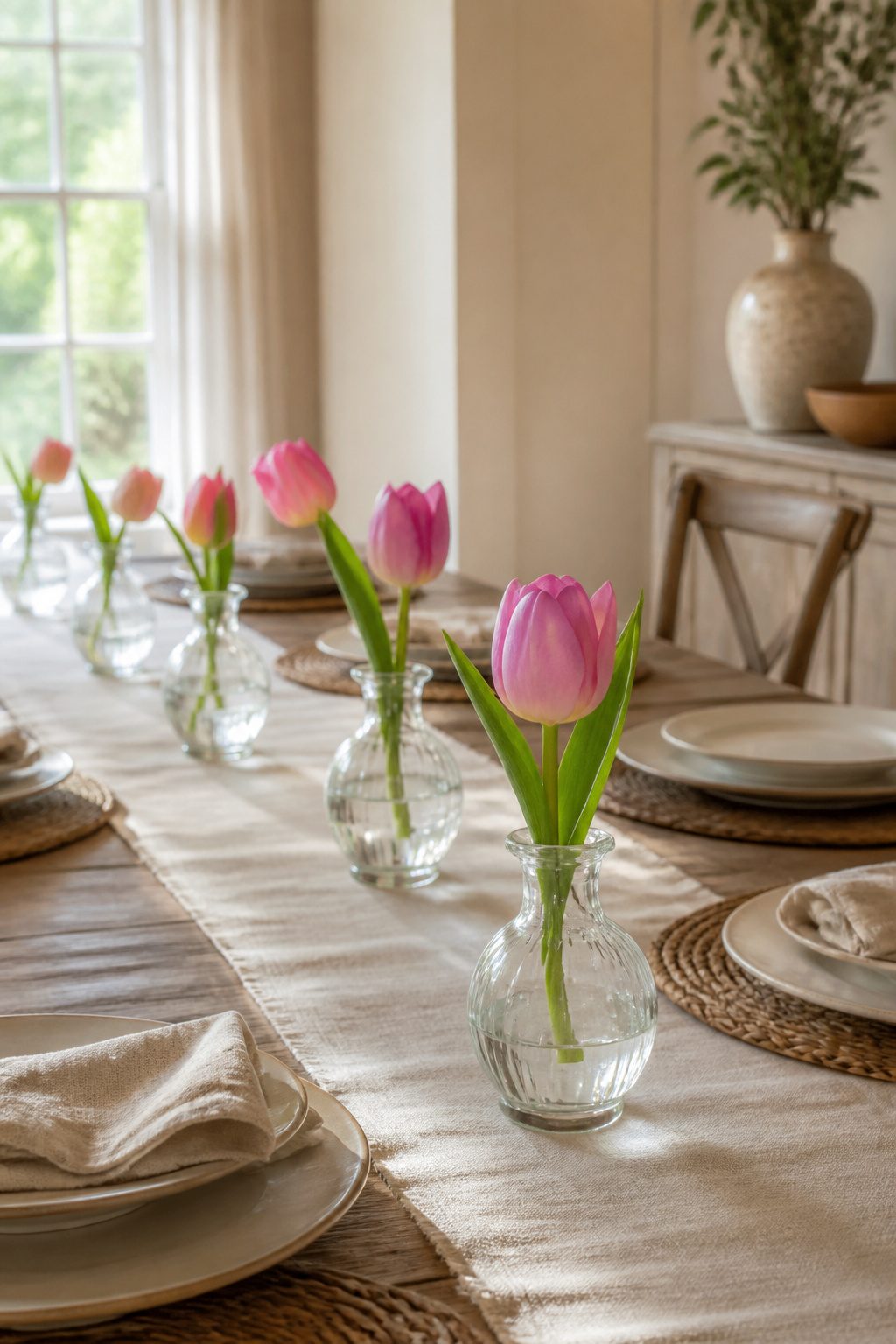
Petite bud vases at each place setting keep the table low enough for conversation while giving every guest their own stem to take home. The trick is choosing flowers that survive the gap between arranging and sitting down.
Tulips, daffodils, and hyacinths are the usual picks for Easter tables, but only the tulip handles a dry stretch with any patience. Daffodils and hyacinths wilt fast once water tubes empty, and their stems turn slimy. Tulips stay upright and keep color for several hours, which covers brunch or dinner with margin to spare. A single grocery-store tulip runs about $1–$1.50 per stem, and five or six stems in bud vases across a six-person table costs under $10. One large centerpiece arrangement of the same flowers would run $25–$40 and blocks sightlines across the table.
Small glass or ceramic bud vases work best, the kind that stand four to five inches tall with a narrow neck that grips the stem. Hurricane vases, the sort drivenbydecor.com uses for fuller arrangements, feel oversized here; save them for the bundle approach. If you want the guest to carry the flower home, those little water tubes that florists use on cut stems solve the dry-stem problem for daffodils and hyacinths too, though they add a step and a slight plastic look against a clean table setting.
Faux tulips read surprisingly well in this small scale, and the cost spreads across years. The realistic ones now available mix pink and white convincingly, and no water tube is required. For a one-time Easter gathering with real blooms, though, tulips win on math and on the small risk of a drooping stem.
6. Lace or Embroidered Table Runner
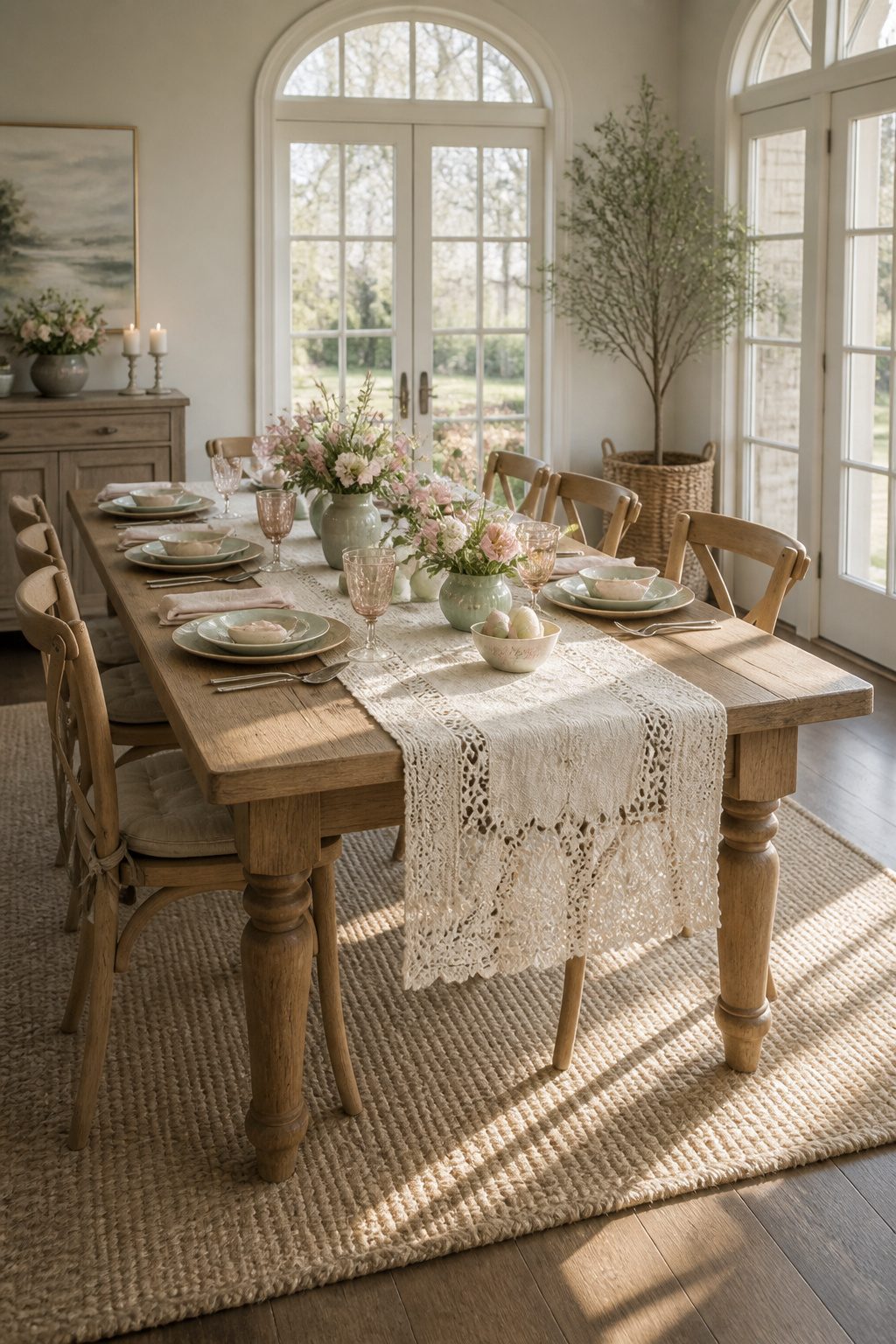
A lace or embroidered runner does the soft work of an Easter tablecloth without the commitment of full coverage. Mine came from a church rummage sale, ivory cotton with pulled-thread work along the edges, and it cost two dollars. The thing I actually measured was length: a standard six-foot folding table needs a runner around 72 inches long to drape a few inches past each end, not the 90-inch runners that pool on the floor and trip people carrying gravy.
The sources all point to letting the table itself show, which is where lace wins over a full cloth. The embroidered linen placemats with floral edging that turn up in European-style settings work the same way, just in smaller pieces. Either route, the fabric should read as something you already had, not something you bought for the day. My rummage runner lives in a drawer the rest of the year and pulls out for spring birthdays too; the pulled thread has a small snag near one corner that I never fixed, and nobody has ever leaned across the ham to notice it.
If you are buying new, look for cotton or linen that will soften in the wash rather than polyester lace that catches candlelight wrong and melts if it gets too close. The pastel tablecloth option works better for a sit-down dinner where plates stay put; the runner suits the buffet-style Easter where people circulate with wine glasses. That is the judgment call: more coverage for formality, less for the kind of afternoon where the table becomes a serving station and the real eating happens on the porch.
7. Gilded or Hand-Painted Bunny Figurines
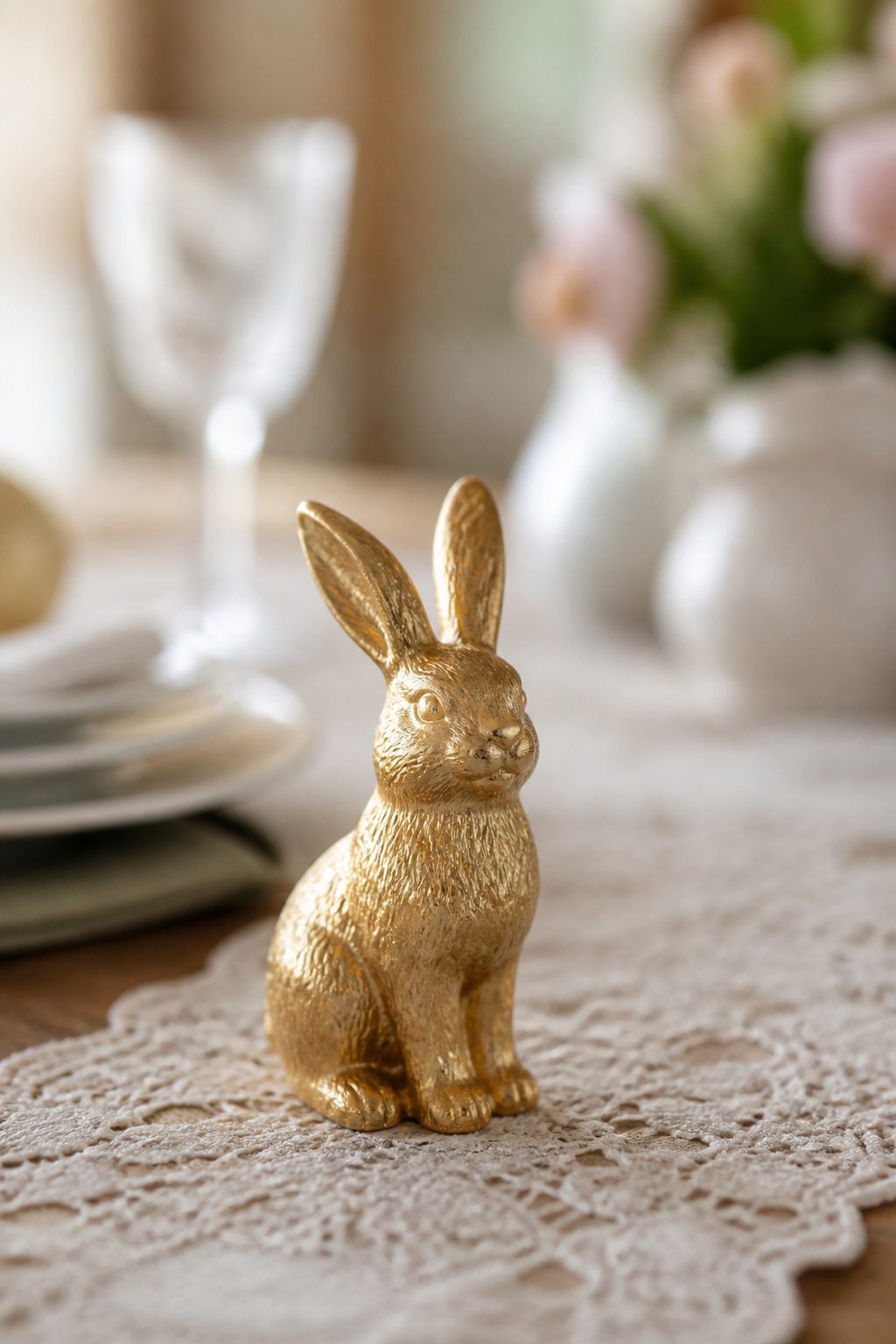
Bunny figurines work best when they stay under four inches and scatter across the table rather than huddle in one spot. A single large ceramic rabbit demands attention like a centerpiece; three or four small ones tucked between plates and glasses read as playful accents that reward a second glance.
The gold bunnies from Target’s Dollar Spot sit about that scale, and their weight keeps bookends steady on a coffee table or end table. Garage sale finds run smaller and lighter, often hollow resin or chipped ceramic, which means they tip if you stand them on stacked books or a tilted surface. Either source works, but the thrifted ones need testing before the guests arrive.
A pink bow or painted detail on one figurine ties the group together without matching exactly. I place the grounded one, the heaviest or the one with the widest base, near the center of the runner, then step two lighter pieces outward so the eye travels the length of the table. Under four inches keeps them from blocking faces across the table, which matters more than the finish once the chairs fill up.
8. Speckled Egg and Moss Cloche
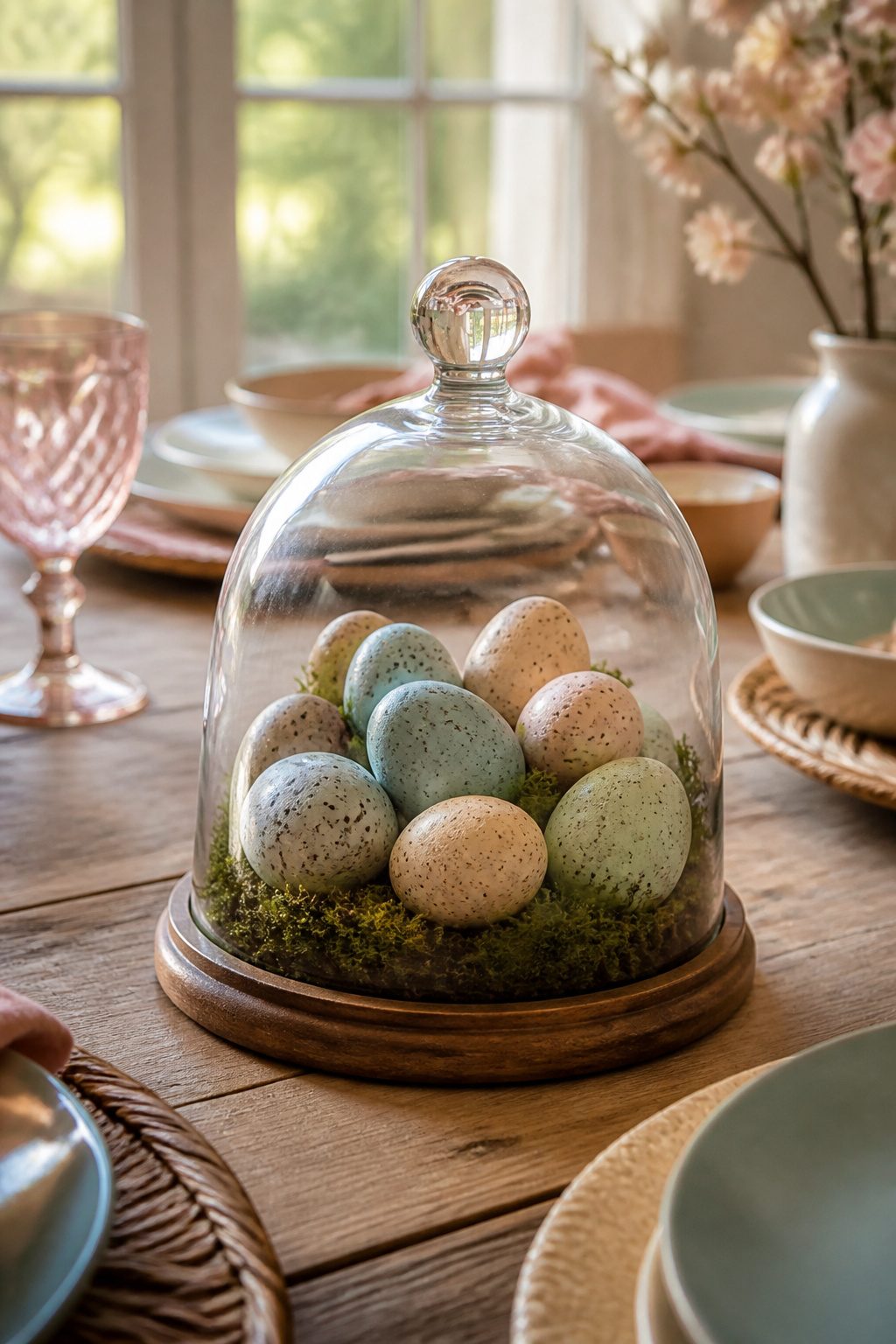
A glass cloche keeps the centerpiece low enough that guests can still see each other across the table, which matters more to me than height ever did. I look for domes around 6 to 8 inches tall and maybe 4 to 5 inches across the base; anything taller starts to block faces, and anything narrower looks like a single egg lost in space. The eggs inside are the trickier part. Real blown eggs are fragile and, with prices where they are this year, not something I want to risk on a table where people pass dishes. Faux eggs have gotten convincing enough that I keep a set just for this. The hand-painted speckled ones, especially, carry the same mottled brown-and-cream look I remember from actual farm eggs, but they weigh nothing and survive a drop onto a plate. Michaels and similar craft stores usually stock them by early February, and the ceramic or foam versions hold paint better than plastic. I fill the base with Spanish moss, the same green-gray stuff that props up eggs in decorative nests, so the cloche does not look like a specimen jar. A little moss goes a long way; it fills gaps without demanding precision, which is useful when I am setting the table the morning of and still need to finish the ham glaze.
9. Softly Tinted Glassware
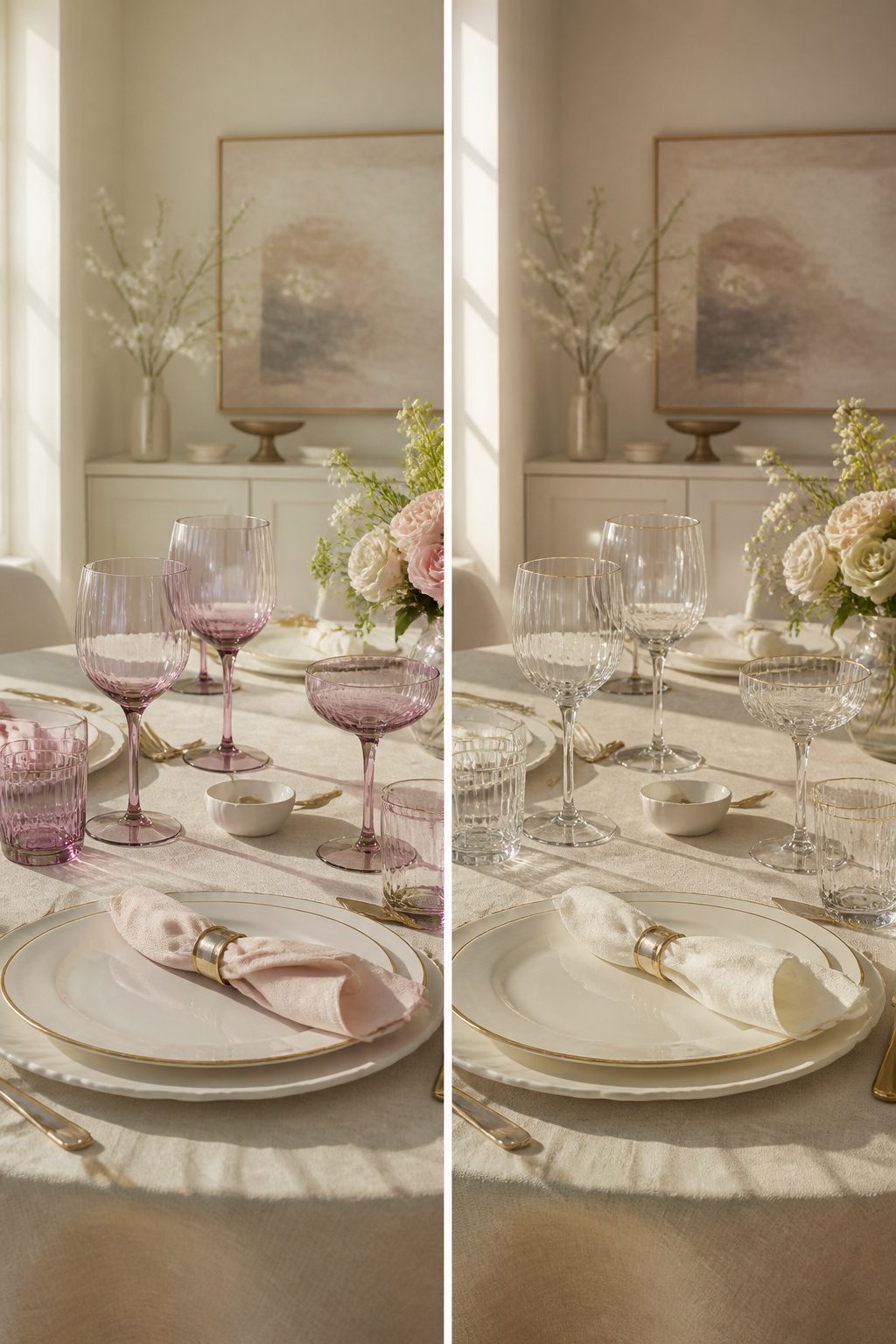
Blush-tinted glassware catches the morning light in a way that feels earned, not decorated. I bought a set of four in lavender last spring, mostly because the price sat under thirty dollars and the stems looked thin enough to feel modern. The tint is subtle, more like the glass was left near a colored wall than dipped in dye, which matters more than I expected. Wine inside looks slightly rosier than it is, and a pale beer reads almost green against the mint-green option. If that mismatch will nag you, stick to water or lemonade in the tinted pieces and save the wine for clear glass.
Dishwasher safety is where I guessed wrong. The tag said hand-wash recommended, which I read as lawyer language and ignored. Two cycles in, the lavender had gone cloudy at the rims where the heat concentrated. Now I wash them in the sink with the rest of the Easter-only pieces, which takes maybe four minutes for the full set. Not a hard lesson, but a dull one to relearn on glasses you bought for a single weekend a year.
10. Gold or Antique Silver Flatware
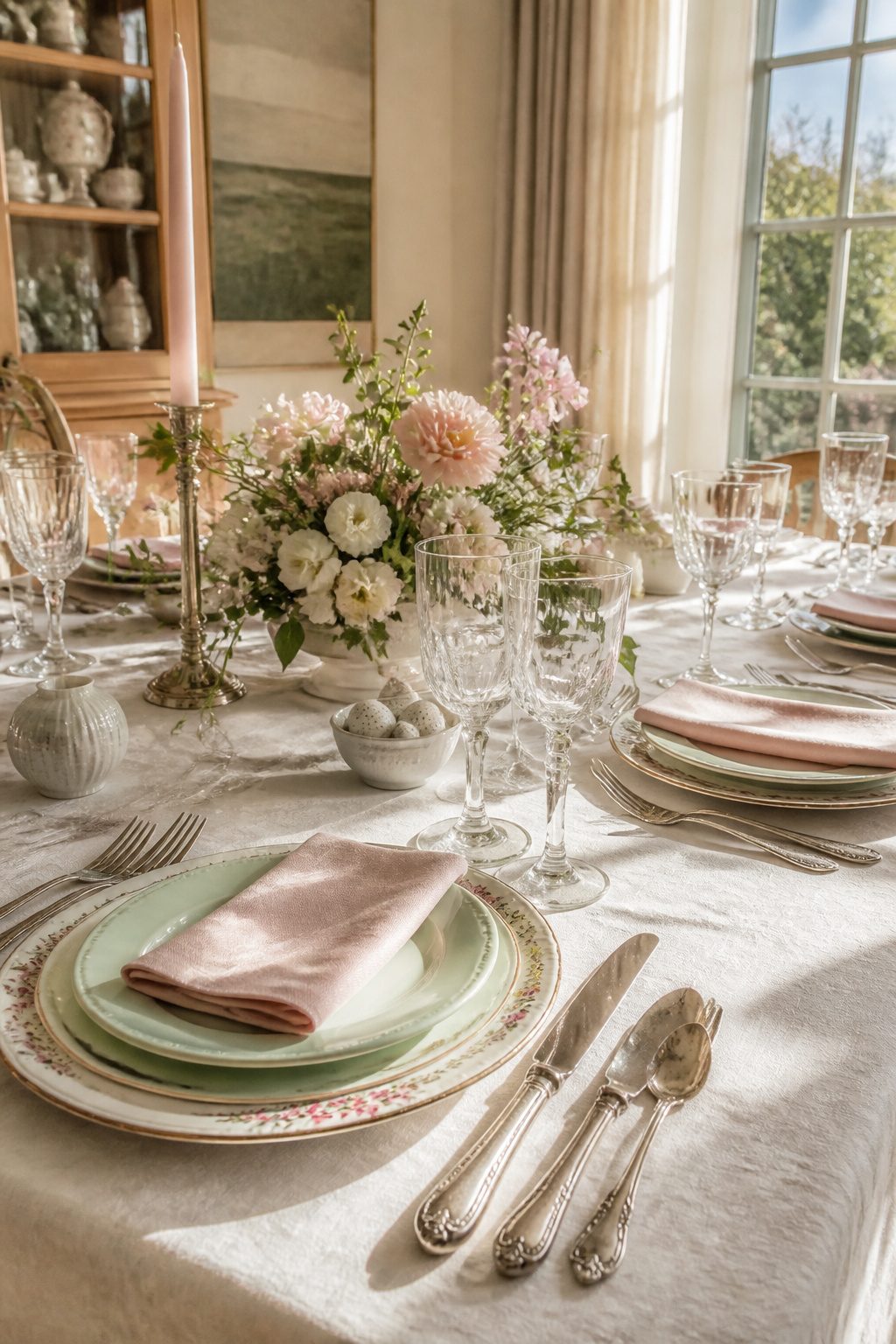
Gold-toned flatware feels festive against a white or pastel Easter table, but the set I already owned turned out to be lightweight stamped pieces that guests noticed the moment they picked them up. One person at last year’s brunch actually asked if the forks were from a takeout set, which is not the comment you want after laying a table for eight. The antique silver I borrowed from my mother-in-law sat differently in the hand, heavier and with a slight patina that caught the afternoon light without looking polished to a mirror finish. That weight difference is what people register first, before they notice the color at all. If you are buying for one spring gathering, rent heavier gold-toned pieces or borrow real silver rather than ordering the budget set that photographs well but feels like aluminum in the hand. The antique silver needed polishing the night before, which is a fair trade for the way it anchors each place setting. My own cheap gold set stays in the drawer now for anything more than a weeknight dinner.
11. Statement Floral Centerpiece
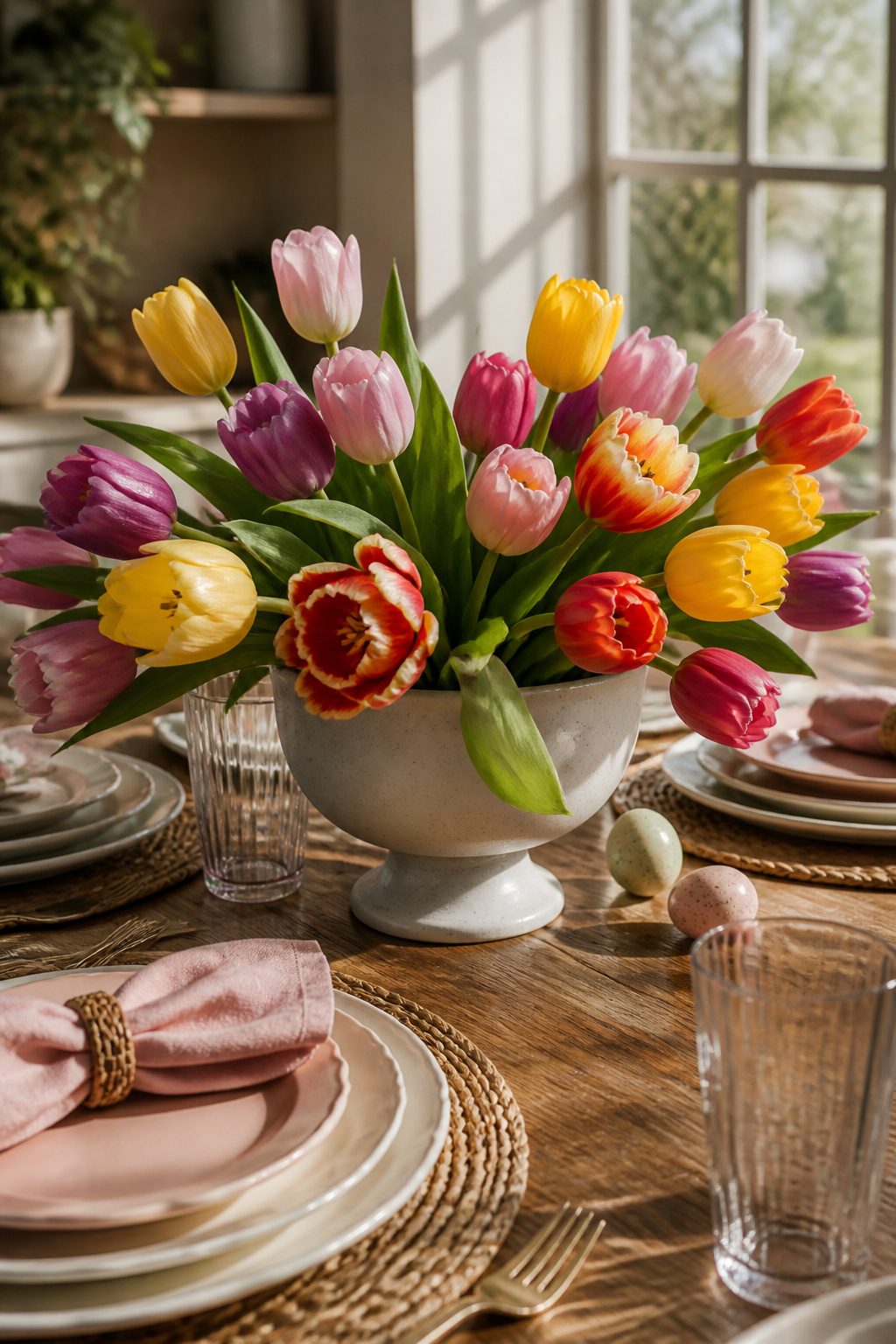
A footed bowl with tulips spilling over the rim reads as effortful even though the whole thing takes ten minutes. The trick is stem count: three bunches of five stems each, or about fifteen total, fills a standard 10-inch footed bowl without gaps. Fewer than that, and the arrangement looks like you forgot to finish it.
Fresh grocery-store tulips run inexpensive enough that replacing them twice over Easter weekend still costs less than most faux stems. Cut the bottoms at an angle when you get home, swap the water every couple days, and they last at least a week. The penny-in-the-water trick supposedly extends life a bit, though I have never tested that myself.
Faux tulips have improved enough that real-touch versions from craft stores now pass for fresh at across-the-room distance. They win if you want the centerpiece set a week ahead without droop, and they store flat for next year. The catch is upfront cost: quality fakes run higher per stem than a grocery bundle, so the math only works if you reuse them three or four Easters running.
For height that still lets guests see each other, keep the total arrangement under fourteen inches and angle the outer stems to cascade rather than stand straight. That shape fills horizontal space without blocking faces.
12. Taper Candles in Spring Shades
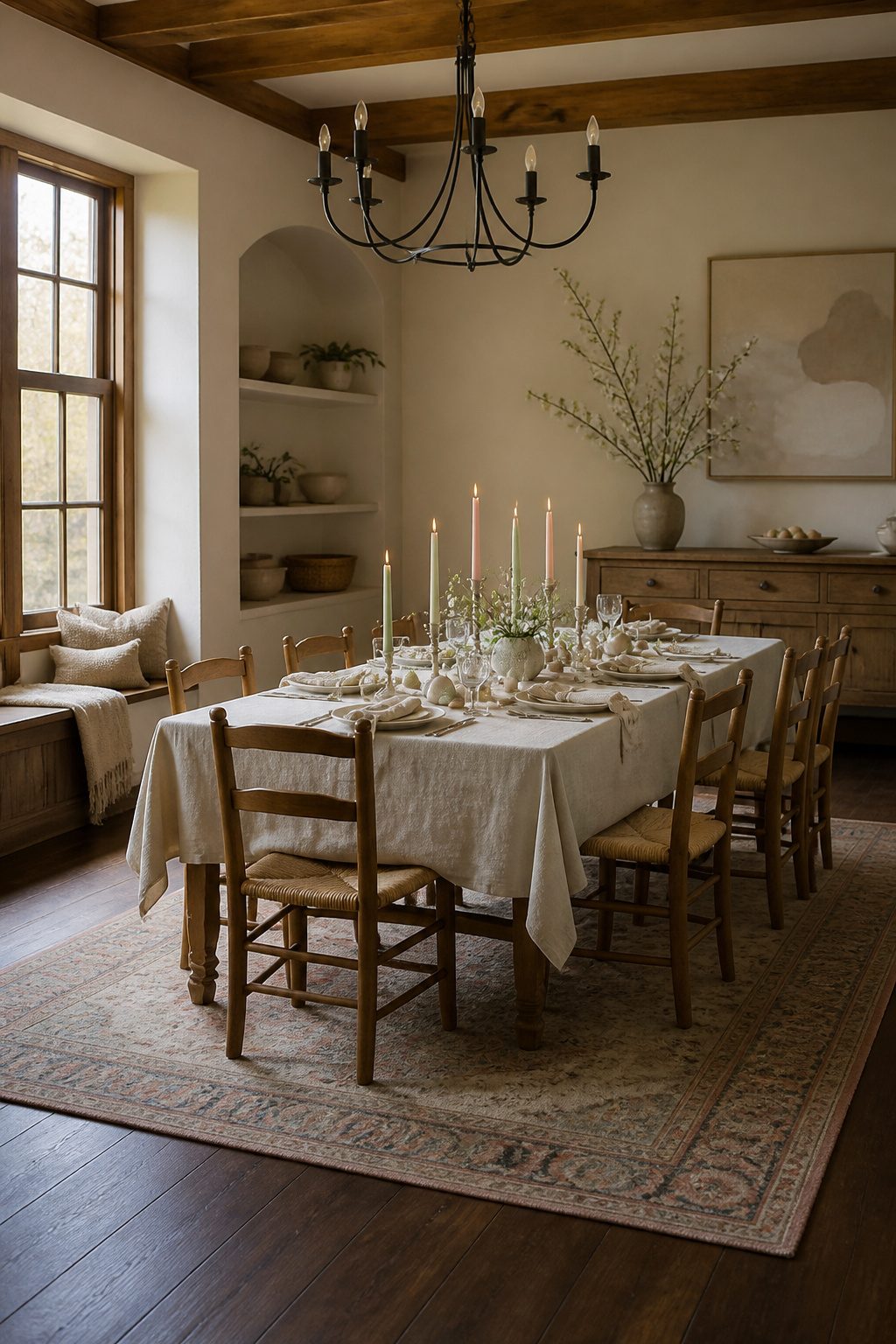
Taper candles in soft spring shades, pale pink or butter yellow or the palest mint, pull the whole table toward Easter without any figurines or florals. The trick is the holder. A crowded brunch table gets bumped by passing plates and elbows, so a weighted base or a slightly cupped holder that grips the taper keeps the candle upright through the meal. I learned that after a slim brass holder tipped into someone’s water glass three years ago.
Burn time matters more than height for a long brunch. An eight-inch unscented taper runs about six to seven hours, which covers the gathering and then some. Scented tapers were my mistake. I bought lilac ones that smelled lovely in the box, but at table they fought with the food, rosemary ham and yeast rolls and all. Now I keep fragrance for the living room and let the kitchen smells stay central. Unscented tapers cost about the same, sometimes less, and no one misses the perfume once the food is out.
13. Layered Rattan or Woven Chargers
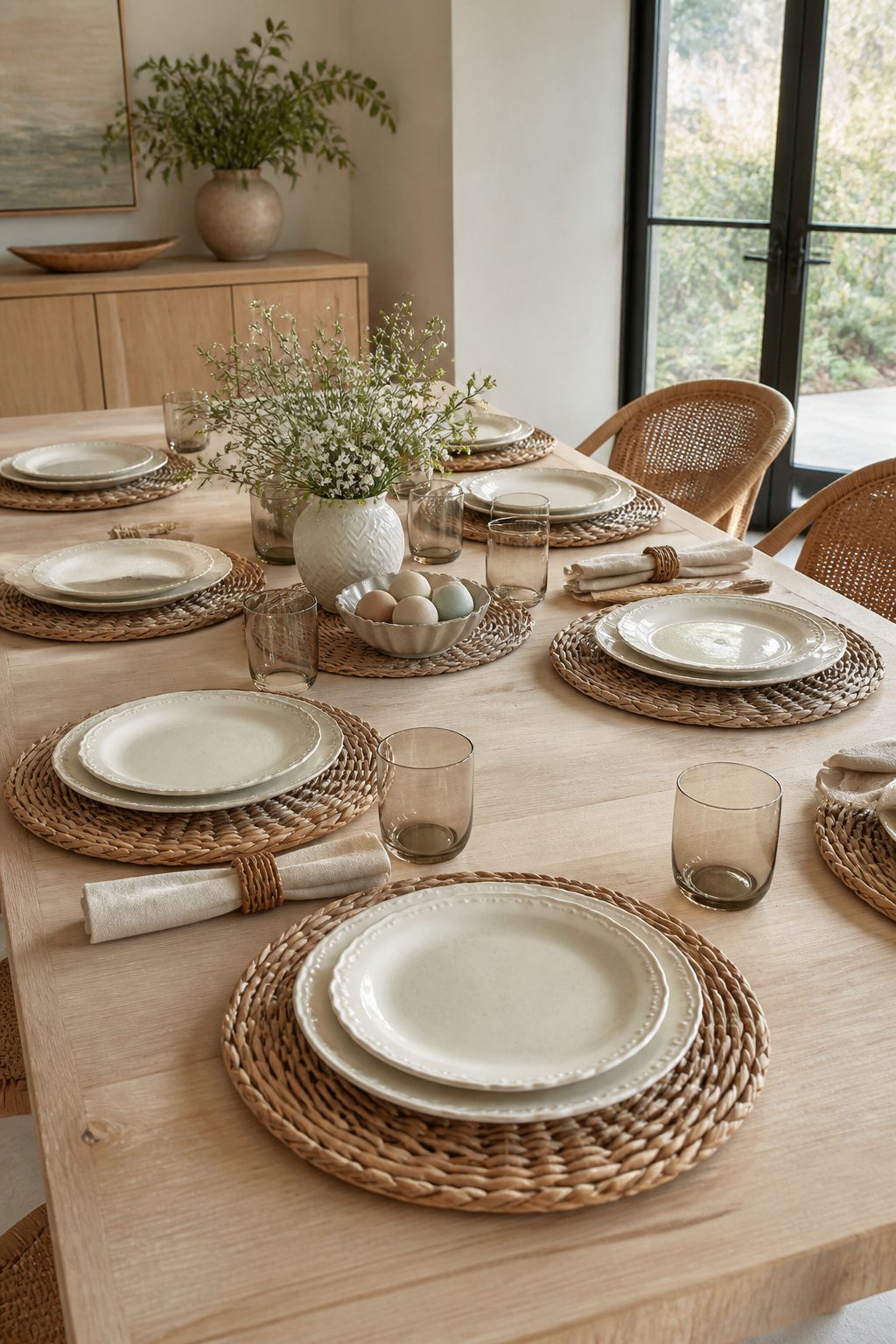
Woven chargers sit underneath the dinner plate and give the whole table its shape before anything else goes down. A 13-inch charger fits standard 10.5-inch dinner plates with about an inch of rim showing, which is the proportion that looks intentional rather than accidental. Anything smaller disappears; anything larger fights your glassware for space.
I found mine at a discount home store for under $8 each, which matters when you are setting for twelve and the math starts to pinch. They are rattan, not seagrass, and that distinction is worth the extra two dollars. Seagrass sheds; rattan holds its weave through multiple washes.
The cleaning reality after gravy is exactly what you picture. A damp cloth works for surface spots, but anything that soaks into the weave means a rinse under the faucet and a full day of drying in the dish rack, propped upright so air circulates. I learned that after a ham-dripping incident two years ago. Now I keep a stack of plain white ceramic chargers for the sauciest dishes and save the woven ones for bread plates or dessert courses where the risk is lower.
14. Mini Potted Herbs as Favors
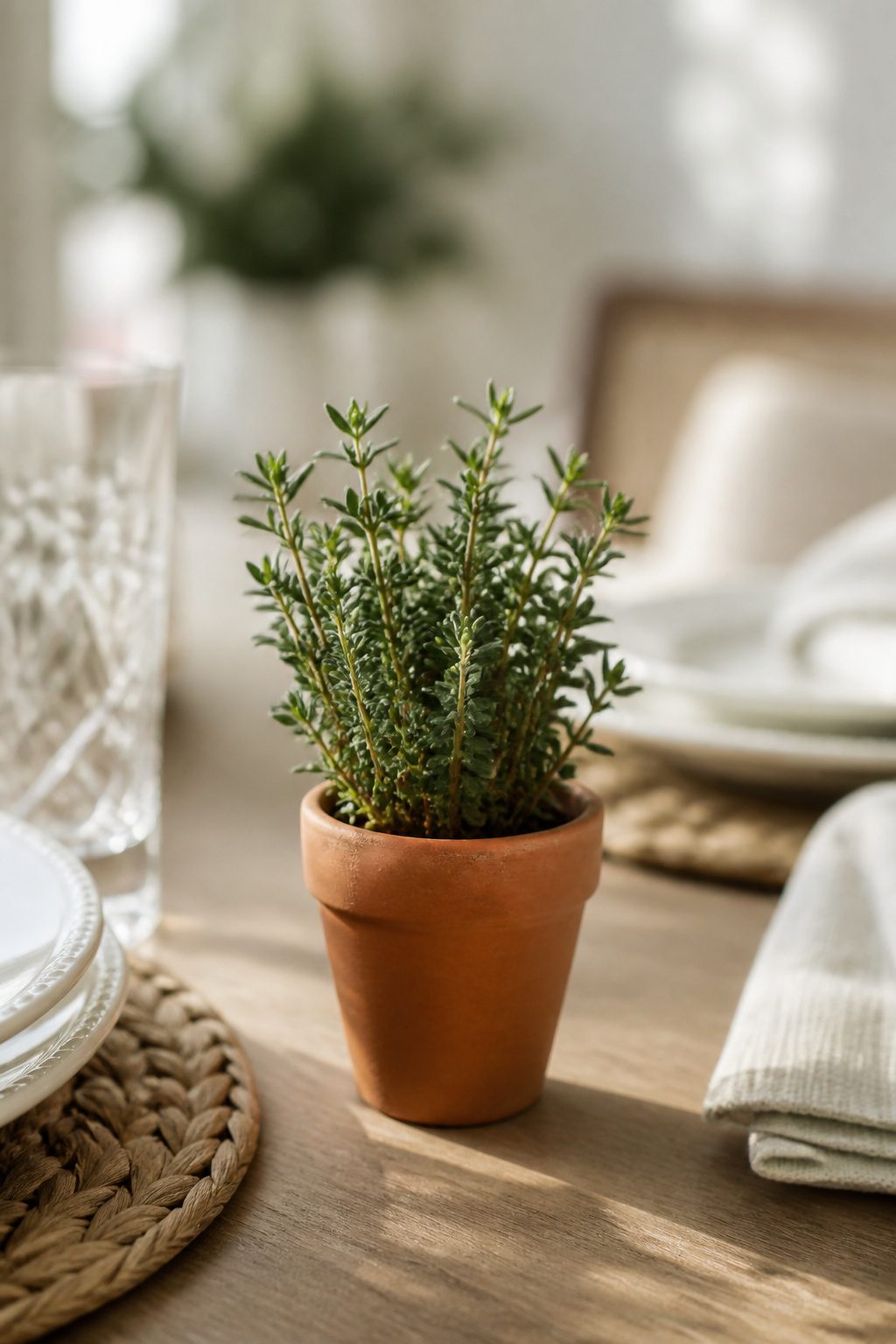
A two-and-a-half-inch pot fits a place setting without crowding the plate, and the root ball stays intact through a car ride home. Thyme and rosemary tolerate a week of dry soil if your guest forgets to water; basil wilts in two days and becomes a guilt trip, so I skip it entirely.
Buying seedlings at a nursery runs about three to four dollars per pot in spring. Starting from seed drops that to under a dollar, but you need eight to ten weeks of lead time and a sunny windowsill. For a table of twelve, the nursery route costs roughly thirty-six to forty-eight dollars total and happens the week of Easter, which is usually how my timeline works anyway. Seed starts make sense only if you are already tending a tray for your own garden and have extras to spare.
I learned the hard way that unglazed terra cotta sheds dust onto the tablecloth. A quick wipe with a damp cloth before setting the table, or choosing plastic nursery pots slipped into paper sleeves, keeps the linen clean.
15. Stacked Cake Stands With Macarons
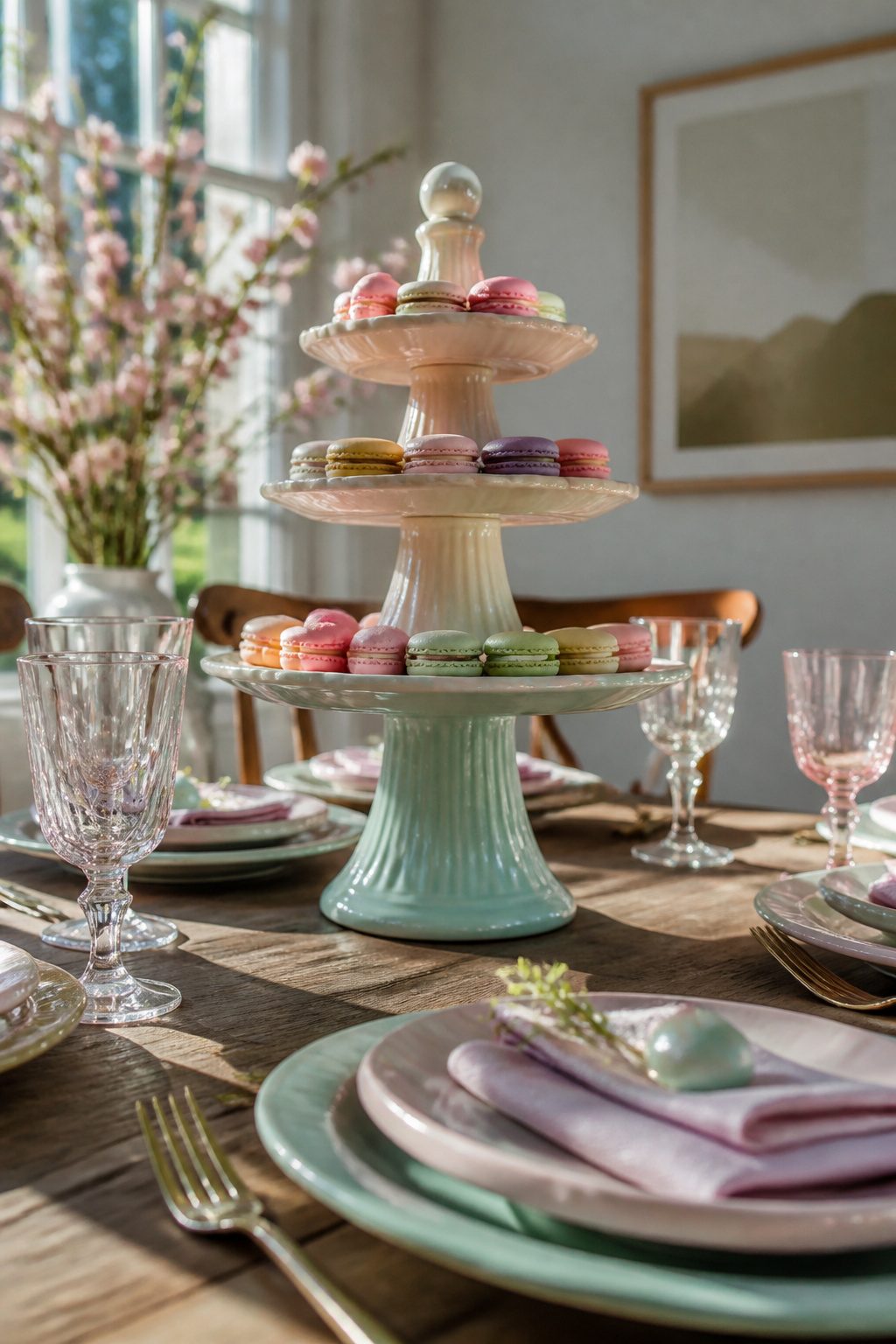
Three stacked cake stands down the center of a table give you height without the cost of a tall floral arrangement, though anything over about fourteen inches starts blocking faces across from each other. I learned that the hard way at a birthday dinner where half the table spent the night leaning left to see around a dessert tower. For Easter, macarons in pastel shells do the color work for you, and the stand itself becomes the centerpiece.
I buy mine from a local bakery case, usually paying around two dollars each, because my one attempt at baking them ended with cracked feet and hollow shells that collapsed the moment I sandwiched them. The bakery version holds up on a stand for hours without weeping or turning sticky, which matters more than pride when guests are arriving at two. A ceramic stand with a slight rim keeps them from sliding, and if you stagger the tiers so the smallest sits highest, you keep the sightline open for anyone seated past the twelve-inch mark. Twelve inches is the ceiling for anything that stays on the table during the meal. After dessert, move the whole stack to a sideboard and let the table breathe.
16. Vintage Water Pitcher With Floating Flowers
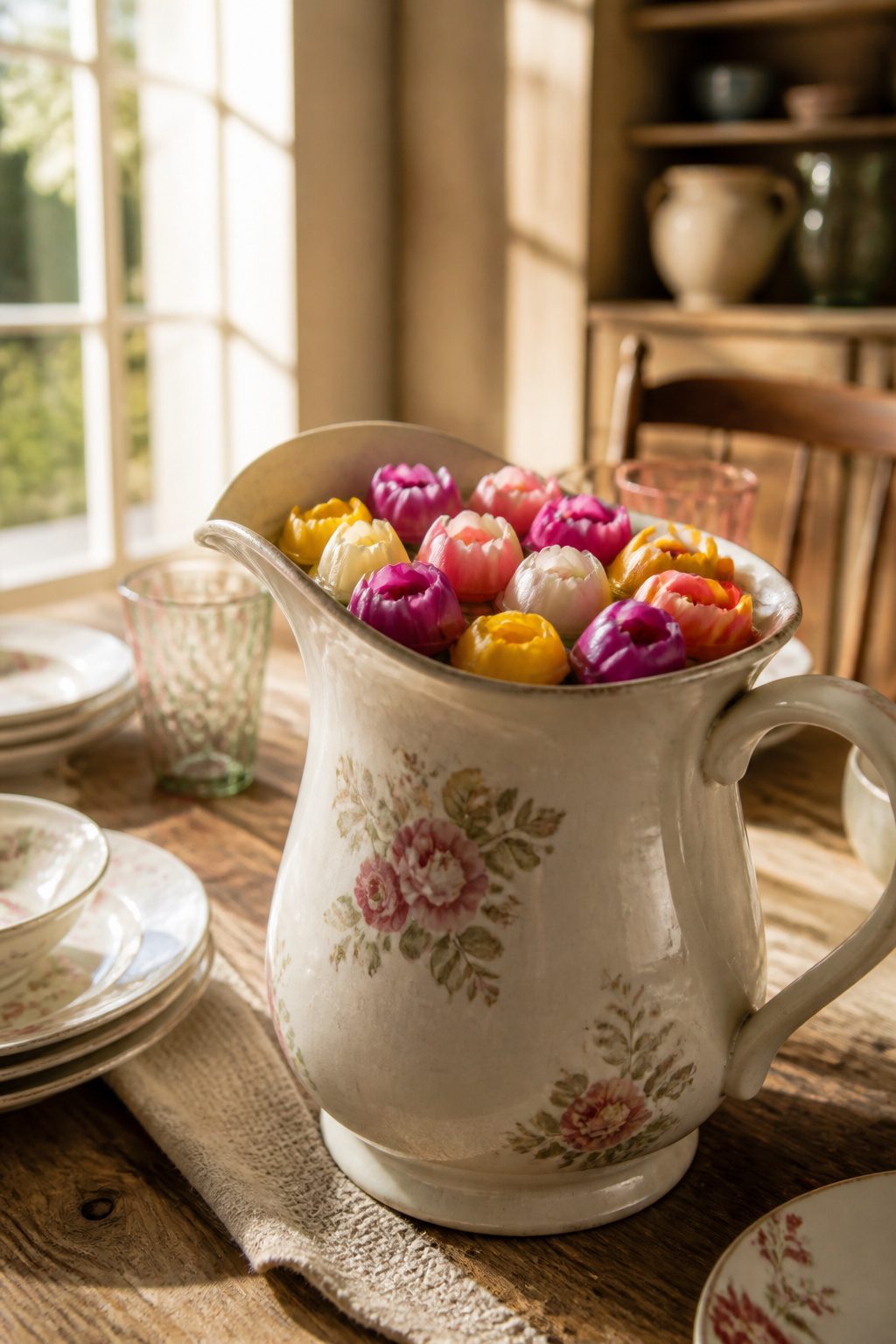
A vintage-style water pitcher filled with floating blooms reads as effortless, not underdone. The shape matters more than the pattern: a wide mouth and a lip that curls outward let flowers spread flat and pour without the drip that ruins a linen runner. I found mine at a flea market in Pennsylvania, paid eight dollars, and did not notice the chip under the handle until I was unloading the trunk at home. The chip sits against the wall now, invisible to anyone not looking for it.
Tulips are the flower that cooperates here. Cut the stems off entirely once the blooms open, and the heads float face-up for two or three days. Ranunculus and anemones will do the same if you catch them at full open. Change the water daily; murky water in a clear pitcher undoes the whole casual effect. Two bunches, about twenty stems, fill a two-quart pitcher without crowding. Grocery store tulips run five to eight dollars a bunch in late March, so the whole arrangement lands under twenty dollars and takes five minutes to assemble.
17. Moss-Trimmed Wooden Serving Board
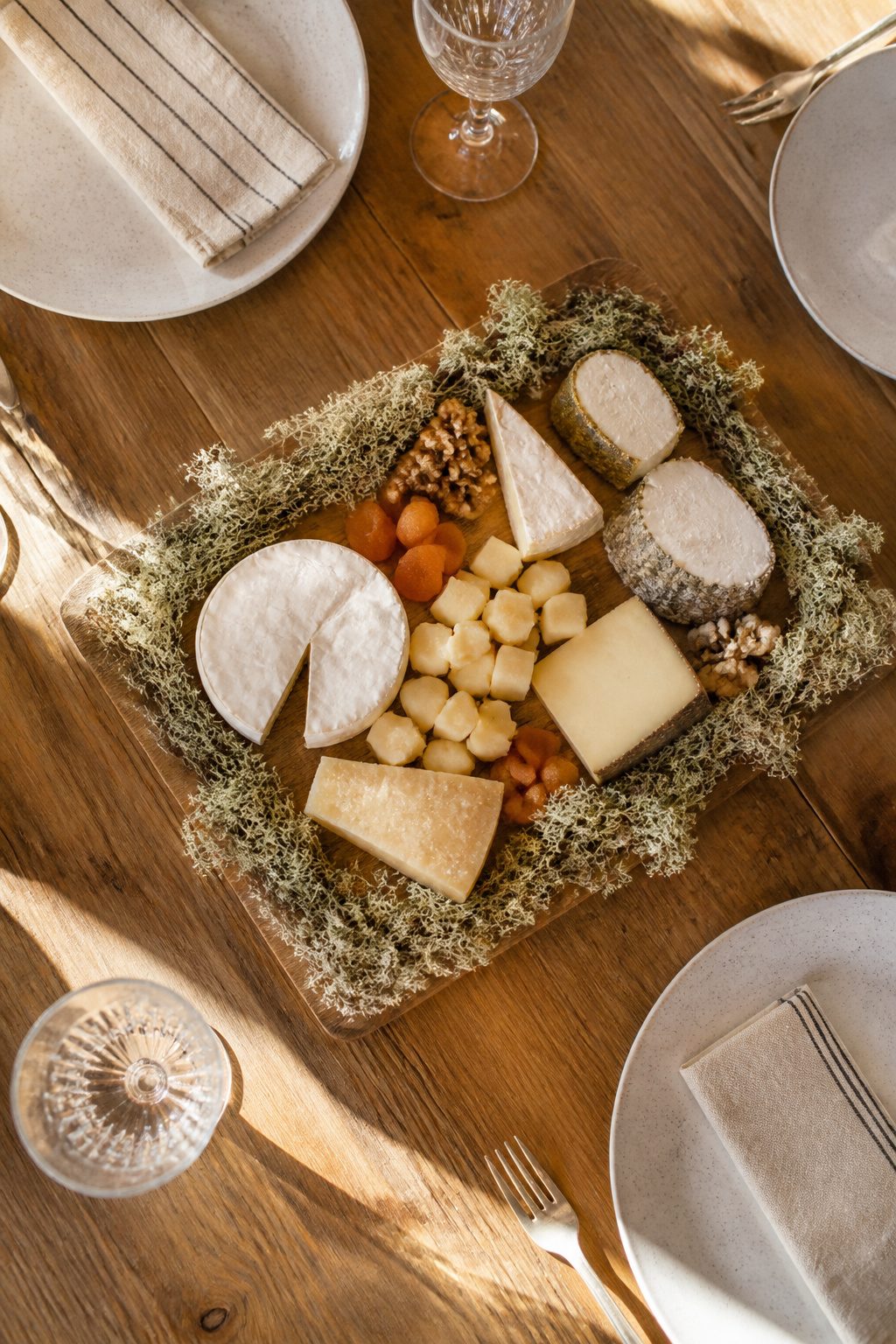
A wooden serving board edged with moss works best for bread or a soft cheese that you bring to the table and serve within the hour. The food-safety question took me longer to settle than the build itself. Sheet moss from the craft store carries dyes and preservatives, so I spent an evening reading through preservation methods before landing on dried, undyed reindeer moss sealed with food-grade wax. That barrier keeps the moss from shedding into the food and prevents it from absorbing moisture and growing mold.
Refrigeration is where this piece shows its limits. Cold air pulls moisture from the moss and leaves it brittle, so the board lives on the counter and only the cheese goes back to the fridge between courses. For a table of eight, a board around 20 by 14 inches fills the space without crowding the plates. Mine sits at 18 inches and needs a second trip for a full baguette.
18. Fresh Greenery Garland
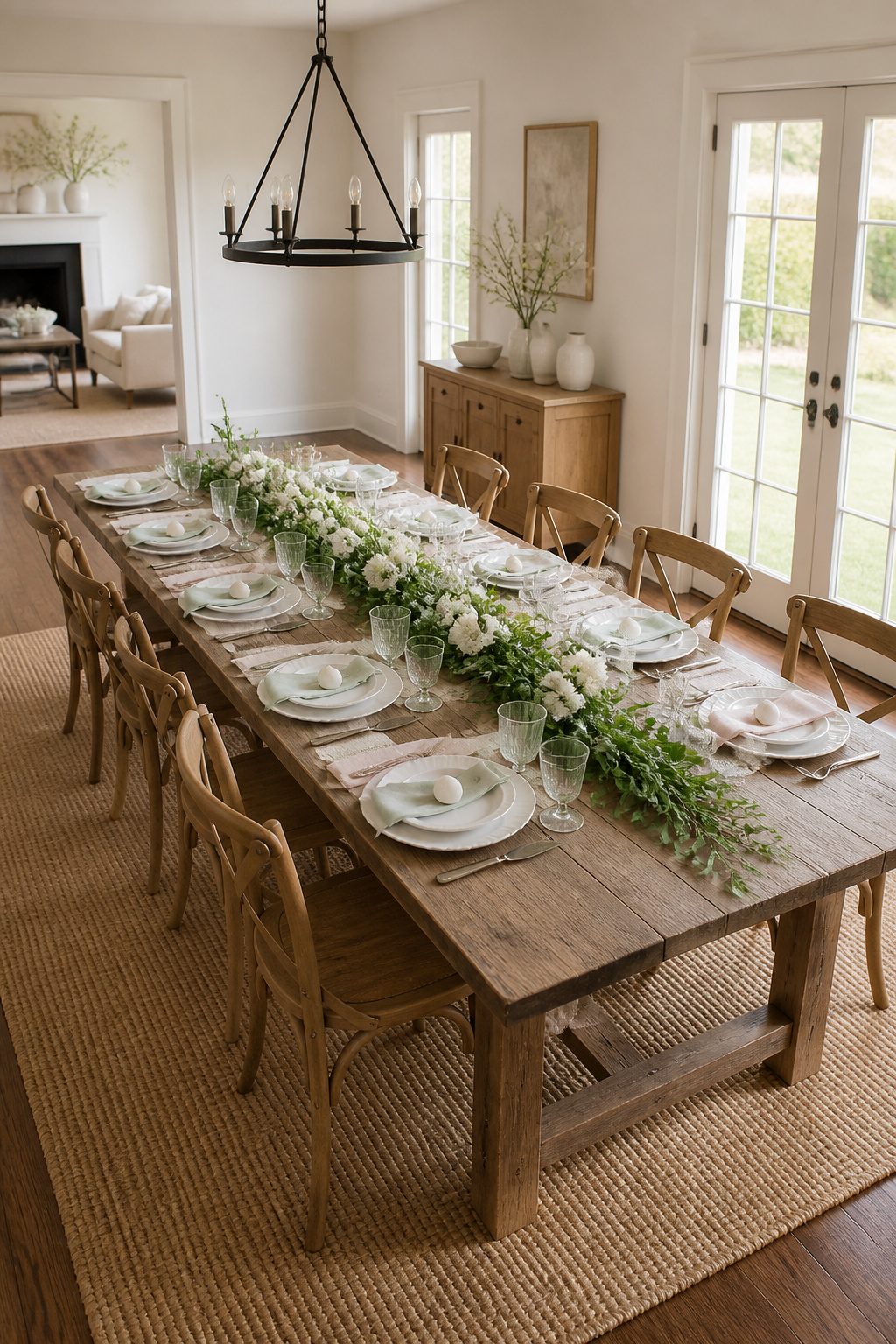
A garland of greenery with soft white blossoms can run the full length of an Easter table two different ways, and the choice changes how guests actually use the space. Plates set directly on top of the garland feel rooted in the garden, but the stems compress and the greenery flattens where the weight sits. Running the garland between place settings keeps it intact and gives guests elbow room, though the table reads more as a runner with accents than as a meadow surface.
Fresh versions of this look exist, and sources describe tables with blooming branches and fresh flowers in pitchers as absolutely fresh, simple, and classy. The reality at my own spring gatherings has been that real greenery wilts by noon under indoor warmth and the bump of water glasses. Faux garlands with real-touch white hydrangeas from Hobby Lobby and similar stems solve this entirely, and the current generation of real-touch fakes passes for fresh well past dessert. The preserved moss and reindeer moss used in spring arrangements adds texture that reads organic even up close.
Cost stays reasonable because a six-foot faux garland can be stored in a bin and redeployed for other spring events. The one limit is scent; if you want the room to smell like cut stems, a small vase of actual tulips off to the side covers that without risking the centerpiece.
19. Chocolate Bunny Place Cards
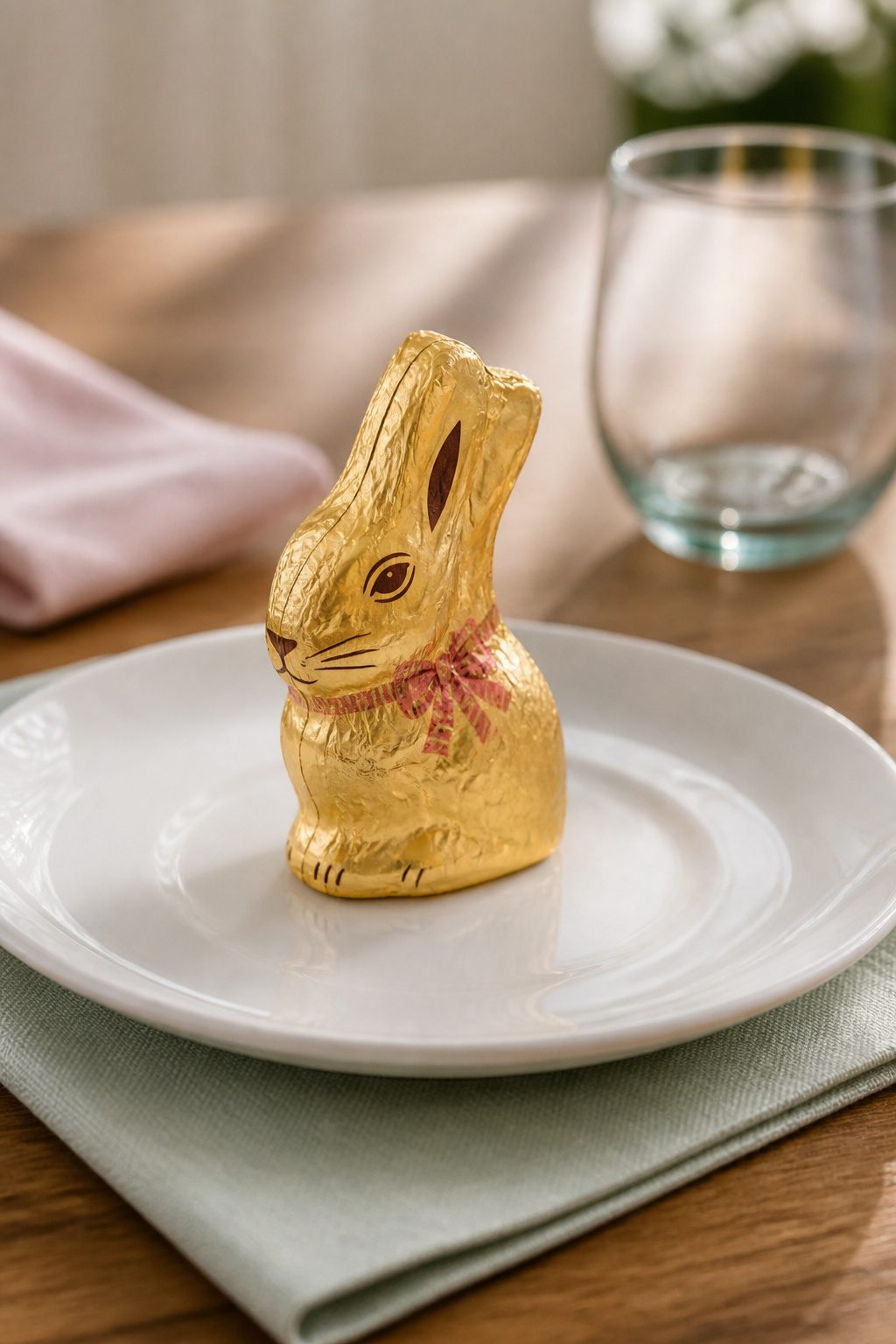
Chocolate bunnies pull double duty as place cards and take-home favors, which keeps the table from feeling cluttered with extra paper. The hollow ones work best; solid chocolate weighs down a napkin and costs more than necessary for something decorative. A four-inch bunny stays upright on a plate and does not collapse into a puddle if the brunch window gets direct sun. I buy them in bulk from the same wholesale club where I pick up the ham, usually a mixed bag of milk and dark so guests have some choice.
Two years ago I set one per plate without thinking and watched a friend tuck hers into her purse, then pull it back out when she realized it was milk chocolate and she avoids dairy. Now I add a small flagged pick to the ribbon around each neck: one color for milk, another for dark, and a third for the few nut-free or vegan ones I keep in the back. The tags cost nothing but a marker and a strip of cardstock, and the thirty seconds of sorting beforehand saves the awkward moment at the table.
20. Cabbage Vase Centerpiece
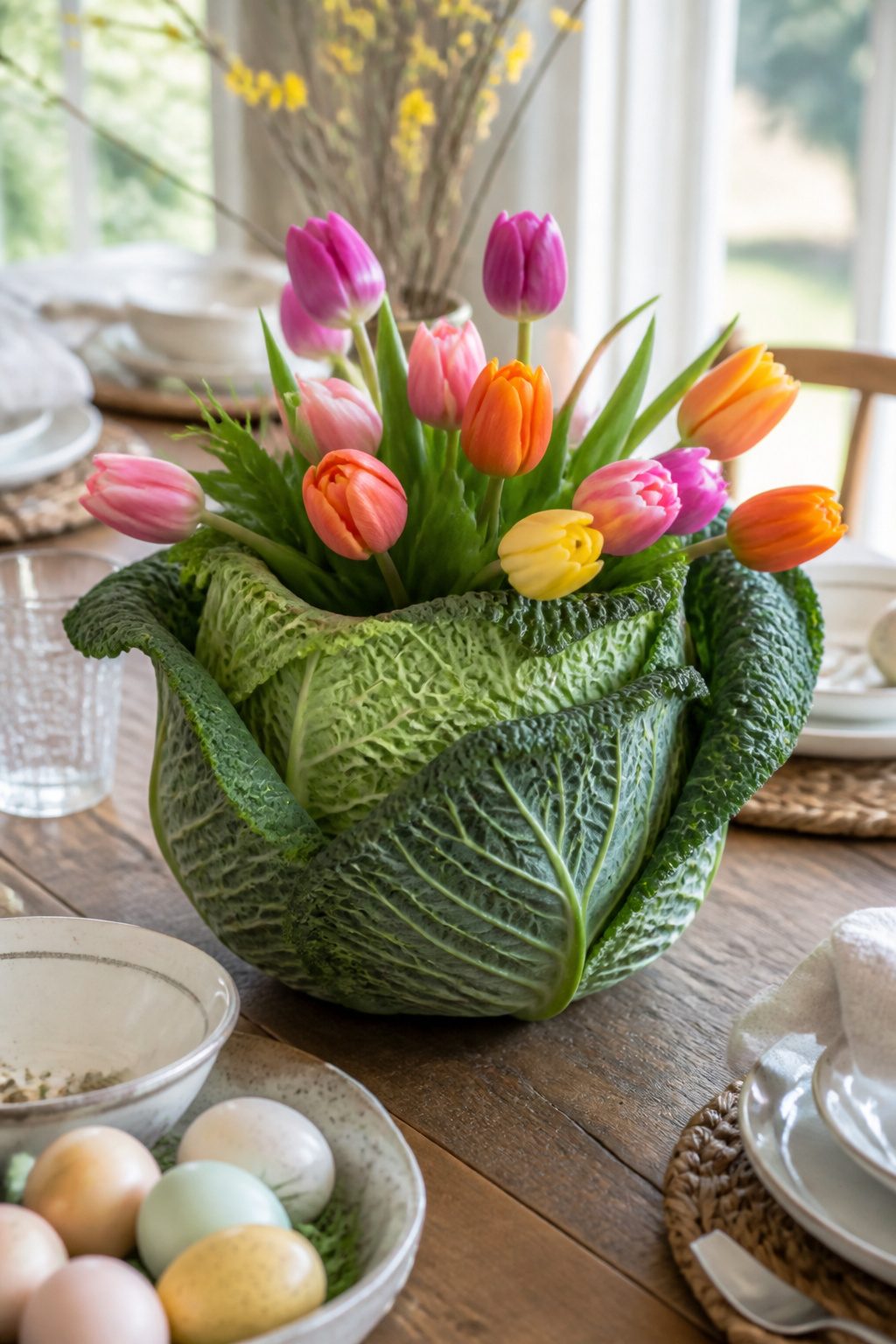
A cabbage vase sounds like a gimmick until you see one packed with tulips and realize the leaves do half the floral work for you. The trick is choosing a Savoy or Napa cabbage over a tight round head; those ruffled outer leaves hold their structure in water for two to three days without wilting into a soggy mess. I learned the hard way that a small cabbage is a leaking cabbage. My first attempt used a head barely wider than a drinking glass, so the hollowed cavity sat too close to the surface and seeped through a crack I hadn’t noticed. Water found its way onto the tablecloth before the first guest arrived. Now I pick a cabbage with at least a six-inch diameter, cut the opening slightly wider than whatever jar or short glass I’m nesting inside, and set the whole thing on clear plastic wrap as insurance. The plastic disappears visually and catches what the cabbage doesn’t. Build it the morning of, or the night before if your refrigerator has room; much earlier and the cut edges start to brown and smell like coleslaw.
21. DIY Bunny Napkin Rings
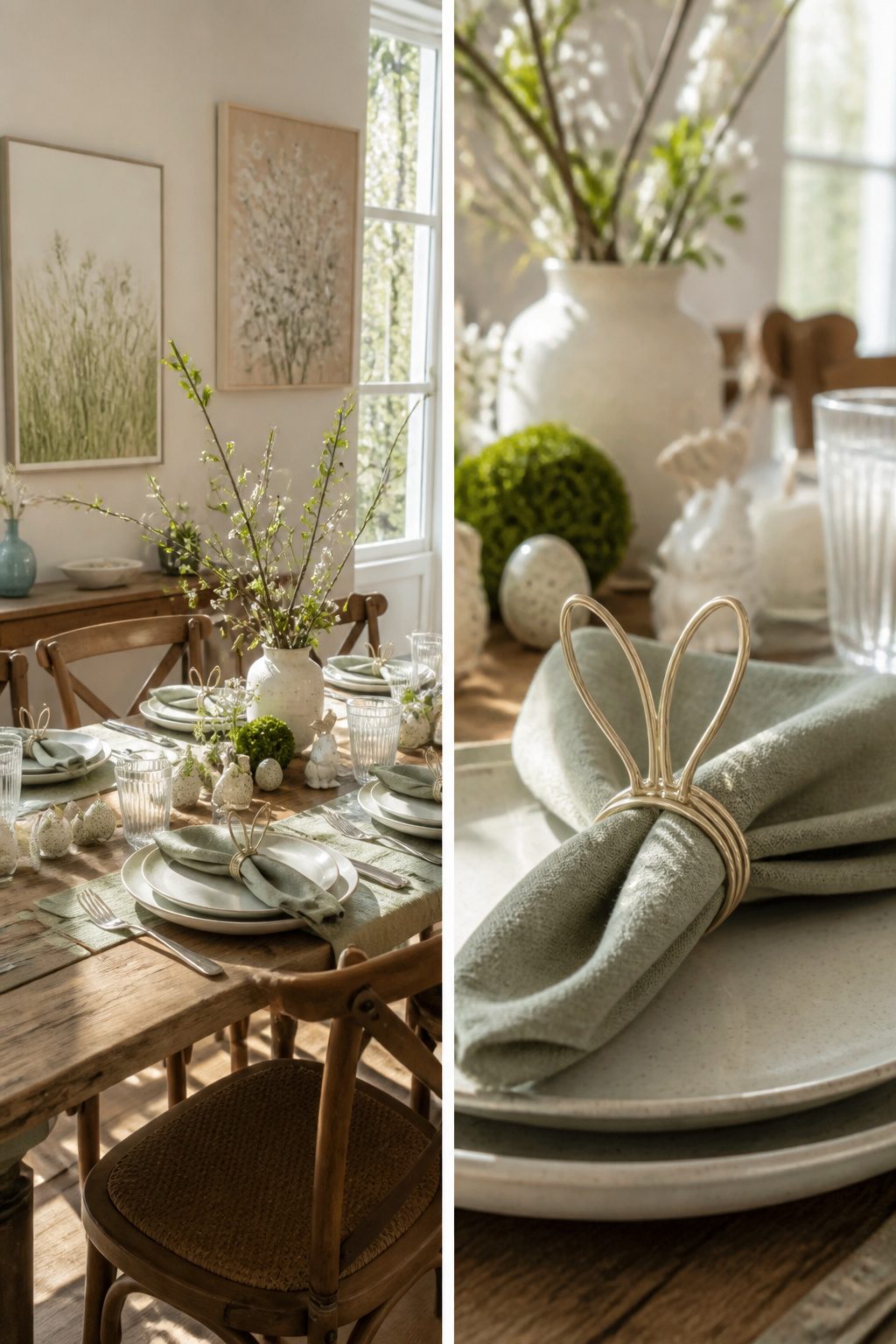
Wire napkin rings shaped like bunnies look delicate on the table but the first batch took me nearly three hours and most of that was fighting the pliers I already owned. The jaws left marks on the galvanized wire no matter how I padded them, so the ears came out scratched and the finished rings looked more like lopsided cats. A template I printed from a craft blog helped with proportion, tracing the silhouette onto cardstock first, but freehanding the second set with the wire against the printed outline saved maybe twenty minutes and looked identical once the napkins were in.
Felt is the forgiving alternative if you want the shape without the metalwork. Wool blend holds the crease from a single stitch up the back, and a dab of fabric glue inside the ear keeps it upright through brunch. Budget about forty minutes and a glue gun you already own. The wire version needs needle-nose pliers, wire cutters, and patience with your own hands; the felt needs scissors and a willingness to accept that no two bunnies will match.
22. Faux Flowers That Read Real
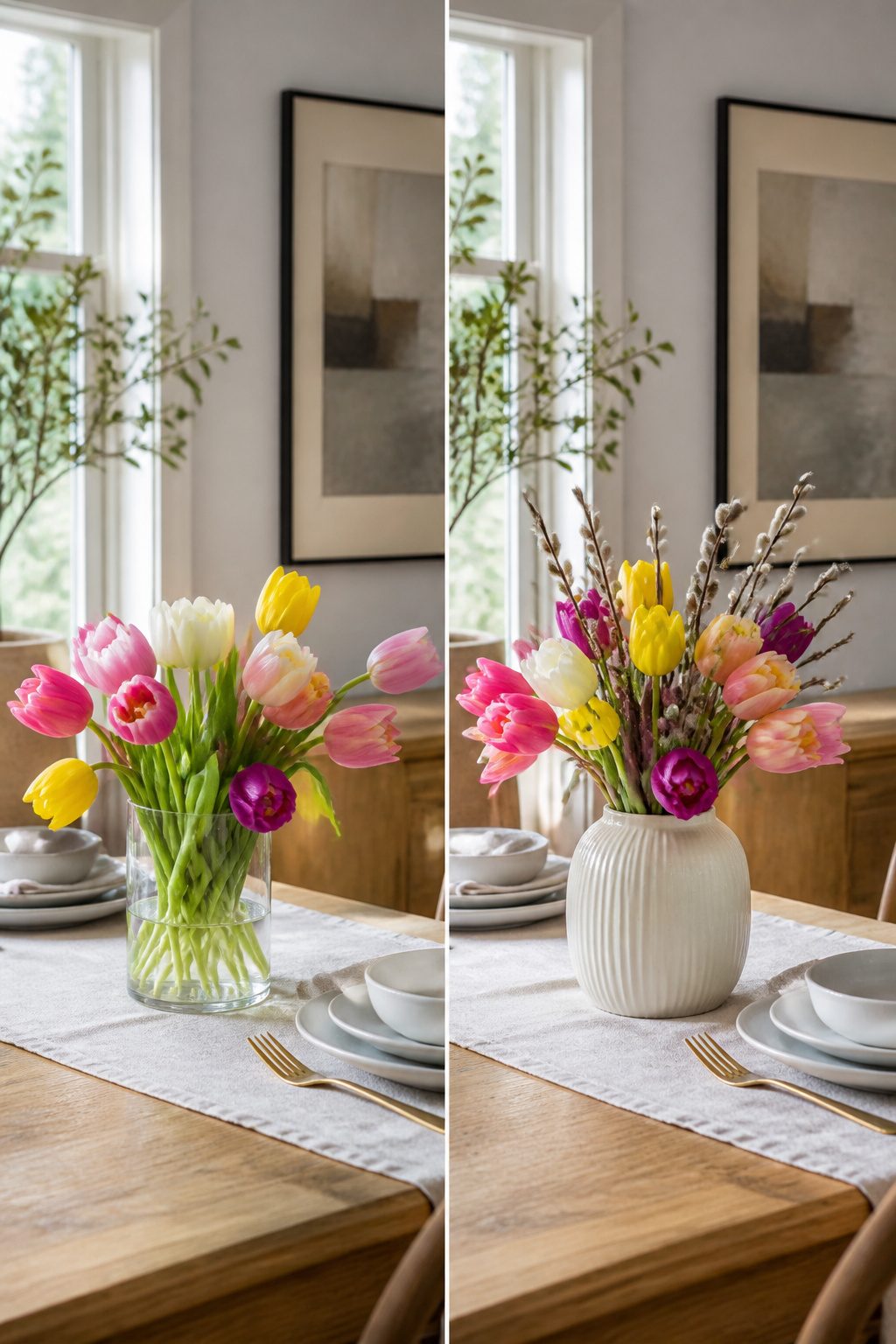
Real-touch tulips from Hobby Lobby have fooled guests at my Easter table three years running, and the ivory stems still bend like fresh cuttings when I pull them from storage. The test is table distance: anything that reads as living from four feet away earns its place, even if the petals go slightly plastic under direct scrutiny. I mix those faux tulips with grocery-store pussy willow or a few fresh stems from the corner bodega; the living greenery does the convincing while the silk carries the color bulk.
The stems that fail are the ones with matte coating or visible wire threading through the petal seams. Hydrangeas are especially tricky, and I have retired two bunches that looked like shower loofahs once the dining-room light hit them. Real-touch varieties cost roughly double the standard craft-store tier, but spread across five or six Easters the per-use math drops below a fresh bouquet that wilts by Monday. A dough bowl arrangement of mixed faux tulips and preserved moss runs about $35 in stems and lasts until you tire of the look, not until the water clouds.
23. Moss and Twigs as Natural Fill
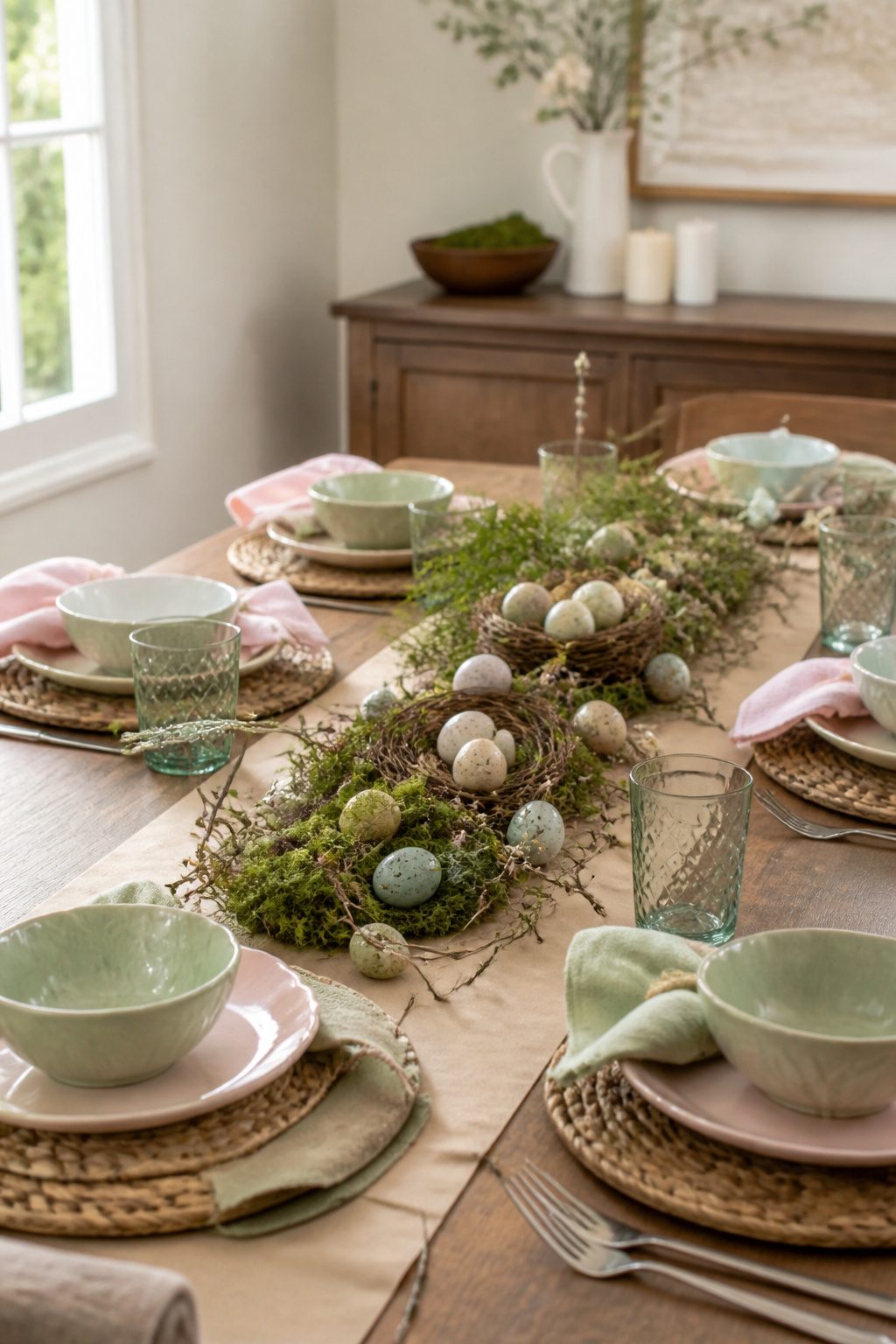
Loose sheet moss looks effortless until someone slides a water glass across it. The first Easter I tried this, I laid a full runner down the center of the table and scattered twigs and speckled eggs on top. By dessert, moss fragments had migrated onto bread plates and into gravy. What stays put is anchored moss: hot-glued to a runner-sized piece of kraft paper or tucked into a low tray that plates can sit around rather than over. Pussy willow twigs work better than bark-heavy branches because they lie flat and do not roll.
The cleanup took twice what I planned. Vacuuming the creases of a linen tablecloth at 10 p.m. taught me to keep a lint roller in the drawer beneath the dishes. Now I set the natural layer on a separate mat or directly on a bare wood table I can wipe down afterward. If the table is painted or lacquered, a paper barrier underneath saves the finish from moisture and stray glue.
24. Chocolate Eggs on Plates
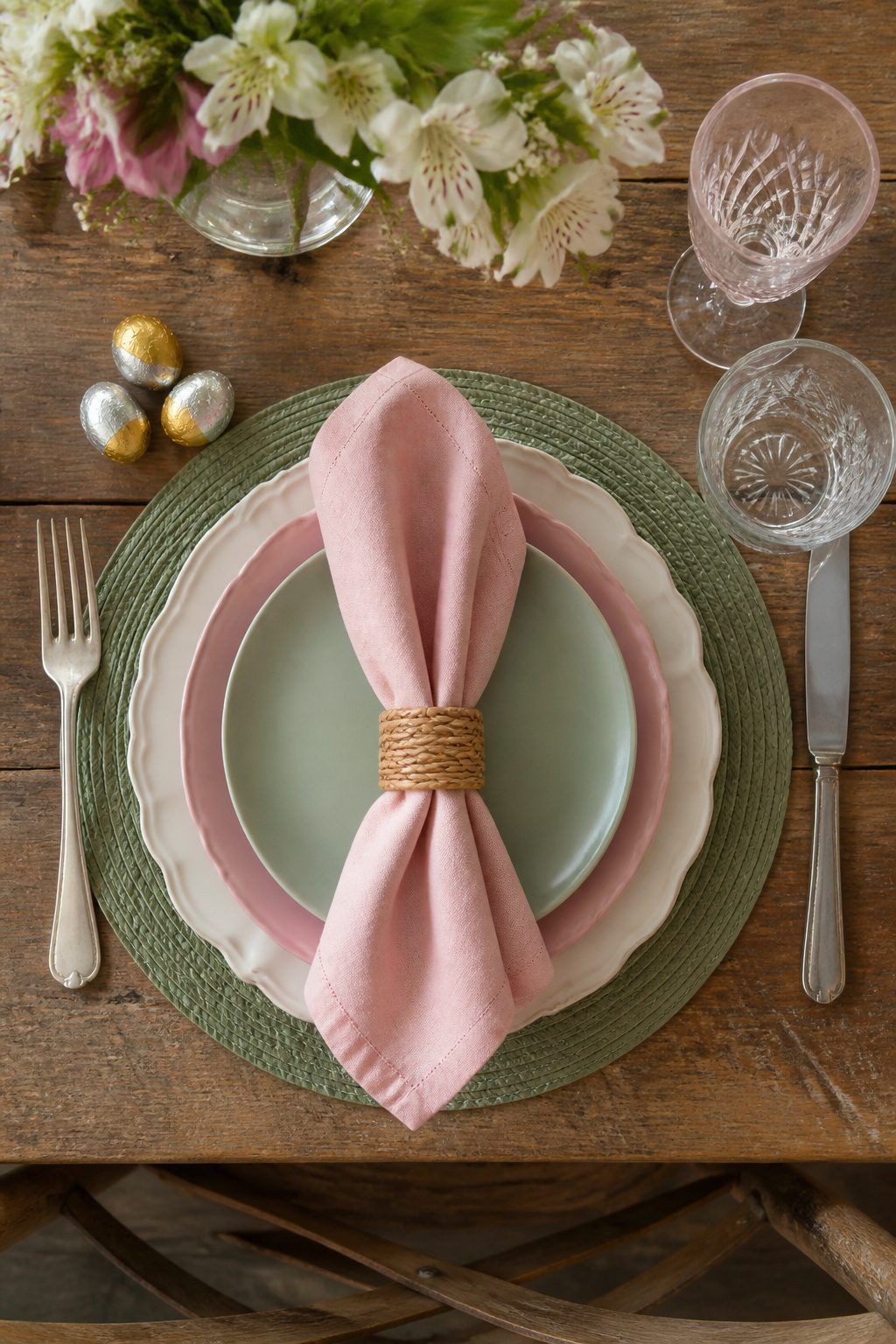
Three foil-wrapped eggs per plate looks generous without sliding into clutter. Two feels stingy once the napkin folds around them; four starts to read as a candy dish rather than a place setting. I stick with three, arranged in a loose triangle near the fork tines where the eye lands first.
Color matching matters more than I expected. Gold foil reads warm against cream or blush linens; silver works with sage and cool grays. Rose gold, which I bought on impulse one year, clashed with the terracotta plates I had already set out. Foil that matches your flatware ties the table together without trying too hard.
The melting risk caught me off guard. I set the eggs out an hour ahead while the dining room sat in afternoon sun, and by the time guests sat down the foil wrappers were soft to the touch. Now I place them only after hot dishes have left the kitchen, or I keep the plates in a cooler spot until the last minute. Warm bread plates are the worst offender; the residual heat from an oven hold will liquefy the base through the wrapper in twenty minutes flat.
25. Handwritten Place Cards
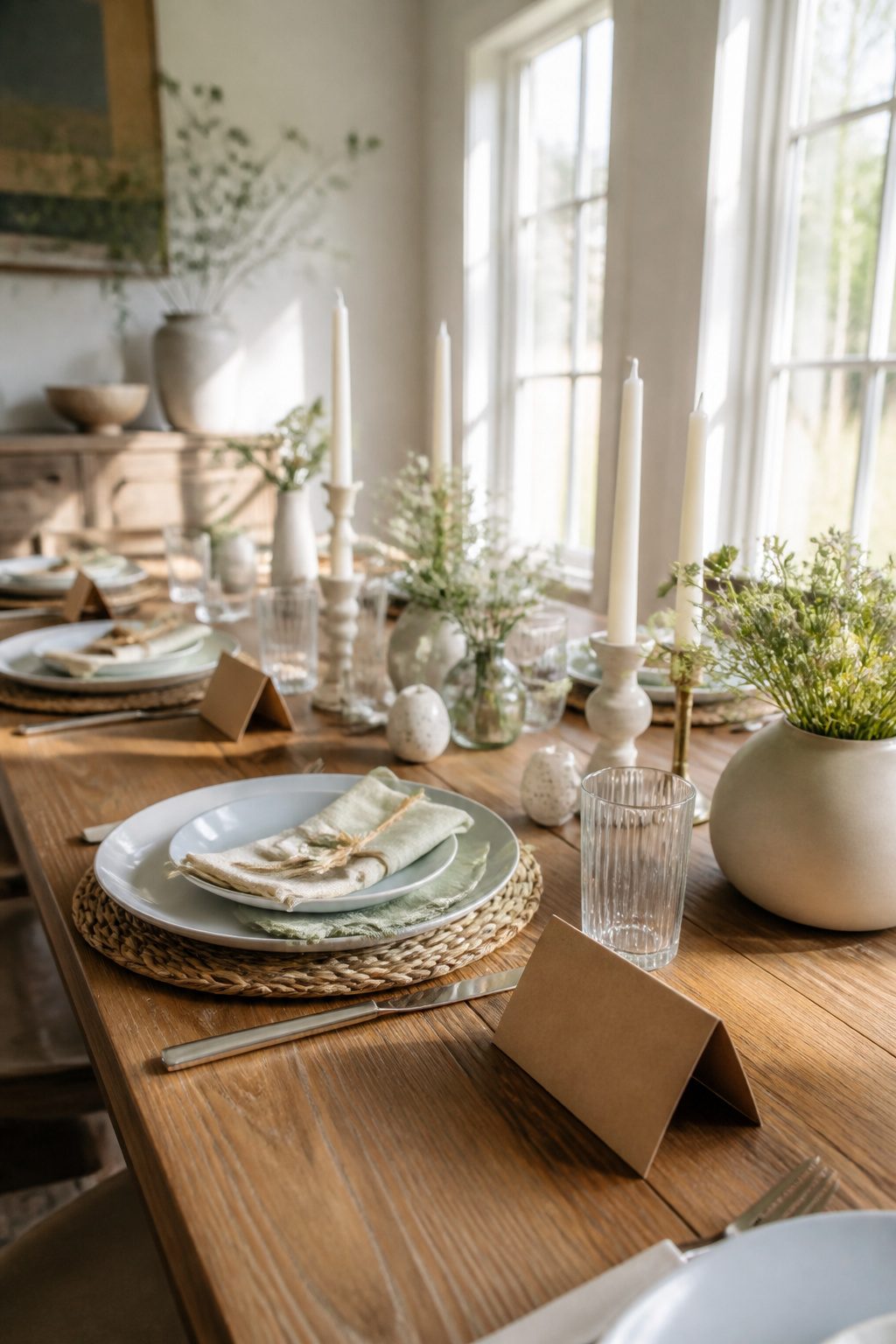
Painted eggs look charming until you are hunched over a dozen of them the night before dinner with shaky hands and a kitchen that smells like vinegar. Heavy card stock, the kind sold for greeting cards or resume printing, stands on its own when you fold a tent fold and crease it hard with a ruler edge. I learned the bleed test the hard way after a guest set a place card in a puddle of gravy; a fine-tip gel pen dissolved into gray smears, but a basic ballpoint held up fine. My handwriting slopes downhill and always has, so the year I had my partner write them instead, the table looked suddenly intentional. Nobody asked about the eggs.
Color Palette First
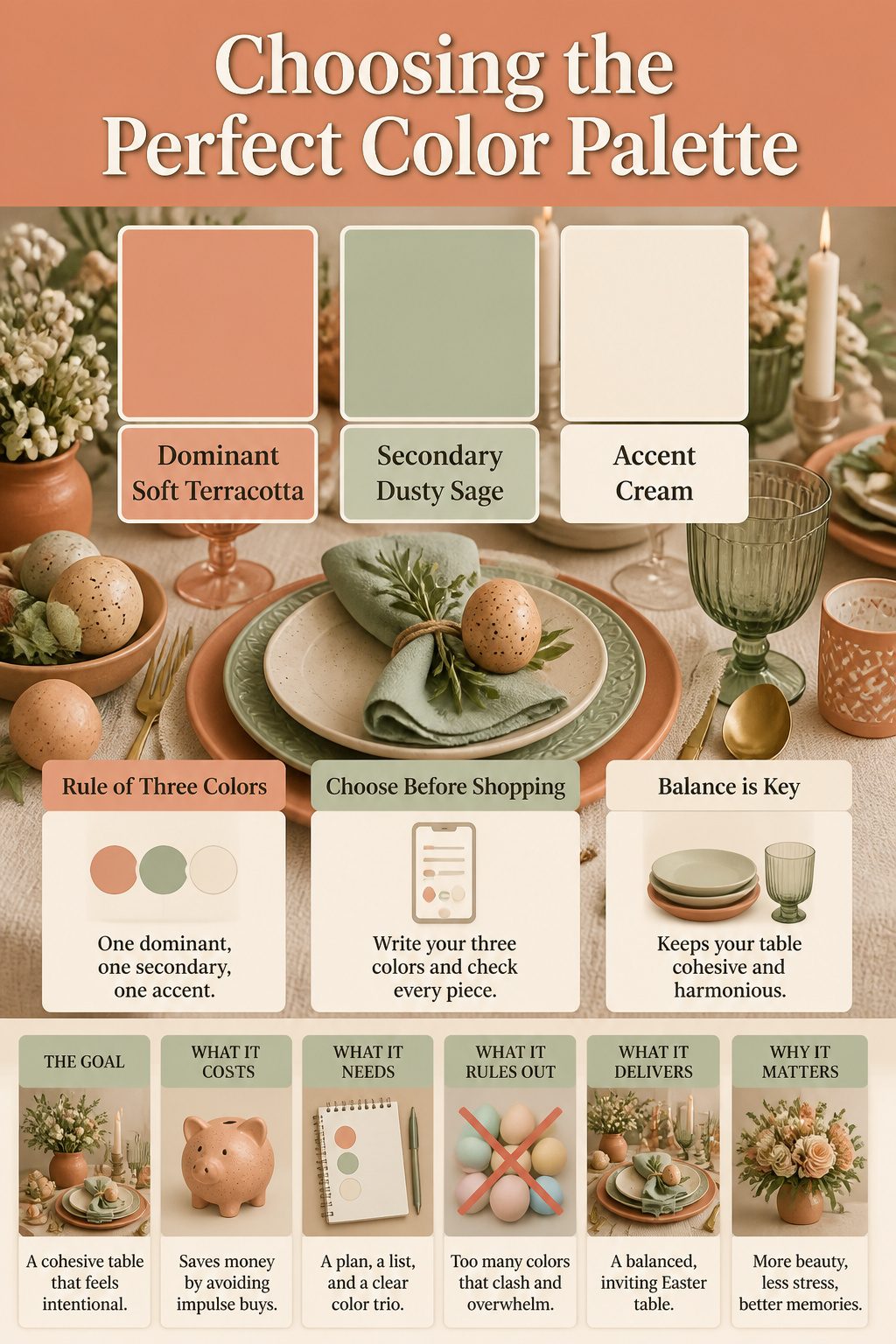
The fastest way to make an Easter table look thrown-together is to buy pieces that each looked pretty on their own. Three colors, total, is the rule I settled on after a few years of trial. One dominant, one secondary, one accent. In 2022 I broke that rule for a brunch I was hosting and used five pastels: mint, blush, butter yellow, lavender, and a pale blue I found on clearance napkins. The table read like a candy store display, not a meal anyone wanted to sit down to. The colors fought instead of talked.
Choose your three before you shop. I write mine on my phone notes and check every candle, every napkin, every egg against that list. If a fourth color sneaks in through flowers or a serving dish, I swap something out to keep the count honest. For 2026 I’m leaning into a warm trio: soft terracotta, dusty sage, and cream. It feels less expected than the usual Easter palette and hides the fact that my plates are a mix of two thrifted sets.
Religious Symbols If You Want Them
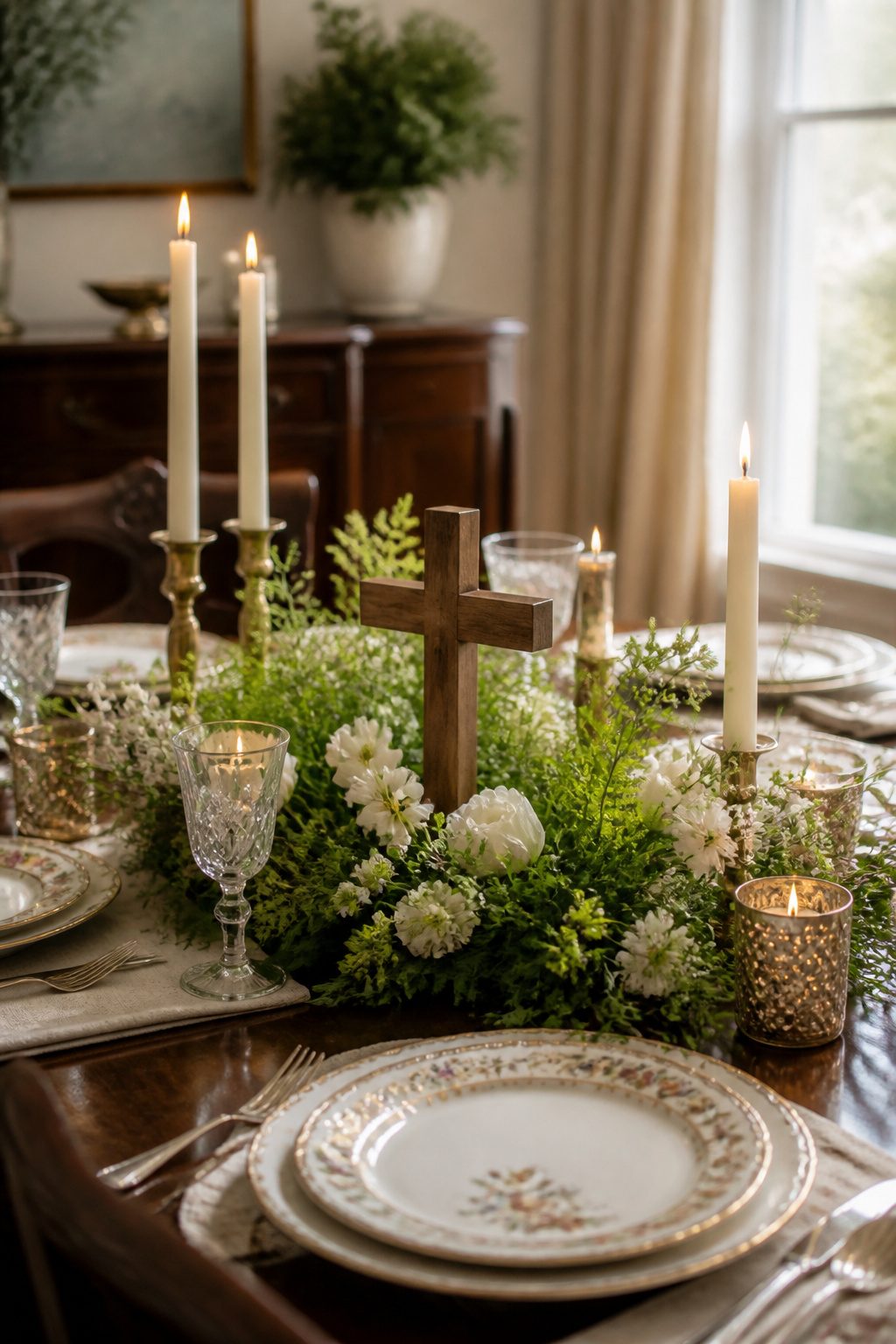
A cross at the center of a dinner table can feel like a church bulletin board landed on your plates. The trick is scale and placement. The most successful version I have seen tucked a small wooden cross, maybe six inches tall, into a centerpiece of fresh greenery so it read as part of the landscape, not a separate announcement. Lamb imagery works the same way: a ceramic figurine among eggs and blossoms, or a single napkin ring with a subtle wool texture, keeps the symbol present without turning the meal into a vigil service.
Where I stop is anything that blocks conversation or the passing of dishes. A tall crucifix standing between guests, or a lamb statue large enough to need its own plate, splits the table into two events: the religious statement and the meal. The sources agree on restraint. One designer used vintage Limoges plates with gilded edges that caught candlelight like church windows; the religious feeling came from the glow, not from any object preaching. That approach costs nothing extra and needs no storage box afterward.
Keep the symbol smaller than your coffee cup and let the spring elements do most of the visual work. If the cross or lamb disappears when someone leans in to pour wine, you have the proportion right.
Outdoor Easter Tables
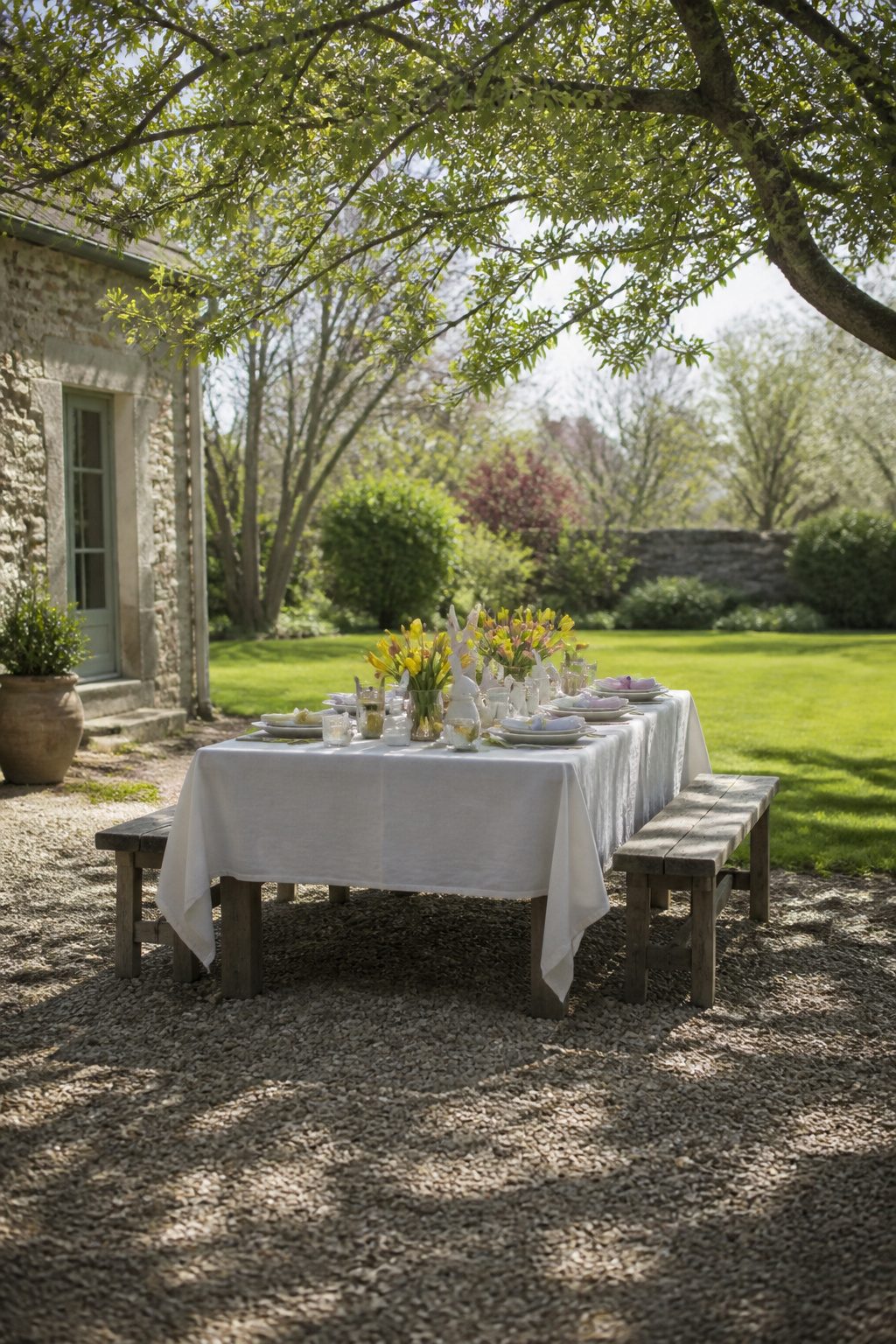
Brunch outside sounds effortless until the wind picks up and your linen runner ends up in the neighbor’s yard. My first two attempts at an outdoor Easter table taught me that lesson the hard way. The third year, I finally weighted the tablecloth corners with plain glass votive holders filled halfway with sand, which looked intentional and cost nothing extra.
Full sun is the other enemy. Fresh tulips wilt in under an hour on a warm April morning, and dyed eggs sweat through their shells. Faux greenery and ceramic bunnies hold up; anything chocolate stays inside until the last minute. I keep a folding card table in the garage as my weather backup, dressed with the same runner and a smaller version of the centerpiece. If clouds roll in, the whole setup moves in about four minutes, and nobody at the party notices the shift.
My Weekend Build Order
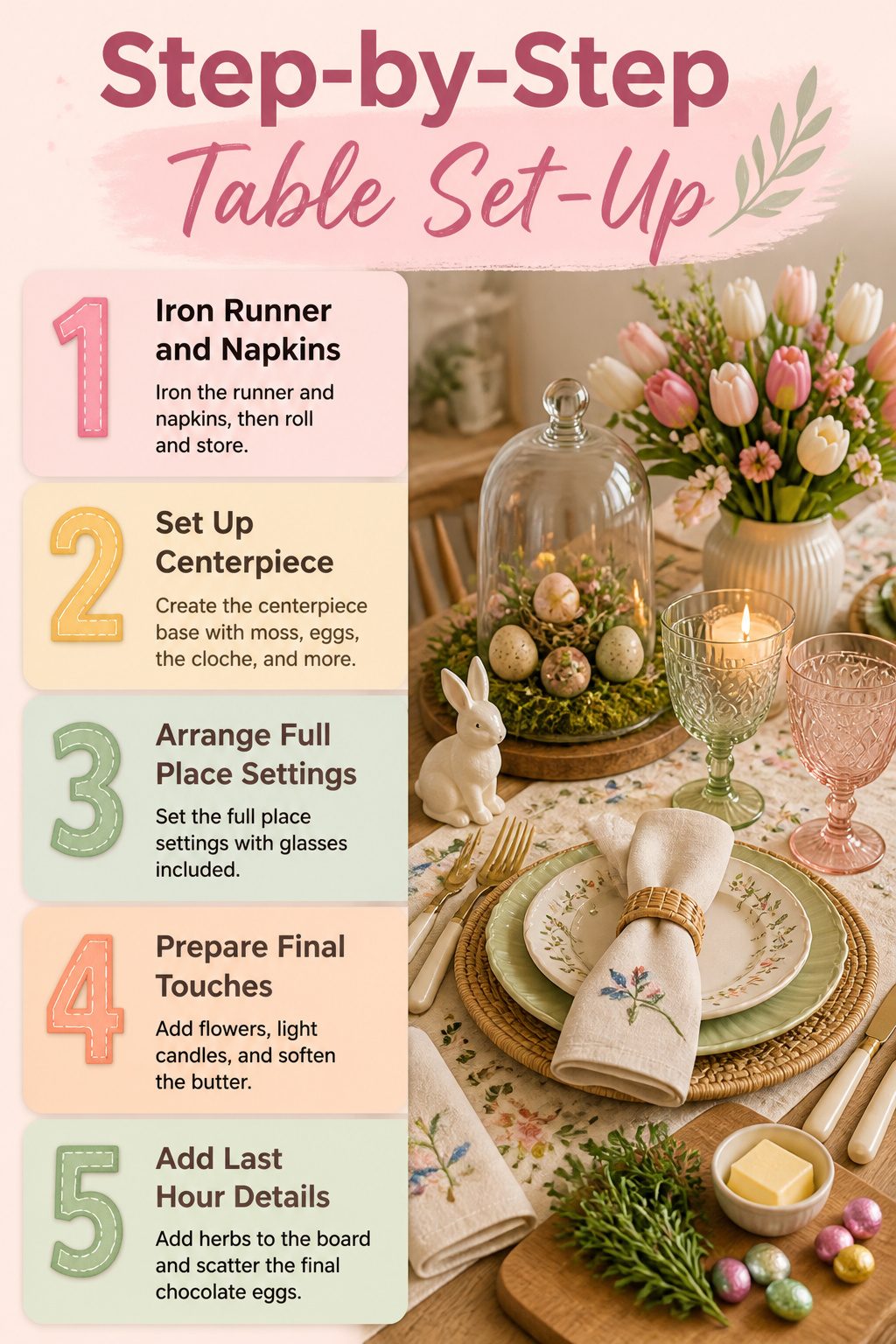
The Friday evening start is always the same: iron the runner and napkins while something mindless plays on the TV. Linen holds creases for two days if you roll it rather than fold it, so that goes into a drawer first. Saturday morning is for the centerpiece base, whatever the year calls for. Moss, eggs, the cloche, the works. Saturday afternoon, the dishes come out and I set the full place settings, glasses included, because the one thing I always forget is the water pitcher and discovering that gap while guests are hanging coats is a special stress. Sunday morning is only flowers, candles lit an hour before, and the butter softening on the counter. Two days ahead, I buy blooms closed enough that they open by Easter but not so tight that they stay bud all through brunch. The last hour is reserved for anything alive: herbs on the board, the final scatter of chocolate eggs. Everything else waits its turn.
What I Do Not Do Anymore
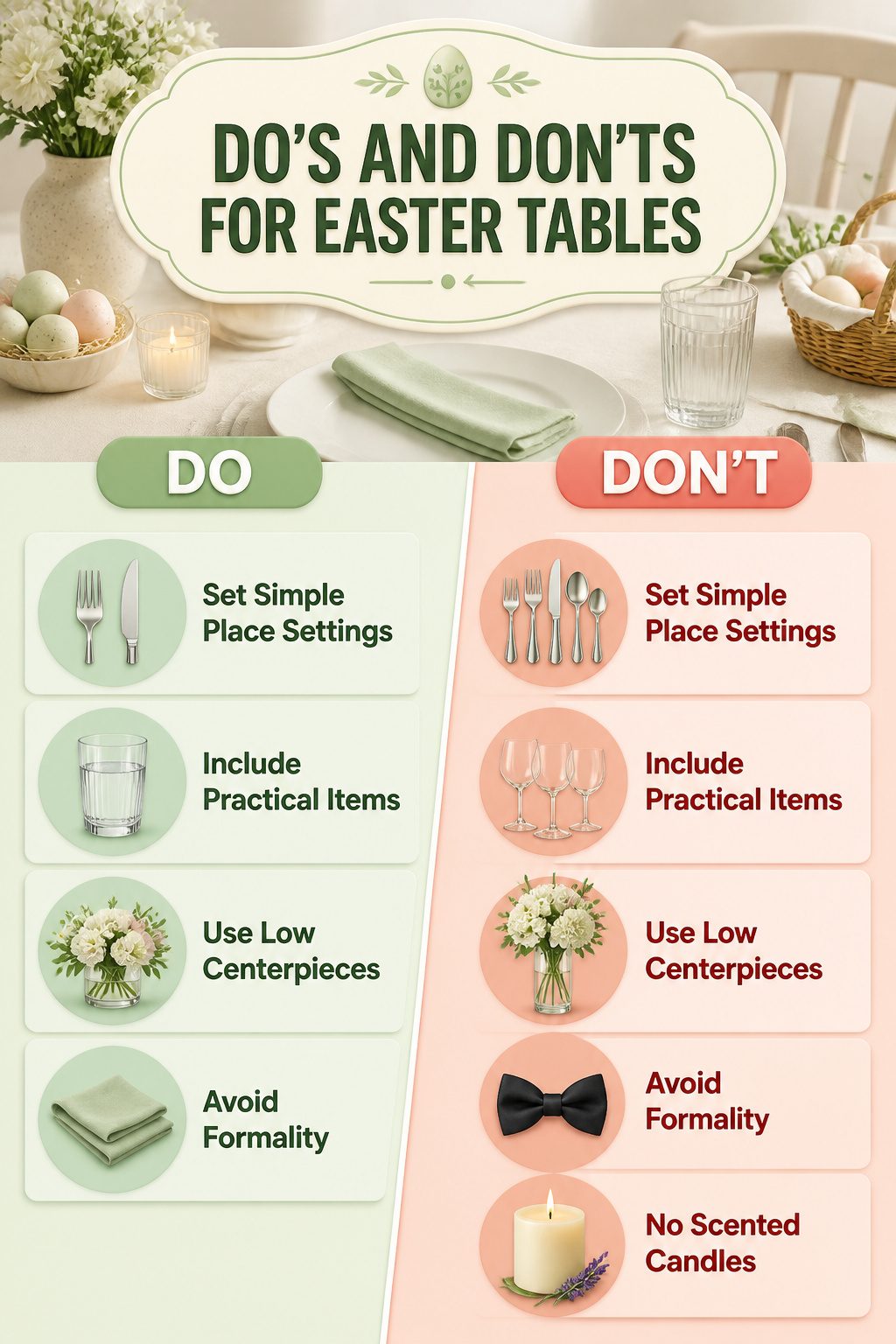
The full formal place setting was the first thing to go. Salad fork, fish fork, dinner fork, three spoons across the top; guests sat down and looked afraid to touch anything. The china had to match, the glasses had to match, and the whole thing felt like a museum where no one was allowed to breathe. A table that makes people nervous is a table that fails. These days I set the fork people actually need and a water glass they can refill themselves. The food matters more than the hardware.
Tall centerpieces lasted two Easters. Hydrangea spheres on glass pedestals, then a branch arrangement that scraped the light fixture. Both turned dinner into a staring contest with the person across from you, or a neck-craning exercise to see who was actually talking. Faces are the whole point of gathering. Anything above twelve inches now goes on a sideboard or not at all.
Scented candles were the slowest lesson. A vanilla-bean pillar seemed harmless until it sat three feet from the ham. Every bite tasted like perfume. Now the candles stay unscented, or they stay in another room. The nose adjusts fast, and it does not adjust back.
Frequently Asked Questions
How do I set an Easter table?
Build from a base of soft pastels and natural textures, then add one or two seasonal accents so the table feels finished without looking like a craft store display. Start with a lace runner or woven charger, layer plates in contrasting tones, and finish with live tulips or small bunny figurines under four inches tall. The goal is a table guests can still use for passing dishes and seeing each other across.
What flowers are best for Easter centerpieces?
Tulips outperform every other spring bloom for table use because they stay upright and keep color for hours without water. Daffodils and hyacinths wilt fast once their stems dry out and turn slimy. For a low centerpiece, fifteen tulips fill a 10-inch footed bowl; for bud vases at each place, a single stem per guest costs about $1–$1.50.
How can I make my Easter table more festive?
Small scattered accents beat one large statement piece. Tuck three or four bunny figurines under four inches between plates and glasses rather than planting one big rabbit in the center. Add hand-painted egg place cards in ceramic cups, or run a greenery garland the full table length with plates set alongside rather than on top. The eye travels more on a table with rhythm than one with a single focal point.
What are some easy DIY Easter table decor ideas?
Hand-painted eggs as place cards take about forty minutes for a dozen plus drying time. Use acrylic craft paint thinned with a drop of water, seal with matte Mod Podge, and set each egg in a small ceramic cup. For napkin rings, wire blooming rings with a stem that loops through a folded linen napkin hold up through washing and reuse with no glue to fail.
Can I use faux flowers for my Easter table?
Yes, and they work especially well in small scales where flaws hide. Faux tulips now mix pink and white convincingly in bud vases, and they store flat for reuse across years. The upfront cost runs higher per stem than grocery-store tulips, so the math favors reuse over three or four Easters. For centerpieces, real-touch versions from craft stores pass for fresh at across-the-room distance and eliminate the droop risk if you set the table early.