
A DIY advent candle holder is a base, four or five candle fittings, and greenery you arrange yourself, built around the weeks of waiting before Christmas. The catch is weight and balance: a tall taper on a narrow riser goes over from a draft, while a three-pound cutting board survives the same bump. Real candles need holders tested for fit, since a quarter-inch variance between metal rings means the taper either wobbles or needs a vegetable peeler taken to its base.
Gather Materials
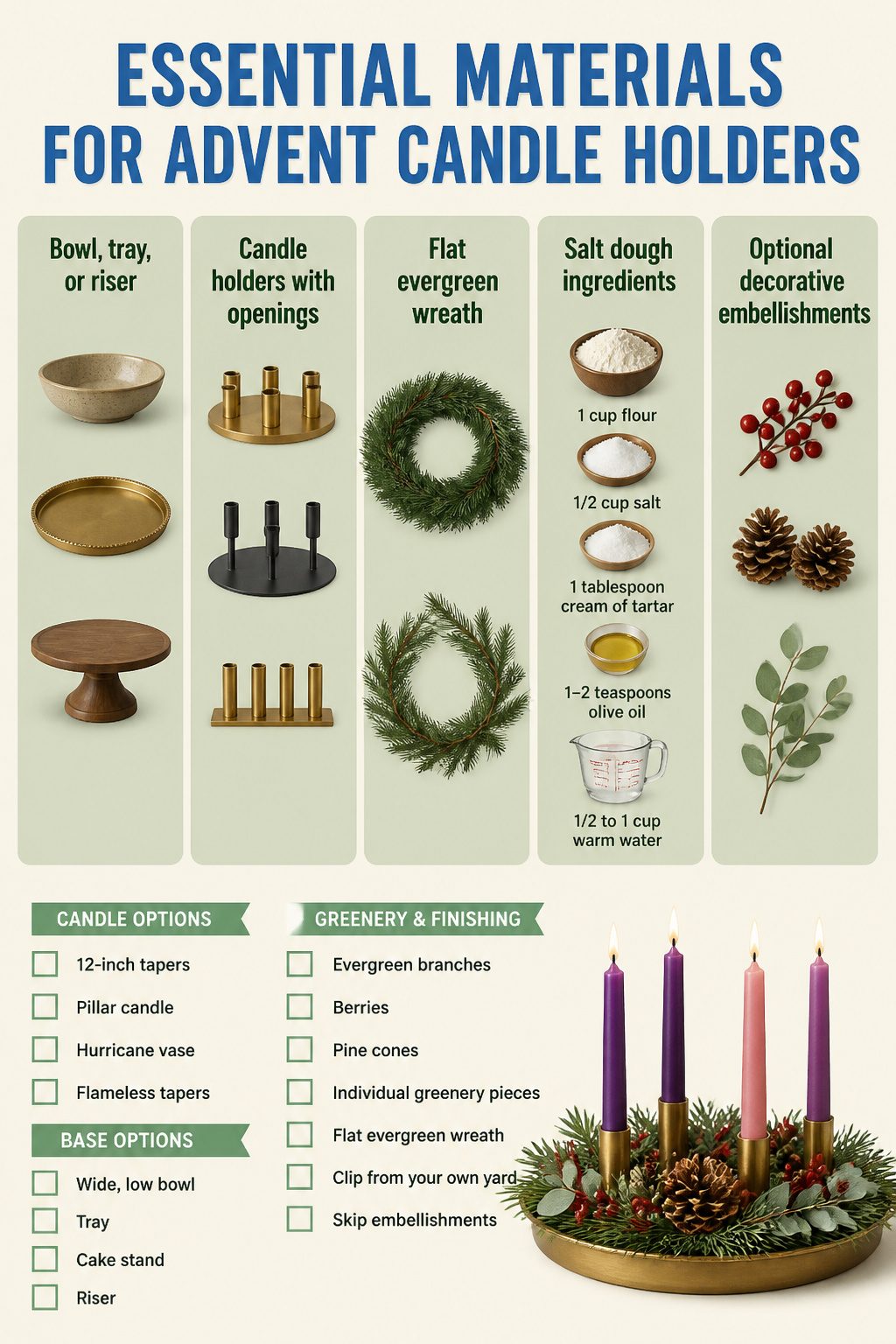
A bowl, tray, riser, or cake stand gives you the foundation, and the choice shapes everything that follows. Wide, low bowls hide the mechanics but need a flat evergreen wreath or individual greenery pieces laid across the rim to raise candles above the edge. Trays and cake stands keep the arrangement open, which I prefer when I’m working with brass candle holders that deserve to show.
The candle holders themselves need four or five openings for a standard Advent count. Tapers run about 12 inches tall, though one approach swaps in a single pillar candle with an optional hurricane vase instead of the full set. Flameless tapers have their place if you light the wreath in a window or leave the room often.
For greenery, a flat evergreen wreath saves time, but evergreen branches shaped in a circle around the base work just as well and cost less if you clip from your own yard. Berries and pine cones dress it up from there, or skip them entirely.
The salt dough route is worth keeping in your back pocket for a spiral or shaped holder: 1 cup flour, 1/2 cup salt, 1 tablespoon cream of tartar, 1–2 teaspoons olive oil, and 1/2 to 1 cup warm water. Knead until smooth after you pour the water and work the oil in. It bakes hard and takes paint, though it will not survive a damp December kitchen.
Prepare the Base
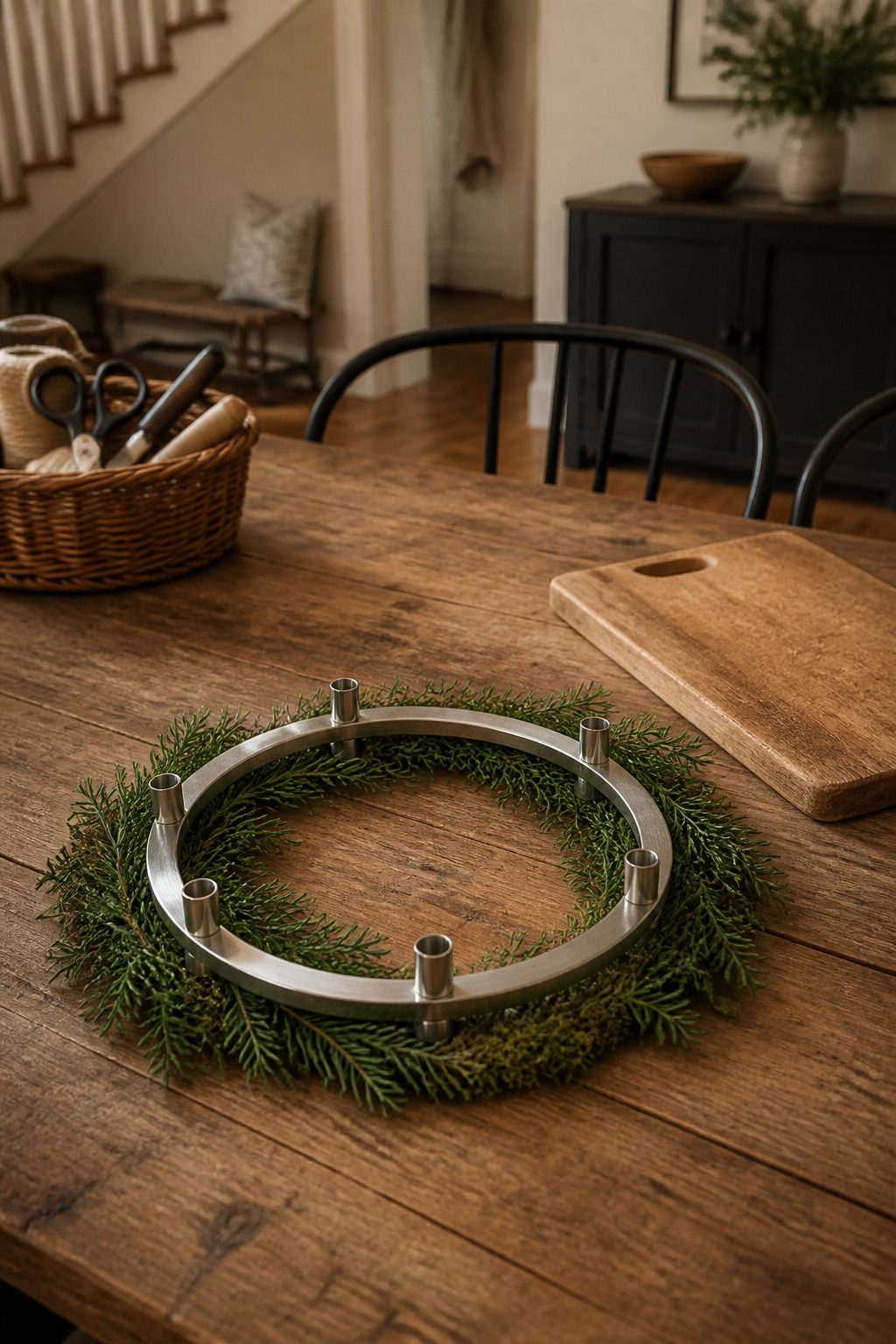
A 12-inch metal ring gives the classic wreath shape and the weight you need once four candles and soaked greenery sit on top. The floral wreath bases sold for Advent work because the candle holders are built in; nothing shifts when someone bumps the table reaching for the potatoes.
Not everyone has storage for a wreath box year-round. A ceramic bowl, a round tray, or even a wooden cake stand lifted from the thrift shelf does the same job with a smaller footprint. The rule is flat and heavy: a low center of gravity beats a wide footprint if the surface underneath is uneven. I have watched a tall taper on a narrow riser go over from a draft through an old window; the base that survived was the chunky cutting board that weighed three pounds before the candles went on.
Round bases pair naturally with grouped candle holders in the center. If your candles stand in a ring, the base needs to match that ring’s diameter or the greenery ends up crowded at the edges and bare in the middle. For a single pillar with tapers around it, a bowl leaves room to tuck moss or branches between the walls and the flames.
Arrange Candle Holders

A 12-inch metal ring gives you just enough room to work with, so spacing four holders evenly at roughly three inches apart keeps the wreath from looking crowded on one side. Five candles tighten that gap to about two and a half inches, which still works if you start measuring from the center point and work outward in both directions. Centering matters more than exact placement. One holder sitting half an inch closer to the edge than the others throws off the whole circle, and taper candles especially will lean visibly.
Stability depends on what the holder sits on. A flat metal base with welded cups already solves most of the problem. For loose holders set inside a bowl or on a tray, the weight of the candle itself becomes the risk. A short brass candlestick with a wide footprint stays put better than a tall narrow one, and battery-operated tapers remove the wax-melt worry entirely. Sources do not specify standard holder diameters, so test your own before committing: set the empty holders on your base, nudge the tray, and see which ones shift. Hot glue or floral foam blocks underneath can lock them in place if you are using a bowl or cake stand rather than a ring with fixed cups. The foam stays hidden under greenery, and the glue is only necessary if you plan to move the finished piece around much.
Add Greenery
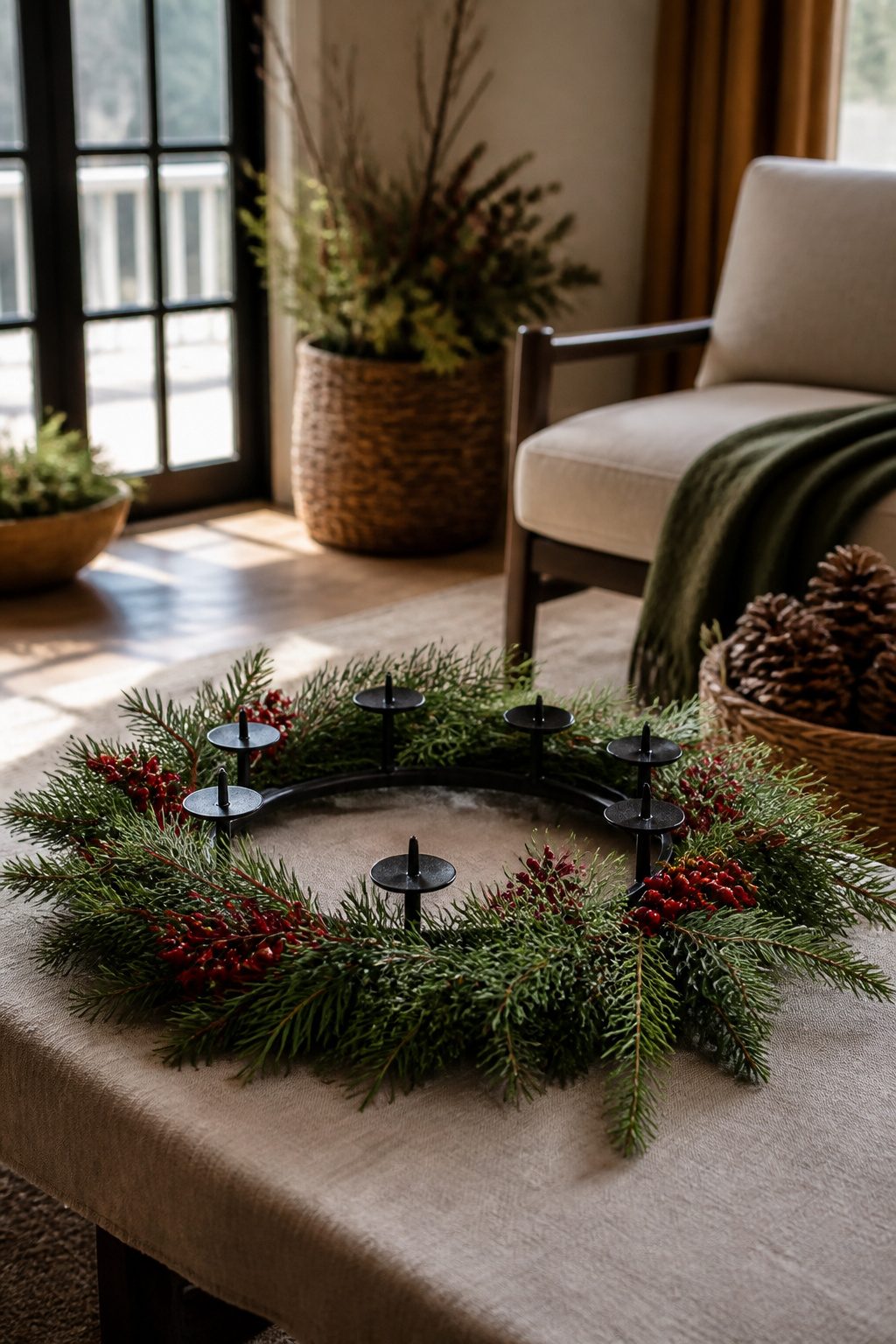
Faux pine stems from Michaels, like the Green Cedar and Red Berry line, give you the texture without the needle drop. I start with an 18-inch artificial wreath as the base, then work individual stems in with wire cutters so each piece sits at a different angle. Hot glue becomes necessary once you start moving the wreath around; berries and short branches shift otherwise.
Layering means thinking about candle access first. Four holders need clear air above them, so greenery stays low and radiates outward. Juniper and mistletoe add the final fill, but I stop before the inner ring crowds the flames. Flameless tapers solve the clearance problem entirely if your stems end up taller than planned.
Decorate with Embellishments
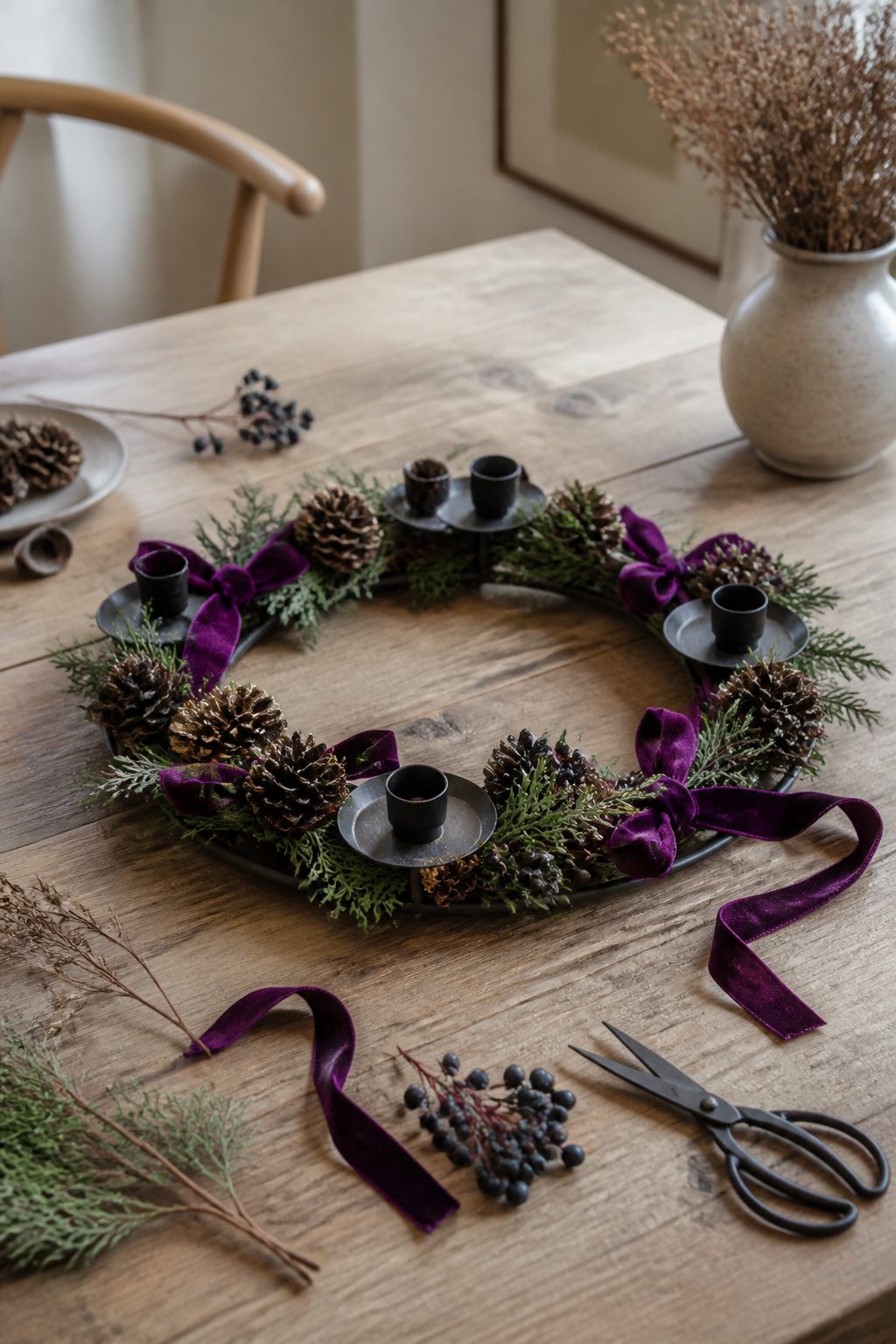
The berries and pine cones go on last, and restraint is harder than it looks. I once filled a wreath so densely that lighting the fourth candle meant singeing juniper needles every Sunday. Now I tuck in three or four clusters and stop, even when gaps still show from certain angles. Hot glue belongs on the embellishment, not the wreath, so a pine cone lifted off later leaves the base intact for next year.
Ribbons can mark candle colors without replacing the candles themselves. Velvet ribbon in purple and pink, tied around white tapers, reads correctly from across the room and stores flat in January. Pomegranates or small brass bells work the same way: seasonal enough for Advent, removable before Epiphany. The wreath stays usable for four weeks because nothing is permanently fixed. What reads as fullness in December often looks like clutter by the second week, so I add less than I think I need and let the greenery do most of the work.
Insert Candles
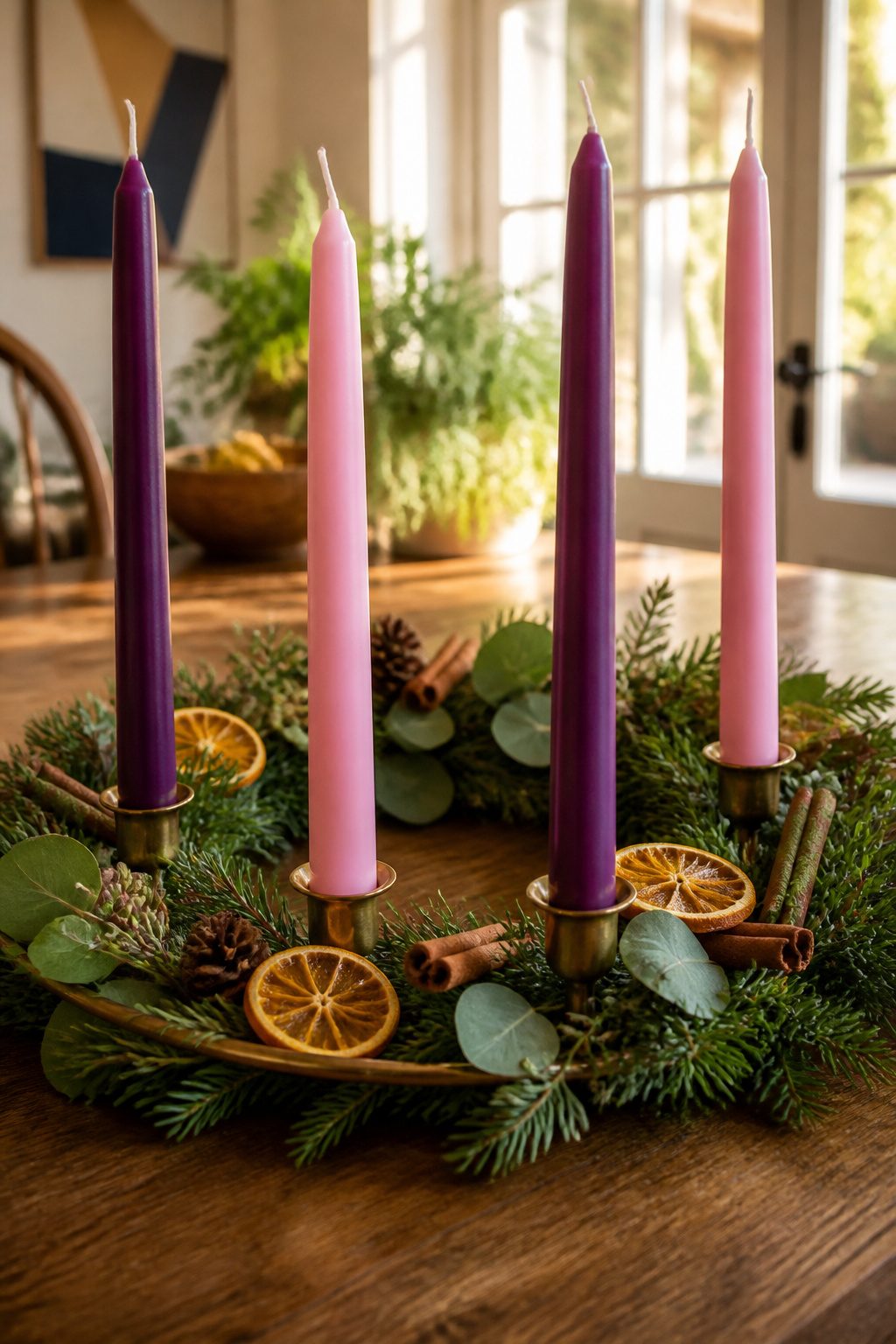
Twelve-inch tapers are the standard most holders are sized for, and that length gives you roughly two hours of burn time per half-inch, enough for a full evening without rushing through the readings. The traditional scheme is three purple and one pink, with an optional white Christ candle set in the center if your base has a fifth holder. Purple marks the weeks of preparation, pink the third Sunday for Gaudete, and white the Christmas Eve or Christmas Day lighting.
Fitting them takes some trial. Metal and ceramic holders vary by a quarter-inch or more, even within the same product line, so a taper that sits loose in one ring may need trimming in another. If the fit is too tight, a few seconds with a vegetable peeler shaved from the base usually does it; too loose, and a drip collar or a small wrap of masking tape at the bottom keeps the candle upright without wobble. A candle that lists even slightly will tunnel on one side and drown its own wick before the first week ends.
Battery-operated tapers are worth considering if your display sits near a draft or a busy hallway. The realistic wax ones with timers have improved enough that the glow reads genuine from across a room, and they remove the evening’s mental load of checking who blew them out.
Light Candles Safely
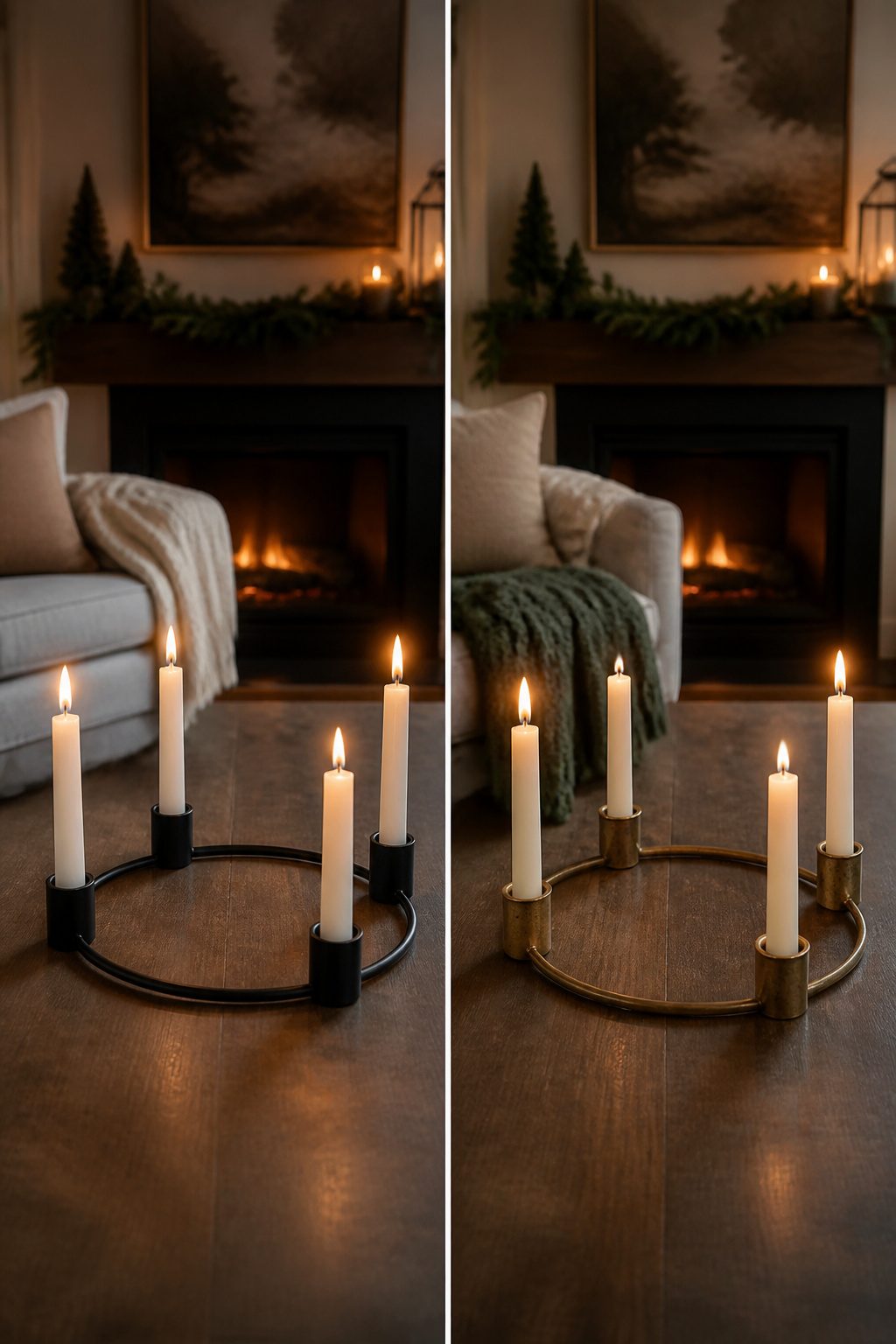
Real candles in a wreath or holder you built yourself deserve the same caution as any open flame. Never leave lit candles unattended, and keep them well clear of greenery that can dry to tinder over four weeks of heating. Battery-operated tapers solve this cleanly; the LED sets from church suppliers shine as brightly as wax, and you skip the watchfulness entirely.
The weekly lighting itself is simple. One candle the first Sunday, two the second, and so on through Advent. A fifth candle, white, goes in the center for Christmas Eve if your design allows it. That rhythm works with real flames or LEDs, and either way the holder you built carries the tradition.
Traditional Advent Wreath
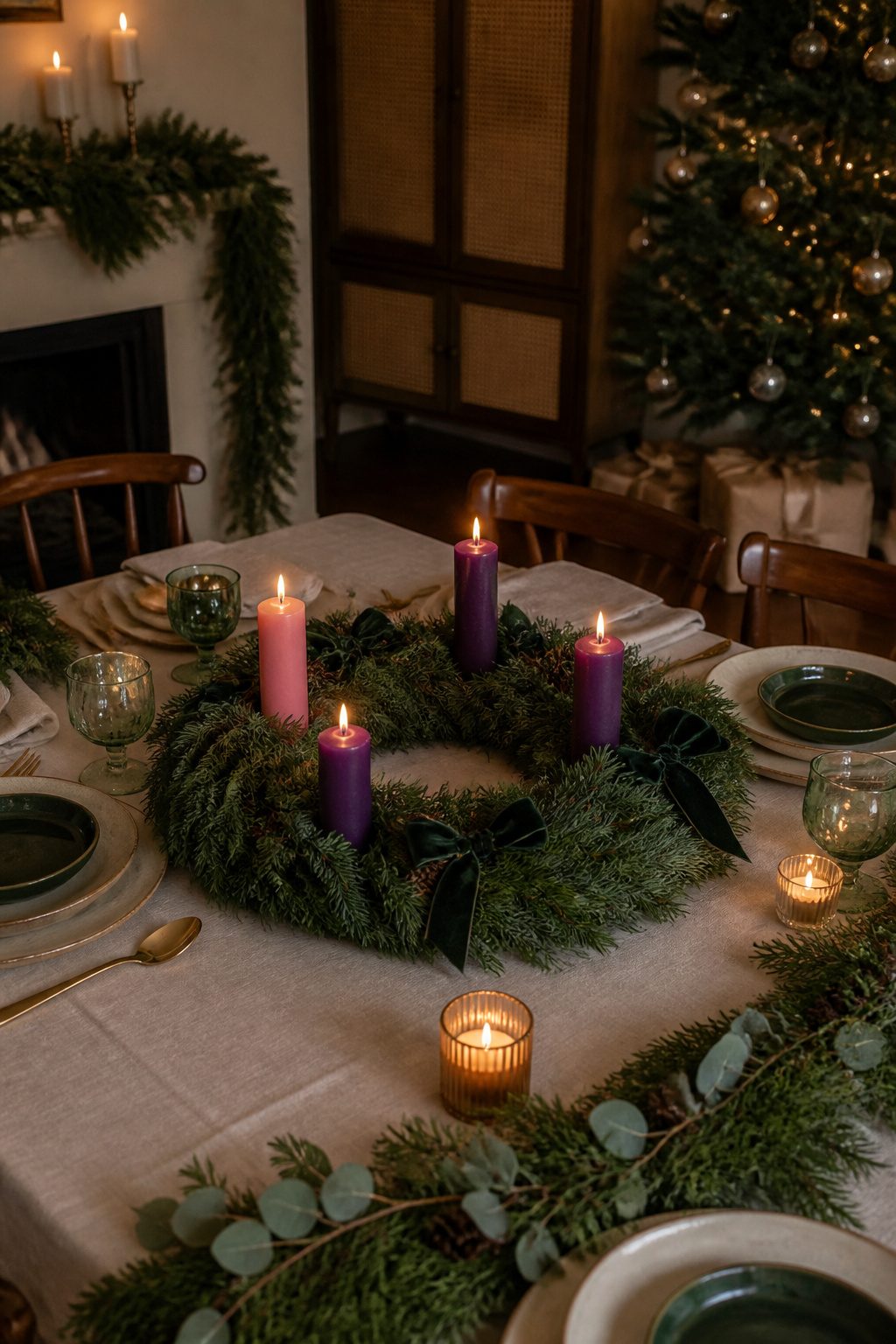
The classic Advent wreath keeps its shape for a reason: four candles set in a circle, three purple and one pink, with an optional white pillar in the center. That ring matters because the weeks themselves move in a circle. You light one candle the first Sunday, add a second the next week, and by the fourth Sunday the whole wreath is burning. The progression is built into the form.
Purple marks the first, second, and fourth Sundays, standing for Hope, Love, and Peace. The pink candle, lit on the third Sunday, breaks the sequence for Joy. Some households add a white Christ candle in the middle, lit Christmas Eve or Christmas Day. The circle itself, with no beginning or end, carries its own meaning alongside the colors.
What I appreciate about this format is how little it demands from a DIY build. A plain grapevine wreath, four metal clips or glass cups, and the right candles will read as traditional even if your greenery is grocery-store cedar rather than formal boxwood. The structure does the theological work; your hands just hold it steady.
Where sources differ is on which Sunday gets pink. Most liturgical calendars place Joy on the third Sunday, though you’ll see some Protestant households light it fourth. Either way, the pink candle is the single break in the purple line, and that visual interruption is the point.
Salt Dough Advent Spiral
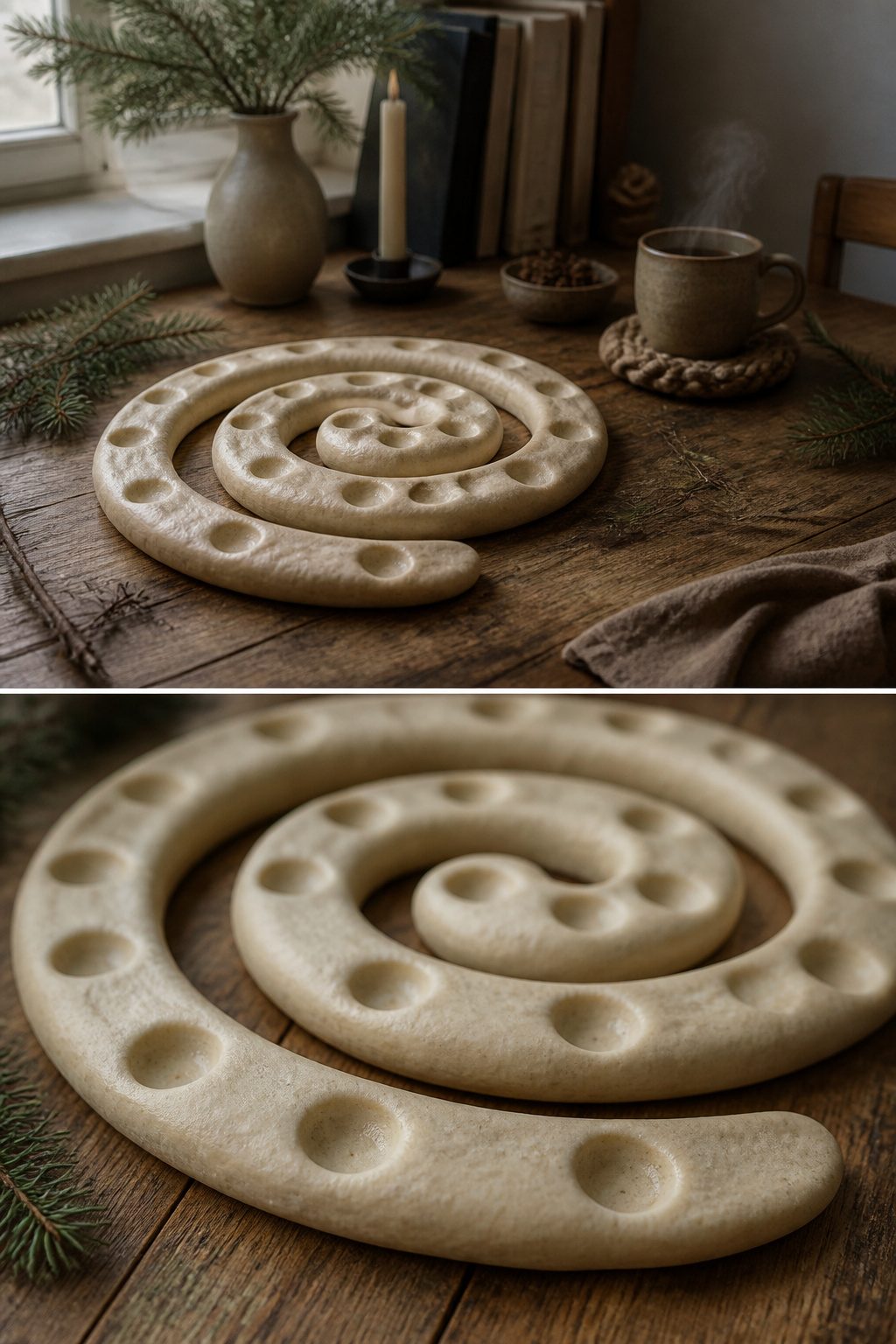
Salt dough offers a completely different path from the circular wreath tradition. The dough itself mixes 1 cup flour, 1/2 cup salt, 1 tablespoon cream of tartar, 1–2 teaspoons olive oil, and 1/2–1 cup warm water. Knead until smooth, then roll and shape into a long spiral with a finger-wide groove pressed down the center for the candles.
Drying takes 2–4 hours at 170°F on your oven’s lowest rack, or several days if you leave it out to air dry. The baked route is what I’d choose for a weekend project; air drying demands more patience than most December schedules allow.
The spiral form changes how you experience the weeks. A wreath gathers everything into one view, but a stretched spiral lets you walk the progression, lighting each candle farther along the path. The salt dough keeps that handmade, slightly uneven texture no factory mold would replicate. Just keep it away from pets and small children who might taste it, and note that the flour content makes this unsuitable for anyone with wheat allergies.
Mason Jar and Shot Glass Displays
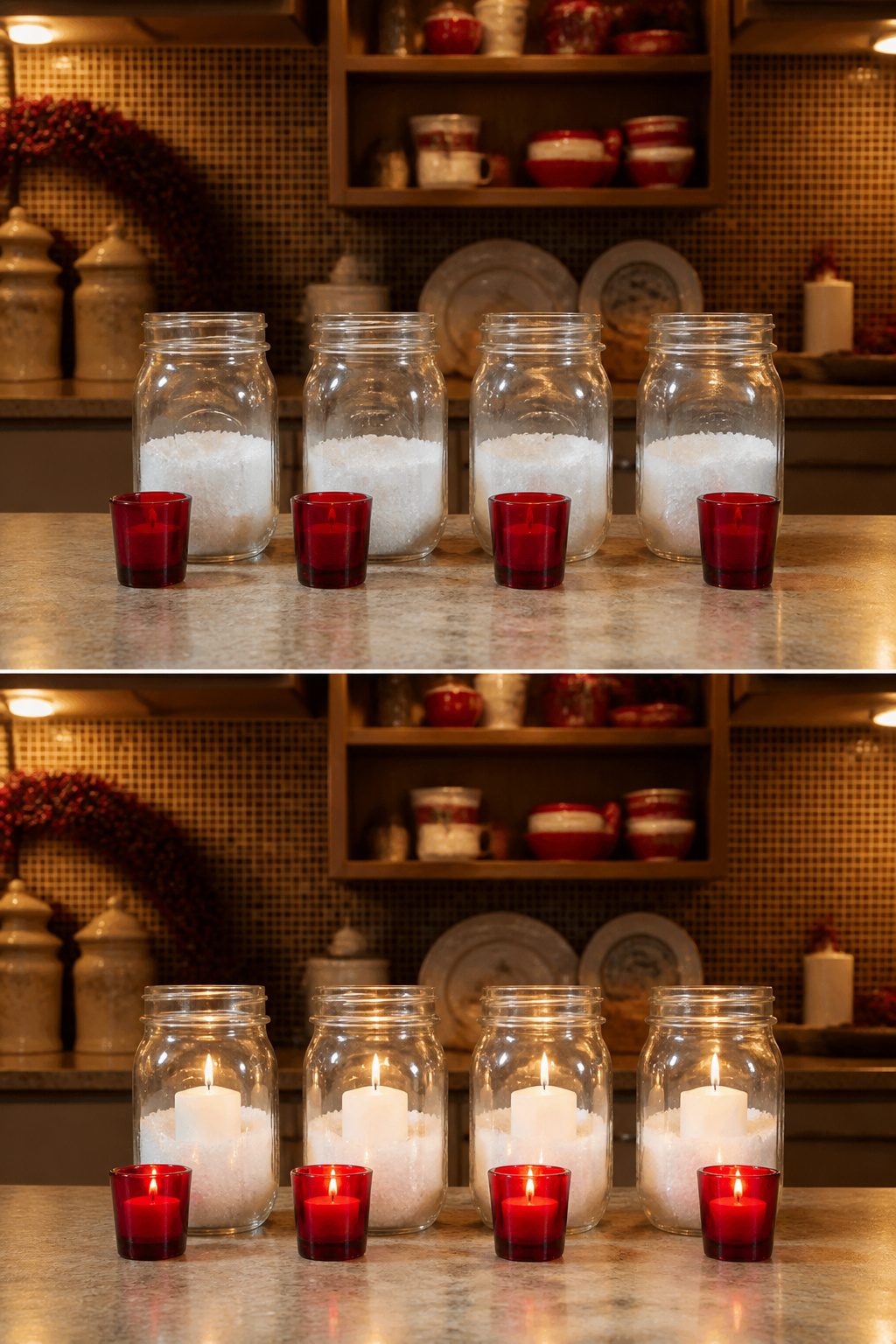
Small apartments and rented rooms rarely come with storage for a seasonal wreath, so compact, movable displays tend to win out. Two builds that fit this brief start with disposable shot glasses or mason jars, both already in most kitchens.
Shot glasses meant for one-time use, the kind that come with café desserts, can be cleaned with paint thinner or nail polish remover to lift any label residue. Painting the inside with two or three coats of red acrylic hides the plastic grain and keeps the outside glossy. White dots go on the exterior; gesso covers in one dab, though regular acrylic or fabric paint works if you already own it. Four of these, one for each candle, line up on a windowsill or shelf and pack flat into a drawer on December 26.
Mason jars filled with Epsom salt give the same small footprint with a different mood. The salt holds tapers steady and catches light like frost, while twine and greenery around the rim dress it up without glue or permanent changes. A row of four jars on a narrow ledge or mantel takes up maybe a foot of depth and moves as a unit when the landlord schedules an inspection.
Both options skip the wreath form entirely, which matters if you lack a table center you can dedicate for four weeks. The jars handle drips better; the shot glasses ask for battery-operated tapers unless you want wax pooling in plastic.
Cake Stand and Teacup Bases
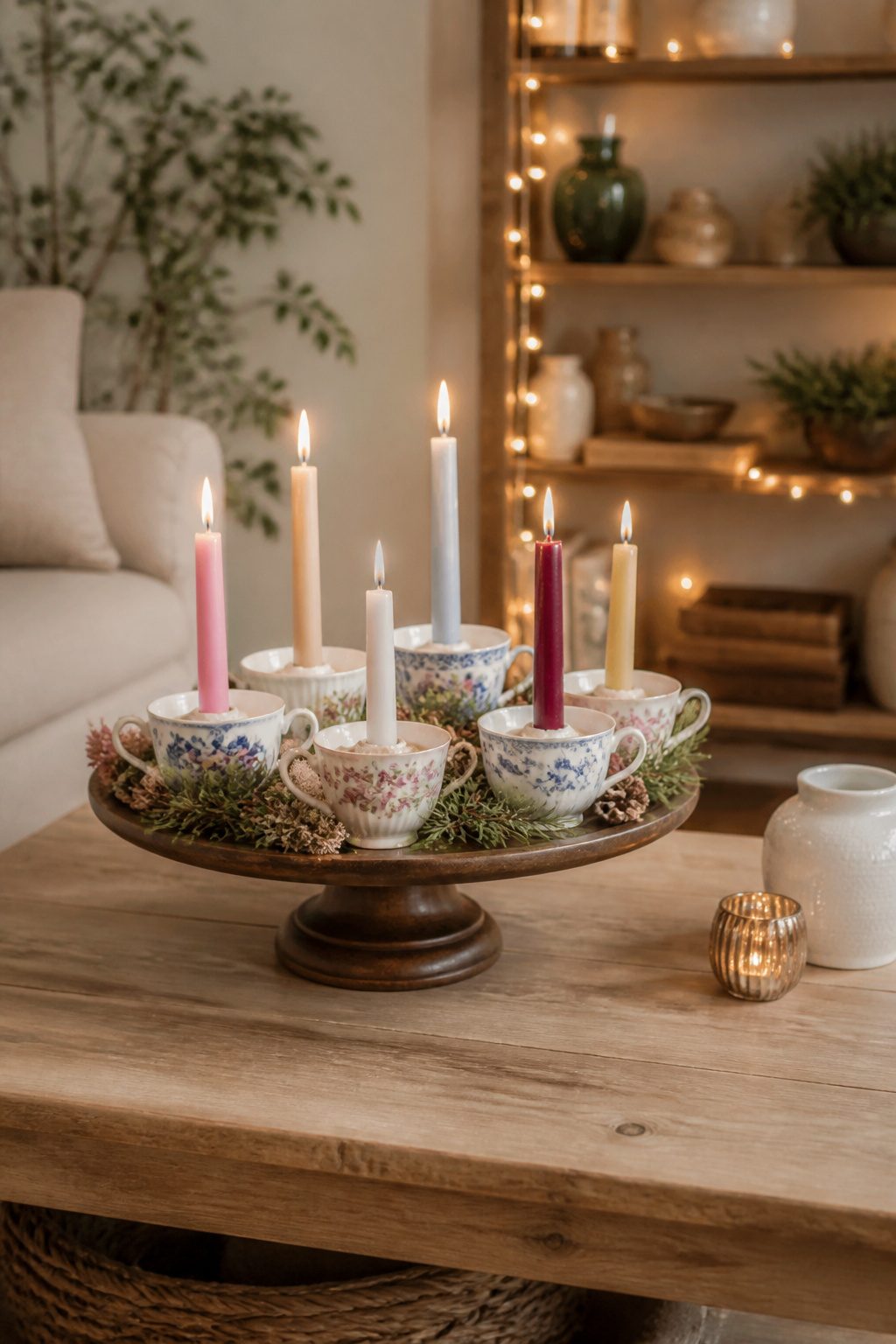
A cake stand lifts the whole display off the table and gives you room to tuck greenery underneath, so the candles read as a wreath without the ring. Wooden ones take paint and distressing well, and four or five candles at different heights keep your eye moving across the surface. No cake stand in the cabinet works just as well: a round wooden tray, a cutting board, or even an unfinished wood slice sits flat and gives the same gathered look.
Teacups break the set into individual holders, which is useful on a mantel or a long table where a single wreath would fight the space. Thrift stores turn up the best shapes, and a mixed set looks intentional rather than accidental. Melt the bottom of each candle and press the wax firmly into the cup so it stays put when someone brushes the table. Nuts, berries, and clipped greenery fill the gaps between cups without needing a formal base. The whole arrangement moves where you need it, and packing it away means stacking cups in a shoebox rather than wrestling a wreath form into a closet.
What Advent Means
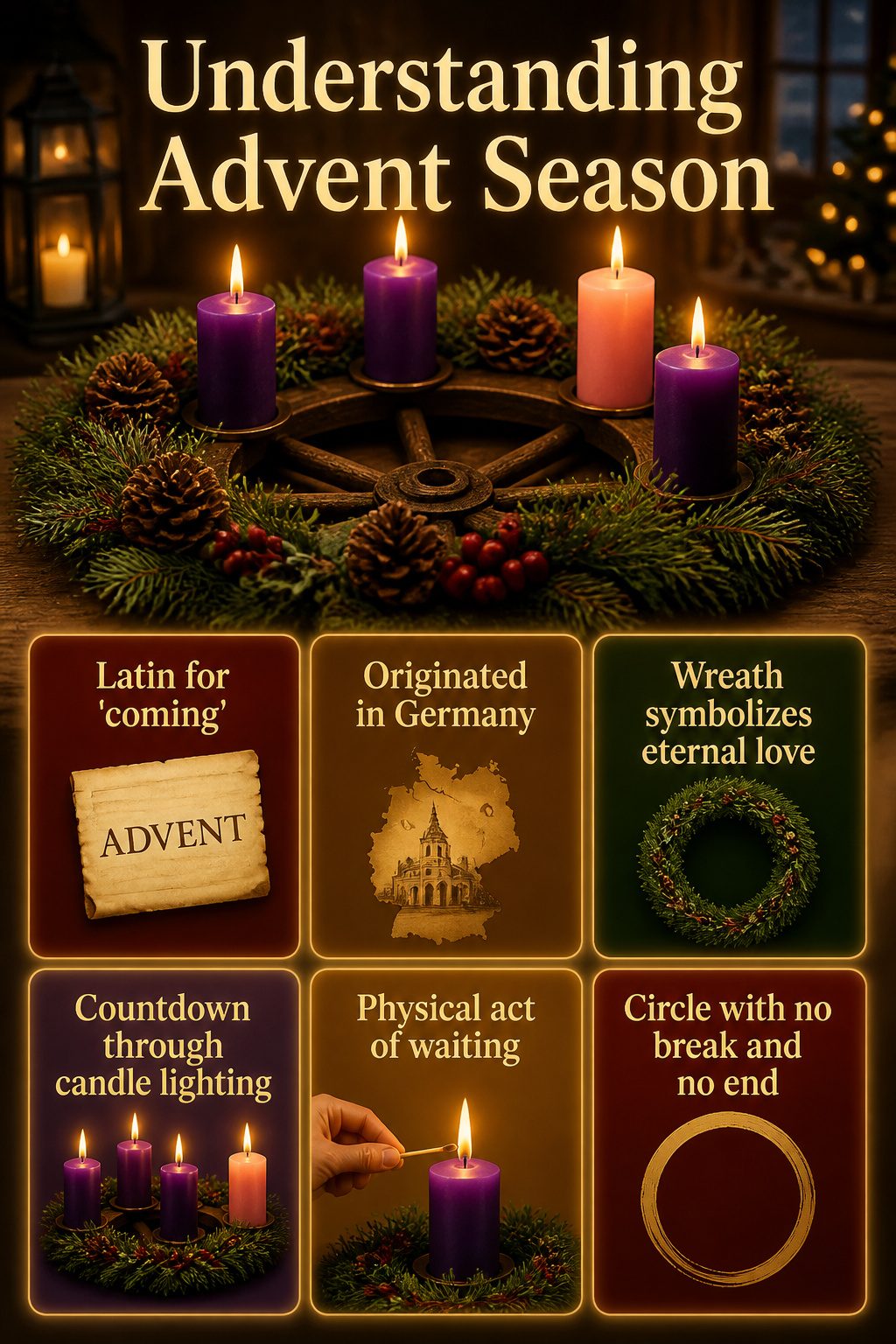
The word Advent comes from the Latin for "coming," and the season marks the weeks of waiting before Christmas. A pastor in Germany first shaped this waiting into something visible: he built a wreath from an old cartwheel, added candles, and let the children in his mission school count down the days by light. That cartwheel became the circular wreath we still use, and the circle still carries the same meaning it did then. The ring itself commemorates God’s never-ending love, a shape with no break and no end.
The candle holder you build extends that symbol into something your hands touch each evening in December. Lighting one more candle each week turns the abstract idea of waiting into a small physical act, repeated until the day itself arrives.
Candle Colors and Weekly Themes
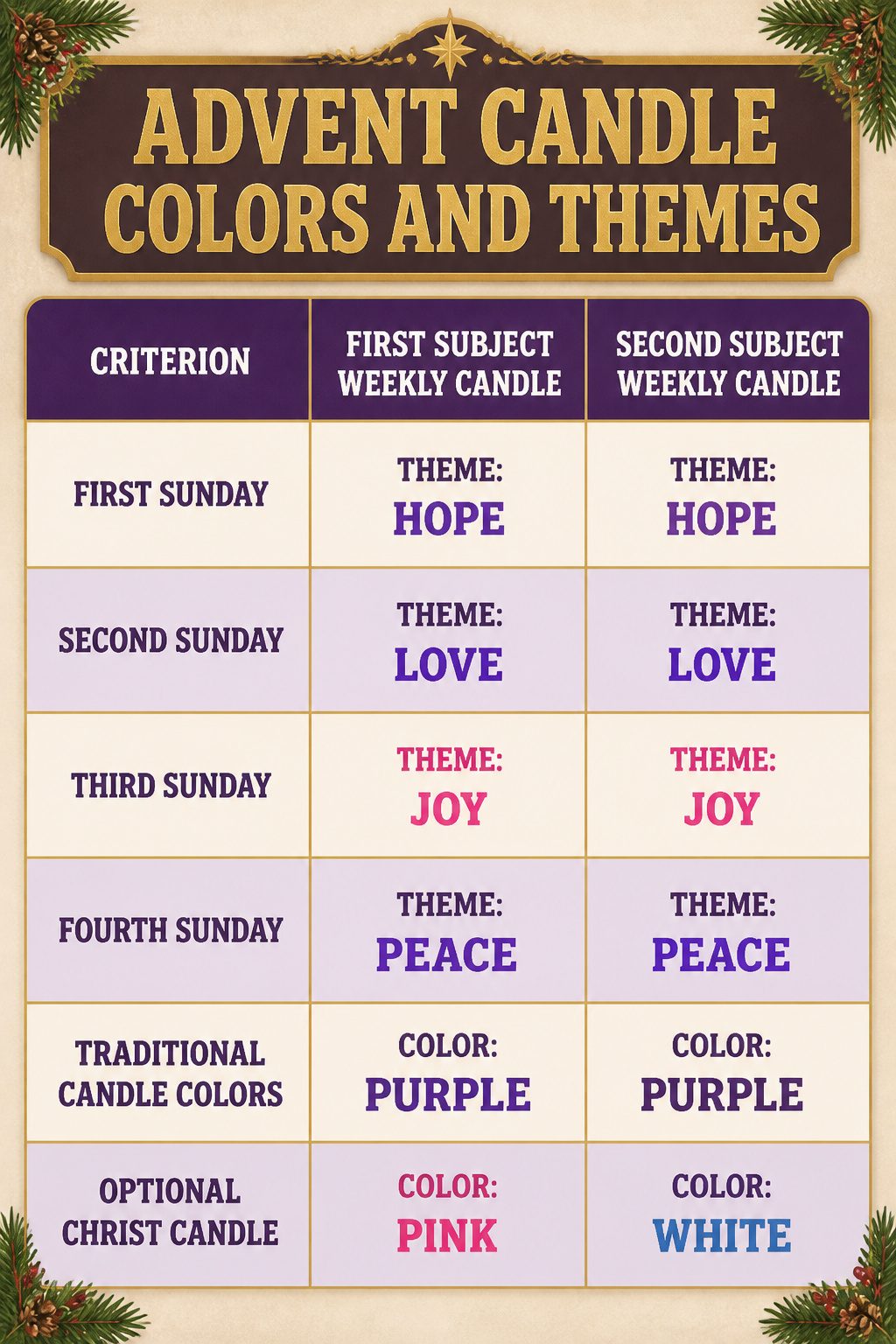
The four Sundays of Advent follow a fixed order that shapes every candle choice. Hope opens on the first Sunday with purple, Love continues purple on the second, Joy breaks to pink on the third, and Peace returns to purple on the fourth. Some traditions add a white Christ candle in the center for Christmas Day itself.
That pink candle, the one that always makes people pause, marks the third Sunday. The shift from purple to pink carries the weight of the season: after two weeks of preparation, the tone changes to celebration. The joy announced to the shepherds, as Luke 2:8-11 recounts, interrupts the waiting with something brighter. Sources call this the Shepherd’s Candle for that reason.
This color break matters when you are building a holder. Three purples and one pink demand balance. A spiral or wreath that clusters the pink candle off-center can look accidental rather than intentional. I would place the pink candle where the eye travels naturally, maybe at the peak of a spiral or opposite the entrance side of a wreath, so the shift reads as deliberate. If you are using all white candles instead, which some makers do to keep a neutral centerpiece, the shape of the holder itself has to carry that weekly progression. Ribbon bands in purple and pink, or small tags tied to each candle base, can mark the Sundays without dictating your whole palette.
Real or Battery-Operated Candles
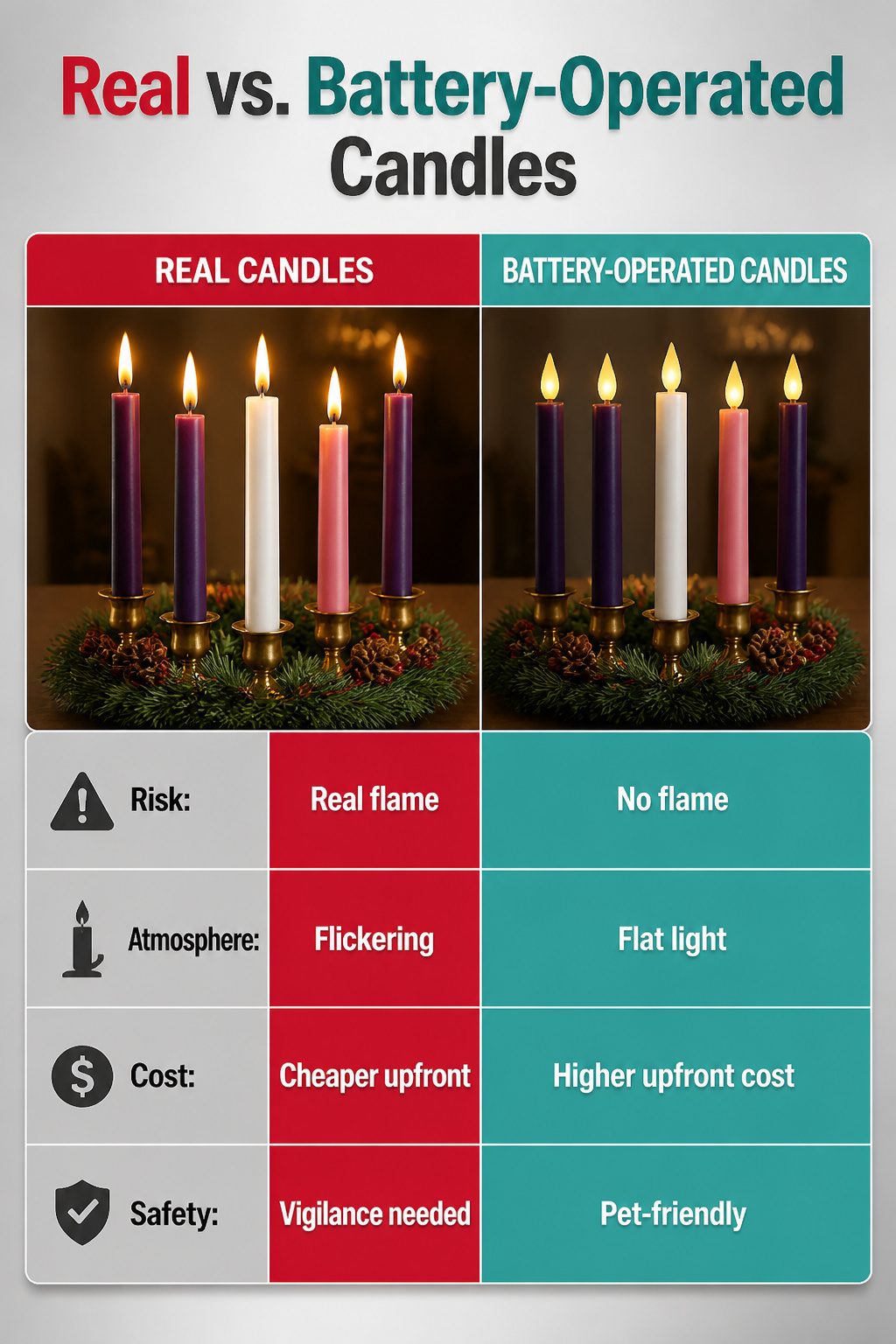
Real candles still carry the risk the Advent wreath was built around: an open flame near dry greenery, often left burning through a meal or a service. Battery-operated tapers and votives eliminate that entirely, which is why some churches have switched to LED sets for every wreath rather than managing a fire watch. The trade is atmosphere. A real taper flickers, dims, and throws actual warmth onto the table; the LED versions shine brightly, as the product descriptions put it, but the light stays flat and the "flame" repeats the same loop.
Cost breaks differently than people expect. A set of 12-inch Advent tapers runs cheap up front, but replacing them yearly adds up, and you need matches or a lighter on hand. LEDs cost more at purchase, then sit in a drawer eleven months and often need fresh batteries by the next Advent. Either choice fails if the base is wrong. A real candle in a loose holder tips; an LED taper too narrow for the ring wobbles and looks like a toy. The passages both mention sturdiness as the non-negotiable, not the flame type.
Households with children or pets tilt the decision fast. A cat that swats a taper or a toddler who can reach the table makes a real candle a vigilance project for four weeks. The battery option removes that without removing the ritual, which matters if you are lighting the wreath nightly rather than just on Sundays. My own leaning, reading through the projects that actually got finished, is toward real tapers for adults-only evenings where the wreath is the centerpiece, and LEDs for anything within tail-wag or small-hand range. The base has to grip either type like it means it.
Materials and Tools Checklist
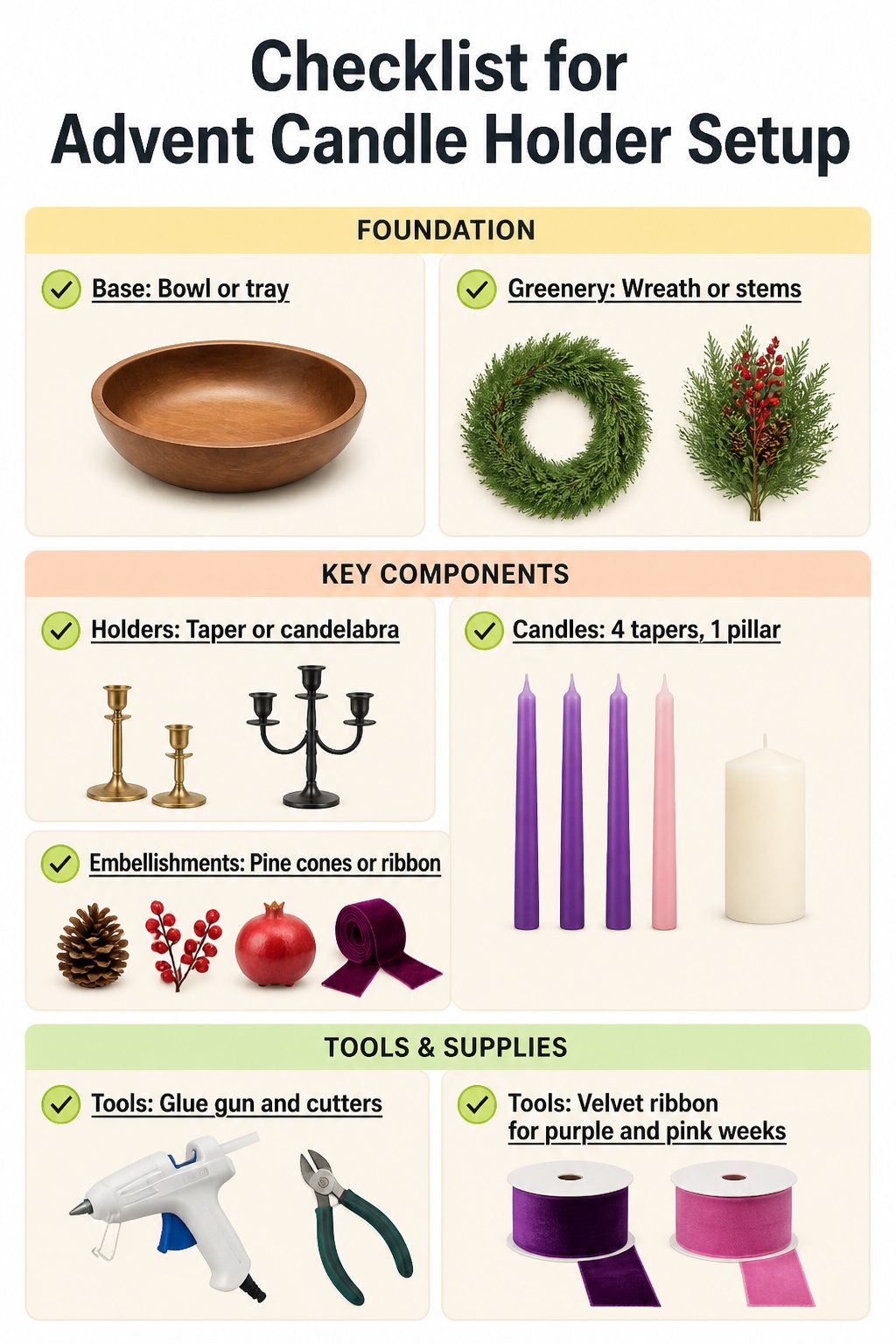
The base is whatever you already own or can grab for cheap: a bowl, a tray, a cake stand, or even a riser. A large undecorated wreath works as the greenery layer, or you can shape individual evergreen branches into a circle yourself. Faux stems from craft stores run about 18 inches across and give you something to reuse next year.
For the candles, you need four tapers and optionally one pillar in the center. Taper holders or a small candelabra sit in the middle of the wreath; a cake stand or pedestal plate works if you prefer pillars. Test the fit before you commit any glue. Holder sizes vary, and a metal advent ring that looked right in the photo can sit too high or wobble on a curved wreath.
- Base: bowl, tray, riser, or cake stand
- Greenery: wreath (real or faux) or individual stems of cedar, pine, and berry
- Holders: taper holders, candelabra, or hurricane vase for a pillar
- Candles: 4 tapers, plus 1 optional pillar; flameless tapers from Amazon or similar
- Embellishments: pine cones, red berries, pomegranates, or ribbon
- Tools: hot glue gun and sticks, wire cutters, and velvet ribbon if you want to mark the traditional purple and pink weeks yourself
Frequently Asked Questions
What are the four Sundays of Advent?
The four Sundays of Advent represent Hope, Love, Joy, and Peace. The first, second, and fourth Sundays use purple candles, while the third Sunday breaks to pink for Joy, also called Gaudete Sunday. Some traditions add a white Christ candle in the center for Christmas Eve or Christmas Day.
How do you make a homemade Advent wreath?
Start with a heavy, flat base like a bowl, tray, or cake stand, then arrange four taper holders spaced evenly in a circle. Add a flat evergreen wreath or individual greenery branches around the base, and finish with berries, pine cones, or ribbon. Test the holder fit before committing any glue, and keep greenery low enough that flames stay clear.
Do Advent wreaths have 4 or 5 candles?
Traditional Advent wreaths have four candles, with an optional fifth white candle added in the center for Christmas. The four count the Sundays of Advent, while the fifth, when used, celebrates the birth of Christ on Christmas Day itself.