
Easy Easter decorating ideas work across every budget, but the deciding factor is how much of your decor will still look right the Monday after the holiday.
The trick most people miss is the two-thirds rule: two parts spring, one part Easter, so your living room does not turn into seasonal storage by May.
A $1.25 matte plastic egg from Dollar Tree reads as ceramic from across the room; the glossy ones only work if you hide the glare behind moss.
1. Use What Is Free
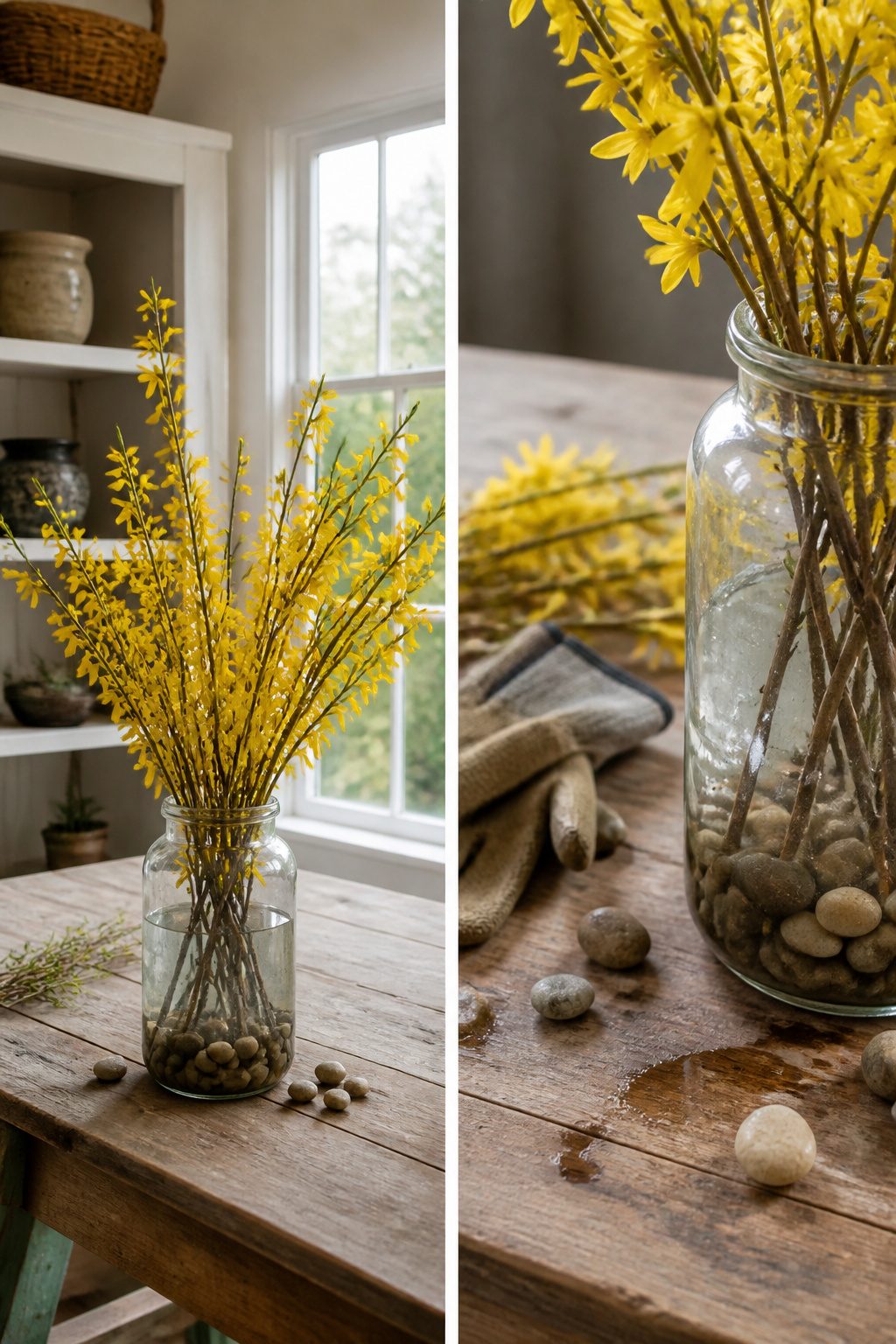
Forsythia branches cut from the yard will open their yellow bells indoors in about two days, and daffodil stems or pussywillow catkins work the same way.
A recycled jar with the label soaked off costs nothing and reads as intentional once you drop a handful of pebbles in first for weight and drainage. Spaghetti sauce jars, salsa jars, pesto jars, any of them.
The pebbles keep narrow stems from tipping, and the cloudy water that collects at the bottom stays hidden.
Early spring in most US zones offers at least one of these three: forsythia, daffodil, pussywillow. If your yard has none, a neighbor’s pruning pile usually does.
The whole arrangement takes under thirty minutes, including the soak time to lift the paper label.
I have left glue residue on more jars than I care to admit; a scrub with baking soda paste finishes the job when plain water won’t.
2. Dollar Tree Runs
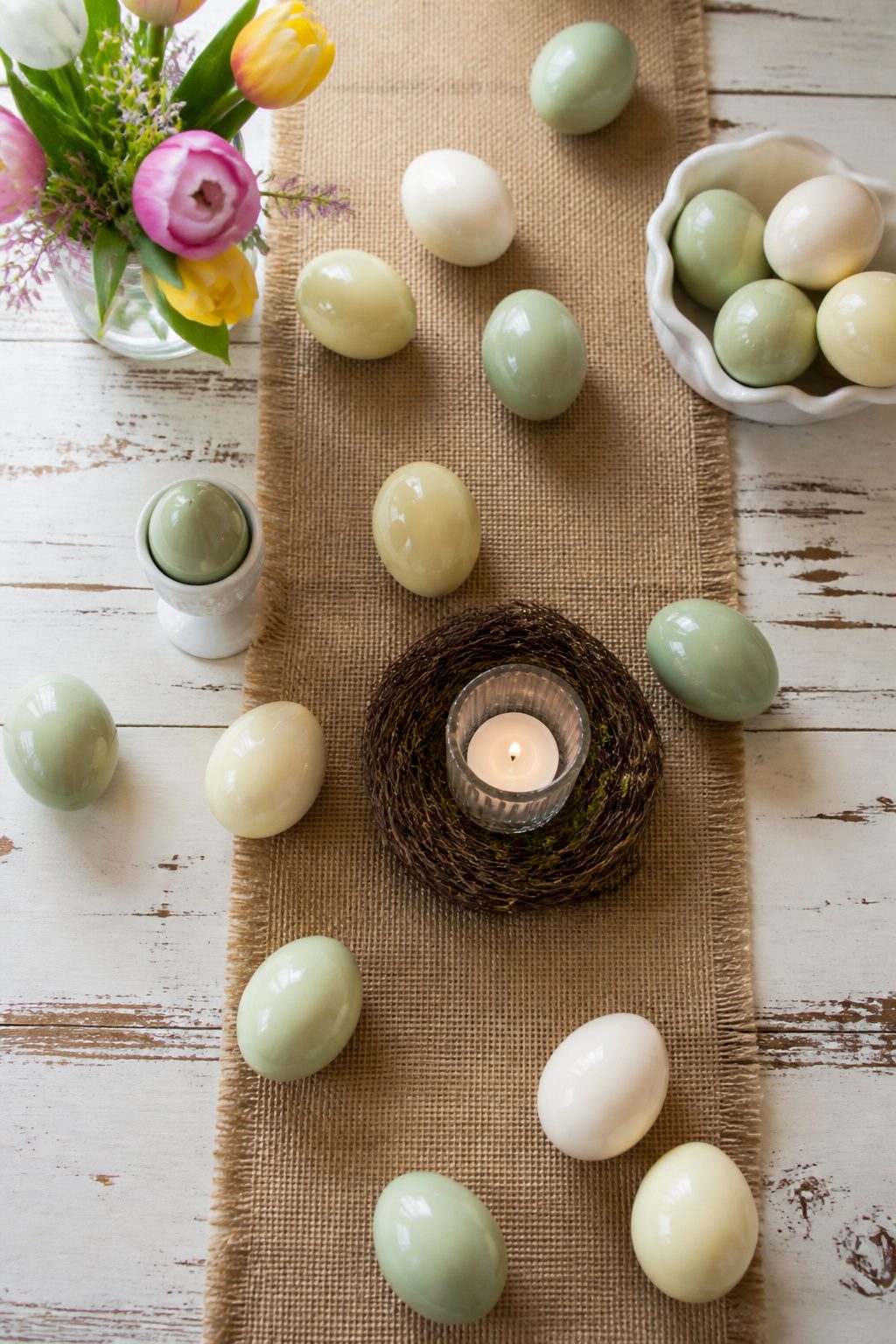
Plastic eggs at Dollar Tree sit in two tiers now: the matte ones that pass for ceramic from six feet back, and the high-gloss ones that scream craft project.
The $1.25 price point still holds, up from the old dollar days, but the trick is knowing which finishes work in natural light versus which ones catch the window glare and look like, well, plastic.
I buy the matte eggs in cream and sage, plus a few of the speckled ones that read as hand-painted.
Faux moss is another grab, though last year I learned the bright green sheets look radioactive under LED bulbs. The darker, almost brown-tinged moss reads as real shadow and depth.
Glass votives are consistently worth it; the weight alone keeps them from tipping on a brunch table, and a tealight behind a thin layer of that moss gives off a glow that looks expensive until you pick it up.
Foam wreaths are the item I skip now. The surface dents if you so much as squeeze the hanger too hard, and ribbon never stays glued through a humid April.
I spent one Sunday reattaching satin strips that peeled like sunburn and threw the whole form out by Monday. Wire or grapevine bases from the thrift store run cheaper in the end, even if the upfront cost is higher.
3. DIY Projects With Cheap Materials
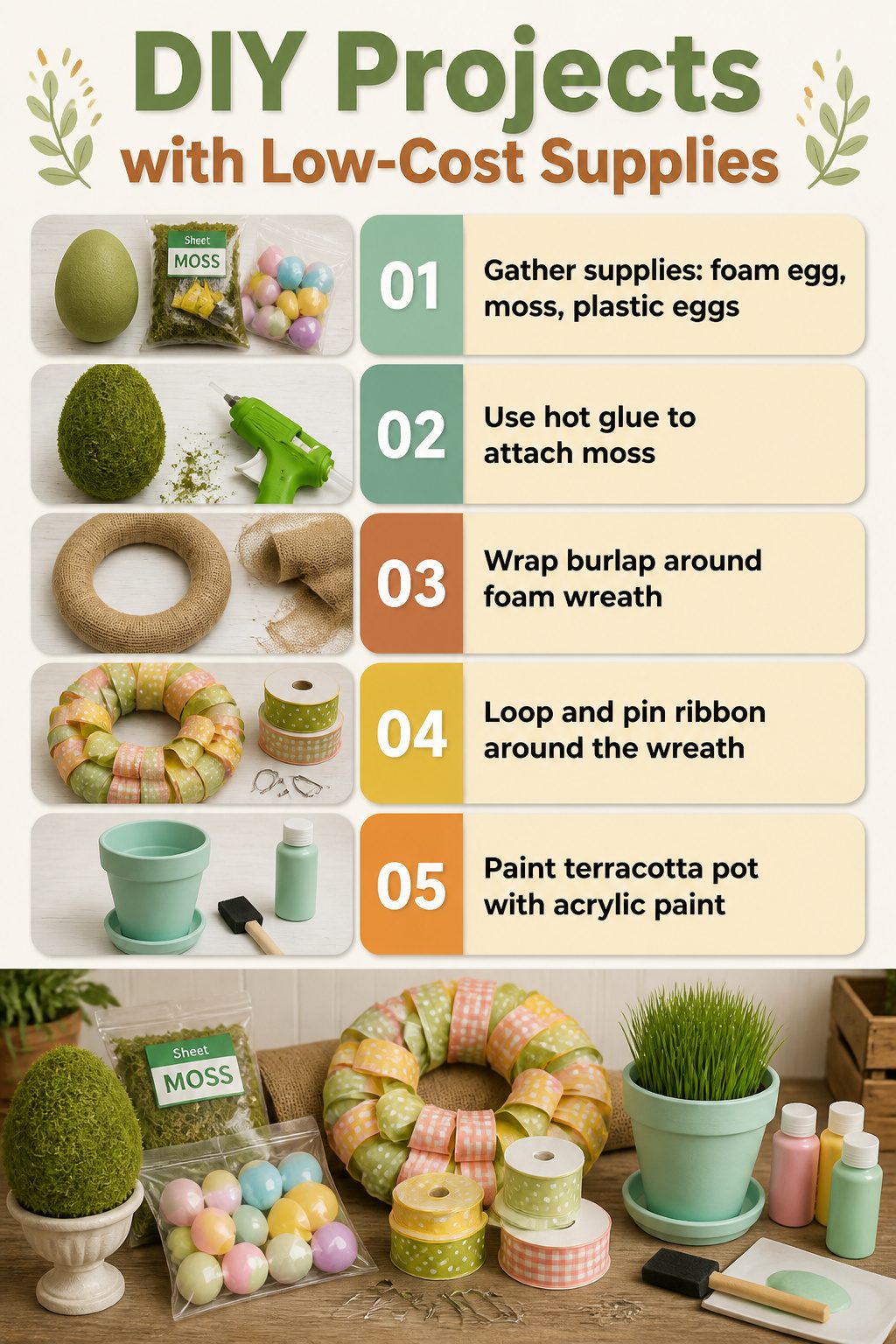
- Moss egg topiary. A foam egg form, a bag of sheet moss, and a bag of plastic eggs from Dollar Tree are the whole supply list. Tacky glue works, but it needs overnight to set; hot glue is what I actually use, and the eggs hold in about ten minutes. The second-degree burn on my left thumb happened last spring when I reached for a strand of moss before the bead had cooled. Let the glue turn matte before you touch it.
- Ribbon wreath. A 14-inch foam wreath form and three spools of 1.5-inch wired ribbon, all Dollar Tree. Burlap covers the form first, same as a bird’s nest wreath base, then you loop the ribbon around and pin it with U-pins or more hot glue. The wired edge is what lets you shape the loops so they don’t collapse against the door. One afternoon, done.
- Painted terracotta pot. A 4-inch terracotta pot, acrylic paint in whatever pastel the store has left, and a sponge brush. Two coats with an hour between them; the second coat goes on thinner and dries faster. The best paint for this, from what I’ve read, is regular acrylic craft paint, not spray, because you want the brush texture to catch light. Fill with wheatgrass seed a week ahead, or drop a candle in the day of.
4. Upcycled Thrift Store Finds
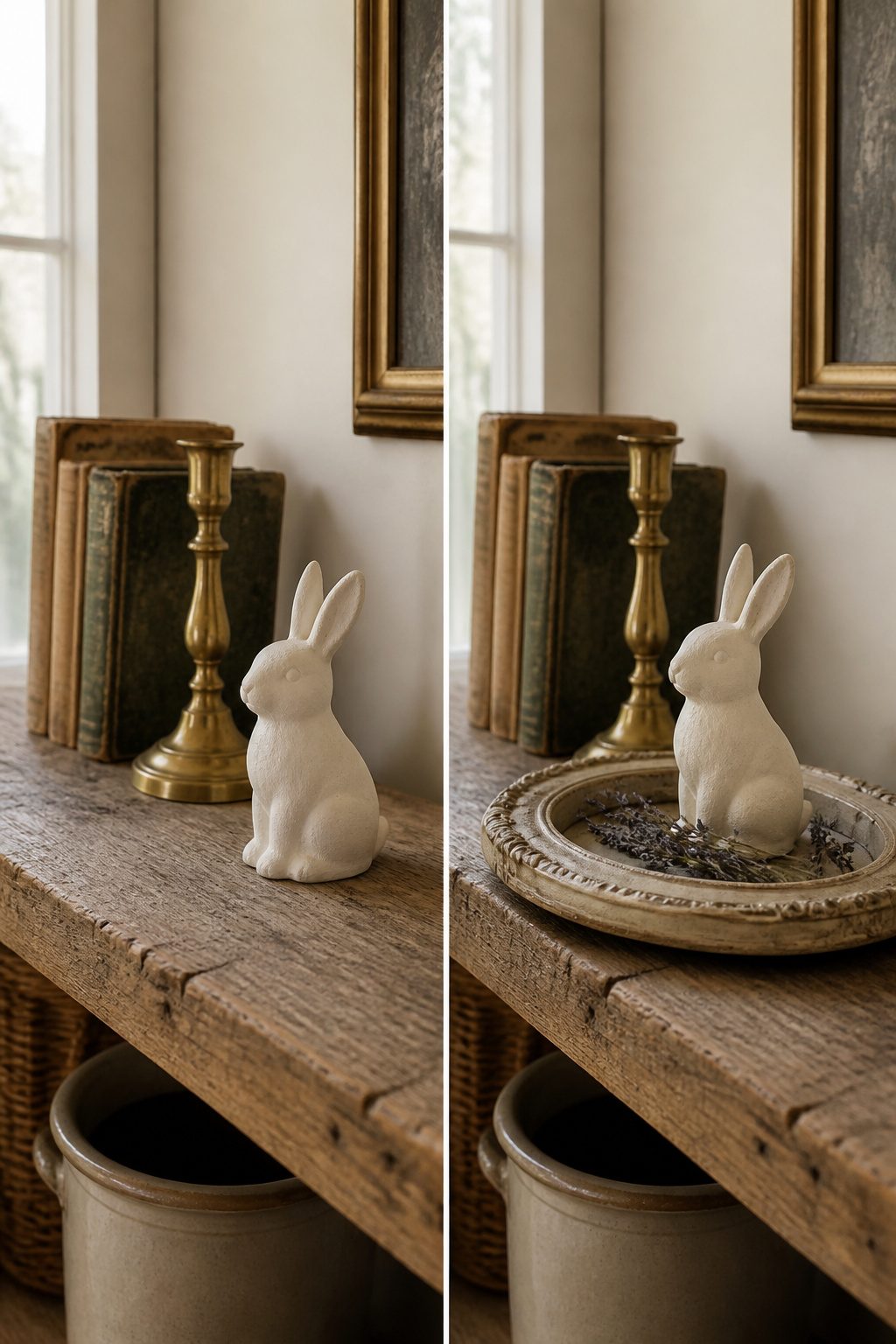
The best thrift store Easter finds have nothing to do with bunnies painted on the front.
Shape is what matters, because a ceramic rabbit in matte white paint reads as modern sculpture, not holiday kitsch, and an oval picture frame with the glass popped out becomes a shallow tray for egg candles or a nest of moss.
I look for brass candlesticks with heavy bases, the tarnished ones no one wants, since a little Bar Keepers Friend brings back the glow and egg-shaped votives sit perfectly in the cup.
My last three trips ran $3 for a small ceramic figure, $5 for a pair of candlesticks, $8 for a heavy frame with good molding. Skip anything already pastel.
The repaint or the reframe does the work, and your shelf looks collected over years, not bought in March.
5. Hobby Lobby Seasonal Discounts
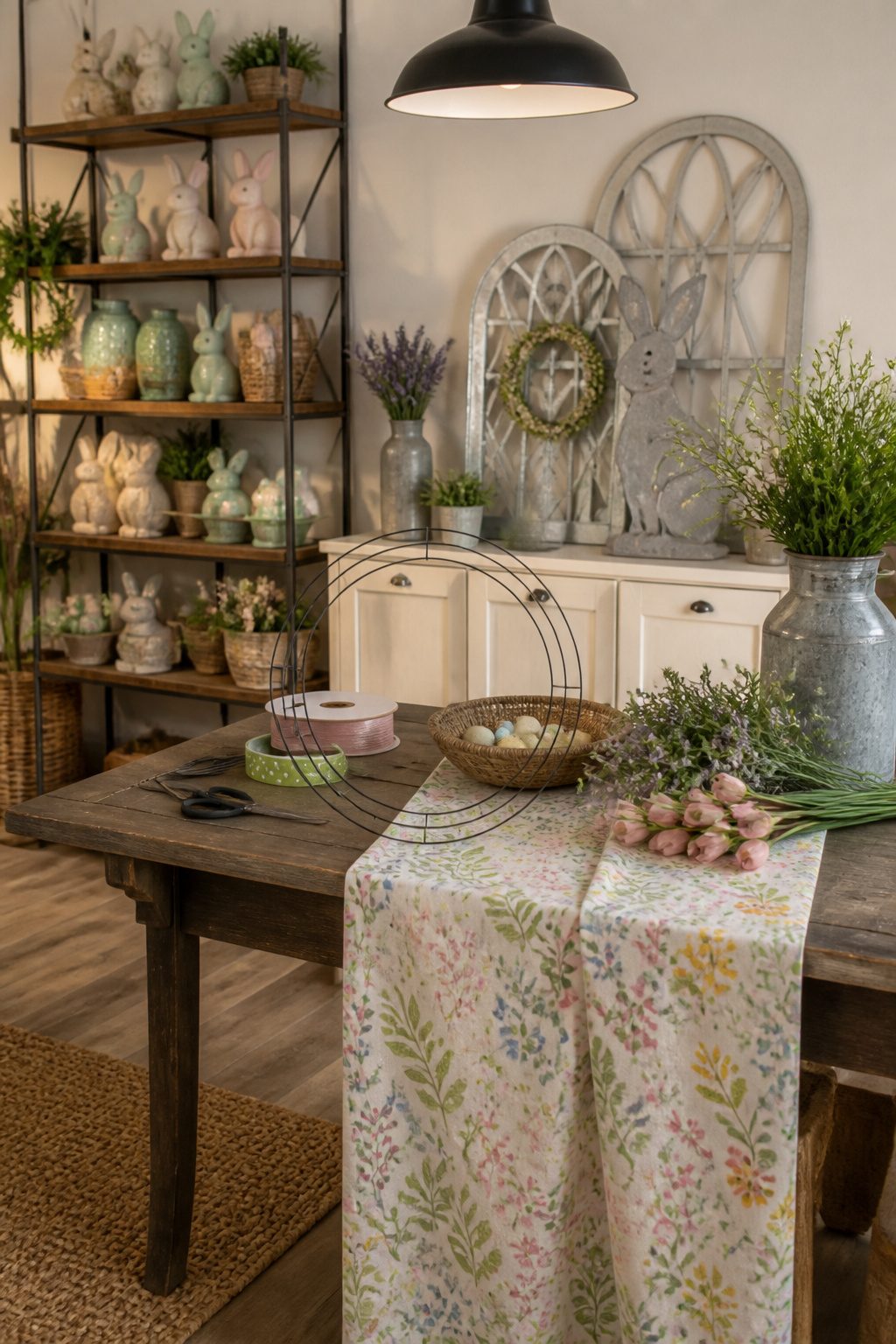
Hobby Lobby’s seasonal markdowns follow a predictable rhythm that I finally learned to respect after one expensive Easter.
The discount drops to 40% off all Easter decor roughly two weeks before the holiday, and holding out for that window matters more than the selection anxiety predicts.
Last March, I bought a wire wreath frame and a galvanized metal sign at full price, then watched both hit the sale rack twelve days later. The difference paid for a table runner I had talked myself out of.
Wire wreath forms are worth the wait; they sell out fast but restock, and the 40% price is the only one that makes sense for a piece you will redecorate every year.
Metal signs are similar inventory, though the designs turn over completely, so passing one you love is a real risk.
Table runners are the easier call. Hobby Lobby keeps deep stock, and the Easter patterns are rarely distinguishable from general spring florals.
Waiting for the discount costs you nothing in selection. My rule now: wire and metal wait for the markdown, runners can too, and anything with a specific date or phrase gets skipped entirely.
A "He Is Risen" sign dated 2024 is not a bargain at any percent off.
6. Etsy for One or Two Special Pieces
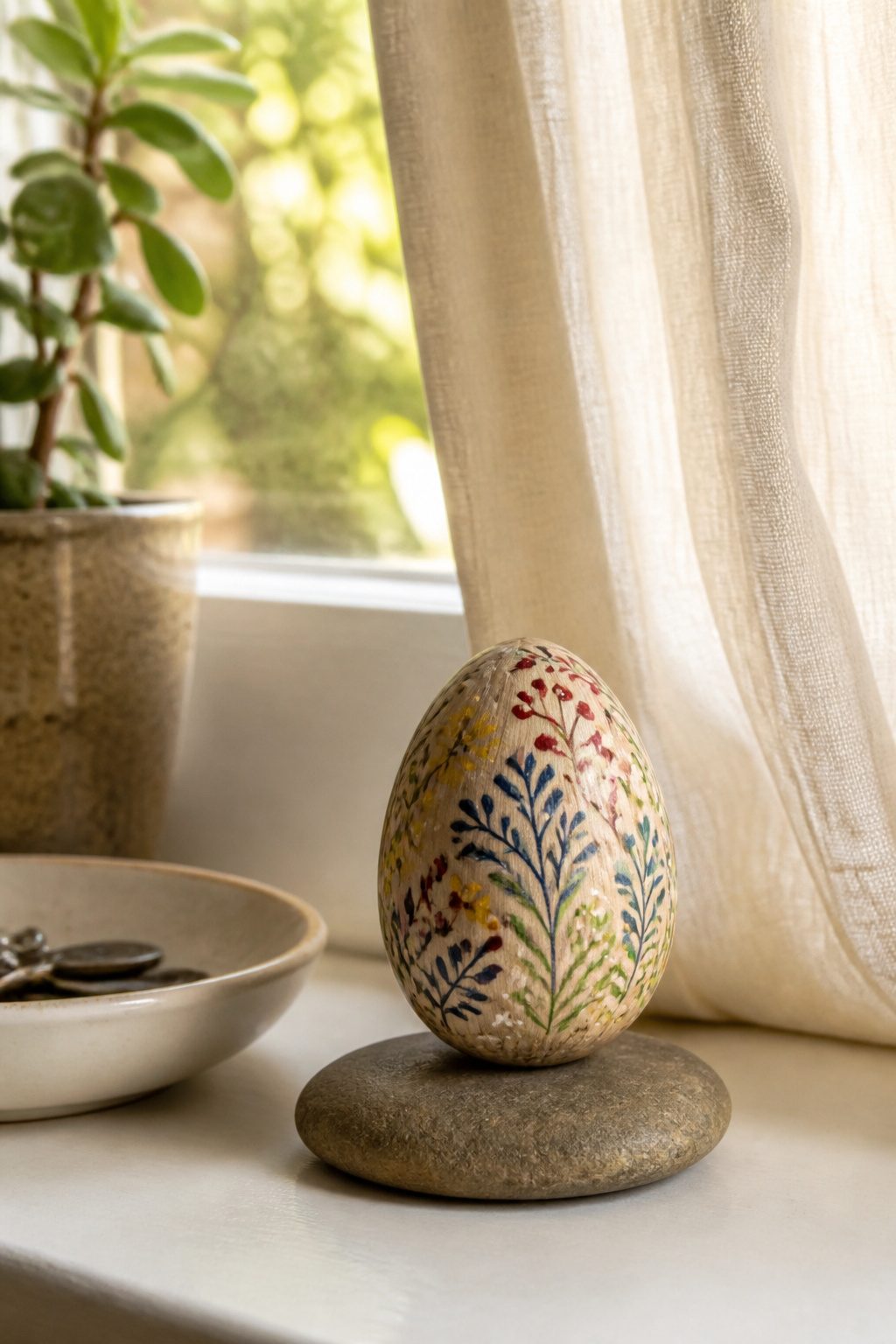
A single hand-painted wooden egg from a seller in North Carolina cost me $18 in 2022, shipping included. It sits on a windowsill and does more for the room than a bag of plastic fill-ins ever could.
Small Etsy pieces work best at $15 to $35 because above that, the shipping math stops making sense for seasonal decor.
The linen bunny banner I almost bought that same spring had a three-week lead time the seller was upfront about. That delay is the reality with one-person shops.
Plan for it, or you will be staring at a bare mantel the Saturday before Easter.
Ceramic dishes and hand-painted eggs function as accents, not anchors. One egg on a stack of books, one dish catching keys by the door.
The mistake is ordering a whole coordinated set and watching the shipping stack up to nearly the price of the pieces.
Keep it to one or two finds, let them sit among things you already own, and the small irregularities in the paint or weave read as charm instead of clutter.
7. Layer in Spring Decor You Already Own
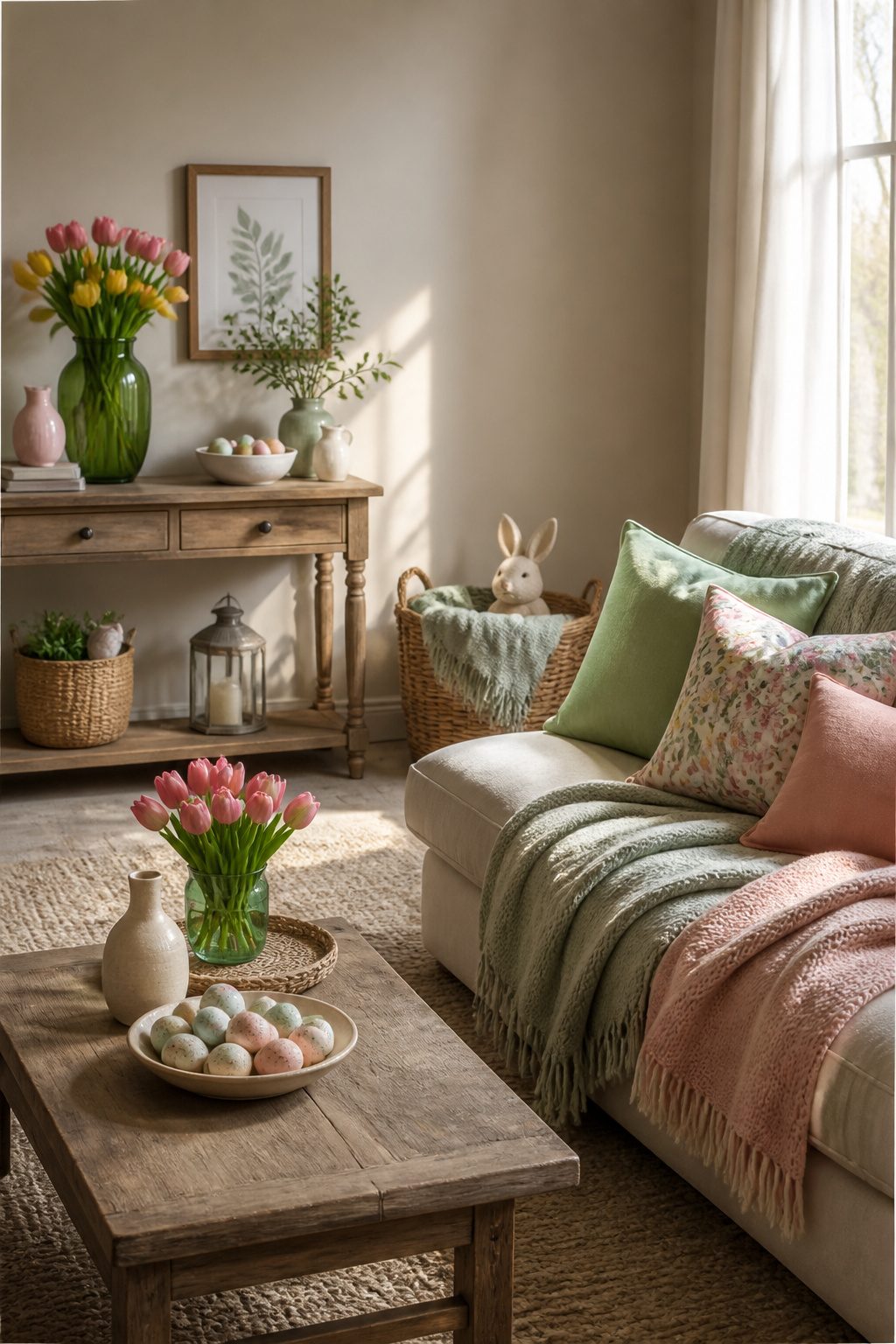
Pastel throws and floral pillows that read as generic spring, not Easter, are the first things out of my storage bin in early March.
A green glass vase that sits on the mantel from St. Patrick’s Day through Memorial Day becomes the base for a few speckled eggs in April, then goes back to holding whatever stems are fresh.
The rule I follow is two-thirds spring, one-third Easter so the holiday never takes over the room.
That means the bunny pillow stays in the closet if the sofa already has two floral cushions; one egg tree on the console table is enough when the gray basket and pitcher of tulips are doing most of the work.
What stays out March through May are the soft textures and natural textures: linen, mossy tones, anything that blends with actual outdoor weather.
The Easter-only pieces, the ceramic bunnies and printed signs, go back into a single bin the week after the holiday so the living room keeps breathing into late spring without looking like a clearance aisle.
8. Natural and Neutral Palettes
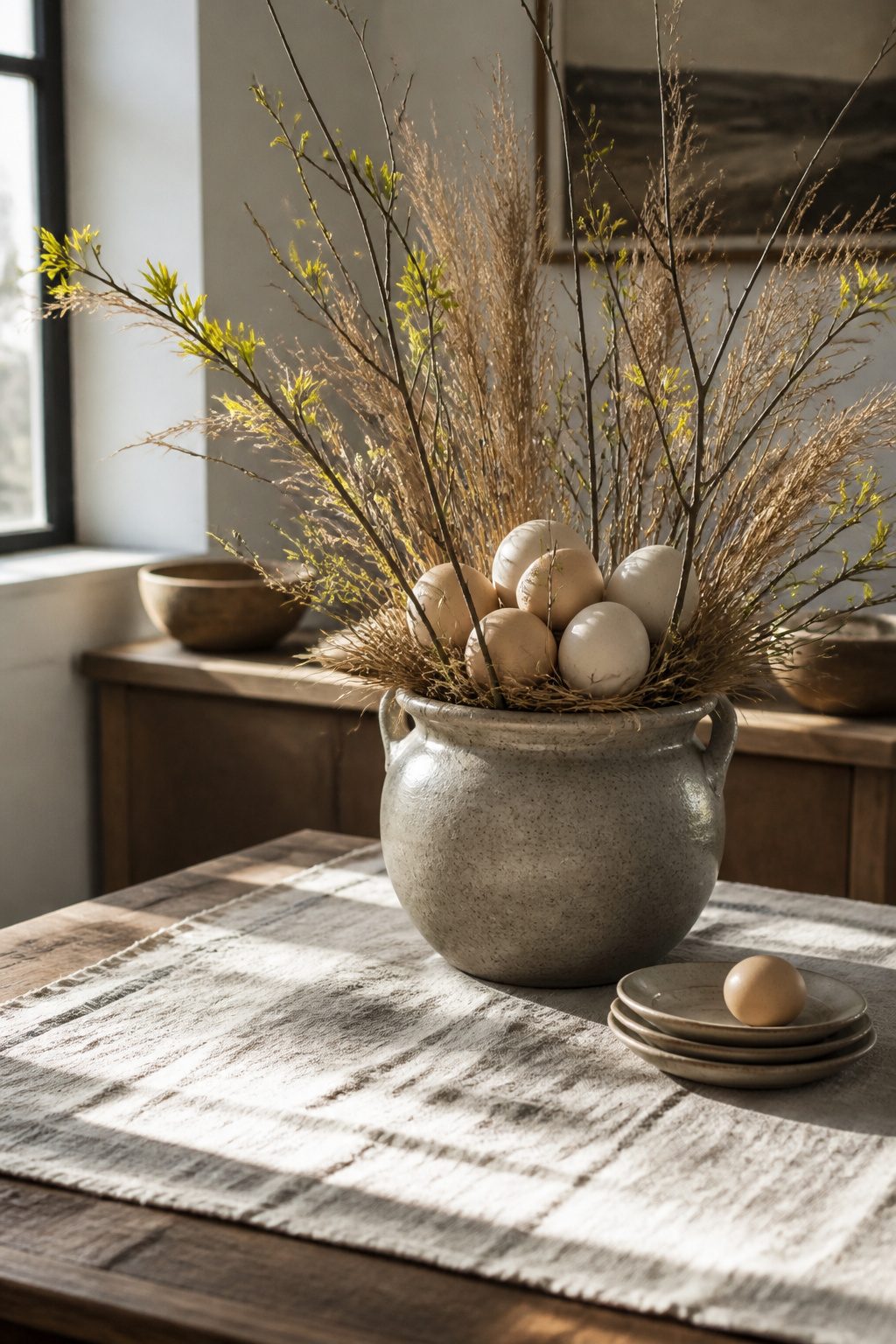
Raw wood, linen, and undyed eggs read as spring without shouting holiday, and they keep working once the candy is gone.
Last year I tried blowing out a dozen eggs with the pinhole method, a toothpick, and more patience than I actually had. I broke four of twelve, mostly by pushing the toothpick too hard against the inside curve.
The survivors went into a crock on the mantel with a few stems of forced forsythia, and that arrangement stayed up through May.
For branches that force well indoors, flowering quince, apple, and forsythia are the reliable ones. Quince takes longest to open but gives the most color; forsythia is fastest and most forgiving if you bring it in early.
A heavy vase matters more than a pretty one, especially once you start hanging blown eggs from the twigs with ribbon.
The sources suggest a 20-inch length and hot glue at the top of the egg, which sounds fussy until you try it once.
I used simple looped thread instead and lost an egg to a curious cat, so the glue method probably wins.
Dried grasses fill the gaps cheaply. Pampas is everywhere now, but plain wheat or oat grass from a craft store runs less and feels closer to the actual season.
Layer those textures, wood against linen against the matte shell of an undyed egg, and the result stays quiet enough to live with.
9. Elegant Without the Bunny Overload
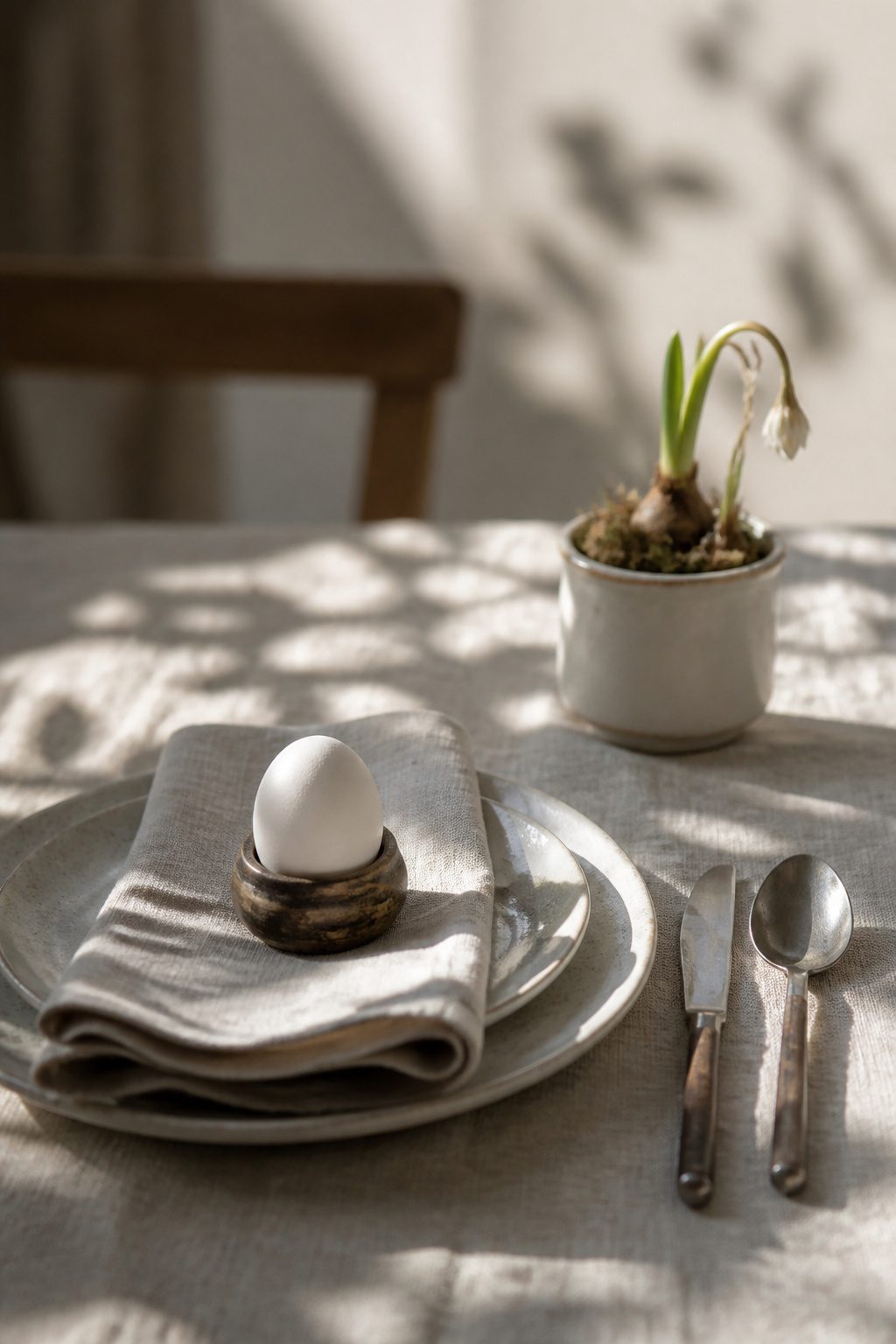
A single blown egg on a linen napkin ring does more for an Easter table than a ceramic bunny parade ever did for mine.
The bulb in a white pot, the handwritten place card, the one stem of forced hyacinth: these read as spring itself rather than a holiday hitting you over the head.
I stopped buying bunny-everything three years ago after packing it all into a Rubbermaid tote that ate half my closet. The visual noise was one problem; the storage math was worse.
In a rental with one closet shelf for seasonal decor, anything that lives in a box eleven months must earn its square inches. A dozen pastel rabbits do not.
The refined approach also survives the Monday after Easter. That white pot with its spent bulb still looks like a houseplant.
The napkin rings work for spring brunches through May. The place cards, frankly, are just good manners with a date on them.
No clearance-aisle mascot required.
Resurrection Gardens
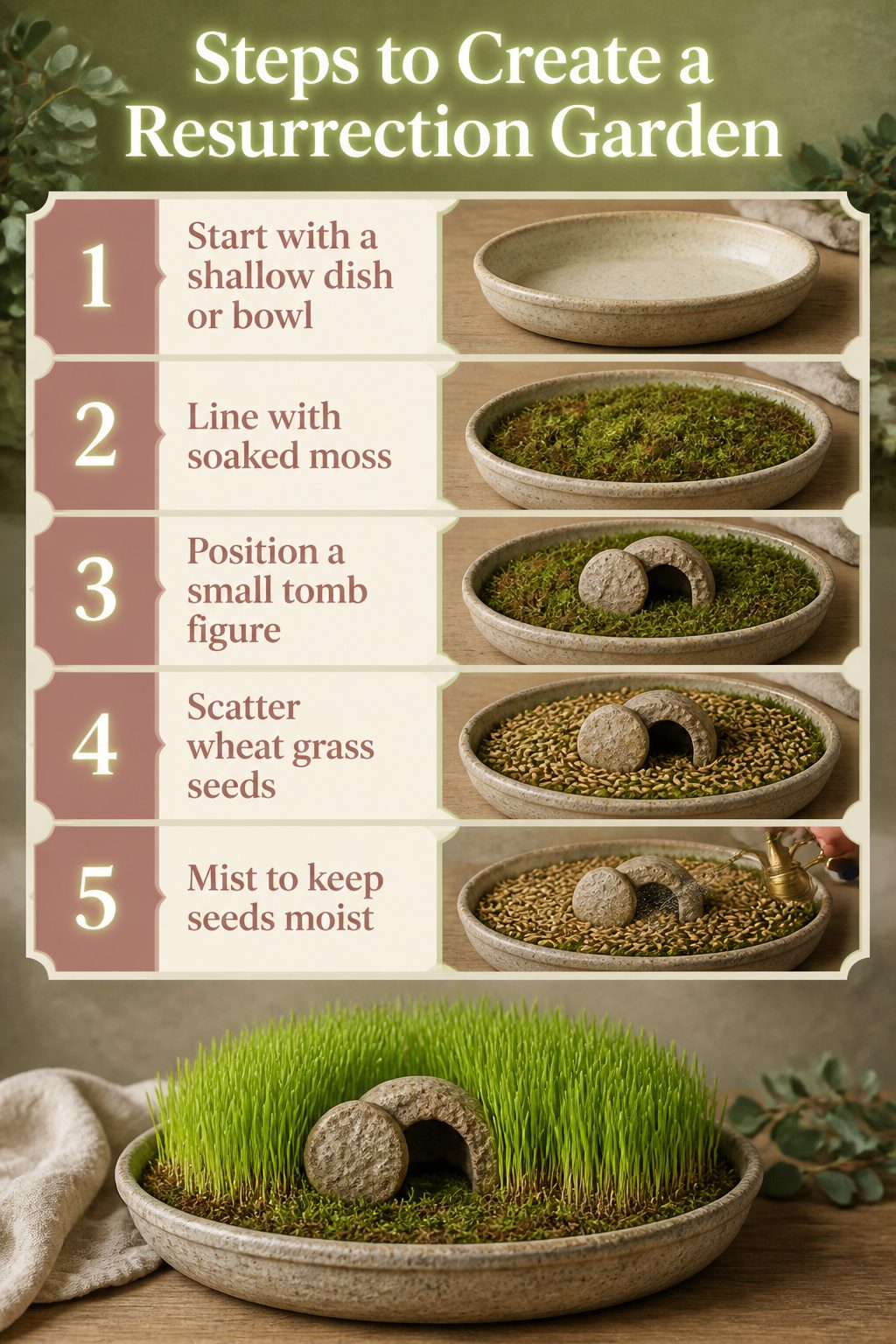
A Resurrection Garden starts with a shallow dish or bowl. Moss lines the bottom, a small tomb figure sits off-center, and wheat grass or a quick-sprouting seed fills the space around it.
The wheat grass usually shows green in four to five days, which means starting it the weekend before Easter or buying pre-sprouted trays from a nursery if time runs short.
The idea comes from the Christian tradition of marking the empty tomb, but the format works even for guests who do not share that background. The living element, the sprouting grain, makes it different from a static decoration.
People touch it, ask about the growth, and lean in to look. That movement around the table matters more than any symbolic reading.
Building one takes about twenty minutes. Soak the moss first so it does not wick water away from the seeds.
Press it into the dish with a slight hollow where the tomb figure rests, so the structure reads clearly from across the table. Scatter seed thickly enough to look intentional, then mist rather than flood.
A dough bowl or antique tian gives a wide, low profile that keeps sight lines open, though any planter with a broad mouth works.
The cost stays low because the components are simple: a bag of sheet moss, a small resin or ceramic tomb, and a packet of wheat grass seed. Most of us already own a suitable dish.
The garden lasts through the season, then composts cleanly.
What I Spend and Where the Money Goes
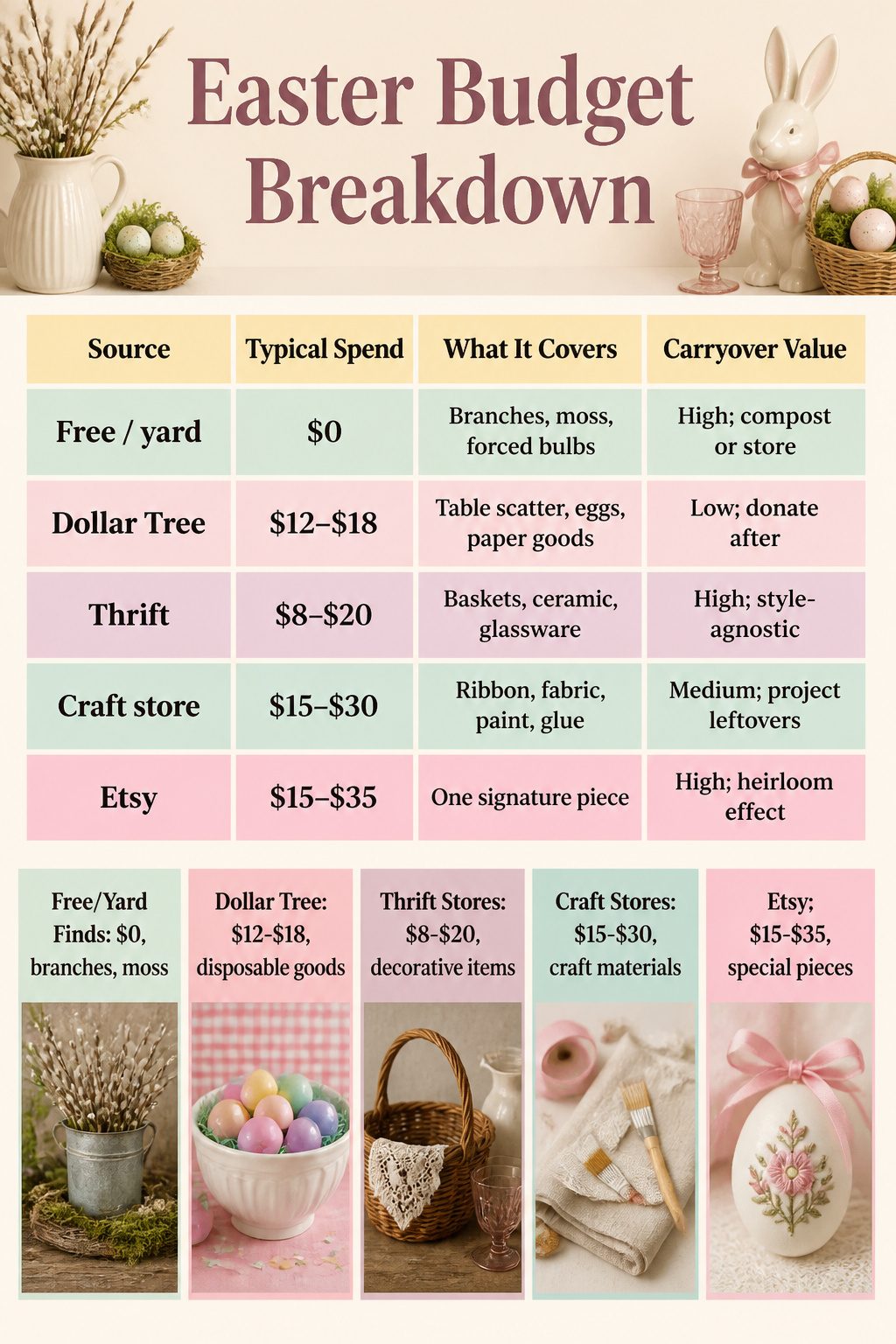
Most years my Easter spending lands under $60 because the garlands, egg fillers, and ceramic bunnies just go back into a labeled bin. The refresh is usually a few replacement pieces, not a full restock.
When I do spend closer to that $80–$120 range, the money splits five ways. Free or yard finds cover branches, moss, and last year’s forced bulbs that finally went to ground.
Dollar Tree handles the disposable table scatter, plastic eggs, and any paper goods. Thrift stores are where I look for baskets, vintage ceramic, or glassware to repurpose.
Craft store trips are targeted: one spool of ribbon, maybe a half-yard of linen, always with a coupon.
Etsy is reserved for one small item, usually a hand-dipped taper or a single embroidered egg cover, something that reads special against all the mass-produced pieces.
| Source | Typical Spend | What It Covers | Carryover Value |
|---|---|---|---|
| Free / yard | $0 | Branches, moss, forced bulbs | High; compost or store |
| Dollar Tree | $12–$18 | Table scatter, eggs, paper goods | Low; donate after |
| Thrift | $8–$20 | Baskets, ceramic, glassware | High; style-agnostic |
| Craft store | $15–$30 | Ribbon, fabric, paint, glue | Medium; project leftovers |
| Etsy | $15–$35 | One signature piece | High; heirloom effect |
The thrift and free categories are where the budget breathes. A $4 basket with flaking paint reads the same as a $40 one once you drop a nest of speckled eggs inside.
The $15–$35 Etsy slot is the only discretionary line, and skipping it is what keeps most of my years under that $60 mark.
Table Setup in One Hour
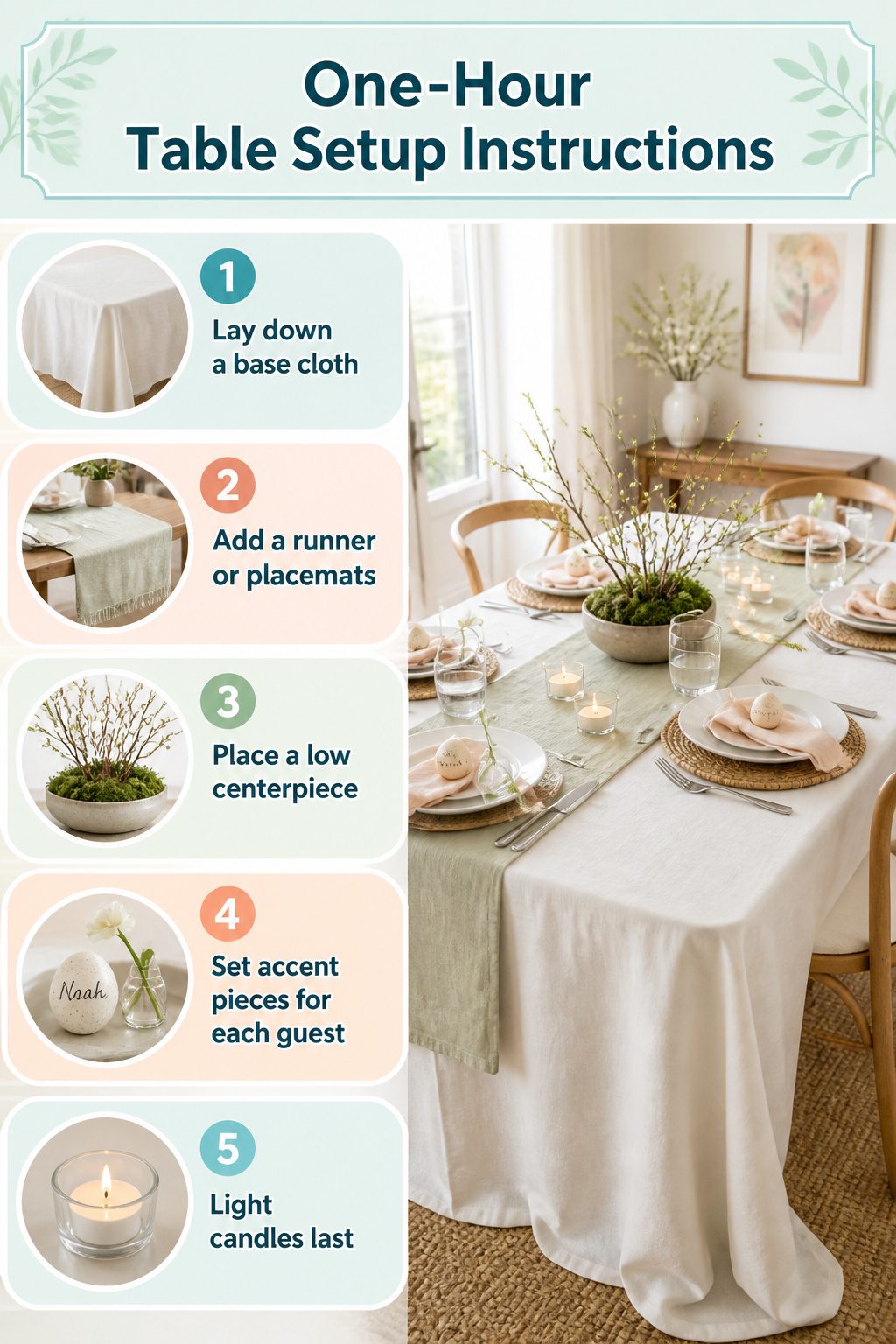
A tablecloth that pools on the floor looks elegant in a magazine and irritating when you are trying to vacuum around twelve chair legs.
I use a drop cloth or a twin flat sheet cut to hang six inches past the edge. That gives enough drape to look intentional without becoming a trip hazard.
- Lay the base cloth first, smoothing from the center out so the fabric does not drift sideways by dessert.
- Add a runner down the middle, or placemats at each seat, but not both. The table needs breathing room or the dishes sit on a slope.
- Place one central low element. Forced branches in a shallow dish work, or a moss garden in a low ceramic tray. The height matters more than the object. I once used a tall forsythia arrangement that blocked faces across the table; conversation died because nobody could see who they were talking to. Keep the centerpiece below eye level when seated, which for most tables means under fourteen inches.
- Set individual accents at each place. An egg with a name written in pencil, or a single stem in a bud vase. These travel home with guests so you are not storing them.
- Light candles last, after the flowers are anchored and the plates are down. Tea lights in clear holders give the most glow for the least money, and they burn about four hours, enough for dinner.
Frequently Asked Questions
How can I decorate my house for Easter?
Start by refreshing your space for spring, then layer in Easter-specific pieces closer to the holiday so nothing feels cluttered. Keep the ratio at about two-thirds spring decor to one-third Easter.
Pastel throws, floral pillows, and green glass vases work from March through May; add speckled eggs or a single egg tree in April, then store the bunny figurines and dated signs the week after Easter.
What decorations can I make for Easter?
Three easy DIY projects use cheap materials from Dollar Tree or craft stores. Make a moss egg topiary with a foam egg form, sheet moss, and plastic eggs glued on.
Loop wired ribbon around a foam wreath form for a door hanger. Paint a small terracotta pot in pastel acrylics and fill with wheatgrass or a candle.
Each takes one afternoon and costs under $10 in supplies.
How do you decorate a table for Easter?
Use a drop cloth or cut twin sheet as the base, hanging six inches past the edge. Add either a runner or placemats, not both.
Choose one central low element like forced branches or a moss garden, keeping it under fourteen inches so guests can see across.
Finish with individual accents at each place, such as a named egg or single stem, and light tea lights last.