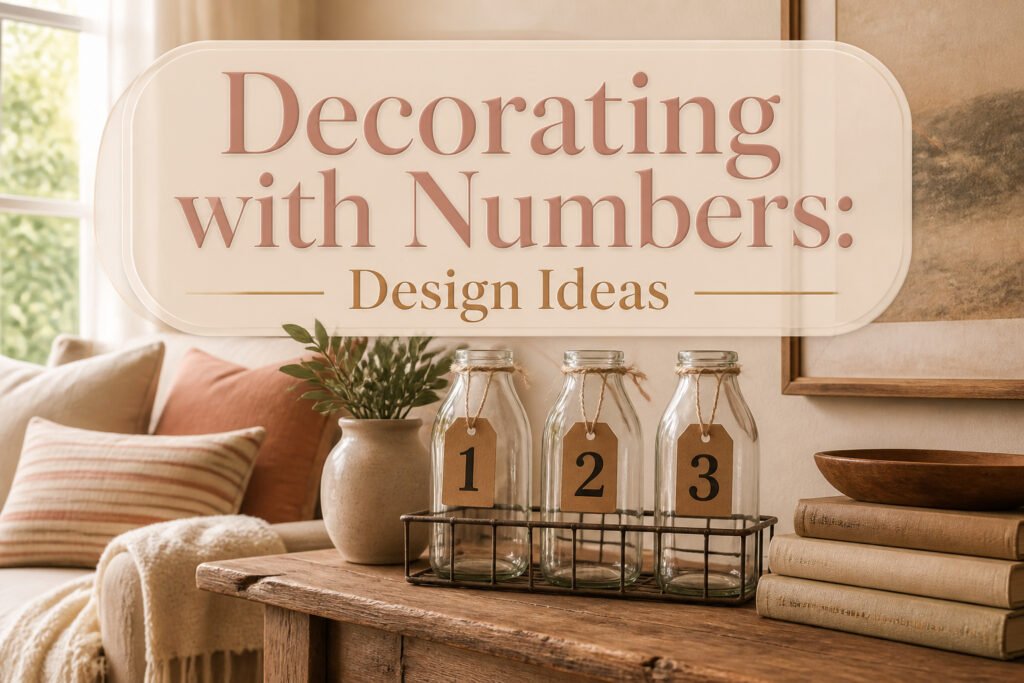
Decorating with numbers is the practice of using numerals as visual elements in a room, not just labels. The trick is keeping the rest of the grouping quiet: one numbered pillow against two solids reads as intention, three starts to look like a sports jersey collection. A $19.99 set of glass milk bottles with kraft tags gives you the look in about ten minutes, and it breaks down just as fast when you move.
Numbered Tags on Milk Bottles
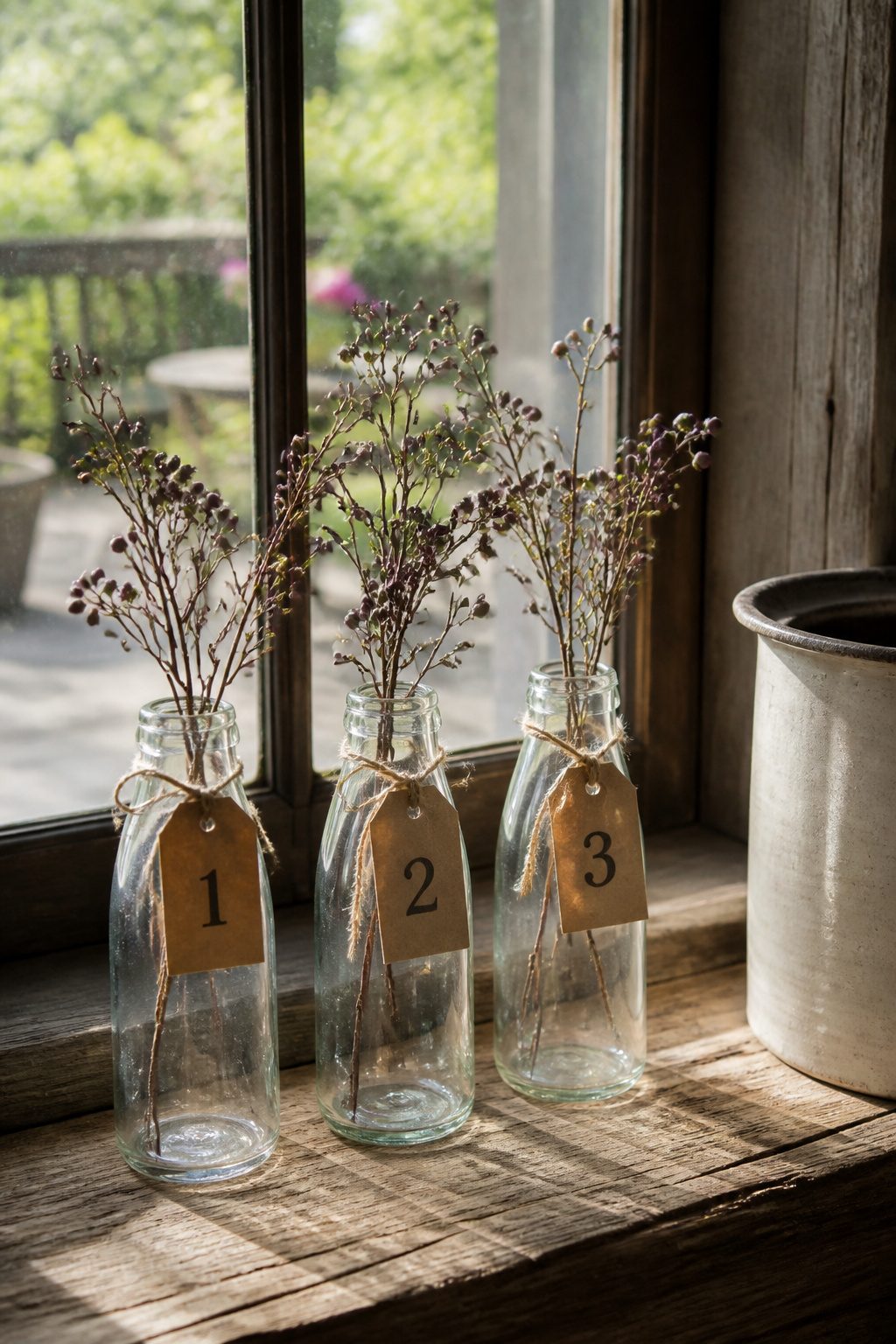
Glass milk bottles with numbered tags land somewhere between farmhouse kitsch and something you might actually keep around. A $19.99 set of three from Amazon gives you the bones of it: clear glass, narrow necks, the old dairy silhouette without the old dairy prices. The numbers come from kraft tags, the kind IKEA sells or you can cut yourself, clipped to each bottle with small wooden pegs. Three bottles, three tags, about ten minutes of assembly once you have the pieces.
Flowers work in these, though the sources I found went with pip berry sprigs in the center bottle, which keeps the palette muted and avoids the fresh-flower replacement cycle. The wire basket that usually comes with the set matters less than you’d think; the bottles stand fine on a windowsill or shelf without it, and the tags read better when the bottles aren’t clustered too tight. What sells the look is the spacing between numbers, not the numbers themselves. Odd grouping, simple materials, weekend timeline. The whole project sits under thirty dollars if you source the tags and pegs from a craft drawer or a dollar-store run, and it breaks down just as fast when you move or tire of it.
Vinyl Number Decals
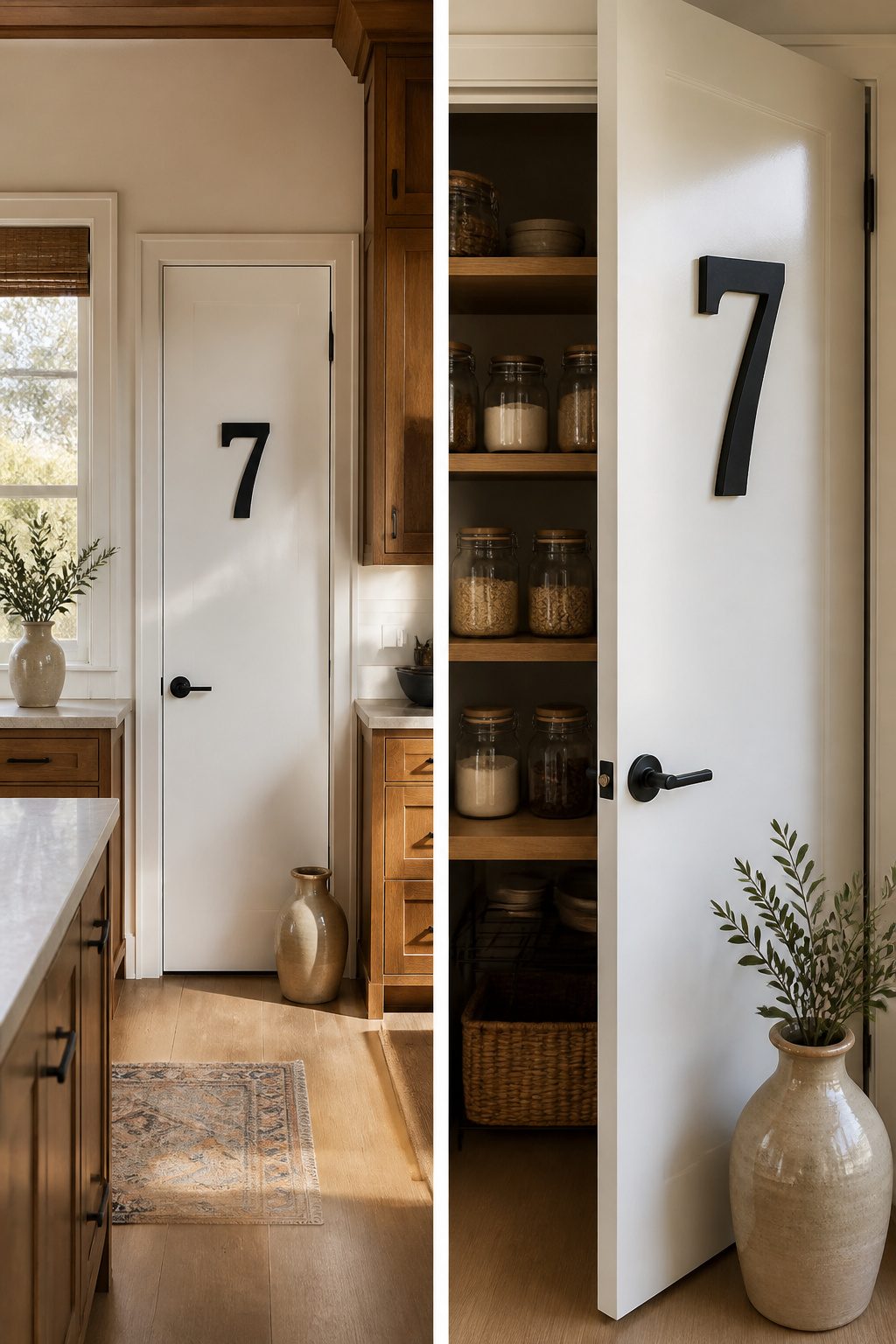
Vinyl number decals stick to smooth surfaces with pressure-sensitive adhesive that peels away clean when the lease ends. I have watched friends press a four-inch "7" onto a pantry door in under a minute, no heat gun or scraping after. The backing paper marks the center line, which matters more than you would think for keeping a house number straight above a mail slot.
The real advantage is the removal. Painted numbers on a rental door mean touch-up paint and a walkthrough deduction. These lift off in one piece if the surface was clean to start with, though textured walls will fight you and leave adhesive behind. Plan for flat doors, glass, or laminate furniture; skip the plaster.
Cost runs low enough that swapping "24" for "25" on a birthday tablescape does not sting. The catch is sizing: a decal meant for a mailbox reads as an afterthought on a full blank wall. Buy for the object, not the room.
Grouping Items in Odd Numbers
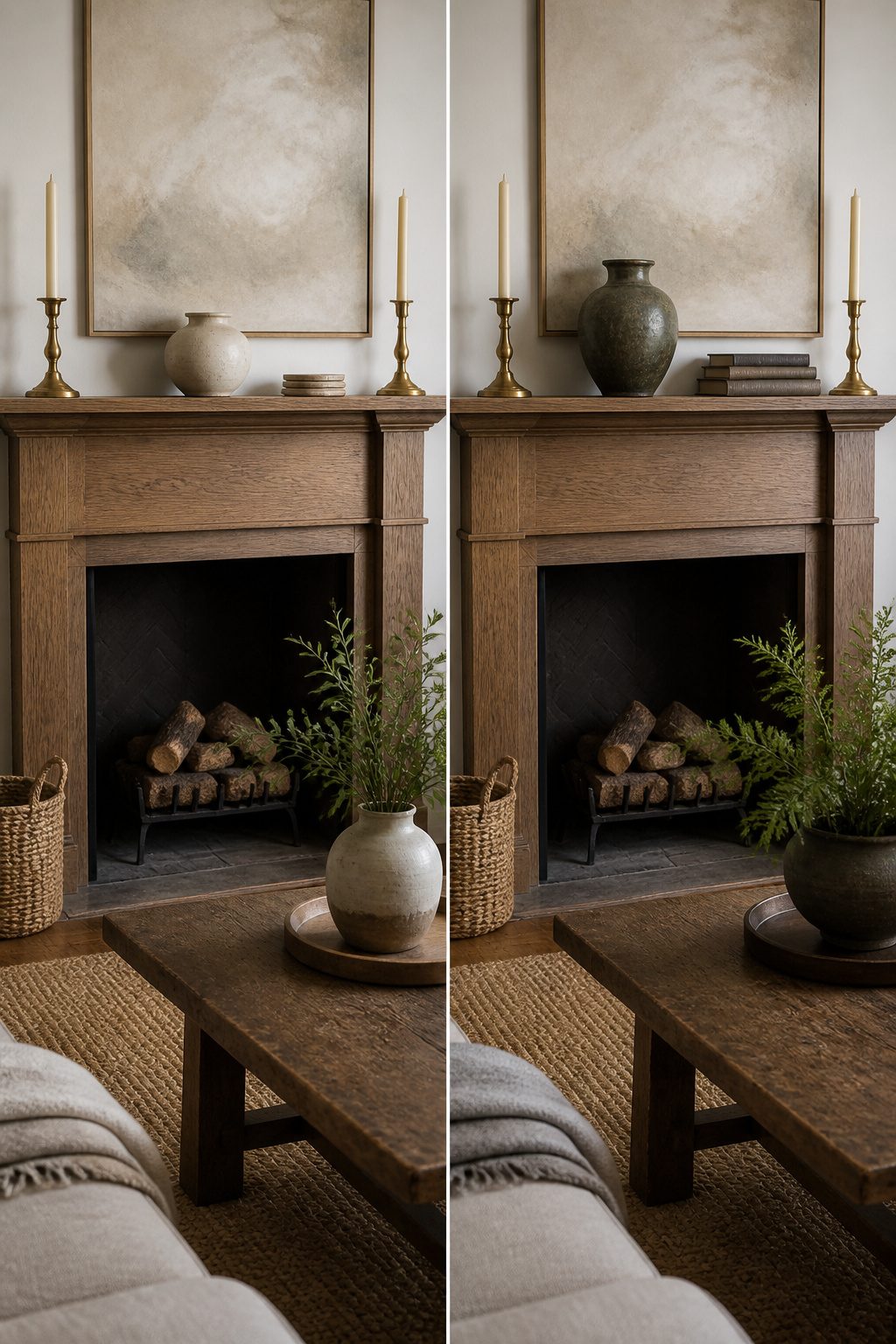
Odd numbers have a way of settling the eye without putting it to sleep. The Rule of Three works because two items on a mantel face each other like bookends; the third gives your gaze somewhere to travel. I learned this the hard way after years of pairing candlesticks in symmetrical twos and wondering why the result felt flat. Add a small vase, a stack of coasters, a bud in a shot glass, and the same surface suddenly holds your attention.
The 60-30-10 color rule runs on the same logic. Sixty percent dominant, thirty secondary, ten accent: three parts, not two or four. Your brain registers the imbalance as movement rather than mistake. Five framed prints above a sofa, seven pillows rumpled across a bed, three armchairs pulled into a conversation cluster: each keeps the eye working just enough to stay interested. Even numbers freeze a scene into halves; odd numbers let it breathe in one direction, then another.
Numbered Art Displays
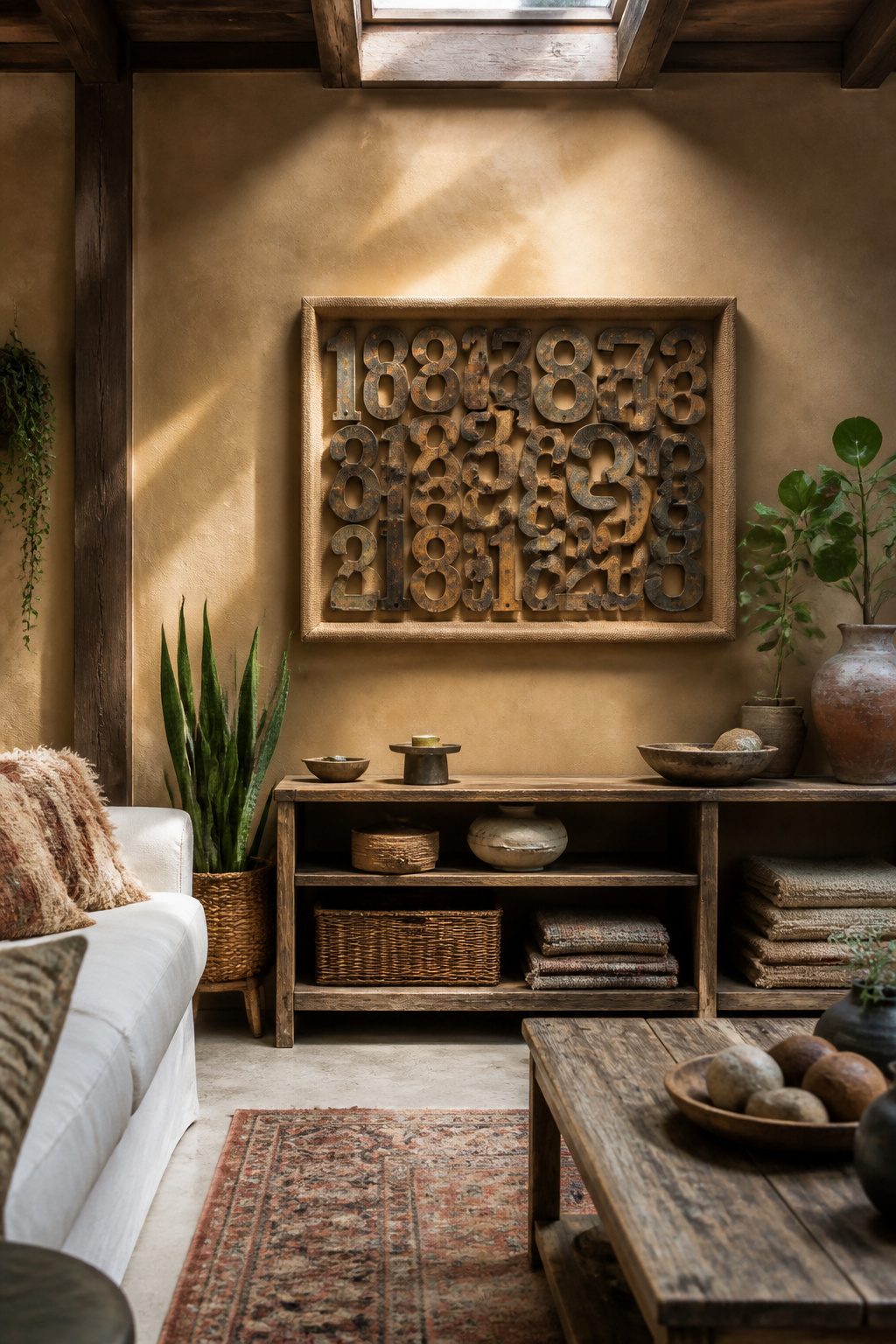
Metal house numbers from the hardware aisle turn into wall art faster than most people expect. The ones I keep coming back to are the basic brass or black-finish digits sold at Lowe’s, usually running a few dollars each. A burlap-wrapped shadow box frame and a handful of pins hold them in place, no glue or power tools needed. The finished piece carries the actual house number, which reads differently than a generic "7" pulled from a craft store. It marks the wall as yours in a way factory prints rarely manage.
A friend of mine took the same material in a rougher direction. She collected thrifted numbers over months, mismatched fonts and finishes, and hot-glued them straight onto her garage door. The result is uneven, slightly crooked, and unmistakably personal. She smiles every time she pulls in. That imperfection is the point; house numbers as art work best when they show the hand that placed them.
Numbered Vignettes
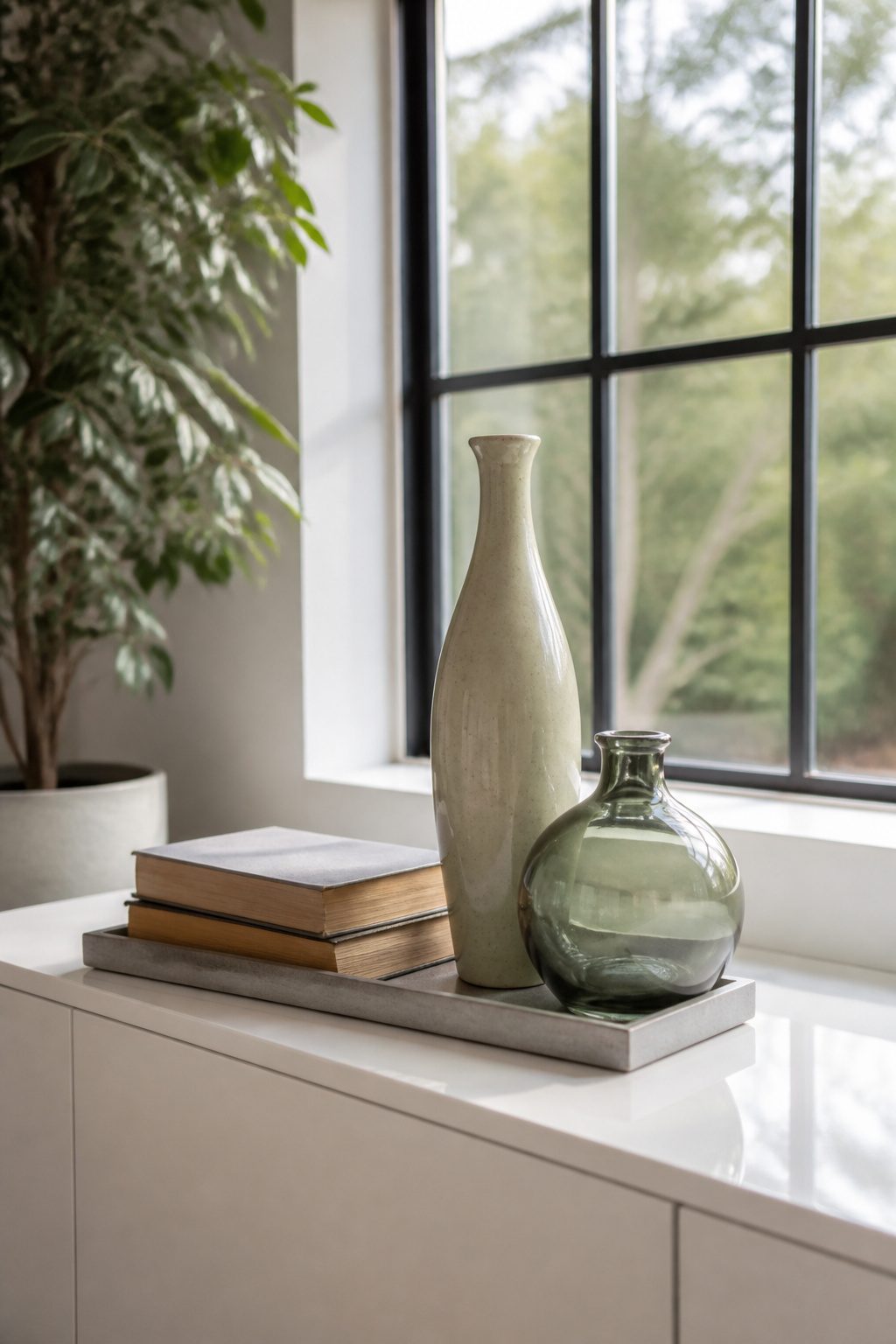
Vignettes are where the odd-number rule stops being a general tip and becomes something you can actually see working. A vignette is a contained scene: a stack of books on a tray, a cluster of candlesticks on a mantel, a morning-coffee corner by the window. Three objects in that frame read as a single, intentional picture. Five can work if the surface is deep enough, but three is the number I reach for almost every time.
The difference from ordinary grouping is the border. A vignette has one, even when the border is invisible. Three vases scattered across a whole console are just three vases. The same three vases on a tray, or between a lamp and the wall, become a scene your eye takes in at once. Vary the heights, shapes, and colors inside that frame, or the grouping goes flat no matter how odd your count.
Too many odd clusters in one room starts to feel chaotic, so I balance them with simpler, even arrangements elsewhere. Scale matters too: a tiny trinket beside a towering vase looks awkward, not curated. The objects should relate to each other and to the space they sit in.
Numbered Pillows
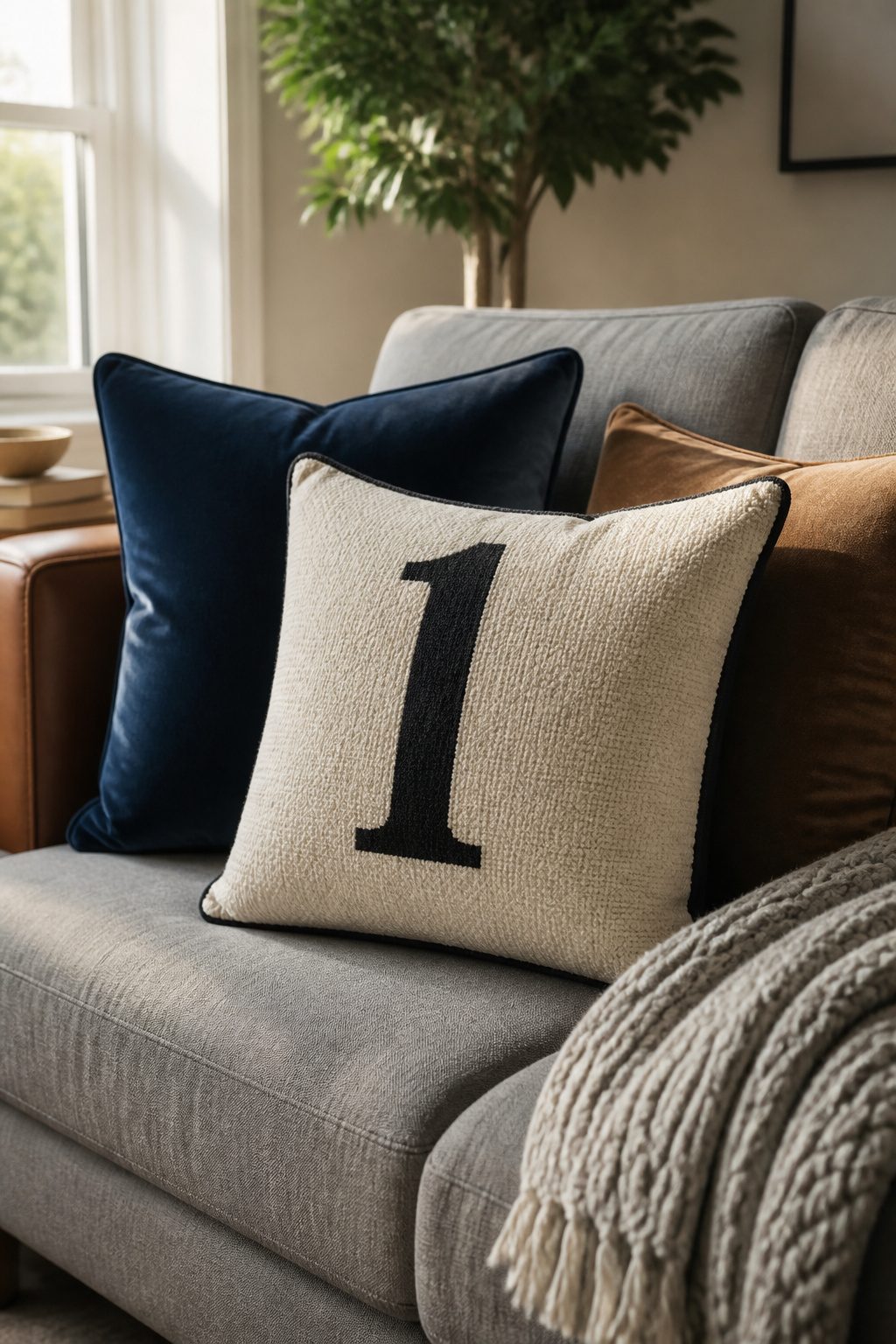
A single pillow with a printed numeral costs about the same as a plain one, which is why this is the lowest-stakes way to try the look. I found mine through a shop that also sells vinyl decals, and the number prints carried that same graphic punch without any commitment past the checkout line. The pillows sit on a sofa or guest bed like any other accent, and when the mood passes, they rotate back into the linen closet with no residue to scrub off.
The trick is keeping the rest of the grouping quiet. One numbered pillow reads intentional; three starts to look like a sports jersey collection. I use one against two solids, or pair it with a stripe that shares the same ink color so the numeral feels grounded rather than random. For a renter’s weekend, swapping pillow covers takes ten minutes and stores flat. The cost lands in that same few-dollars-per-cover range that makes seasonal changes painless, and the timeline fits between grocery runs.
One numbered pillow, two solids is the formula that keeps it from looking like a theme park room.
Numbered Furniture
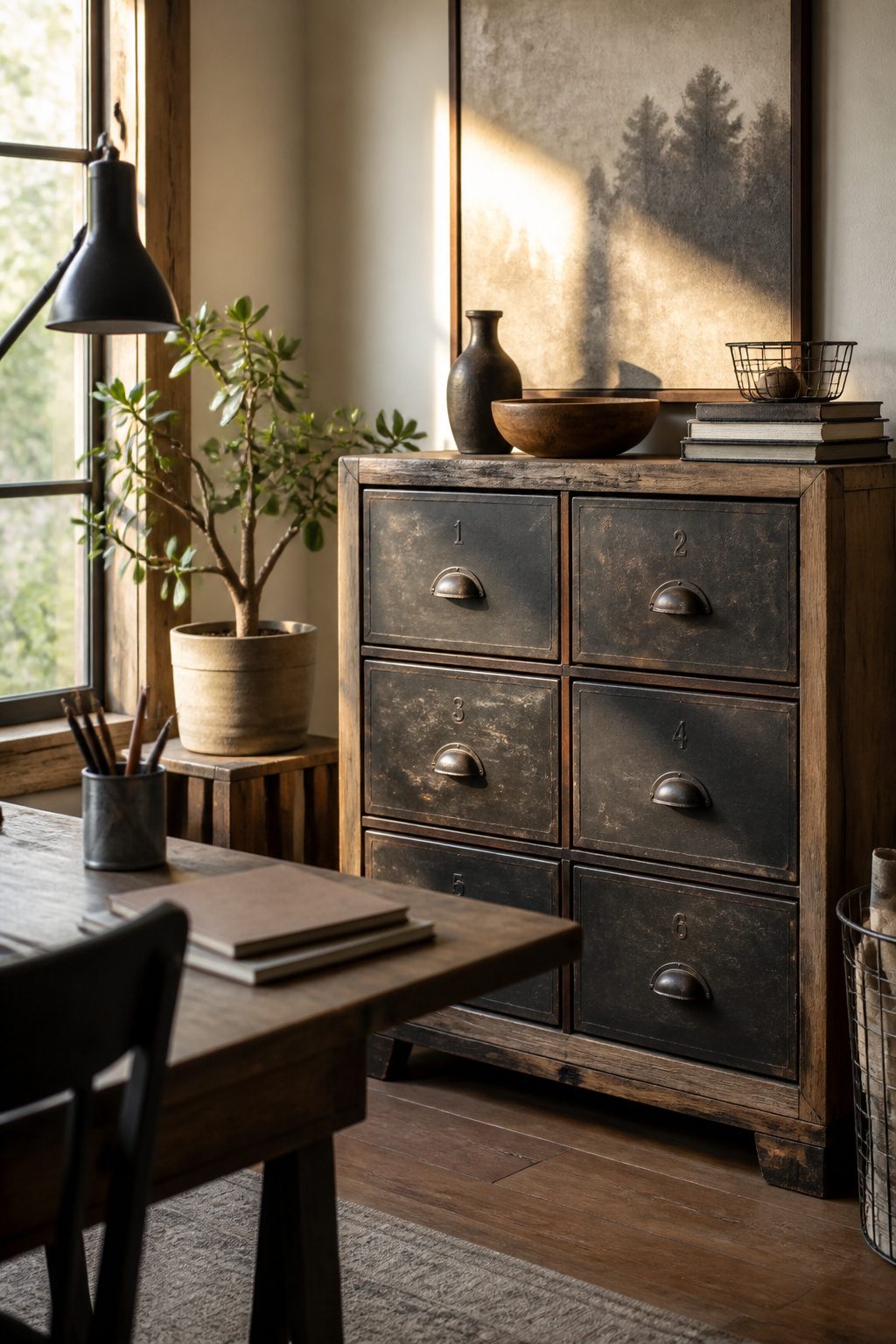
Furniture that wears its numbers openly is harder to find than the usual wall art or pillow covers, which makes the hunt part of the point. I have seen numbered drawers on vintage apothecary cabinets and old postal sorting pieces turn up at estate sales and salvage yards, usually priced by the seller’s guess at trendiness rather than any real market. The numbers were functional once, marking where quinine or third-class mail lived, and that leftover purpose gives them more weight than a painted-on stencil.
A dresser with its drawers labeled 1 through 6 works best when the numbers are original hardware, cast or stamped into metal pulls. Reproductions exist, but the paint sits on top of the surface instead of wearing in, and the difference shows under daylight. For a renter, one piece like this carries a whole room without committing a wall to a theme you might tire of by lease renewal.
I looked for DIY plans to build something similar and found almost nothing worth following. The gap means this is a search-and-rescue project, not a weekend build. Check architectural salvage in older industrial cities, or set an alert for "haberdashery cabinet" and "seed bin" on resale sites. The shipping runs high on anything with that many drawers, so factor in whether local pickup is an option.
Why Odd Numbers Work
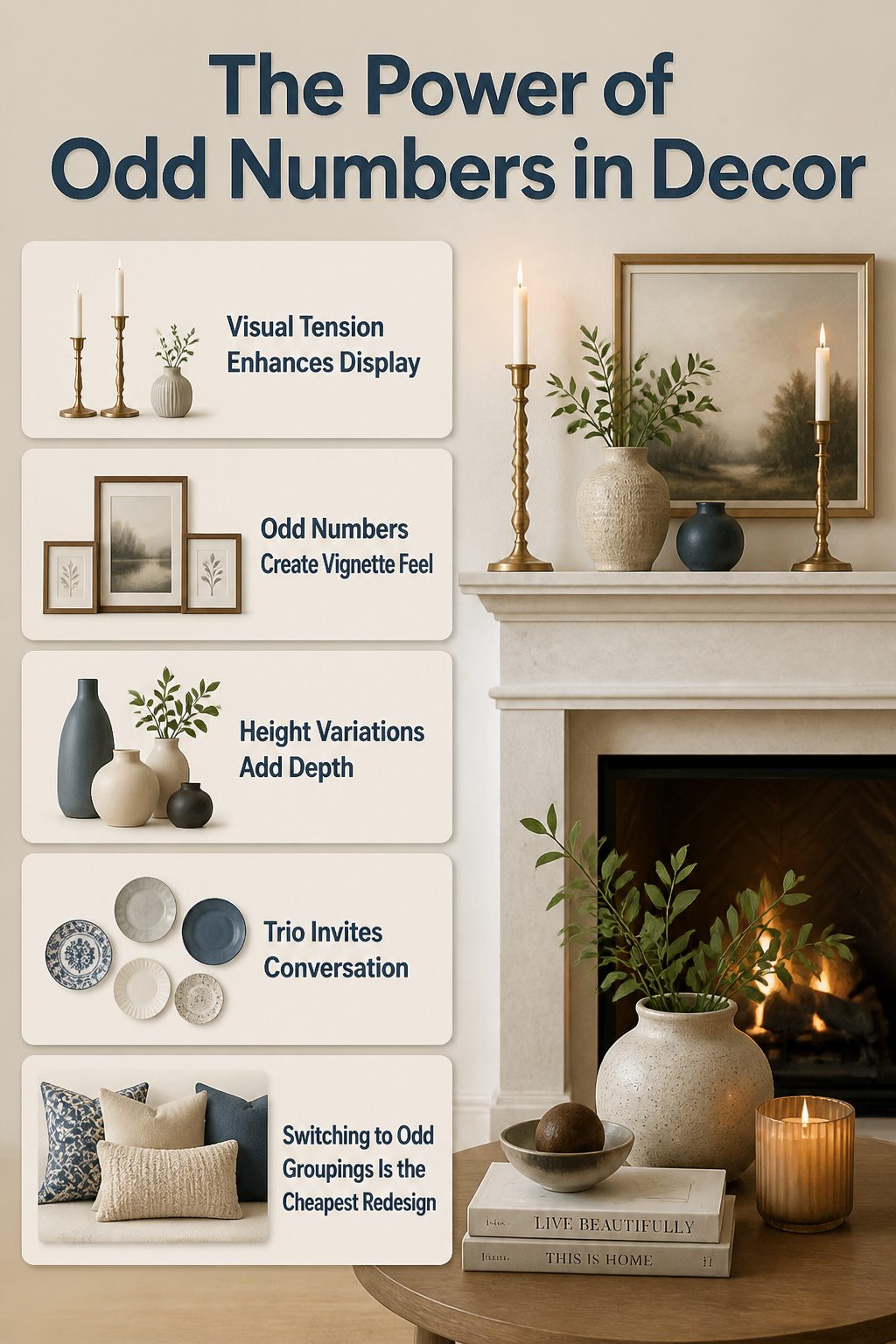
Two candlesticks on a mantel sit there politely, and the eye registers them once and moves on. Add a third object, even something small like a bud vase, and the grouping suddenly asks your eye to travel: left, right, center, back again. That slight imbalance is the visual tension that keeps a display alive, and it is why decorators reach for threes and fives almost by reflex.
The brain does not settle as easily on odd numbers. With pairs or fours, the mind completes the symmetry immediately; with threes or fives, it keeps hunting for a center, a relationship, a reason. The result feels intentional rather than accidental, collected rather than staged. A trio of framed prints, five pillows mixed across a sofa, three candles staggered by height on a side table: each reads as a vignette rather than a lineup.
Varying height and shape matters as much as the count itself. Three objects all the same size still flatten into a row; three objects with one tall, one wide, one small create the depth that makes the odd number rule worth using. The same principle scales up. A wall of five plates in different diameters carries more energy than four matched ones, and a cluster of three armchairs invites conversation in a way two facing each other never quite does.
I used to default to pairs because they felt safer, more balanced on the face of it. The displays stayed tidy and forgettable. Switching to odd groupings, even just on a bookshelf or bedside table, was the cheapest redesign I have done; nothing new bought, only rearranged.
DIY Projects With Numbers
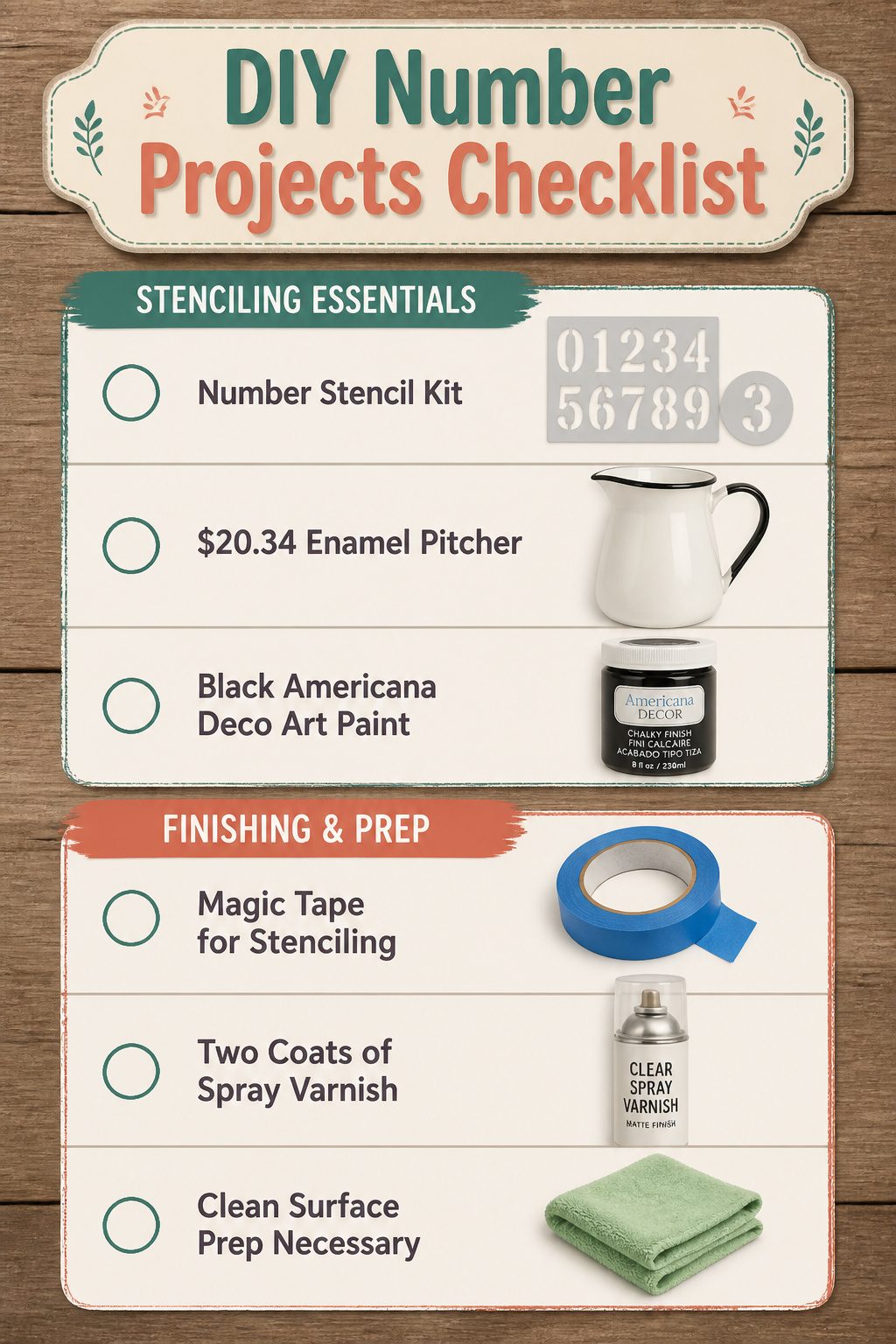
Stenciling a number onto something plain is the fastest way to give it purpose. An enamel pitcher, the kind you can find for $20.34, turns into a farmhouse piece in about five minutes with a number stencil, black Americana Deco Art paint, and magic tape to hold the stencil steady while you work. Two light coats of spray varnish after it dries, and the finish holds up to actual use.
Decals are the renter’s version of the same idea. They pull off and reposition if you stick them crooked the first time, which I have definitely done. Lamps, candlesticks, end tables, drawers, stairs, they all take a number without committing to paint. Sets usually cover 0 through 9 with duplicates for dates or house numbers.
The budget on either path stays under what one dinner out costs. Paint and a brush last for dozens of projects; a decal set covers multiple pieces. The mistake to avoid is treating the surface first. Grease or dust under a stencil bleeds the edge, and decals bubble over anything not wiped clean. Five minutes of prep saves the redo.
What Numbers Mean to You
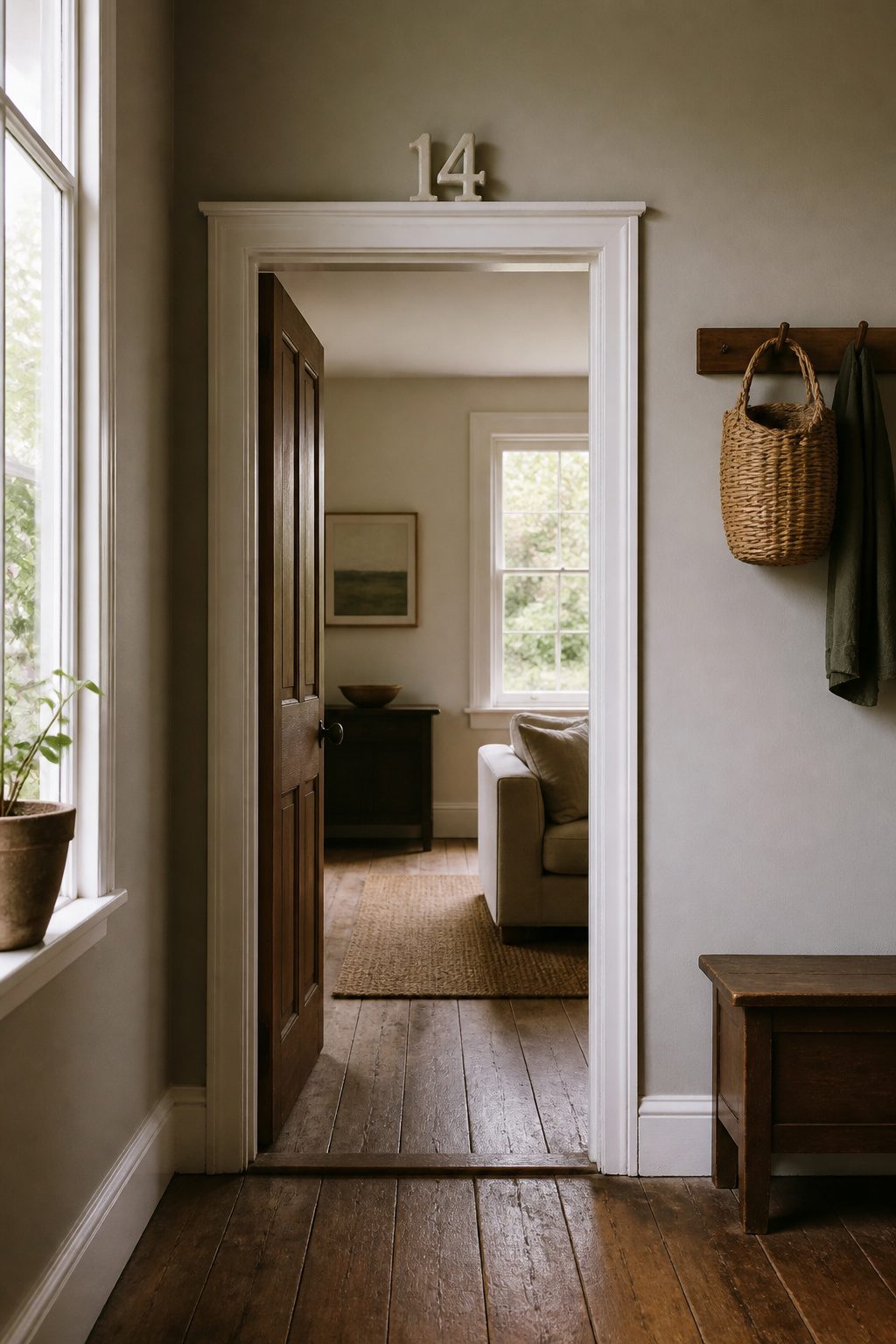
A house number printed on a pillow or a birthday digit stenciled above a doorway carries weight that a random 7 or 23 never will. The difference is the story you already know about it.
My own front door still has the "14" the previous owner left, and I keep meaning to swap it for the year my grandmother was born. The metal is cheap, the swap would take twenty minutes, but I hesitate because the current numbers are merely correct while the replacement would mean something. That hesitation is the point. A numeral with personal significance turns decoration into a small act of remembering, and the labor of installing it becomes part of the ritual.
Cultural symbols work the same way. A "8" hung near an entryway nods to luck and continuity in ways a "5" does not, at least for households that grew up with that association. The symbol does not need explaining to guests. It lives in the space the way a family photo does, visible to everyone but fully legible only to the people who placed it there.
The risk is sentiment tipping into clutter. One meaningful date on a shelf reads as intention. Six of them, framed and lined up, starts to look like a memorial wall. My rule, borrowed from a friend who edits her mantel ruthlessly: one number per room, two only if the rooms connect and the digits relate. Everything else stays in the drawer where meaning does not have to compete for attention.
Vinyl Decals and Temporary Fixes
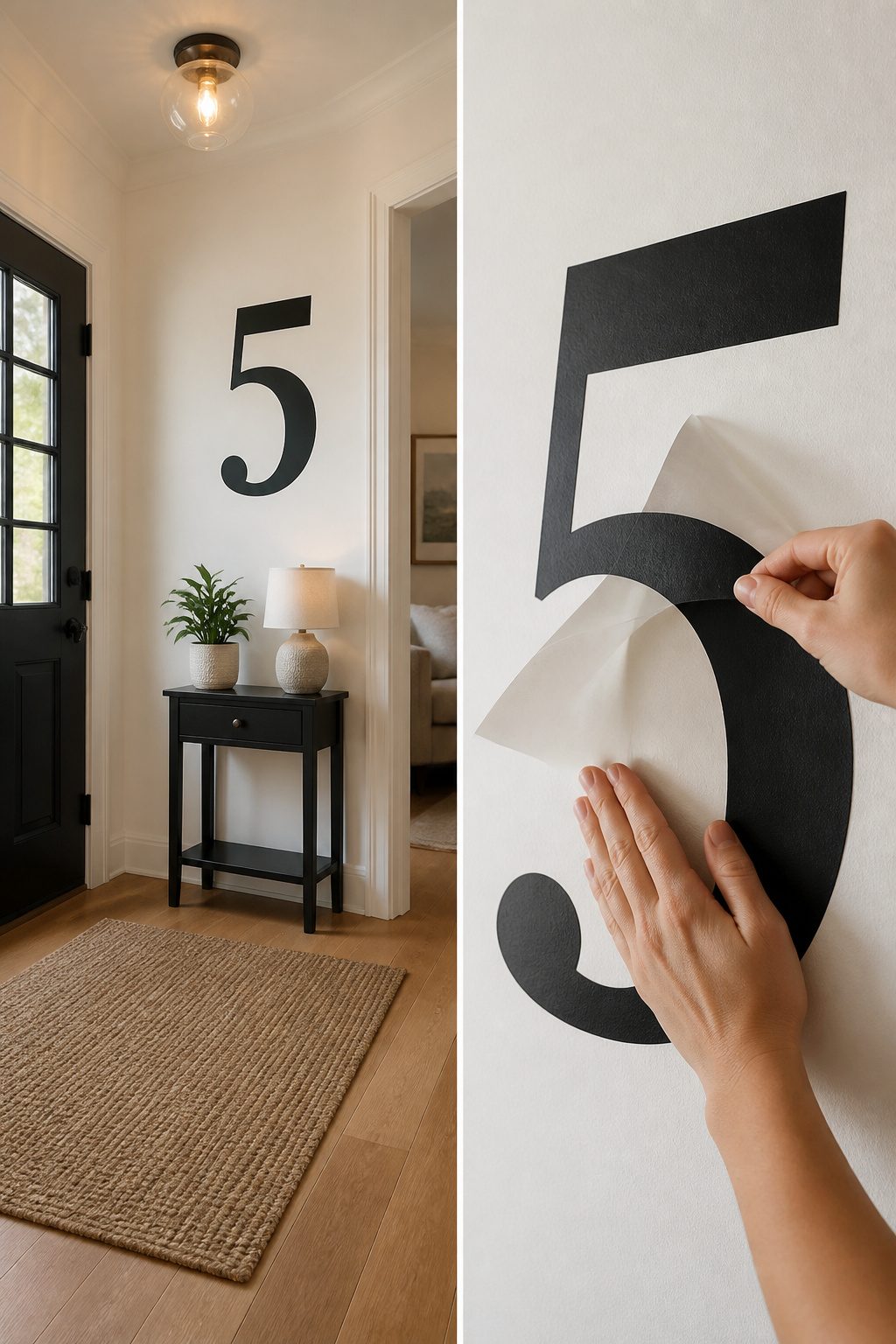
Vinyl decals are the first thing I check when a number needs to live on a wall I do not own. The backing peels away, the decal presses flat with a squeegee or a credit card edge, and six months or two years later it lifts off without the landlord ever knowing it was there. That last part matters if your lease turns over every twelve to eighteen months, or if your building’s policy treats nail holes as billable damage.
The renter’s risk with paint or stencils is not the applying. It is the touching up afterward, the color matching, the wall texture that never quite returns to flat. A decal sidesteps all of it. The better ones are cut from matte vinyl that reads as painted from across a room, not glossy sticker stock that catches light like a parking permit. Sizes run from four inches for a shelf corner to two feet for a statement wall, and the cost stays under thirty dollars in most cases.
Heat from a hair dryer softens the adhesive for removal. Pull slowly, parallel to the wall, and the film releases in one piece. Any residue wipes off with rubbing alcohol. The whole job takes ten minutes, which is about how long I spend patching a single picture hook. For someone who wants house numbers over the kitchen doorway this year and something else next year, that reversibility is the whole point.
Frequently Asked Questions
What are some creative ways to use numbers in home decor?
Numbered tags clipped to glass milk bottles with small wooden pegs, vinyl number decals pressed onto doors or furniture, and metal house numbers pinned inside shadow box frames all add graphic interest without permanent commitment. DIY stenciling on enamel pitchers or thrifted numbers hot-glued to a garage door turn functional items into personal art. The article also suggests numbered pillows, original hardware on vintage apothecary cabinets, and simple decal sets for lamps or stairs.
Why is decorating with odd numbers more effective?
Odd numbers create visual tension that keeps your eye moving through a display rather than settling once and moving on. Two candlesticks face each other like bookends; a third object gives your gaze somewhere to travel. The brain keeps hunting for a center and relationship with odd counts, which reads as intentional and collected rather than staged. Varying height and shape inside the odd grouping matters just as much as the count itself.
How can I incorporate numbers into my existing decor?
Vinyl decals press onto smooth surfaces in under a minute and peel away clean when you move, making them ideal for rental doors, pantry fronts, or laminate furniture. Stenciling a number onto a plain enamel pitcher takes about five minutes with craft paint and spray varnish. Swapping in a single numbered pillow cover against two solids adds graphic punch without theme-park excess, and the covers store flat when the mood passes.