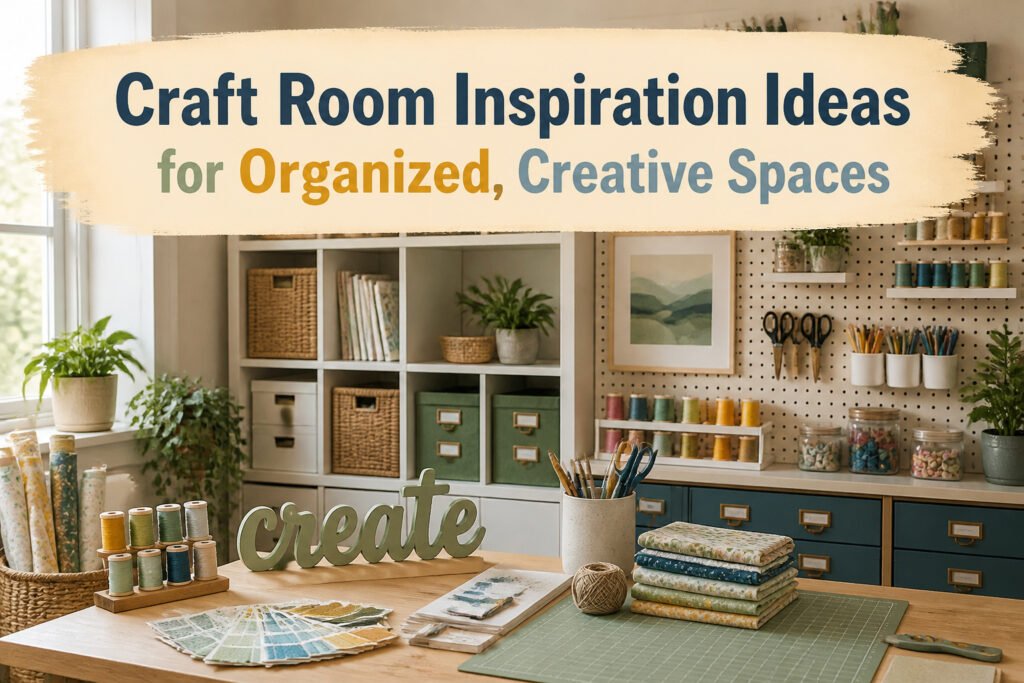
The right craft room inspiration depends on whether you rent, sew, or work mostly after dark. A $15 pegboard panel fails if you mount it from the ceiling down instead of from your elbow height up, and the IKEA Kallax only became the default because its 13-inch cube fits standard bins without specialty sizes.
1. Boho Style Craft Room
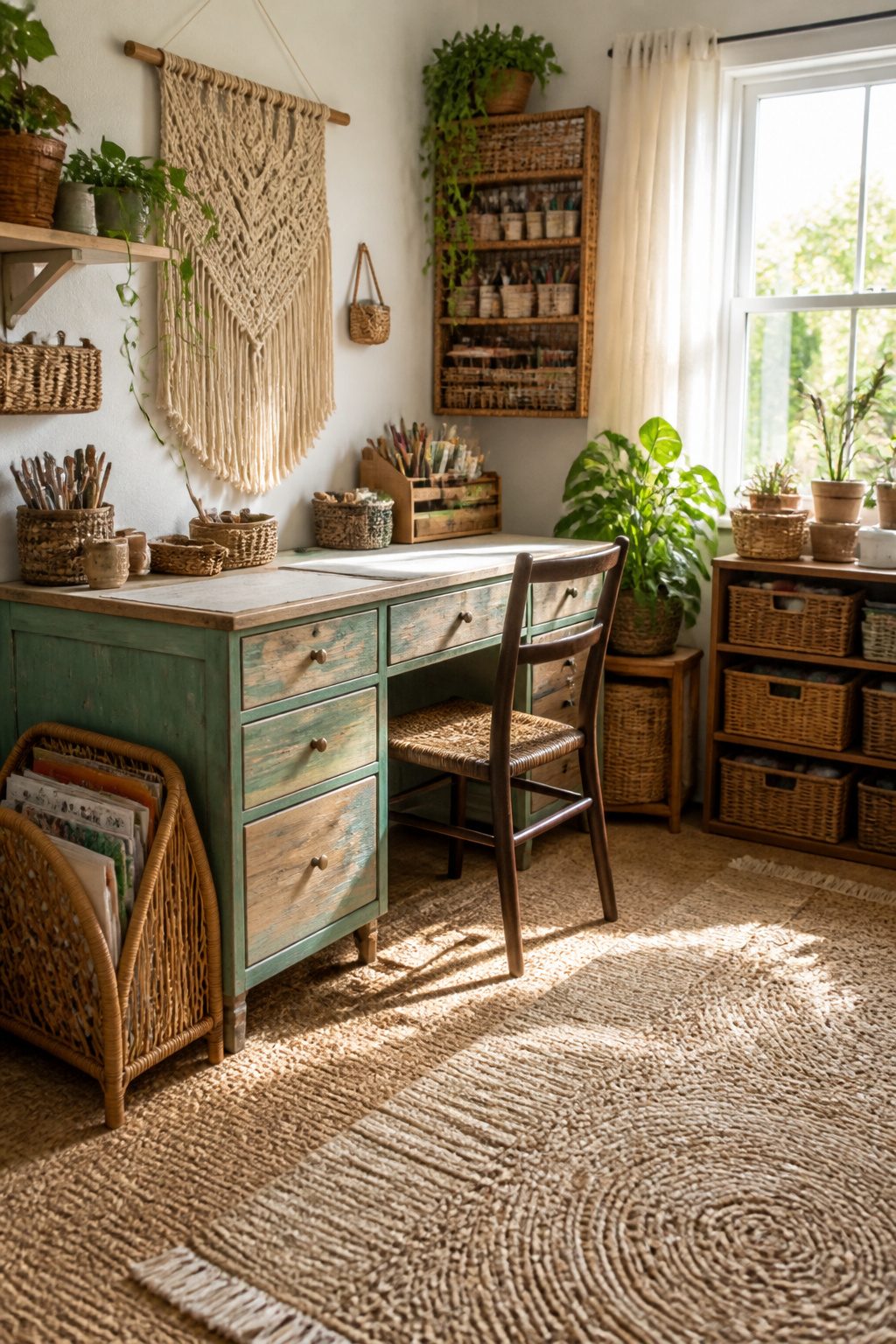
Colorful décor and natural textures make a craft room feel like someone actually works there, not like a set waiting for a photographer. Rattan, macramé, and layered rugs build that lived-in warmth without requiring a single boutique purchase. Most of my own pieces came from thrift stores and clearance aisles: a rattan magazine holder for under five dollars, a macramé wall hanging from a garage sale, rugs stacked two-deep because each one had a stain that made it cheap.
The layering hides the flaws. A secondhand jute rug with a faded corner disappears under a smaller woven cotton one, and the combination looks intentional. Macramé works the same way. A plant hanger with a frayed cord still holds a terracotta pot fine, and the rough spot faces the wall anyway.
Painted furniture fits here too, but the boho trick is letting the brushstrokes show. I once spent an afternoon trying to get a smooth factory finish on a thrifted desk before realizing the uneven color was the whole point. Now that desk sits under three mismatched rugs and a wall of woven organizers, and the room feels finished because it never tried to look perfect.
2. IKEA Kallax Storage
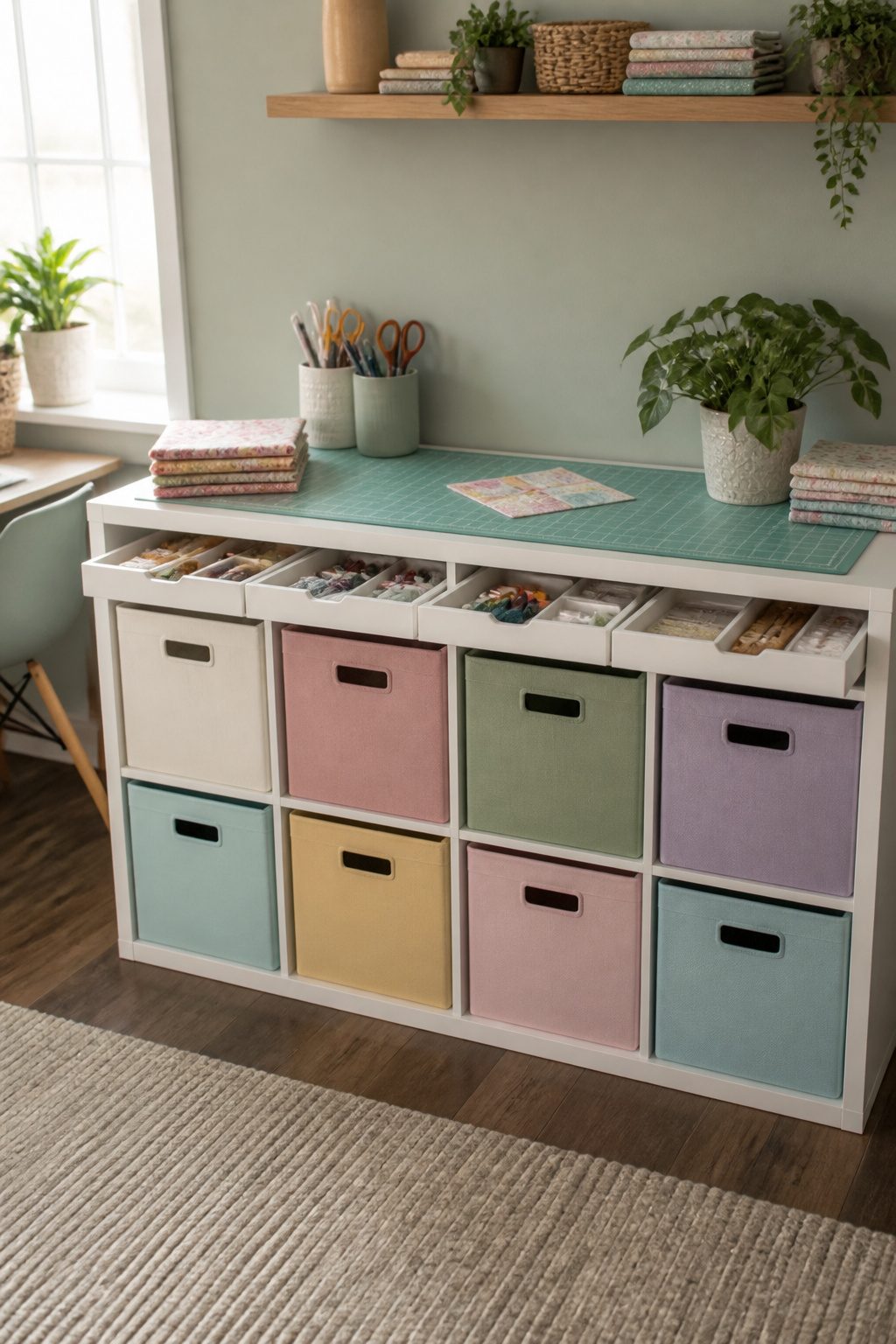
The IKEA Kallax unit became the default craft room storage for a simple reason: the 13-inch cube fits standard bins without forcing you to hunt for specialty sizes. A 2×4 or 4×4 configuration handles most wall widths renters actually have, and the flat top at standard counter height holds a cutting mat without wobbling. At $80–120, the Kallax beats custom built-ins by roughly a factor of ten, which matters when your budget is a few hundred dollars and the room might not be yours in two years.
I added drawer inserts to mine after watching scissors and pins disappear into the back of open cubes. The inserts turn one cube into three shallow drawers; they cost extra, but the upgrade keeps small tools visible and reachable. For paper, the cube depth fits standard paper holders standing upright, which is why so many craft room plans pair the Kallax with vertical storage rather than stacking flat. The whole system assembles with an Allen key and a free evening, though I will warn you the dowels fight back if you rush the alignment.
3. Pegboard Organization
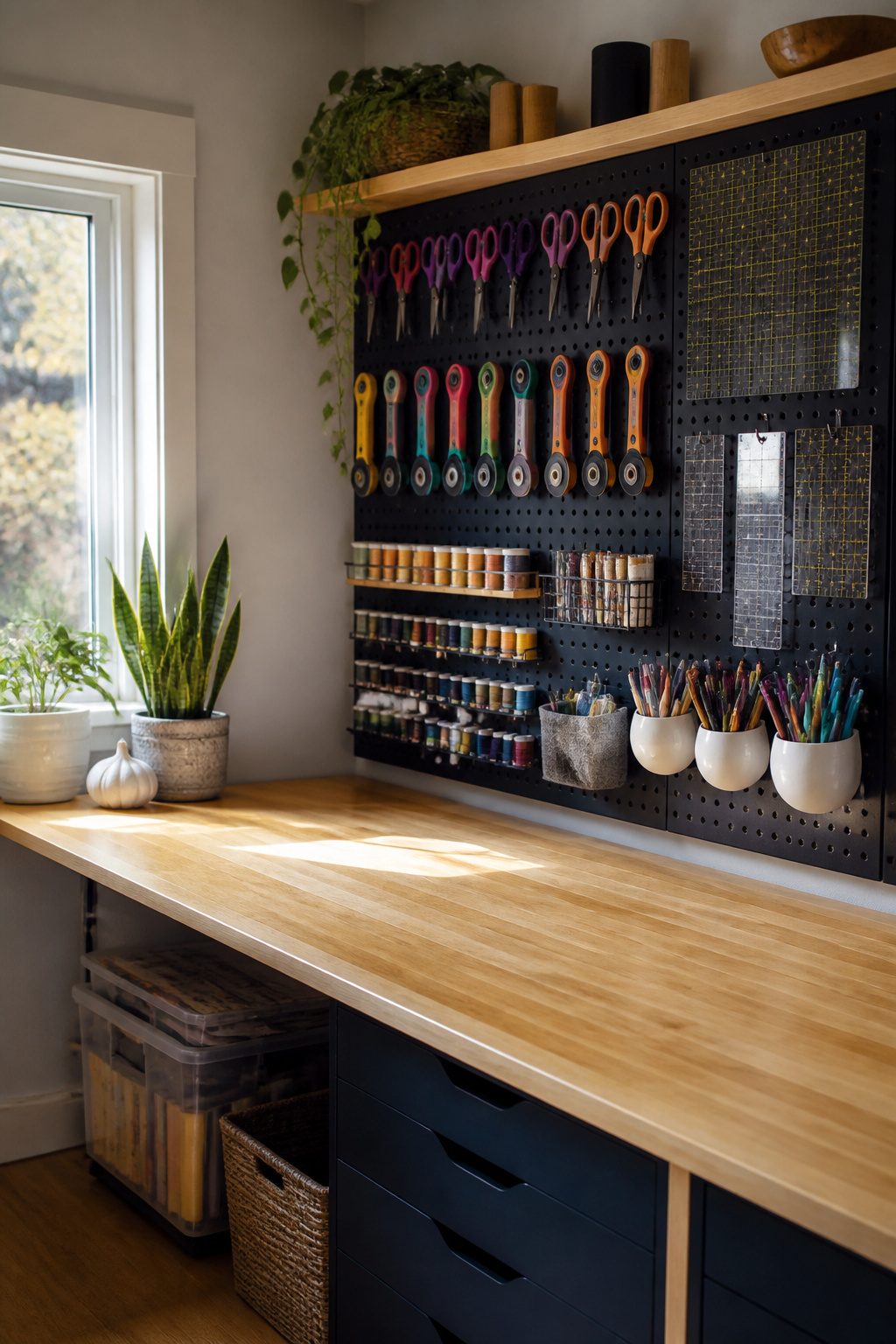
Wall-mounted pegboard turns your tools into a display you actually use instead of a drawer you dread opening. Scissors, rulers, rotary cutters, and the rest of your everyday gear stay visible and within arm’s reach, which means you grab the right blade the first time instead of digging through a dark tangle of supplies.
Standard 24×48-inch panels run about $15–25 at most hardware stores, and that single sheet covers a generous stretch of wall above a worktable. The mistake I see most often, and the one I made in my first setup, is mounting the board too high. The bottom two rows of hooks end up above comfortable reach, so they sit empty while the middle rows get crowded and the top rows become decorative storage for things you never touch. Measure from your standing elbow height down, not from the ceiling up, and leave that lower third open for the tools you reach for a dozen times a session.
4. Gallery Walls
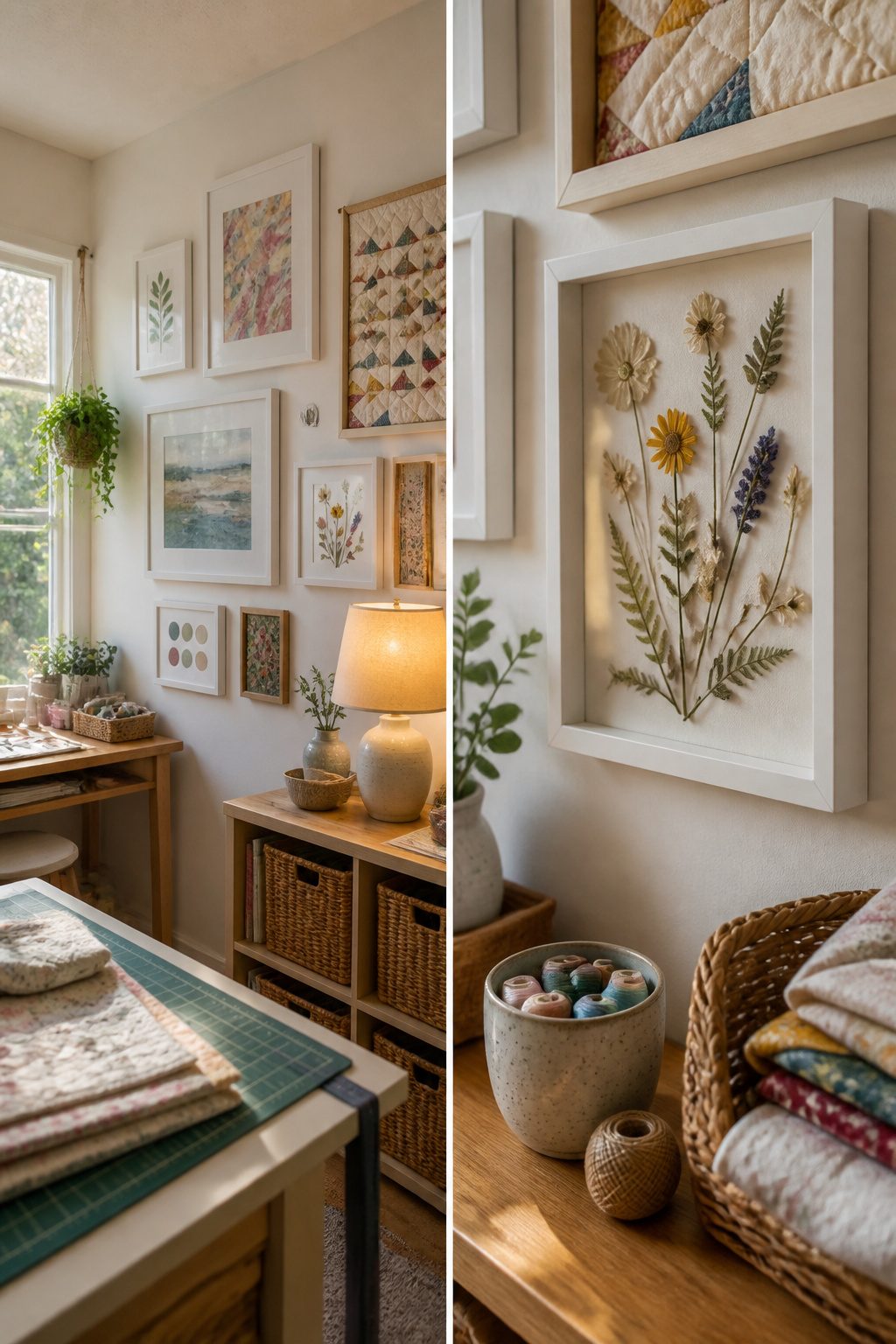
Bare walls in a craft room feel like a workshop, not a space you want to spend a Saturday in. Framed art, quotes that keep you moving through a project, and pieces you have already finished turn the room into something personal without much cash.
The frames matter more than what goes inside them. Thrift stores usually have mismatched wood frames for a few dollars each. One afternoon with a can of spray paint, all in the same color, pulls them together for under $30 total. White reads clean against busy supplies; matte black hides fingerprints if your hands stay dusty.
What hangs inside should not look like you bought the wall ready-made. Mix in a quilt block you pieced last winter, a pressed flower arrangement from a walk, or the first lopsided bowl you threw on a wheel. Those handmade pieces break up the symmetry and remind you what the room is actually for when a project stalls. Without them, the wall starts to feel like a store display you are afraid to touch.
5. Colorful Accents
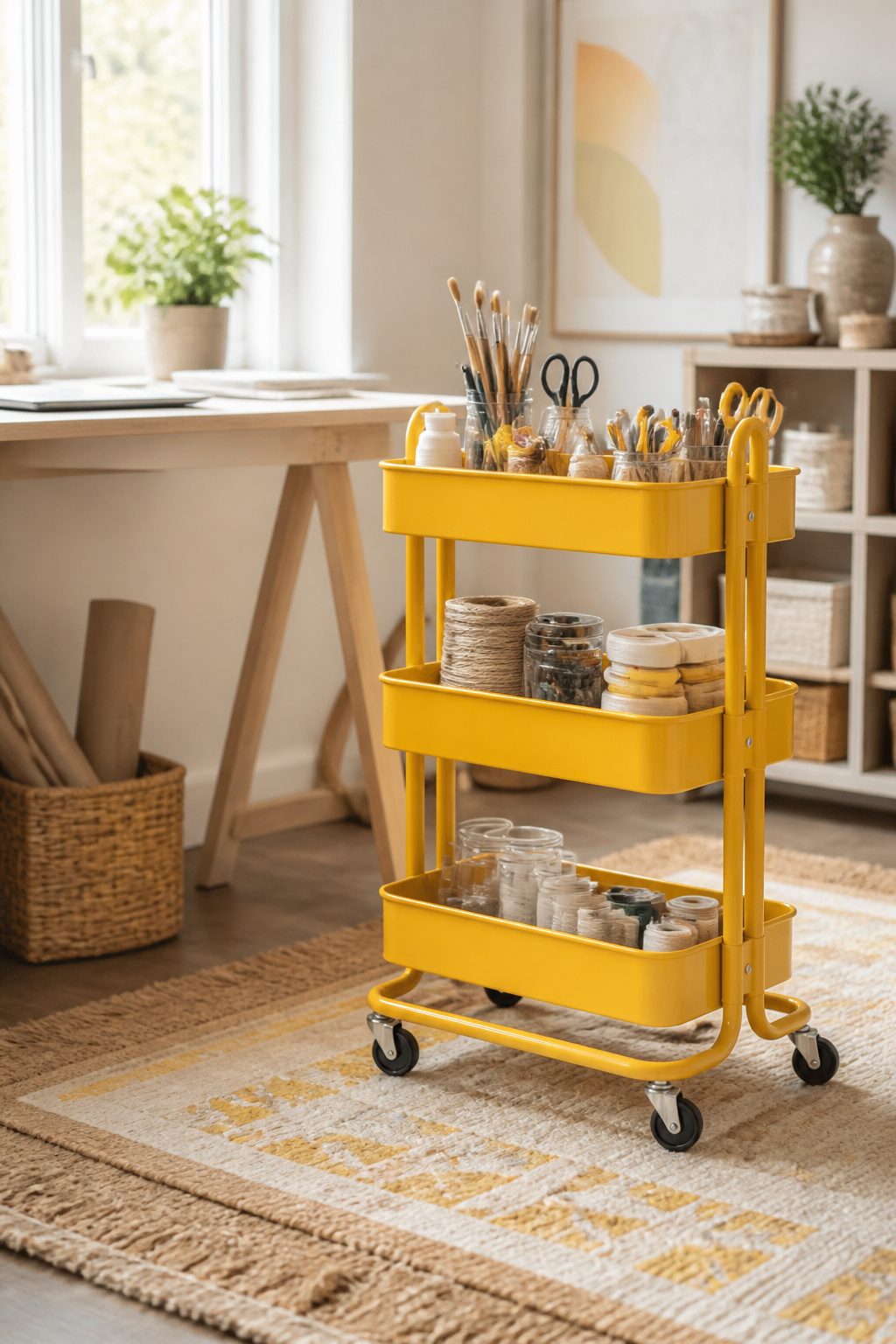
A full repaint is rarely where the energy in a craft room actually comes from. What moves the mood is one strong color hit against a quieter background, and the quieter background can stay the same paint already on your walls.
I learned this after painting an entire accent wall in a saturated teal and feeling like the room was shouting at me every morning. The next attempt, I kept the existing warm white and added a single yellow rolling cart for markers and washi tape. The yellow did more for my attention span than the wall ever had, because it sat at eye level while I worked and changed with the daylight.
For painted furniture, Tidewater by Sherwin-Williams mixed at 75% strength gives a lighter, less pool-deck version of the color that reads as fresh rather than themed. A teal chair in that shade against beige or gray walls carries the whole room without asking for a roller and drop cloths. One bold piece usually outperforms a full palette overhaul, especially in a rental where the walls have to go back someday.
6. Functional Work Surfaces
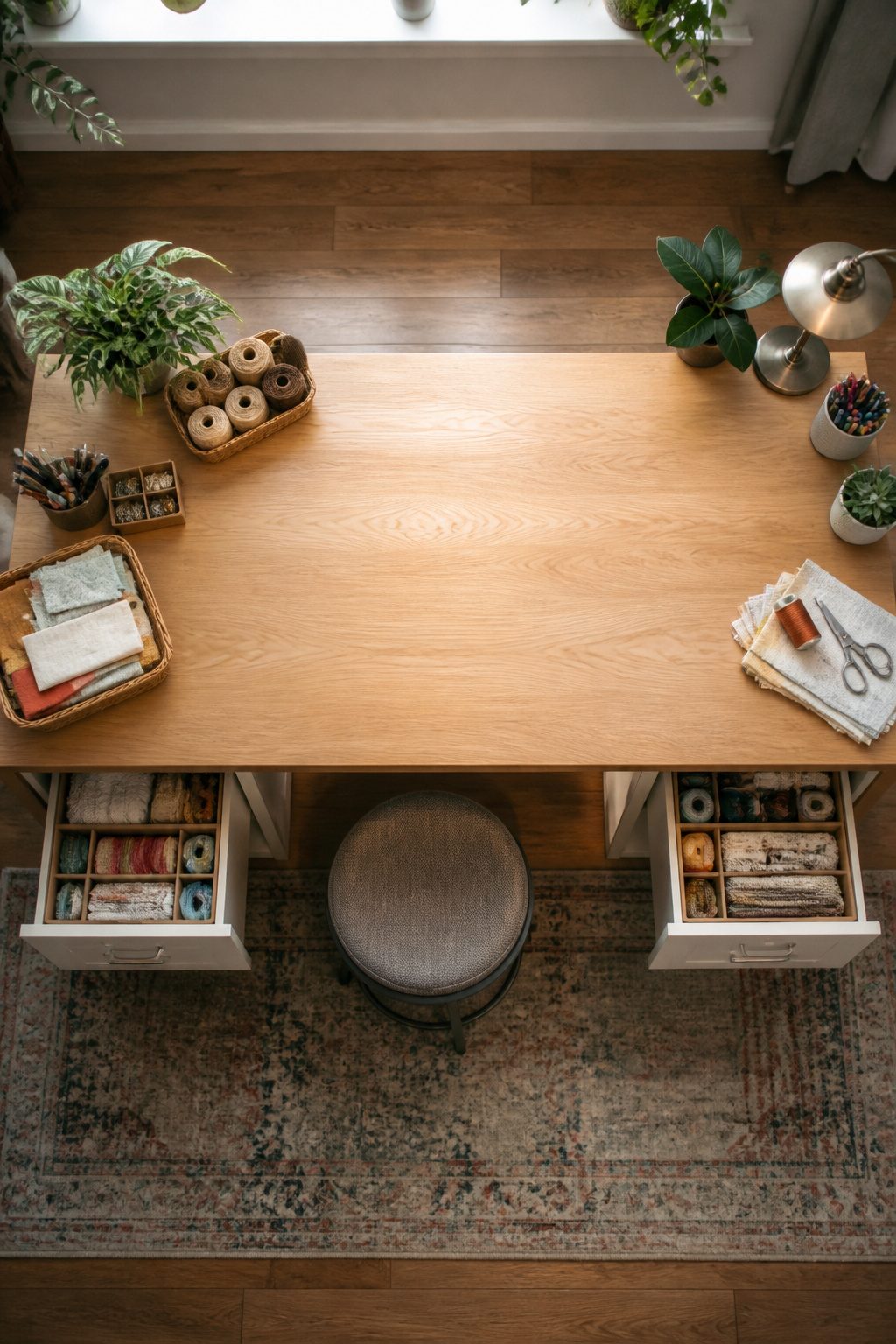
A craft table needs to survive pressure, not just look good in photos. Most guides skip the part where height actually matters for the work you do, so I tested both options side by side. Standard 30-inch desk height left my shoulders hunched during long cutting sessions; 36-inch counter height let me stand comfortably without bending to the blade. That six-inch gap turned out to be the difference between finishing a project and quitting with a backache.
For the surface itself, I spent $60 on a hollow-core door laid across two filing cabinets from a resale shop. The door gives you 80 inches of spread-out space, and the cabinets add drawer storage underneath. It wobbles slightly if you lean hard on one corner, but a shim under the short leg fixed that in two minutes. The whole setup moves with you if you rent, and replacing a gouged top costs another door, not another furniture purchase.
7. Lighting Solutions
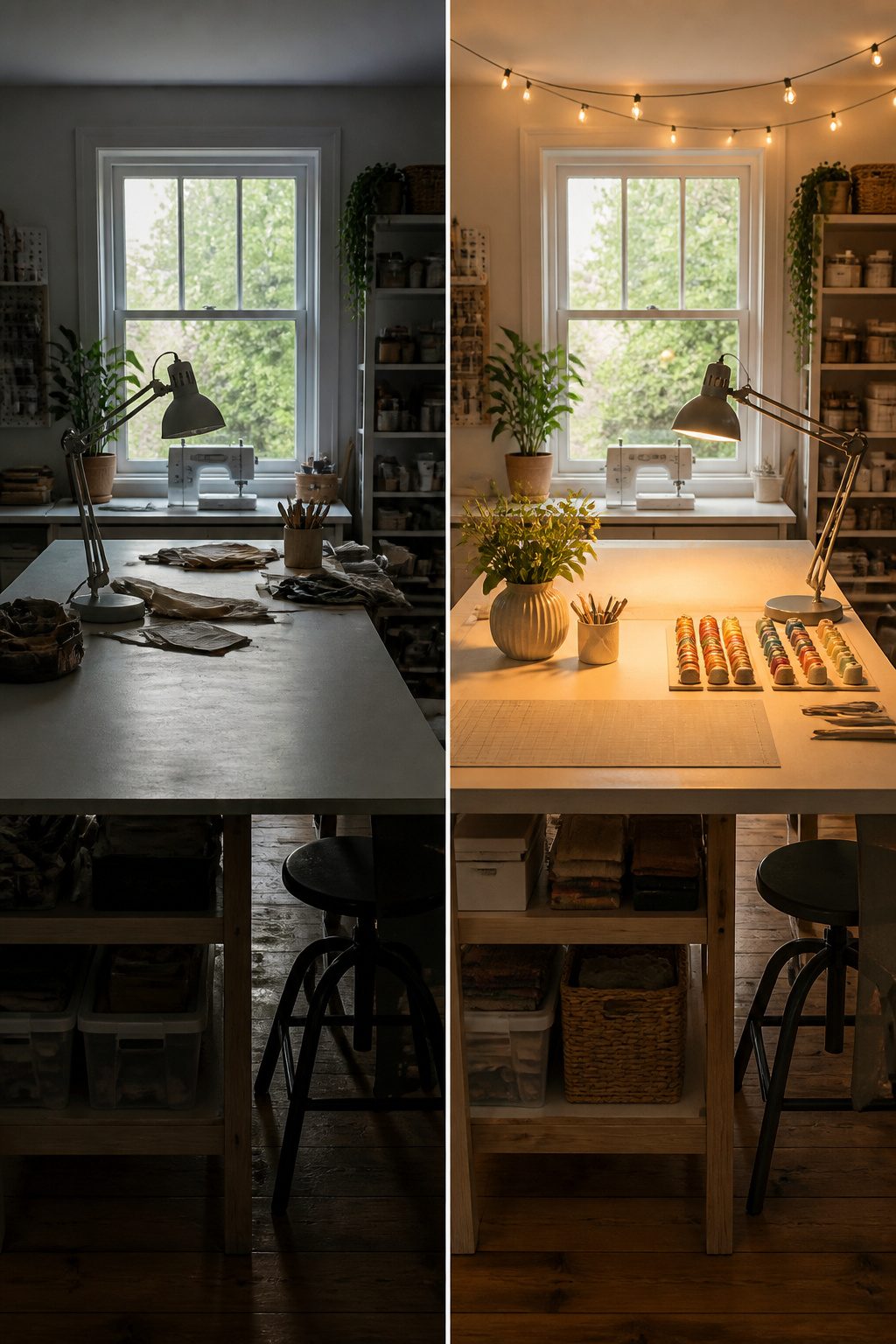
The single ceiling fixture in my first craft room left a dark stripe across my cutting mat every afternoon, and thread colors looked different at 4 p.m. than they did at 10 a.m. Shadows across detailed work are the mistake most people make, not the wattage.
Task lighting fixes what overhead light misses. Adjustable-arm desk lamps with daylight-temperature bulbs let you bring the source to the work, not the other way around. String lights along a shelf edge add ambient fill without the clinical feel of a workshop. A seafoam teal light, the kind Jennifer Maker spec’d for her own room, gives enough brightness for close work while reading as decor when it’s off.
Natural light gets skipped in most craft room roundups, but window placement matters more than any fixture for anyone matching fabric or thread. North-facing light stays consistent through the day; south-facing shifts warm by afternoon and can make two blues look like a match when they aren’t. Position your color-critical tasks where that light lands steady, and use the lamps for everything after dark.
8. Storage Bins and Baskets
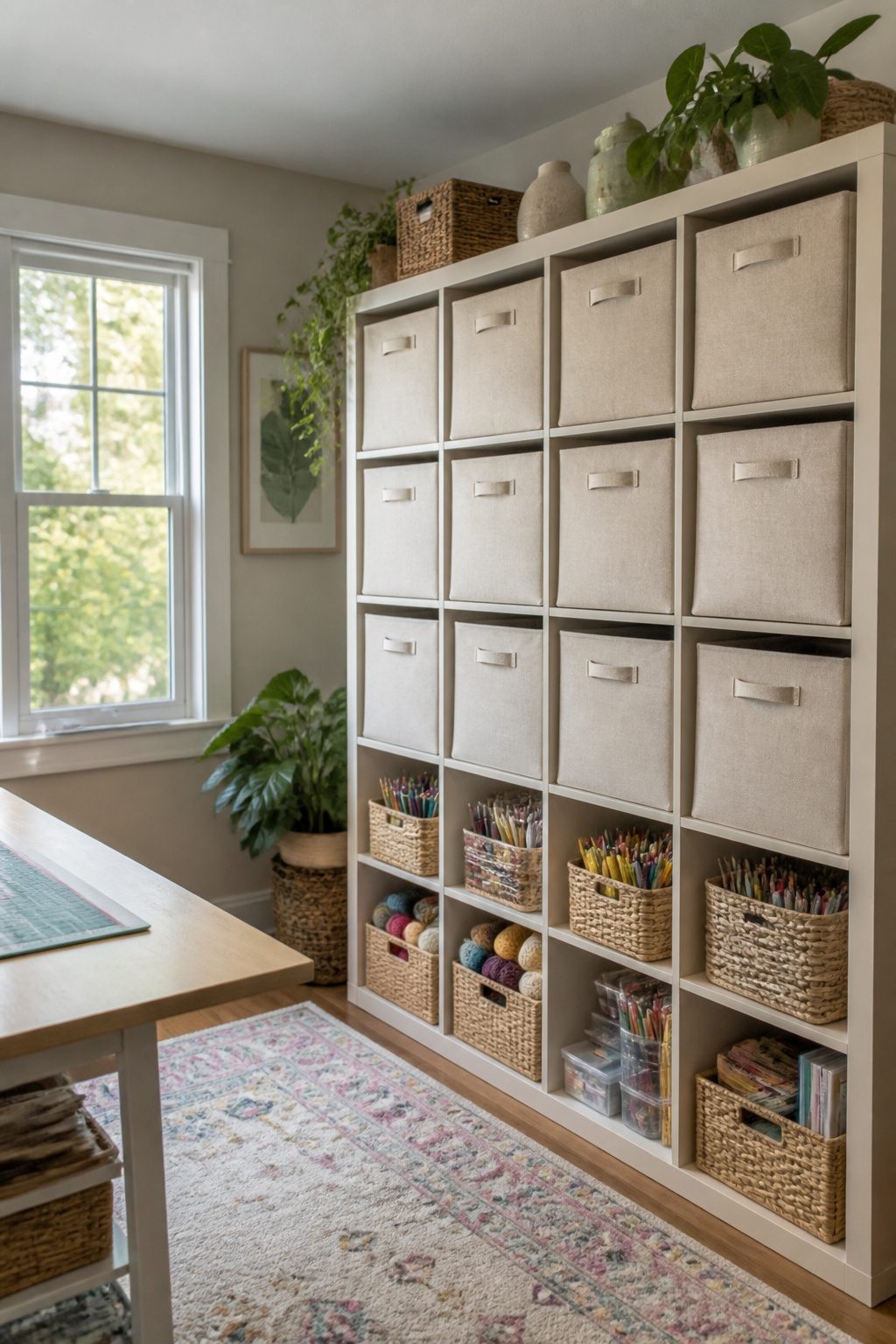
Open shelving looks like clutter unless the bins themselves match. I learned this after buying mismatched containers on sale and realizing the shelf read as junk drawer instead of craft room. Collapsible storage bins run $5–12 at discount retailers and work best for the seasonal overflow, the extra yarn or holiday stamps that sit empty half the year. Stackable baskets handle the everyday stuff: scissors, glue sticks, half-finished cards. The wire basket mistake cost me a weekend. Labels on wire only work when the label faces outward; turned sideways, they disappear between the bars. I had to unstack everything and turn each basket to read it. Now I buy bins with flat fronts or weave the label through the handle so it stays visible.
Sewing Room Specifics
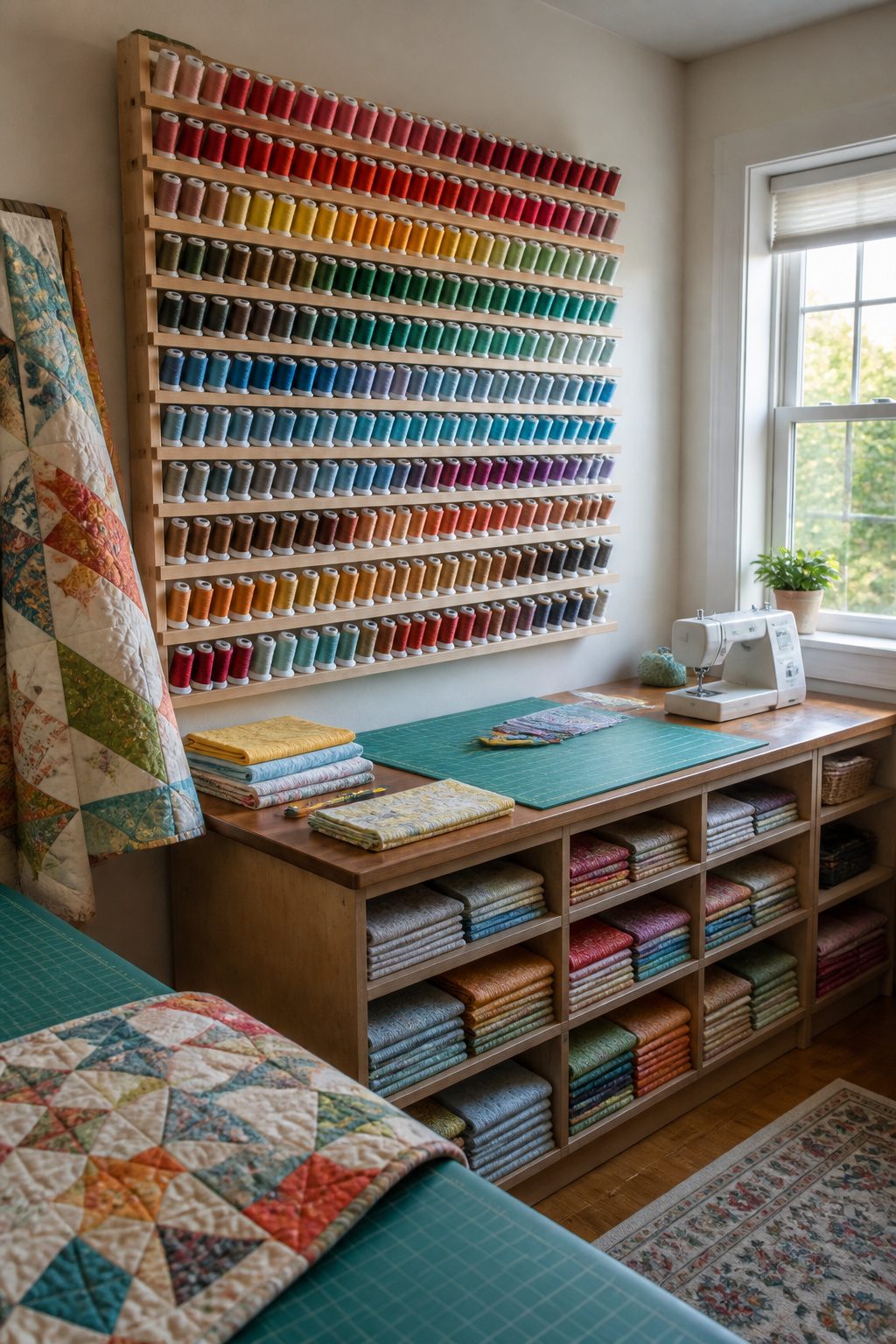
Thread storage turns chaotic fast if you sew with any regularity. The Mega Rack changed that for me, wall-mounting sixty spools where I can see every color at a glance without digging through a bin. For smaller spaces, the Mini Thread Rack fits above a window or beside the ironing board and holds the dozen colors you reach for weekly.
Fabric is the harder half. Deep stacks in drawers hide what you own; you buy duplicates, or you avoid starting projects because unfolding everything feels like work. Shallow drawers solve this if you fold yardage to finished dimensions, not rolled tubes. A six-inch width lets you file fabric like paper, spine-out, so each print stays visible without lifting the stack above it. I keep yardage under two yards folded flat; anything longer gets the bolt method, draped over a pants hanger in the closet so it does not crease at the fold.
Budget-Friendly Tips
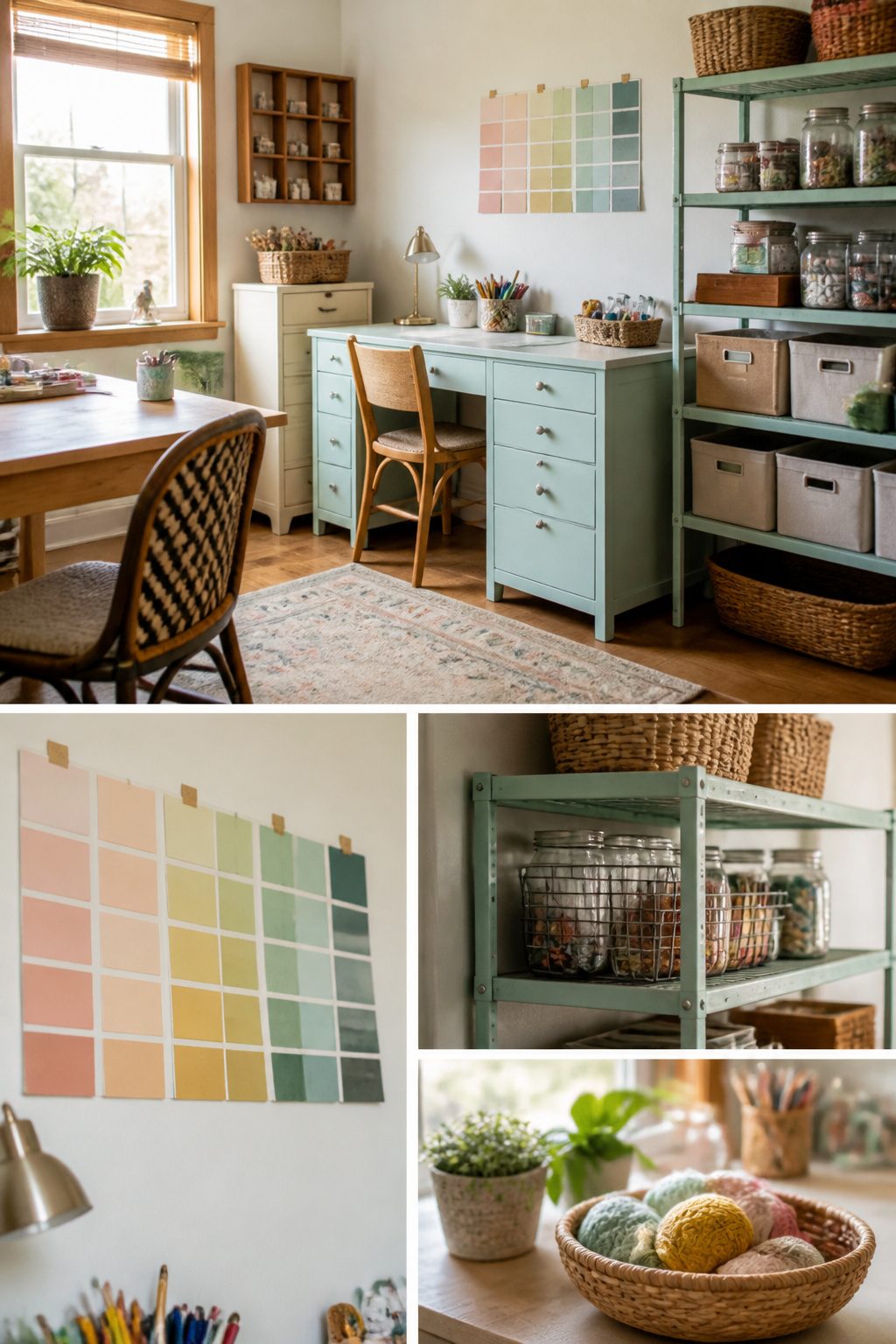
A full craft room redo on a few hundred dollars sounds tight until you spread it across three weekends and stop buying new. Thrift store desks and shelving run $15–$40 in most towns, and a quart of paint in whatever color your inspiration board demands will unify mismatched pieces into something that looks intentional. I learned the hard way that skipping primer on a laminate bookcase means the paint chips where scissors and tape dispensers knock it, so $8 for primer saves the $40 desk.
Dollar store bins work fine for thread spools and paint tubes once you label them. Plain paper labels and glue stick last about three months before the edges curl. Stick-on vinyl labels from the hardware aisle, cut with scissors to size, survive humidity and actually let you read what’s inside without pulling six bins out.
Color testing trips to hardware stores cost nothing. Those free paint sample strips, cut apart and taped to the wall where your daylight hits, show you what white actually reads as by 6 p.m. I once painted an entire accent wall "Soft Linen" that looked like institutional green once dry; the sample strip would have caught it in an afternoon.
What I Got Wrong First
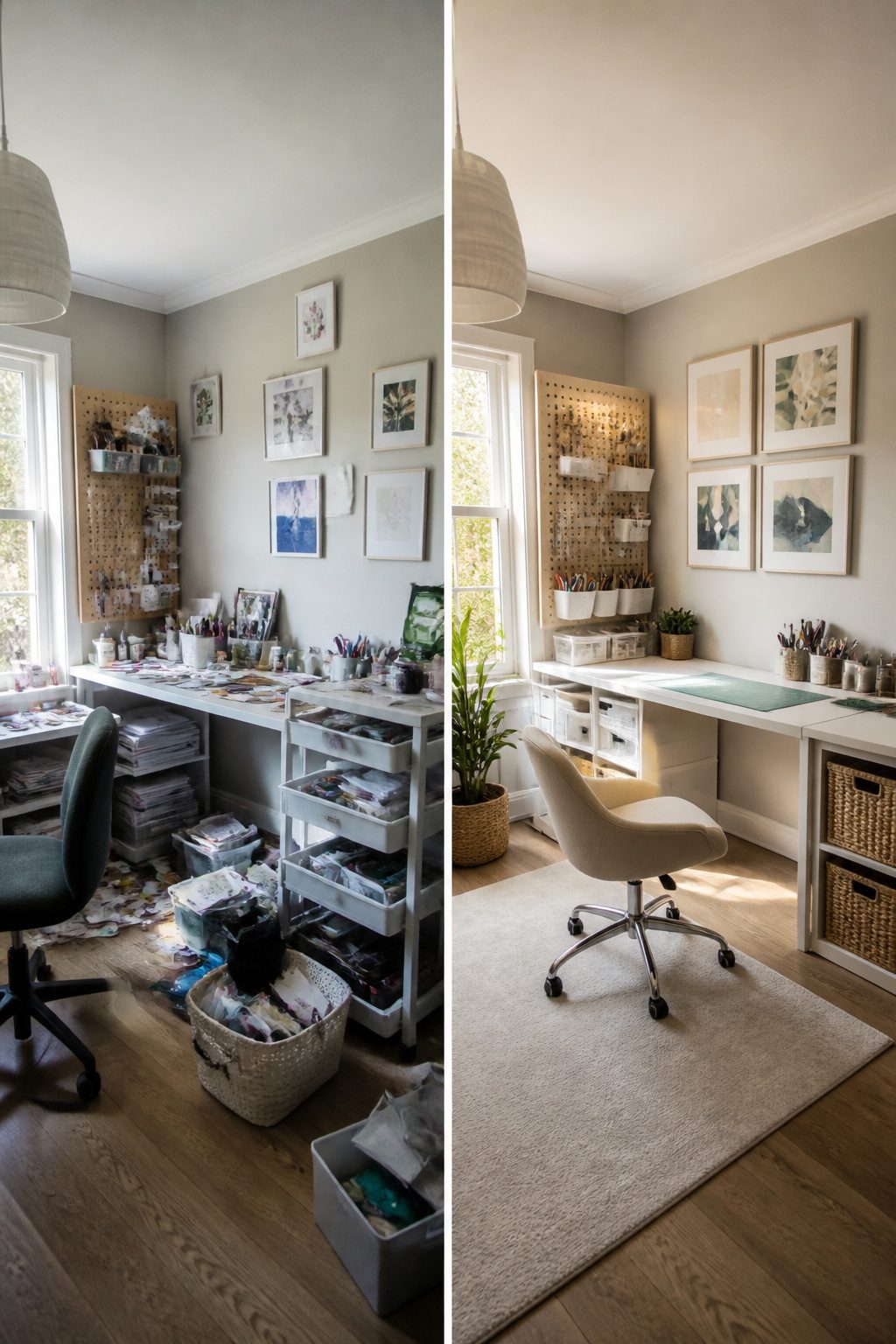
The first IKEA Kallax unit I hung in my old apartment went straight into drywall with the screws that came in the box. Two months later the seam between units gapped open like a split lip, and I found the top row had pulled half an inch off the wall. Wall anchors rated for the actual load, not the hardware included, would have saved the whole job.
Pegboard felt like the obvious next step. I painted mine with leftover semi-gloss trim paint because it was free and already in the garage. Within a week my rotary cutter and steel ruler had slid off three times; the gloss let everything skate. Flat or eggshell grips metal and wood handles without fighting you.
The gallery wall above my desk looked great in photos. It also looked great until I rolled my chair back to stretch and clipped a framed print with my head. I had measured the wall, not the room. Chair clearance is a measurement you take from the seat back to the wall, not the wall to empty floor. The frame left a gouge I still patch every spring.
Frequently Asked Questions
What are some craft room organization tips?
Smart storage solutions like cubby cabinets, labeled containers, and stackable bins keep supplies neat and easy to find. The IKEA Kallax unit works well because its 13-inch cubes fit standard bins without hunting for specialty sizes. For small tools, drawer inserts turn open cubes into shallow drawers so scissors and pins stay visible and reachable.
How do I decorate my craft room?
Personalize the space with framed art, quotes, and handmade pieces you have already finished. Thrift store frames in mismatched wood, unified with one can of spray paint, pull together for under $30 total. Mix in your own work, like a quilt block or a pressed flower arrangement, to remind you what the room is for when a project stalls.
What colors should I use in my craft room?
One strong color hit against a quieter background moves the mood more than a full repaint. Keep existing warm white walls and add a single bold piece, like a yellow rolling cart or a teal chair in Sherwin-Williams Tidewater at 75% strength. One bold piece usually outperforms a full palette overhaul, especially in a rental where walls must go back someday.
What kind of work surface do I need for a craft room?
A sturdy table at counter height, 36 inches, lets you stand comfortably without bending to the blade. A hollow-core door laid across two filing cabinets gives 80 inches of spread-out space for about $60, with drawer storage underneath. The whole setup moves with you if you rent, and replacing a gouged top costs another door.
How can I maximize storage in a small craft room?
Vertical storage solutions like pegboards and wall-mounted shelves free up floor space. Standard 24×48-inch pegboard panels run $15–25 and cover a generous stretch of wall above a worktable. Mount the board from your standing elbow height down, not from the ceiling up, so the lower third stays open for tools you reach for constantly.