
The difference between a cramped December and one that actually works is usually one measurement: the diagonal of your corner, not the wall length.
A slim 6.5-foot pencil tree at 28 to 32 inches wide fits where a full 7.5-footer blocks the door for three weeks.
What you already own, the sofa color, the rug, the art, sets the two- to three-color palette that keeps a small room from shrinking further.
1. Choose a Smaller Christmas Tree
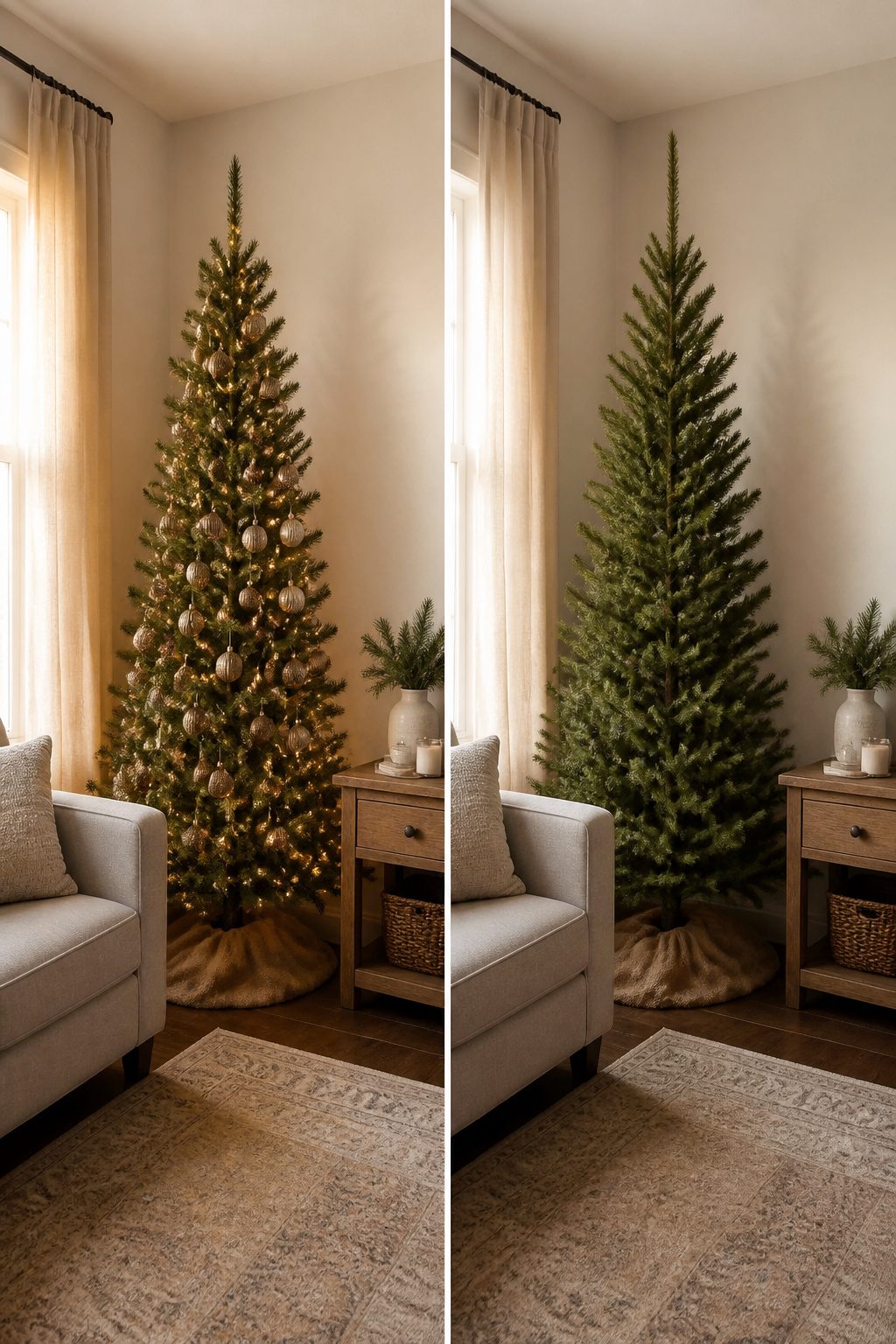
A slim tree standing 6.5 feet tall and only 28 to 32 inches wide at the base fills vertical space without eating the floor plan.
Measure the corner diagonal, not just the wall length; that diagonal tells you whether the branches will brush the sofa arm or block the walkway.
Tabletop trees under 24 inches run $15 to $50 and sit on surfaces you already own, while pencil varieties in the slim range cost $40 to $120 and stake out territory in corners that full trees cannot touch.
In 2019 I bought a full 7.5-footer that blocked the front door for three weeks.
The base alone spread past 40 inches, and stepping around it with groceries turned into a seasonal sport. That tree went to my sister’s house the next year, and I have not repeated the mistake.
A slim replacement in the same corner left the walkway clear and still held enough lights and a small topper to read as the room’s center.
Half trees, flat on one side, press against walls if you want height without depth.
White or flocked finishes read as smaller than green against pale walls, though classic green with traditional ornaments wins if the rest of the room stays neutral.
One rule I follow now: the tree’s width at the widest ring must clear any path by at least six inches, or the hassle outlasts the sparkle.
2. Use Vertical Space
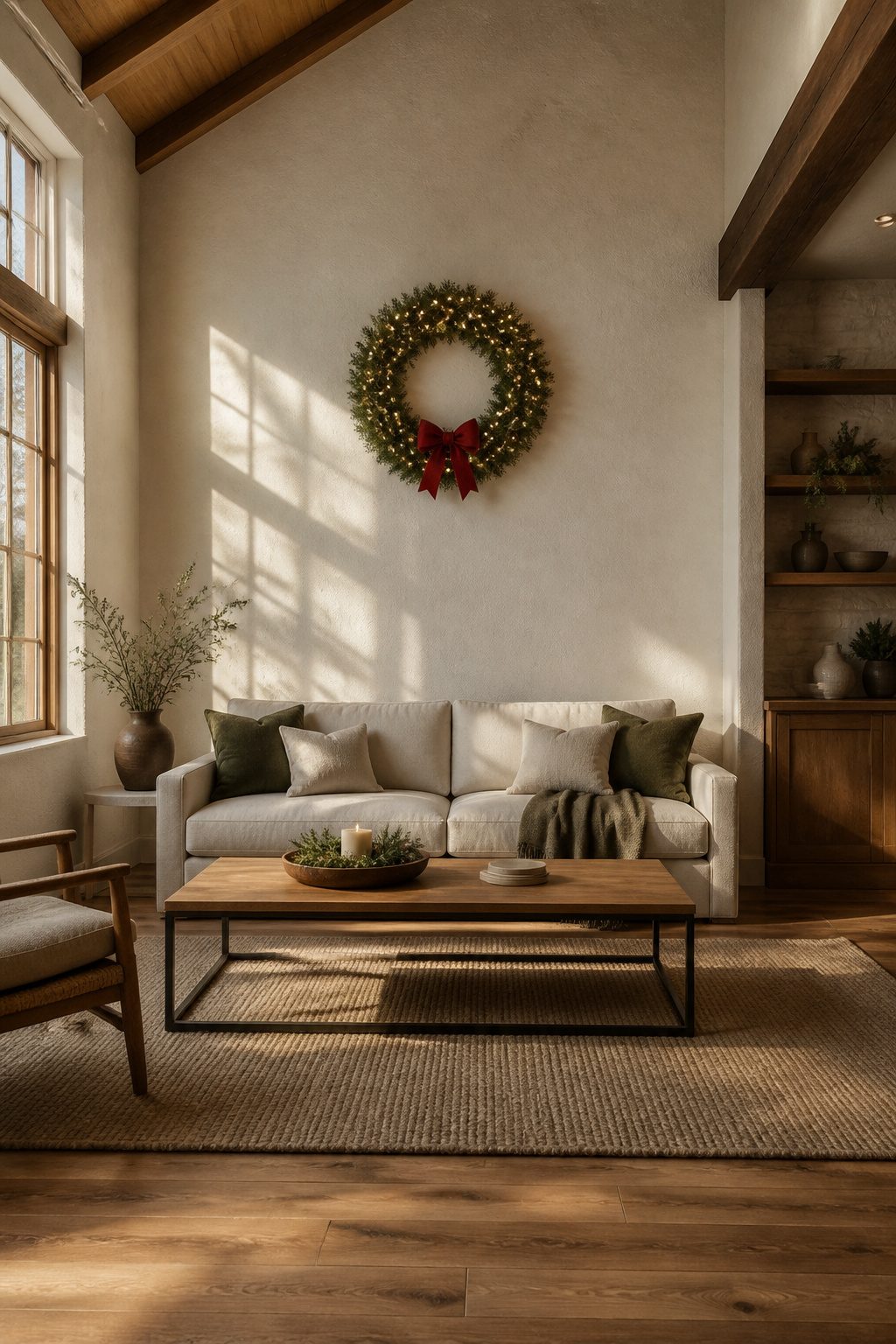
Wall-mounted wreaths pull the eye upward without costing an inch of floor space.
Wire wreath forms stay light enough to hang on a single nail or a removable hook, though the hook only works if your walls are smooth. Textured walls need a different plan.
In 2021, I tried Command strips on a stippled ceiling and woke at 2 AM to garland and broken glass on the coffee table. The adhesive held the paint, not the wall behind it.
Ceiling-hung garlands solve the same problem higher up. Clear fishing line rated to 20 lb disappears against white ceilings and carries more weight than it looks like it should.
A tension rod tucked inside a window frame or above a door casing gives you a solid anchor for greenery across a span, no drilling needed, which matters in a rental where patch-and-paint is another weekend you do not have.
The real gain is where your eye lands. Floor space stays clear for the furniture you already own, and the room reads taller because the decoration sits above head height.
That vertical path works especially well in small living rooms where every horizontal surface is already doing two jobs.
3. Keep It Simple
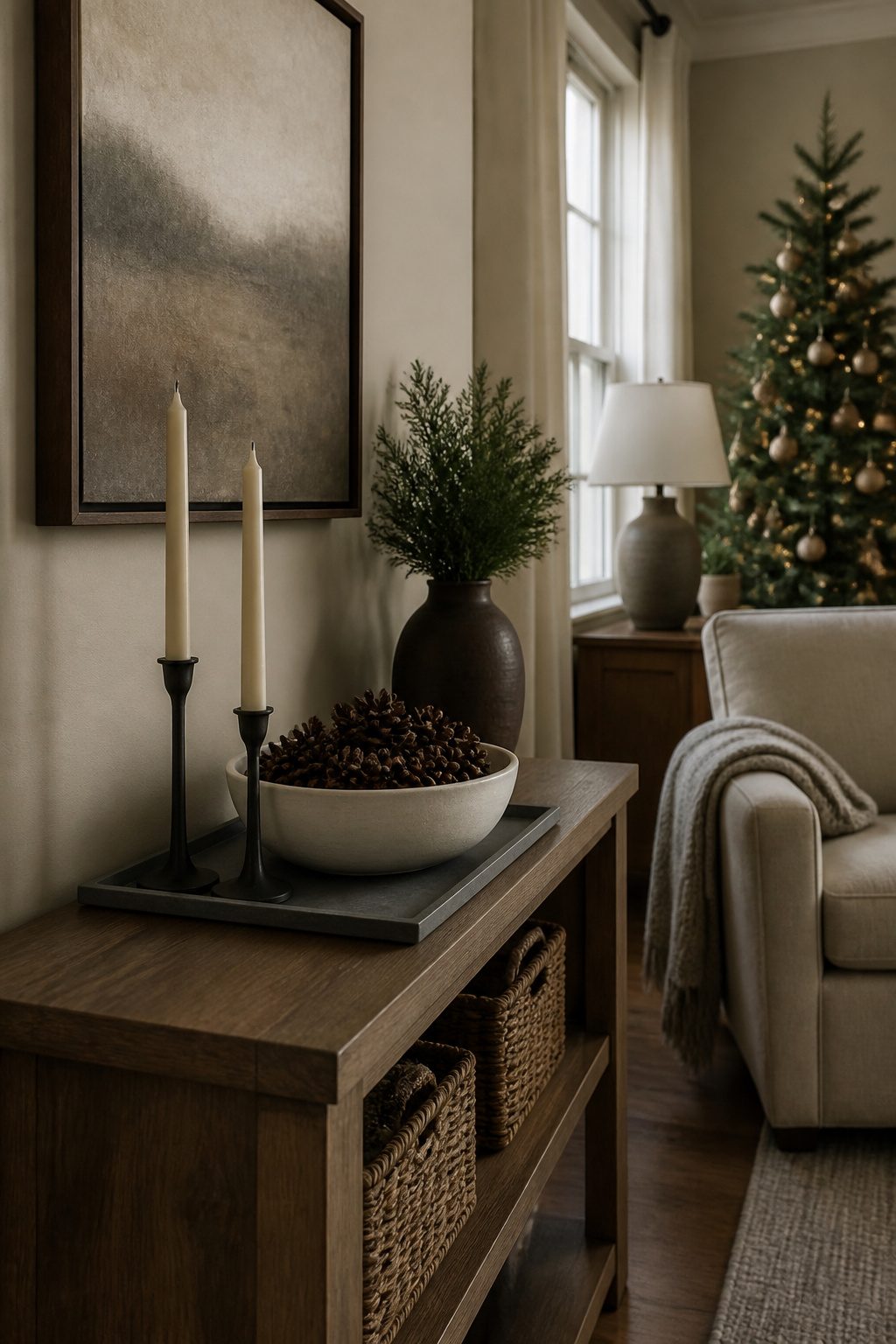
The year I tried to fit eleven Christmas items onto a 24-inch console table, I learned what clutter actually looks like. It was 2020, I had already boxed up the everyday stuff, and somehow the surface still looked crowded.
The problem was the count itself: I was treating each pinecone as its own object instead of the bowl holding them as one item on the three-item rule.
Now I clear the room before anything with a hook or a candle comes out of storage.
A small living room does not get bigger because you shoved the mail pile into a drawer; the space has to breathe first, or the decorations compete with yesterday’s living.
Three objects per surface sounds severe until you realize a clustered grouping reads as one gesture, and a single strand of garland counts as one item even if it drapes three feet.
Color restraint is what makes the limit stick.
Lucy Uren at Rowen & Wren builds her palettes to flow house-wide, and I have borrowed that: when the red appears only in the stockings and the tree ornaments, the three objects on the mantel do not need to shout.
Muted tones against the green you already own keep the eye from bouncing around a room that has no corners to spare.
4. Stick to a Cohesive Color Palette
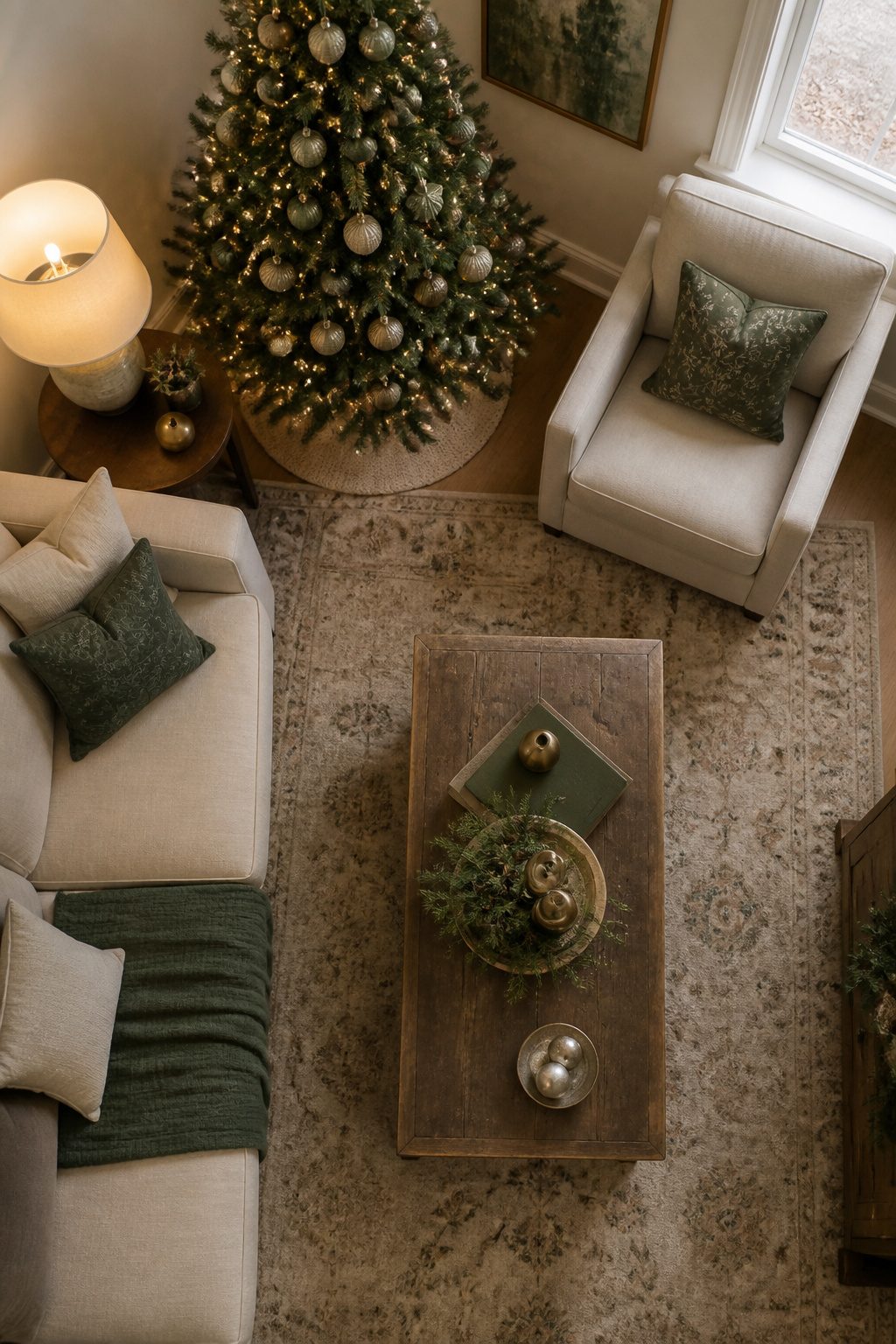
The 2018 Christmas still haunts me: red, green, gold, silver, and blue all competing in a 12-by-14-foot living room.
The tree looked like a department-store clearance rack, and the room felt smaller than it ever had. Two to three colors maximum is the rule I learned the hard way, and it holds for every surface including the ornaments.
Choosing the palette starts with what you already own. The sofa color, the rug, the art on the walls, these are fixed for the season unless you have a much bigger budget than mine.
My standing combination is cream, forest green, and tarnished brass, picked because the cream matches my walls, the green nods to a velvet chair I bought used in 2019, and the brass handles on the floor lamp tied the third color in without buying anything new.
The tree carries the same three colors in its ornaments; anything else gets stored in the basement that year. A small room leaves no place for the eye to rest if the palette breaks halfway across the space.
5. Create Festive Vignettes
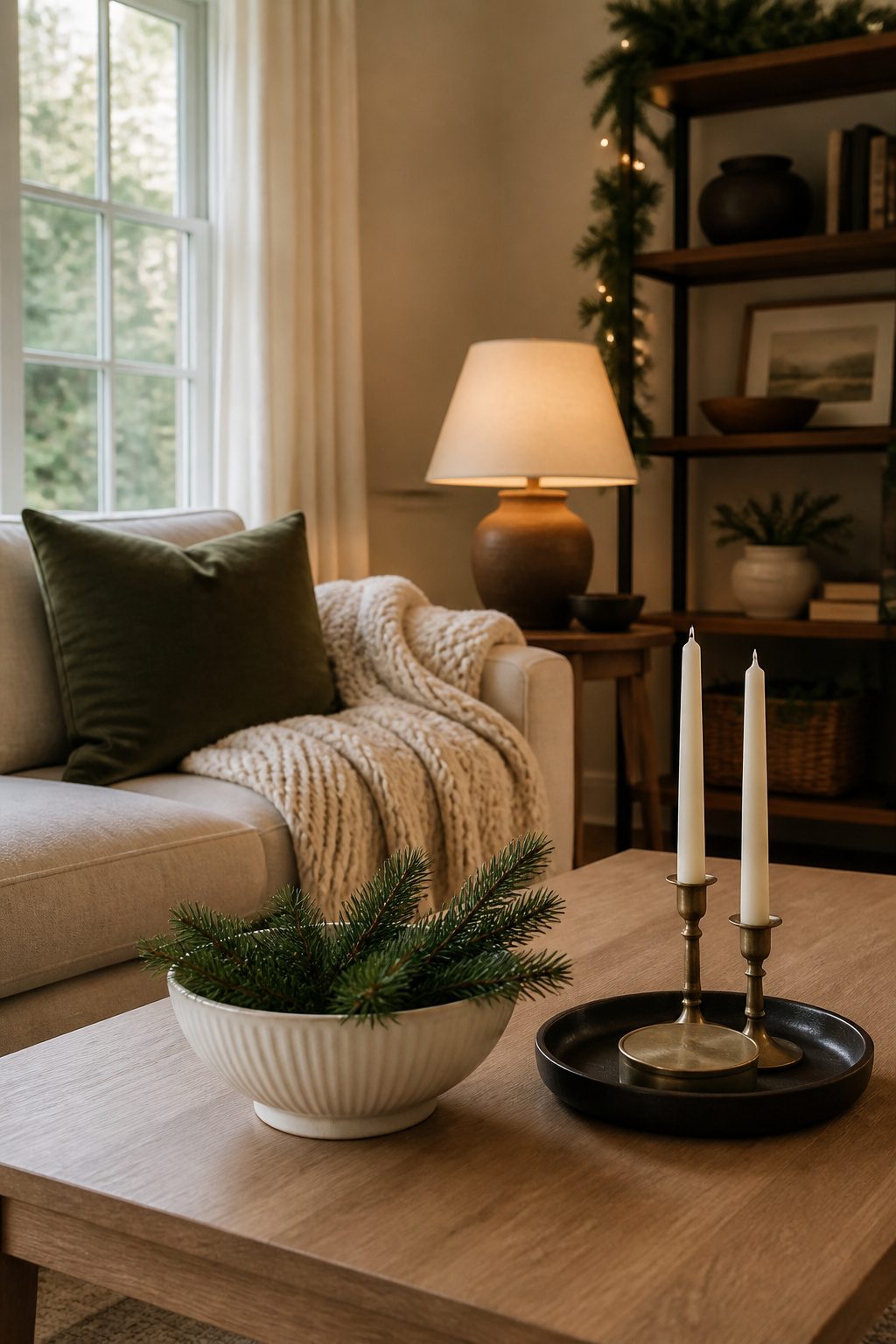
A single ironstone bowl, two taper candles, and a sprig of cedar on my coffee table carried the whole room in 2022.
The grouping sat on a tray no larger than a sheet of paper, and guests commented on it more than the tree. That is the power of a vignette done right: it reads as intention, not accumulation.
The tallest piece in any surface grouping should stay under 12 inches when the surface itself is under 18 inches deep.
Anything taller fights the ceiling and turns the table into a pedestal. I learned this the hard way with a pinecone topiary that towered at 16 inches and blocked sightlines across the sofa until I swapped it for a shorter candle.
Negative space between objects matters more than the objects themselves.
Three items with breathing room between them look curated; five crammed together read as clutter, no matter how nice each piece is. On a shallow windowsill, that usually means two things plus the ledge itself as the third visual anchor.
Battery fairy lights tucked behind the bowl, or a narrow velvet ribbon looped through a hanging ornament, add the color and height variation that Gisela Graham’s vignettes rely on.
Real greenery works, but keep candles clear of it. Flameless tapers solve the safety question if you have pets or small children, and the glow is indistinguishable after dusk.
6. Add Natural Elements
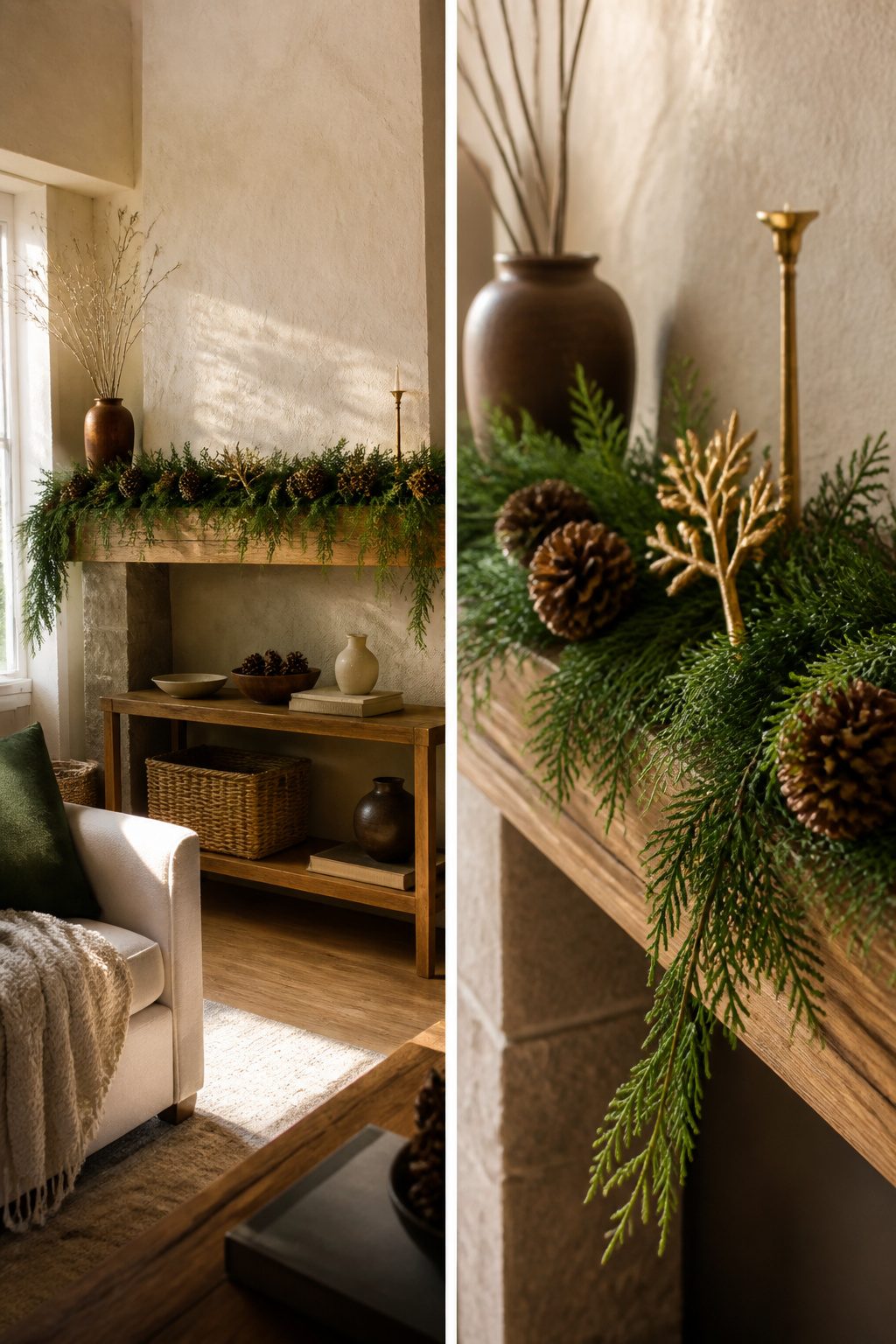
Fresh grocery-store greenery runs $8 to $15 a bunch, and in a small living room a single bunch cut apart fills more nooks than you’d expect.
I lay stems along mantels, tuck sprigs into existing vases, and wire short pieces to curtain rods where they read as garland without the bulk.
Water keeps cut cedar or fir crisp; without it, three days is the honest limit before browning sets in.
Cedar dries down to a brittle bronze that still looks intentional months later, while eucalyptus sheds its little caps everywhere, a fact I learned after vacuuming twice a day for a week.
The pinecones came from a park walk, baked at 200°F for 30 minutes after the aphid incident of 2017.
That year I skipped the oven, set a bowl of cones on the radiator, and spent January chasing tiny green insects across the sill.
Now the baking is non-negotiable. A can of matte gold spray paint turns bare branches into something that catches lamplight without glitter; the paint costs about six dollars and the branches are free.
I spray outside on cardboard, let them dry overnight, and stand them in a weighted vase where the vertical line draws the eye up without taking floor space.
7. Use Multi-Functional Decor
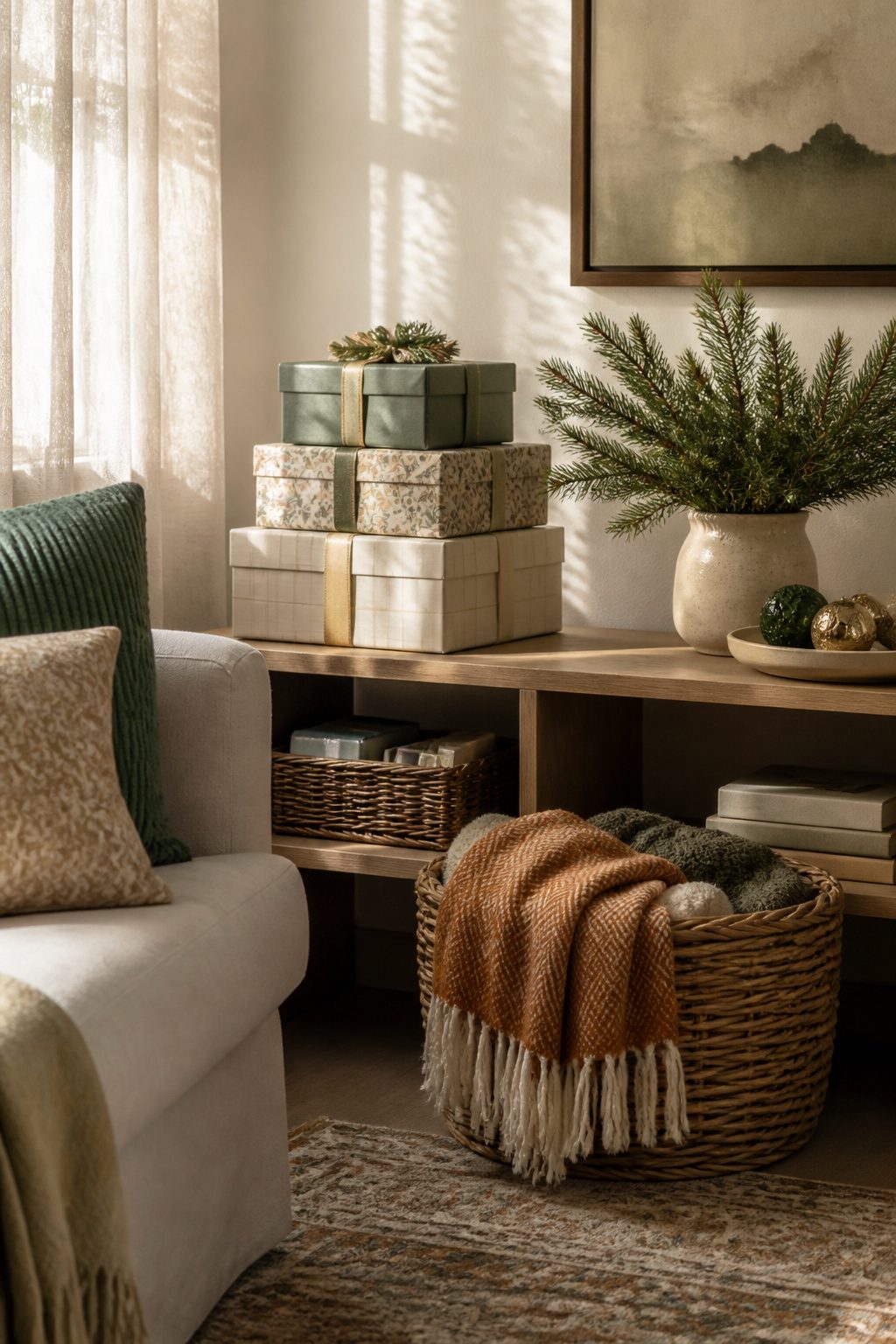
Lidded boxes that look like wrapped gifts sit on my shelf from December through February, then flip to plain linen for the rest of the year. The same set holds remotes in July and tree ornaments in January.
A woven basket under the console hides wrapping paper rolls when the tree skirt drapes over it, so that corner works as storage eleven months and decoration for one.
Pillow covers over existing inserts run $8–$14 each, against $25 or more for new stuffed pillows. I bought three plaid covers two winters ago and swap them onto the same down forms I use year-round.
The math on that one purchase: roughly thirty cents per use if they last five seasons, versus a dollar-plus per use for cheap novelty pillows that flatten out.
My wall-mounted advent calendar, the kind with numbered pockets, held seed packets by March and became a mail sorter by June.
That shift only works because the original design was plain wood, not overtly Christmas. A felt Santa version would have gone to closet jail January 2.
8. Rearrange Furniture First
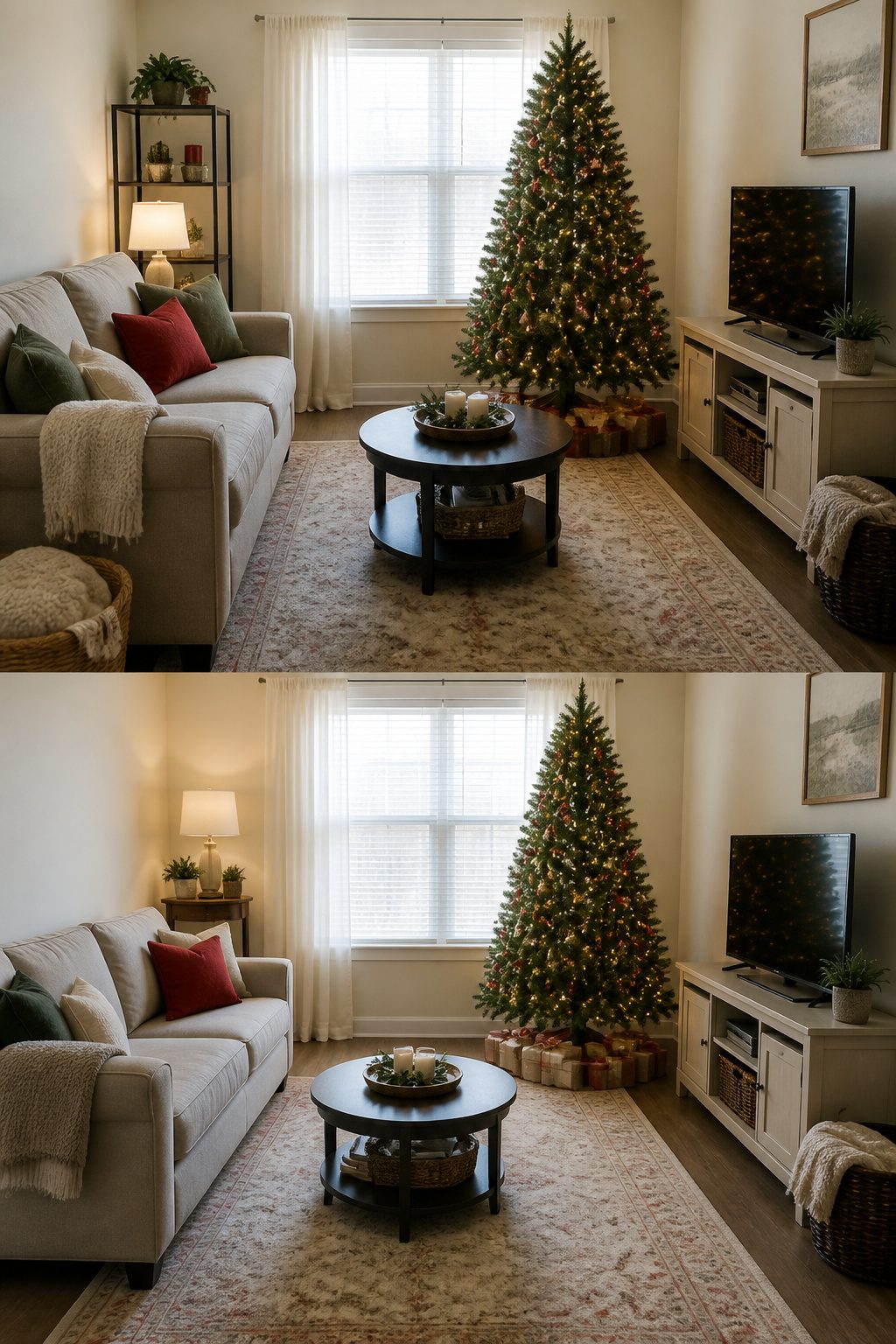
The year I tried to wedge a tree between the sofa and the wall without shifting the sofa six inches first, I spent three weeks of December squeezing past branches every time I stood up.
Move the furniture before you open a single decor bin. That six inches of sofa slide would have cost nothing and saved the whole arrangement.
Temporary removal matters more than rearrangement. One side table and the floor lamp I never actually use went into the bedroom for the month, and the room immediately felt larger than it does in July.
The passages I read while planning this out suggest keeping main traffic paths at least 30 inches wide and secondary walkways no narrower than 18 inches.
Those numbers track with what I noticed: the 28-inch gap I left one year felt fine until guests arrived with coats and plates, then turned into a bottleneck.
Store the displaced pieces in a bedroom or closet for December. Putting them back takes ten minutes in January, and the open floor does more for the room than any strand of lights.
9. Layer Cozy Textiles
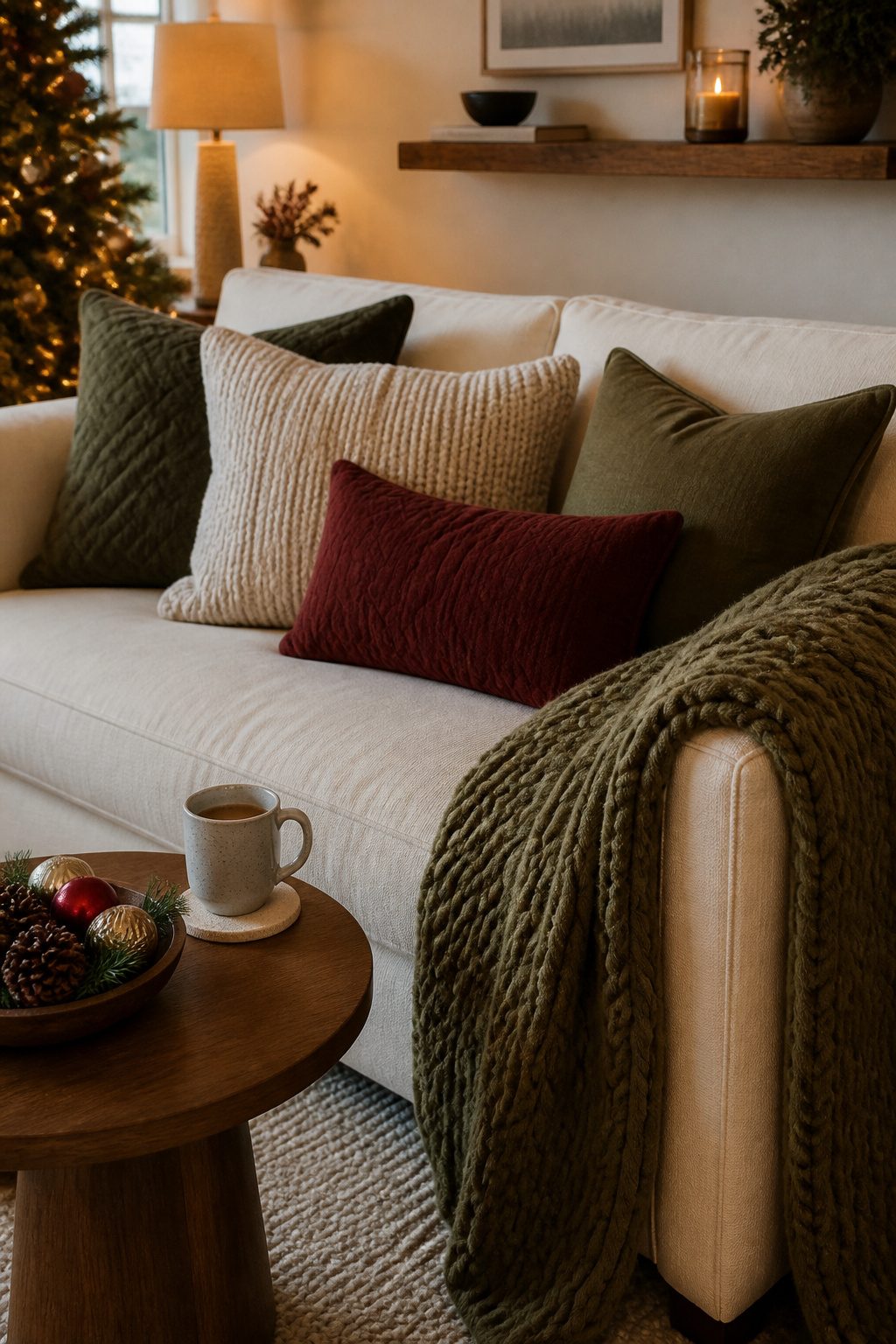
Pillow covers beat full replacements for anyone storing holiday gear in a closet or under a bed.
Two covers fold flat and slip into one bin; three standalone pillows need three. I learned that the hard way after a set of stuffed plaid rounds ate half my shelf for eleven months.
Chunky wool and quilted cotton read winter without shouting it.
Velvet works too, though the cheaper poly-blend pills where elbows rest. The throw to skip is anything labeled "faux fur" that turns out to be acrylic.
Mine sparked against the couch every time I shifted, then shocked the cat. It went back in the bag by December third.
Washing matters more than you’d think with daily use. Mid-season, cold water, line dry if the tag allows it.
The wool I have shrank to lap-blanket size after one dryer cycle. Now it lives on the dog’s bed, which is at least still in the living room.
10. Hang a Mirror to Expand the Room
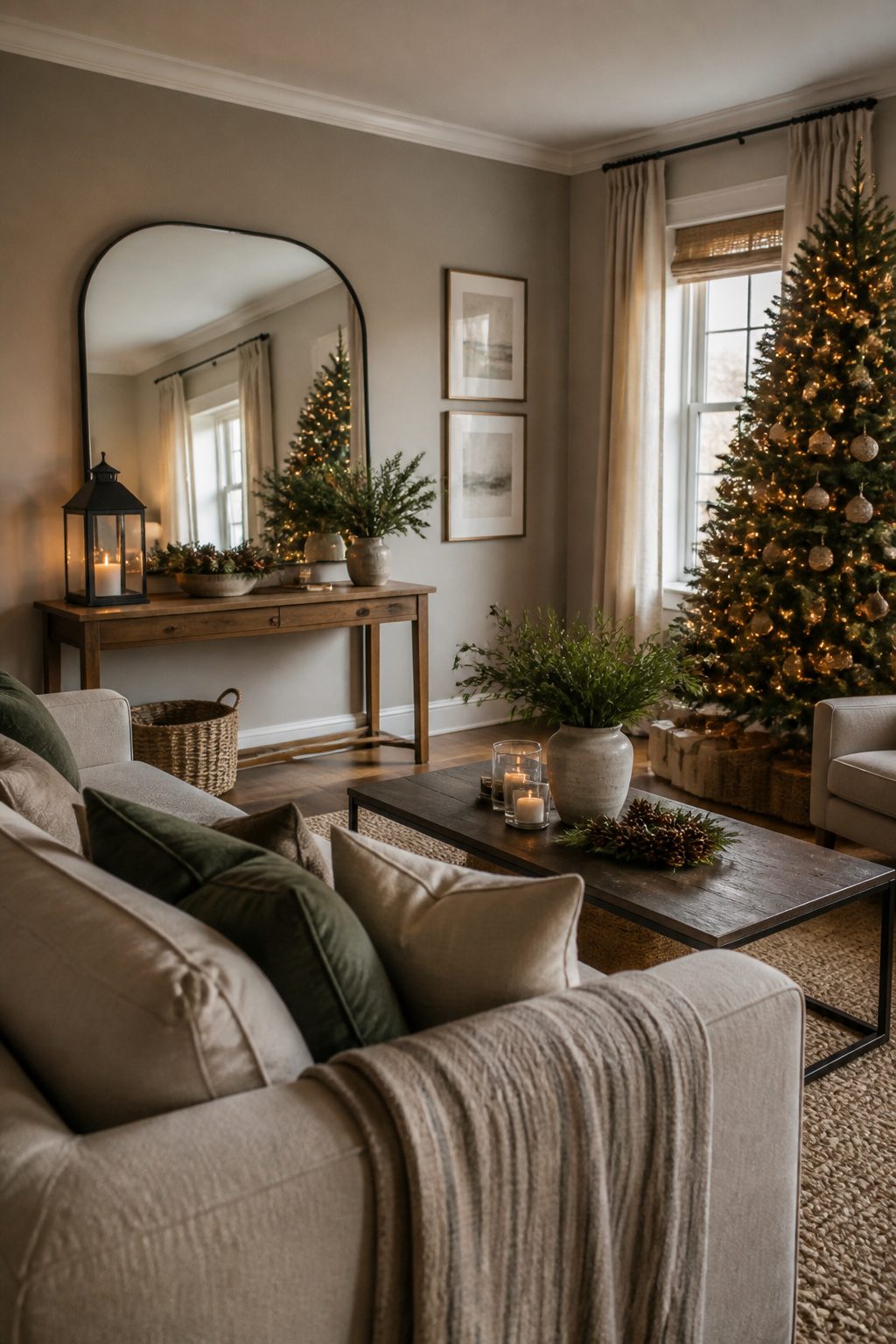
A mirror hung opposite the window catches afternoon light and throws it back across the room, which matters more in December when daylight disappears by five.
The placement is the whole trick. Random walls just show you the sofa again; the window-facing position borrows the outdoors and makes the wall seem to hold another room behind it.
Size rules matter more in small spaces, not less.
The mirror should span at least two-thirds of whatever sits beneath it. I learned this the hard way in 2019 with a twenty-inch flea-market mirror above a four-foot console.
The gap on each side chopped the wall into three competing pieces, and the room felt smaller, not larger. I swapped up to a thirty-two-inch version the next year, thrifted for $12 and sprayed the frame matte black that same afternoon.
At night the payoff doubles. One mirror facing your candles or string lights registers as two sources of glow, which is the cheapest way to build warmth in a room that cannot fit extra lamps.
The reflection does not duplicate wattage, but your eye reads it that way, and the space fills out.
11. Use Warm Lighting
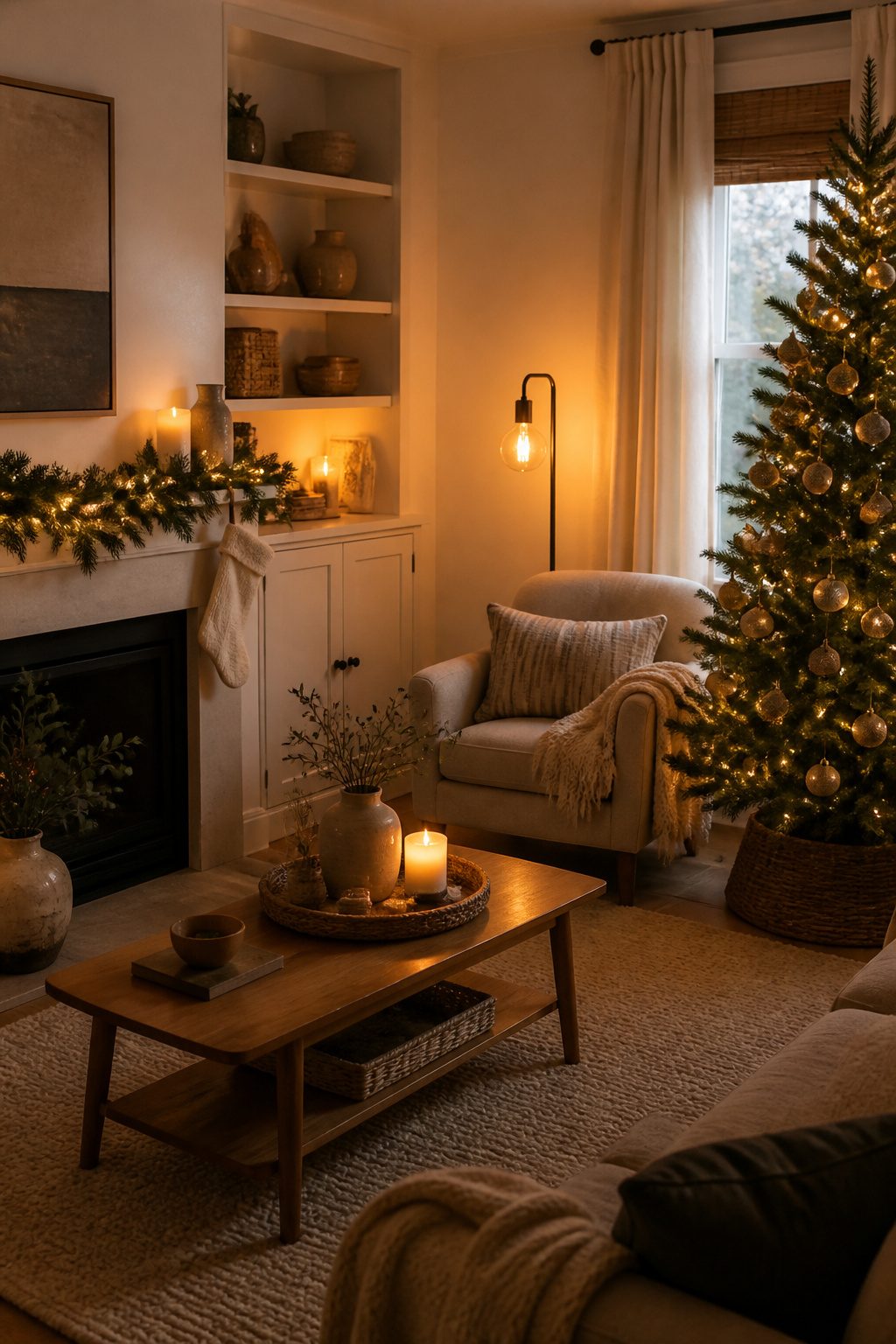
The year I bought cool-white string lights, my living room looked like a dentist’s office waiting area for six weeks straight.
2700K is the temperature that reads as firelight, and anything bluer than that fights the whole point of a small room at Christmas.
Battery candles with a 6-hour timer, 18 hours off, run about $12 to $18 for a set of six.
I set mine on the bookshelf and the windowsill and forget them. One floor lamp with an amber bulb, dimmed to about elbow height, does more than the overhead fixture ever could.
The trick is keeping the light source within four feet of where someone actually sits. Overhead bulbs alone just flatten the room and remind you how small the ceiling is.
12. One Small DIY Project
Three years back, I spent an afternoon rolling cinnamon dough into stars and hearts, baking them low and slow, threading ribbon through the holes while they were still warm.
By New Year’s they had turned into a bowl of brown crumbs and a kitchen that smelled like a expired candle. One handmade element per room is the limit, not a craft fair booth.
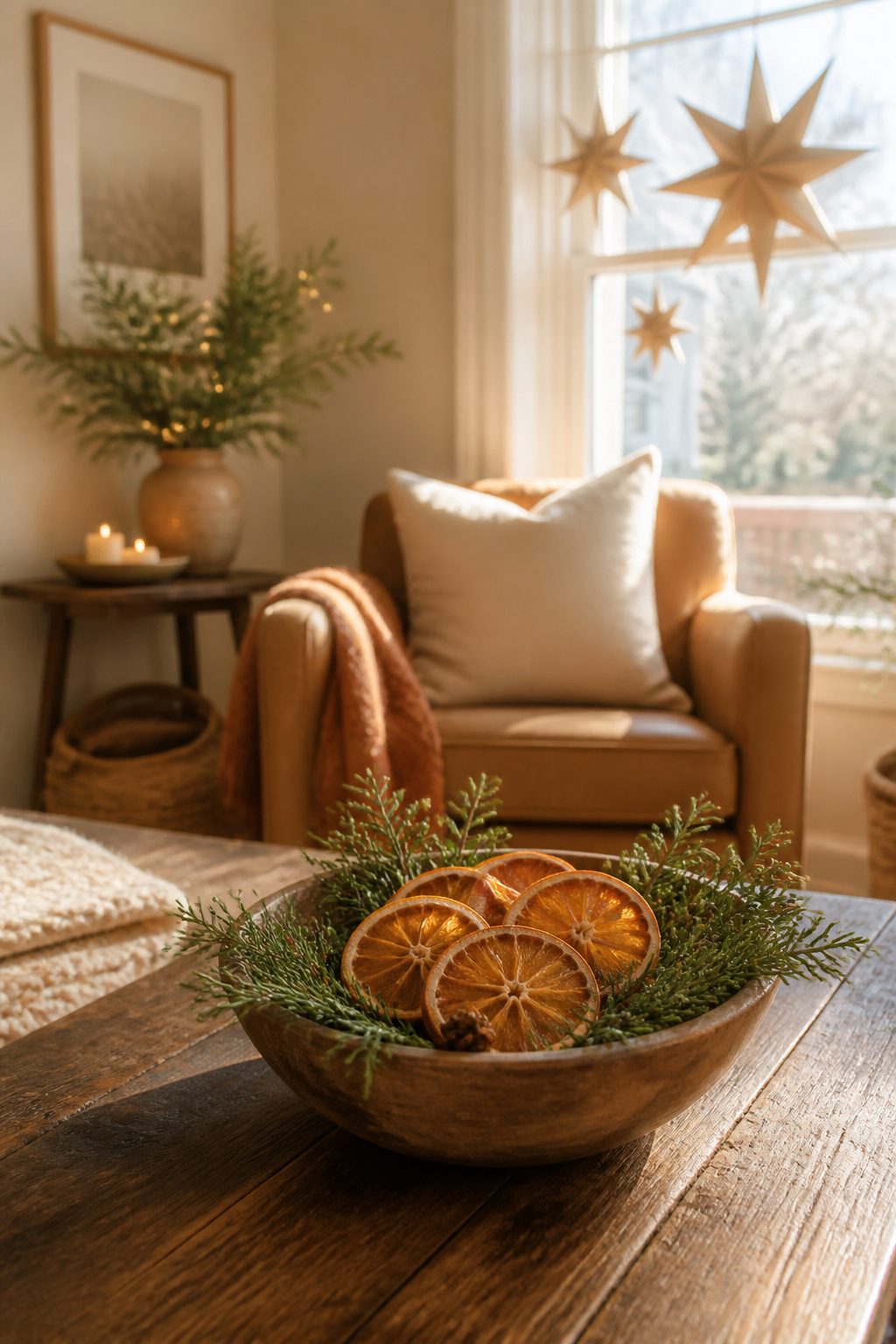
What actually survives the season costs less and takes under forty-five minutes. Paper stars folded from old sheet music, strung on regular thread, hold their shape through January.
Orange slices go into the oven at 170°F for four hours until they are stiff and translucent; the house smells like actual citrus, not a factory approximation.
A clove-studded orange, studded in a simple spiral, lasts weeks on a side table and costs maybe two dollars in fruit and spice.
I stop at one. The paper stars over the window, or the orange slices on the mantel, or the pomander on the bookshelf.
Any two and the room starts looking like a project, not a living room. Any three and you are back to the crumb bowl, just slower.
13. Decorate Unused Spaces
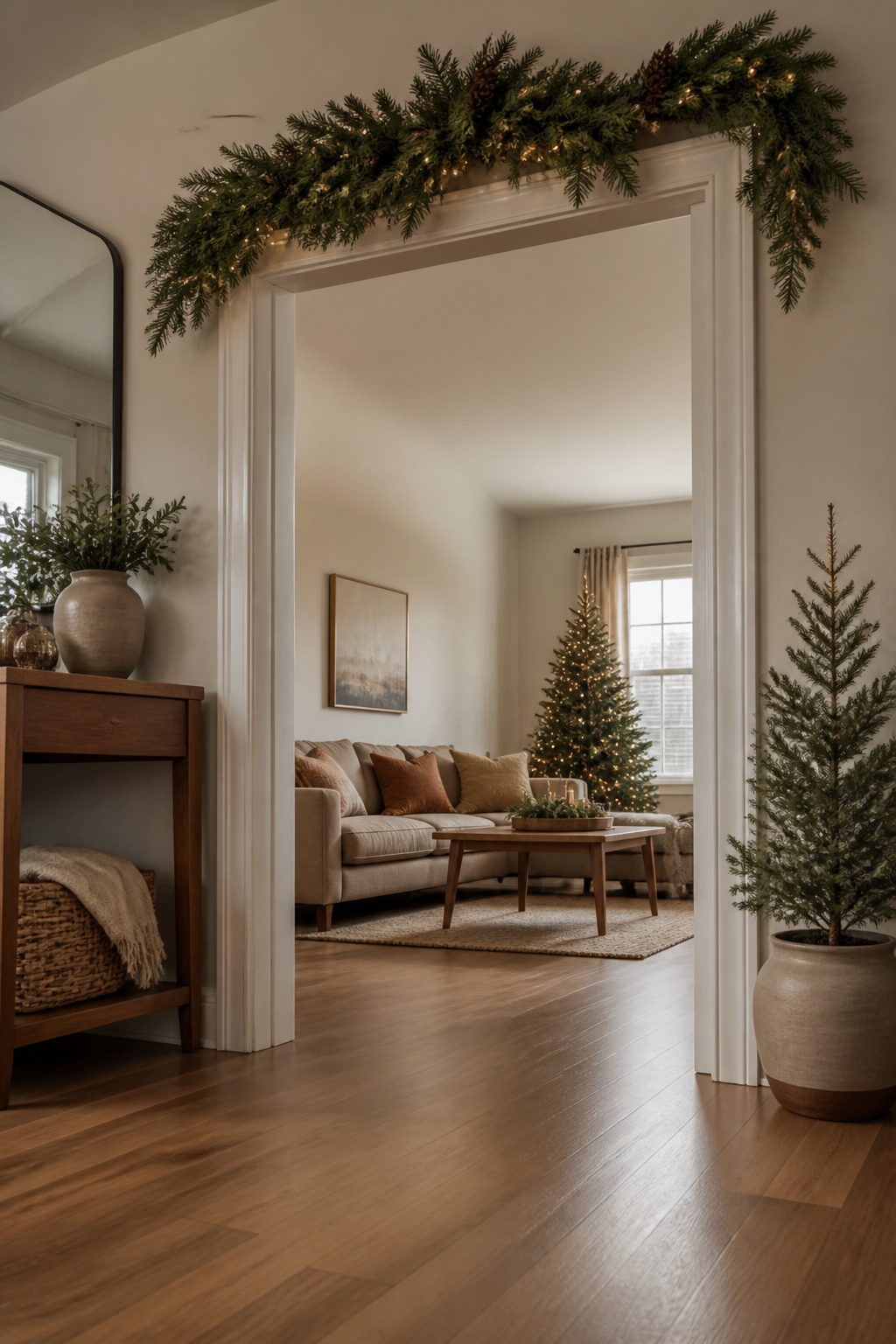
The tops of doorways are dead space eleven months a year, which makes them fair game for December.
In my old apartment, a single garland looped over the bathroom doorframe was the thread that tied the living room to the rest of the place.
Without it, the tree sat in one room and the wreaths in another and nothing spoke to each other.
The back of the front door takes a slim wreath or a swag just fine, as long as you can still open it fully.
Fire-door routes are the hard stop: nothing on those, and nothing hanging below 80 inches in any main path where someone tall might catch it.
Stair railings work if you have them, but one unexpected vertical spot beats scattering thin garland across every threshold.
Jess Morris wrapped a doorway in handmade garlands as the single dramatic gesture in a studio, and the effect carried the whole room.
"Less is more in creating a beautiful space in small quarters. I like to use one main feature piece or material and add a few accents in."
Pick your one doorway, choose real or faux greenery, and let the rest of the apartment stay quiet.
What to Declutter Before You Start
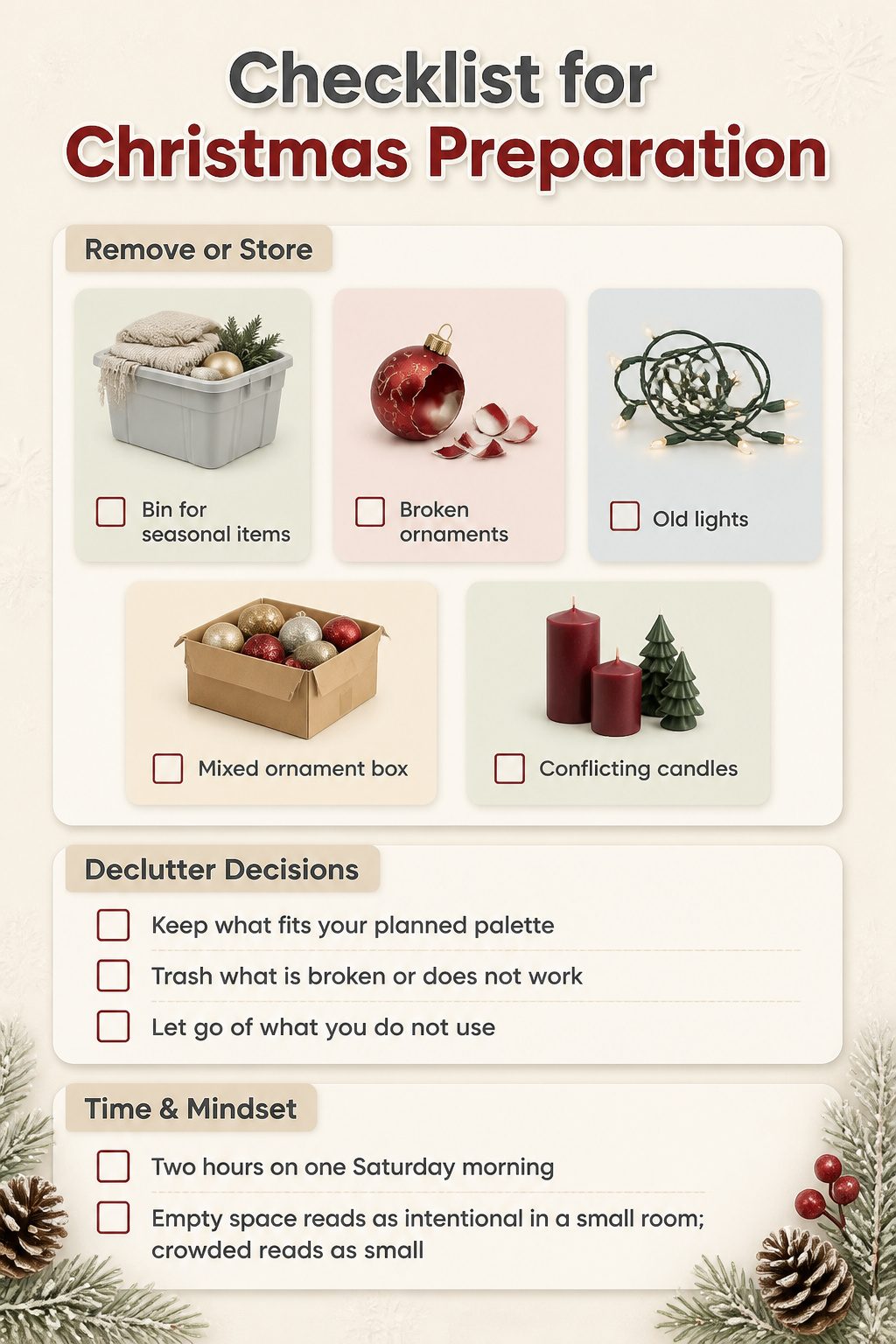
The year-round objects sitting on your mantel, side tables, and windowsills need to go somewhere else for December.
A bin in the closet works fine; the coffee table books and that ceramic bowl you got in 2019 can live there until January.
Broken ornaments and the strand of lights that only half-lit last year belong in the trash, not in a box you pretend you will fix.
The mixed ornament box from 2019 that never got sorted is probably not worth sorting now. If your planned palette runs silver and white, the burgundy pillar candles and forest green figurines will fight it, so pull those too.
Two hours on one Saturday morning clears enough surface area for the vignettes to come. Empty space reads as intentional in a small room; crowded reads as small.
My Weekend Timeline
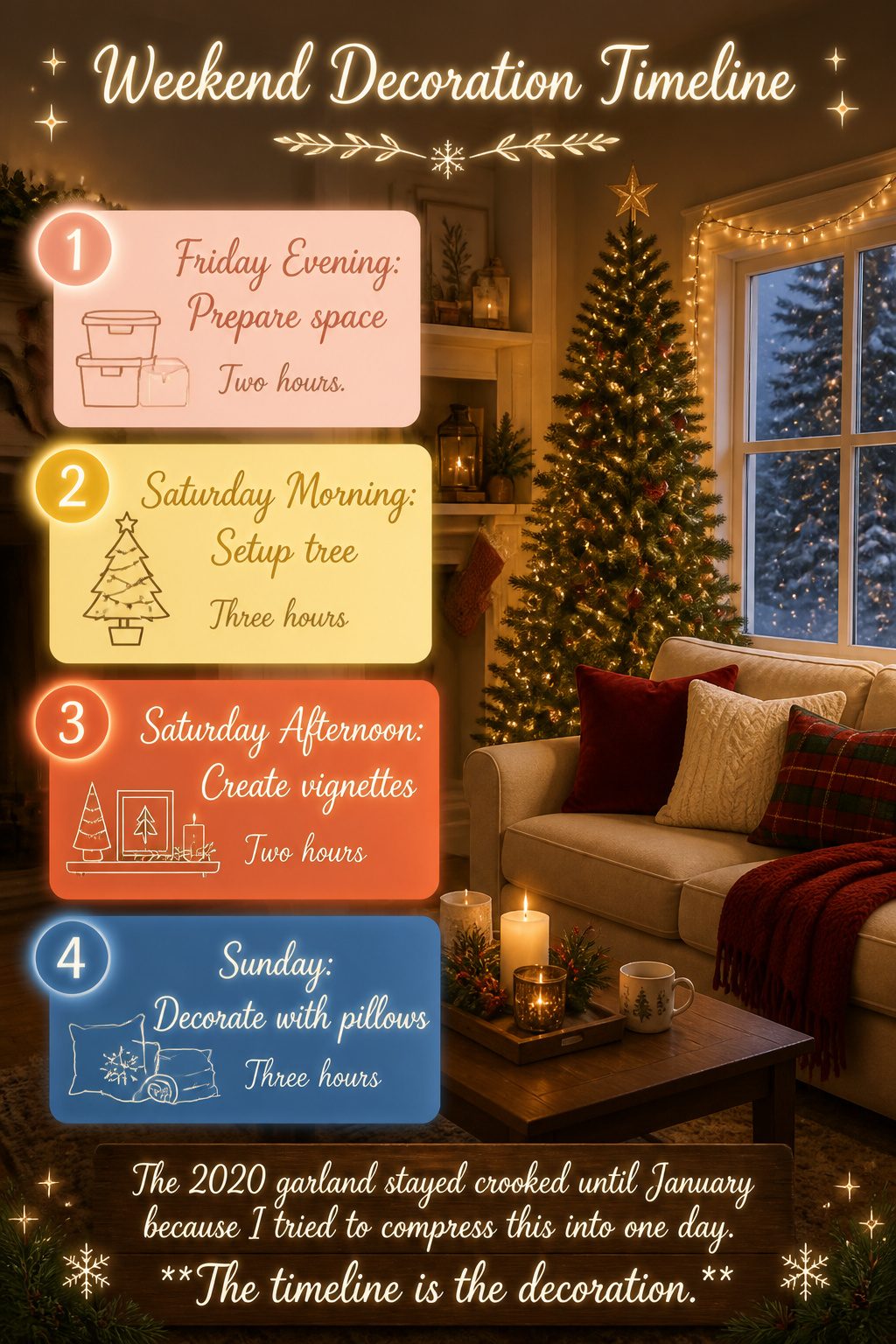
- Friday evening, two hours. The bins come down, the coffee table slides toward the sofa, and the magazine pile that lives on the floor vent gets boxed. Corners and window areas open up for what comes next.
- Saturday morning, three hours. The tree goes in the corner with the open sightline, lights first so you are not threading them through branches later. Battery fairy strings run along the top of the window frame, drawing eyes up.
- Saturday afternoon, two hours. Shelves and the mantelpiece get their small vignettes: standing decorations, a strip of greenery, height varied so nothing reads as a flat line. Velvet ribbon on anything that hangs.
- Sunday, three hours. Pillow covers swap out for the holiday color story, one throw folded over the sofa arm, and the single DIY project that was supposed to happen Saturday.
The 2020 garland stayed crooked until January because I tried to compress this into one day. The timeline is the decoration.
Where I Bought What Lasted
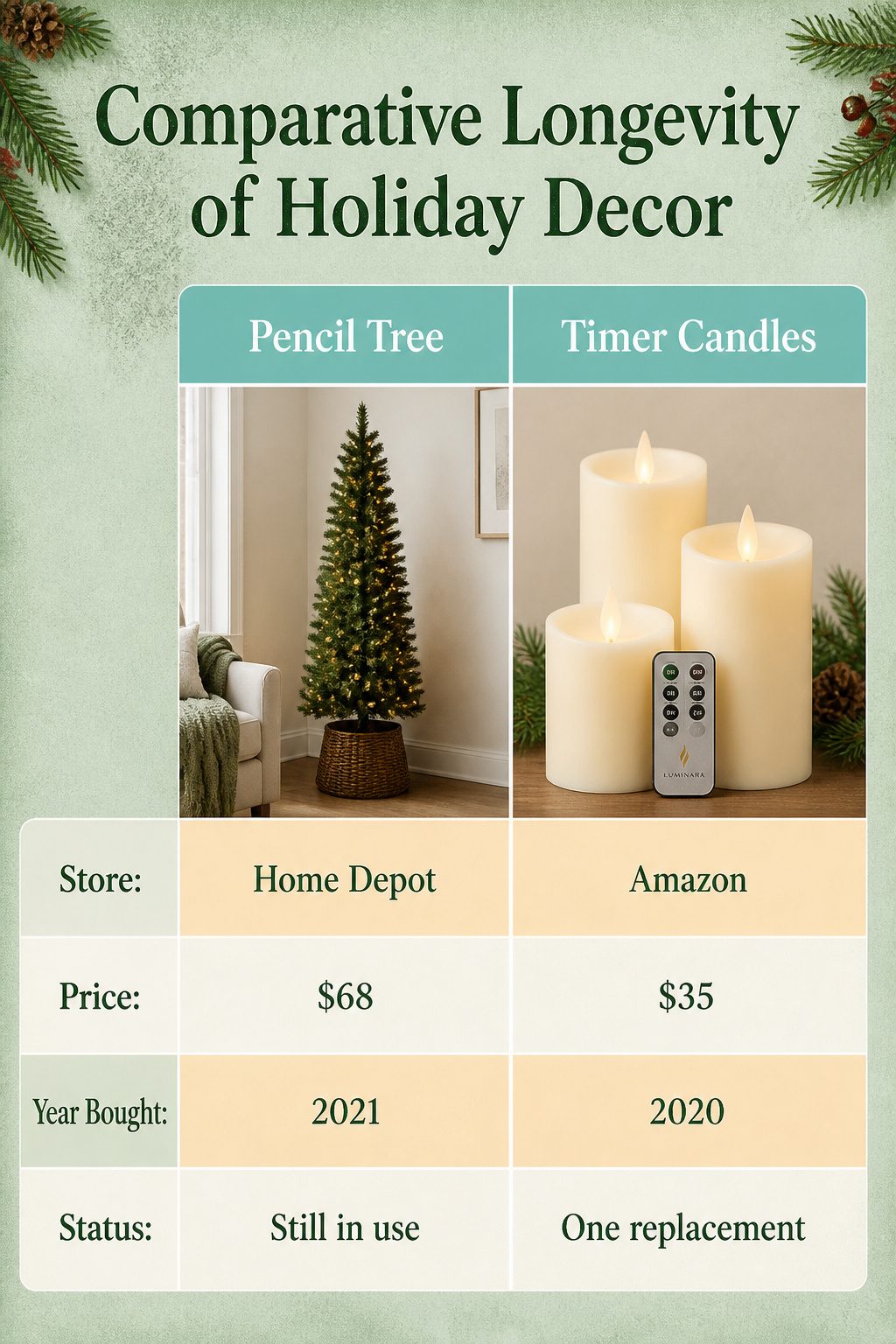
A pencil tree from Home Accents Holiday has survived four seasons in my living room corner. The 6.5 ft version at Home Depot ran $68 in 2021 and still fluffs out fine after storage.
Timer candles from Luminara cost more upfront, around $35 for a set on Amazon, but one battery change in five years beats crawling behind furniture every evening.
| Item | Store | Price | Year bought | Status |
|---|---|---|---|---|
| 6.5 ft pencil tree | Home Depot | $68 | 2021 | Still in use |
| Timer candles (set) | Amazon | $35 | 2020 | One battery replacement |
| Pillow covers | IKEA | $9 each | 2019 | Faded slightly |
| Wire wreath form | Dollar Tree | $1.25 | Annual | Replaced yearly |
IKEA’s Vinterfjäril covers at $9 each have dulled a little since 2019, though the zippers still work. The Dollar Tree wire frame I rebuy yearly at $1.25 because bending last year’s out of shape takes longer than the trip.
What I stopped buying: discount store string lights averaging two seasons before half the strand goes dark. The $12 saved upfront cost more in replacement runs.
Sustainable Swaps That Saved Money
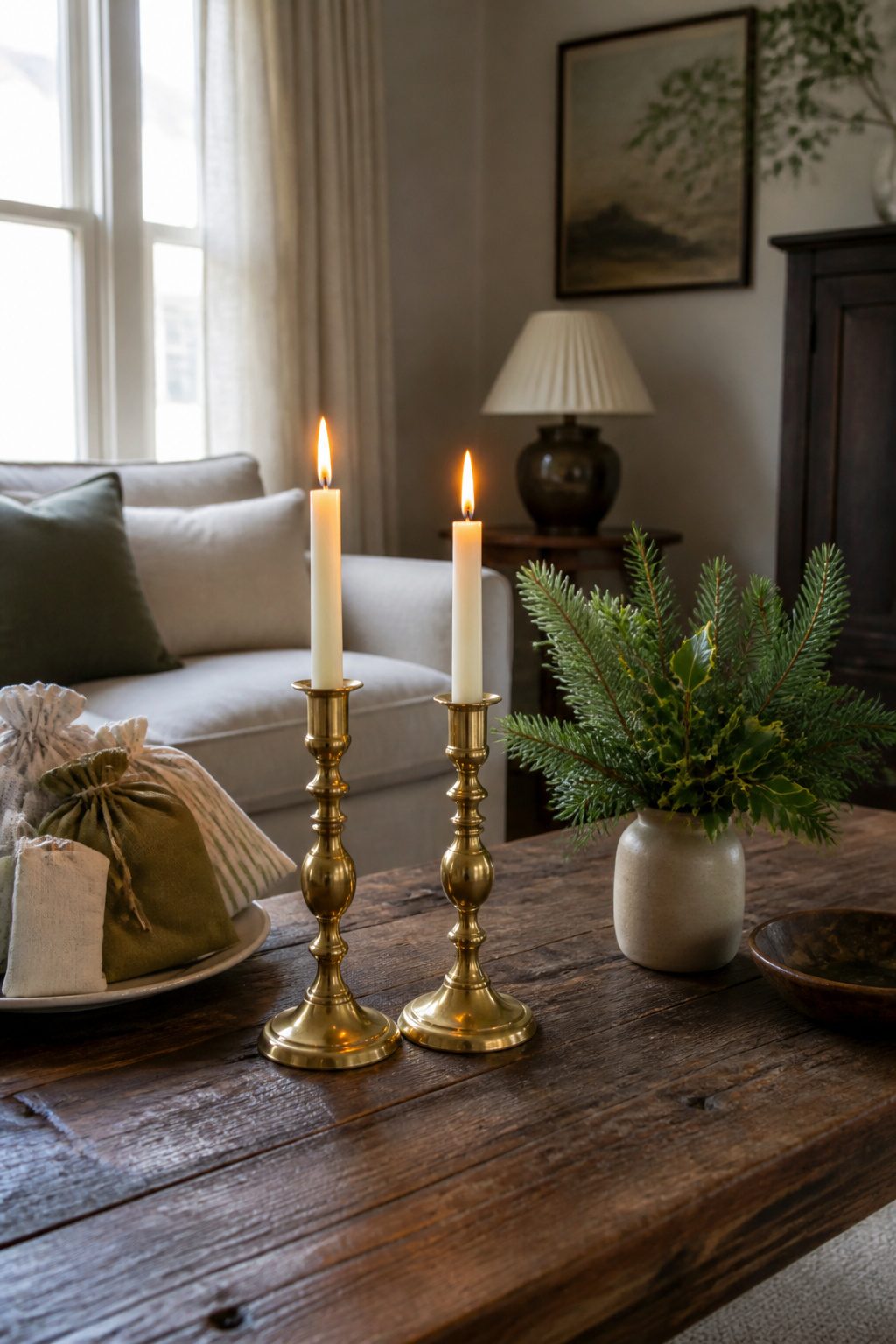
Brass candlesticks from the thrift store run about $4 a pair, while new ceramic ones start at $22.
The brass takes a polish and looks like you spent far more than you did. Foraged greenery costs nothing but the 40 minutes it takes to clip fir and holly from whatever grows nearby, versus $12 a bunch at the grocery store.
The tradeoff is time against money, and most Decembers one of those is tighter than the other.
Fabric gift bags sewn from scrap linen eliminated my wrapping paper storage problem entirely. They take a few evenings to make, but they flatten to nothing and come back out next year.
Frequently Asked Questions
How do I choose a Christmas tree for a small living room?
Pick a slim tree around 6.5 feet tall and 28 to 32 inches wide at the base, or go smaller with a tabletop version under 24 inches.
Measure the corner diagonal, not just wall length, to make sure branches clear your sofa and walkways by at least six inches. Half trees flat on one side also work if you want height pressed against a wall.
What are some easy Christmas decorating ideas for small spaces?
Use vertical space with wall-mounted wreaths and ceiling-hung garlands so floor space stays clear.
Keep surfaces simple with a three-item rule, and build small vignettes with grouped objects that read as one gesture. A tension rod above a door or inside a window frame gives you greenery spans without drilling.
How can I make my small living room feel cozy for Christmas?
Swap pillow covers onto existing inserts rather than buying stuffed holiday pillows, and layer in chunky wool or quilted cotton throws.
Stick to 2700K warm lighting that reads as firelight, and place light sources within four feet of where people sit. Battery candles on timers add glow without taking up outlets or space.