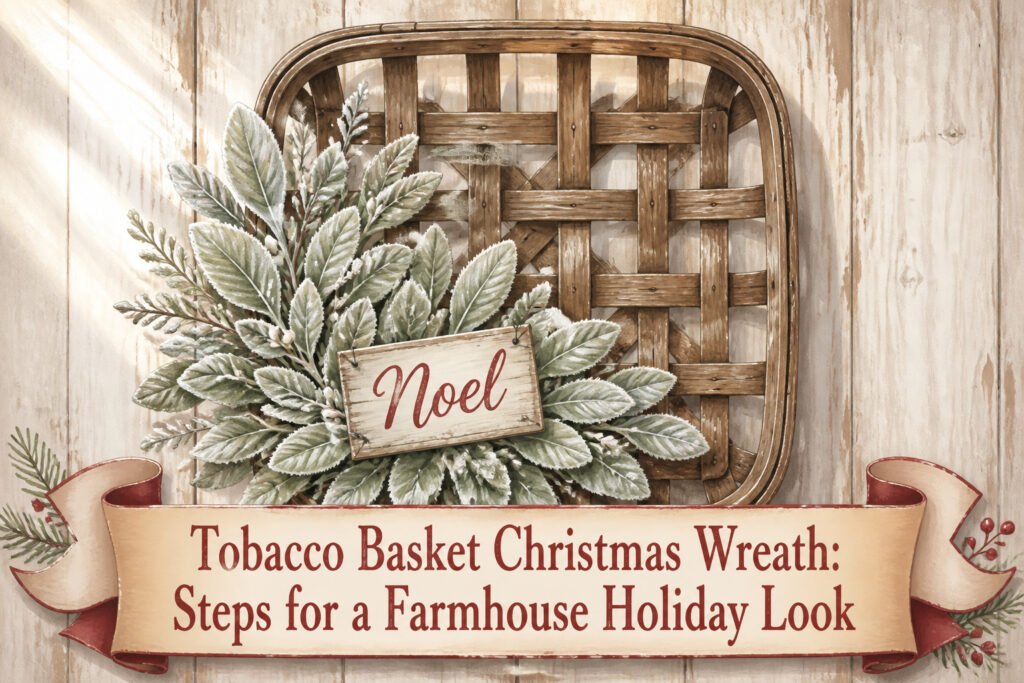
A tobacco basket Christmas wreath is a flat, woven tray turned into a wall decoration, originally built for drying tobacco leaves. The catch is weight: the thin oak or hickory slats split under anything heavier than a lightweight ornament, so every stem, sign, and berry spray has to stay featherlight. I paid craft-store prices for a basket that already looked a decade old, then wired frosted lamb’s ear and a single "Noel" plaque to a block of floral foam glued in one corner.
1. Gather Materials
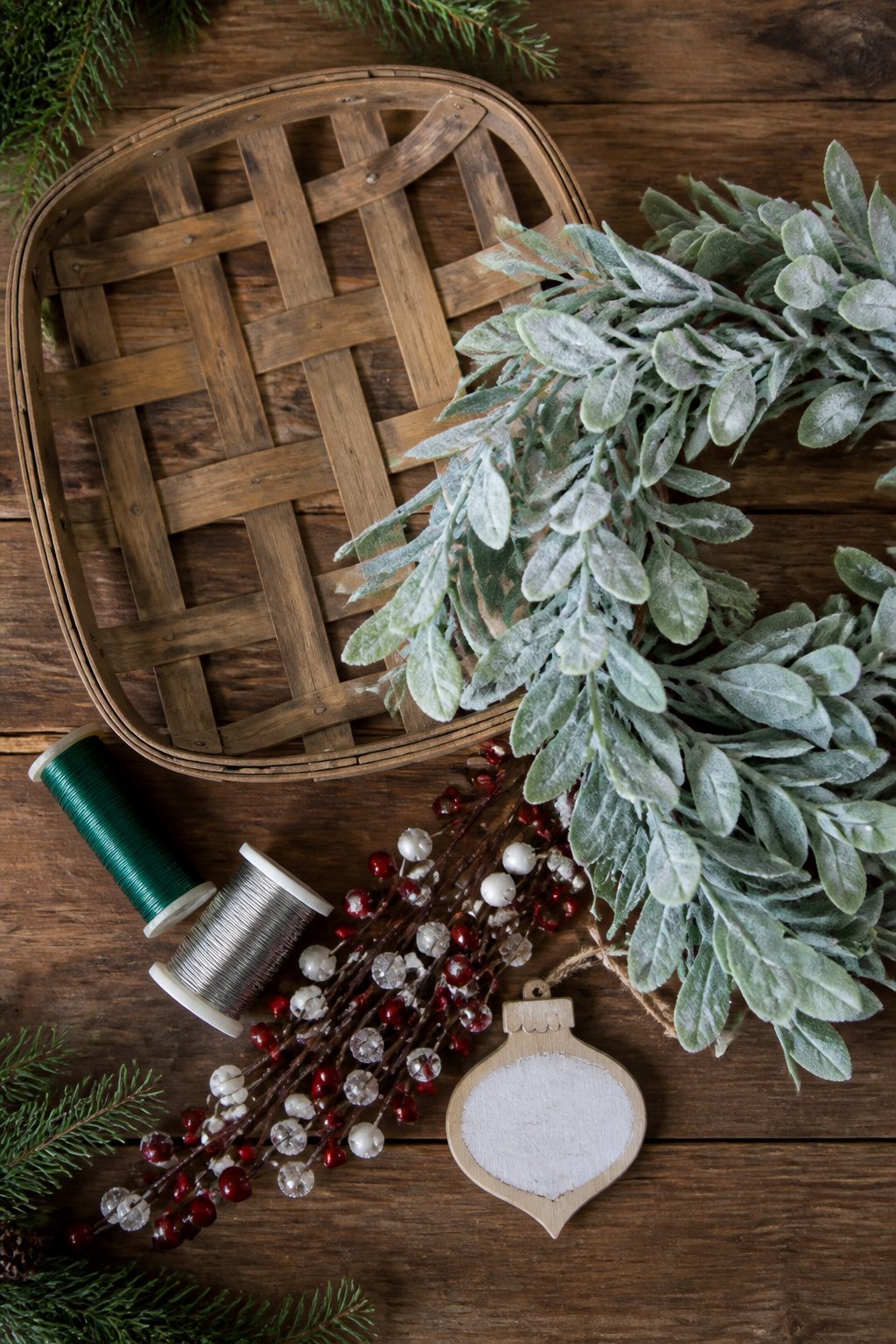
Tobacco baskets turn up at Hobby Lobby, Michaels, and Walmart in whatever finish matches your wall. Mine came from Hobby Lobby in a medium stain that already looked a decade old. The weave is thin and the slats split if you look at them wrong, so everything you hang on it needs to stay lightweight.
Floral wire in green or silver does the fastening work. I keep both on hand; green disappears against greenery, silver blends with frosted elements. Skip hot glue unless you are treating the basket as disposable. Wire lets you strip the whole thing back to bare basket after New Year’s, which is the point of starting with a base this neutral.
For greenery, frosted lamb’s ear wreaths from craft stores give you bulk without weight. Snowy sprays add the same winter tone in smaller pieces. Berry sprays need to be the bendable kind; stiff stems fight the basket and win by cracking it. The little sign I used was technically a Christmas ornament, which kept the load light enough that a single wire loop held it. Jute twine or wired ribbon works for the hanger itself. Heavier signs need multiple anchor points to spread the load, and even then I would think twice. The basket I bought would not survive a dropped two-pound plaque.
2. Prepare the Basket
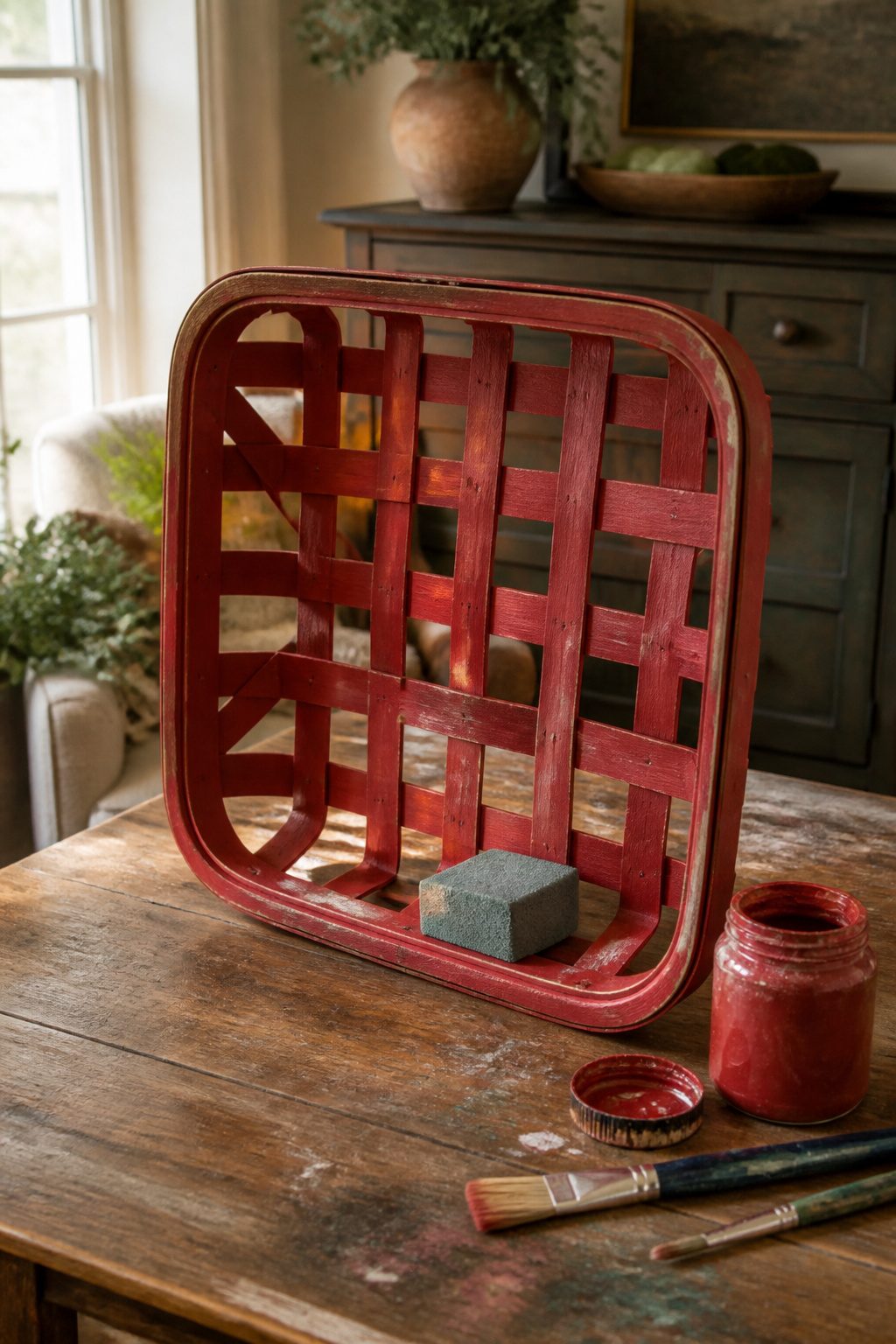
A tobacco basket comes with wide, flat slats that leave nowhere to anchor stems or picks. The first move is giving yourself something solid to work against. I cut a small rectangle of dry floral foam, roughly the size of my palm, and hot-glued it to the inside corner where the basket’s frame meets. Zip ties through the slats add a backup grip, and a glued-on silk leaf covers the plastic ends if they show.
Paint the basket Tuscan Red if you want that Christmas look one maker achieved with a Target Bullseye Playground basket and acrylic craft paint. The shade sits between brick and barn red, enough warmth to read as holiday without shouting. Good ventilation matters, and the slats need a full day before you handle them; paint trapped between the woven strips stays tacky longer than the surface suggests. If you already found a red basket, skip this and move on.
3. Add Greenery
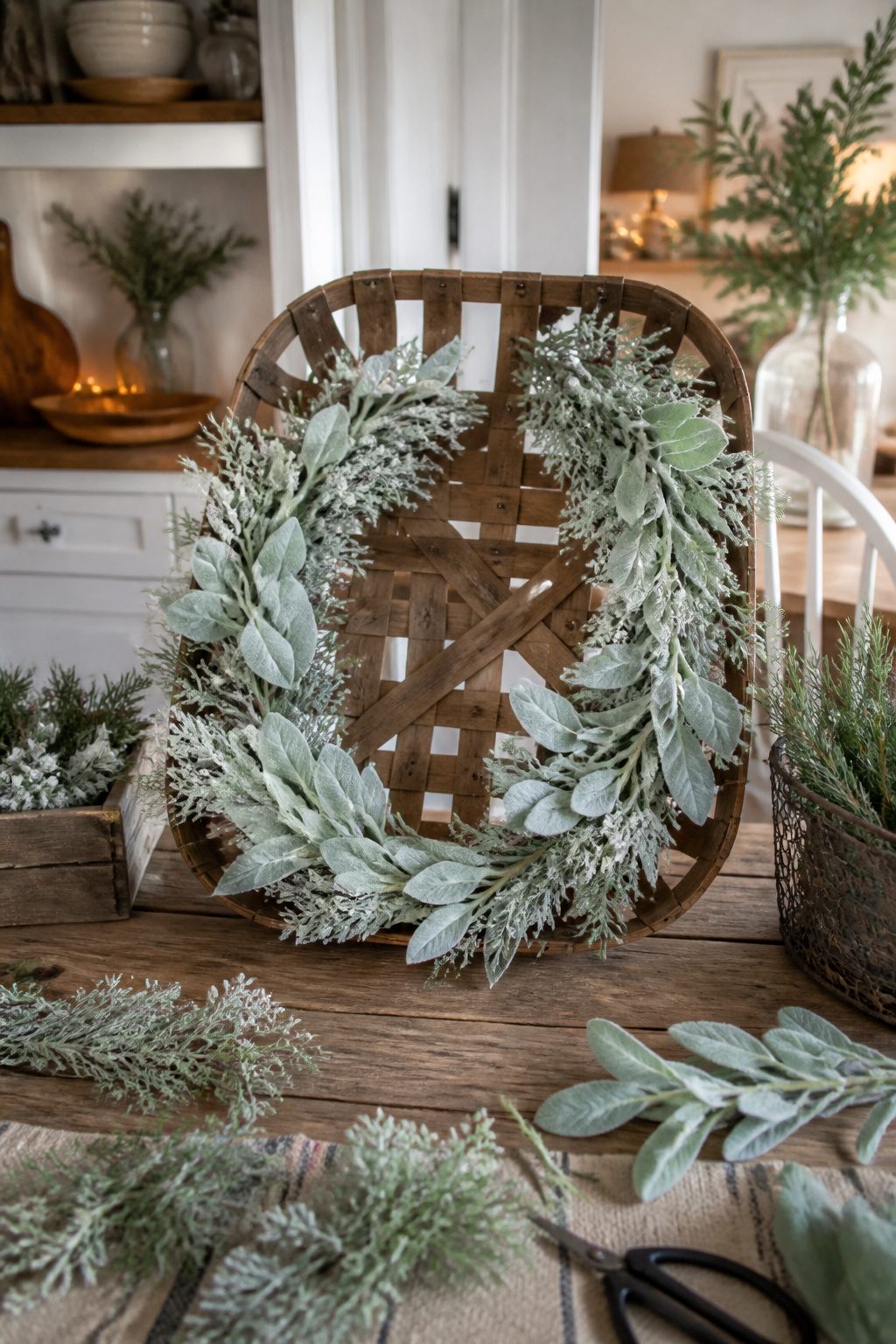
Frosted lamb’s ear makes the best starting layer for hiding foam and giving that muted, dusty look farmhouse wreaths are known for. I push the stems through the basket weave or wire them to the block, letting the larger leaves drape over the edges first to kill the artificial shape of the base. Snowy greenery sprays come next, tucked into the gaps where the foam still shows. The white flocking on both picks catches door light in a way that reads winter without screaming holiday. Working from the outside in keeps the arrangement from going lopsided; the center fills itself once the perimeter is set. If a stem pokes too far forward, bending it back with pliers costs less than snapping it and starting over.
4. Incorporate Flowers and Accents
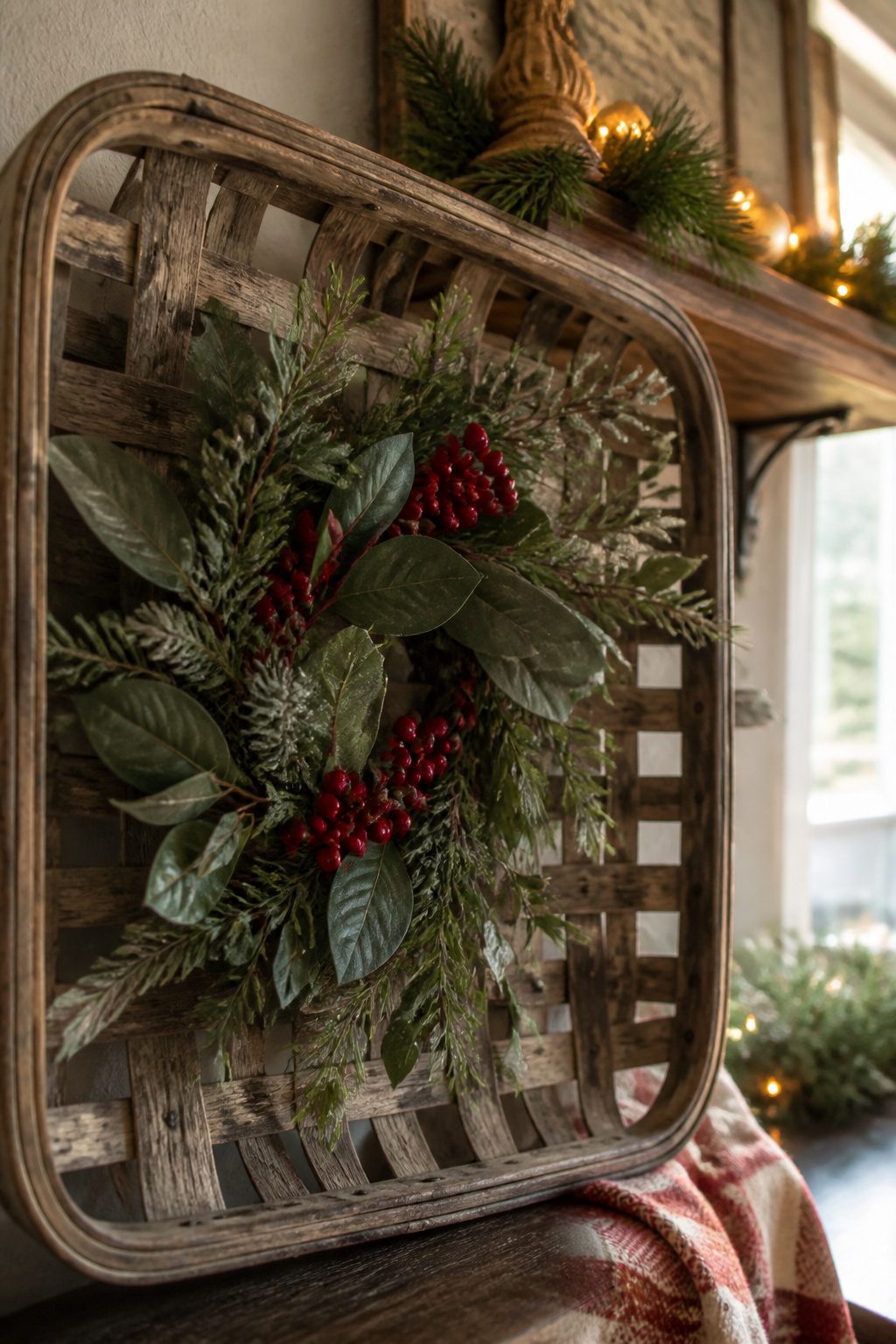
Faux holly berries and a small wooden sign are the finishing touches that turn greenery into a Christmas piece. The berries add the red pop that reads holiday from a distance, and a hand-lettered sign, something like "Noel" or "Gather," gives the wreath a focal point. Tobacco baskets are fragile, so any sign must be lightweight or secured with extra wire in multiple places. A heavy sign will strain the reeds and can warp the whole basket over a season. I would keep that in mind when choosing your sign; an ornament-style plaque, the kind sold for tree hanging, is usually light enough to wire on with two loops twisted tight. For heavier pieces, brown floral wire blends with the basket’s frame and can anchor at several points to spread the load. The same wire trick works if you want to tuck in dried flowers or cotton bolls after Christmas; swap the berries and sign, and the base wreath carries through the year.
5. Secure Decorations
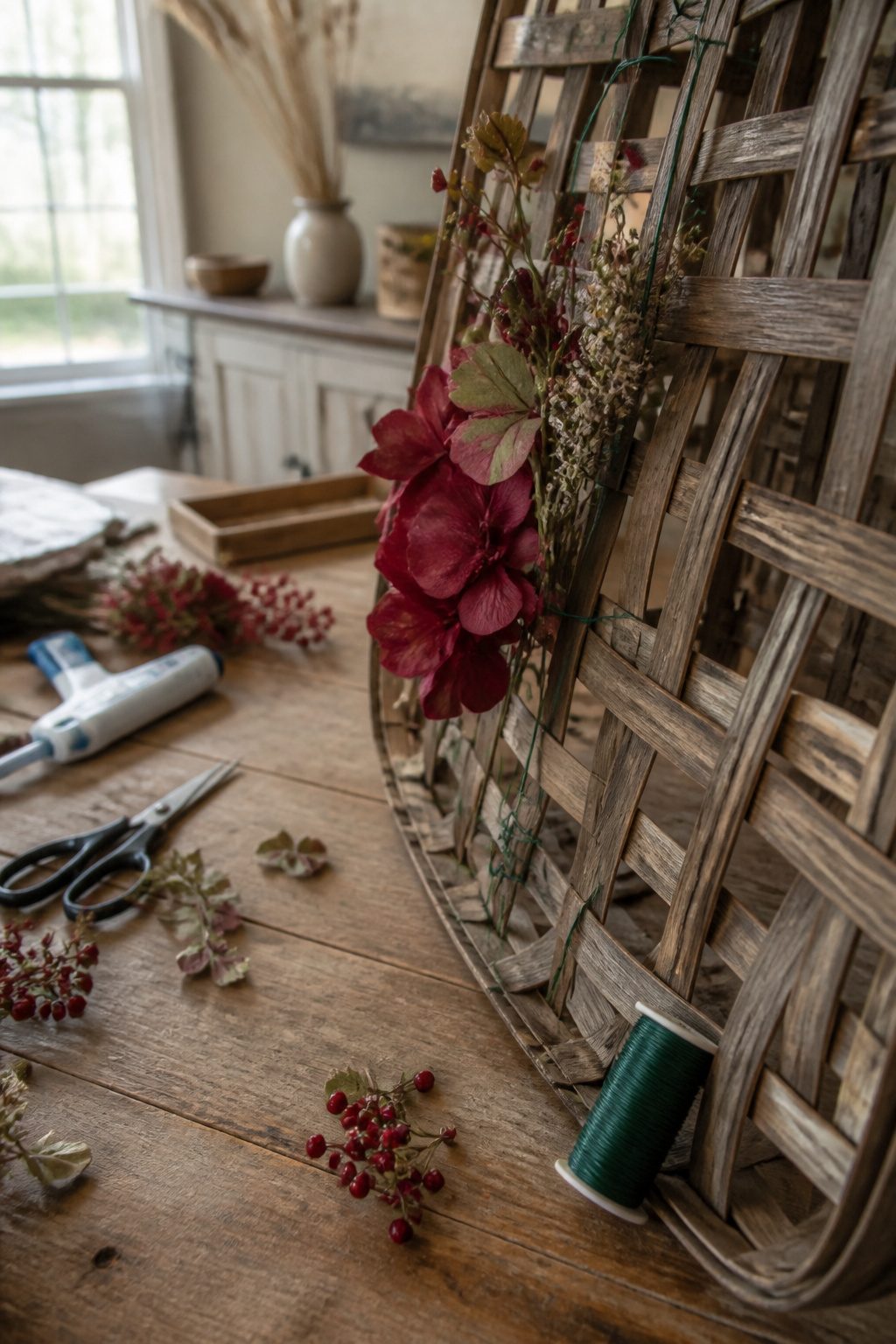
Floral wire wins for a tobacco basket you want to use again. The aged wood splits under heat, and hot glue bonds permanently to whatever surface meets it, basket or not. Wire lets you adjust placement without commitment, then twist it off clean in January.
I keep a roll of 22-gauge floral wire in my holiday bin for exactly this. Thread it through the stems or the handle on a small sign, wrap it around a slat at the back, and twist until the element sits where you want it. For something heavier than a lightweight ornament, a second loop or a small block of floral foam wired to the basket gives stems something to bite into. Styrofoam works too, though it sheds.
Hot glue is faster but risky on old tobacco basket wood. The dry, brittle slats can crack under thermal stress, and removing the glue later means scraping and possible splintering. If speed matters and the basket is a reproduction rather than vintage, a low-temp glue gun is the safer bet. Still, wire leaves the basket whole for next year or for a completely different season.
6. Hang the Wreath
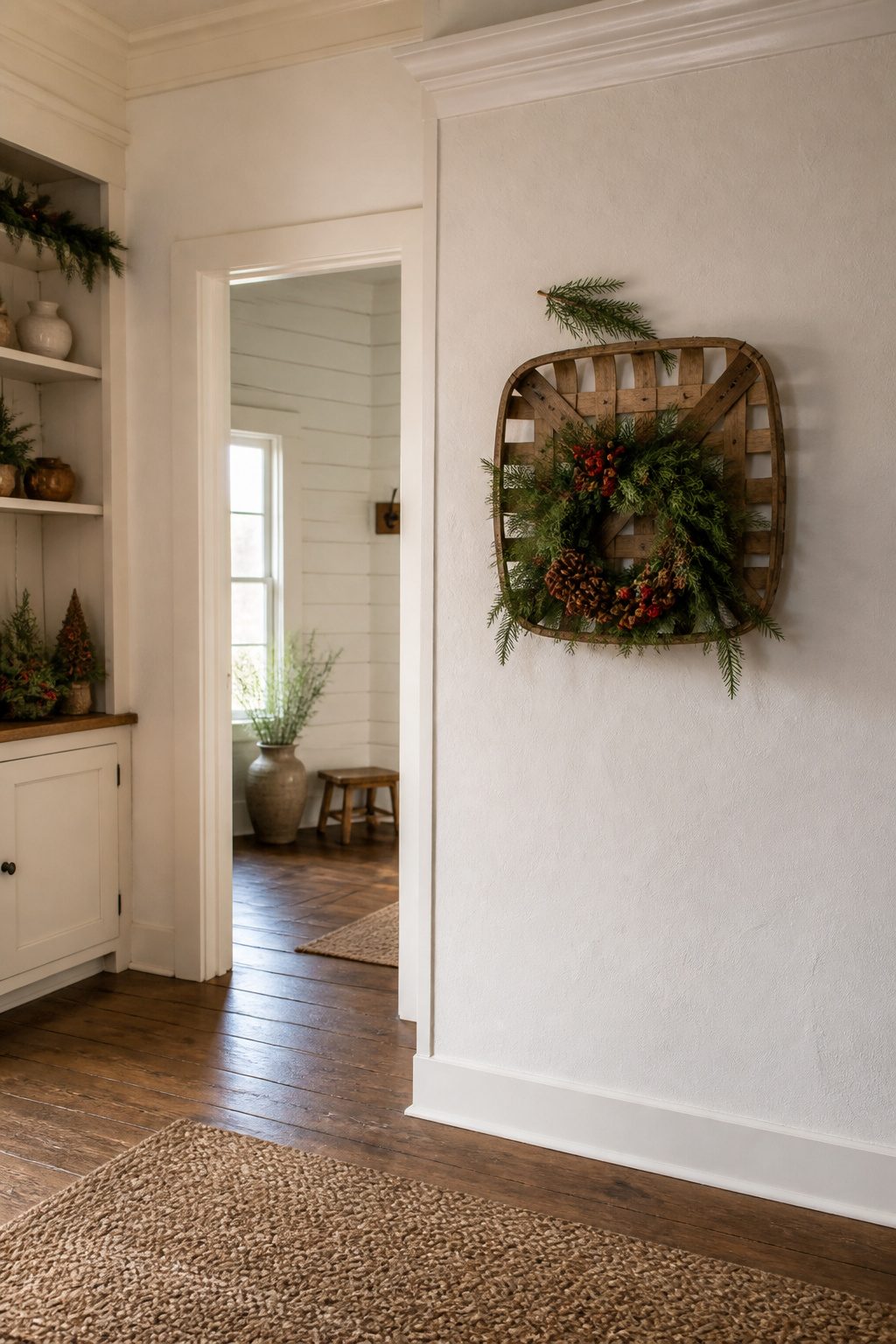
A loop of floral wire bent in half and twisted at the ends makes the cleanest hanger for a tobacco basket wreath, though jute rope or butcher’s twine works just as well if that is what you have on hand. The basket itself is lightweight enough that a small nail or hook poked through the open weave can carry the whole thing without needing a wire loop at all. Hammer that nail slightly above center, right where the curve of the basket meets the wall, so the rounded front hangs straight rather than tilting. A twig of greenery tucked into the arrangement will hide the nail head. If you add a heavy sign or thick decorations, the basket is fragile enough that the weight needs spreading out, extra wire, or attachment in a couple of spots so nothing pulls through the thin slats.
What a Tobacco Basket Is
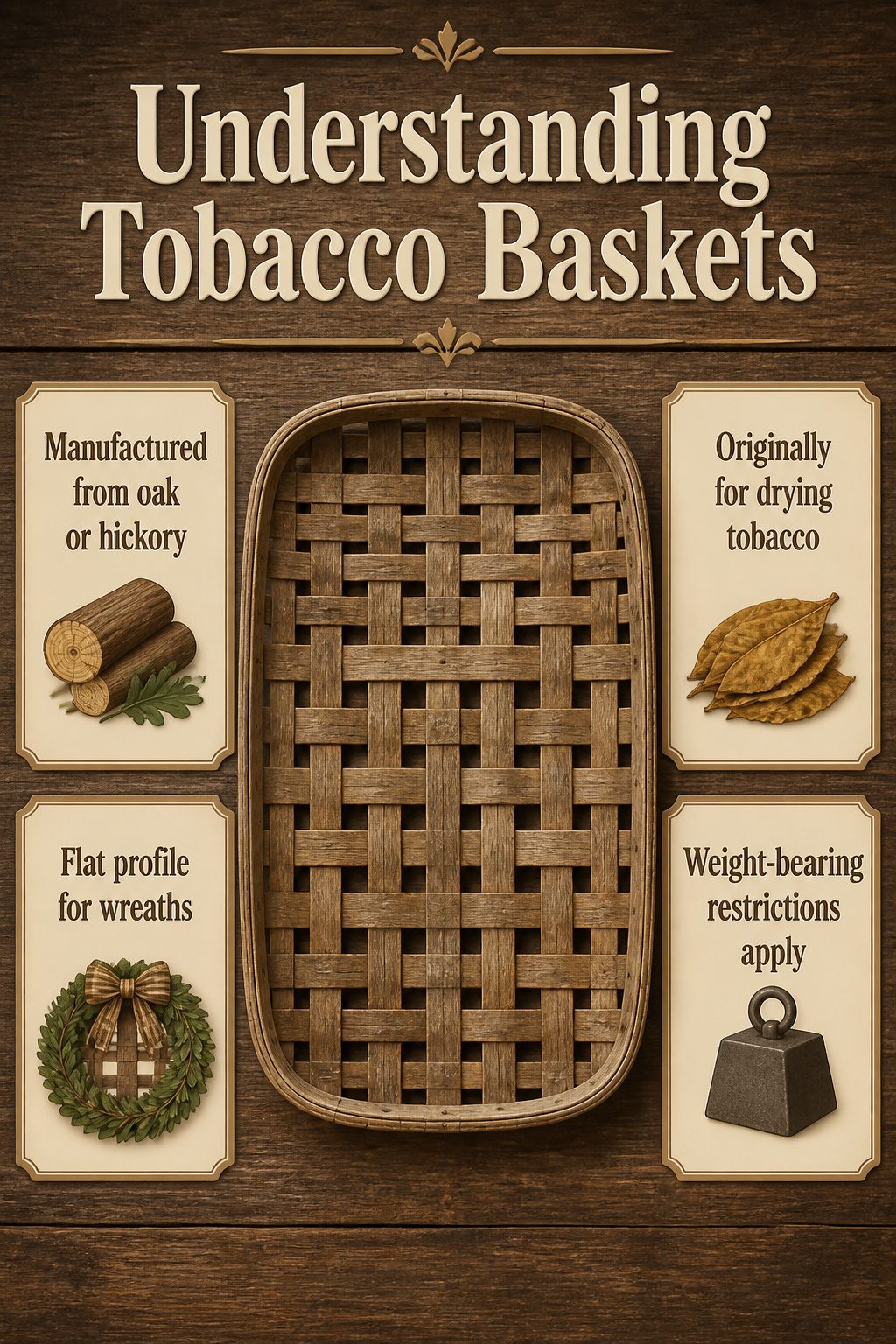
A tobacco basket is a flat, woven tray originally built for drying and carrying tobacco leaves. Farmers would spread harvested leaves across these wide, shallow surfaces so air could circulate underneath, then use the same basket to haul the cured crop to market. The weave is typically loose and open, made from split oak or hickory, which keeps the whole thing surprisingly light despite its size.
That same flat profile is what makes it a natural base for a wreath that sits nearly flush against a door. Unlike rounded grapevine or foam rings that jut out and catch on storm doors, a tobacco basket lies close to the surface. The open weave also lets zip ties or floral wire thread through almost anywhere, so attaching heavy greenery or a big bow does not require guessing where the frame is. Farmhouse decor picked these up years ago for exactly this reason: the shape does the architectural work, and the aged wood already looks like something that hung in a barn for decades.
Vintage Against Modern Replicas
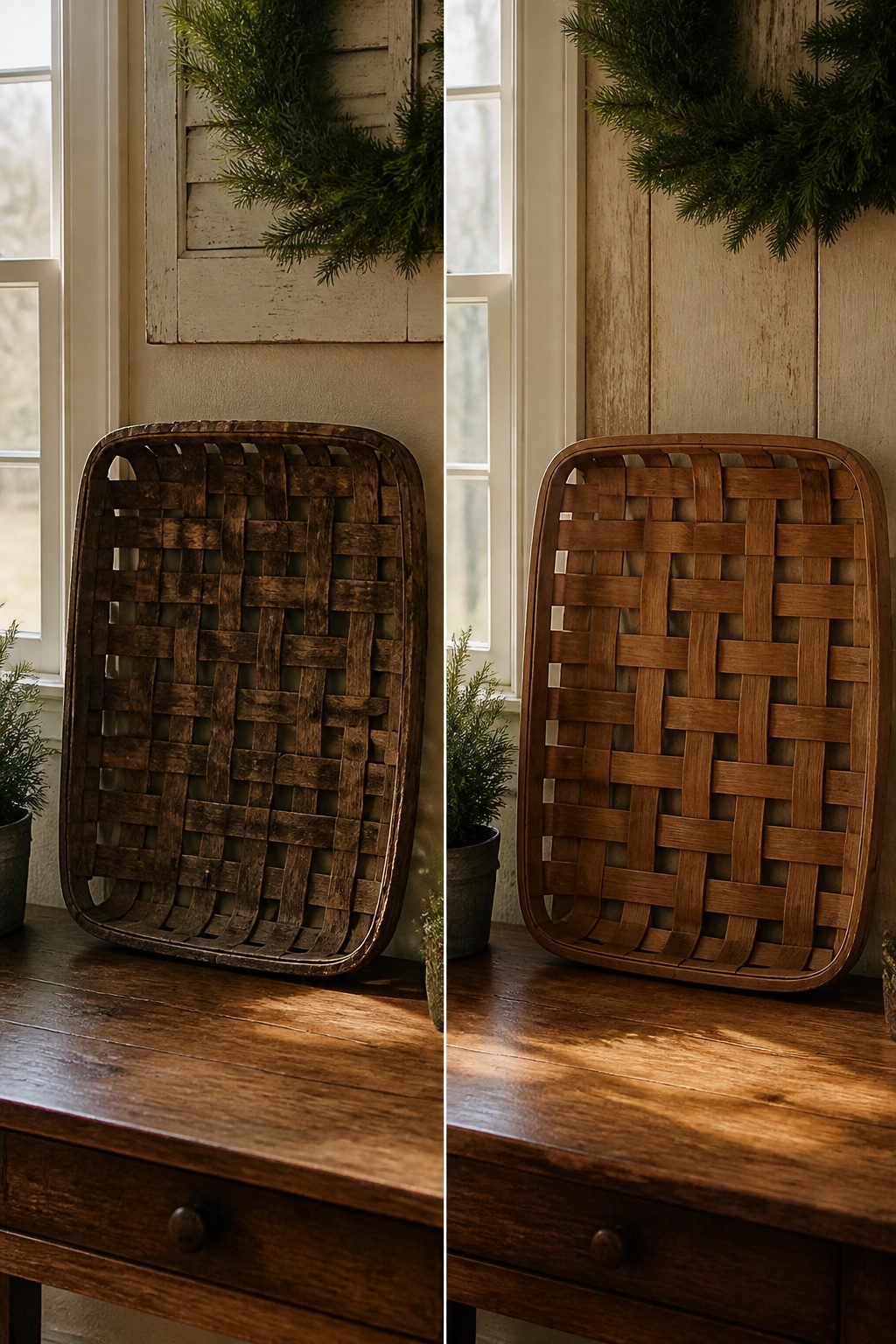
Vintage tobacco baskets carry a patina that replicas never quite fake: the wood has darkened unevenly, the weave is tighter and slightly irregular, and the whole thing feels light enough to worry you when you lift it. That fragility is real. I have read enough project accounts to know that forcing a staple through aged oak slats can split them clean through, which is why most wreath makers now reaching for this look end up with a modern replica instead.
The replicas are more uniform, often cheaper, and far easier to find. Hobby Lobby and Michaels stock them regularly, and both stores run coupons that drop the price further. One maker found hers at AC Moore for $5 before that chain closed; Walmart now carries lookalikes too, sometimes two for the price of a single basket elsewhere. The tradeoff is in the surface. Replica wood is usually softer, the stain even, and the gaps between slats wider than on any basket that actually dried tobacco leaves.
For something between the two, Etsy is worth the search. Handmade versions from small shops run closer to vintage in weave density, and you will occasionally find a true antique listed at a price that beats the craft-store markup. If the basket is only going to carry faux greenery and a bow, the replica wins on cost and weight. If you want the wall piece to read as found object rather than craft project, the hunt for vintage is the whole point.
Seasonal Adaptability
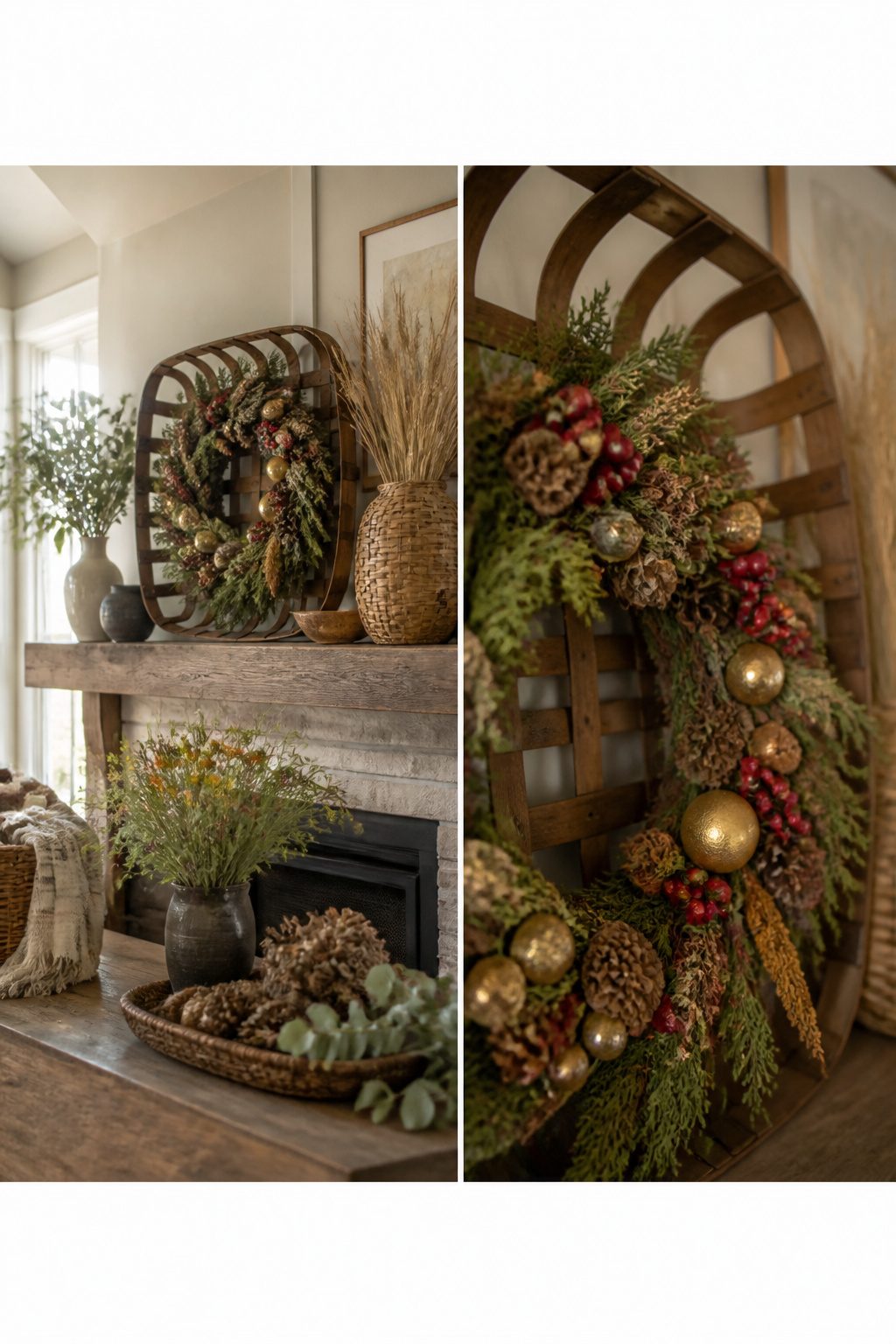
A tobacco basket wreath earns its keep the same way a plain white wall does: it waits for you to change what hangs on it. The same woven frame carries Christmas greenery in December, then sheds the red berries for dried wheat and grasses once November arrives. Spring means clipping wildflowers from the roadside or the grocery store bunch, and summer shifts to eucalyptus that dries in place and lasts through the heat. The basket itself is the one purchase you make once, which matters when your project budget needs to stretch across four seasons instead of one. Swapping the contents takes maybe twenty minutes and whatever you have on hand, so the wreath never sits in storage half the year feeling like wasted money. That adaptability is why the farmhouse look survives real budgets; it treats decoration as layers you add and remove, not objects you collect and store.
Faux Against Real Greenery
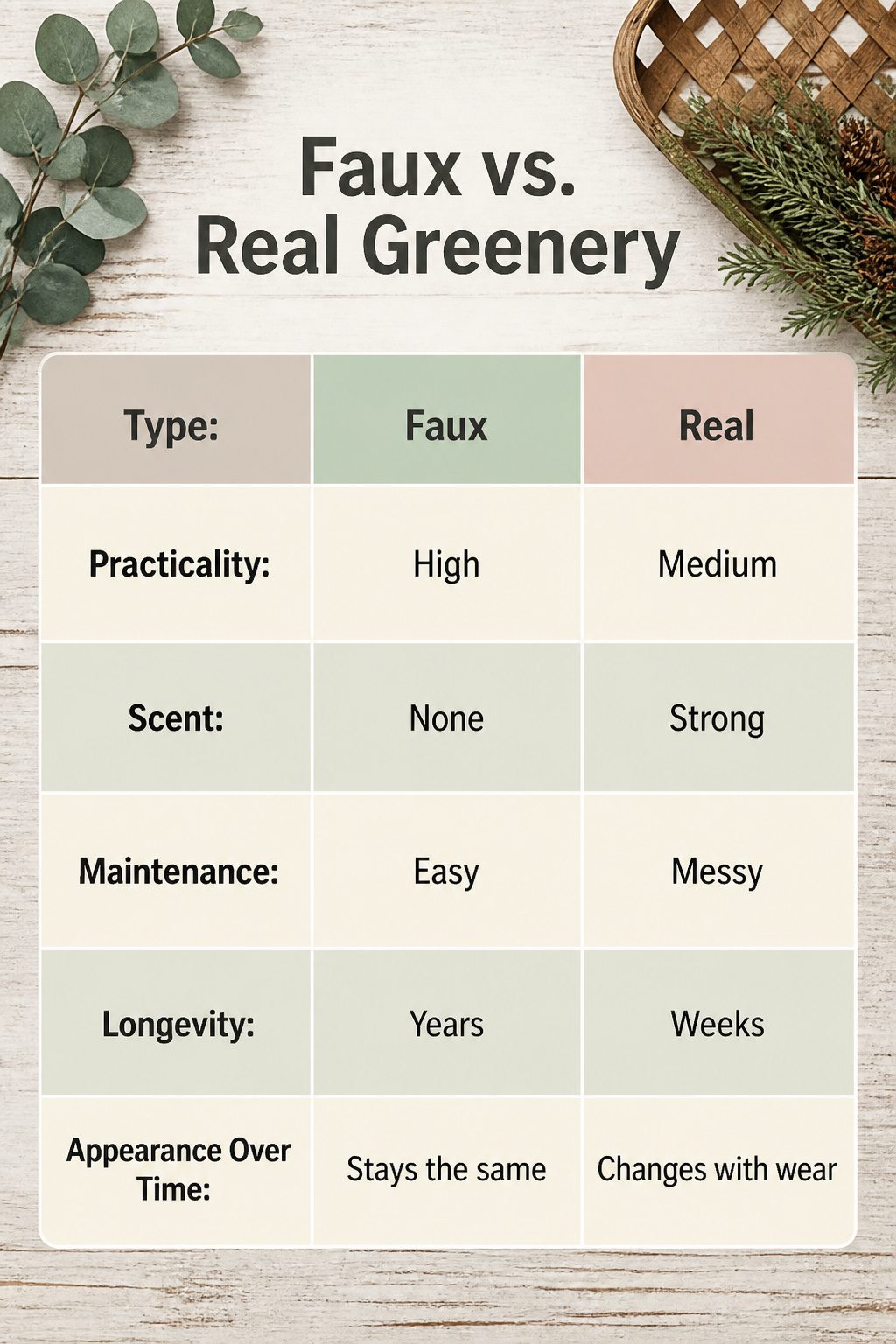
Faux greenery wins on practicality for a tobacco basket wreath you plan to store and reuse. The plastic stems bend flat against the basket weave, so the whole piece slides into a closet shelf or under a bed without the bulk of a foam ring. After three seasons, the same eucalyptus picks still read crisp against the stained wood, no browning at the tips.
Real greenery smells like December, which matters more than I expected the first time I tried it. Cedar and pine cuttings tuck naturally between the slats and read softer, more accidental, which suits the farmhouse look. The catch is the shed. Needles drop through the basket onto the floor, and sap can darken the wood where stems rest. A stained basket is not ruined, but it is changed.
If you want the scent, fresh cuttings layered over a faux base give most of the effect without full commitment. Wire the real stems loosely so they lift out in January, then store the basket with its permanent greens already in place. The basket itself should last years; the question is whether you want it to look identical each season or record the wear.
Miniature Versions

Mini tobacco basket ornaments scale the same farmhouse look down to something you can hang on a tree or tuck into a gift bow. The blanks turn up at craft retailers like Oriental Trading, and the build follows the same steps: a little greenery, a few berries or a tiny pinecone, and wire or twine for hanging. What changes is the commitment. A full basket wreath takes up wall space and demands a storage plan come January; a cluster of three or four miniatures fills the same visual role on a smaller wall or above a doorway, and each one stores flat in a shoebox. The same materials work for gift tags, where the basket acts as the tag itself with a name written on a strip of paper glued across the slats. Pine wreaths with cones read more rustic; boxwood with berries leans traditional. Either way, the miniatures let you test the look before you invest in the full size, or skip it entirely if your space runs small.
What to Avoid
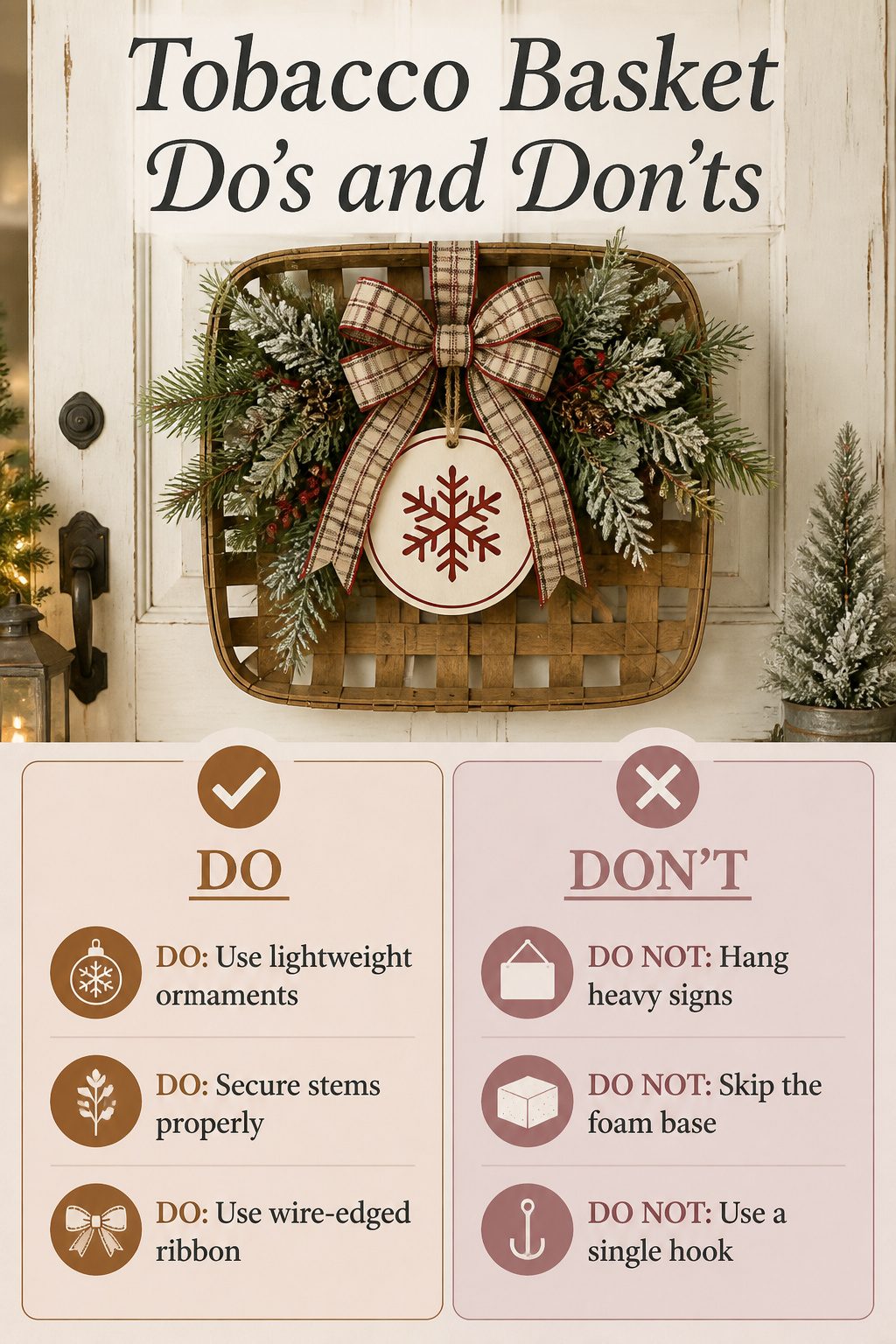
A heavy sign will split the weave on a tobacco basket before you even get it hung. The thin slats are built for air-drying leaves, not for bearing weight, and the damage shows up as a slow crack that widens when you lift the basket to test it. A light ornament-style sign, or one wired in several places to spread the load, is the safer choice. Skipping a foam base means your greenery shifts every time the door closes. I watched a friend’s arrangement slide to one corner over a week because her stems were only tied at the back, not anchored to anything solid inside the basket. Wire-edged ribbon matters more here than on a grapevine wreath; regular ribbon softens in humidity and lets the whole frame tilt forward. For hanging, a single hook through one weave point concentrates stress right where the basket is weakest. Two points, slightly above center, let the rounded bottom settle straight without pulling any single slat.
Frequently Asked Questions
What do I need to make a tobacco basket christmas wreath?
You need a tobacco basket, floral wire in green or silver, lightweight greenery like frosted lamb’s ear wreaths and snowy sprays, bendable berry stems, a lightweight sign or ornament, and jute twine or wired ribbon for hanging. Keep everything light; the thin slats split easily under weight.
Can I use this wreath after Christmas?
Yes. Wire everything on instead of gluing, then strip it back to bare basket after New Year’s. The neutral base works for any season; swap in dried wheat for fall, wildflowers for spring, or eucalyptus for summer.
Will a tobacco basket hold a heavy sign?
No. The thin, brittle slats crack under strain, and a heavy sign can warp the whole frame over one season. Stick to ornament-style plaques or secure slightly heavier pieces with brown floral wire at multiple points to spread the load across several slats.