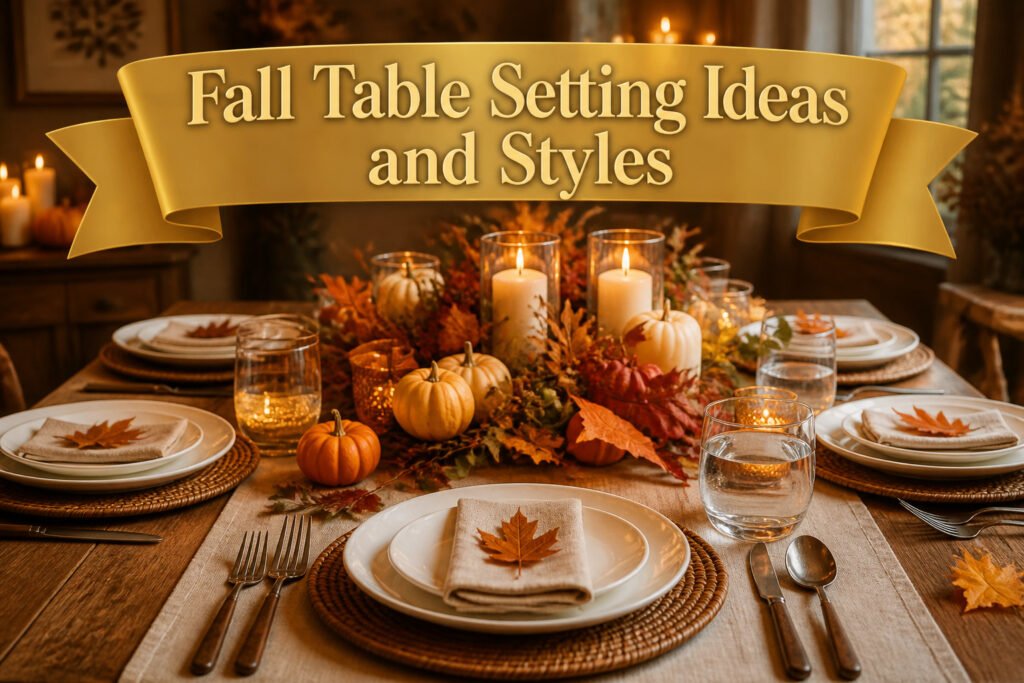
A fall table setting works best when you build around the food, not the other way around. Start with where the turkey or grain bowl lands, tuck stems or mini pumpkins into the gaps, and you get seasonal atmosphere without sacrificing space for actual plates. Most of these setups cost under thirty dollars to stage because the base is already in your cabinet: white dishes, water glasses, the table itself.
1. Modern Fall Tablescape Ideas
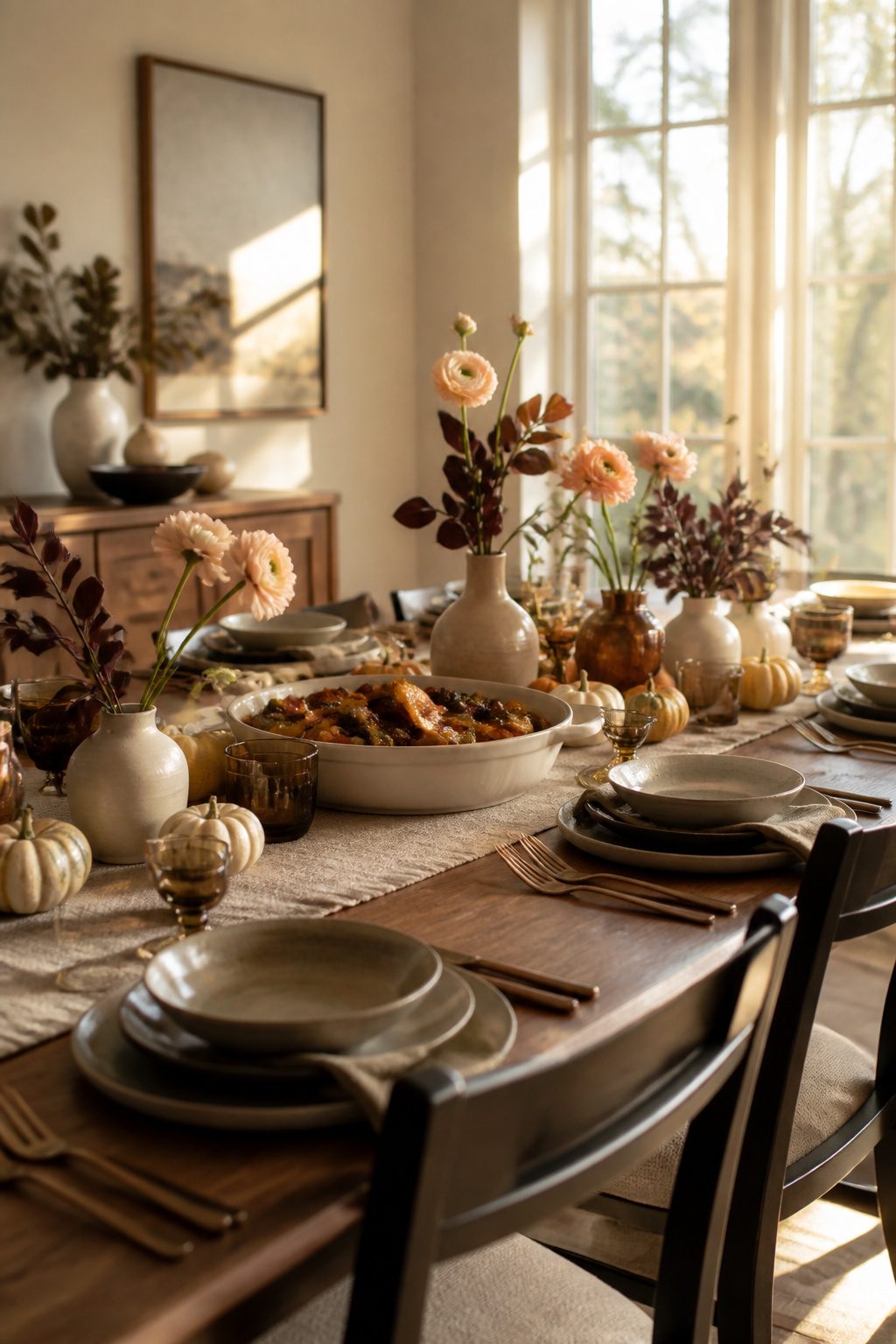
Modern fall tablescapes have quietly dropped the mandate for orange and red. Last year I set a table with blush pink ranunculus against dark autumn foliage, and the pairing read as seasonal without shouting it. The pink picked up the earthy undertones in roasted squash and brown butter dishes already on the menu, so the decor and the food talked to each other instead of competing.
The move is to fill the table with serving ware first, then decorate around it. Map where the turkey or the grain bowl lands, drop a sticky note if you need to, and tuck stems or mini pumpkins into the gaps. You end up with fewer decorations but more room for actual food, which matters when six people are passing plates. For a holiday dinner, the setup can sit all morning; just add the hot dishes when the timer goes off.
2. Elevated Fall Table Decor Ideas
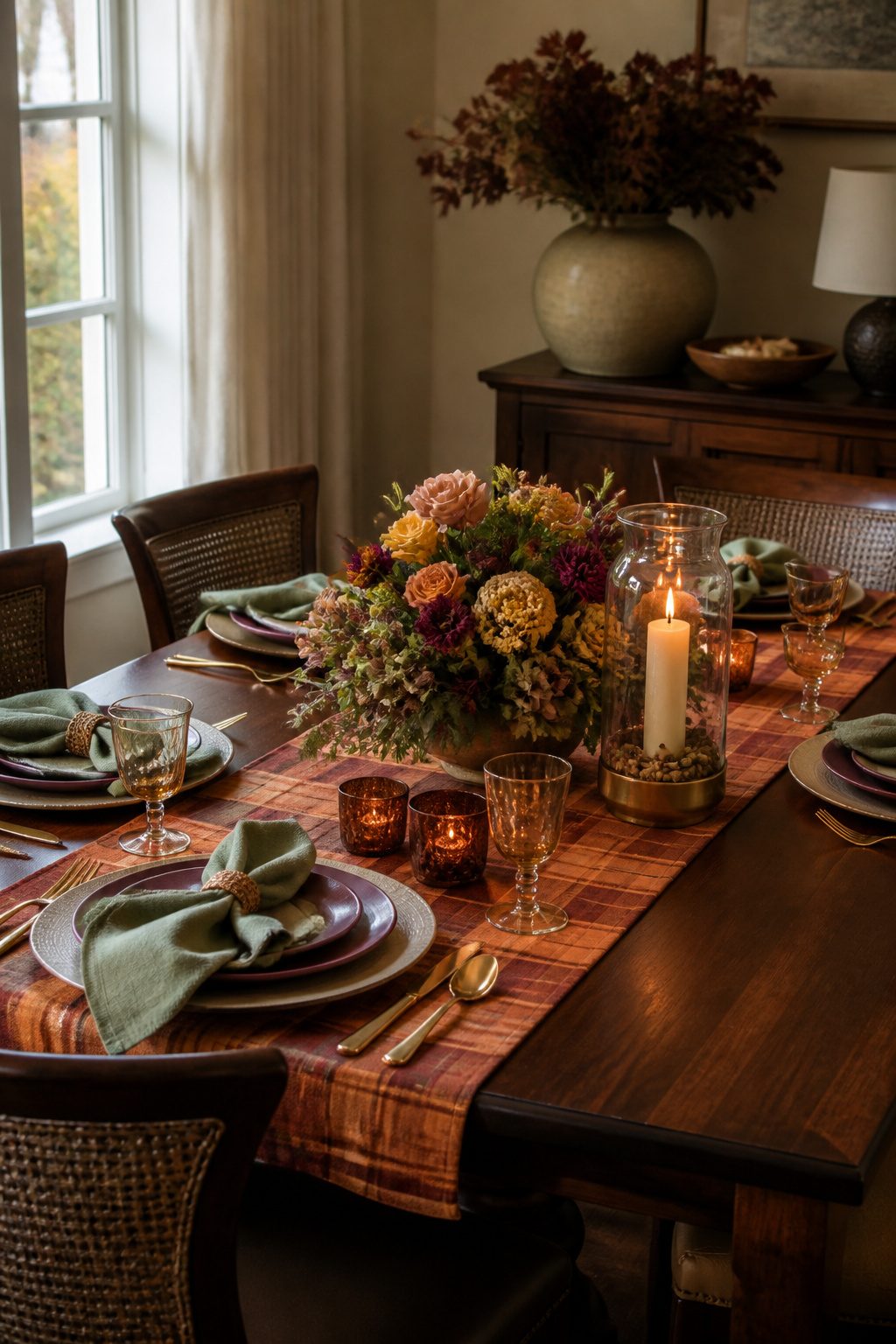
The difference between a weeknight dinner and Thanksgiving is not how much you spend, it is how much you signal. For a casual Tuesday, a single runner in a rust-toned plaid and one taper candle in a jar does the work. The candle stays lit through the meal, the runner goes straight into the wash, and the whole setup takes under ten minutes. For a holiday where guests are dressed up, the same runner becomes the base layer: add cloth napkins, a low centerpiece they can talk over, and plates that at least coordinate in weight if not pattern. The formality lives in the stacking, not the shopping.
Color carries more weight than objects. A table heavy on burgundy and gold reads as Thanksgiving whether the plates are paper or porcelain. The same dishes with sage napkins and pale wood chargers feel like late September, early October, still harvest, still warm, but lighter. The 41-idea scope runs across that whole range, from a single pumpkin and a stack of library books as a riser to full place cards and printed menus. Most of them cost under thirty dollars to stage, because the base is almost always what you already own: white dishes, water glasses, the table itself. The seasonal part is the swap-in layer.
Candles are the fastest atmosphere shift, and the easiest to overdo. Three tapers in brass holders read intentional; nine of anything read like a fire marshal test. For a long table, two or three small groupings beat one giant centerpiece every time. Guests need to see faces, not arrange themselves around a floral obstacle. The mistake I have made more than once is building the centerpiece first and forcing the seating to accommodate it. Build for the people, then dress the gaps.
3. Tips for Creating a Fall Tablescape
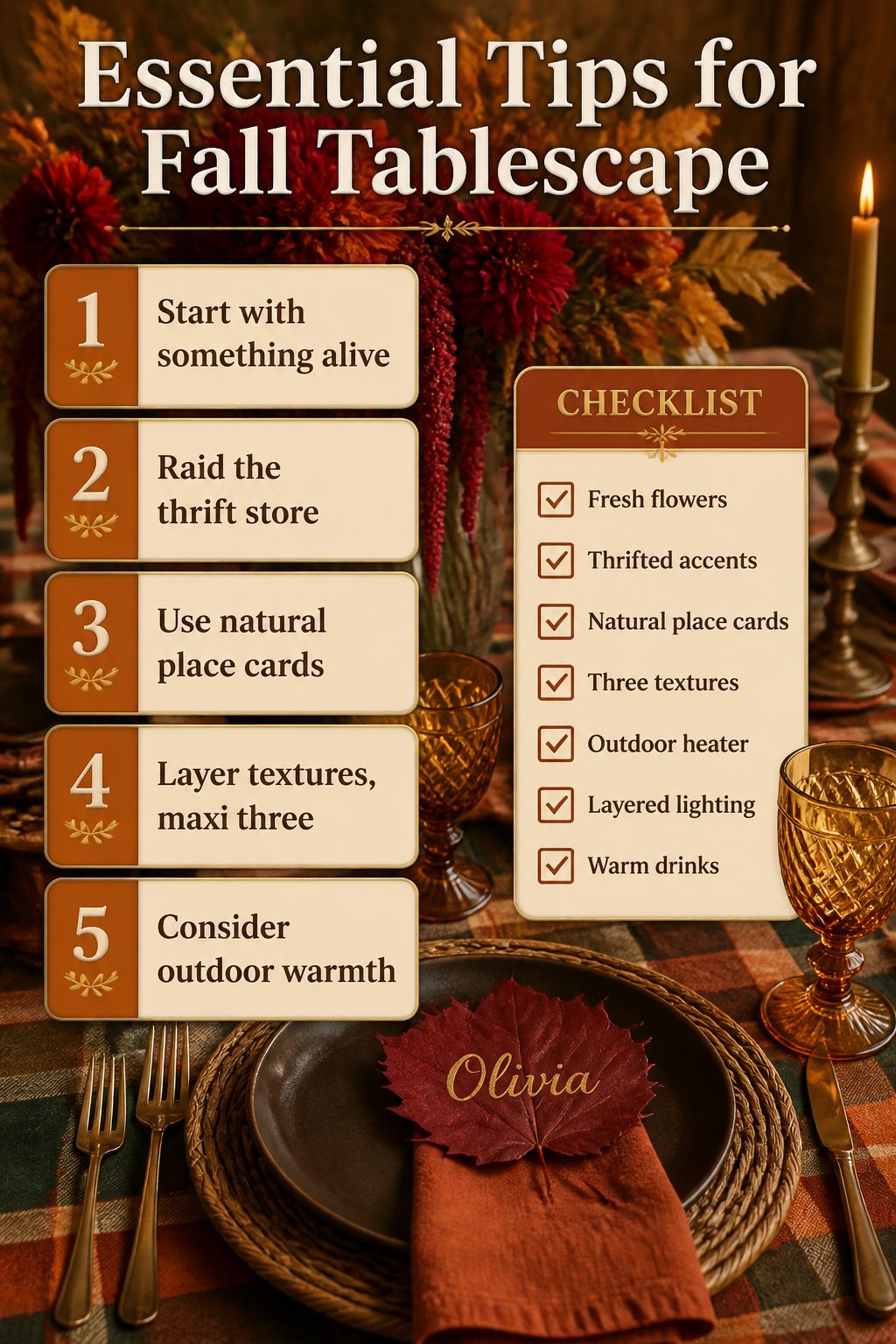
- Start with something alive, even if it dies by dessert. Last year I laid a runner of amaranth and dahlias straight from the garden down the center of the table; by hour three the stems looked tired, but the deep reds against dark plates had already done the work. Cut flowers right before guests arrive, or use fall grasses that hold their shape longer.
- Raid the thrift store first for napkins and glasses. Bronze candlesticks and amber cut-glass wine glasses cost me under $15 total at a secondhand shop, and they carry more weight than new dollar-store versions. The trick is buying one odd piece per seat so the table feels gathered, not matched.
- For place cards, skip the craft store. Amaranth leaves stay that moody red all season; a gold pen on the leaf itself takes two minutes and looks intentional. I tried standard orange oak leaves once and they crumpled before anyone sat down.
- Layer textures, but stop at three. A plaid tablecloth, smooth plates, and one woven charger per setting is enough; add wooden bowls and the eye has nowhere to rest. I learned this after a Thanksgiving where every surface competed.
- Stretch outdoor meals with a patio heater if you have one. The fall air matters more than the decor, and dining outside past October feels like a stolen evening.
4. Neutral Fall Table Setting Ideas
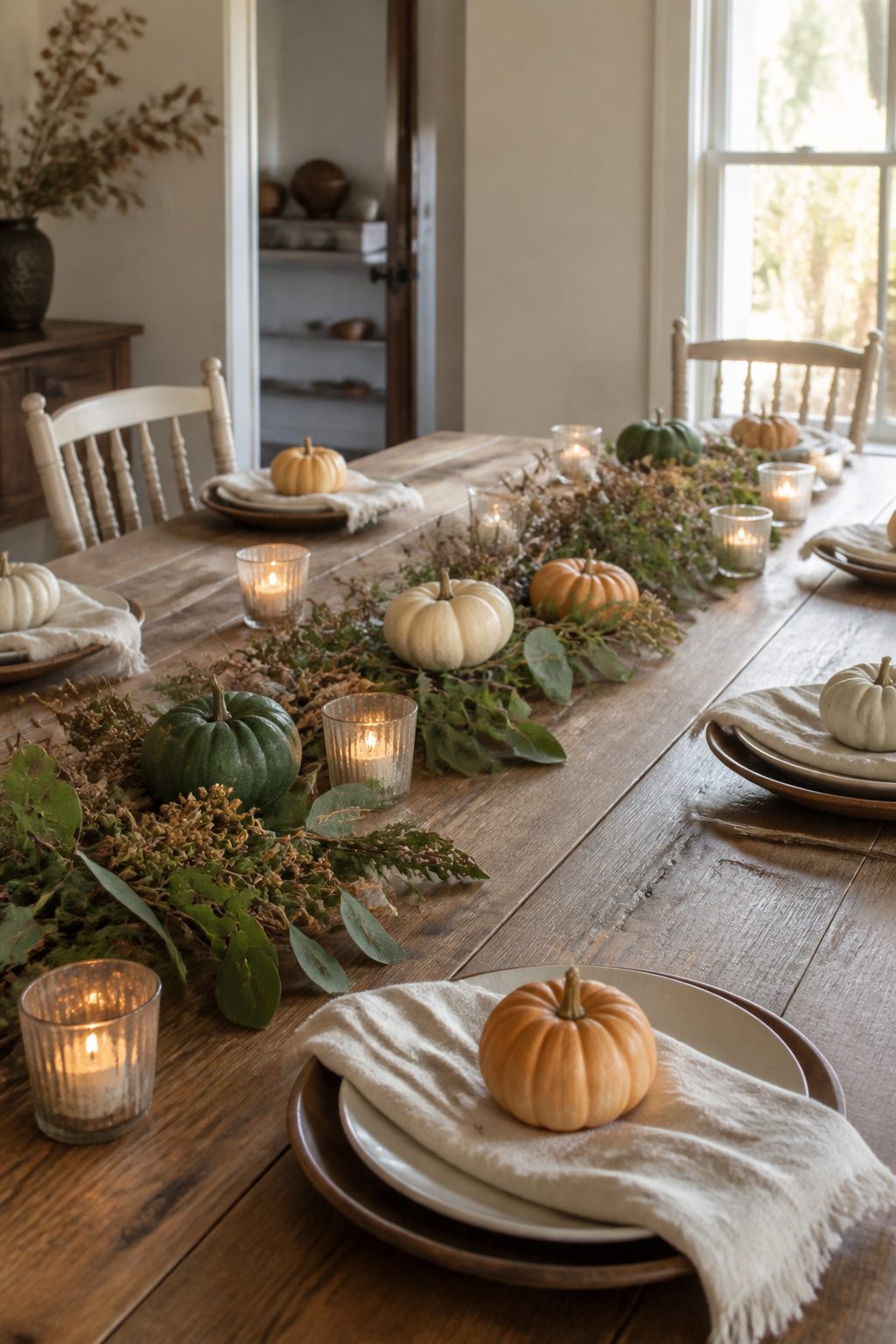
Soft greens, browns, and cream read as autumn without shouting it. Blush and faded greens with rust tones bridge late summer into early fall better than a hard pivot to orange ever could. The muted shift matters most in rooms where existing decor already has its own palette; a neutral fall table setting lets the season in without starting a color fight with your sofa.
For a centerpiece, autumn branches and mini pumpkins or squashes run down the middle of the table instead of a formal runner. Tea lights in votive holders tucked between them give the low glow that makes a dinner feel late-year. Painting fake pumpkins in the exact cream or sage you need solves the grocery-store color problem, and a paint pen on each pumpkin turns it into a place card for guests. Leafy greens and deep red flowers, like the purple carrot and dark red combo used at one farm dinner, keep the arrangement from going pastel.
Casual cloth napkins under each pumpkin, no pressed linen required, keep the whole thing at a level where you can actually sit down to eat.
5. Simple Fall Table Decor Ideas
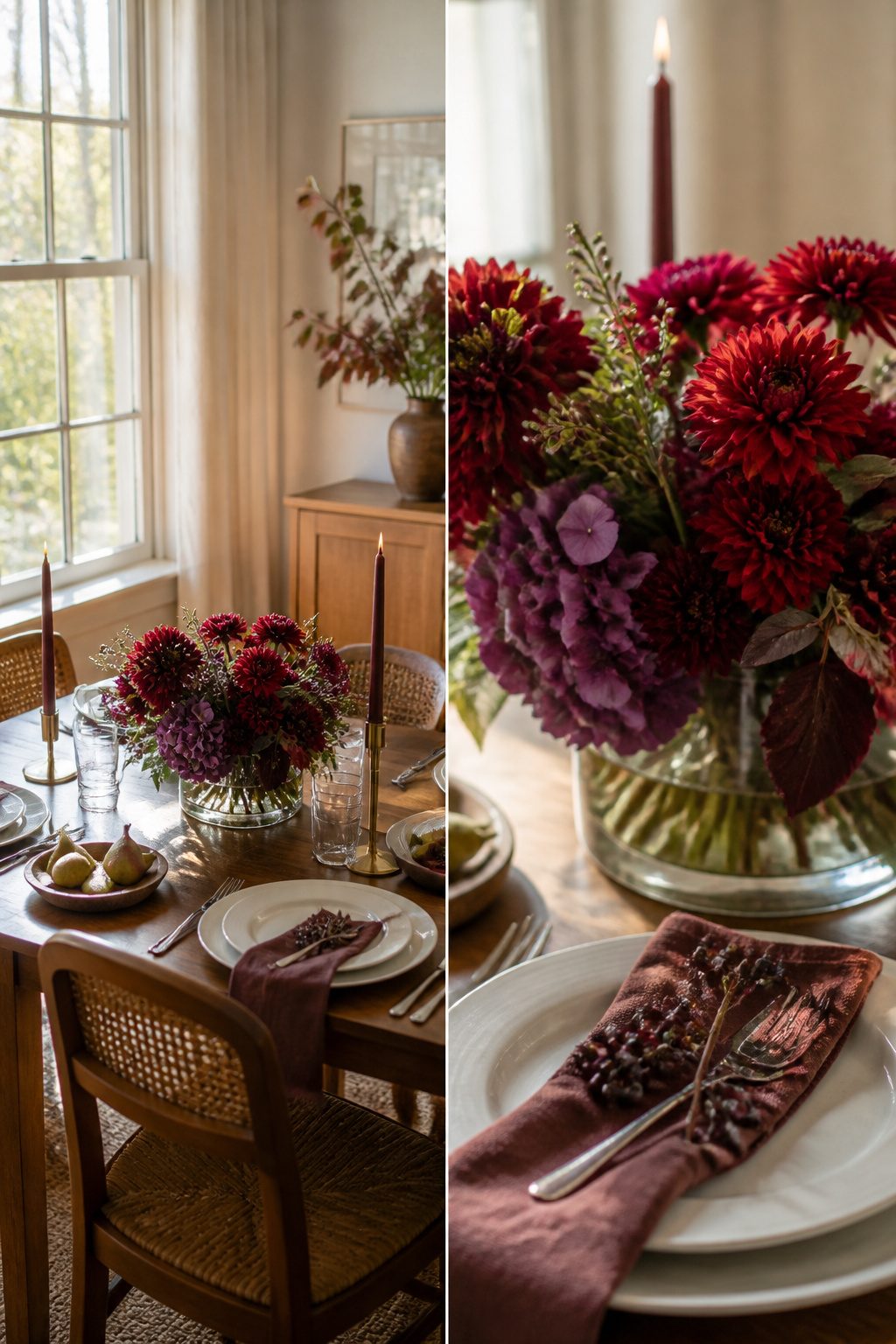
A single grocery-store bouquet and two taper candles can carry a whole table. That is the setup I keep returning to when the afternoon is short and the guests are due at six. The flowers do not need arranging school: cut the stems short, drop them in a low vessel, and let the petals spill over the rim. Trader Joe’s fall bouquets run cheap enough that you can split one between the centerpiece and a stem laid across each napkin.
The candles matter more than the holder. A pair of brass candlesticks from the back of a cabinet, or even plain glass votives, will read as intentional if the colors repeat something already on the table. Deep reds and purples against white plates feel modern and autumnal without touching orange at all.
What actually makes this work is the napkin. A casual linen square, slightly wrinkled, gives the single flower stem somewhere to rest so the place setting does not look forgotten. Skip the charger and the layered flatware. One fork, one knife, and the plate you already own will hold up fine beside a centerpiece that has some height to it.
The yard offers the same shortcut. Branches with leaves still clinging, a handful of seed pods, or a few sprigs of whatever is turning color out back can replace the bouquet entirely. The result is sparser, but on a table where people are eating and talking, sparse is often better than staged.
6. Rustic and Elegant Fall Table Settings
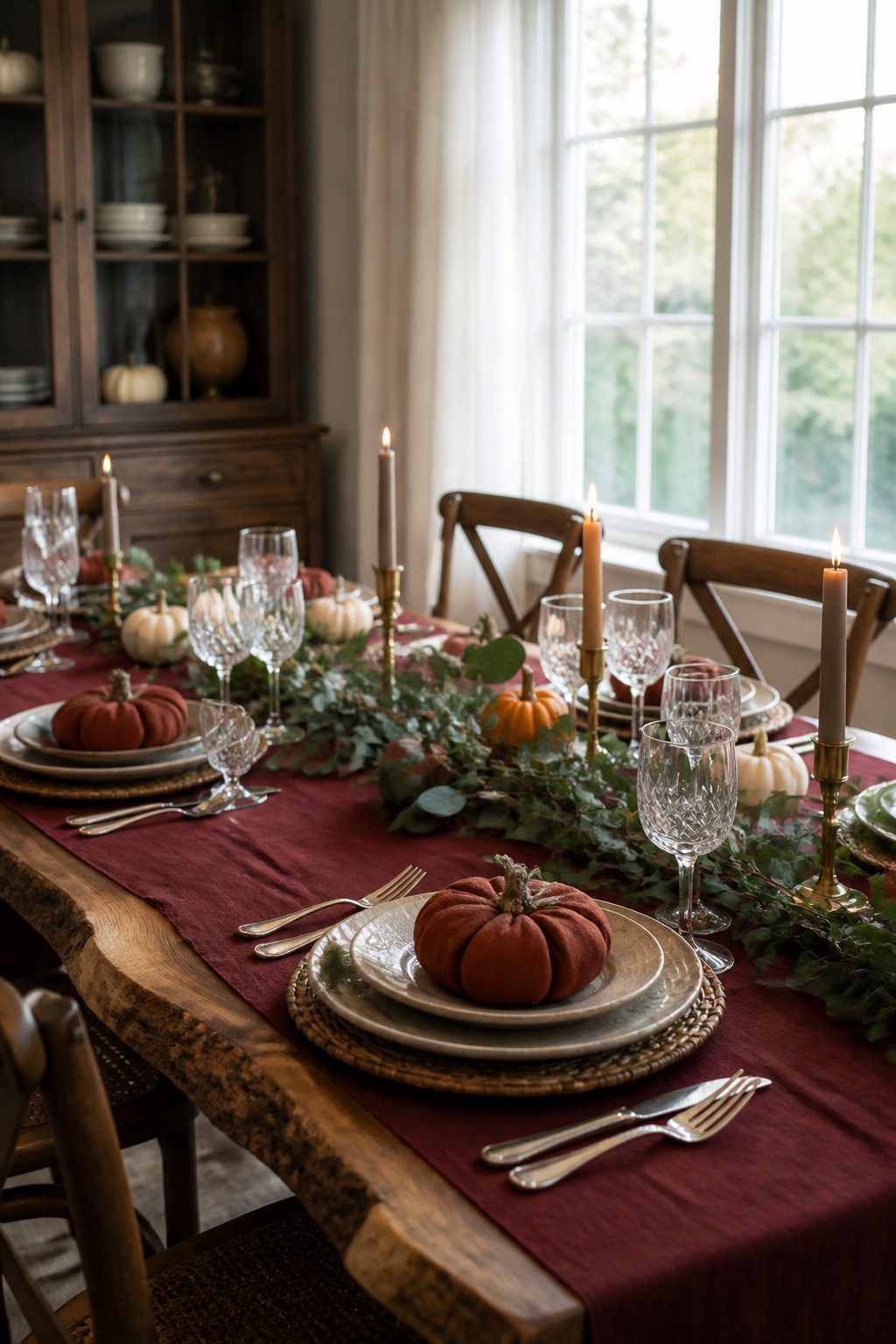
Warm wood tones and rougher textures need something holding them back from looking like a campsite. The line sits at finish: a live-edge board reads rustic, splintered plywood reads unfinished. Copper goblets or cut-glass stemware do the restraining, catching light so the table does not flatten into one brown note.
Color helps too. Bittersweet orange or deep maroon in a tablecloth or salad plate layer over neutral dinnerware, keeping the warmth without letting things go muddy. Eucalyptus laid down the center smells like fall and adds that slightly wild note, but keep it sparse. Too much branch and vine, and the table starts looking like you forgot to clear the yard debris.
The pumpkin napkin fold works here because it is one playful element in an otherwise controlled setting. One fold per place setting, not every trick at once. One rough element needs one polished counterweight or the eye has nowhere to rest. My own rule: if I am using an unironed linen or a slab of bark, the glasses had better be spotless and the silver aligned. The contrast does the work; matching rustic to rustic just piles on.
7. Casual Fall Table Setting Ideas
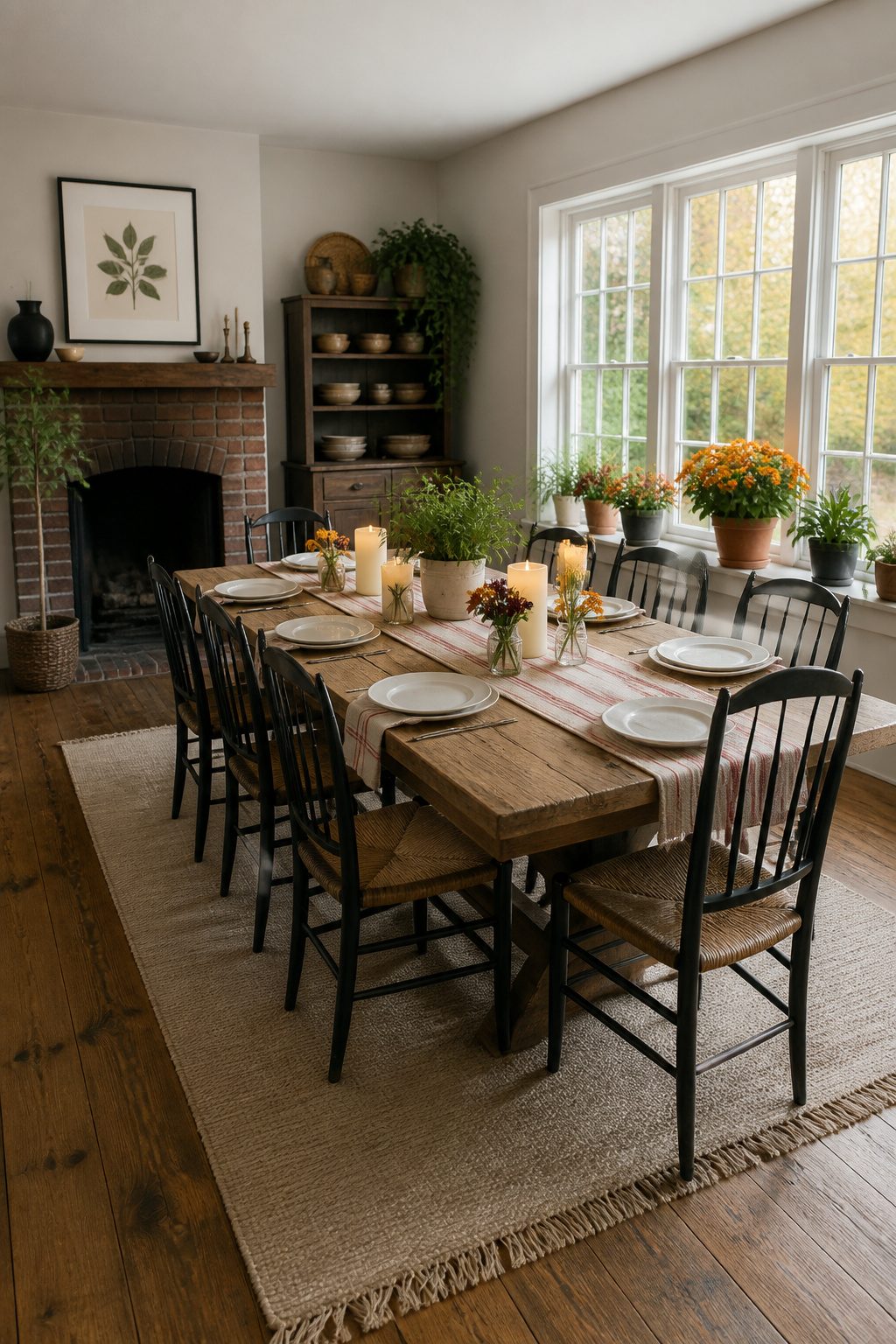
A striped runner down the middle does more to signal "relaxed but intentional" than any centerpiece could. I learned that watching a friend set her table for Sunday supper: the runner gave the eye a place to land, and the rest stayed simple.
For Friendsgiving or any gathering where people actually linger, battery-operated pillar candles solve the wax-and-fire problem without losing the glow. Pair them with striped napkins, not the formal folded kind, just tucked under the plate or left loose. The pattern does the work of looking festive so nothing else has to.
Small potted herbs or marigolds from the windowsill read as casual because they are casual: something you already had, not something you bought to perform autumn. The same with flowers clipped from a fall garden, dropped onto a linen napkin at each seat. One basic centerpiece plus taper candles, and the table is done in twenty minutes.
The line between thrown-together and intentionally simple sits in the textures. Smooth plates against patterned linens, maybe a wooden bowl mixed in, signal that someone thought about it without overthinking it. Bright orange or red plates against striped or patterned linens add warmth without the pressure of a full holiday production. That balance, pared back but still beautiful, is what keeps people at the table past dessert.
Color Schemes That Actually Work
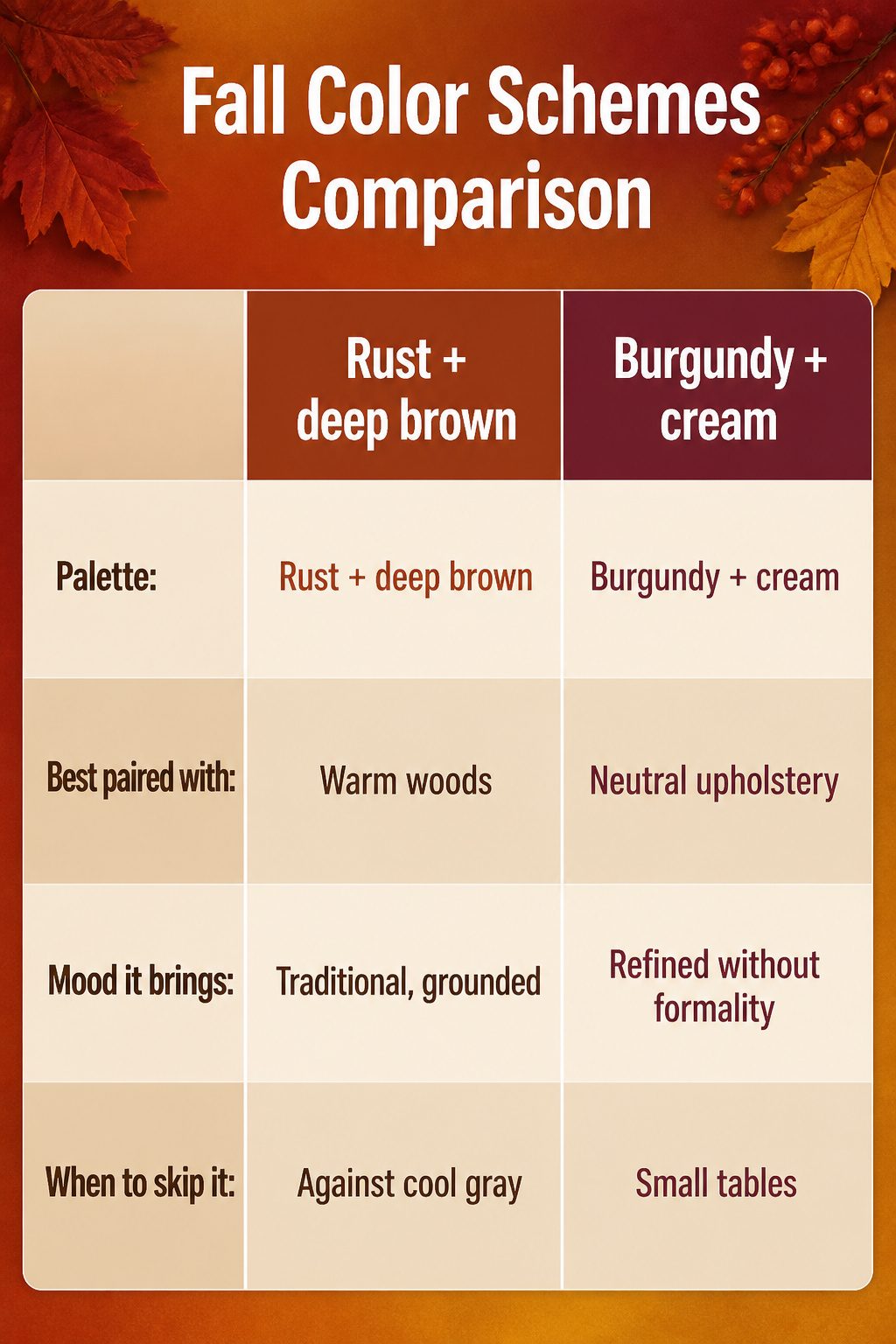
The first time I tried a rust-and-burgundy scheme, it fought my gray walls and looked like a craft-store explosion. The room’s existing colors matter more than the season when you’re choosing a fall palette. Rust, burgundy, mustard, olive green, cream, and deep brown all work, but which ones work for you depends on what your dining area already wears.
| Palette | Best paired with | Mood it brings | When to skip it |
|---|---|---|---|
| Rust + deep brown | Warm woods, beige walls | Traditional, grounded | Against cool gray or stark white |
| Burgundy + cream | Neutral upholstery, brass accents | Refined without formality | Small tables where it reads too dark |
| Mustard + olive green | White or sage walls, natural fiber rugs | Early fall, transitional | Rooms already heavy with green |
| All neutrals: cream, soft brown, faded green | Anything you already own | Calm, reusable year-round | When you want clear seasonal signal |
Neutrals won me over for my own apartment because my everyday dishes and linen stayed out and looked intentional. A collected, mix-and-match look works fine if you keep one element consistent: color, material, or style. For renters especially, the neutral route means the same runner and napkins carry from September through winter without a storage bin of orange-only pieces.
What Not to Buy for Centerpieces
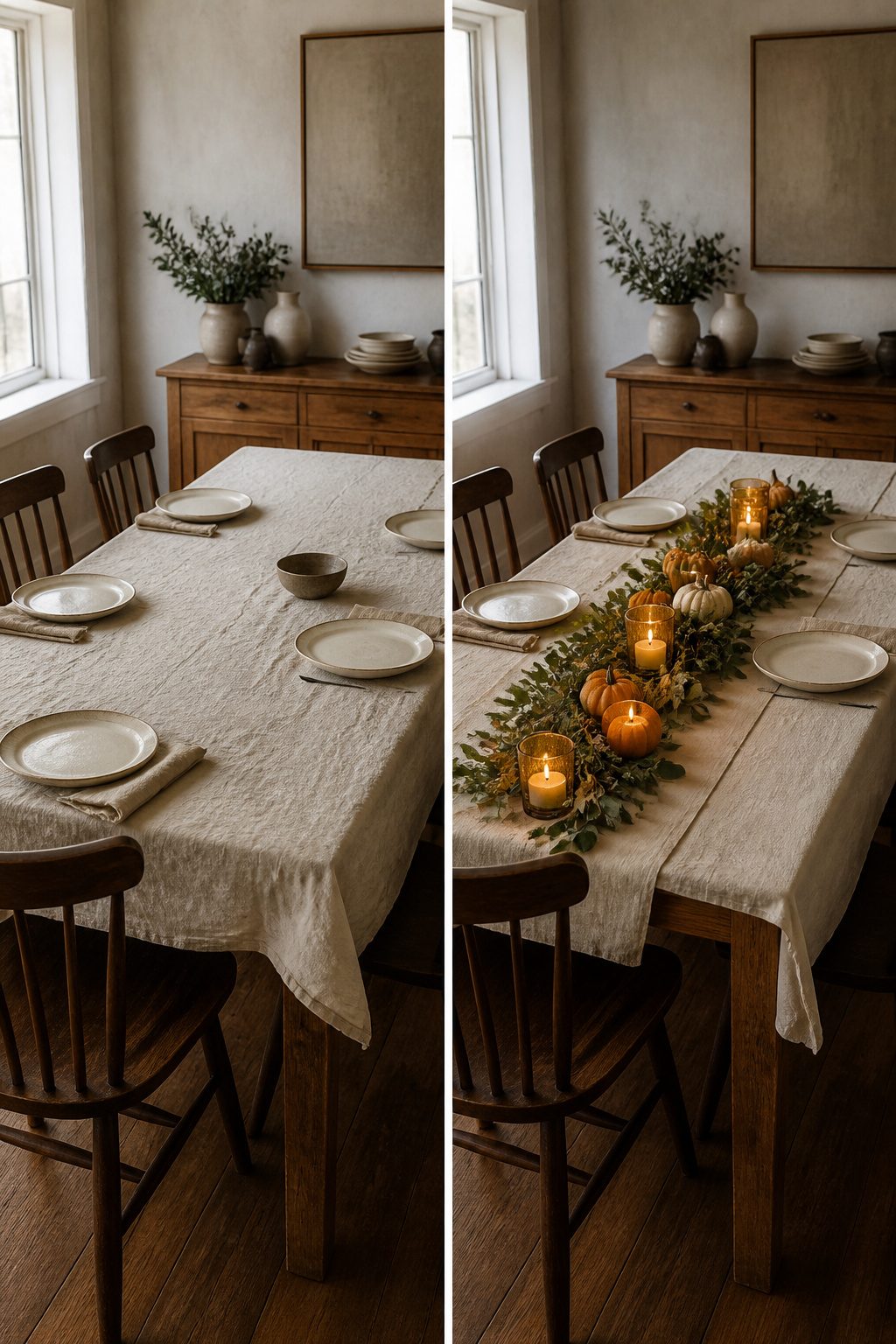
The centerpiece that towers above the rim of a wine glass looks dramatic in a magazine spread and becomes a practical headache the moment someone wants to pass the potatoes. Keep the tallest point below eye level when seated, about 14 inches, and you stop blocking faces across the table. I learned this the year I filled a tall glass cylinder with dried wheat and branches; half the guests spent dinner leaning sideways to talk around it.
Crowding hurts more than height. A centerpiece that stretches wall-to-wall leaves no landing spot for serving dishes, so everything ends up on the sideboard and the host runs relay. Low arrangements of mini pumpkins, a few gourds, tealights in amber glass, and some clipped greenery solve both problems. They read as abundant without claiming territory, and a guest can lift the whole cluster to the counter when the turkey arrives.
Small tables magnify every mistake. At a 36-inch round, even a modest vase becomes a screen. The low pumpkin-and-candle route matters more here because seeing across is the whole point of gathering. One year I skipped the centerpiece entirely on a tiny table and just ran a strip of kraft paper down the middle with a votive every place setting. It cost maybe six dollars, took ten minutes, and nobody missed the drama.
Mixing Dishes Without a Matching Set
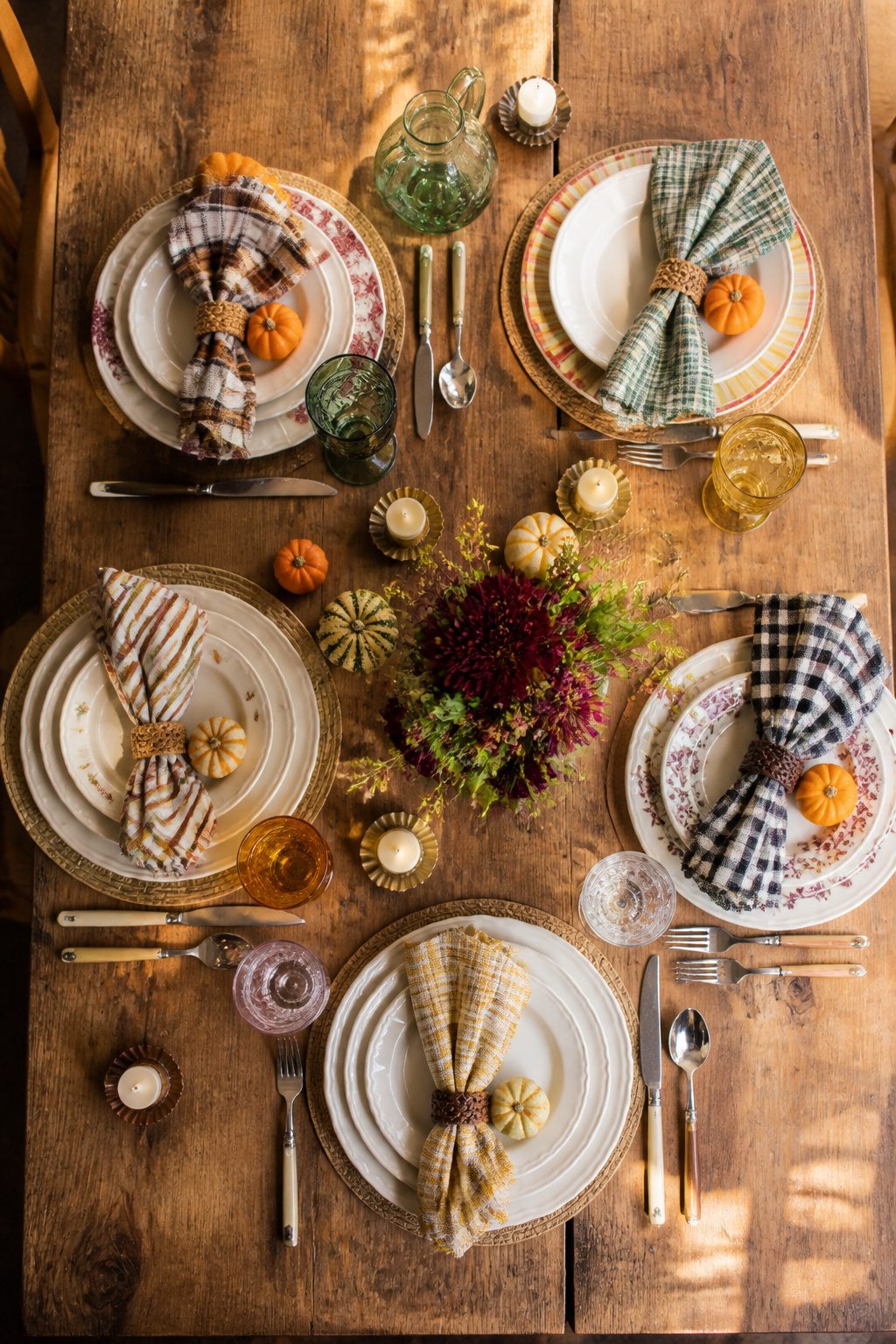
A matching set of dishes is not necessary for a fall table that reads intentional rather than accidental. The thrift stores and flea markets where I look for pieces rarely offer complete sets anyway, and that limitation turns out to be an advantage. Collected plates, glasses, and placemats carry more warmth than anything bought all at once.
The rule that keeps mixed pieces from looking like a mistake is staying inside one color scheme. A tartan plaid throw, buffalo check plates, and ticking stripe napkins all hold together when they share a palette. White dishes work as the quiet base that lets busier patterns breathe. Without that unifying color thread, the eye registers chaos instead of charm.
Reusing the same items across different setups helps too. One set of cut-glass water glasses, a few saved green bottles stripped of their labels, a handful of eucalyptus stems. Storage stays manageable, the budget stays real, and the table still looks pulled together for a Saturday dinner that took an afternoon to arrange.
Natural Elements You Can Source Free
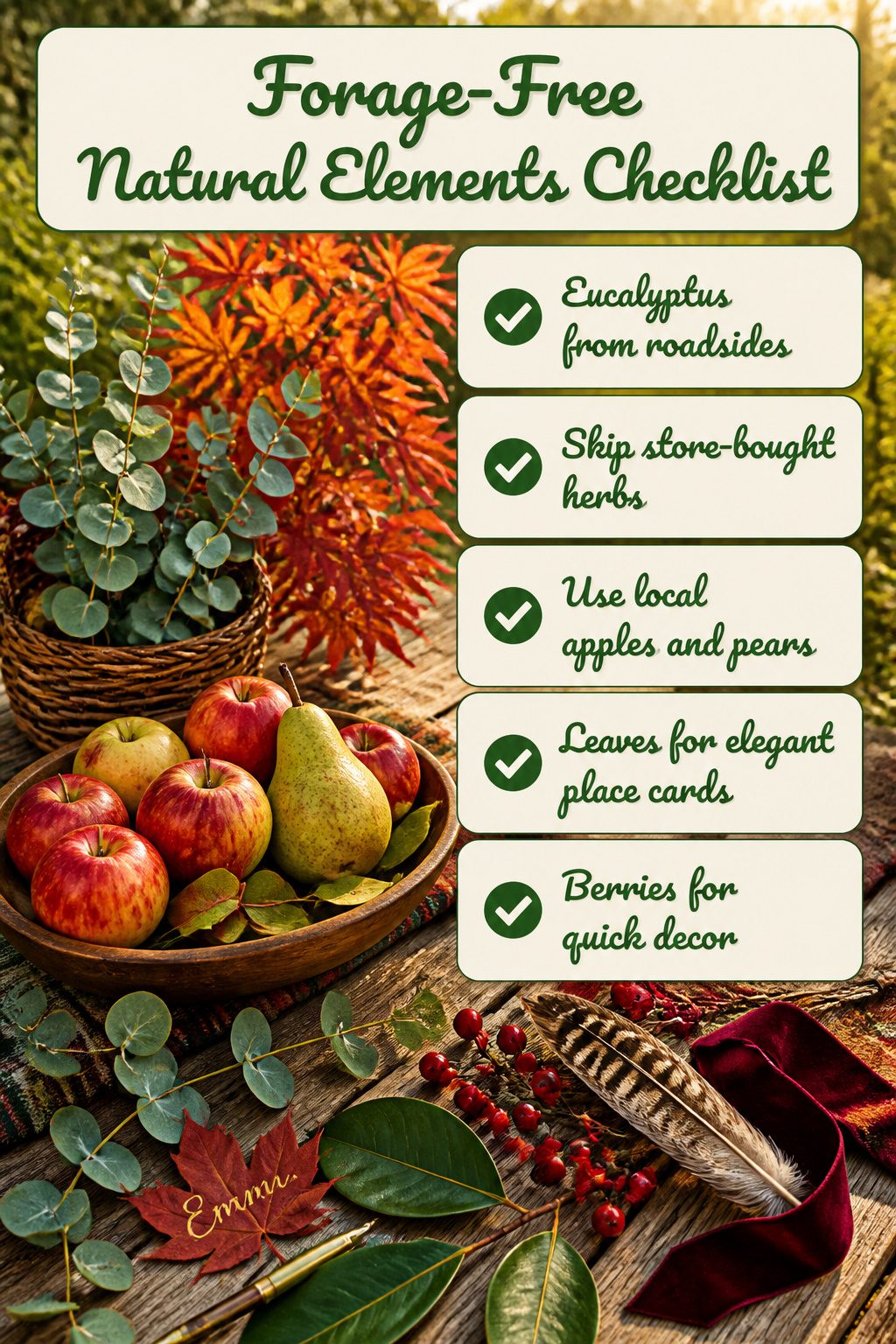
Free materials from outside beat anything shipped to your door, but timing matters more than with store-bought stems. Eucalyptus cut from the roadside dries in place and lasts weeks, while Japanese maple branches at peak color hold three days at most before they crisp. Roses still blooming into November in warmer zones give you that long-stem look for free if you have them.
- Forage branches from your yard or roadsides: eucalyptus, Japanese maple, or any tree with fall color. Eucalyptus wins for endurance; maple wins for a weekend event only.
- Skip the grocery store herbs unless you already have them: rosemary looks great but wilts fast off the stem, and the $3 bunch is not worth it for a single table.
- Pears and apples from your own fruit bowl or a neighbor’s tree cost nothing and read as intentional. Landed Interiors & Homes built a whole table around apples with yellow flowers and a plaid blanket, and the produce did all the work.
Seasonal produce really is the best way to add fall flair to your dining table.
That means a bowl of pears or a line of apples down the runner is not a placeholder: it is the whole centerpiece. No vase, no foam, no arrangement skill needed.
- Leaves for place cards last one evening. A lemon leaf, magnolia, or maple leaf with a name in gold pen looks elegant, but write them the day of or they curl.
- Red berries with a feather and velvet ribbon work for a single dinner; the berries soften and the feather collects kitchen grease by day two.
- Forage in the morning, arrange by afternoon, and serve that evening if you want anything delicate at its best.
Layering Textures Without Clutter
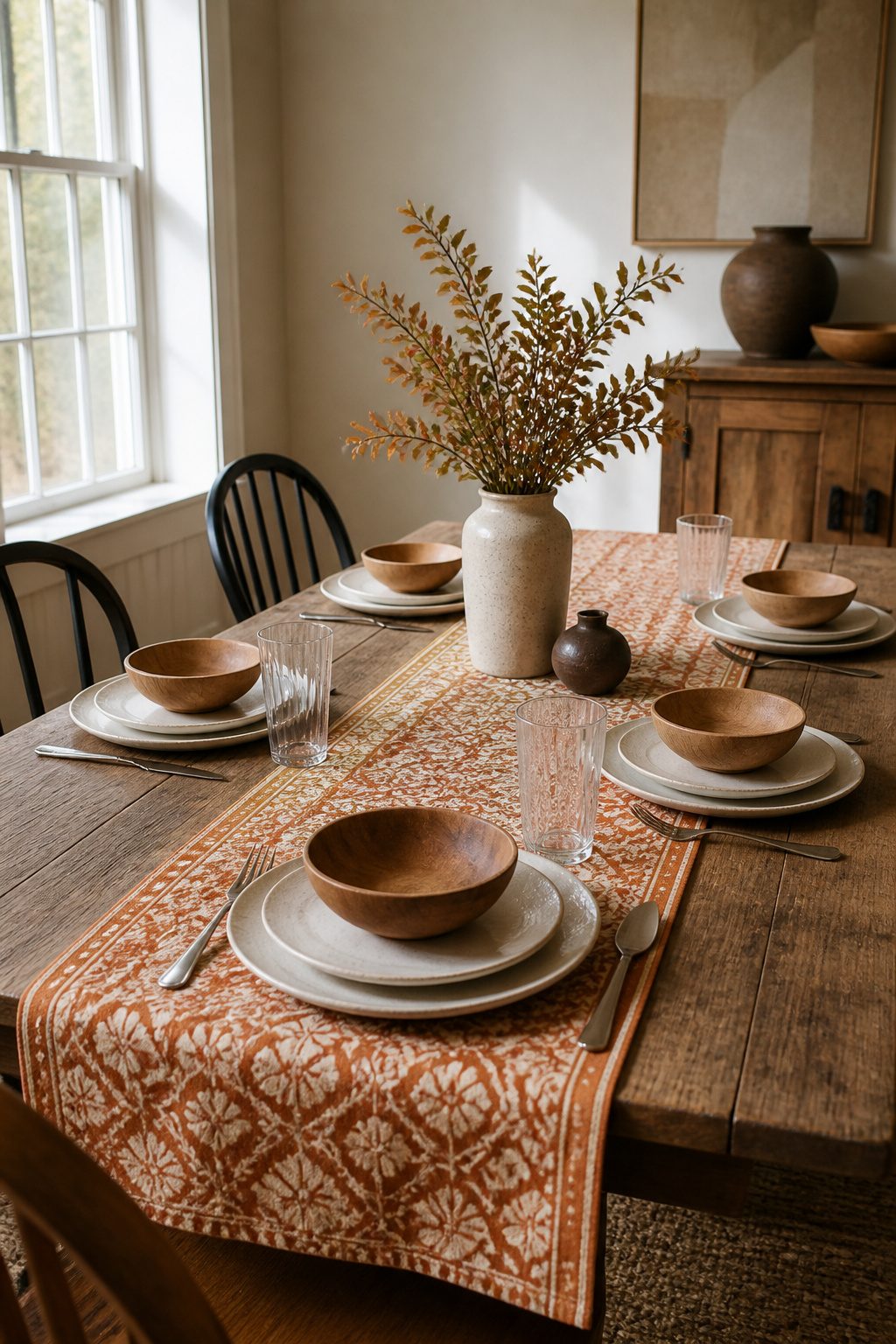
Smooth plates against patterned linens is where depth starts, but the line between layered and cluttered sits closer than most of us expect. I learned that the hard way one Thanksgiving when tartan placemats, buffalo check napkins, and ticking stripe runners all landed on the same table. The colors stayed within a fall palette, yet the eye had nowhere to rest. Three competing patterns is usually two too many unless one of them is nearly neutral.
White plates ground the look more reliably than I’d guessed. That bright surface gives the eye a pause between textures, and it lets a single bold pattern, like a harvest sampler linen, carry the whole mood. Natural elements help too, but wooden bowls or woven chargers work best when they repeat a texture already in the room rather than introducing a new one.
The combination that finally worked at my house: smooth cream stoneware, one patterned linen in warm orange, and a single wooden element per place setting. The table felt collected, not decorated. Adding even one more texture, a cut-glass goblet or a second wood tone, tipped it back into noise. For a weekend project with grocery-store flowers and candles, restraint reads as intention.
Frequently Asked Questions
How can I create a cozy fall table setting without spending a lot?
Most fall table settings cost under thirty dollars to stage because the base is almost always what you already own: white dishes, water glasses, and the table itself. The seasonal part is the swap-in layer, like a rust-toned plaid runner, a few taper candles, or mini pumpkins tucked into gaps after you map where the food will land. Raid thrift stores first for napkins and glasses; bronze candlesticks and amber cut-glass wine glasses run under $15 total and carry more weight than new dollar-store versions.
What colors work best for a fall table setting?
Rust, burgundy, mustard, olive green, cream, and deep brown all work, but which ones work for you depends on your dining area’s existing colors. The room’s palette matters more than the season when you’re choosing; rust and deep brown pair with warm woods and beige walls, while mustard and olive green suit white or sage walls. Neutrals like cream, soft brown, and faded green work with anything you already own and carry from September through winter without a storage bin of orange-only pieces.
Do I need matching dishes for a beautiful fall table?
A matching set is not necessary. Collected plates, glasses, and placemats carry more warmth than anything bought all at once, and thrift stores rarely offer complete sets anyway. The rule that keeps mixed pieces from looking accidental is staying inside one color scheme; tartan, buffalo check, and ticking stripe all hold together when they share a palette, with white dishes as the quiet base that lets busier patterns breathe.
What centerpiece works best for a country-style fall table?
A low arrangement of mini pumpkins, a few gourds, tealights in amber glass, and some clipped greenery reads as abundant without claiming territory. Guests can lift the whole cluster to the counter when the turkey arrives, and you keep the tallest point below eye level when seated, about 14 inches, so faces stay visible across the table. Seasonal produce like a bowl of pears or a line of apples down the runner can be the entire centerpiece; no vase, no foam, no arrangement skill needed.
How do I make a small dining table feel festive for fall?
Focus on a few meaningful accents rather than lots of decor, because small tables magnify every mistake. At a 36-inch round, even a modest vase becomes a screen, so skip the centerpiece entirely and run a strip of kraft paper down the middle with a votive at every place setting. A table runner, a small cluster of items they can lift aside, and cloth napkins in autumn colors transform the table without crowding it.