A front door Christmas garland is a strip of greenery, real or synthetic, hung around a door frame to mark the season.
The catch is that the wrong length leaves you stretching a 1.5-meter piece across an 18-foot frame, or the wrong construction has glitter shedding onto your porch by New Year’s.
The 30 warm white LEDs woven through a 9-foot pre-lit fir garland, ready to plug in without tangled cords, is what separates the garlands that stay up from the ones that come down early.
Pre Lit LED Outdoor Fir Garland
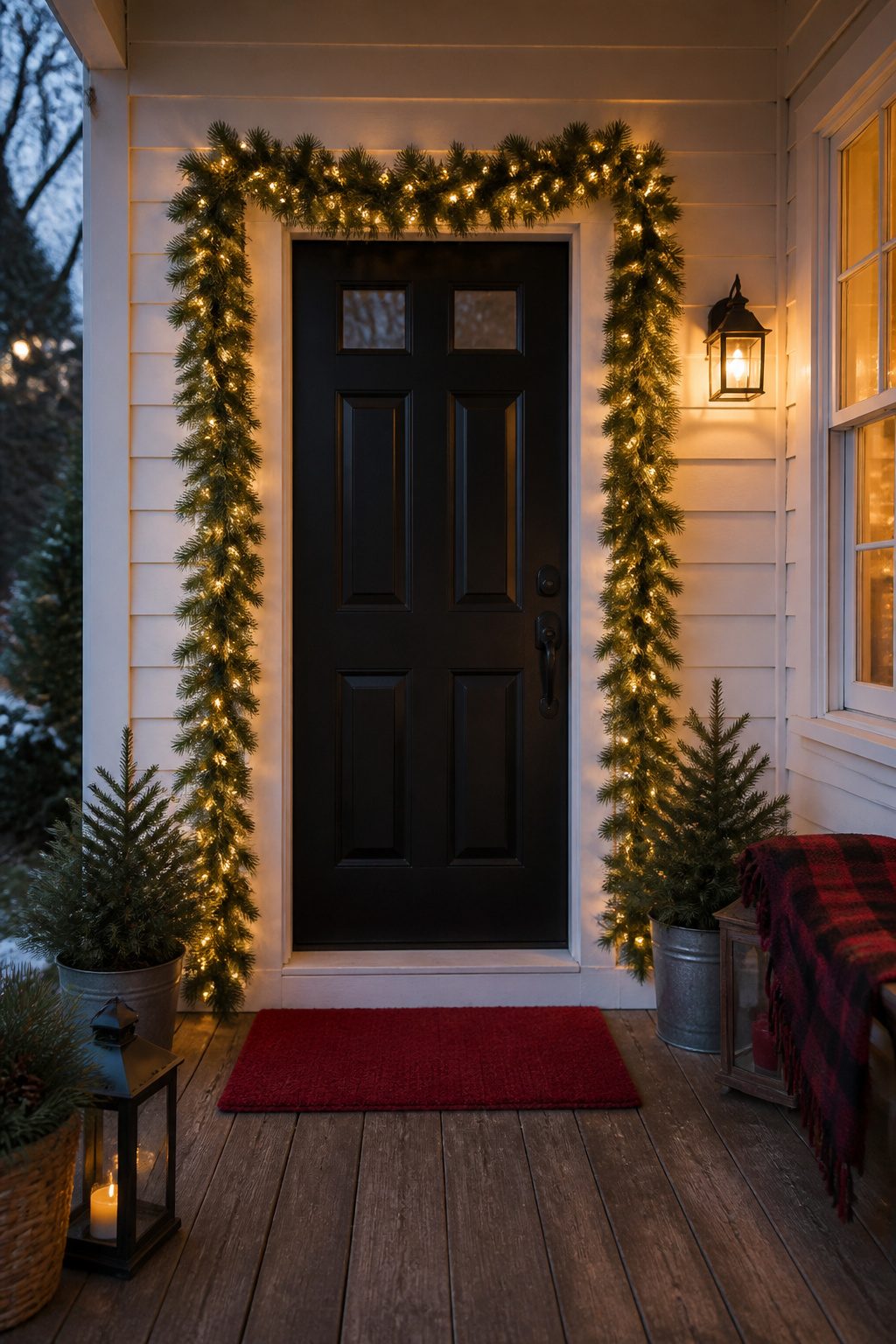
A pre lit LED outdoor fir garland with 30 warm white LEDs solves the problem I always had with separate string lights: tangled cords, burned-out bulbs mid-season, and the gamble of whether the spacing would look right once hung.
The LEDs are already woven through the faux greenery, so the glow sits where it should without extra work.
The typical 9-foot length matters more than I expected. Two pieces frame a standard front door with a little drape at the corners, no cutting or doubling up required.
For renters and first-home owners, that plug-and-play setup means no drilling for extra hooks to manage loose light strands, and no storage box of half-working incandescents to deal with come January.
The weather-resistant build handles actual outdoor duty, not just a covered porch.
Outdoor White Berry Cypress Foliage
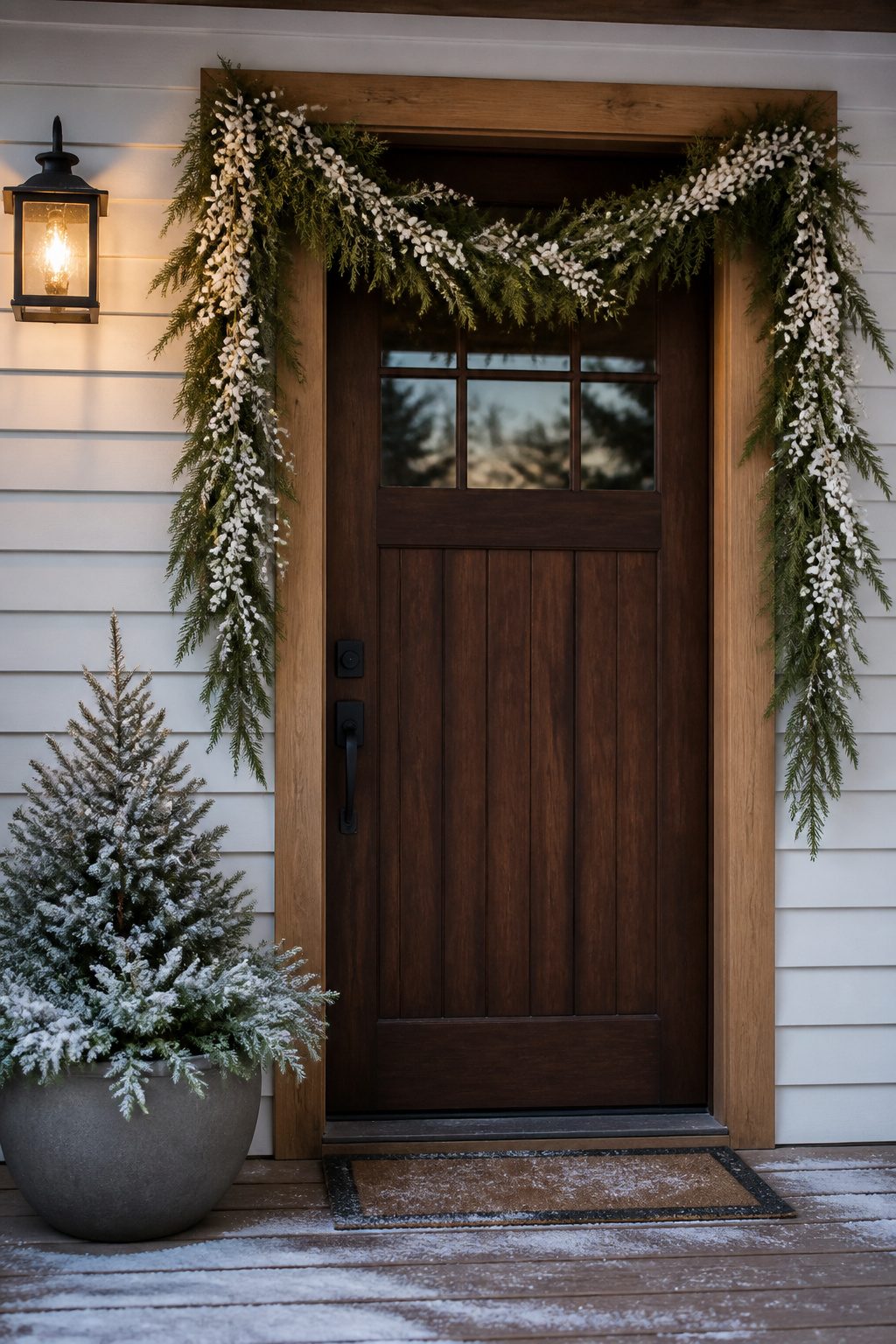
The outdoor white berry cypress foliage I hung last year carried better from the curb than anything with a red accent ever has.
The berries are small enough to read as texture until you get closer, then they catch porch light or streetlight and throw it back in a way that looks intentional rather than flashy.
That quality matters on a Scandinavian-influenced exterior, where the whole point is restraint and the garland needs to hold its own against pale siding or natural wood without shouting.
Cypress branches keep their structure in cold and wet weather better than softer evergreens.
The stems are wired, so the garland holds a swag shape without collapsing against the door frame, and the white berries are fused or glued well enough that you lose only a few over a season of wind and freeze-thaw cycles.
I would not call it indestructible, but it outlasted a cheaper pine option I tried the year before by a clear margin. For a minimal look, skip the lights entirely and let the berries do the work after dark.
Pre Lit Outdoor Snowy Christmas Garland
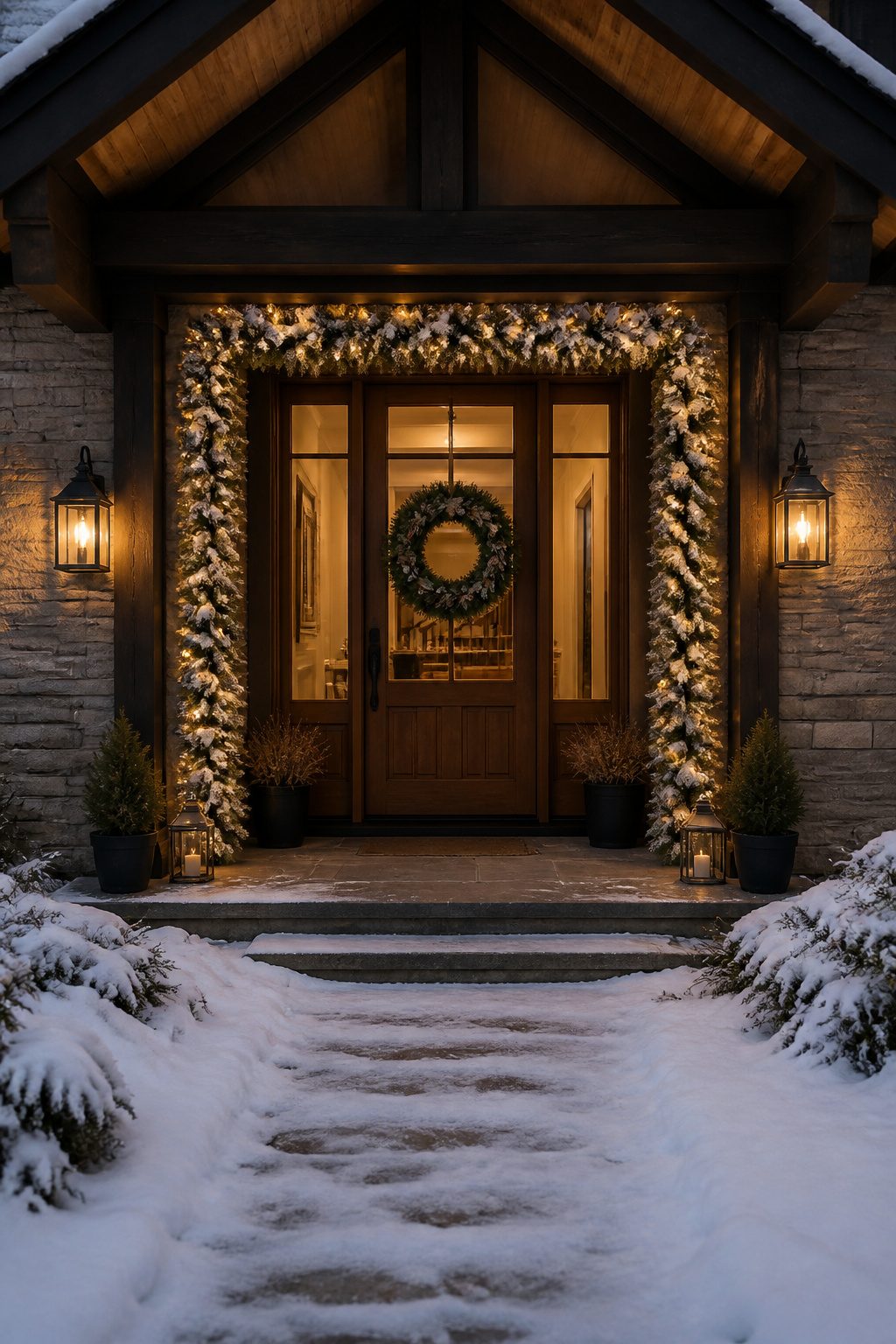
A 2.5m pre lit outdoor snowy Christmas garland hits a useful sweet spot for a standard front door, giving enough length to frame the opening without pooling on the step.
The built-in 70 dual-colour LEDs mean you are not wrestling with a separate string of lights or hunting for an outdoor outlet you did not plan for.
That matters on a Saturday morning when the temperature is dropping and you still want the look finished by evening.
The flocked or snow-dusted finish photographs well for Pinterest because the white catches light differently than flat green, creating depth even in a quick phone snapshot.
Where the snow effect works is on the needle tips and branch edges, where real frost would settle.
Where it reads cheap is when the white coating is sprayed evenly across the whole surface like spray paint, flattening the texture instead of highlighting it.
The better versions concentrate the dusting on the outer needles and leave the inner branches darker, which is what you want to check in product photos before buying.
Real Touch Norfolk Pine Wreath
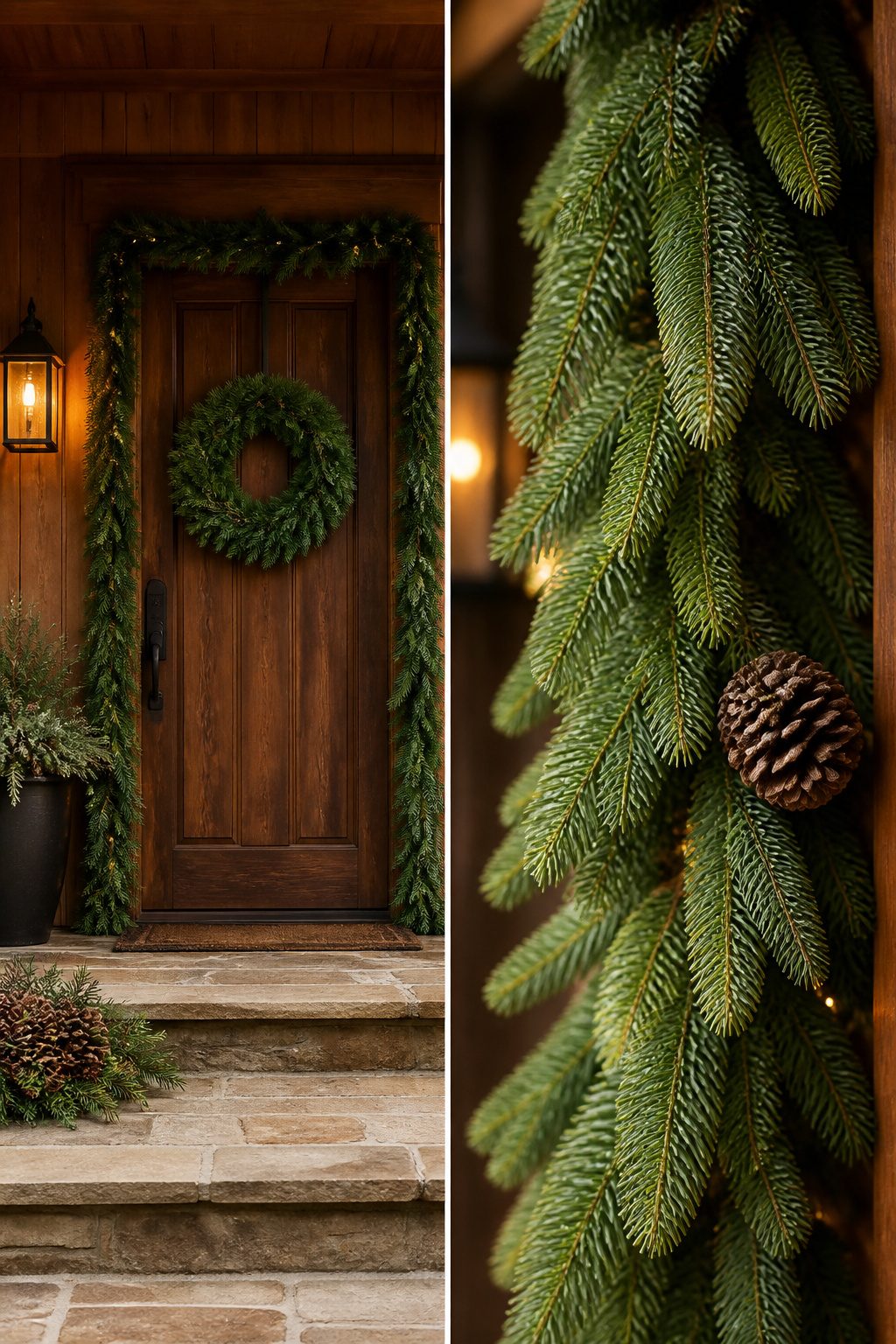
The real touch Norfolk pine wreath works best as a partner to your front door christmas garland, not a replacement for it.
Hang it centered on the door, then run garland along the frame or around the sidelights so the two pieces echo each other without competing.
The needles are molded PE plastic, the same material used in the 1.85-meter garland versions, and that molding is what gives them the slight give and matte surface that reads as fresh-cut from a few feet away.
Actual Norfolk pine cuttings turn brown and drop needles after a hard rain; the PE version sheds water and keeps its shape through freeze-thaw cycles.
I have left one up through a wet December week and it looked the same coming down as going up.
For door pairing, a 24-inch wreath hits the right scale for a standard 36-inch residential door. Much larger and it starts to read as a wall piece; much smaller and it gets lost against the garland running beside it.
The 70-branch density fills the ring without looking like a solid green disk, which matters when you are layering ribbon or a simple cluster of berries at the base.
Faux Garland with Lights
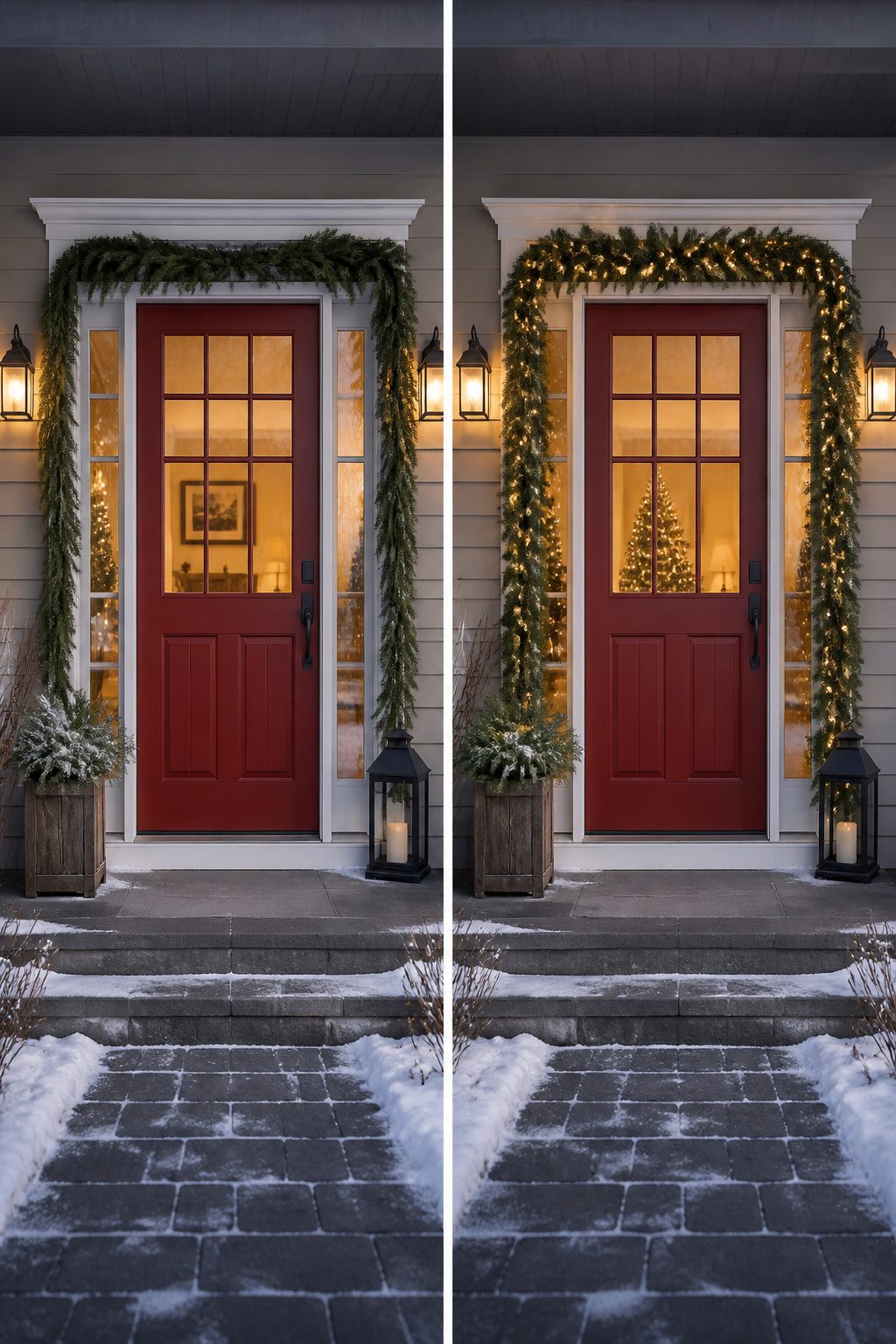
Pre-lit faux garland saves the step of winding in your own lights, though the built-in strands usually run shorter than what you’d add yourself.
A 192-inch Real Touch Norfolk Pine Garland at $159.99 lands at the top of the market with dense, flexible branches you can shape around a doorframe, while a 5-foot ball garland at $9.99 covers the budget end with simpler construction and fewer tips to fill out.
The money shows up in branch density and light count: that $159.99 piece carries enough volume to read lush from the sidewalk, whereas the $9.99 version works better as a layering piece over a mailbox or railing than as a solo statement on a front door.
Battery packs solve the outlet problem for doors with no nearby plug, though you’ll trade continuous glow for the convenience.
Plug-in pre-lit garlands stay lit for hours without fading, but only if your door happens to sit within cord reach of an exterior outlet.
When I planned my own setup, the battery route won because my 1920s porch has one outlet behind a storm door that stays latched all December.
Most pre-lit options run warm white LEDs, which read classic rather than trendy and match the color temperature most people already have in window candles or tree lights.
Mixed Evergreen Foliage
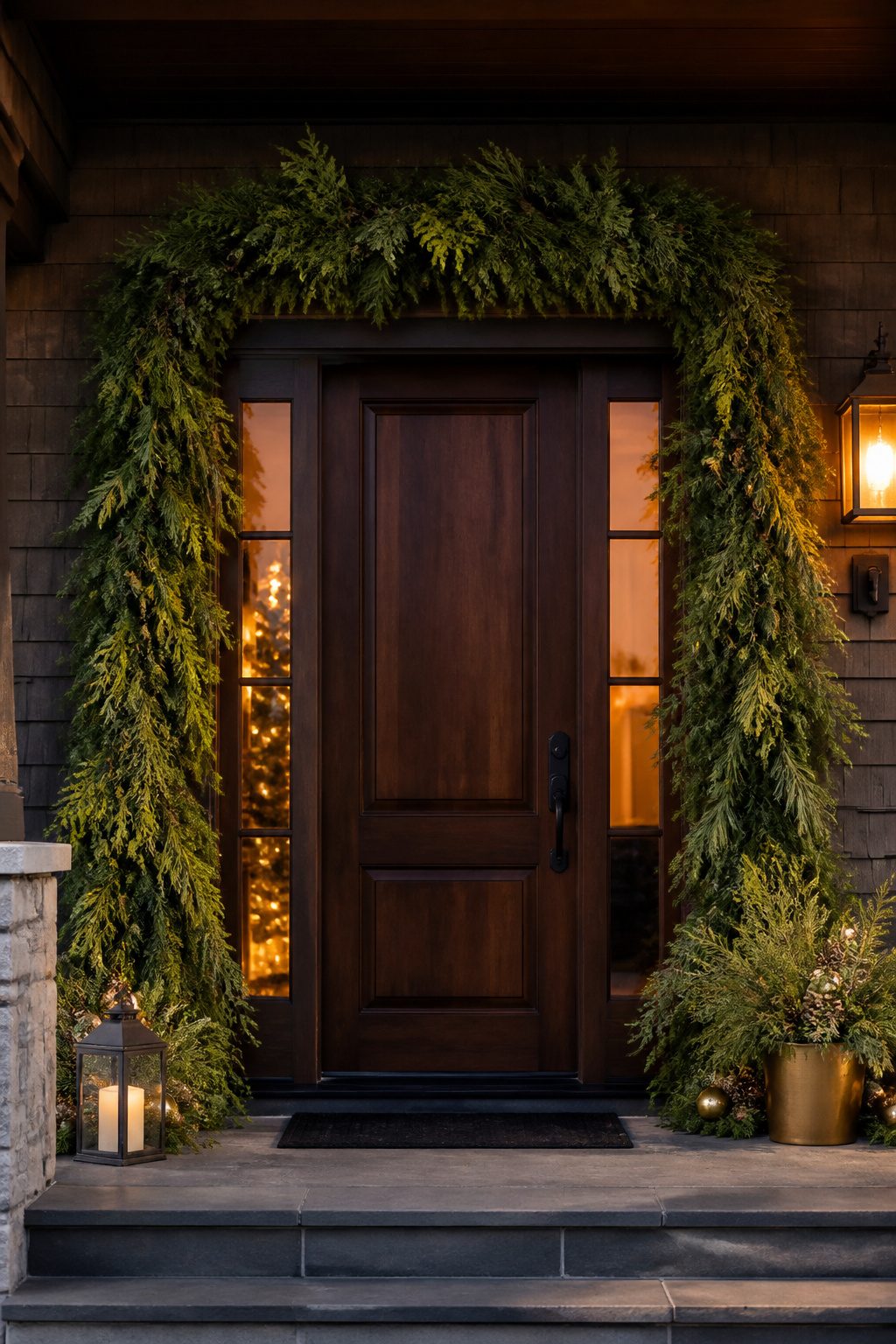
Mixed evergreen garlands blend pine needles, cedar fronds, and fir tips into one piece, and that variety is exactly what keeps the artificial origin from shouting across the yard.
From the sidewalk, the eye reads the different textures as natural depth rather than flat plastic uniformity. Most standard garlands run about 18 inches in fullness when fluffed properly, though the back side against your door will stay flatter by design.
The spot to watch is wherever two foliage types meet; manufacturers often leave a thin transition zone that reads as a bald stripe from the street.
Work those sections first, pulling individual stems across the gap so cedar overlaps pine and no base wire shows. Sparse ends happen even on good garlands, usually the last six inches before the loop.
I bend the outer tips outward at a 45-degree angle rather than straight, which fakes extra volume without adding material.
The mixed greens forgive this more than single-species garlands would; one texture reading as thin just looks like the variation already built into the piece.
Supabright Door Garland with 440 Warm White LEDs
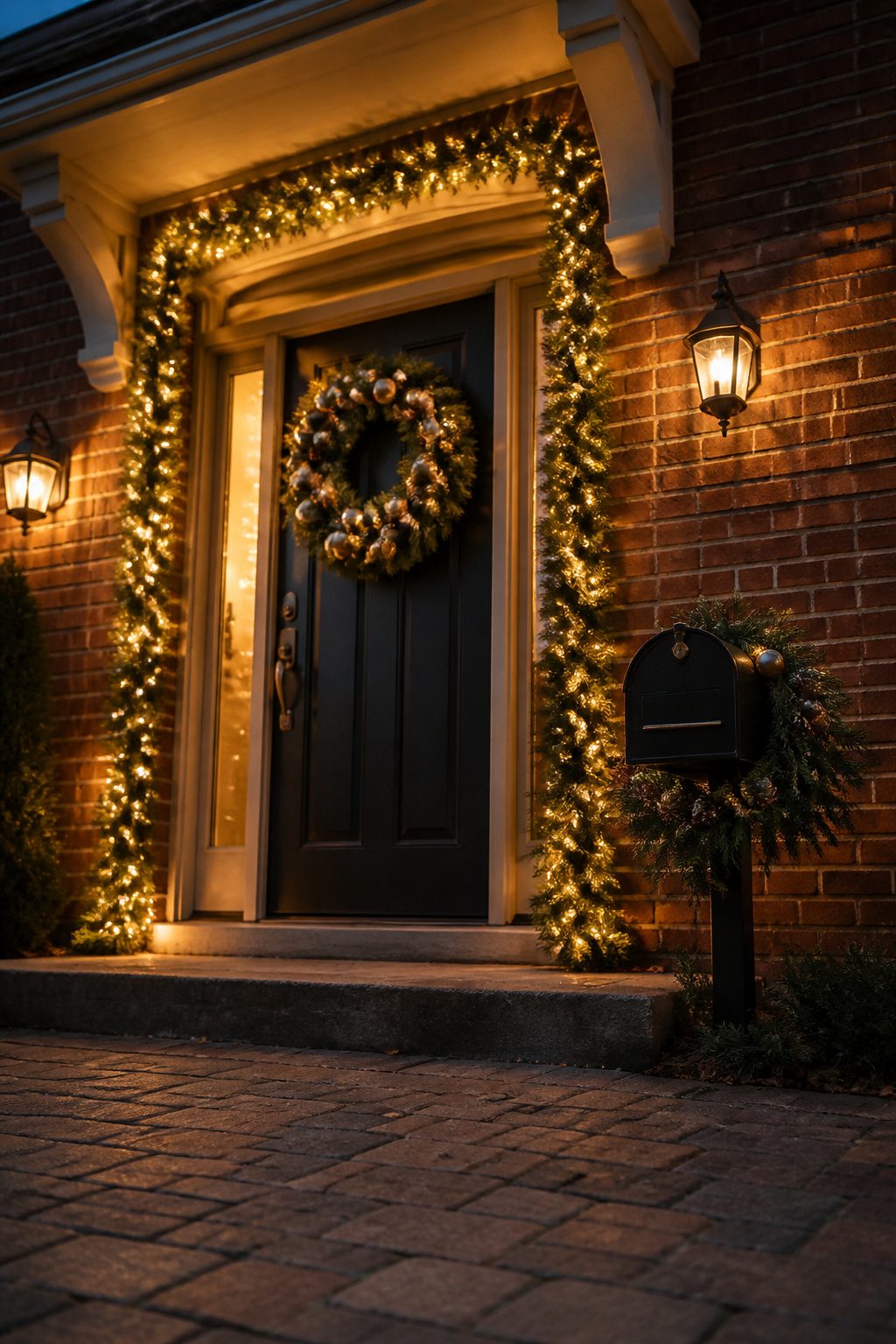
A 5.5 metre strand with 440 warm white LEDs gives you roughly one bulb every 1.25 centimeters, which is the density that actually reads as "lit" from thirty feet away rather than "spotted with light."
The Supabright garland uses that density across eight lighting modes, and the difference between its twinkle and steady burn is worth choosing deliberately.
Twinkle here means a randomized slow pulse, not the aggressive blink of older fairy lights; from the street it registers as movement and depth, while steady burn flattens the door into a bright rectangle that can look more like a landing strip than an invitation.
Power draw on 440 LEDs runs low enough that you are not looking at a dedicated circuit. Most households string this on existing outdoor outlets already handling other holiday load, and the built-in eight-hour timer keeps the draw from running overnight.
The timer also solves the maintenance issue: set it once and the display manages itself through the season, which matters more than it sounds when December weather turns.
Fresh Front Door Garland
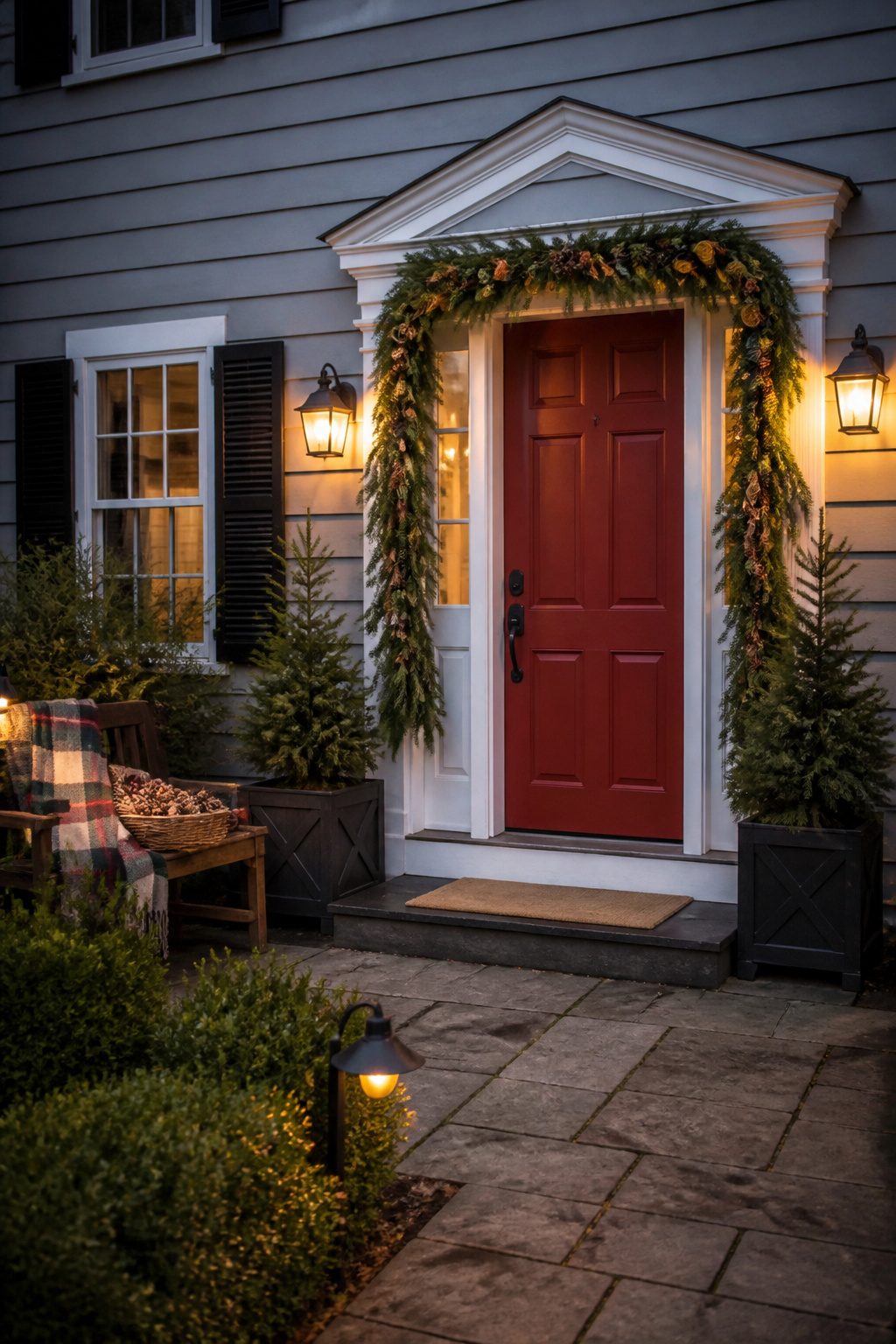
Fresh spruce garland runs 3 to 10 feet and arrives dressed with pinecones, berries, orange slices, and cinnamon sticks. House Beautiful calls it premium for a reason: the scent is immediate, the curb appeal is real, and the lifespan is short.
Welcome guests with the timeless beauty of a fresh spruce garland.
What that means in practice: two to three weeks outdoors in cool, dry weather, less if rain freezes and thaws on it or if you are in the humid South.
Local tree farms and some grocery chains carry them from late November; mail-order greens ship overnight and cost more.
The math over time is what stopped me from making it an annual habit. A fresh piece at $40 to $80 each season totals $120 to $400 across five years.
A decent faux garland runs $30 to $60 once, lasts those same five years, and the only ongoing cost is storage space and maybe new lights.
The trade is scent versus spend, and for a weekend project on a real budget, the faux option usually wins.
Artificial Eucalyptus Garland
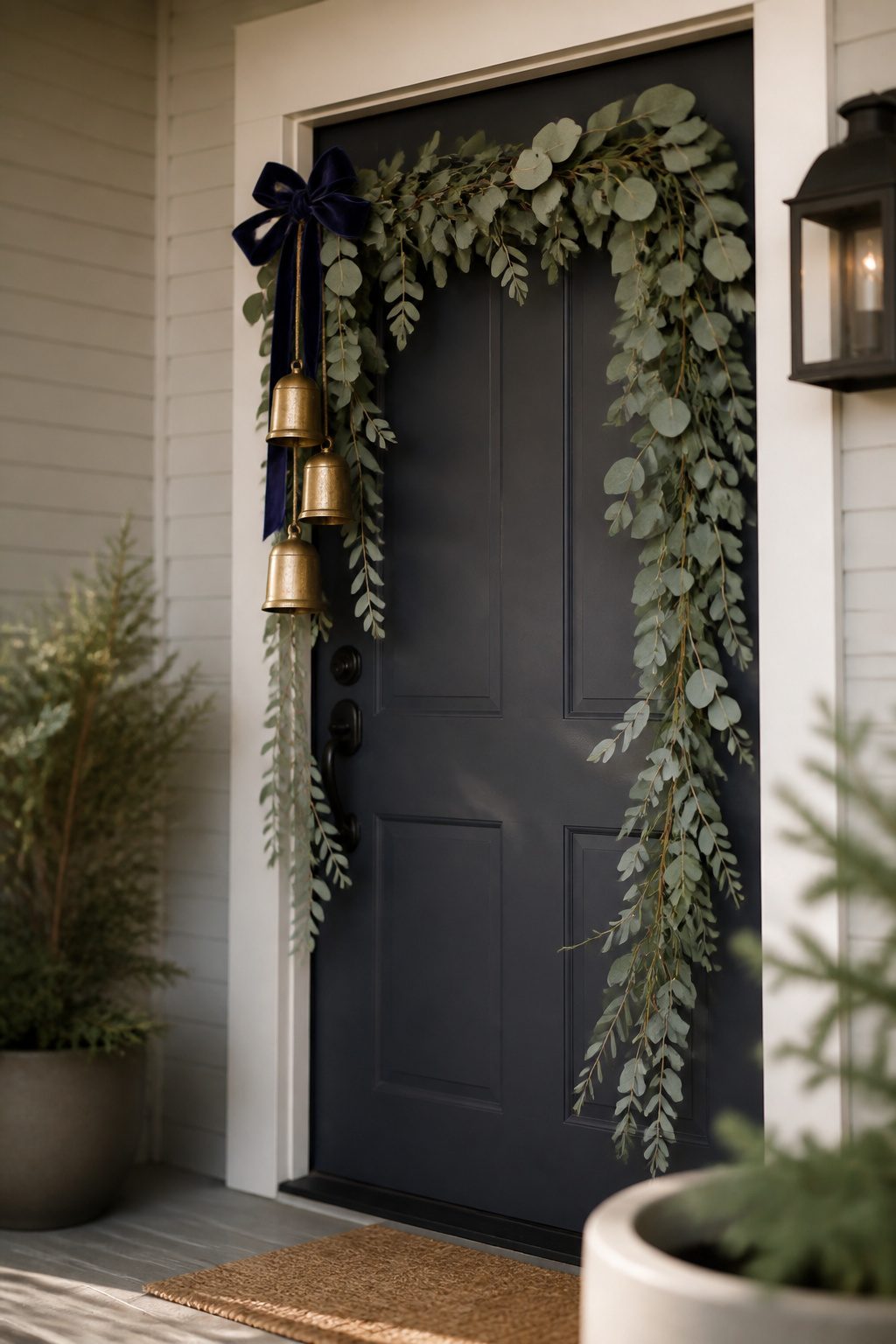
Silvery-green eucalyptus reads as modern in a way pine never quite manages, and that shift in tone opens the door to color schemes that skip red and green entirely.
Last year I paired a 6-foot artificial strand with navy ribbon and brass bells, and the effect felt intentional rather than like a holiday default I had settled for.
The weight matters more than I expected. Eucalyptus garlands drape softer and hang flatter against a door frame, no fighting the spring-back of stiff needles.
For renters, that lighter build means command hooks hold steady without the anchor anxiety that comes with heavier faux fir.
The same strand I hung in December spent March through October woven over a bathroom mirror, then went back outside with dried orange slices clipped in.
Two seasons of use, no storage bulk, and the color still looks deliberate rather than faded.
Outdoor Silver and Gold Foliage
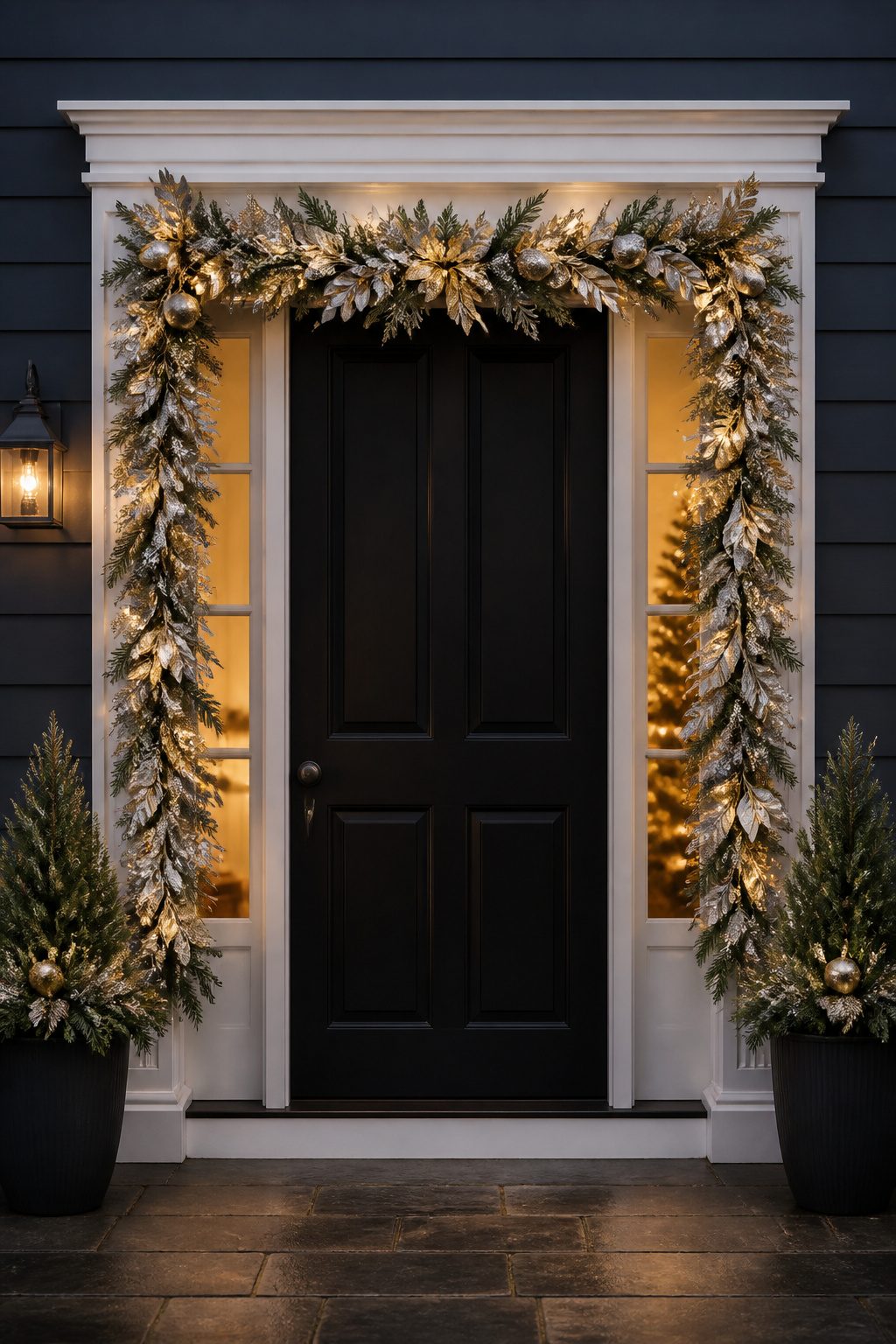
Metallic silver and gold garlands catch porch light in a way matte greenery never quite manages, turning a front door into something visible from the street even on dark December evenings.
The finish reads as festive luxury, though that same shimmer can tip into dated territory depending on what surrounds it.
Against charcoal, navy, or deep forest siding, the contrast stays crisp and intentional; paired with beige brick or warm terracotta, the effect can feel like leftover 1980s opulence rather than something chosen for this year.
Construction on the outdoor-rated versions runs to PVC or polyethylene branches with metallic flakes bonded to the needles, sometimes with wire frames inside to hold the draped shape along a railing or frame.
The question of shedding matters more than sellers usually admit.
Those flakes are not embedded into the plastic; they sit on top, and a season of wind, brushing against coats, or handling during install will leave glitter on gloves, door mats, and porch steps.
Some lines lose enough that by January the garland reads as merely pale rather than deliberately metallic. If the porch is covered, the wear slows; exposed to weather, expect noticeable dulling within a few weeks.
For renters or anyone swapping decor every year, the tradeoff is straightforward: the metallic finish gives you the brightest first impression, but it is not the choice that holds up for reuse without looking tired.
Red Door Garland
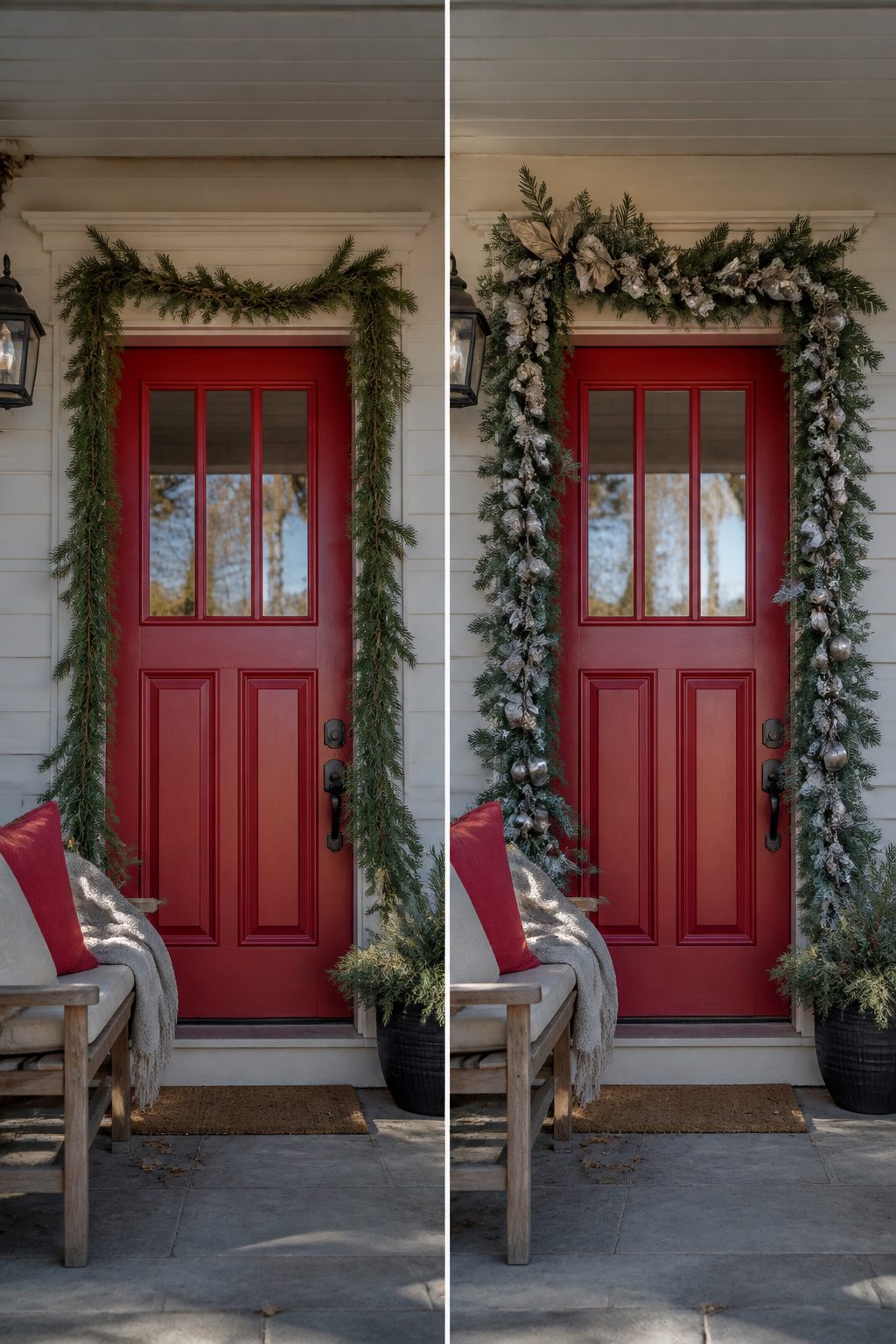
A red door reads as a statement already, so the garland has to decide whether to compete with it or step back.
Cool, blue-based greens like fir or spruce hold their own against red without turning murky, while yellow-greens like olive or sage drift toward brown where the two colors meet.
That shift happens faster than you would think, especially under porch light after sunset.
Red berries and ribbon on a red door can work, but the texture has to do the separating. Glossy holly leaves or matte cedar branches create enough visual distance that the reds read as layers, not one flat shape.
Last year I tried a thin pine rope with wired crimson velvet, and from the street it photographed as a single rust-colored blur.
The fix was swapping in branches with silver undersides; the flash of gray broke up the field just enough.
If your door leans orange-red rather than brick or barn red, gold-tone accents turn the whole entry into a near-complementary shout. That is not always wrong for Christmas, but it is a choice to make on purpose.
White lights, not warm white, tend to cool the pairing down to something you can live with for a month.
Installation Techniques
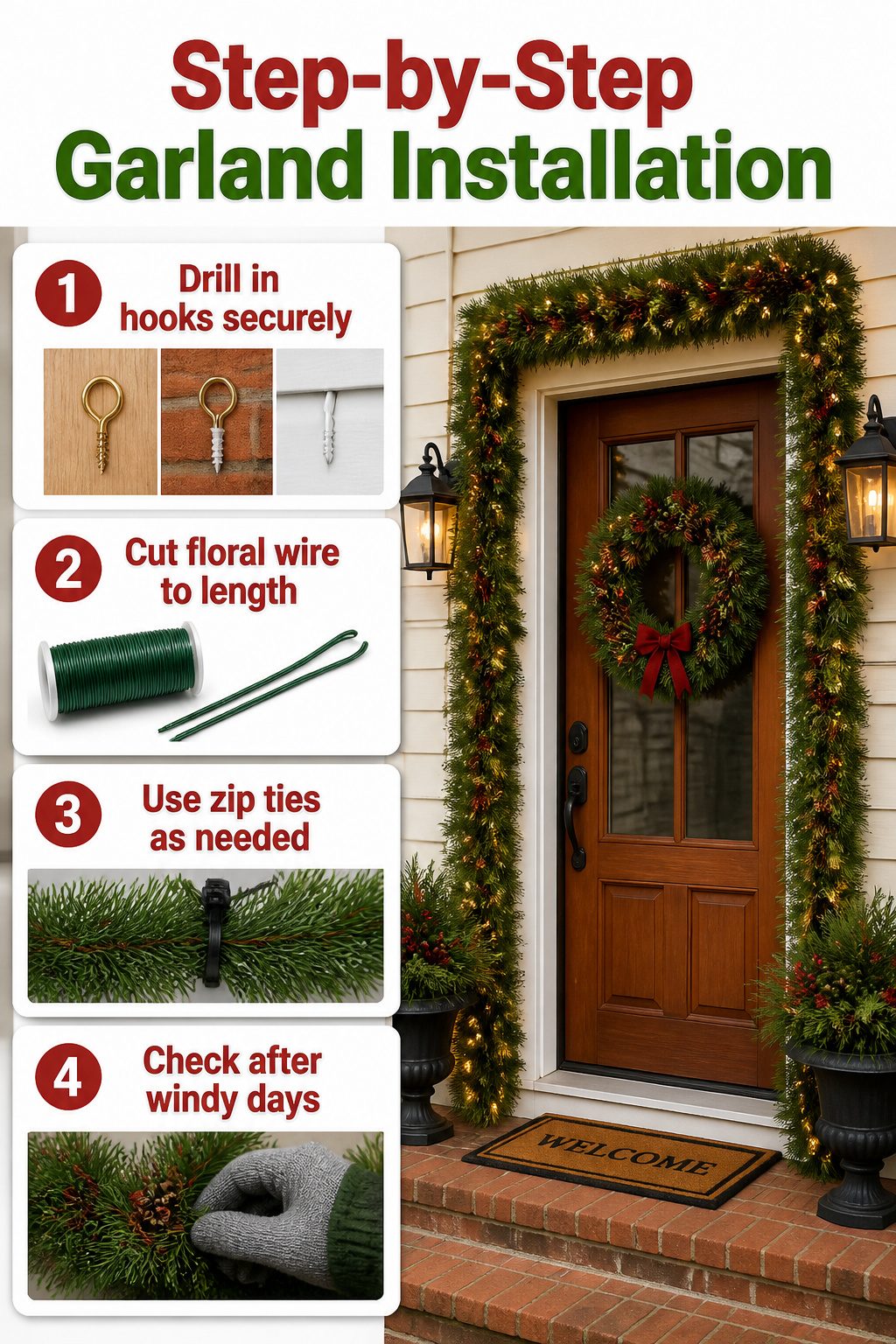
- Screw-in hooks drilled into wood door frames hold the most weight and leave only a small hole to fill later. For brick, a masonry bit and anchor set the hook deep enough that frost won’t loosen it. Vinyl siding needs a hook designed to slip into the seam between panels; a standard screw cracks the lip.
- 20 gauge floral wire cut to 16-inch lengths is what I double up and twist around the garland’s own wire frame, then loop over the hook. Two strands at once keep the greenery from sagging in wind. The wire hides inside the foliage so nothing metallic shows.
- Zip-ties work when wire runs out. A loose loop goes around the garland, slides over the hook, and tightens. Snip the tail flush and fluff the branches over the plastic. They hold through rain but will brittle after a season or two of UV, so cut them off in January rather than trying to reuse.
- On a covered porch, any of these methods lasts the month. Out in open weather, wire wins; zip-ties in direct sun can snap during a cold snap. Check the garland after the first windy day and retighten whatever loosened.
Types of Garlands
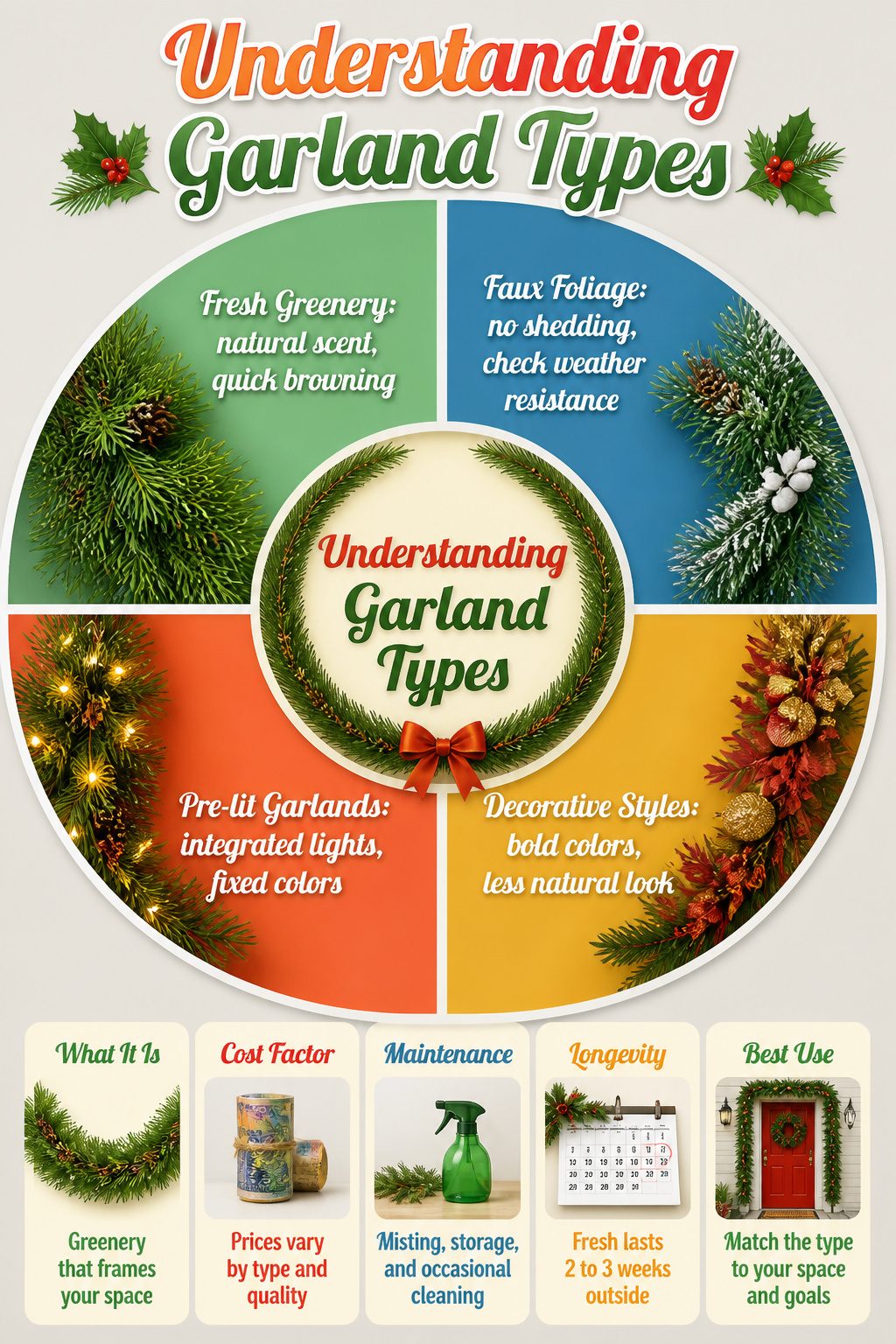
Most garlands fall into one of four buckets, and the lines blur more than retailers let on.
- Fresh greenery gives that pine scent and uneven, organic drape, but it sheds needles, needs misting, and lasts maybe two to three weeks outside before browning. The fir front door garlands and any hand-cut mixed evergreen fall here.
- Faux foliage skips the shedding and the watering. The 1.5m pre-lit LED outdoor fir garland, the white berry cypress, and the snowy Christmas styles are all built from synthetic materials shaped to mimic real branches. Weather resistance varies, so check whether the label says outdoor-rated or just "suitable for covered areas."
- Pre-lit garlands layer LEDs onto either fresh or faux bases. The 30 warm white LEDs on that fir garland, or the 440 warm white LEDs on the Supabright, mean you are buying the lighting and the greenery as a single unit. Battery timers help, but the battery box needs hiding, and the light color is fixed unless you restring it yourself.
- Decorative styles push past realism into color, metallics, or berries. Silver and gold foliage, red door garlands, and eucalyptus that never grew in nature fit here. These read more as ornament than plant, which works on a painted front door but can clash with actual landscaping.
The overlap hits when a pre-lit garland is also fully decorative, or when faux pine is so realistic you cannot tell from the sidewalk. Start by deciding whether you want maintenance, longevity, or a specific look.
Two of the three is realistic on a weekend budget; all three usually means spending more on the faux side than on fresh.
Length Options
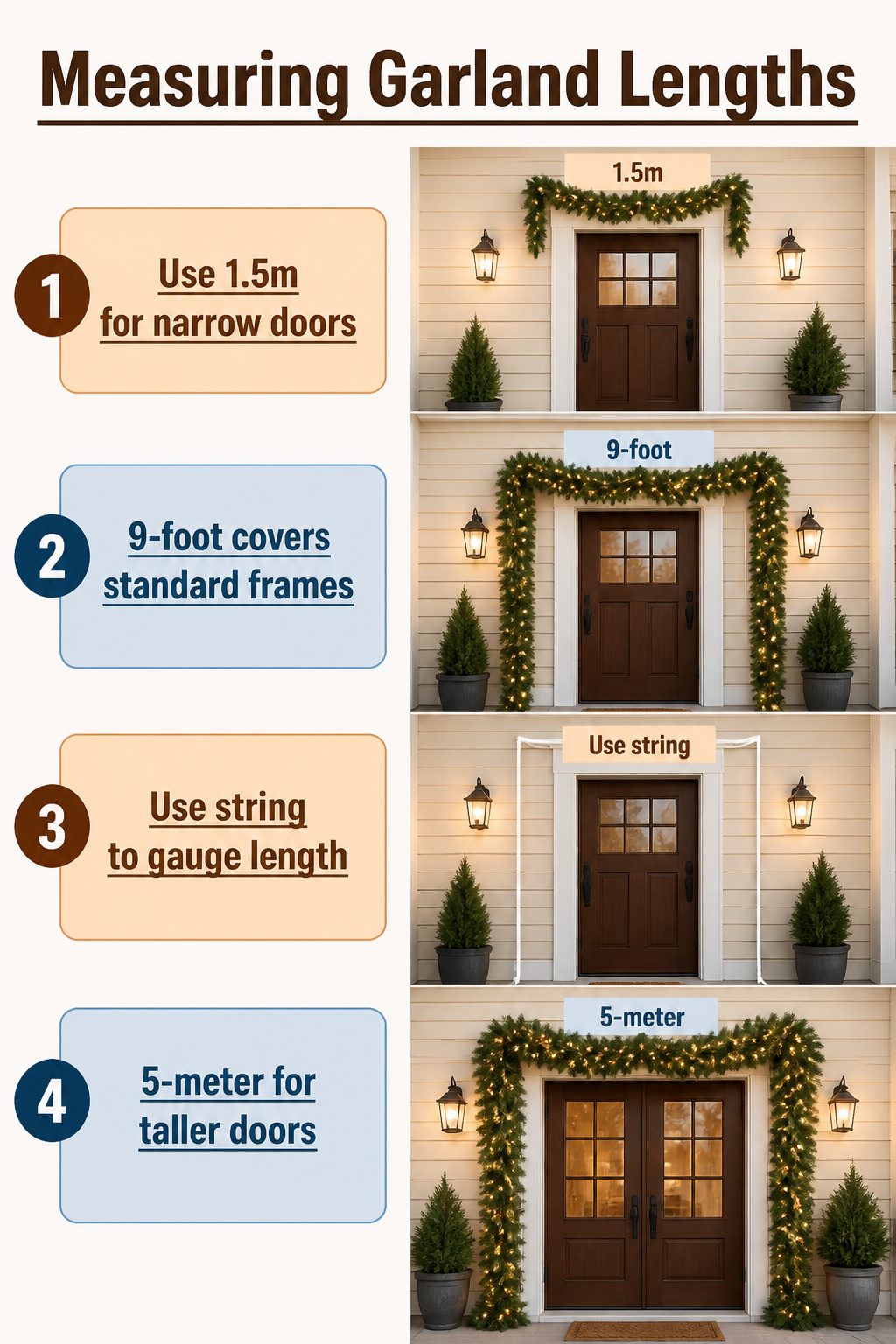
A 1.5-meter garland works for a single swag across the top of a narrow door, but most surrounds need more. Two 9-foot garlands, end to end, cover a standard door frame with enough drape to look full rather than stretched.
That 18-foot total leaves room to work down both sides and across the header without fighting every inch into place.
Before ordering anything, cut a piece of string to the length you’re considering and tape it around your frame.
The string shows you exactly where the garland will land and whether you need an extra foot to tuck behind the planter or reach the outlet.
I learned this after a 2.5-meter pre-lit garland I bought left an awkward gap at the bottom; the string would have caught it in thirty seconds.
For taller or double doors, a 5-meter option like the Supabright line gives you the same wrapped look without splicing two pieces.
The tradeoff is weight and storage bulk, so match the length to your actual frame rather than rounding up by default. Two 9-foot garlands remain the safest starting point for a standard single door.
Lighting Features
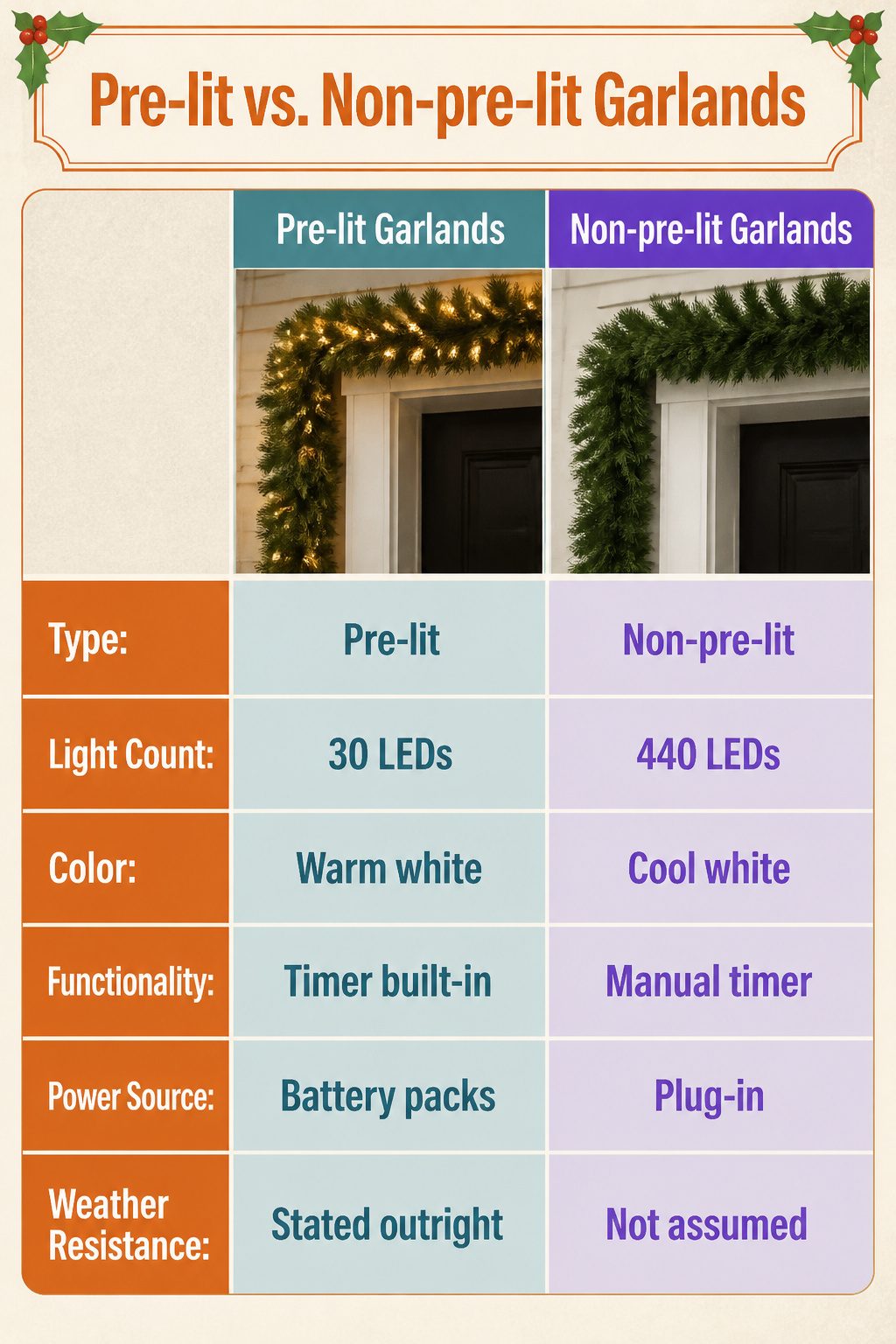
Pre-lit garlands save the step of weaving your own lights through greenery, but the numbers on the box matter more than most people notice.
A 9-foot piece with 30 warm white LEDs gives a soft, scattered glow, almost like candlelight catching the branches. A door-sized 5.5-meter garland with 440 LEDs in the same warm white reads entirely different: bright, defined, almost architectural.
The effect you want should decide which you buy, not the other way around.
Warm white leans yellow, the color of old incandescents; cool white is bluer and reads sharper against dark evenings. Twinkle functions feel festive for about two days, then the blinking starts to grate.
Steady burn is what I would choose for a front door you pass every evening. Battery packs let you hang anywhere without an outdoor outlet, though you will trade brightness for that freedom and remember to swap or recharge.
Plug-in strands stay brighter longer and usually cost less per LED, but the cord becomes part of your design problem.
Before buying, check whether the timer is built in or absent. An automatic 8-hour timer means the lights handle themselves; without it, you are the timer, or the garland burns all night until January.
Weather resistance should be stated outright, not assumed from "outdoor" in the product name. LEDs themselves last, but the wire connections and battery compartments are where cheap builds fail first.
Frequently Asked Questions
What is the best way to hang outdoor Christmas garland?
Screw-in hooks drilled into wood frames hold the most weight, while masonry anchors work for brick and specialized hooks slip into vinyl siding seams without cracking them.
Double up 20 gauge floral wire cut to 16-inch lengths, twist it around the garland’s internal wire frame, and loop it over the hook so nothing metallic shows through the foliage.
Zip-ties work in a pinch but turn brittle after UV exposure; cut them off in January rather than trying to reuse them.
How long should my garland be for my front door?
Two 9-foot garlands end to end remain the safest starting point for a standard single door, giving you enough length to run down both sides and across the header with natural drape at the corners.
A 1.5-meter piece covers only a narrow top swag, while a 5.5-meter option suits taller or double doors without splicing.
Cut a piece of string to your planned length and tape it around the frame before ordering; this catches awkward gaps in thirty seconds.
What types of garlands are available for front doors?
Fresh greenery gives scent and organic drape but sheds needles and lasts two to three weeks outside. Faux foliage skips maintenance and lasts years, though outdoor-rated labels matter more than product names suggest.
Pre-lit garlands build LEDs into either fresh or synthetic bases, saving installation time but fixing your light color and count.
Decorative styles push into metallics, berries, or eucalyptus tones that read as ornament rather than plant, which works on painted doors but can clash with live landscaping.