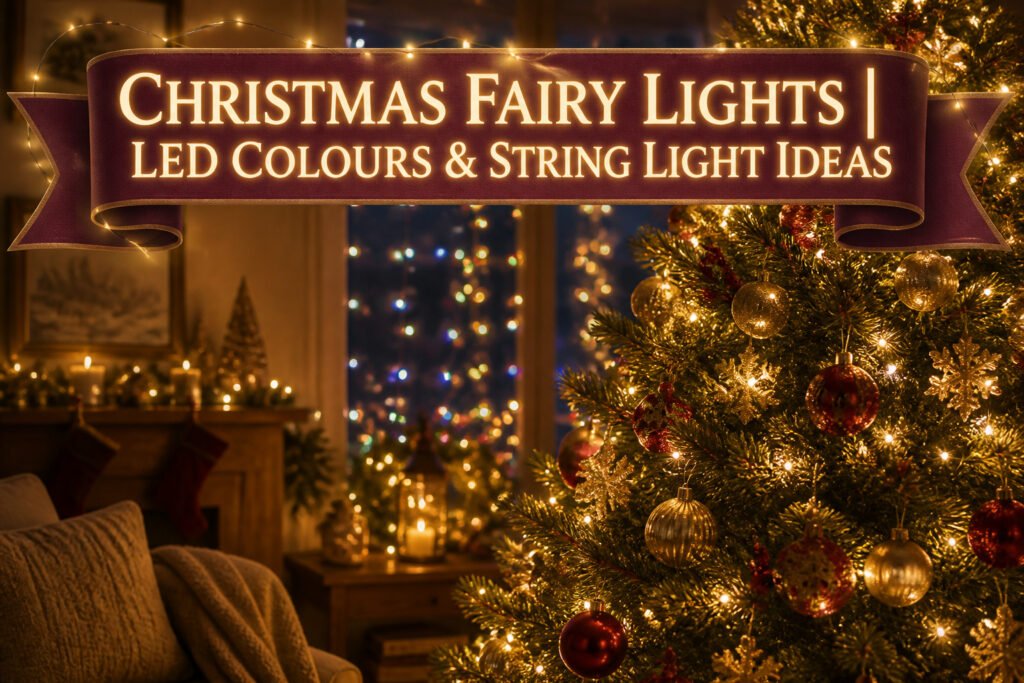
Christmas fairy lights are thin-strand LEDs on bendable wire, usually silver or gold, that run on battery or plug-in power with timer options. The catch is that color temperature changes everything: warm white flatters wood and greenery while cool white turns clinical against traditional red-and-gold decor, and mixing both on the same tree wrecks the display. Most strands run about $39.99, with blue slightly higher at $44.99, and the wire you choose, silver or gold, determines whether the hardware disappears or becomes part of the look.
Warm White LED Fairy Garland Lights
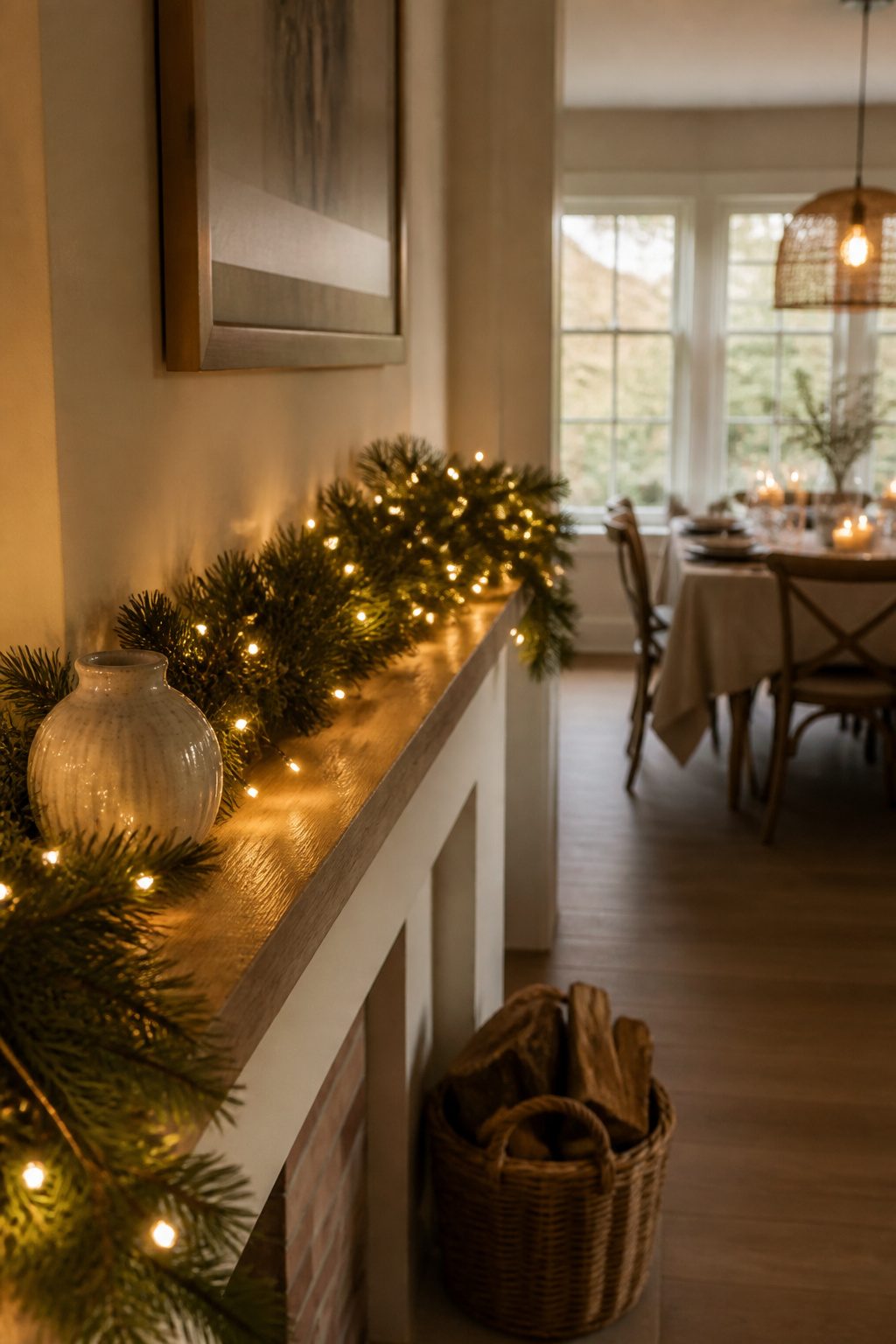
Warm white LED fairy garland lights on silver wire run $39.99, and that color temperature is where most of us should probably start. The bulbs read somewhere between candle flame and late-afternoon sun, which means they play nice with wood tones, greenery, and the cream or off-white walls most rentals already have. Cool white can look sterile against those backdrops, and the colored options start to read as theme rather than atmosphere.
The silver wire matters more than I expected when I first started looking at these. Against white ceilings, light walls, or window frames, the line practically disappears, so the light seems to float rather than announce its hardware. Bend it around a mantel garland or weave it through a wreath and the wire holds shape without fighting you.
Battery packs with timer functions keep the setup from becoming a daily chore, and the thin wire fits spaces rigid corded strands won’t. I would skip trying to stretch a single string across a whole room; the glow pools best in contained areas like a console table arrangement, a headboard outline, or inside a glass cylinder where the reflection doubles what you bought. For renters especially, warm white is the safest bet for a tone that still feels like Christmas without demanding the rest of your decor match it.
Cool White LED Fairy Garland Lights
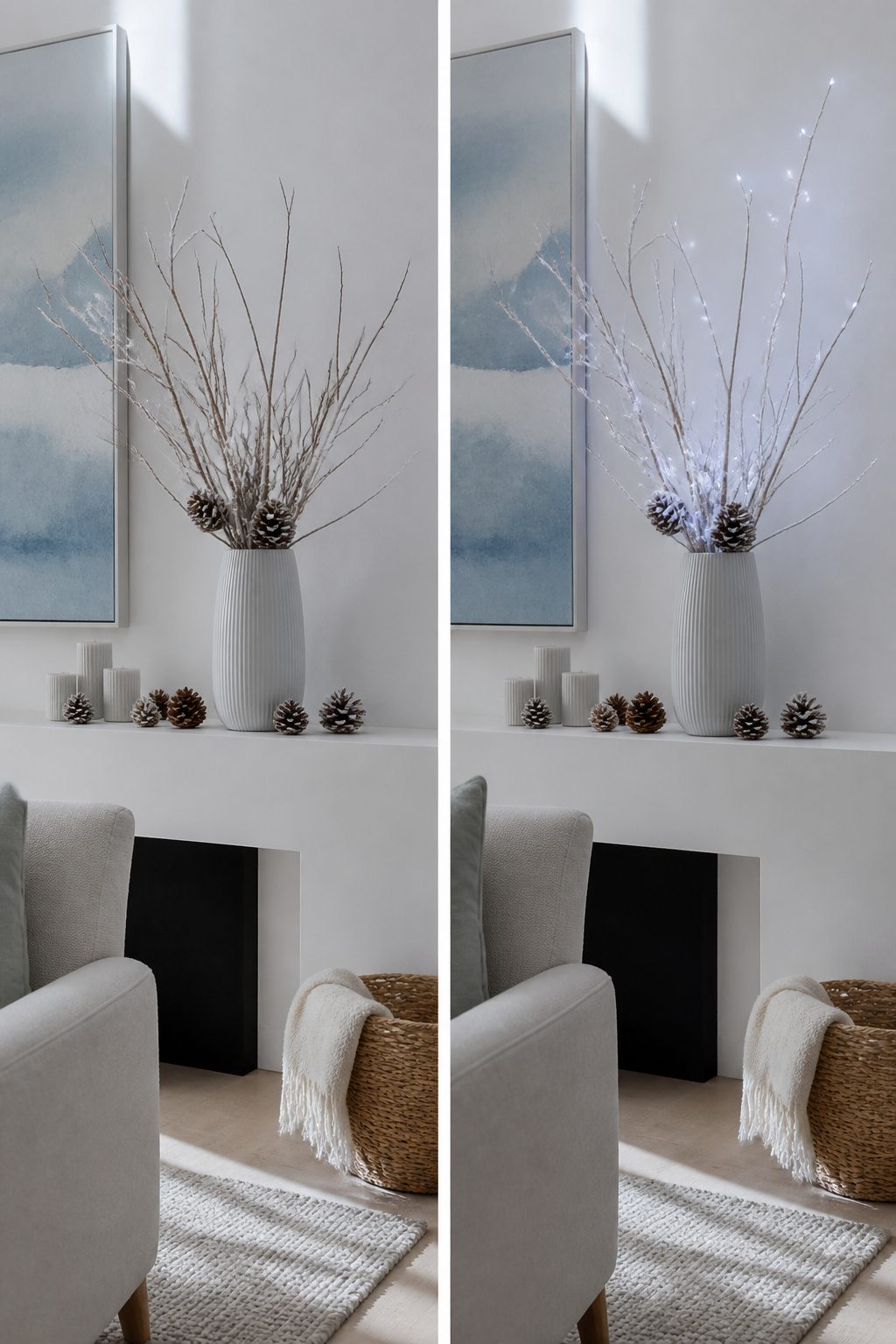
Cool white LEDs carry a noticeably bluer, icier cast than their warm counterparts, and that temperature shift changes where they belong. The $39.99 silver-wire strands read crisp and contemporary against white walls, bare branches, or minimalist mantels where warm white would look muddy. In a traditional Christmas setting, though, packed with red velvet, gold ribbon, and pine garlands, the same tone can feel clinical, almost like a hospital corridor sneaked into December.
The real mistake is mixing both temperatures on the same tree. I learned this the hard way one year when a strand of cool white I grabbed on sale went up beside older warm white lights. The difference is not subtle; the warm bulbs looked dirty by comparison, and the cool ones looked sterile. One or the other, consistently, saves the whole display. For modern spaces, cool white wins. For classic Christmas warmth, it fights the room.
Clear White LED Fairy Garland Lights
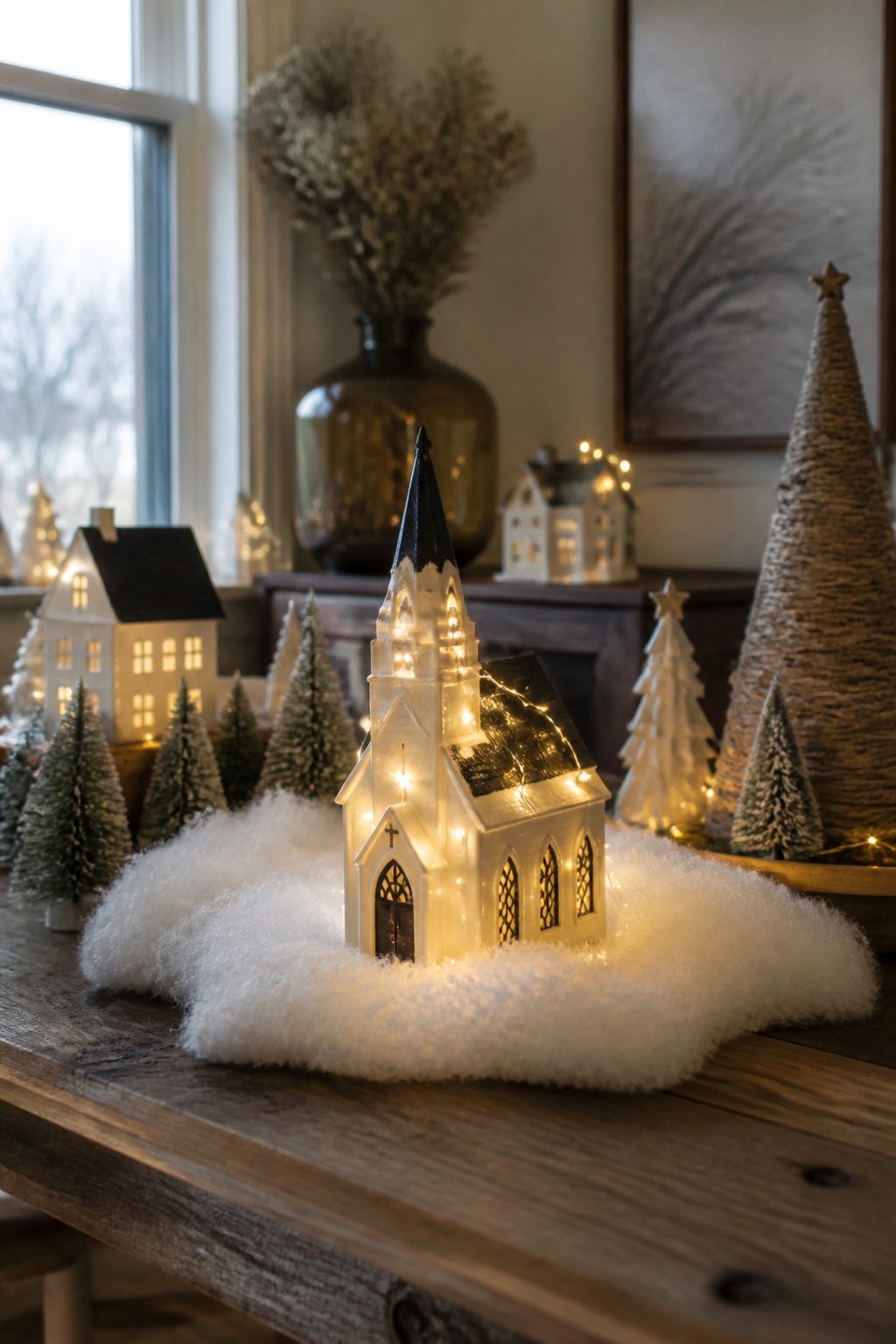
Clear/white LED fairy garland lights sit right between warm and cool white on the shelf, and the difference matters once you plug them in. Warm white pulls toward candle flame, yellowed and cozy; cool white leans icy, almost blue at the edges. Clear white reads as pure, neutral brightness, no color cast at all, which is exactly why it disappears into village scenes and snow-dusted displays. The light looks like moon reflection rather than bulb glow, so your miniature houses or cotton batting read as lit from within by something natural.
Silver wire helps here. It catches almost no light itself, unlike green or gold wire that can throw a tint back at you. Bending the strands around a ceramic church or tucking them under polyfill snow, the wire becomes invisible and the bulbs seem to float. The strands run about $39.99 for standard lengths, same as the warm and cool white versions, so the choice is aesthetic, not budget-driven.
Battery-powered sets with timers suit these displays best. You can set the block behind the village, run the thin wire through cotton batting, and not touch it until January. The neutral color means the "snow" won’t look dingy or electric, just quietly lit from underneath. That same neutrality makes clear white less forgiving in bare garlands where warm white flatters greenery; hide the wire and you solve the problem.
Yellow Gold LED Fairy Garland Lights
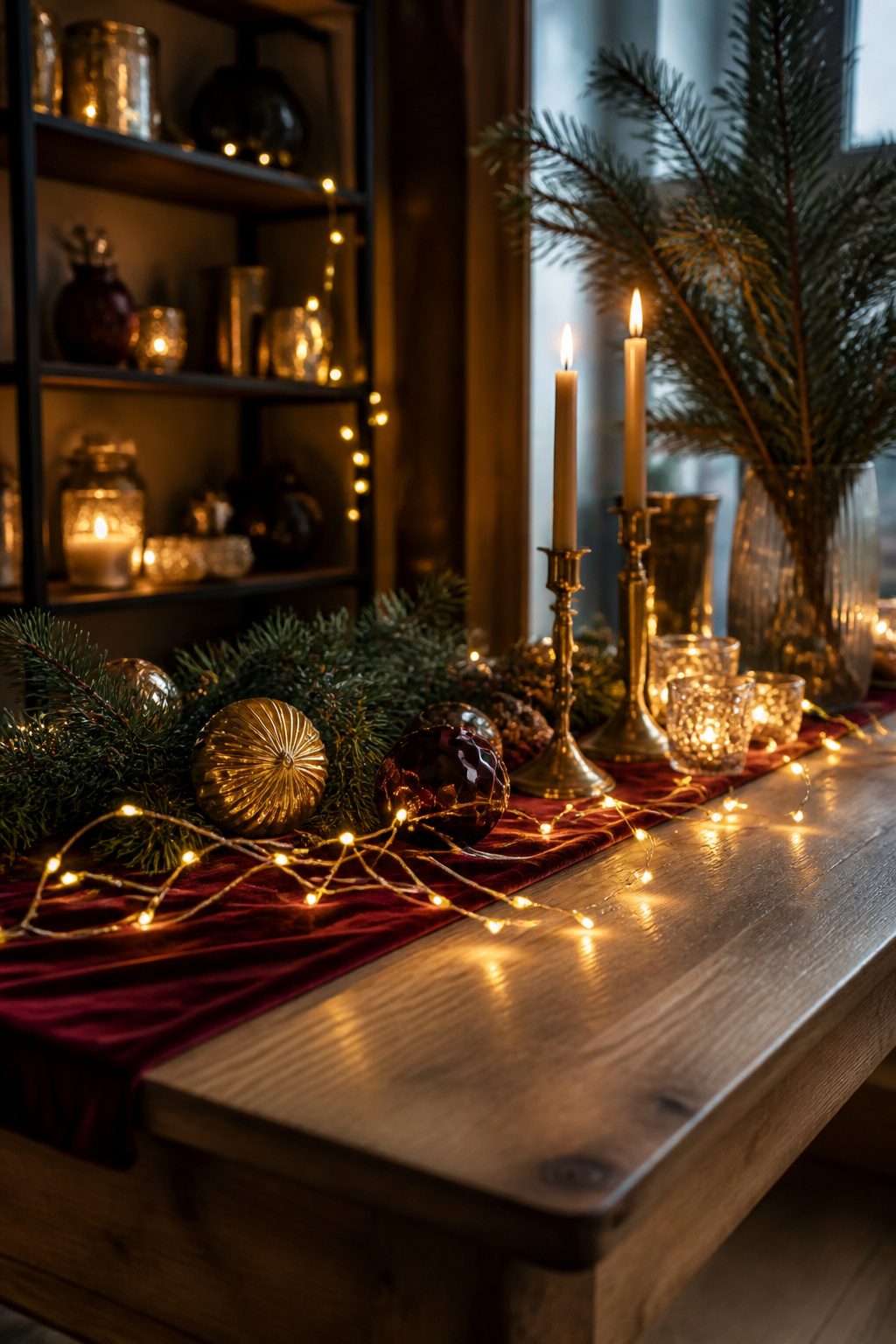
The gold wire on these $39.99 LED fairy garland lights is the detail that changes how you use them. Silver wire disappears; gold wire becomes part of the look, catching whatever light is already in the room even when the LEDs are off.
That warm yellow glow reads candlelit in a dim corner or against dark greenery, vintage without trying too hard. The same tone against white walls or pale birch can tip toward dated, especially in daylight when the gold wire reads brassy against cool paint. I would keep these where the surrounding color has some depth to it: deep greens, navy, burgundy, or wood with a warm stain.
The wire bends the same way silver does, so shaping it around a wreath frame or tucking it into a glass jar works identically. The difference is you are not hiding the infrastructure. In a centerpiece where the lights themselves are visible, that gold line reads intentional; in a setup where only the glow should show, warm white on silver wire is the safer play.
Battery timer function runs the usual cycle, so these suit spots without a convenient outlet. The 23% discount puts them even with the warm white and cool white versions, so the choice is purely aesthetic: do you want the wire to read as metal, or not?
Blue LED Fairy Garland Lights
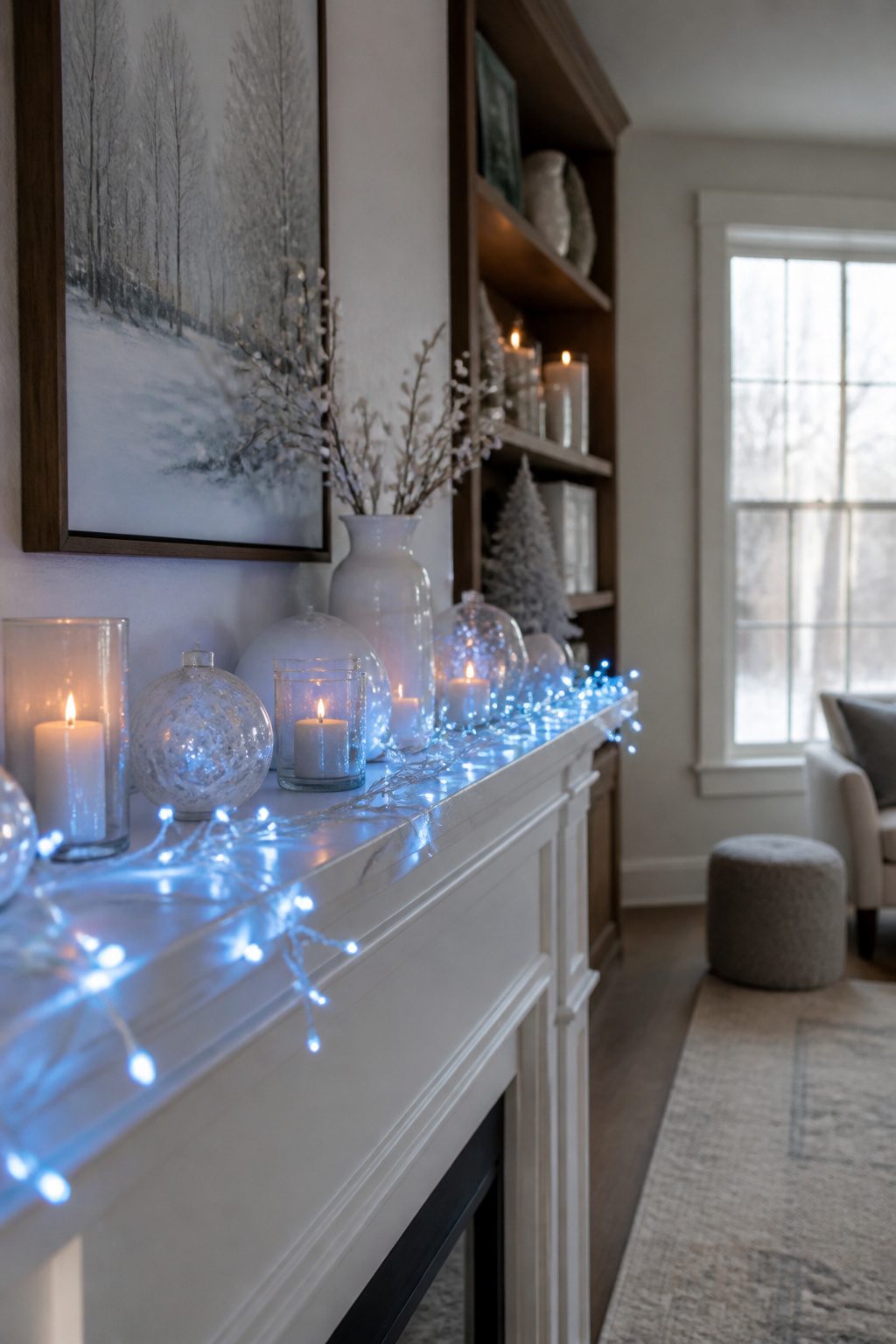
Blue LED fairy garland lights on silver wire run $44.99, five dollars steeper than the warm white or cool white versions at the same store. The upcharge makes sense only if you actually need blue, and most living rooms do not.
Silver wire helps here. It disappears against white mantels or frosted branches in a way green wire never would, so the blue reads as floating points rather than a circuit diagram. That matters because blue turns cold fast. Two strings along a bookshelf feel like a server closet; the same two strings woven through a white paper garland above a window read as winter ice. The difference is the material around them, not the lights themselves.
Hanukkah overlap is where this color earns its keep. The same string that looks out of place at a red-and-green party works straight through late December without swapping. If you celebrate both, or neither and just want a January look that stretches past New Year’s, blue buys you that range.
The common mistake is volume. Blue LED fairy lights at full density wash everything in aquarium tones. One string, maybe two, with plenty of daylight space between them, keeps the mood crisp rather than clinical. The timer function on the battery pack helps here; set it for four hours after dark so the color never overstays.
Red LED Fairy Garland Lights
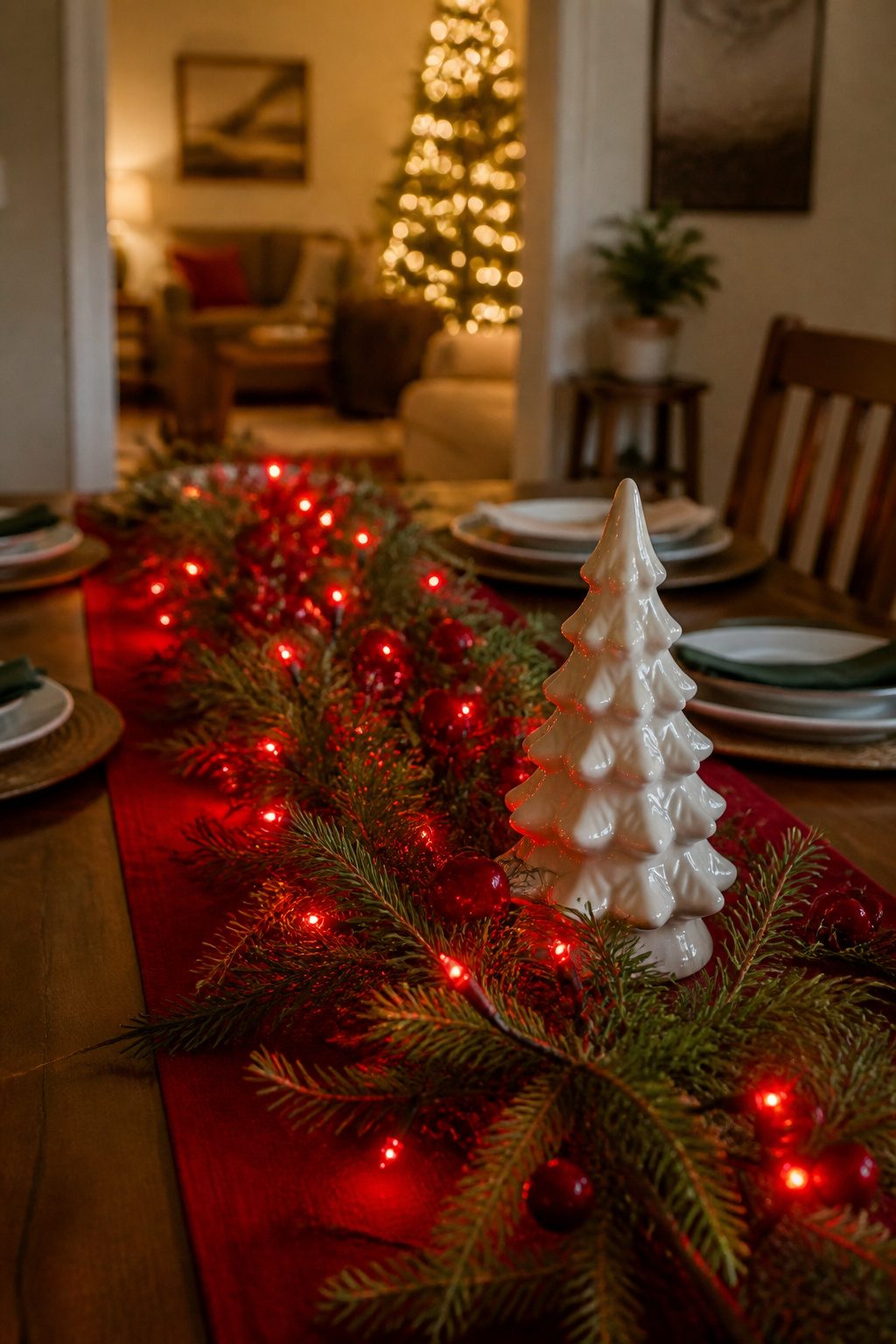
Red LED fairy garland lights on silver wire sit at $39.99, same as the warm white and green options, and that price point makes them tempting to grab as a wildcard color. The silver wire disappears against most backdrops, which helps, though red itself fights for the same invisibility in dim corners.
An entire string of pure red reads less "holiday mantle" and more "tavern patio" to my eye. The color pools heavily, and without enough surrounding light or texture, the glow turns flat and theatrical. I have used red most successfully as a thin accent, maybe fifteen bulbs tucked deep into a garland where green foliage can break it up, or wrapped around a white ceramic tree where the pale surface reflects rather than absorbs the tone.
Battery-powered strings with timer functions help here, since red benefits from the control. Set them to fade on after dark when the room’s other lamps are already lit, and the color stays a punctuation mark instead of taking over the sentence. On their own, though, across a full six-foot stretch? That dominance is hard to unsee once you notice it.
Green LED Fairy Garland Lights
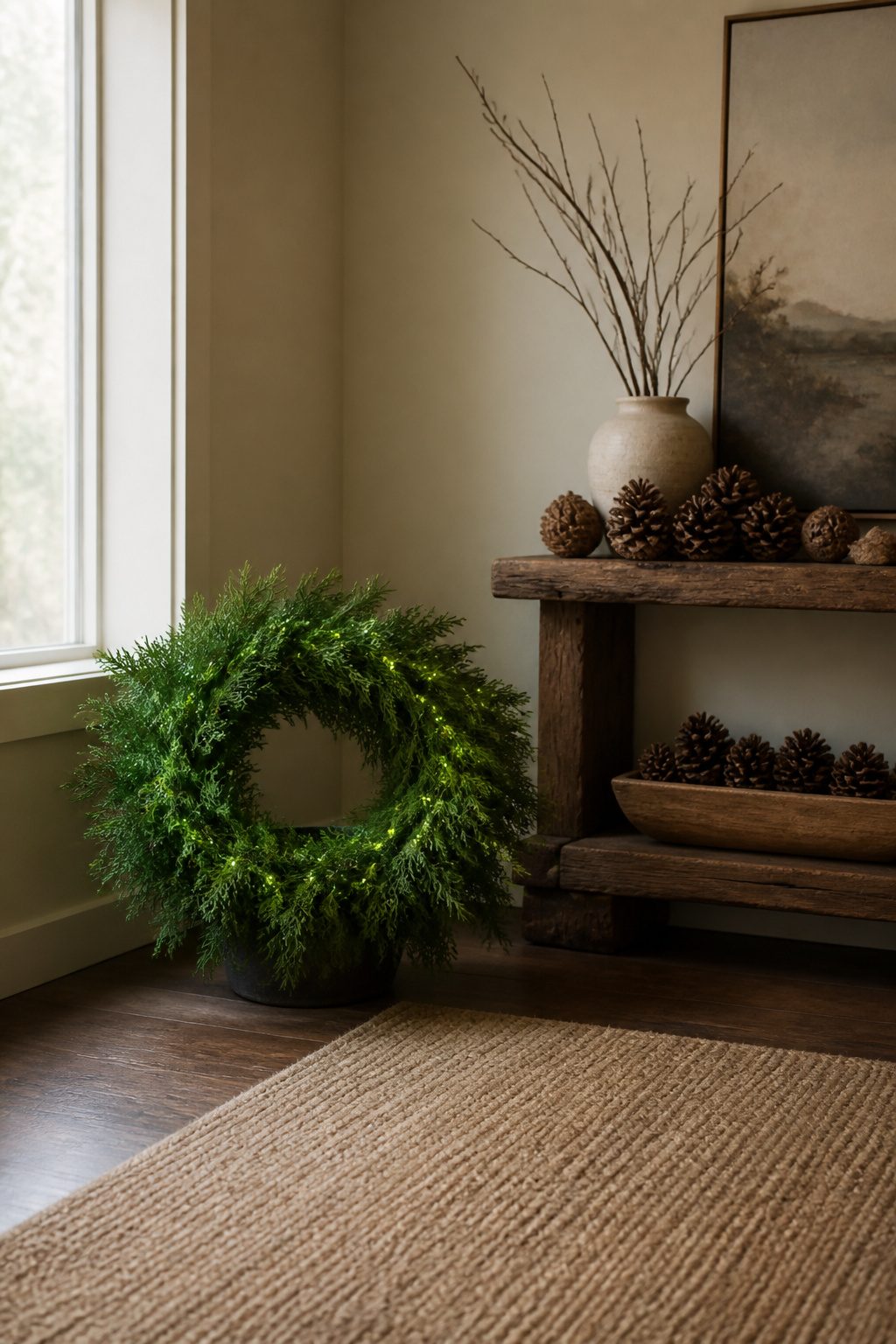
Green LED fairy garland lights run $39.99 with matching green wire, and that pairing is the whole point. The wire is meant to disappear into pine garlands, boxwood wreaths, or any dense greenery where a silver or gold thread would flash like a fishing line. I learned the hard way that this invisibility is also the trap. Last year I ran them along a bare mantel where the green wire hung in plain view against white paint, and the effect was less magical than electrical. The green light itself, meanwhile, works best as a supporting player. Used alone it reads as novelty, the color of exit signs and haunted houses. Tucked into a mixed garland with warm white strands, though, it deepens the natural tones of real or faux foliage without demanding attention. Battery power with a timer function keeps the setup flexible for wreaths you hang away from outlets, though longer strings need a plug-in adapter. Save these for places where both the wire and the glow can hide in plain sight.
Decorating Ideas
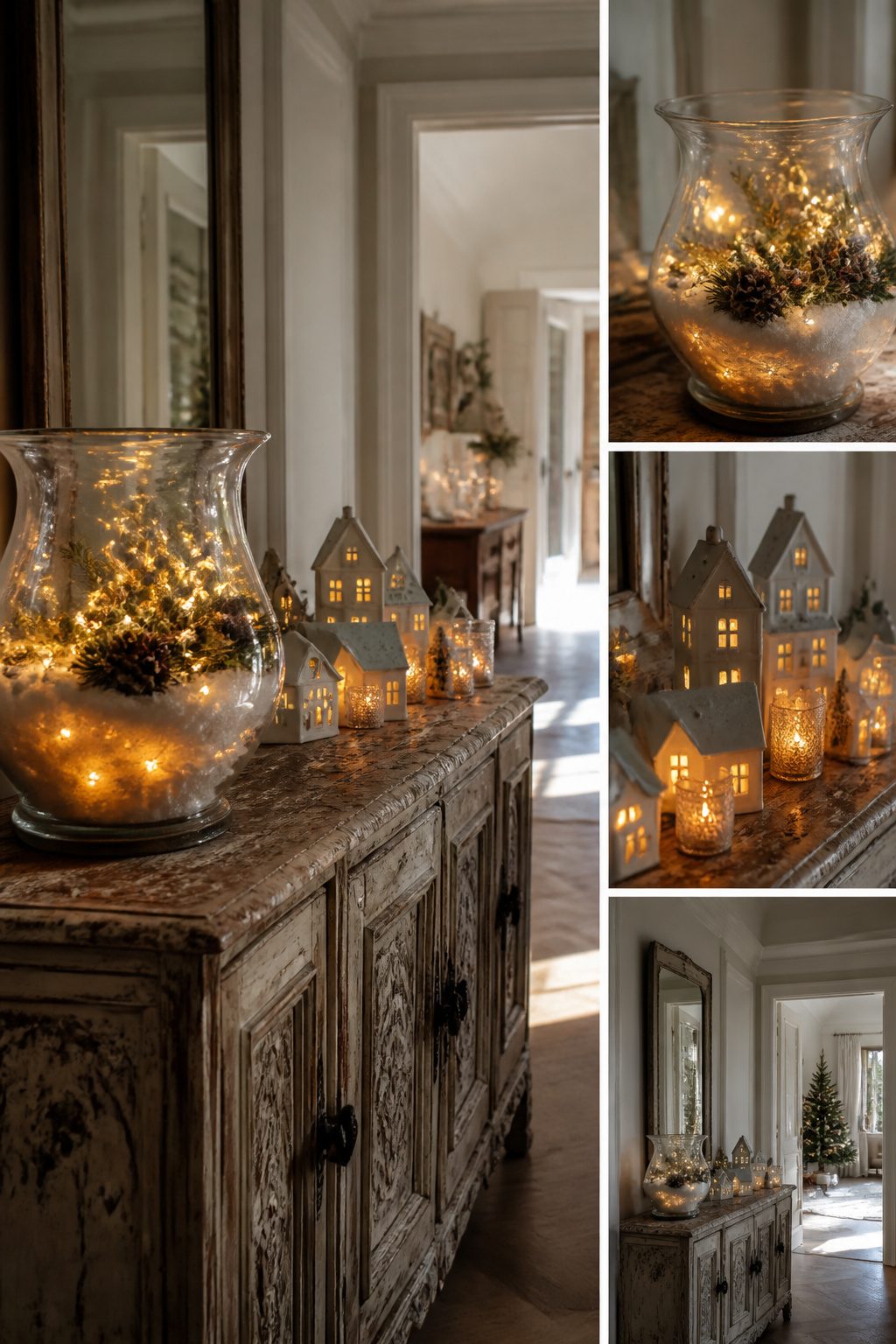
Wrapping battery-powered fairy lights around a wreath saves the extension-cord headache I used to have with my front door setup. The 50-light strands from the craft store run about eight hours on fresh AAs, which gets you through an evening without the timer math.
Village scenes need more light than you think. My first attempt left the ceramic houses in shadow while the string lights pooled between them like a runway. Tucking the strand behind each building, running it along the back edge of the base, puts the glow where it belongs: on the windows and the tiny painted doors. Two strands of 20 lights each, spaced six inches apart, fills a standard mantel length without the hot spots.
For a centerpiece, glass hurricane candles over a coil of lights looks expensive and costs about $12. The trick is raising the lights so they do not sit flat against the table; a shallow bowl flipped upside down inside the vase gives you that lift, and the reflected light doubles what you see. I tried faux snow directly over the bulbs once and learned that polyester batting melts against anything warmer than an LED. The fix is a layer of clear glass marbles or a thin acrylic sheet between snow and light. The diffusion is actually better, and you will not get that scorched-plastic smell by New Year’s.
Storage That Saves Next December
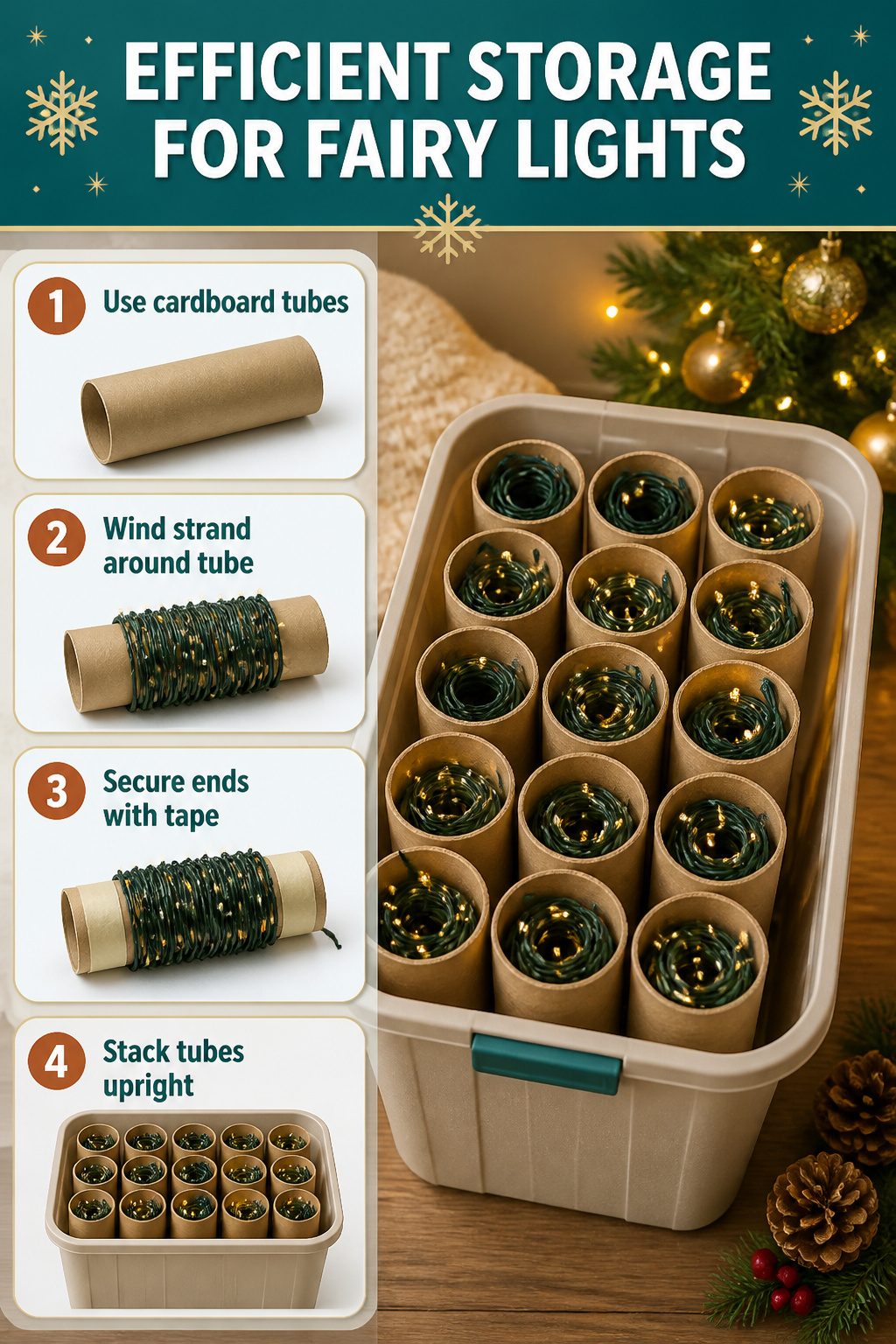
The worst thirty minutes of last December was untangling a strand of warm white LEDs that had been tossed in a tote bag with garland and ornament hooks. Three bulbs cracked in the process, and two sections never lit again. Cardboard tubes from spent wrapping paper solve this cleanly: wind the strand around the tube, secure both ends with a loop of masking tape, and stack the tubes upright in a bin. Fairy lights need narrower cylinders than C7 or C9 strands, since their wire is thinner and tangles more aggressively. A paper-towel roll works for a 50-light strand; a gift-wrap tube handles 100 lights with room to spare. The time saved the following year is the whole point. Last season I pulled out six tubes, plugged each strand in to check, and had the tree lit in twenty minutes. The year before, with the bag method, the same job took two hours and a trip to buy replacements.
Frequently Asked Questions
What are fairy lights?
Fairy lights are small LED bulbs spaced along a thin, flexible wire, usually silver or gold, that bends easily around wreaths, mantels, or inside glass containers. The wire is thin enough to disappear against light backgrounds, so the bulbs seem to float rather than hang from a visible cord.
How can I use fairy lights for decoration?
Wrap battery-powered strands around wreaths to skip extension cords, tuck them behind ceramic village buildings to light windows and doors, or coil them inside glass hurricanes with a shallow bowl underneath for lift. For snowy displays, keep polyester batting away from the bulbs with a layer of glass marbles or acrylic between; LEDs stay cool enough not to melt plastic, but the spacing helps diffusion.