
Window sill decorations christmas shoppers face range from $3 thrift-store villages to $30 department-store sets, but the deciding factor is not price. It is whether you own the sill or answer to a landlord. A gel cling forgotten until February drops into your hand intact; a paper sticker Santa leaves a ghost outline that costs your deposit.
1. Christmas Wreaths
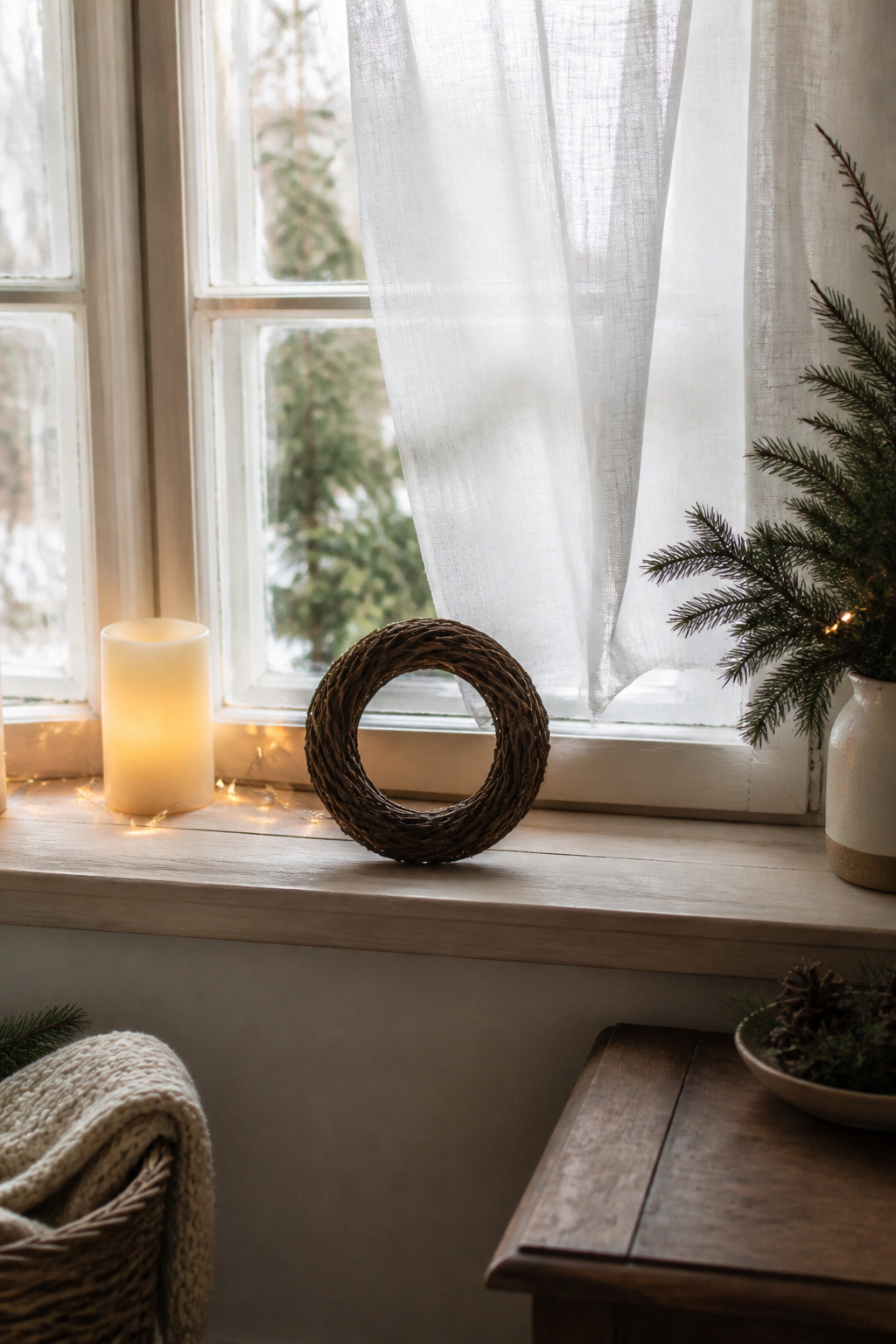
A 12-inch door wreath looks generous online but sits half off a standard sill, blocking the lower glass and scraping paint every time the window shifts. 6–10 inch diameters keep the full circle on the ledge and leave daylight alone. Grapevine bases work best here; they weigh almost nothing and grip the wood without sliding. I bend the wire hanger flat against the back so the wreath sits flush instead of tipping forward every time a truck rolls past. Craft-store stock runs $8–$14 for plain versions, while pre-lit wreaths start around $22 and need an outlet or battery pack you then have to hide. For a sill that faces the street, the unlit grapevine plus a nearby candle or string light gives the same glow without the hardware.
2. Miniature Christmas Trees
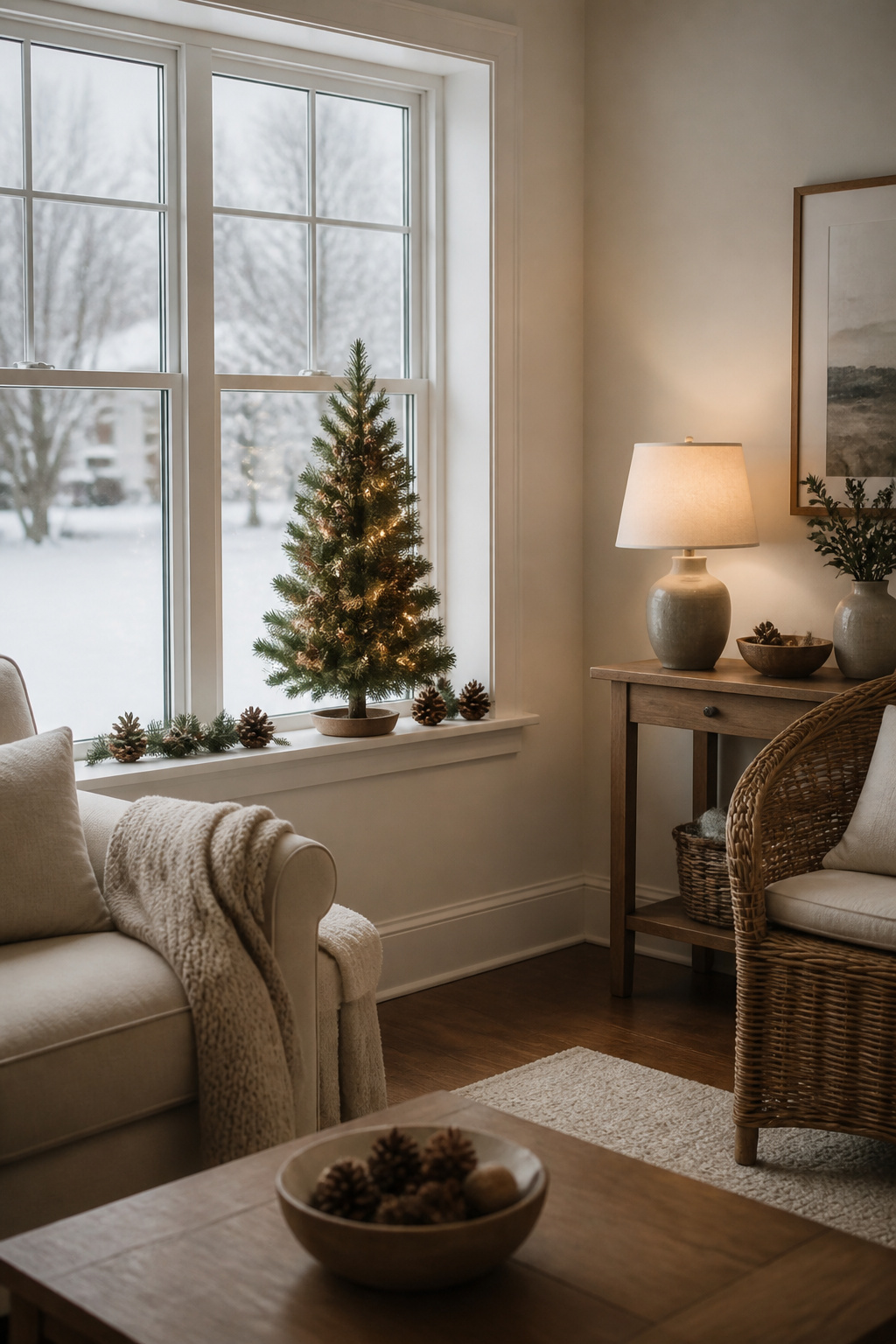
Miniature Christmas trees are an adorable addition to a window sill, but the charm fades fast when one tips over and scatters needles across the floor. The sweet spot for most windows is 12 to 24 inches, the height that clears a standard frame without crowding the glass. Artificial trees solve the bug and fallout problem that comes with real ones, though they bring their own stability issue. A weighted base matters more than the tree itself; battery-operated LED lights let you skip the cord hunt entirely, while plug-in strands stay brighter longer but need an outlet within reach. I skipped the base one year, set the tree on a saucer instead, and spent the week chasing it back upright every time the radiator kicked on. Now I check the bottom weight before anything else.
3. Garland

String a simple strand of pine or evergreen boughs across a window sill and you have the bones of something that looks intentional by Christmas morning. Six feet of garland covers a standard 36-inch sill, doubled back on itself for fullness so the wall behind does not peek through. Artificial garland runs $5–$10 at craft stores and holds its shape through January; foraged branches cost nothing but taught me their own lesson. Fresh garland sheds needles onto the sill, and the sap stains painted trim if it sits more than a day or two. I learned that the hard way on a rental with a security deposit at stake. Command hooks rated for 2 pounds, spaced every 18 inches, carry the weight without leaving holes a landlord would notice.
4. Candles
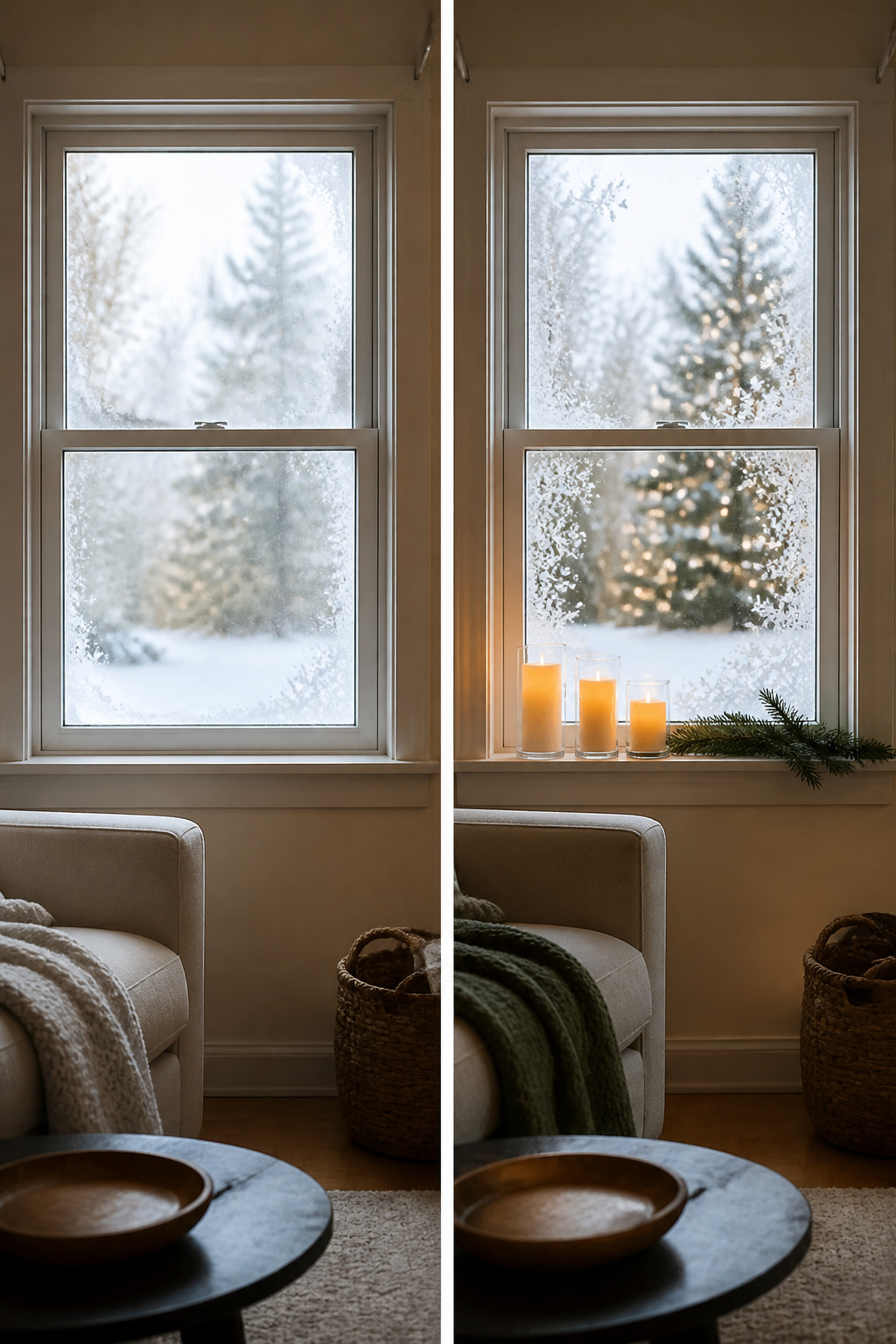
Battery-powered LED candles are the only kind I trust on a window sill now, and that shift happened after a real candle scorched the paint on a rental sill I couldn’t repair. The LED set I bought in 2019 still runs on the same daily timer, which is the kind of longevity that makes the upfront cost feel small.
If you do use real wax, group candles in odd numbers, three to five pieces, and keep them between three and six inches tall so the scale reads as intentional rather than cluttered. Glass holders are non-negotiable; they catch the drip that otherwise finds the sill crack you didn’t notice was there.
5. Christmas Villages
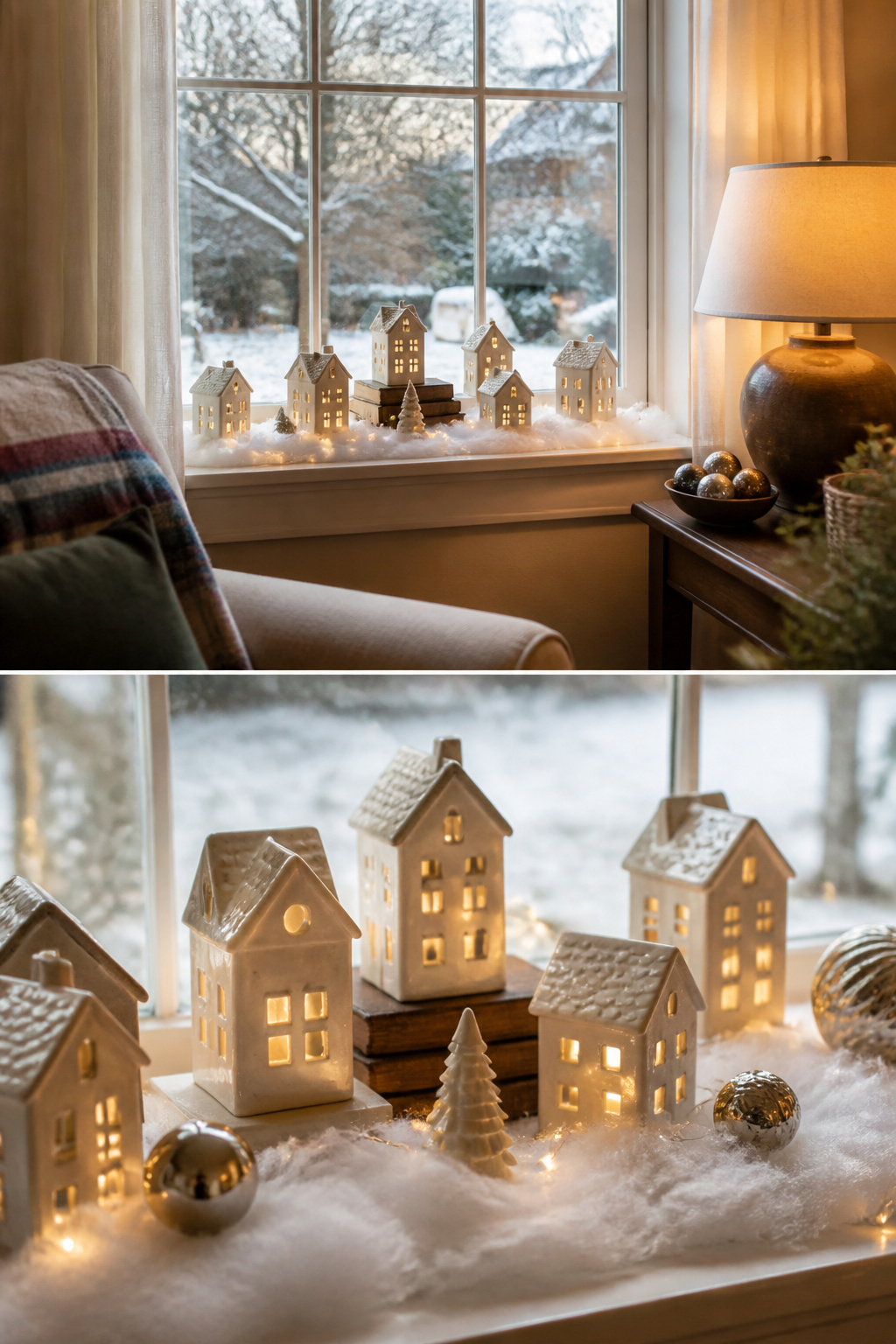
A Christmas village on your windowsill sounds cozy until you try it. Most village pieces run 4–6 inches tall, but bases and trees add another 2 inches, and the total blocks sightlines through the glass. My fix was stacking thrift-store hardcovers under the back row so the rear buildings sit higher, while the front row stays low. The depth you lose to the stack, you gain back in actually seeing through the window.
Department store sets start around $30 for a single building, but thrift stores reliably sell loose ceramic houses for $3–$8 apiece. Mixing styles works fine; snow covers a lot of mismatch. Cotton wool from the pharmacy makes cheap ground cover, and a string of battery lights threads between the buildings without needing an outlet nearby.
I kept my village on the sill for three years until a cat took out the porcelain church. Ceramic shatters, and the pieces are too small to sweep safely with pets around. Paper or plywood houses, the kind you fold or glue yourself, survive the same fall and cost less to replace. That switch ended my porcelain phase for good.
6. Ornaments

Tension rods across the window frame let you hang ornaments at varying lengths without drilling a single hole, which matters when your lease has a clause about holes and your deposit is on the line. I thread string lights along the rod, then tie small ornaments to the wire with fishing line or thin ribbon. The 2-inch shatterproof balls are the ones that survive a drop onto tile when the cat investigates or the suction cup fails at 2 a.m. Most adhesive hooks top out around 1 pound per ornament, so the big glass heirloom from your grandmother stays in the box. The year I ignored that rule, a draft did exactly what drafts do, and I spent an evening with a dustpan and the lingering smell of pine-scented carpet cleaner. Shatterproof ornaments cost roughly the same and let you cluster five or six at different heights without calculating wind load like you’re engineering a suspension bridge.
7. Snowflakes
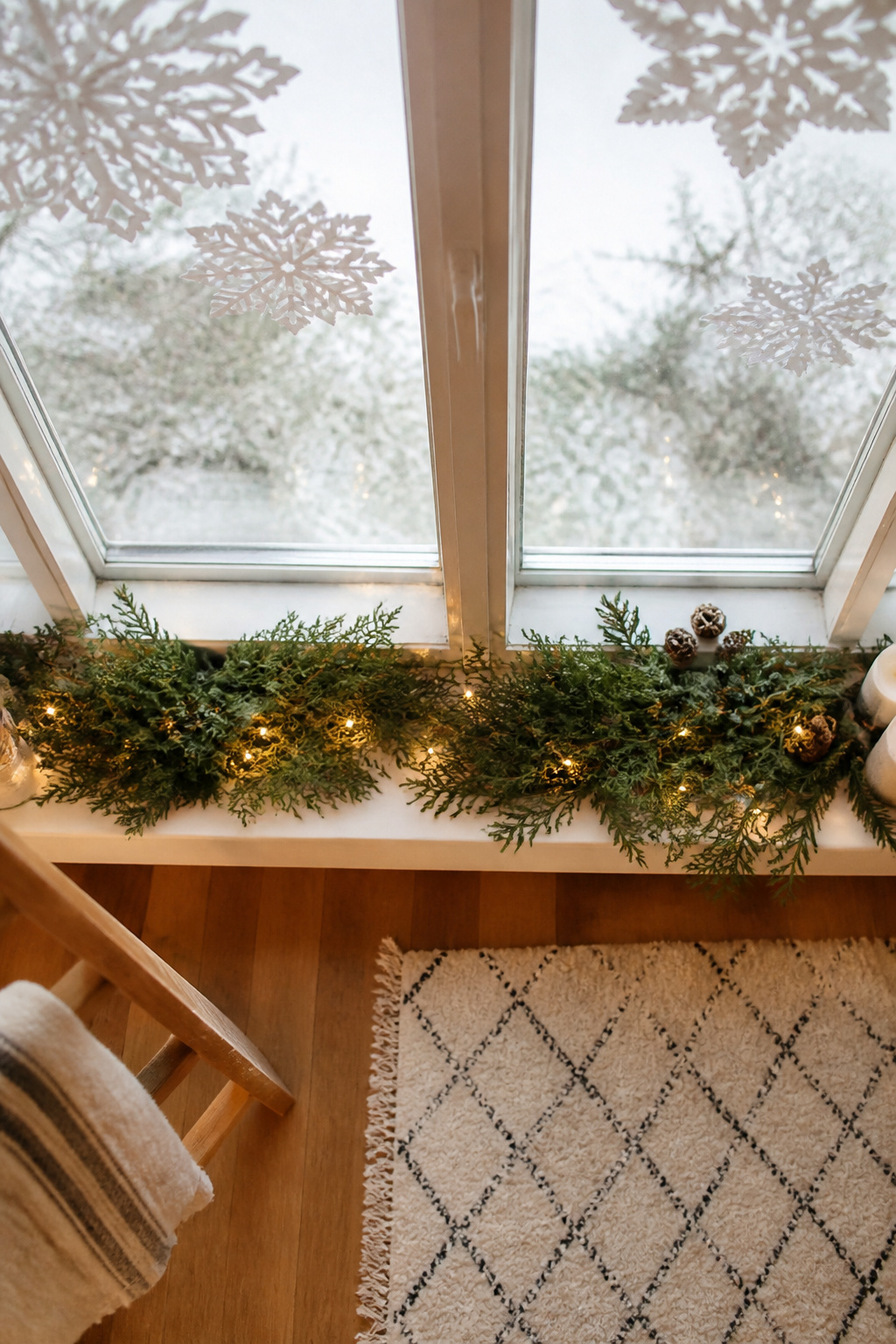
Cut-paper snowflakes still work, but the paper matters more than the pattern. My daughter and I tried two weights one December: her construction paper flakes went limp after three humid days, while my printer paper cutouts stayed flat through New Year’s. The difference was visible by the second week, when hers curled like autumn leaves and mine kept their geometry.
Die-cut felt from craft stores skips the humidity problem entirely. The same bins usually hold 4-inch wooden cutouts too, often for a dollar or less, and those carry enough weight to hang straight without tape bulk. Vinyl clings solve both issues and leave no residue, which matters on a rental window you do not want to scrub in January.
There’s no easier (or cheaper!) way to decorate your window than with a few sophisticated window decals.
The credit holds: decals cost little and take seconds. For the sill itself, though, snowflakes belong in the upper corners, not the ledge. The surface space is better saved for garlands or candles that need the flat real estate. Paper, felt, wood, or vinyl, the flakes read best catching light from above, and the ledge stays open for the rest of your Christmas window sill decorations.
8. Natural Elements
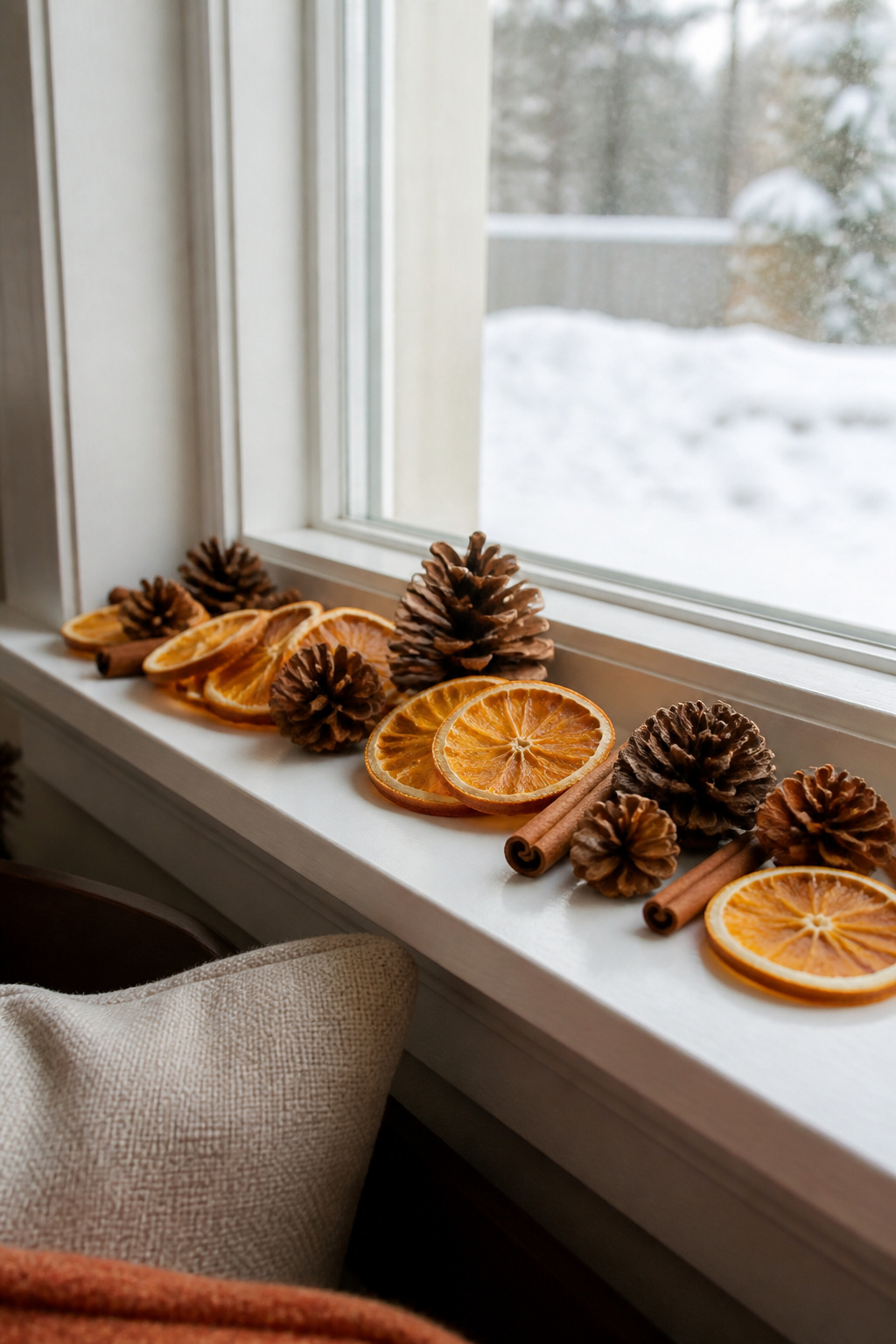
Pine cones from the yard need thirty minutes at 200 degrees before they ever cross your threshold; the heat kills the bugs that would otherwise hatch in your warm living room over the next week. I learned that after skipping the step once and finding a small cloud of tiny insects hovering over the sill by New Year’s. Baking is non-negotiable if you are bringing in anything with scales or needles.
Branches last roughly three weeks before they dry out enough to drop needles in earnest. Dried orange slices, cinnamon sticks, and whole nutmeg do not mold if the air in your place is reasonably dry, and the combination smells better than any candle I have ever bought. In 2021 I strung oranges sliced to 1/8 inch and dried for six hours, tucked in cinnamon sticks, and laid it all along the kitchen window with a few baked cones. The whole arrangement cost nothing but time, and the scent carried through the apartment for the full month. The oranges darken to a deep amber that reads as color against white trim without fighting the green outside.
9. Window Clings and Stickers

Gel clings and adhesive stickers sit right next to each other in the seasonal aisle, but they leave the window in very different condition. Gel clings peel off clean in one piece even after months; adhesive-backed paper stickers bond to paint and will lift it when removed. Sizes run 3 to 8 inches, small enough to cluster or large enough to stand alone, and both work best applied directly to glass rather than painted frames where the risk multiplies.
The distinction cost me part of a security deposit. A gel heart snowflake stayed on my rental kitchen window through February simply because I forgot it was there; it dropped into my hand intact when I finally noticed. A paper sticker Santa on the bedroom frame, same season, left a pale ghost outline that the walk-through caught. I paid for that repaint. Now I keep a hard rule: gel on glass only, nothing with glue touches a painted surface I do not own.
10. Fairy Lights

The battery box is the first thing to check against your sill. Most strands ship with a black plastic housing that sits awkwardly in plain view, so I look for sets where the box is slim enough to tuck behind the frame or under a lip. Wire length runs from about six feet up to twenty, and the gap between those numbers matters more than you’d think. A six-foot strand wraps a small kitchen window; twenty feet drapes a triple-wide living-room bay. Measure the perimeter you actually want to trace, add a foot for slack, and buy that length. Stretching a short strand or coiling excess both look wrong.
Color temperature shapes the whole mood. 2700K bulbs read like candlelight, the warm amber that makes a room feel lived-in after dark. 5000K throws the blue-white of a hardware-store aisle, and I have never seen it work in a home window at Christmas. The difference is not subtle once the sun drops.
Timer functions save the daily walk-around. The standard cycle runs six hours on, eighteen off, which means the strand fires itself at the same time every evening and dies before morning. I ran a set on thumbtacks in a rental once, pinning the wire directly to the painted sill. The lights looked fine until move-out, when each tack left a pinhole ring the landlord spotted from the doorway. Patching took a Saturday of spackle, sanding, and touch-up paint. Command hooks or the adhesive clips that ship with some strands cost a few dollars more and leave the deposit intact.
DIY Ideas That Hold Up
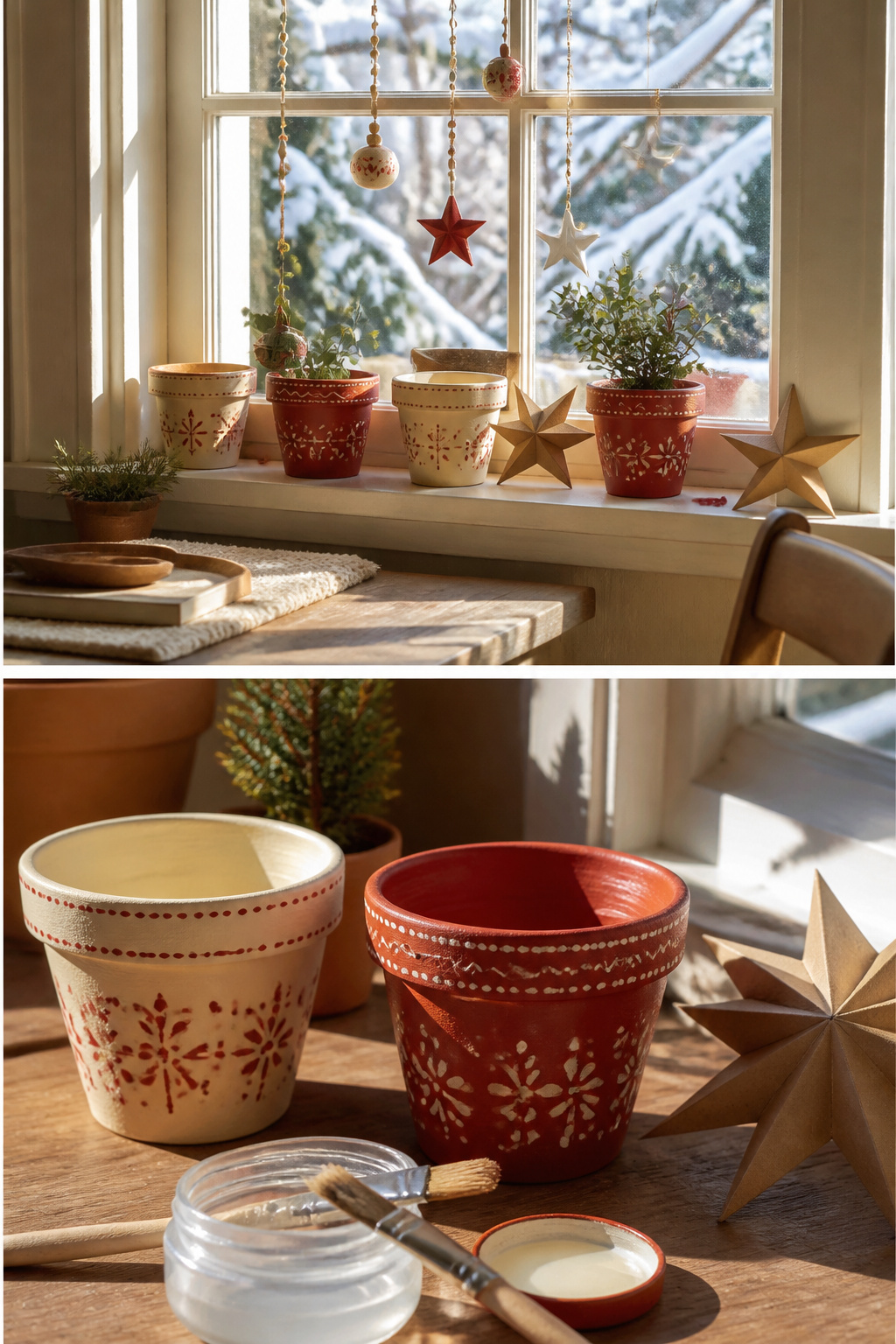
Painted terracotta pots look effortless on a window sill, but the finish takes more patience than the tutorials suggest. Acrylic paint on raw terracotta needs three coats minimum and a clear sealant on top, or the color turns muddy where the clay drinks it in. The pot I painted in 2018 with a cream base and a thin red stripe still sits in my rotation; the sealant is why it reads as intentional rather than thrifted.
Cardboard stars are another project every list includes and few explain. Cereal box weight or heavier is the cutoff. I learned this the humid December my first set, cut from a shipping box, sagged at the points by New Year’s. Heavier stock holds its shape through multiple seasons if you store it flat.
Handmade ornaments strung at varying heights between the pots and stars give the arrangement depth without costing gallery prices. The combination works because the materials are cheap enough to replace and personal enough to keep.
Natural Materials and Fresh Greenery
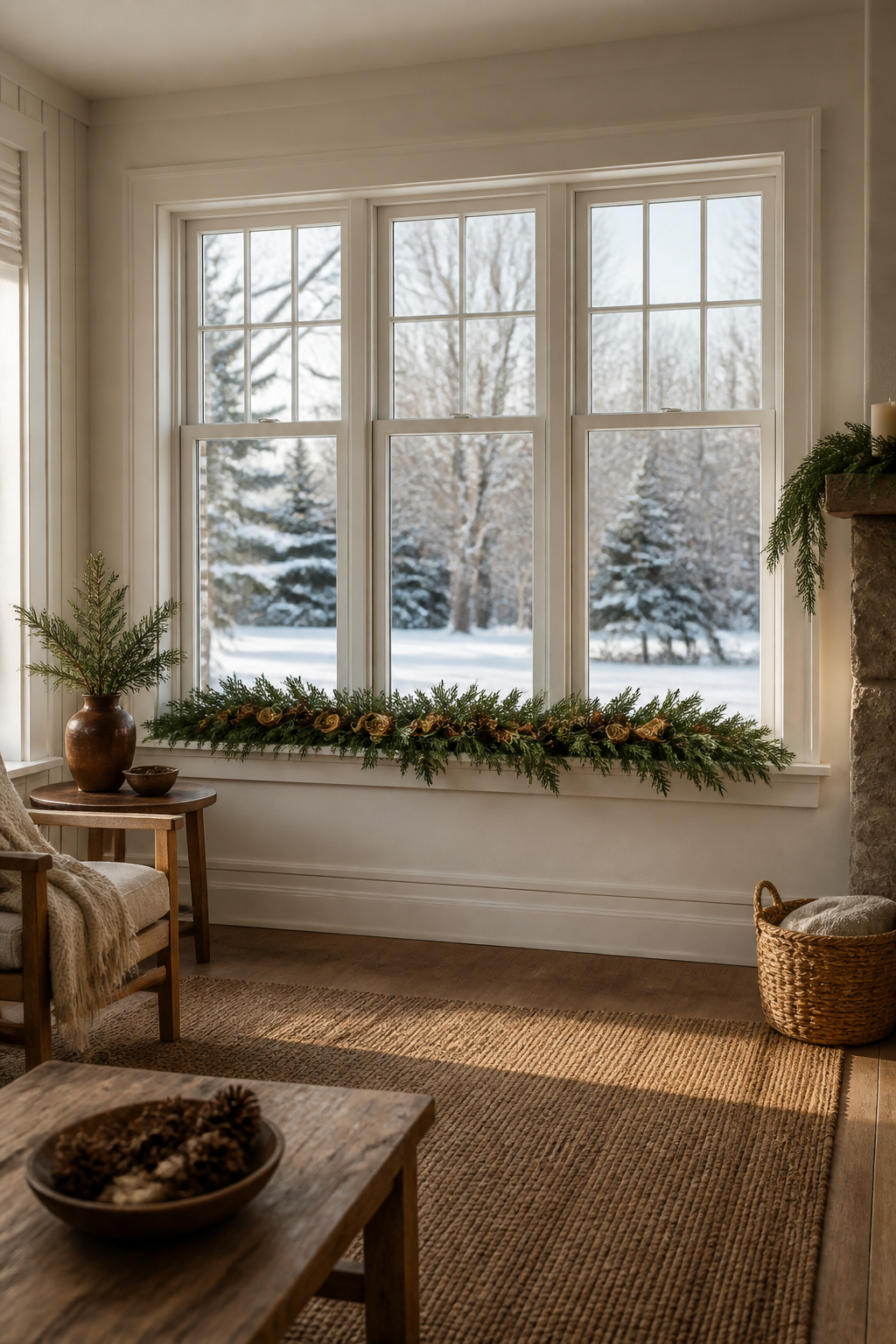
Cedar branches on a window sill look sharp for about two weeks before the needles start browning and dropping into the track. Fir lasts a bit longer, three to four weeks if the room stays cool, which makes it my usual pick for a sill that gets afternoon sun. Holly berries are the shortest show, giving you maybe a week before they shrivel and pop off onto the glass; I skip them now unless I’m decorating the day before guests arrive.
Foraging your own greenery saves the $10–$15 a farmers market bunch costs, but only if you actually have legal access. State parks and most nature preserves ban plant collection outright. Your own yard, a neighbor’s with permission, or a tree farm that sells cut-your-own are the safe bets. I learned the hard way that a good shake outdoors matters more than you’d think. One December I brought in a armful of white pine, set it on the sill, and spent the next three mornings finding tiny spiders on the curtains. Now every branch gets shaken hard against the trunk, then left in the garage overnight. Anything still crawling by morning stays in the garage.
The market bunches have their own advantage beyond legality: they come cleaned and sized for vases, so you’re not wrestling with uneven branches that won’t sit flat against the sash. For a renter who needs the deposit back, that’s worth the price.
Warmth from Candles and Lights
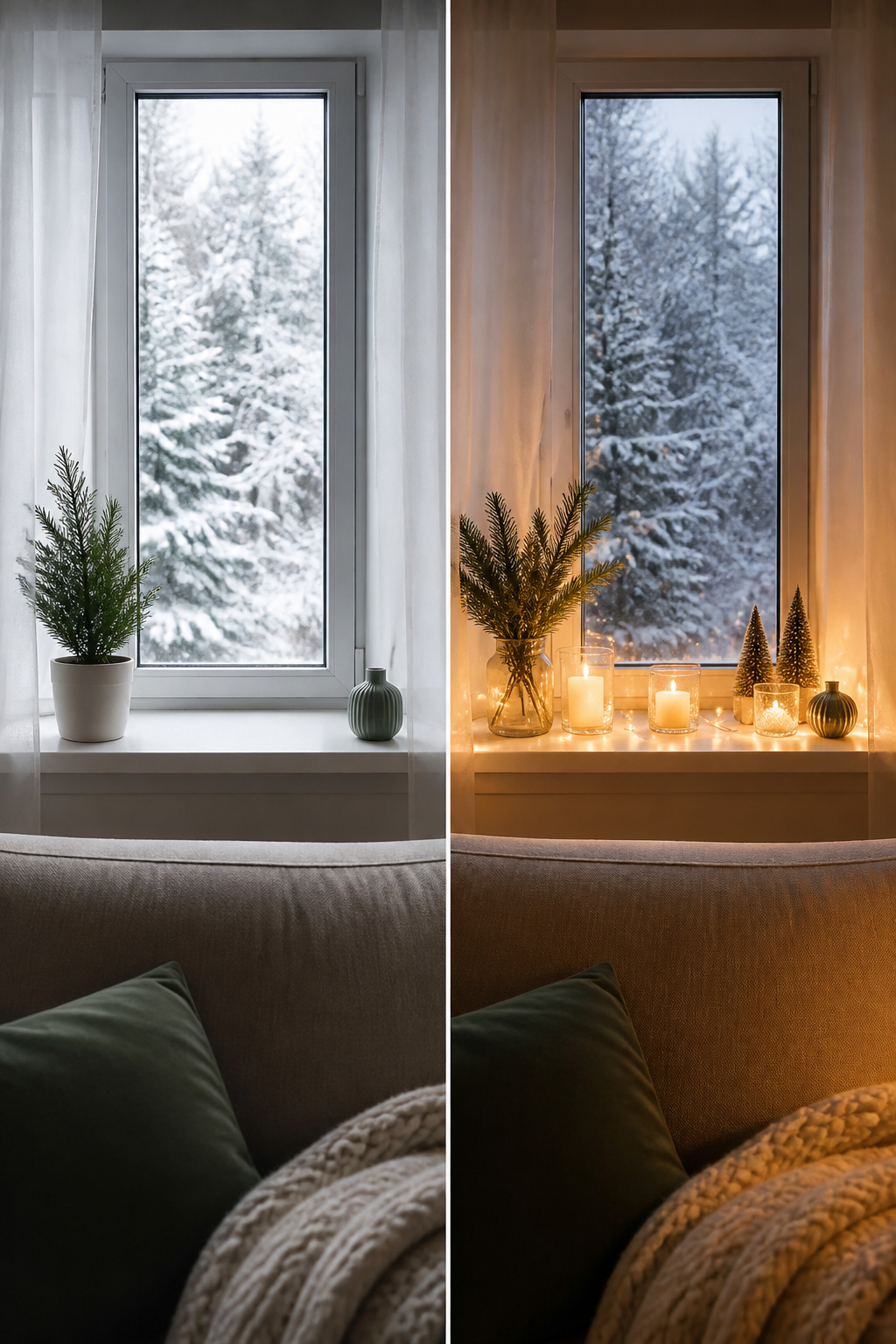
A windowsill lit only by candles sits flat and theatrical, like a stage set waiting for actors. The strand of fairy lights tucked behind the glass jars is what pulls it back into a room someone actually lives in. 10 to 20 lumens per strand is the workable range; anything brighter steals the flame’s job instead of backing it up. I learned the color temperature rule the hard way one December, setting a 2700K candle against a strand of 5000K LEDs I had grabbed from the patio box. The same two feet of pine held both, and the mismatch made the warm wax look dirty and the cool bulbs look clinical. Now I treat a single sill as one zone: one temperature, one mood. Battery-powered strands let you place the light without fighting the outlet location, and keeping the LEDs behind or below the candles means the glow reaches the glass and the wall without drawing a line across the flame itself.
Color Themes That Work
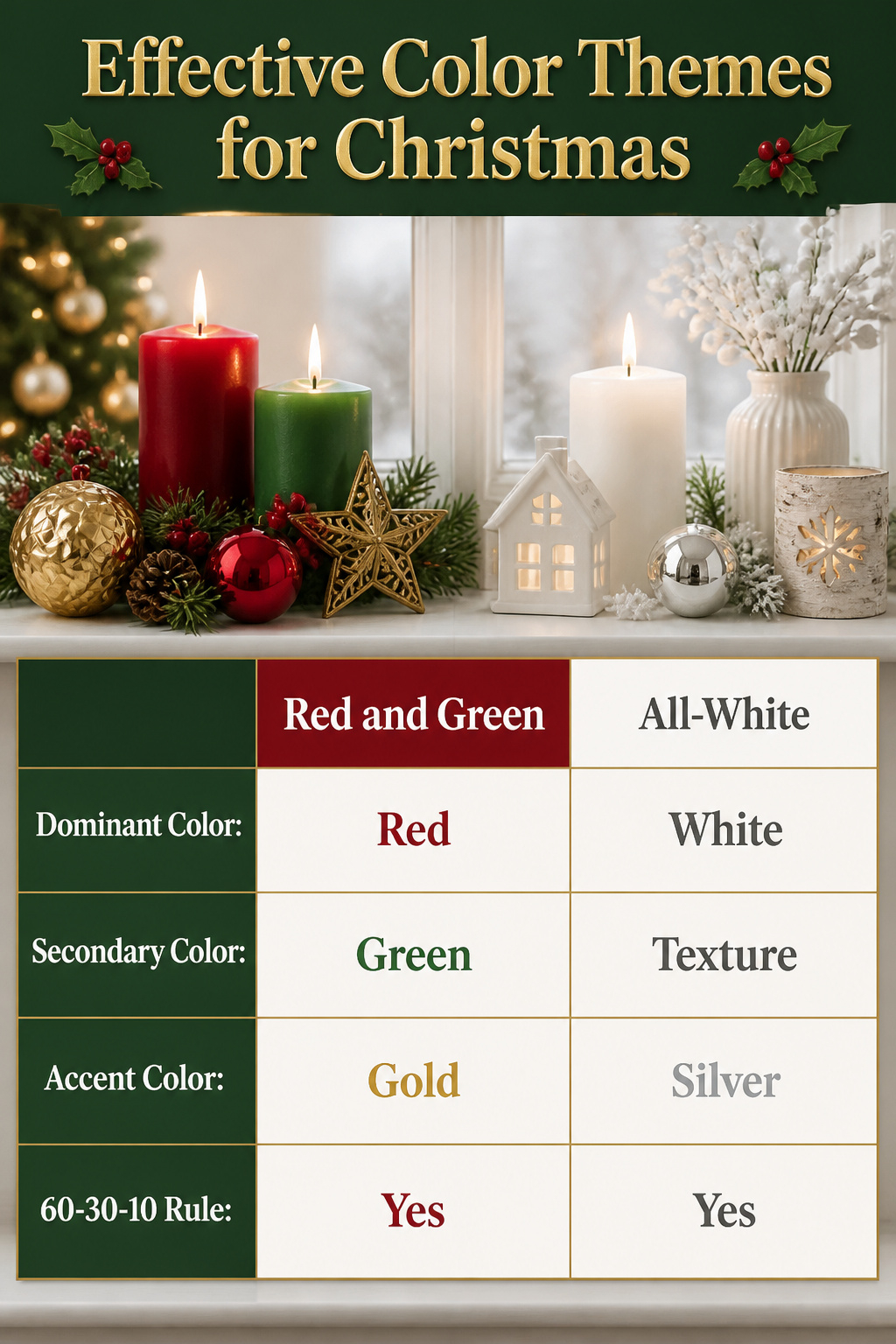
Red and green still read as Christmas because they are Christmas, but the pairing collapses under its own weight the moment you add gold, silver, and white to the same twelve inches of sill. My 2020 attempt did exactly that, and the result looked like a clearance bin had tipped over. Two colors, maybe three if one stays quiet, is the ceiling for a space this small.
The 60-30-10 rule keeps that limit honest: sixty percent dominant, thirty percent secondary, ten percent accent. On a window sill that usually means the dominant color lives in your base layer, the secondary in greenery or textiles, the accent in a single metallic or a handful of berries.
All-white schemes need the same discipline. Without it, white candles against white ceramic against white glass read as blank, not intentional. Birch bark and matte ceramic against glossy glass solved that for me; the variation is in texture, not hue. Silver threads through white cleanly if you keep it to that ten percent accent. Gold does too, though the two metallics fight each other unless one clearly leads.
Frequently Asked Questions
What are some ideas for decorating window sills for Christmas?
Six to 10 inch wreaths, 12 to 24 inch miniature trees, garland doubled back for fullness, grouped LED candles, tiered Christmas villages, ornaments hung on tension rods, paper or felt snowflakes in upper corners, and baked pine cones with dried orange slices all work well on a sill. Each idea in the guide includes a specific size or setup rule that keeps the decoration stable and the window functional. Battery-powered lights and Command hooks help renters avoid damage to paint or trim.
How can I make my window decorations more festive?
Add fairy lights at 2700K for candle warmth rather than blue-white hardware-store tones, and layer a strand behind glass jars so the glow reaches the wall without crossing the flame. Odd-numbered candle groupings and ornaments at varying heights create depth that reads as intentional rather than cluttered. A single color temperature across one sill ties the mood together; mixing 2700K and 5000K makes both look wrong.
What materials are best for Christmas window decorations?
Grapevine wreath bases grip wood without sliding and weigh almost nothing; artificial garland holds shape through January where fresh branches stain paint with sap. Battery-powered LED candles outlast real wax and remove the fire risk on a narrow ledge. Shatterproof ornaments survive tile floors when cats or drafts strike, and gel window clings peel off clean in one piece while adhesive paper stickers lift paint. For natural elements, bake pine cones at 200 degrees for 30 minutes to kill insects before bringing them inside.