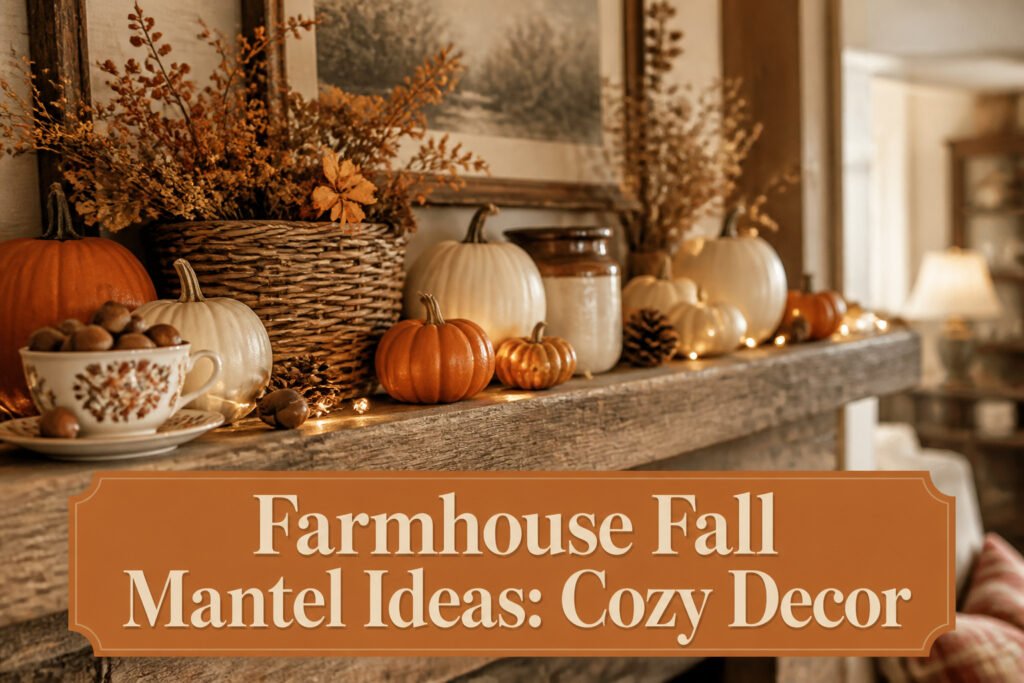
A farmhouse fall mantel can run from a $12 thrift-store tray to a $24 set of wooden pumpkins or cost nothing at all if you forage pinecones after the first hard frost. What separates the ones that look staged from the ones that feel lived-in is whether you start with the weather, not the calendar, and wait for the first morning the porch thermometer dips below sixty before you drag out the bin.
1. Pumpkins

Wooden pumpkins anchor a farmhouse fall mantel better than almost anything else because they hold their shape and you can reuse them year after year. Last September I picked up a set of three from Hobby Lobby for $24 with the fall discount, and that price still feels like the right ceiling for this kind of thing. I keep them in a whitewash finish, which reads as neutral against the brick and doesn’t fight whatever else I drag out of the bin.
Real pumpkins have their place, but only one, and only a sugar pumpkin. The small ones run a few dollars at the grocery, smell like actual fall for about ten days, and rot by Thanksgiving no matter what you do. I set it on a ceramic dish so the mess stays contained, then it goes straight to the compost once the stem softens. Mixing the fake wooden ones with that single real specimen keeps the mantel from looking like a craft store exploded, and the decay timeline forces me to strip the mantel clean before December anyway.
2. Candles
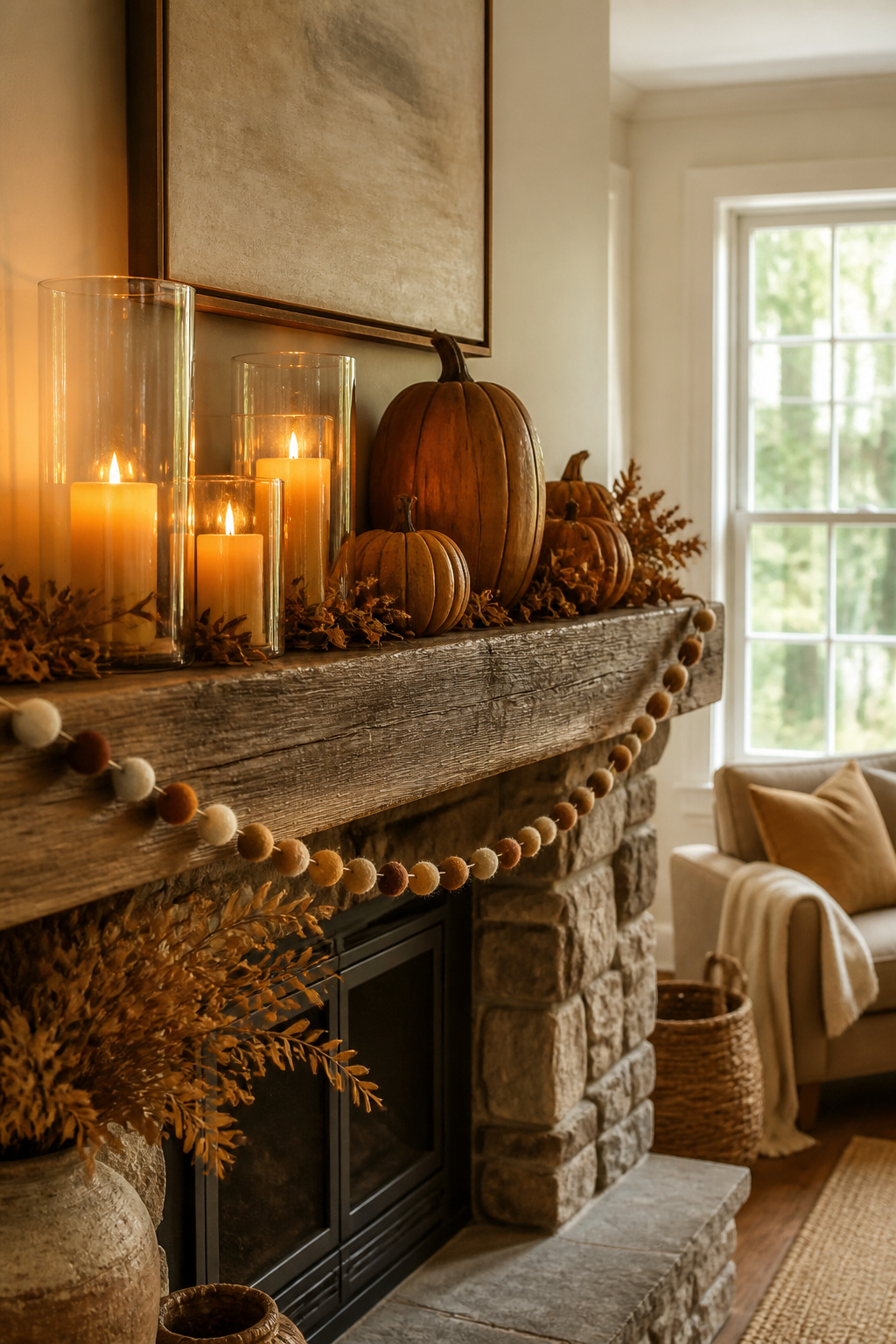
A wool garland catching flame in 2021 is what pushed me to battery-operated candles, and I have not looked back. The ones I use now are from Luminara, and their warm glow reads as real from the sofa because I place them inside glass hurricanes on the outer edges of the mantel, where the flicker catches the light but hides the telltale plastic wick tip. Keep real candles at least twelve inches from anything dried or wool, a distance I learned the hard way when the garland went up faster than I could reach it. The Luminara Orange Timer Candle 6" Pillar 3D Flame gives that amber tone without the vigilance, and grouping three at staggered heights in front of a mirror does more for depth than a row of identical tapers ever managed.
3. Garlands

Wool garlands add the kind of softness that makes a mantel feel lived-in rather than staged. The Autumn Meadow Mushroom Wool Garland 6′ nearly came home with me last year, but the $18 felt leaf garland I ended up making over two evenings does the same job for a fraction of the cost. Felt leaves in burnt orange and deep red, strung on twine, drape across the stone with just enough weight to hold their curve.
The drape matters more than the density. I let the center sag slightly lower than the ends so it frames whatever sits beneath without blocking it, and I keep the strands far enough from the firebox that heat never reaches them. Where the garland catches dust is the problem: the felt fibers hold onto fireplace grit and everyday household dust in ways a smooth surface never would. By mid-October it looks tired, so I carry the whole string outside, give it a hard shake against the fence, and let it air before bringing it back in. Two evenings of cutting and stringing, then ten seconds of maintenance once a month; that ratio works for a weekend project.
4. Decorative Trays
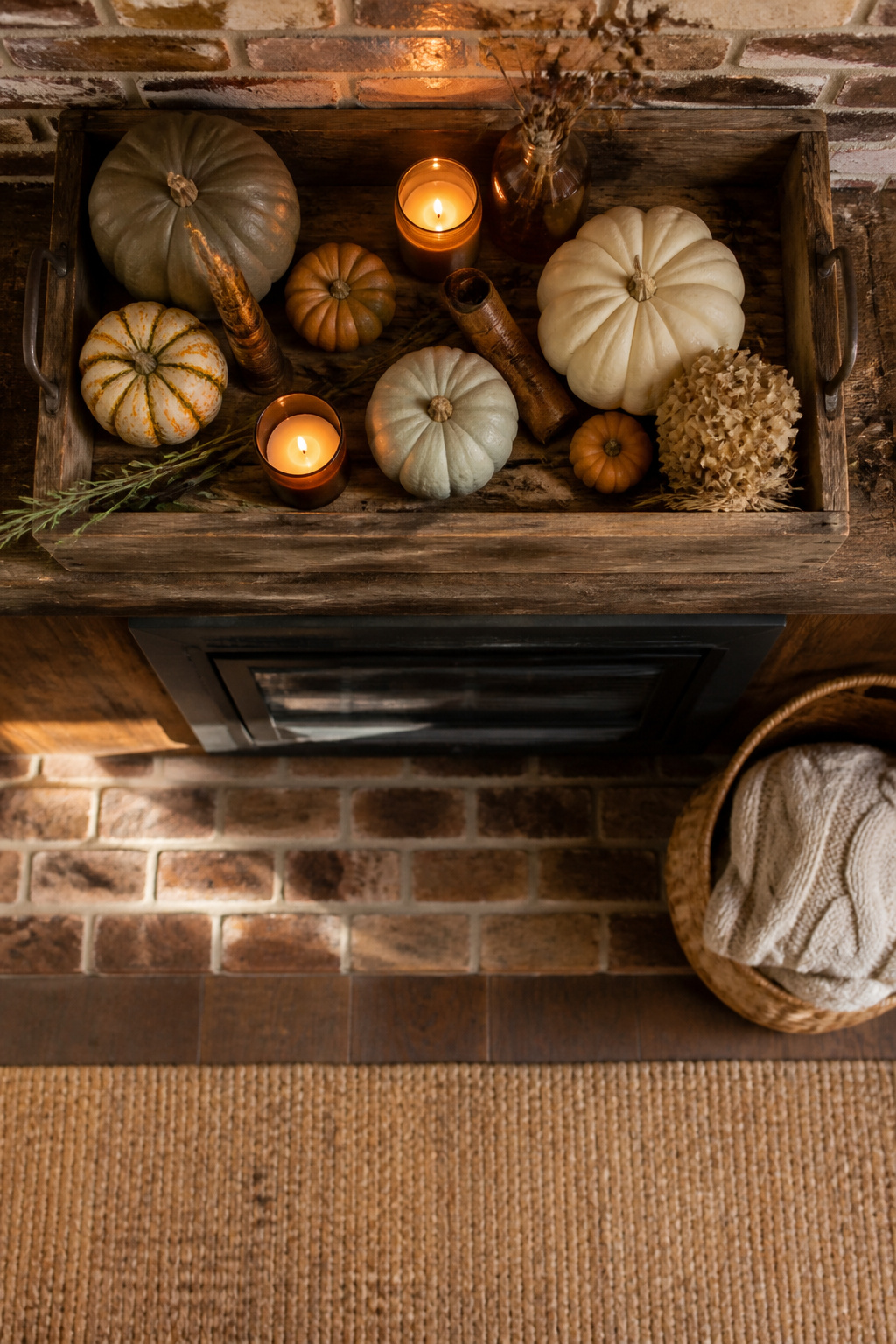
A tray that is too small will cost you more than the $12 you spent on it. I learned that the hard way last October, when a metal thrift-store tray barely ten inches wide let three mini pumpkins roll straight onto the hearth during a dinner party. The sound of gourd hitting brick is not cozy.
The replacement came from a flea market outside Asheville: a reclaimed barn wood tray, roughly twenty-four by fourteen inches, with iron handles and a lip tall enough to matter. That lip corrals the small stuff, and the tray itself lifts the back row of whatever you are staging so the eye reads in layers rather than a flat police lineup of objects.
Height variation is what separates a mantel from a shelf. The barn wood sits an inch and a half above the mantel surface, which is just enough to let a candle or a stack of old books in front still register as its own thing. Without that lift, everything competes for the same visual plane and the whole arrangement collapses into clutter.
For a standard six-foot mantel, look for a tray at least twenty inches long. Anything under sixteen, and you are back to chasing pumpkins.
5. Natural Elements

Pinecones, dried flowers, and foraged foliage are the backbone of my mantel every October, mostly because they cost nothing and the walk to collect them is half the point. I go the same weekend each year, usually after the first hard frost, when the roadside seed heads are brittle and the maple leaves have curled but not turned to dust. Bake anything you bring home at 200°F for about an hour; skipping this once left me with a minor carpet beetle situation that took three weekends to clear.
Fresh eucalyptus taught me the harder lesson. The stems looked beautiful for three days, then oozed enough oil to soften the paint behind my mantel clock. I had to touch up the wall in April. Now I stick to dried seed heads from grasses and pressed leaves I flatten under books for two weeks. Those last the full season without staining wood or attracting moisture. The pressed leaves do fade to brown by January, but by then the mantel has moved on to winter anyway.
6. DIY Signs or Artwork
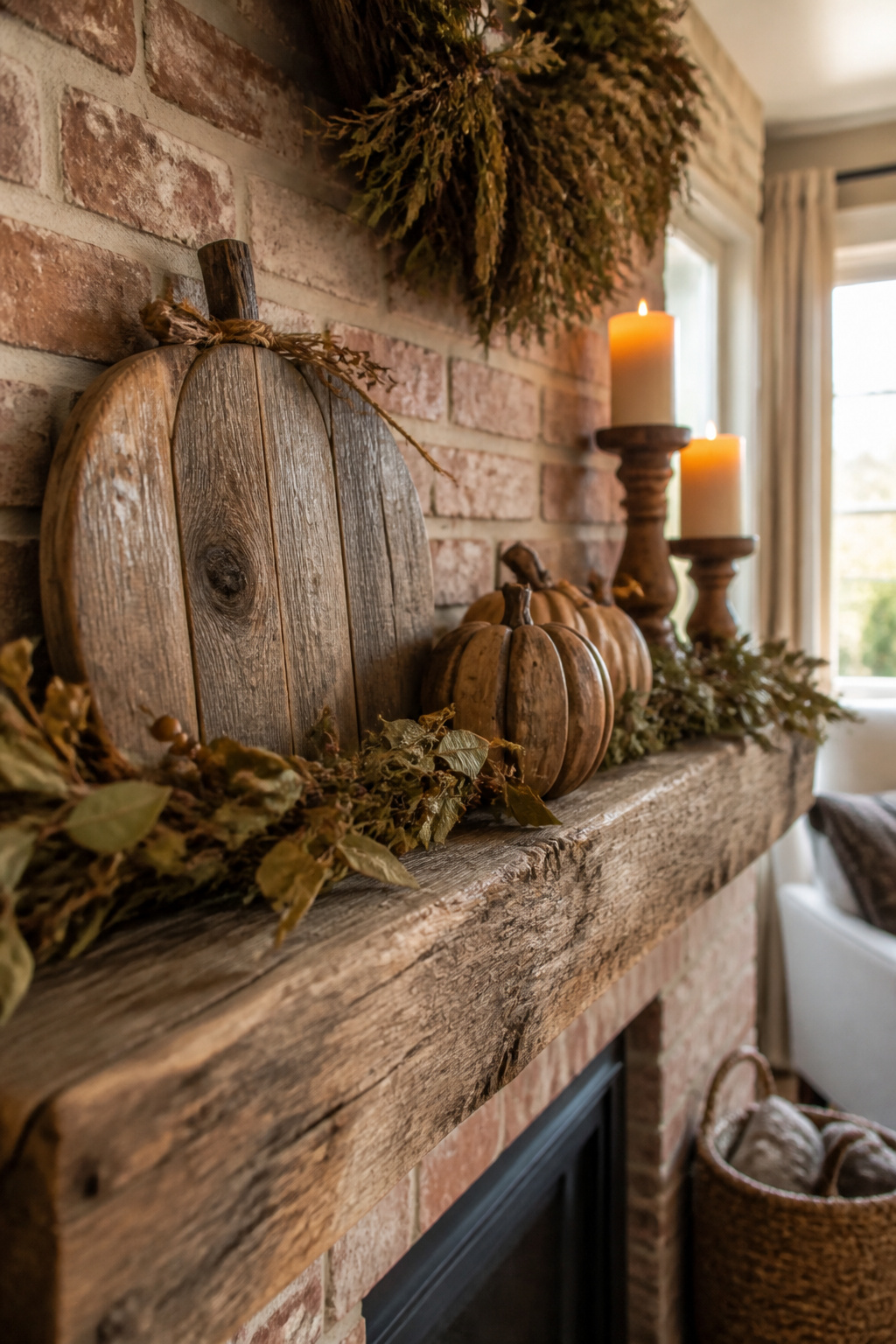
Reclaimed wood signs work because the grain already carries years of wear, so the mantel does not need much else around them. My main piece is a 24 by 36 inch barn board plank, sanded just enough to remove splinters while leaving the saw marks visible. I paint the lettering with chalk paint, usually in a soft cream against the dark wood, because it covers in one coat and scrapes off clean when November ends and I want the board bare for December.
The saying changes every year. "Gather" lasted two seasons before it felt like a greeting card, and now I cycle through phrases I actually say out loud, like "Stay Awhile" or something pulled from a book I read that autumn. The paint lets me wipe it away with a damp cloth and start over, which matters more than the specific brand ever did.
I lean the sign against the brick rather than hang it. The weight of old oak keeps it stable, and I can shift it an inch left or right until it balances the garland or the candle group I set beside it. In 2019 I drilled pilot holes for hooks and regretted the permanent scar in the mortar the minute the season turned. The holes are still there, patched with caulk that never quite matched. Leaning costs nothing and leaves no evidence.
7. Layering Textures
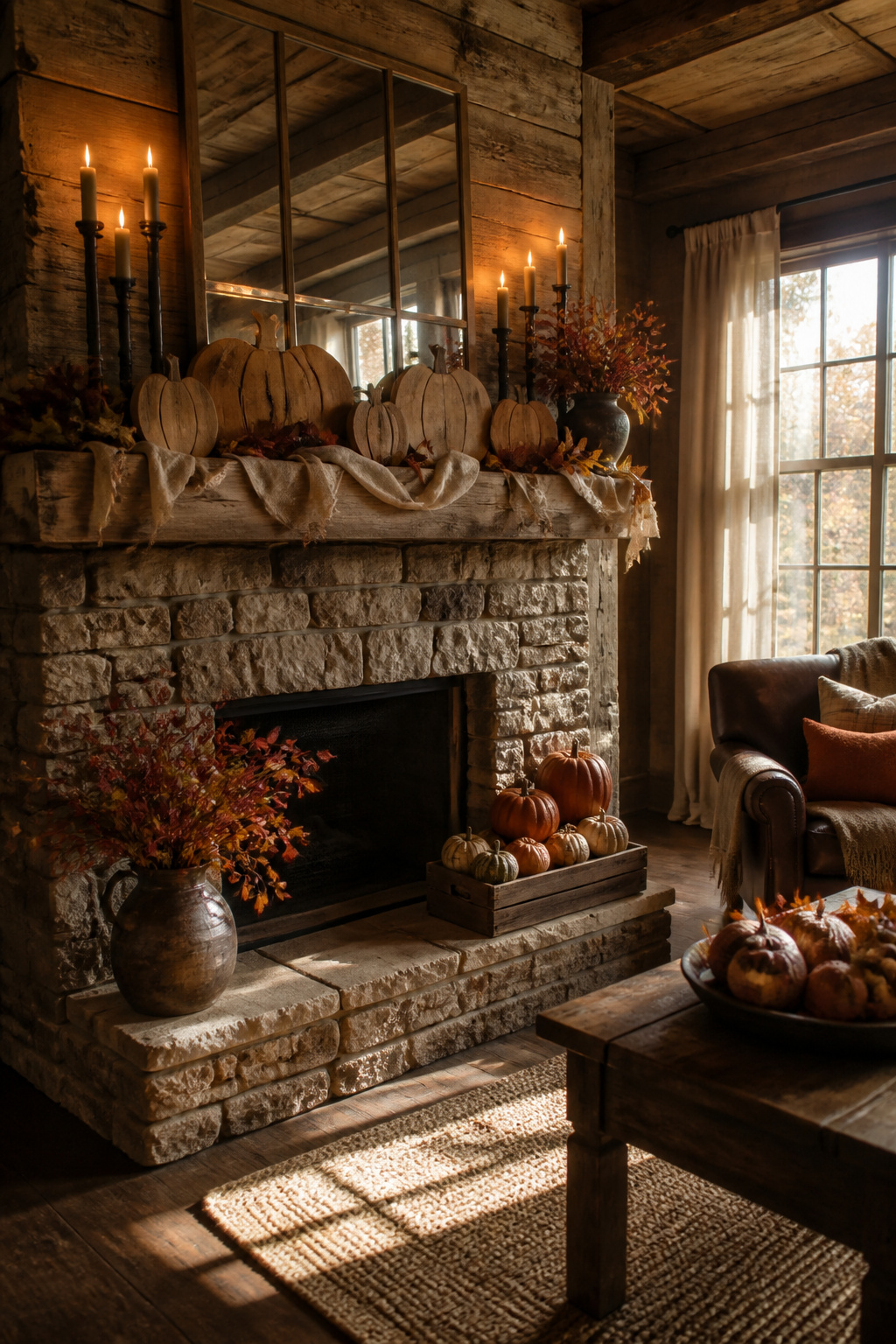
Iron candlesticks belong at the back of a farmhouse fall mantel, not because they are the prettiest piece but because their height blocks the wall and gives everything else something to step out from. In front of those I set wooden pumpkins, the kind with the rough-cut stems, then looped a frayed linen ribbon between them like I had just untied a bundle and left the string where it fell. The soft garland comes last, draped low enough to brush the mantel edge.
Three materials beats five every time. The eye reads the difference between wood grain, cool iron, and nubby linen without working at it; add a fourth and the brain starts cataloging instead of resting. I learned that the hard way last year when I threw in a ceramic pitcher and a brass tray and the whole thing started looking like a tag sale.
Odd numbers run the same way. Three candlesticks or five pumpkins group naturally; pairs square off and fight each other for attention. The rule is simple enough that I count in my head while I arrange, and if I hit an even number I either subtract one or hide the spare behind the garland until January.
Color Schemes
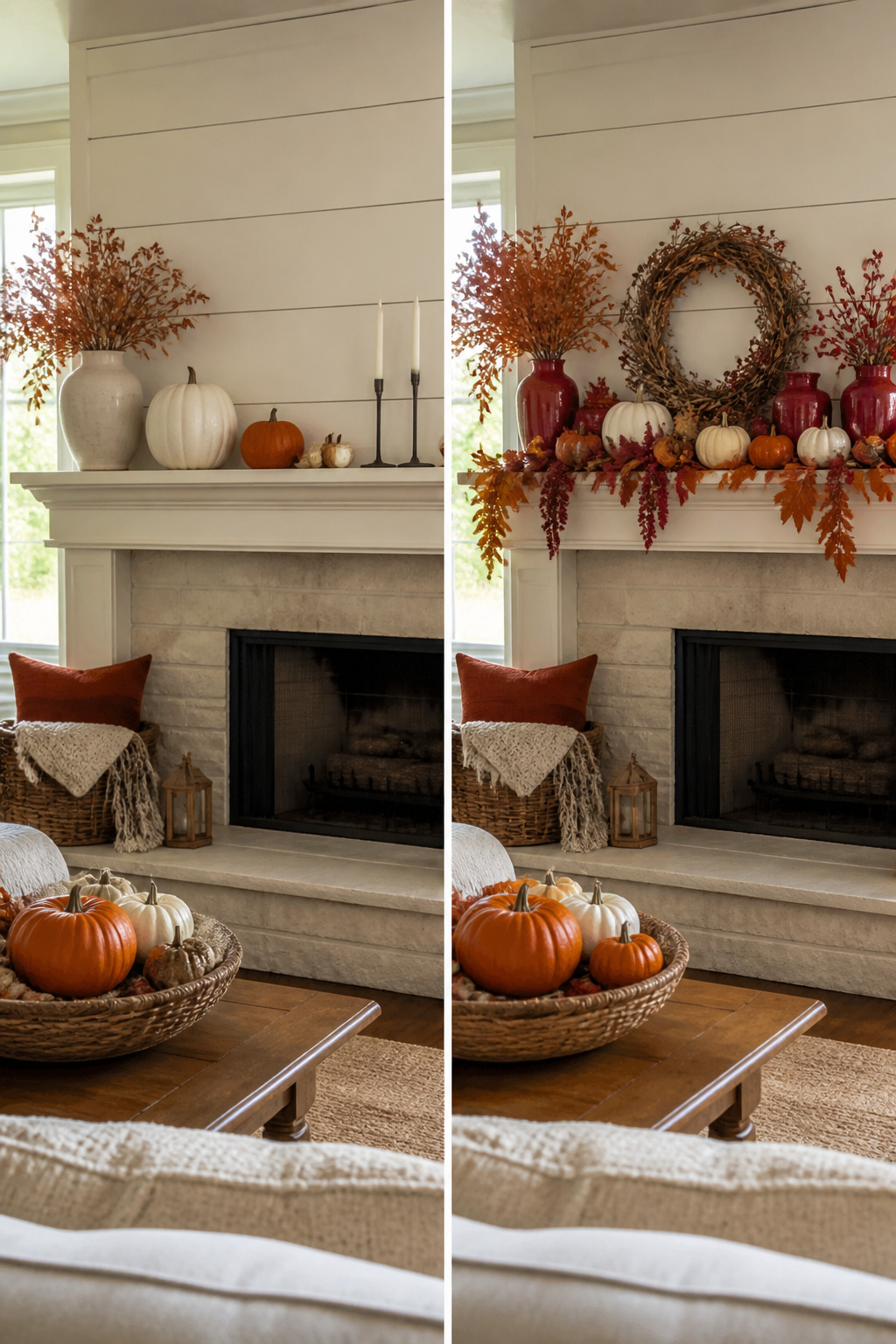
The classic farmhouse fall mantel leans on burnt orange, deep red, and neutral tones working together rather than competing. Cream and warm gray do the heavy lifting as backgrounds, which lets the stronger colors read as intentional rather than loud.
My own mantel in 2020 taught me this the hard way. I used a bright orange that photographed almost neon against my off-white brick, and the whole room looked like a craft store exploded. The next year I swapped to terracotta and cream, and the camera finally saw what my eye did: something that belonged in the house.
Now I limit myself to two main colors plus one accent. Three full colors split the eye three ways, and a mantel is too small a stage for that kind of chaos. Two colors give you a backbone; the third, used once or twice, is the period at the end of the sentence. Last year my pair was terracotta and cream, with a single deep red ceramic pitcher off to one side. That pitcher drew more comments than anything else on the shelf, partly because it was the only thing competing for attention.
Layering Techniques
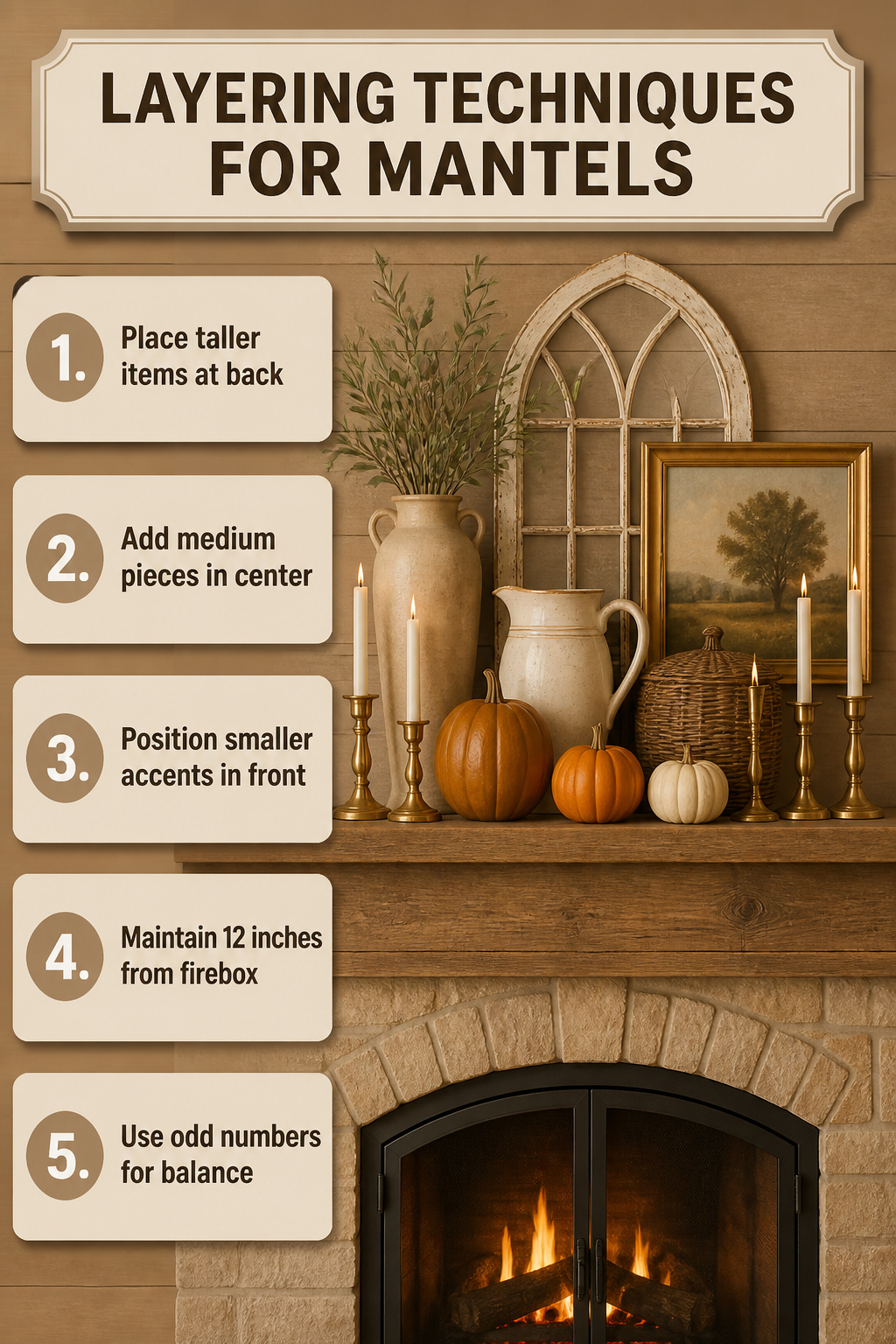
The back-to-front method is the only arrangement I trust enough to photograph each year so I remember what worked. Taller pieces sit behind, medium items in the middle, smaller accents in front. That three-tier depth keeps every object visible without the mantel reading as a single flat line.
I leave at least twelve inches of clearance from the firebox opening, measured from the front edge of whatever sits closest. Anything less and the heat starts to worry me, especially once candles enter the mix in October.
Odd numbers help the grouping feel accidental rather than staged. Three pumpkins of descending height, five brass candlesticks staggered along the length. The tallest piece usually anchors one side rather than dead center; symmetry reads formal, and farmhouse leans a little off-balance on purpose.
The photograph I take is simple: straight-on, phone camera, no staging. By late November I have forgotten whether the woven basket sat left or right of the ironstone pitcher. The picture saves me from reinventing the layout come next September.
Seasonal Timing
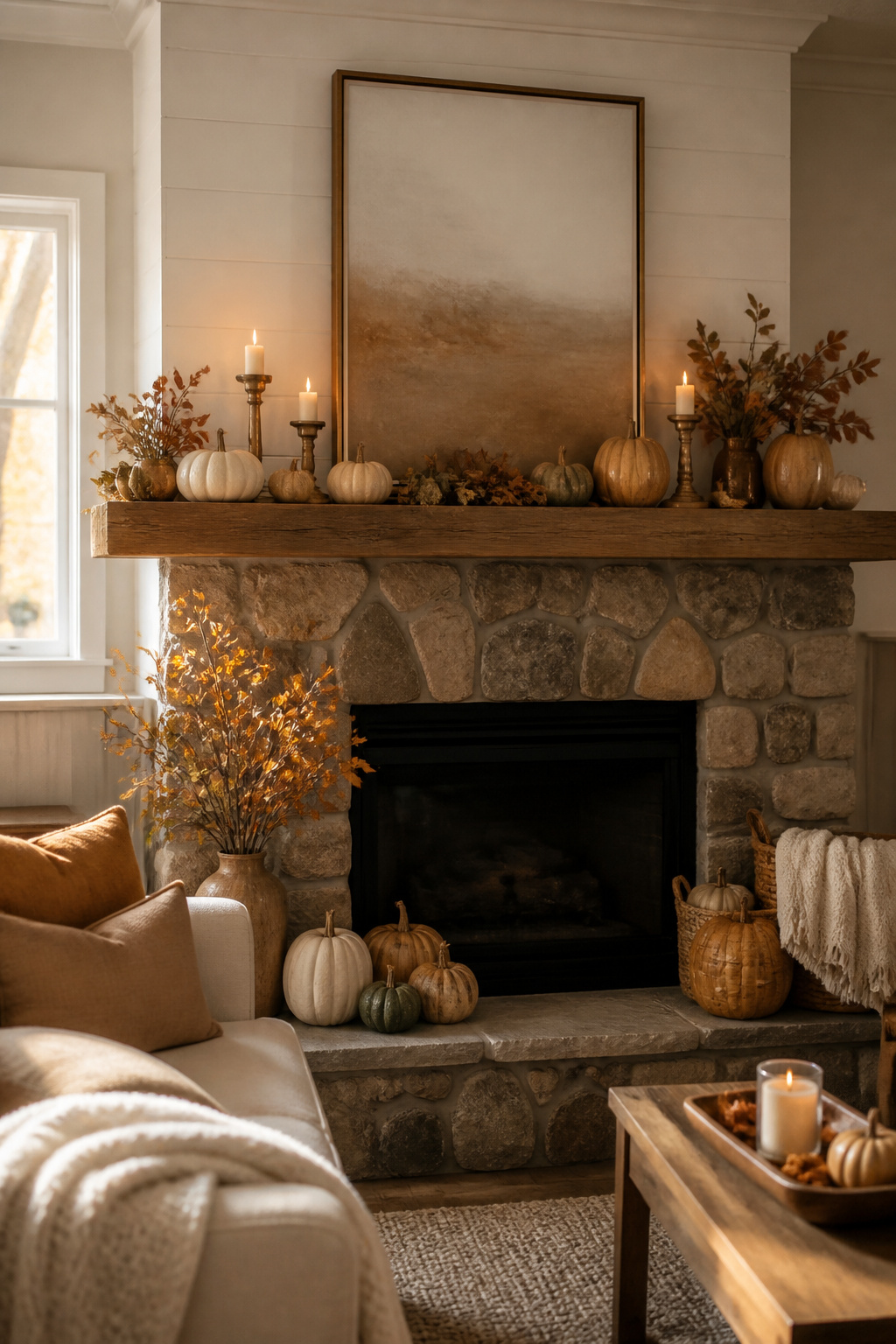
Late September through early October is the practical window for putting up a farmhouse fall mantel, and I hold to that because the decor only reads right when the air outside matches it. The year I caved and decorated September 1, the mantel looked absurd against 85-degree afternoons; the wool throws and copper mugs felt like props in a play nobody believed. Now I wait for the first cool weekend, the one where you actually want the oven on. That Saturday morning, the porch thermometer dipping below sixty, is when the garlands and pillar candles make sense in the room. Start with the weather, not the calendar, and the whole display lands differently.
Safety with Heat

Wool garlands and dried leaves look right for farmhouse fall mantels, but anything fibrous or brittle needs real distance from the firebox. I keep my own decor at least twelve inches back from the opening, and I treat that as the minimum, not the comfort zone. The test that changed my mind was watching a friend’s Autumn Meadow Mushroom Wool Garland, hung too low over a working fireplace, develop singed tips and a permanent wave where the heat rose. The damage showed up after one evening; the fibers had not caught fire, but they had distorted enough to ruin the shape she paid for.
Battery-operated candles became my standard after that. They give the same warm glow without the rising air current that pulls embers toward fabric, and I no longer have to babysit the mantel once the room gets cold. Before I place anything new, I hold my hand at mantel level and move it slowly toward the firebox until the air turns distinctly warm. That boundary is where the decor stops, every time, no exceptions.
Frequently Asked Questions
How to decorate a mantel for a fall fireplace?
Start with wooden pumpkins as anchors, add a single real sugar pumpkin for authentic scent, and layer in battery-operated candles inside glass hurricanes. Wool garlands draped across the front add softness, while a reclaimed barn wood tray at least twenty inches long corrals smaller items and creates height variation.
How to design a fireplace mantel?
Use the back-to-front method: taller pieces like iron candlesticks or signs sit behind, medium items like wooden pumpkins or trays in the middle, and smaller accents in front. Limit yourself to three materials and group in odd numbers so the arrangement feels accidental rather than staged.
What month do you start decorating for fall?
Late September through early October, once the first cool weekend hits and the thermometer dips below sixty. Starting with the weather rather than the calendar makes the whole display feel believable in the room.
How do you arrange items on your fireplace mantel?
Place taller items in the back, medium-sized items in the middle, and smaller items in front for three-tier depth. Keep at least twelve inches of clearance from the firebox opening, and position the tallest piece off-center rather than dead center for that intentional farmhouse imbalance.