Outdoor Christmas table decorations that last through December depend on drainage more than anything else. Greenery laid flat where meltwater pools turns brown in days; the same stems in a slatted crate stay crisp for weeks. A neighbor taught me that difference the hard way, and it changed how I build every outdoor table since.
1. Natural Greenery Arrangements
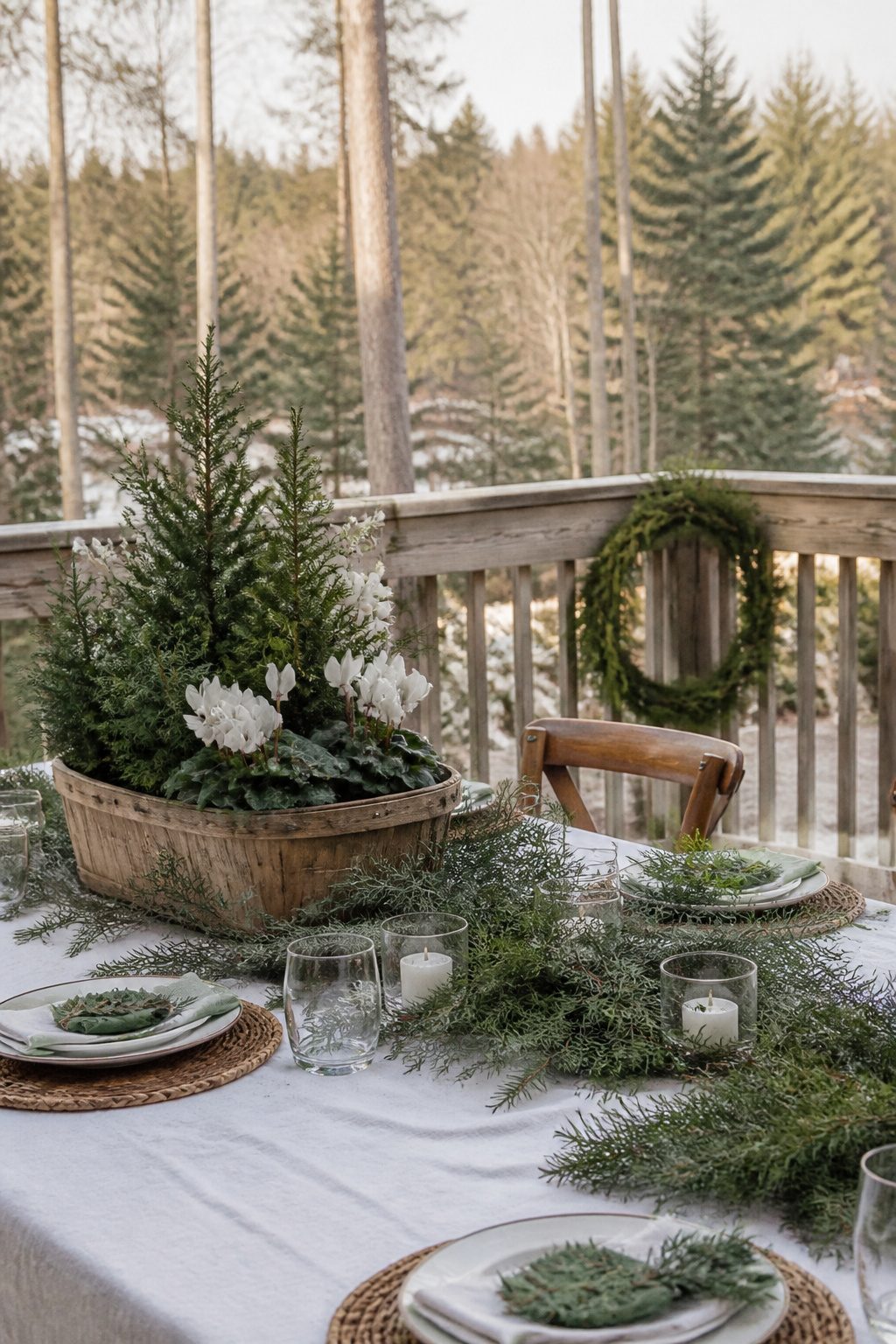
Fresh greenery turns an outdoor table into something that feels gathered rather than bought. Mini conifers and silvery evergreens are the backbone: they shrug off frost and keep their color through weeks of cold. A few years back, I watched a neighbor’s porch garland go brown while her table centerpiece, built from the same nursery batch, stayed crisp. The difference was drainage. She’d laid the garland flat where meltwater pooled, but the table pieces sat in a slatted crate that let water run through.
For a table runner, branches of silvery evergreen laid directly on the cloth beats a formal garland. They cost less, read more casual, and you replace any stem that dries out without dismantling the whole thing. Tuck mini conifers into a low basket or an old toolbox for a centerpiece that doesn’t block faces across the table. White cyclamens, if your nursery has them, add bloom without the fuss of cut flowers in the cold.
A wreath on the nearest wall or railing echoes the table and frames the space. Make it yourself with wire, branches, and a few small ornaments, or buy one rated for outdoor weather. Either way, keep the scale low so it doesn’t compete with what’s on the table.
2. Festive Tablecloths
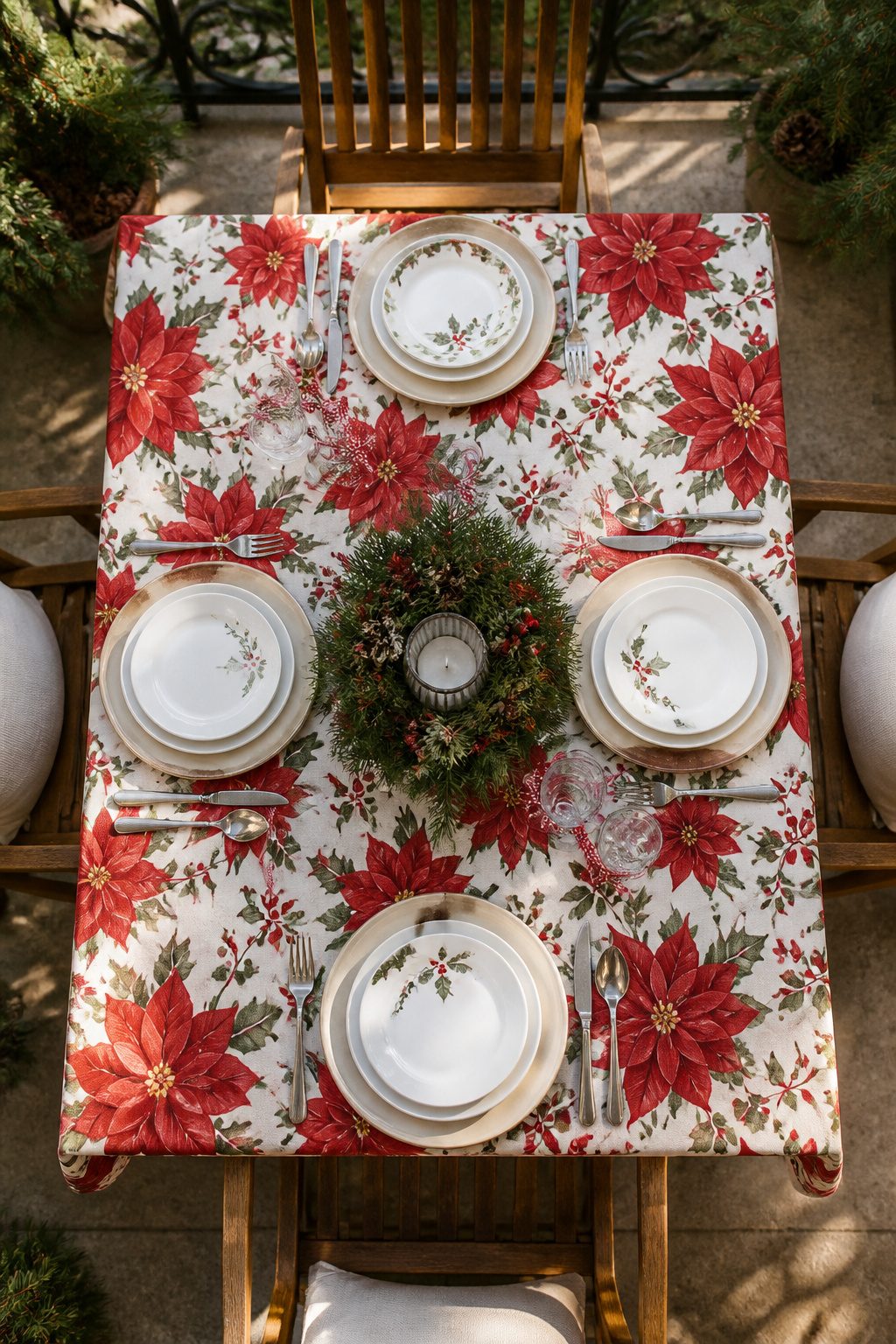
A red and white poinsettia tablecloth sets the whole tone for an outdoor Christmas table without much effort. The pattern is busy enough that you do not need much else to signal the holiday.
I learned the hard way that the tablecloth wants neutral dishes underneath it. White plates or cream stoneware sit back and let the poinsettias do the work. Layering a smaller seasonal plate on top, something with a thin holly trim, adds interest without fighting the cloth. The one time I tried red-rimmed dishes on that same poinsettia pattern, the table looked like a gift shop exploded.
For outdoor use, the weight matters more than indoors. A heavier cotton or linen blend stays put in a breeze that would send a thin polyester runner into the neighbor’s yard. If your table is rougher wood, the thicker weave also hides splinters and uneven grain that a delicate runner would expose.
Ribbon ties on glasses or a single sprig of berries at each place finish it without extra dishes to wash. Red gingham ribbon costs little and reads Christmas without trying hard. Keep the center clear for whatever centerpiece you settle on later; the cloth already did the heavy lifting.
3. Simple Centerpieces
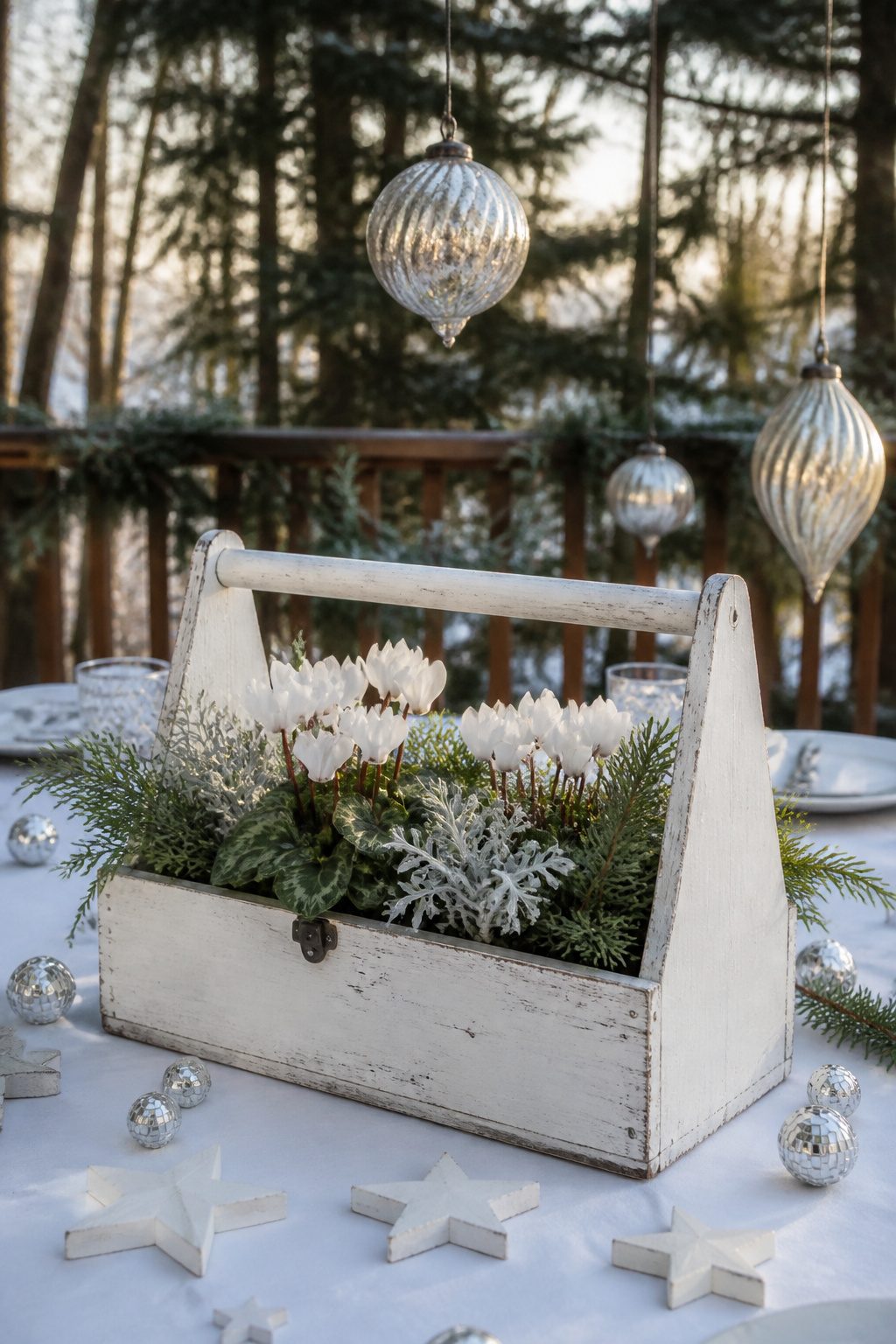
A white upcycled toolbox makes a better outdoor centerpiece than most things sold for the purpose. I gave mine a quick paint job last fall, and now it holds hardy greens, white cyclamens, and silvery foliage that shrug off cold evenings. The shape does the work: low enough to see over, divided enough to keep plants from sliding into each other.
The trick is mixing materials without clutter. Tuck in painted wooden stars or a few shiny mini disco balls so they catch the winter light, but keep the palette tight. White baubles, not red and green everything at once. The restraint reads as confidence, and it costs less.
For the space above the table, oversized metal ornaments hung from the deck railing or a low branch do more than any table-height centerpiece alone. I saw these in red diamond, white diamond, and star bell shapes, and the move is to hang them at varied heights with neutral string, not fishing line that disappears. Random placement beats a pattern; the eye fills in the rhythm. Lower the star bells directly over the table so guests have something to look up at between bites.
Combine the two ideas by running greenery along the toolbox edges, then letting it visually connect to whatever hangs overhead. The table feels intentional without feeling staged.
4. String Lights
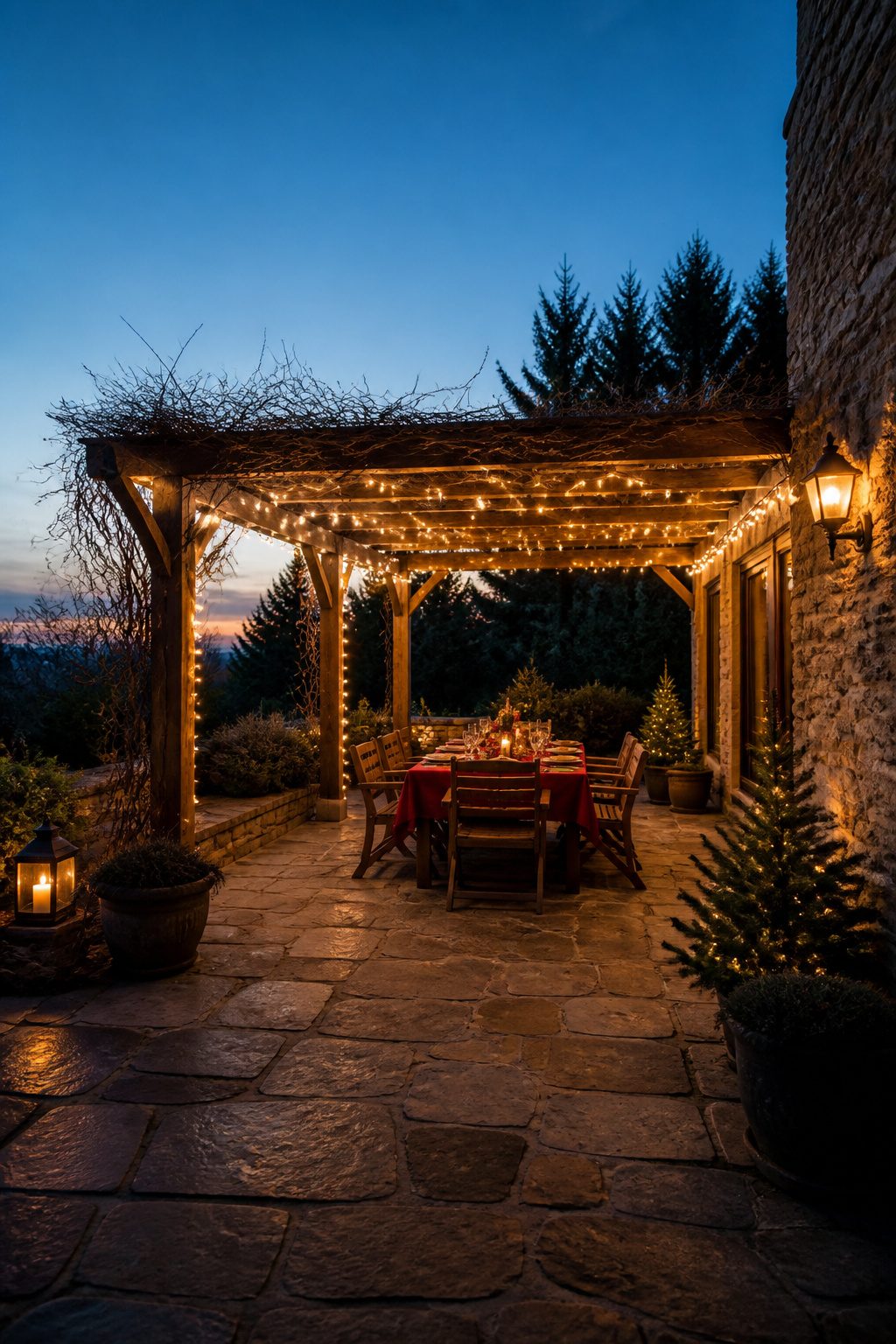
String lights turn an outdoor Christmas table from invisible to inviting the moment the sun drops. I learned this the hard way after a Thanksgiving dinner where guests ate by phone flashlight because I assumed candles would be enough. They were not.
Outdoor-rated string lights are the only kind that belong outside, and the label matters more than the price tag. Lights marked for exterior use carry a UL rating that covers rain, snow, and the temperature swings a December evening throws at them. Regular indoor lights will trip a breaker, fray, or worse.
Color-changing strands have come a long way from the clunky remote-control days. Most now shift through warm white, multicolor, and a few in-between tones from an app, which means one set of lights carries you from dinner to dessert without climbing a ladder. I hang mine in a loose zigzag about two feet above the table, low enough to cast actual light on the plates but high enough that a standing guest does not take them out with a wine glass. Command hooks on the underside of a pergola or fence railings work for renters; no drilling required.
The wet question comes up constantly. Outdoor Christmas lights are built to get wet, provided the plug and any extension cords sit under a cover or use a weatherproof box. Water on the bulbs is fine. Water pooling in the socket is not.
5. DIY Decorations
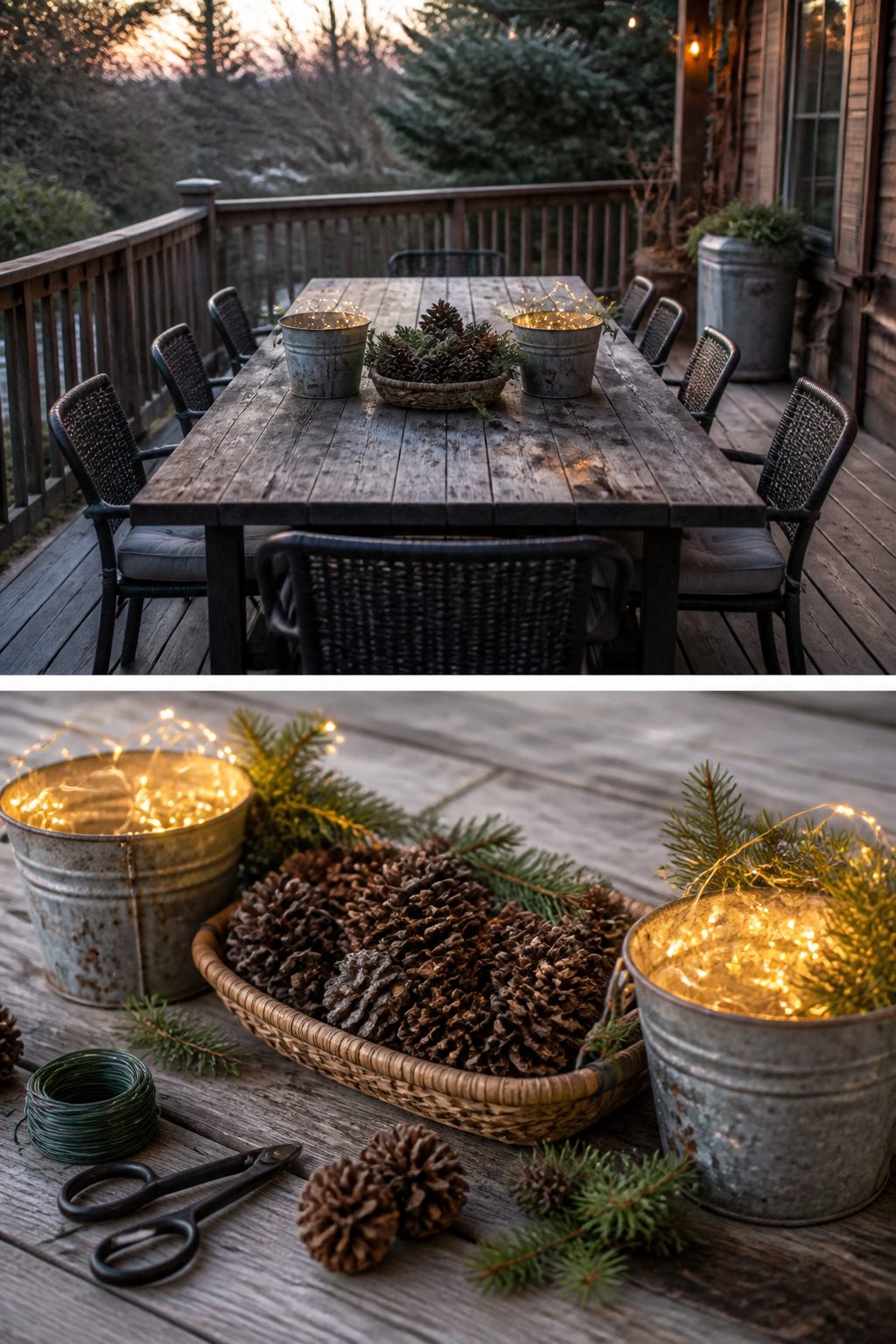
Scrap wood left over from a fence repair became my favorite piece of the table last year. I brushed on a holiday message in exterior acrylic, nothing fancy, just "Warm Wishes" with a rough pine tree, then sealed it with a weather-safe finish so the rain would not turn it to pulp by New Year’s. The whole thing took an evening and cost maybe six dollars in paint I already owned.
Metal buckets work the same way. A pair of old galvanized ones, the kind that hold ice at summer cookouts, filled with battery-powered string lights and set at either end of the table, give off a glow that looks intentional rather than improvised. The trick is keeping the battery pack dry; a sandwich bag inside the bucket does the job without visible fuss.
Pine cones gathered from the yard line the center in a shallow basket, wired with a few more of those lights. The charm is in the rough edges. A sign with uneven lettering and a bucket that dented when you kicked it last July feel lived-in in a way store displays do not, and the total outlay stays under what a single designer lantern would run.
6. Colorful Accents
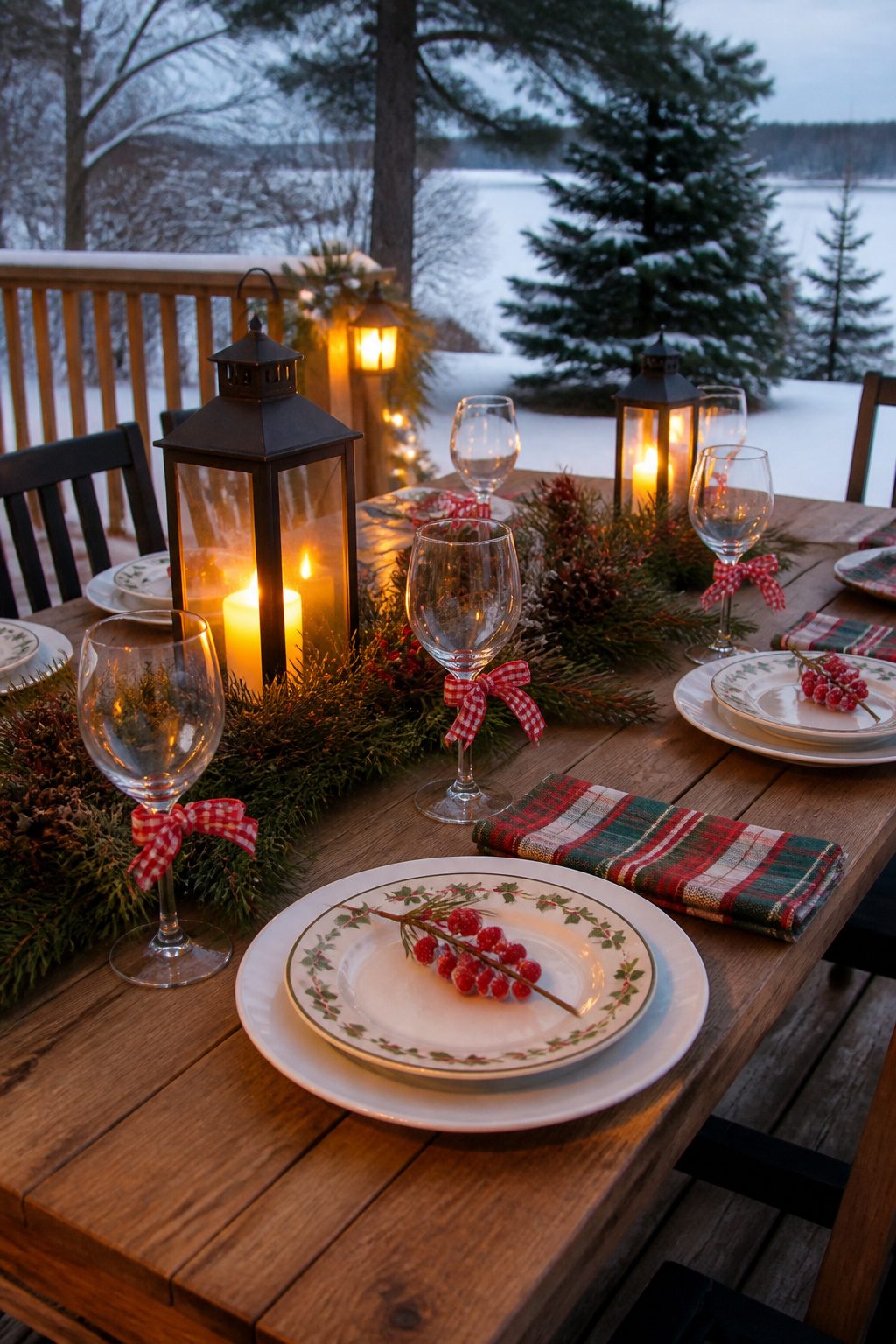
A sprig of red berries on each plate costs next to nothing and reads as intentional the moment guests sit down. I layer neutral dishes underneath, then set a smaller seasonal plate on top; the holly-trim plates I found at Burke’s Outlet do the heavy lifting without demanding a full new set. Plaid napkins add the warmth that makes people want to stay; the same pattern on a tablecloth can feel like too much, but folded beside a plate it just reads cozy. Red gingham ribbon tied around a glass stem or looped through a napkin ring is the kind of detail that looks fussy in a photo but takes about ten seconds per setting. Warm dishes against warm ribbon against the cool of actual winter air outside: that contrast is what makes the table feel lived-in rather than staged.
7. Outdoor Christmas Tree
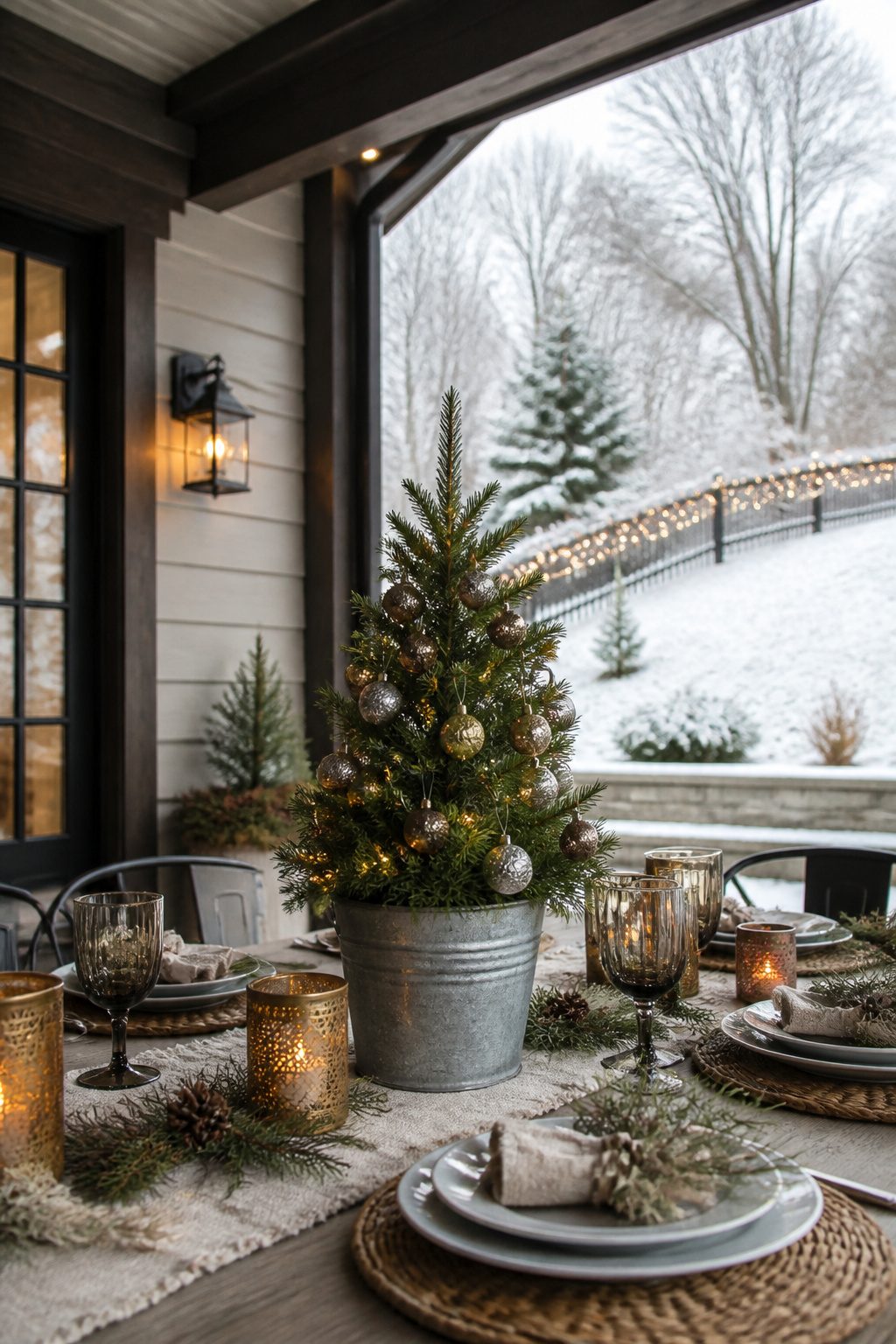
A small outdoor Christmas tree on the table reads as centerpiece rather than afterthought, but the weather will test whatever you set out. Plastic ornaments, wide ribbon, and LED lights hold up where glass baubles and wired candles crack or short. A live tree in a pot works if you already own one; otherwise a weather-safe artificial tree saves the watering and the post-holiday root shock. I would keep the scale under four feet so the tree does not eat the seating space or block sightlines across the table. Place it near the entryway if the table sits close, so guests catch it on arrival, but weight the base heavily. Wind gusts that a living room tree never sees will tip a lightweight pot or a hollow stand in an afternoon. My own compromise is a small artificial fir in a galvanized bucket filled with sand; the bucket rusts slightly each season, but the tree stays upright and the ornaments stay intact.
8. Candlelight
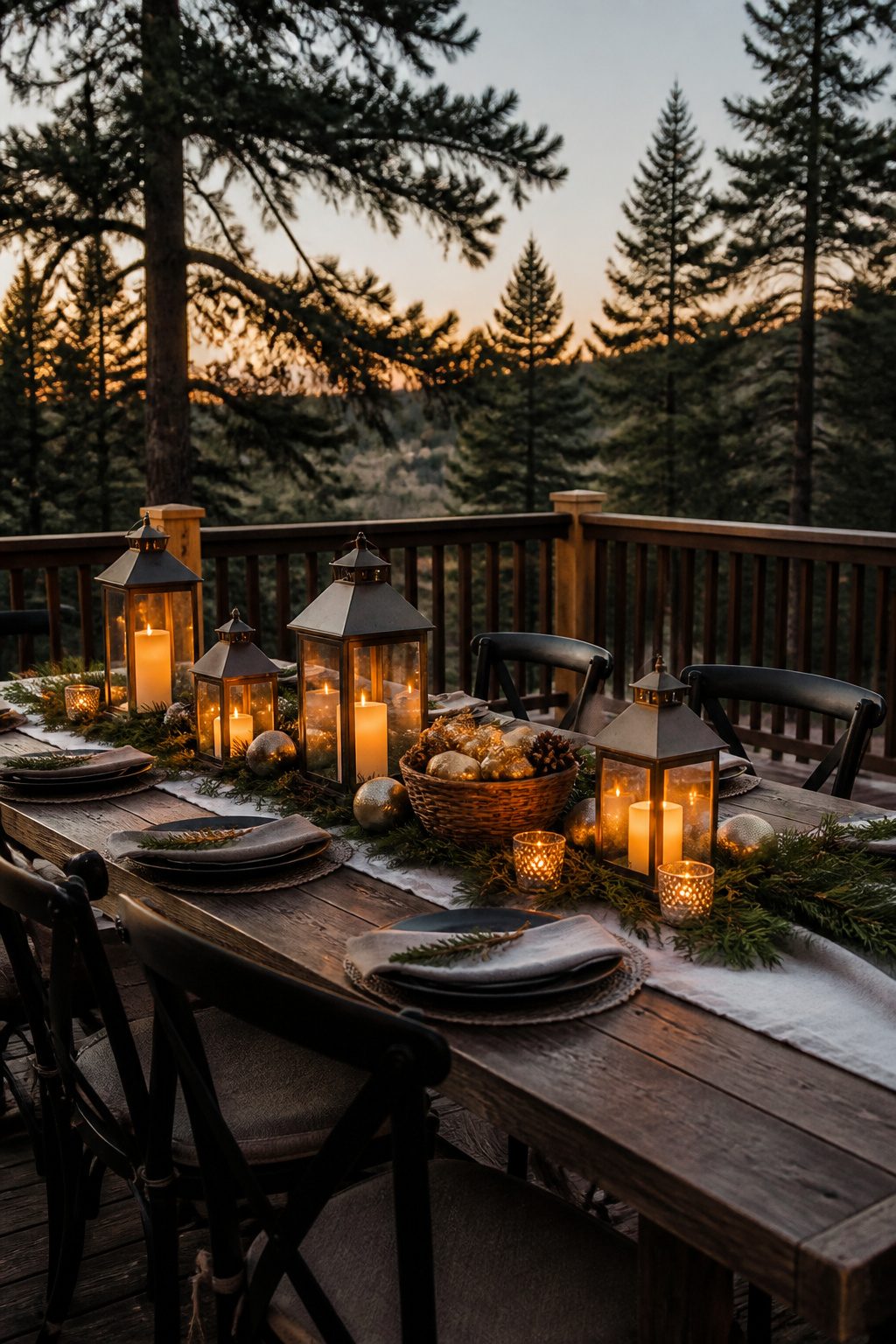
Battery candles beat real flame the moment wind enters the conversation. I learned this after watching a pillar candle gutter out across three attempts at an outdoor Thanksgiving, each relight shorter than the last. The battery version, tucked inside a lantern with a frosted glass panel, gives the same amber pool without the vigilance.
Outdoor-rated cords and lights matter if you are mixing in plug-in strands. Pathways need to stay clear, and every piece of the setup should hold steady when gusts pick up. That is the safety side handled in about five minutes of checking.
For the mood itself, a few lanterns or battery candles clustered low across the table do more than one tall centerpiece. The light sits at eye level instead of above it, and guests actually see each other across the plates. A small basket of ornaments or pine cones in the center keeps the table from feeling crowded while the glow does the heavy lifting.
The goal is a warm holiday mood, not a perfect one. A little each evening gets you there without the overwhelm of a single marathon setup session.
9. Whimsical Elements
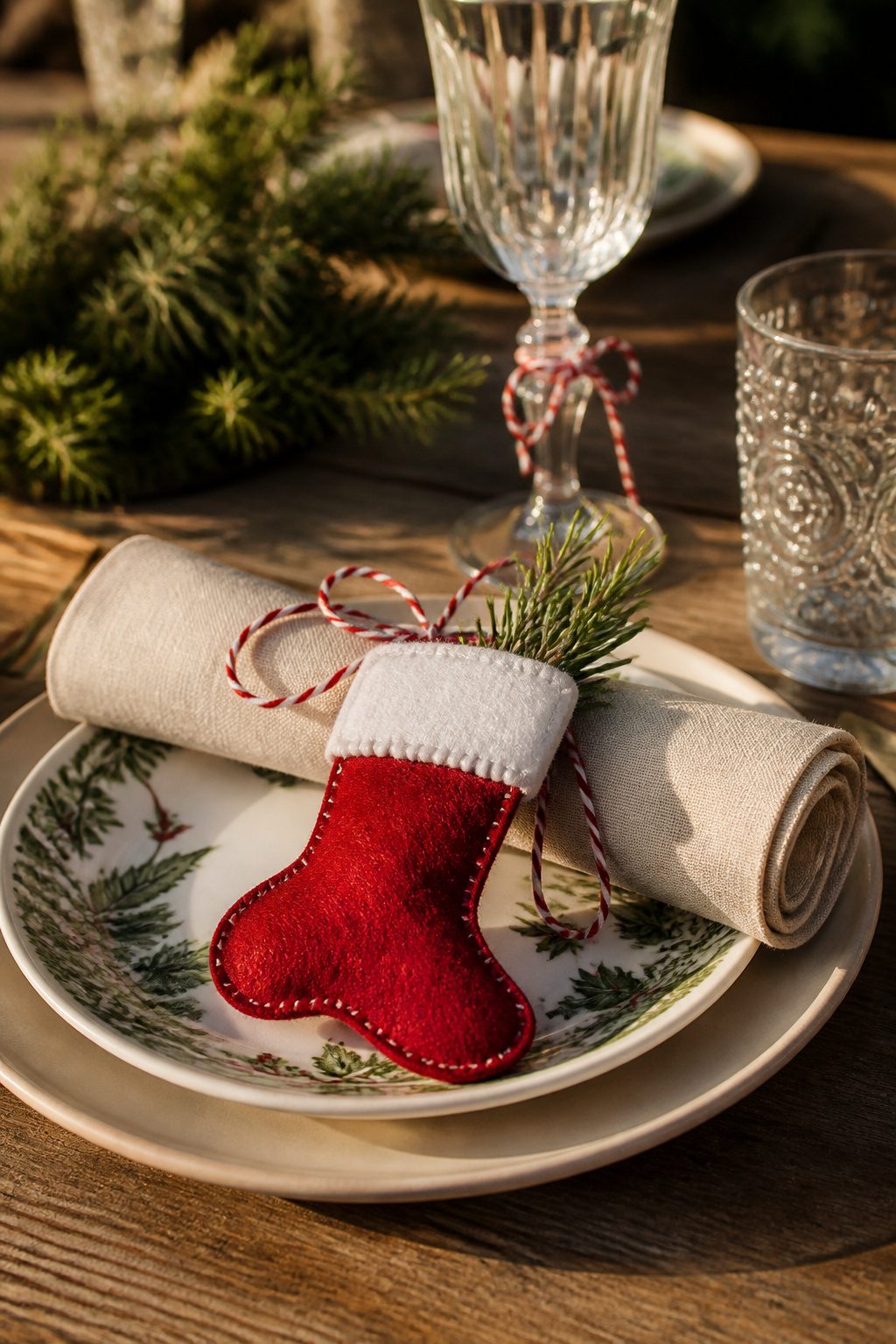
Miniature stockings turn a rolled napkin into something that makes guests pause before they sit. The ones I keep coming back to are about four inches tall, just big enough to thread a napkin through without looking like a placeholder. Red felt with a white cuff is the classic, but a mismatched set of plaids and solids reads more collected-over-time than bought-in-bulk.
Tiny stockings as napkin holders work because they do two jobs at once: they keep the napkin rolled and they give each seat a gift-like moment. Tuck a sprig of rosemary or a cinnamon stick into the cuff if you want scent, or leave them empty and let the shape carry the whole gesture.
Baker’s twine and vintage bulb rings are another route, especially if your table already has retro lights strung somewhere nearby. Attach a loop of red-and-white twine to the base of a bulb with hot glue, wrap the base completely, and tie around the napkin. The look is colorful and slightly kitsch in a way that outdoor settings forgive more easily than a dining room would.
The mistake to avoid is mixing both ideas on the same table. Bulb rings and tiny stockings each want to be the quirkiest thing in sight; put them together and neither reads as intentional. Pick one, repeat it at every place setting, and let the repetition do the work.
What Greenery Lasts Outside
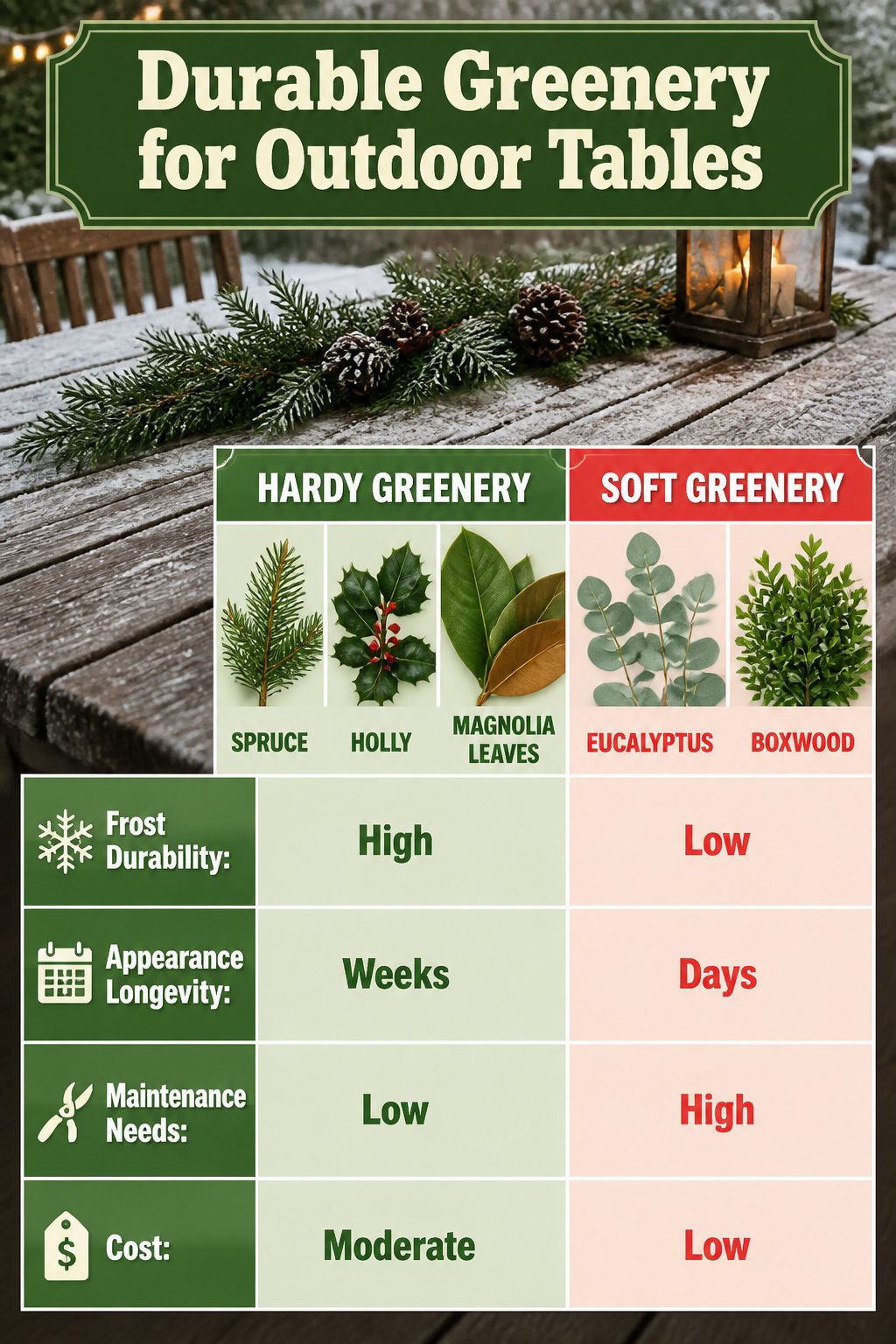
Fresh cedar and pine branches look beautiful on an outdoor table until they don’t. In my experience, the difference between greenery that holds up and greenery that turns brown by Christmas morning comes down to one thing: hardy plants that can last through winter versus the softer stems that wilt in cold rain. Spruce, holly, and magnolia leaves handle frost far better than eucalyptus or boxwood, which droop within a day or two outside.
Garlands and wreaths built from these tougher materials give you the classic look without the daily replacement routine. I lean toward artificial garlands for anything that sits flat on a table surface; moisture pools there, and even hardy cuttings suffer. A good faux garland along the table edge, paired with a few real spruce sprigs in a vase where air circulates, gets the texture right without the maintenance. Wreaths work the same way: hung on a nearby door or wall, they pull the scene together and can be either fresh or artificial since vertical placement drains better.
If you want the transition to stay easy, faux greenery moves from Thanksgiving to Christmas without swapping pieces. Real branches demand a plan for swapping them out, usually every three to five days in wet weather.
How I Layer a Place Setting
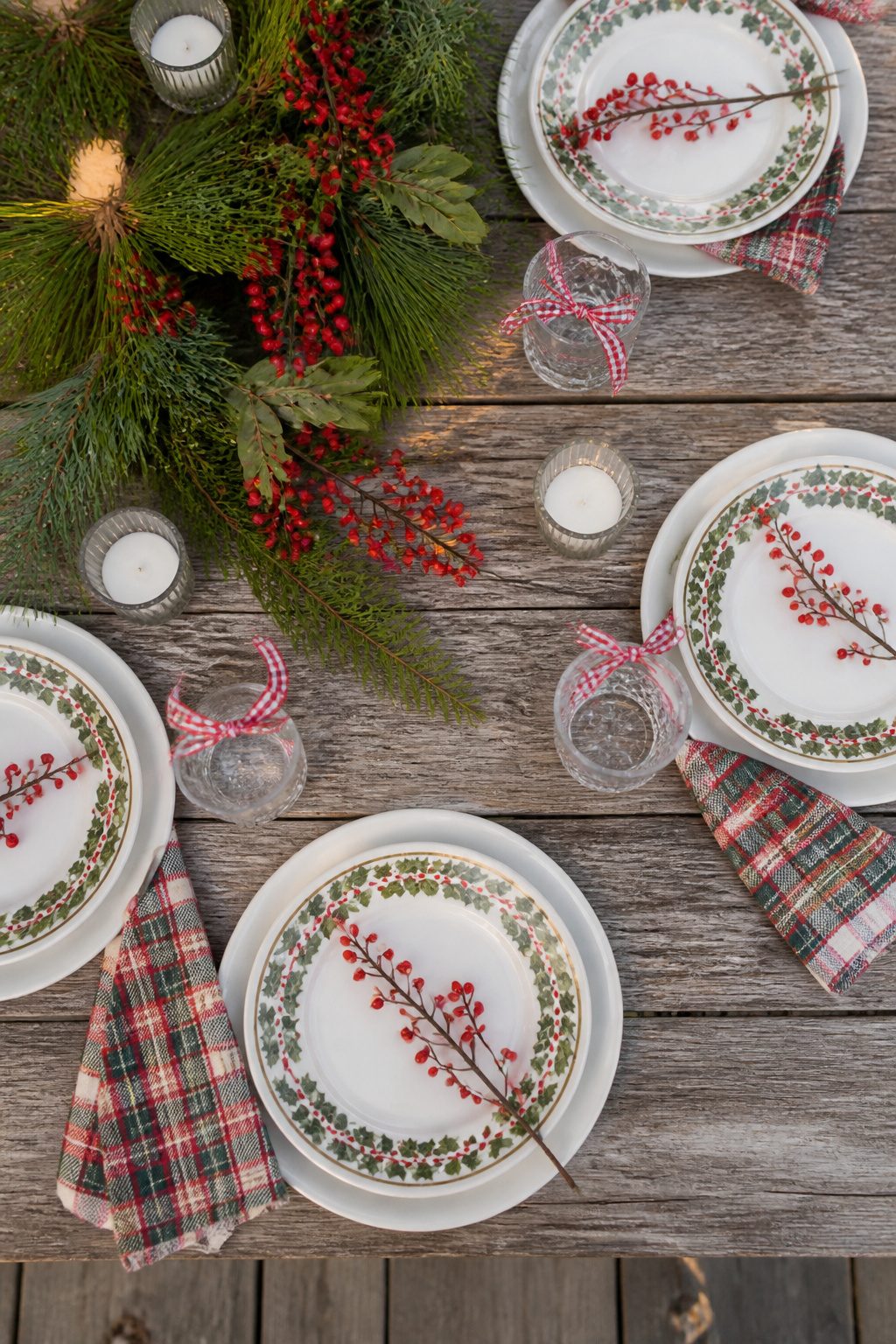
Neutral dishes underneath seasonal ones give the whole stack some breathing room. I keep my everyday white plates as the base, then set the holiday layer on top, something like those delicate holly trim plates from Burke’s Outlet. The white keeps the table from feeling cluttered once the greenery and glasses land around it.
Plaid napkins do the heavy lifting for color. One source pairs them with blankets as seat cushions, which tells me the pattern itself is doing enough work that the dishes can stay simple. I fold mine square and offset them rather than centering everything like a restaurant setup; it reads more relaxed for an outdoor meal.
A sprig of red berries across each plate costs next to nothing and beats a printed menu card for warmth. Ribbon ties on the glasses finish it, though I skip the bow if the wind picks up. Gingham ribbon on stems works best under $5 a roll, and it unties fast for washing later.
Lighting That Actually Works Outside
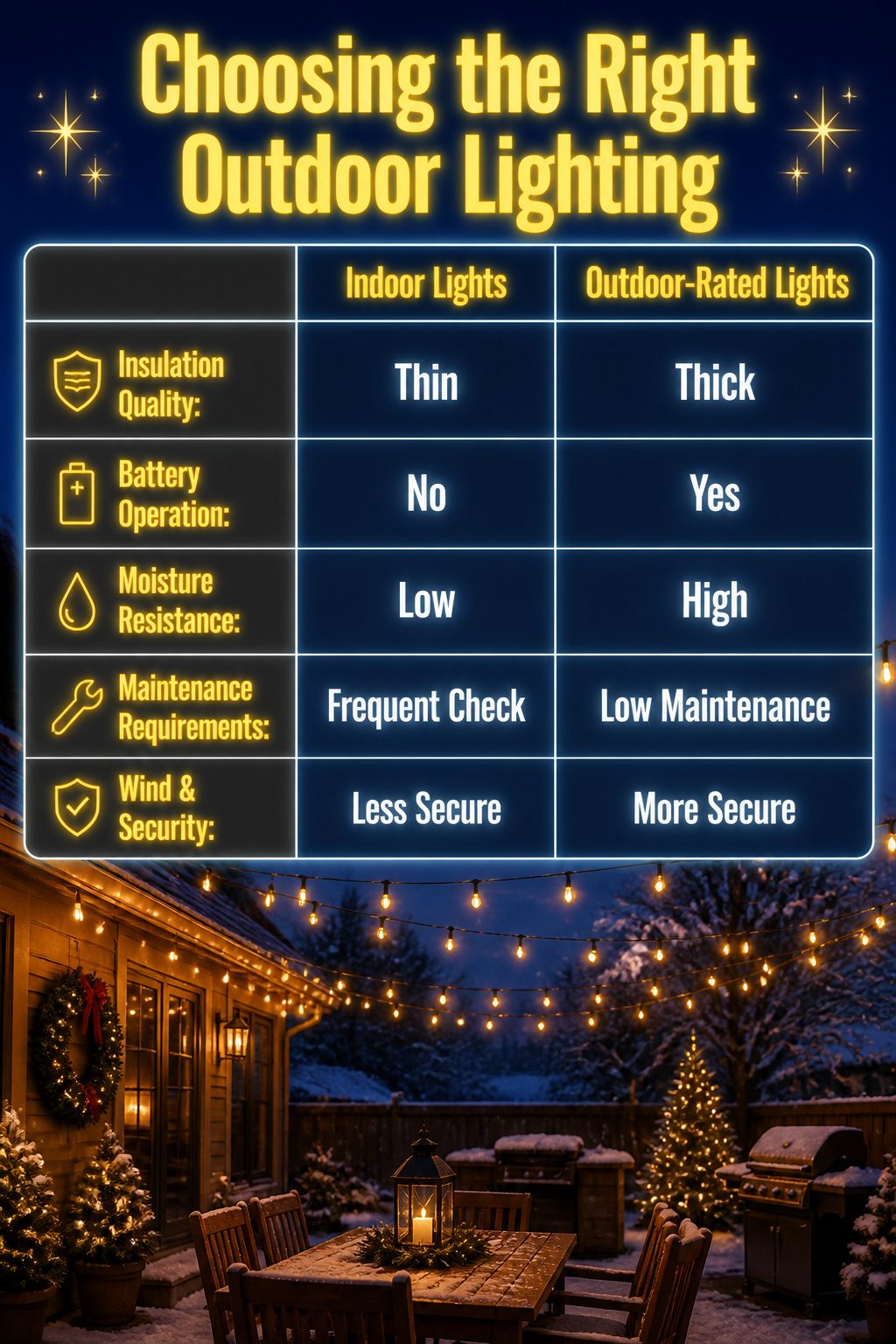
Twinkle lights from the craft drawer look tempting, but outdoor-rated lights are the ones that won’t trip your breaker when dew settles in. The difference is in the insulation: outdoor-rated strands use thicker wire jackets and sealed sockets rated for moisture, not just the thin vinyl wrap meant for dry living rooms. I learned that the hard way one year, standing in the rain with a string of indoor lights that had gone dark before dessert.
Battery operation matters when your table sits more than an extension cord’s reach from the house. Most outdoor-rated strands still need an outlet; battery boxes give you the fifteen feet past the patio edge where nobody wants to run a cord guests might trip over. Check that all decorations stay secure even when the wind picks up, and keep pathways clear so the path from grill to chair stays open after dark.
The goal is a warm holiday mood, not a perfect showroom. Do a little each evening so you don’t feel overwhelmed, and test your setup one night before guests arrive so you have time to swap in fresh batteries if the cold has drained them.
DIY Without the Workshop
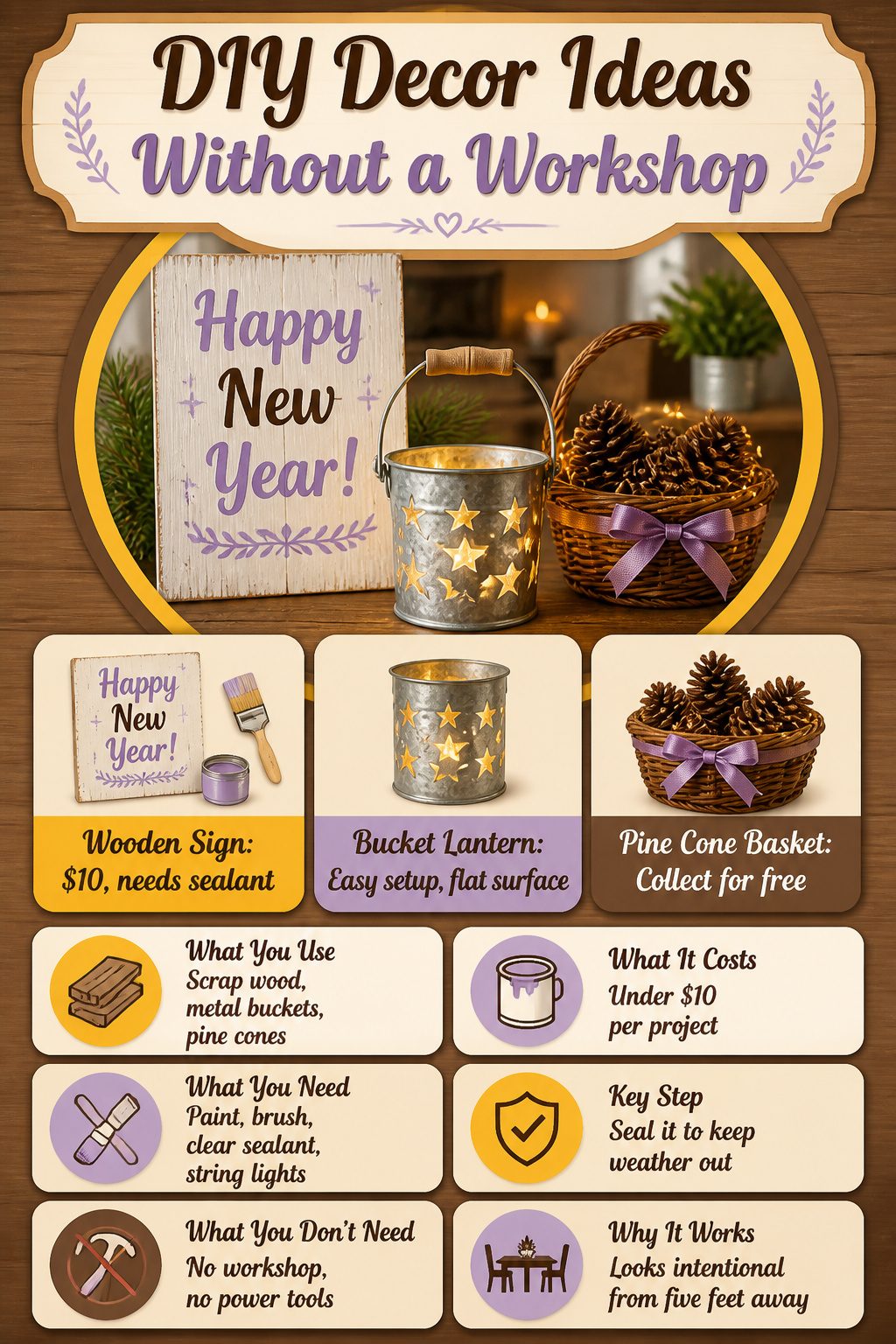
Painted wooden signs look handmade because they are, and that is the whole appeal. A scrap of 1-by-6 or pallet wood, a $4 tester pot of exterior paint, and a brush you already own: the spend stays under ten dollars if you raid the garage first. The sources mention weather-safe sealant, which matters more than the paint itself. One coat of clear exterior sealer over the lettering keeps the message readable past New Year’s, otherwise rain swells the grain and the words blur by Boxing Day.
No workshop is required for this. A kitchen table covered in newspaper works fine; the pieces are small enough to dry on a windowsill. Battery-powered bucket lanterns follow the same logic. Metal buckets, the kind sold at hardware stores for mixing or cleaning, hold a string of lights and sit flat on any surface. The light faces upward and pools on the table rather than glaring across the yard, which is what you want when people are trying to eat.
The sealant is the step most people skip, and it is the one that separates a weekend project from a weekend project you repeat next weekend because the first version warped. Pine cone baskets cost nothing if you collect the cones yourself, though the sources note that adding ribbon or small lights is what keeps them from looking like yard debris arranged in a bowl. The point of these pieces is that they read as intentional from five feet away, which is the distance across a dinner table.
Frequently Asked Questions
What should I use for outdoor Christmas table decorations?
Natural greenery like spruce and holly, festive tablecloths such as red and white poinsettia patterns, and simple centerpieces built from upcycled containers or low baskets work best. Choose hardy plants that shrug off frost, heavier fabrics that stay put in breeze, and keep the palette tight so the table feels gathered rather than bought. A wreath on a nearby wall or railing frames the space without competing with what’s on the table.
Can outdoor Christmas lights get wet?
Yes, outdoor-rated lights are built to handle rain and snow, but the plug and any extension cords need protection. Water on the bulbs is fine; water pooling in the socket is not. Use a weatherproof box or keep connections under cover, and always check for the UL rating that covers exterior use.
How do I decorate my deck for Christmas?
Start with a festive tablecloth in a bold pattern like poinsettia, then layer neutral dishes underneath so the cloth does the heavy lifting. Hang oversized metal ornaments at varied heights with neutral string overhead, and add plaid napkins or gingham ribbon on glasses for warmth that makes people want to stay. Keep pathways clear and test your lighting setup one night before guests arrive.