
A spring wreath is a circular arrangement hung on a front door to mark the shift out of winter, though the right choice depends on whether your door faces direct sun, sits under a porch, or needs to survive a humid climate. The tulip wreaths I looked at this year come in 16 colorways and 7 sizes, which matters more than the flower type itself: a 22-inch wreath on a 36-inch Craftsman door reads completely different than the same wreath squeezed onto a 32-inch rental unit.
Tulip Wreath
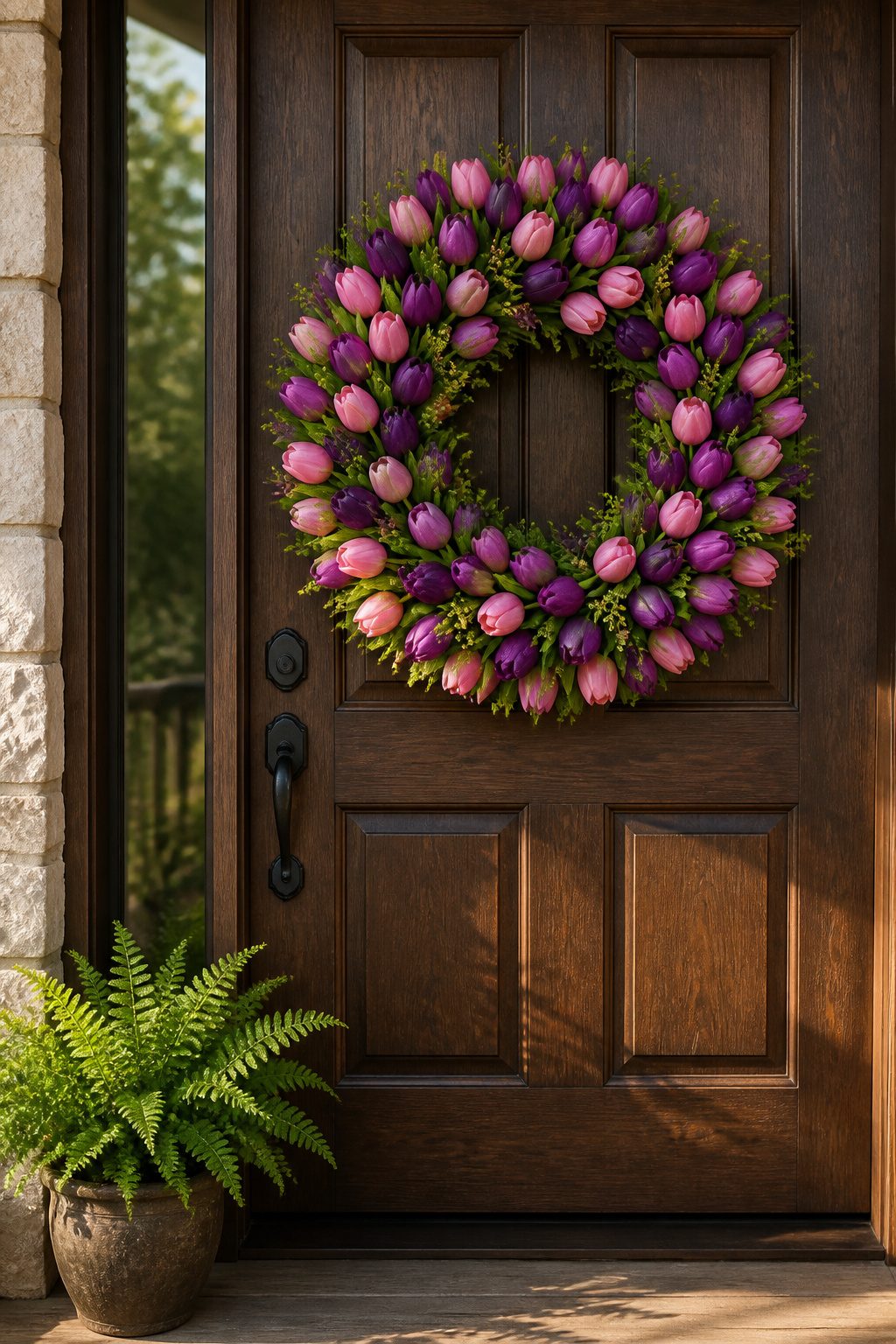
Tulip wreaths carry the clean signal of early spring without trying to look like summer yet. The stems stay slim and the heads hold their shape, so a wreath reads as deliberate rather than overgrown. What surprised me, looking through the options for this year, is how much room there is to match a door rather than fight it: 16 color-way options and 7 size options now run in the same tulip wreath line, which means a muted brick and stone exterior can take something saturated without the color looking accidental.
I used to remove the ribbon that ships with these wreaths. The stock tie reads gift-basket to me, and the flowers have enough structure on their own. Against a dark wood door, a purple-pink mix with greenery underneath gives the contrast without turning the whole entry into a statement piece. For renters especially, that matters: the wreath does the seasonal work, not a paint job you cannot make.
The sizing range is what lets this work on a narrow apartment door or a wide Craftsman frame without looking scaled wrong. A 22-inch wreath on a 36-inch door sits differently than the same wreath on a standard 32-inch rental unit, and the extra sizes mean you are not guessing with wire cutters.
Hydrangea Wreath
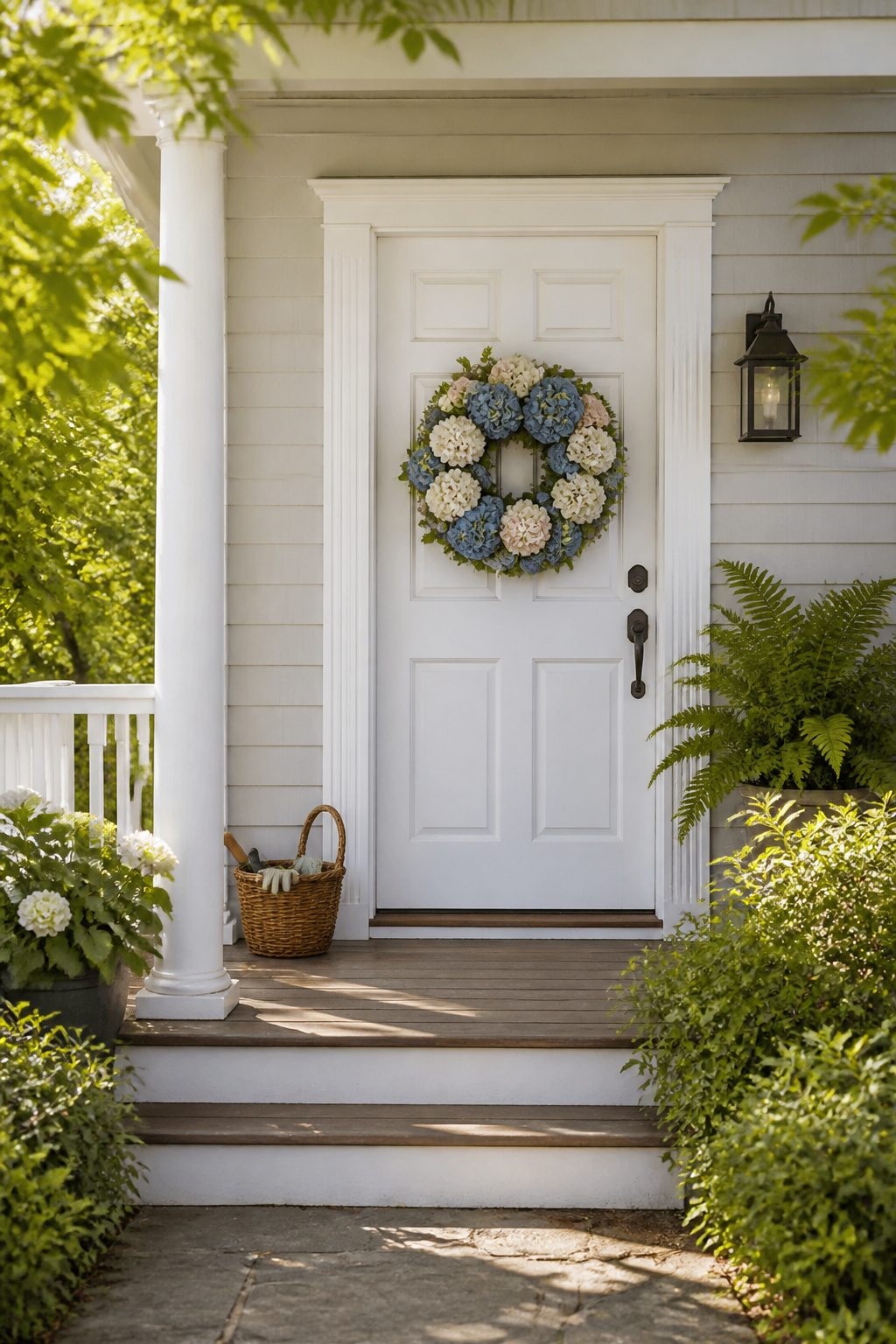
A hydrangea wreath carries weight on a door in a way thinner stems never manage. The clustered blooms build a full, rounded silhouette that reads clearly from the street, which matters more than most people realize until they hang something flat and watch it disappear against siding.
The scale that works for standard entryways sits around 24 inches in diameter, roughly the footprint of a mixed flower wreath in pink, white, and green you have probably already seen in craft store displays. That size fills a six-panel door without crowding the hardware or brushing the frame when it swings.
Color shifts with hydrangeas more than most spring picks. The same base wreath can run blue, blush, or cream depending on the dye lot or whether the maker used dried, preserved, or silk heads. Blue reads cold from a distance against warm brick; blush softens white trim without going pastel-saccharine. Green foliage interwoven through the clusters keeps the shape from turning into a solid color disk, which helps the depth hold up under porch shadows.
The downside is bulk in storage. A 24-inch dome does not flatten into a holiday bin the way grapevine does, so the wreath either hangs year-round in a closet or you accept the creasing that comes with stacking. My own sits on a nail in the garage rafters from May through March, dusted off with a hair dryer on cool before the next spring.
Magnolia Wreath
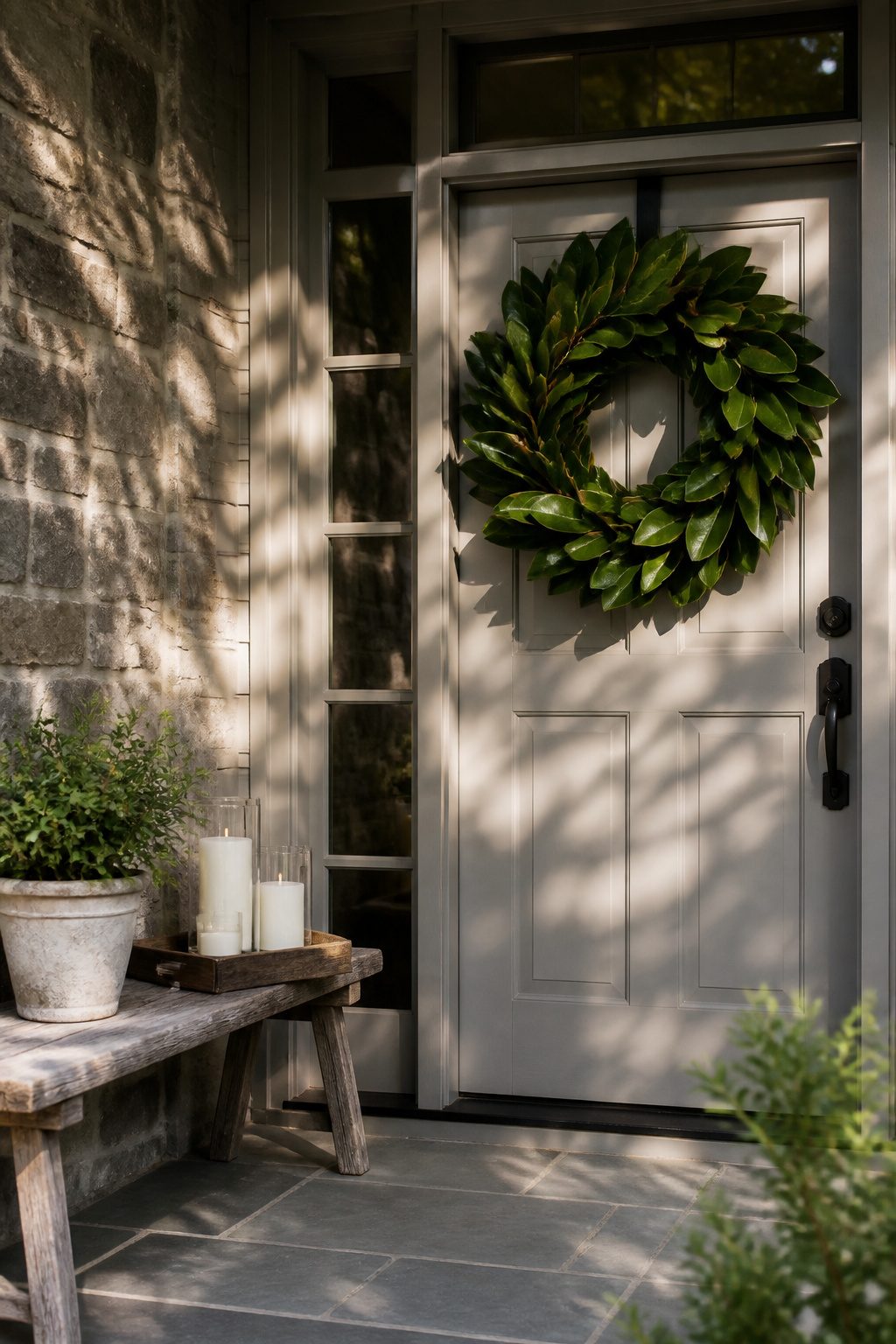
A real-touch magnolia wreath carries that particular weight of large, glossy leaves that read as structure rather than bouquet. The surface catches light differently than matte greenery, so the door reads finished even on gray March afternoons when nothing else on the porch has woken up yet.
What drew me to this option is the bridge it builds. Late winter into early spring is an awkward stretch for front-door dressing, and magnolia leans neutral enough that it does not pretend the daffodils have arrived early. Sources note these wreaths as a pick for anyone who does not want seasonal rotation eating closet space, and that tracks with my own hesitation about storing four wreaths in a rental with one hall closet.
The 30-inch sizes from McGee & Co. run notably budget-friendly for the scale, though I have not hung one myself to speak to how the weight sits on an over-the-door hook versus a nail. If your door faces direct afternoon sun, the gloss on faux leaves can turn plastic up close faster than matte eucalyptus. Shade or a covered entry buys you more years before that happens.
Eucalyptus Wreath
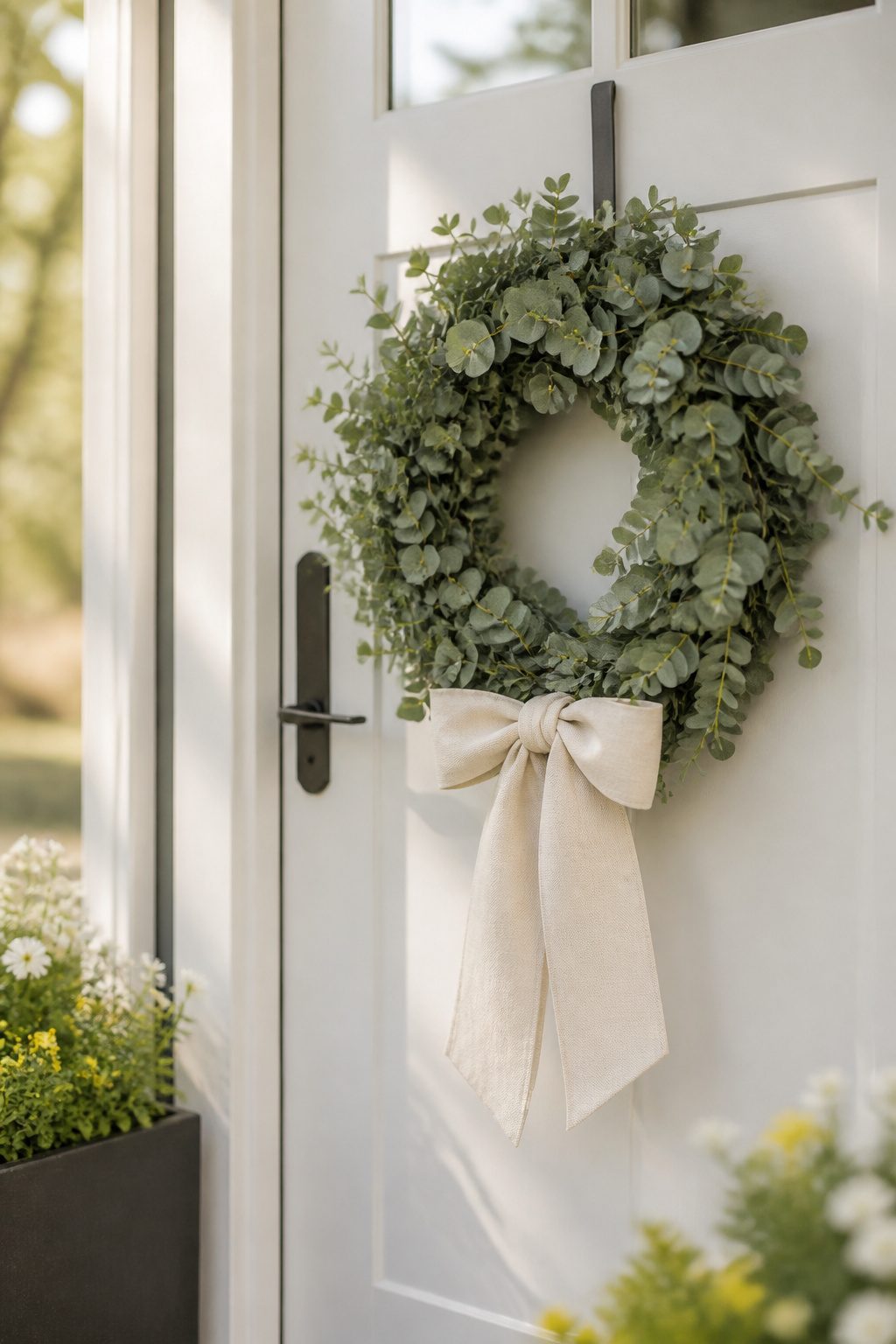
A 22-inch eucalyptus wreath carries that silvery-green tone that reads as fresh without shouting spring. The color sits somewhere between sage and sea glass, which makes it the right choice for minimalist or modern farmhouse doors where brighter florals would feel out of place. Artificial eucalyptus holds the shape through humidity and rain better than the dried stems I used to buy, and the foliage stays full enough that bare spots do not show after a month on the door. At $29.99 on sale, the cost lands where a weekend project should, and the 22-inch scale fills a standard front door without blocking the peephole or scraping knuckles. The downside is the same as any greenery wreath: it does not read "March" to everyone who walks up. Pair it with a linen bow in cream or soft blush if the door needs a warmer nudge toward the season, or leave it bare and let the silver-green do the quiet work.
Forsythia Wreath
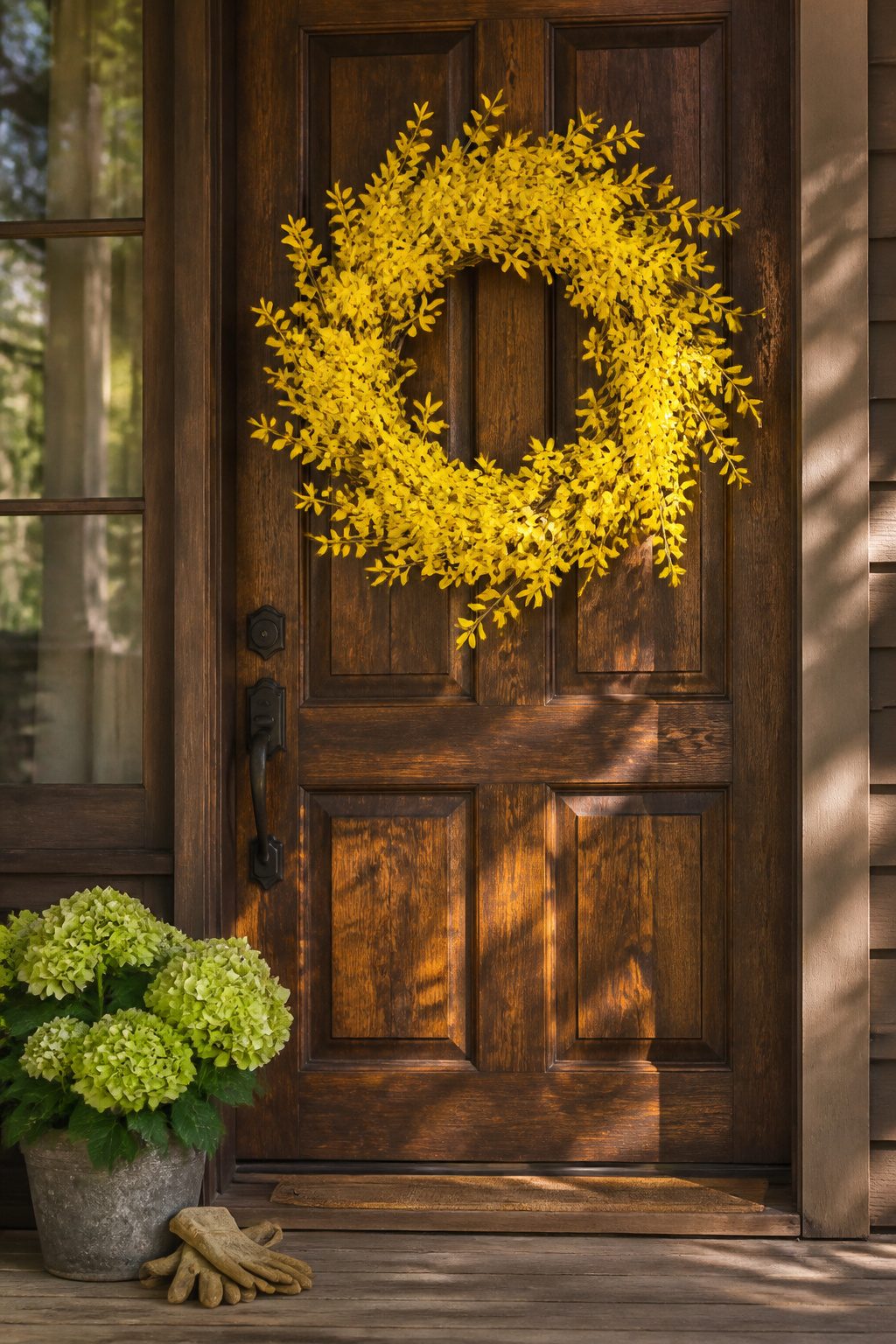
Bright yellow forsythia branches catch the eye before anything else in the yard has woken up, which makes them a natural signal that spring has actually arrived. The sprays grow long and arching, so a wreath built from them works best on a taller door or a wide entry where the shape has room to breathe. On a narrow apartment door the branches can feel like they are escaping the frame.
The color is almost aggressive up close, which is why I like it from the street. A forsythia wreath reads as cheerful at twenty feet and slightly frantic at two, so placement matters more than with softer blooms. If your door sits back from the sidewalk under a porch, the impact gets lost; this is a front-of-the-lawn, visible-from-the-curb choice.
Fresh branches wilt in a few days without water, so dried or good-quality faux stems are the practical route for a wreath that stays up longer than a weekend. Dried forsythia holds that same saturated yellow and takes wiring into a grapevine base without fighting back. Wire the heavier stems first to build the arc, then fill in the face with lighter sprays so the wreath keeps its spray shape rather than collapsing into a flat disk.
Egg Wreath
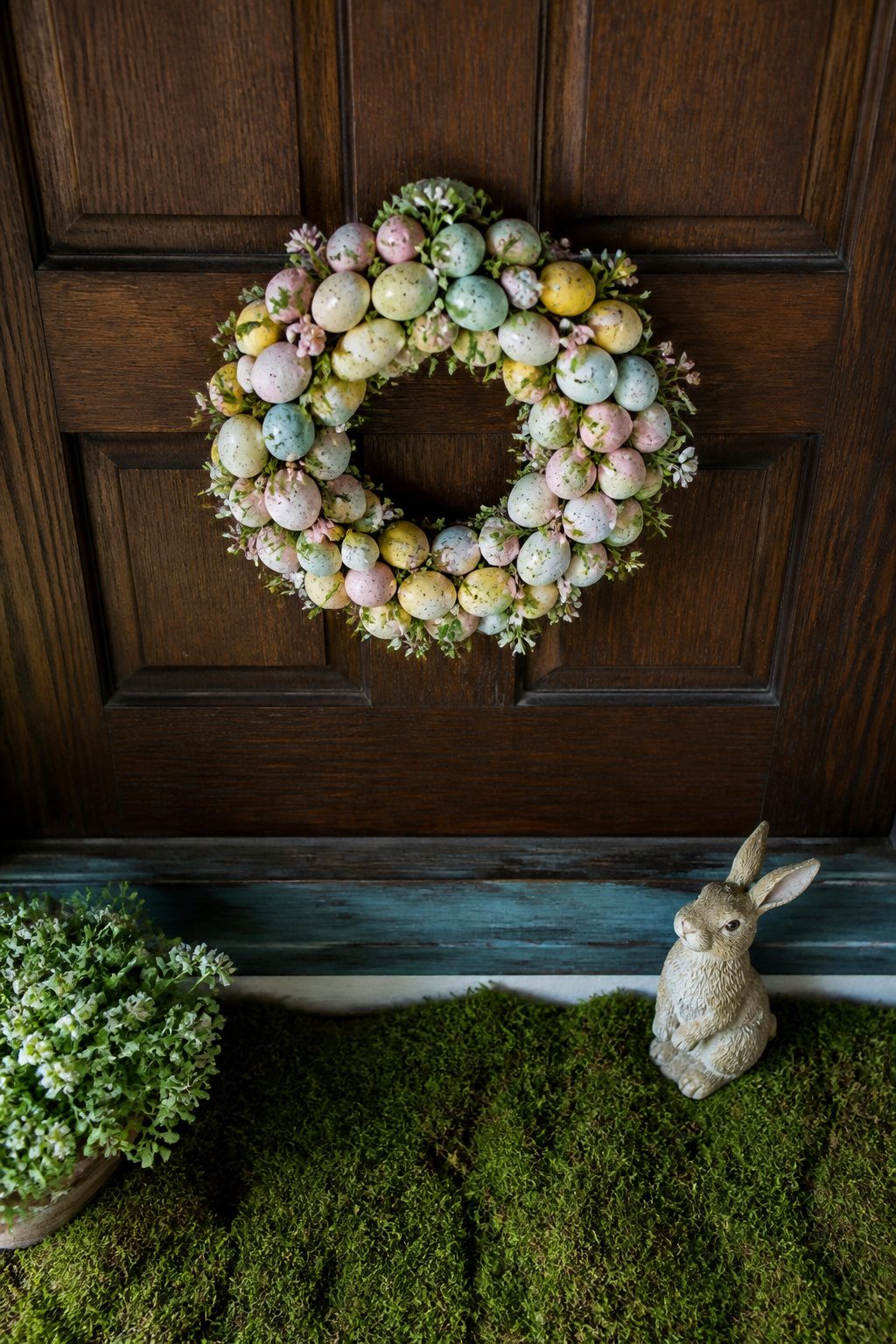
A 16-inch egg wreath sits in that awkward space between Easter decoration and spring statement. The size is compact enough for apartment doors, but the shape reads childlike against a front door unless the palette is restrained.
What convinced me, looking through the seasonal listings, is that pastel speckled finishes extend the timeline while bright primary colors lock the wreath to one Sunday in March or April. The 16-inch dimension from the craft shops keeps the silhouette round and full, not stretched, which helps the eggs read as intentional rather than toy-like.
The storage question matters here. A foam egg wreath takes up more closet space than a flat grapevine base, and the dimensional bumps snag on whatever you stack it against. If you change wreaths often, that bulk is fine. If you want one piece from March through May, the egg motif starts to feel like leftover holiday décor by mid-April unless the colors stay muted and the greenery mixed in balances the whimsy.
Daisy Wreath
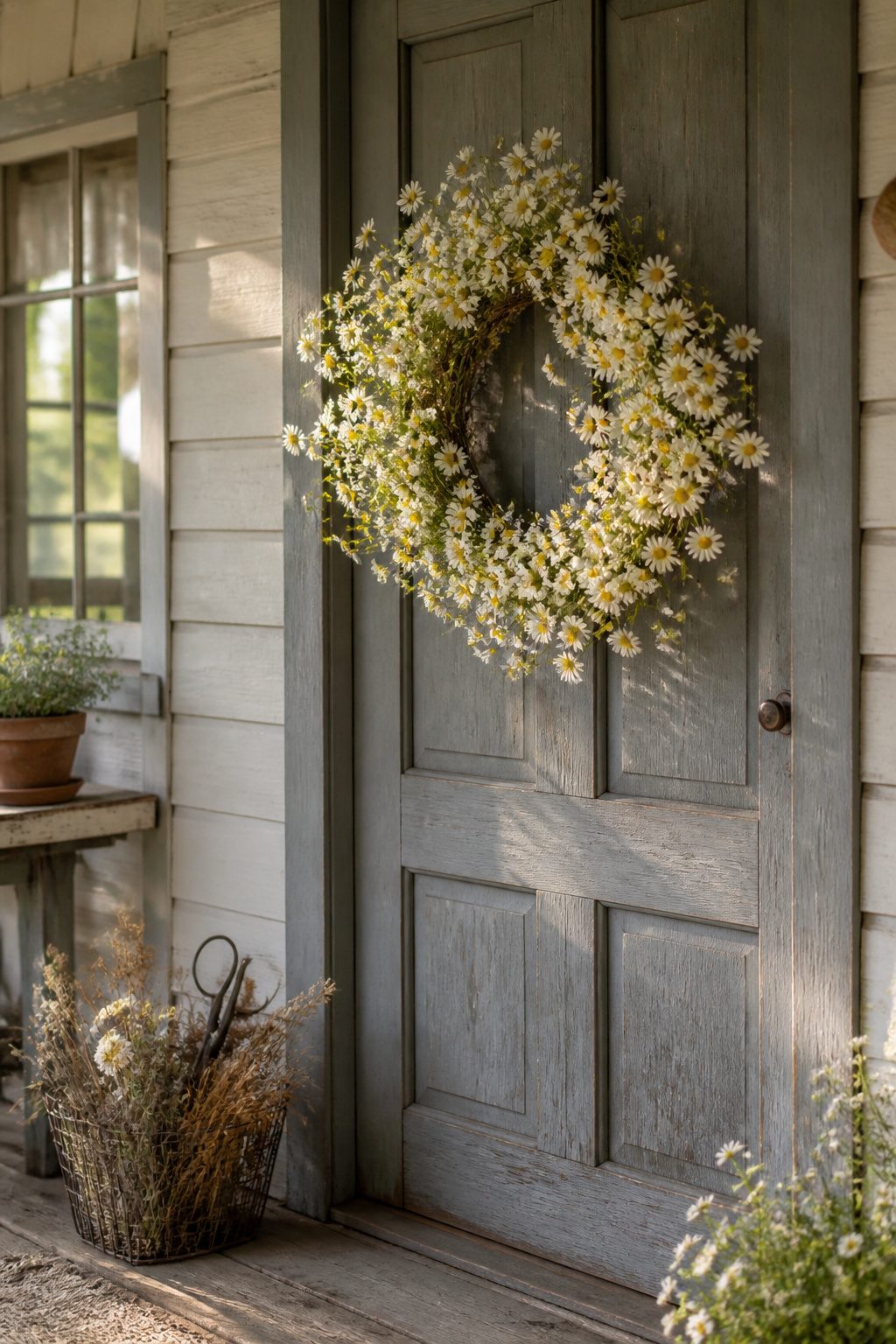
A daisy wreath works best when it looks like something you clipped from the roadside, not something that came out of a factory. The casual, cottage-garden feel is the whole point, and scale and density are what make or break that illusion. Too sparse, and the gaps show the wire frame underneath; the eye reads "cheap craft project" before it reads "daisies." Too dense, and you lose the simple, open charm that makes daisies appealing in the first place.
I learned this the hard way on my first attempt, packing in stems until the wreath looked like a solid white disc from ten feet away. The individual flowers disappeared. What works better is leaving deliberate breathing room, letting the grapevine or twig base peek through in places so the daisies read as fresh-cut and lightly arranged rather than permanently glued. Aim for coverage where no structural grid is visible, but individual blooms still stand apart enough to catch light on their petals.
For a standard 18-inch base, that usually means stepping back every few minutes to view the whole thing from doorway distance rather than working nose-to-stem. The back can stay sparser than the front since no one sees it, which saves both stems and the natural look.
Wildflower Wreath
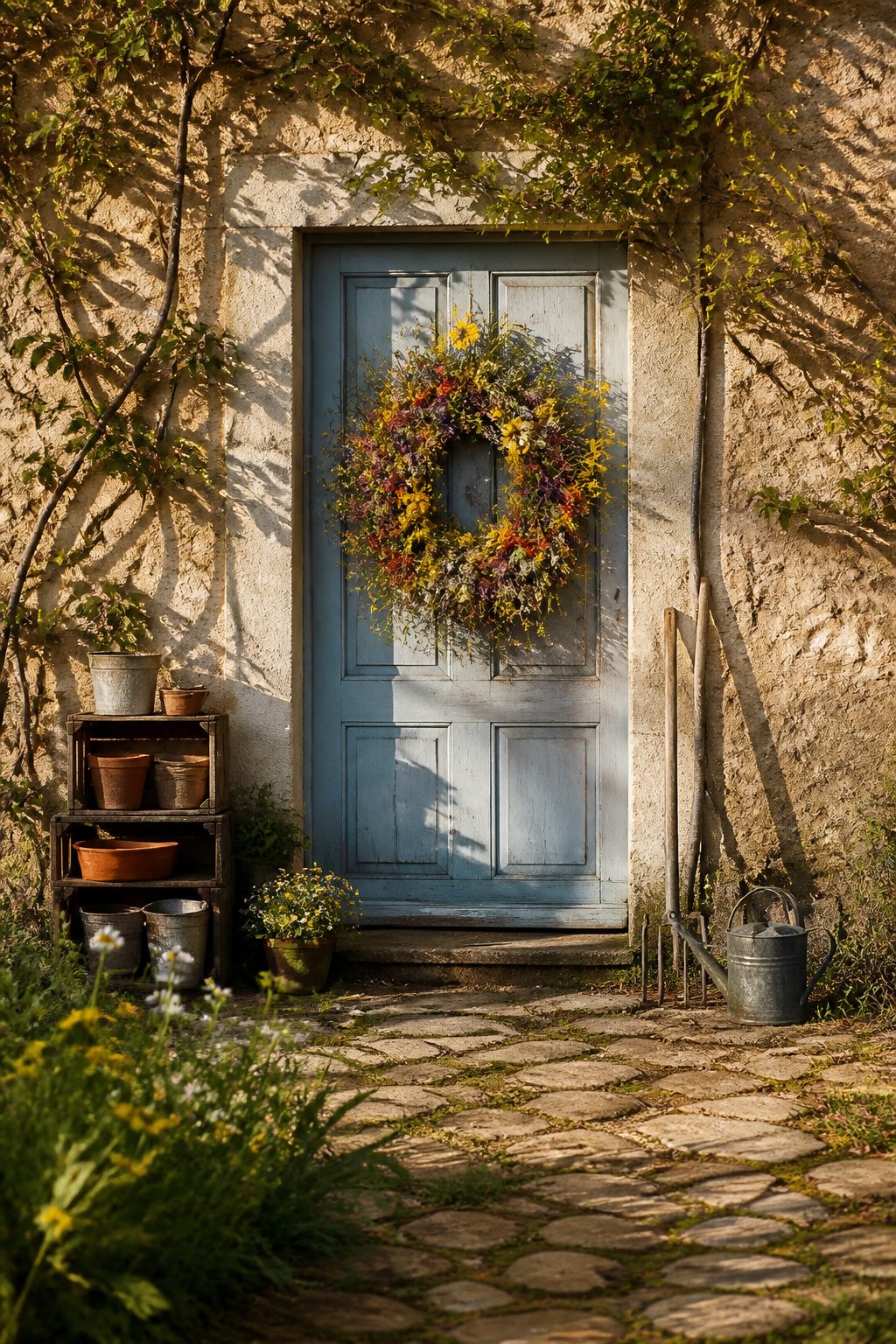
A wildflower wreath carries the looseness that formal arrangements usually edit out. Stems angle wherever they grew, colors clash in the way actual meadows allow, and nothing lines up at twelve o’clock. That informality is exactly why it works on a front door that already has some wear, or a rental where the porch light hangs a little crooked.
The meadow-gathered look differs from the usual spring wreath in one clear way: structure is the enemy. Wired tulip bunches and symmetrical hydrangea domes read as designed; wildflower pieces read as found. Let a few stems trail past the grapevine base and the whole thing looks like you walked back from a field rather than a craft store.
Where this fits best is the less-polished entry. A painted-wood farmhouse door, a brick stoop with chipped mortar, a screen door that rattles: these settings make a tidy wreath look overdone. The same wildflower piece on a brand-new fiberglass door with brushed nickel hardware can look accidental rather than intentional, so the surrounding context matters more than with formal styles.
For building one, the mistake is overstuffing. Three or four stem types, none of them symmetrical, spaced unevenly around a plain grapevine ring, usually land better than a dense arrangement. Dried yarrow, bachelor’s buttons, and a few wispy grasses are enough; the eye fills in the meadow from there.
Mixed Flower Wreath
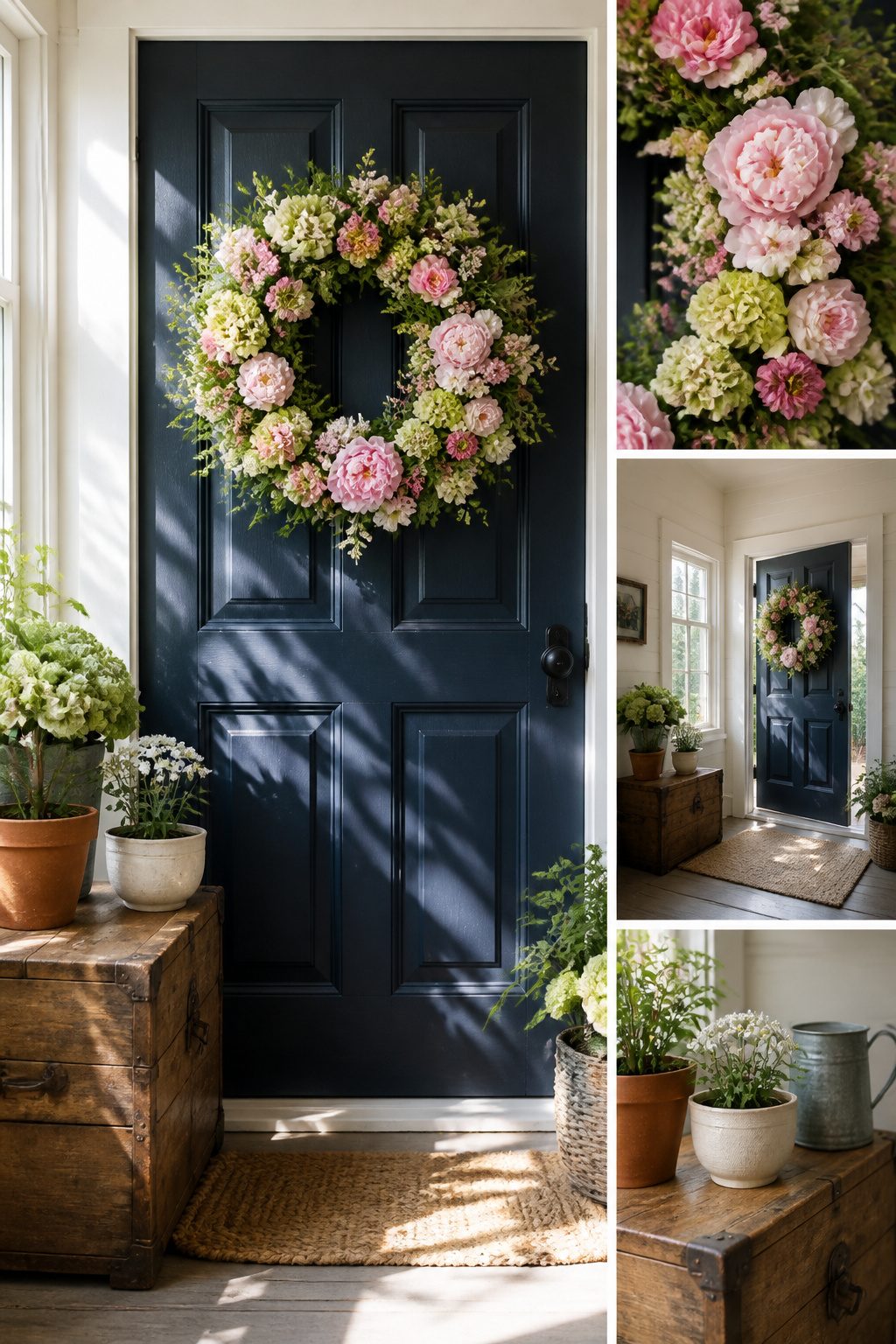
A 24-inch mixed flower wreath in pink, white, and green runs about $30 on sale, down from $40, and that price point matters when you’re swapping wreaths twice a year. The mixed approach solves the spring problem I kept running into: single-flower wreaths look sparse when the real bloom season hasn’t hit your region yet, or they look fake when the color is too uniform.
Mixing flower types lets you lean on whatever’s actually available. Early March, the pink peonies might carry the show while the white ranunculus stays tucked in as filler. By late April, the green foliage base still reads fresh even as individual blooms start looking tired. I used to buy tulip-only wreaths and watch them go from "cheerful" to "obviously artificial" in about ten days of uneven fading.
The 24-inch size fits a standard front door without looking like a holiday decoration. Anything smaller gets lost against painted siding; anything larger needs a covered porch to keep it from dominating the entry. At two and a half feet, this one lands in the zone where neighbors notice it from the sidewalk but it doesn’t block the door swing.
Two colorways exist: the pink-white-green I bought, and a red-purple-green version that reads more summer to me. For spring specifically, the cooler palette wins. The red-purple mix goes on sale at the same price, but save it for July when the heat has already burned off the delicate spring look.
Greenery Wreath
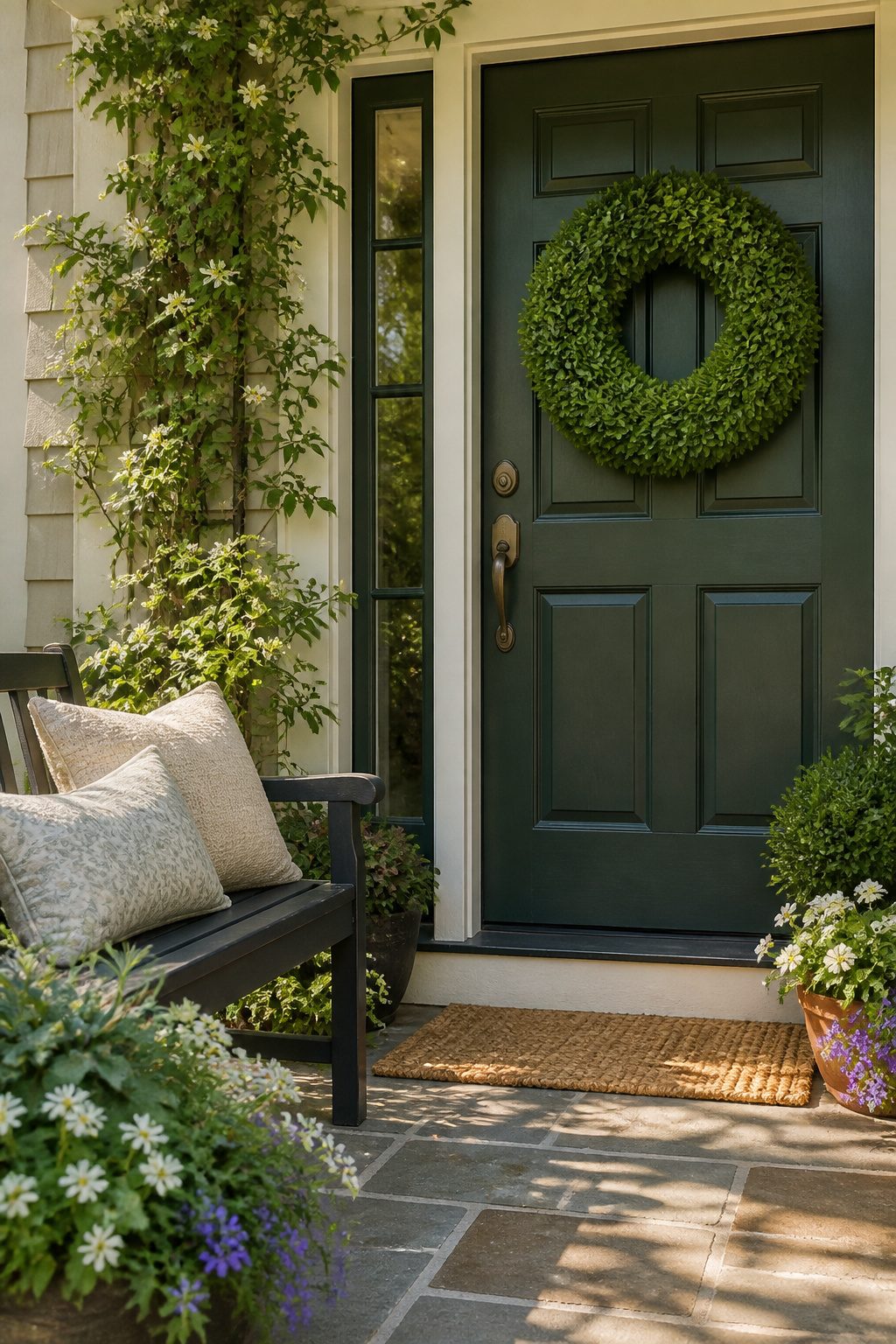
A 30-inch boxwood wreath hangs heavy and full on a door, and that scale matters more than most people expect. Smaller greenery wreaths can look like an afterthought against a standard front door; the 30-inch size reads intentional from the curb.
Leaf-only wreaths outlast flower-heavy options by months, not weeks. Without petals to fade or berries to drop, a fern or eucalyptus base stays presentable from early spring straight through summer. Storage is simpler too: one wreath, three seasons, no bin of swapped-out accents taking up closet space.
The tradeoff is color. A mixed eucalyptus wreath gives you silver-green variation; boxwood reads as a single dense tone. If your door is already a strong color, that restraint works. If the door is flat white or builder beige, the wreath can disappear unless you step close.
McGee & Co. runs large on greenery at a lower price point than most 30-inch options, which matters when you are not sure you will want the same look next year. Real-touch magnolia costs more but carries a gloss that reads alive under porch light. Two ways to play this: buy the budget 30-inch and treat it as disposable after two seasons, or spend up once and stop thinking about wreaths for five years.
Floral Wreath
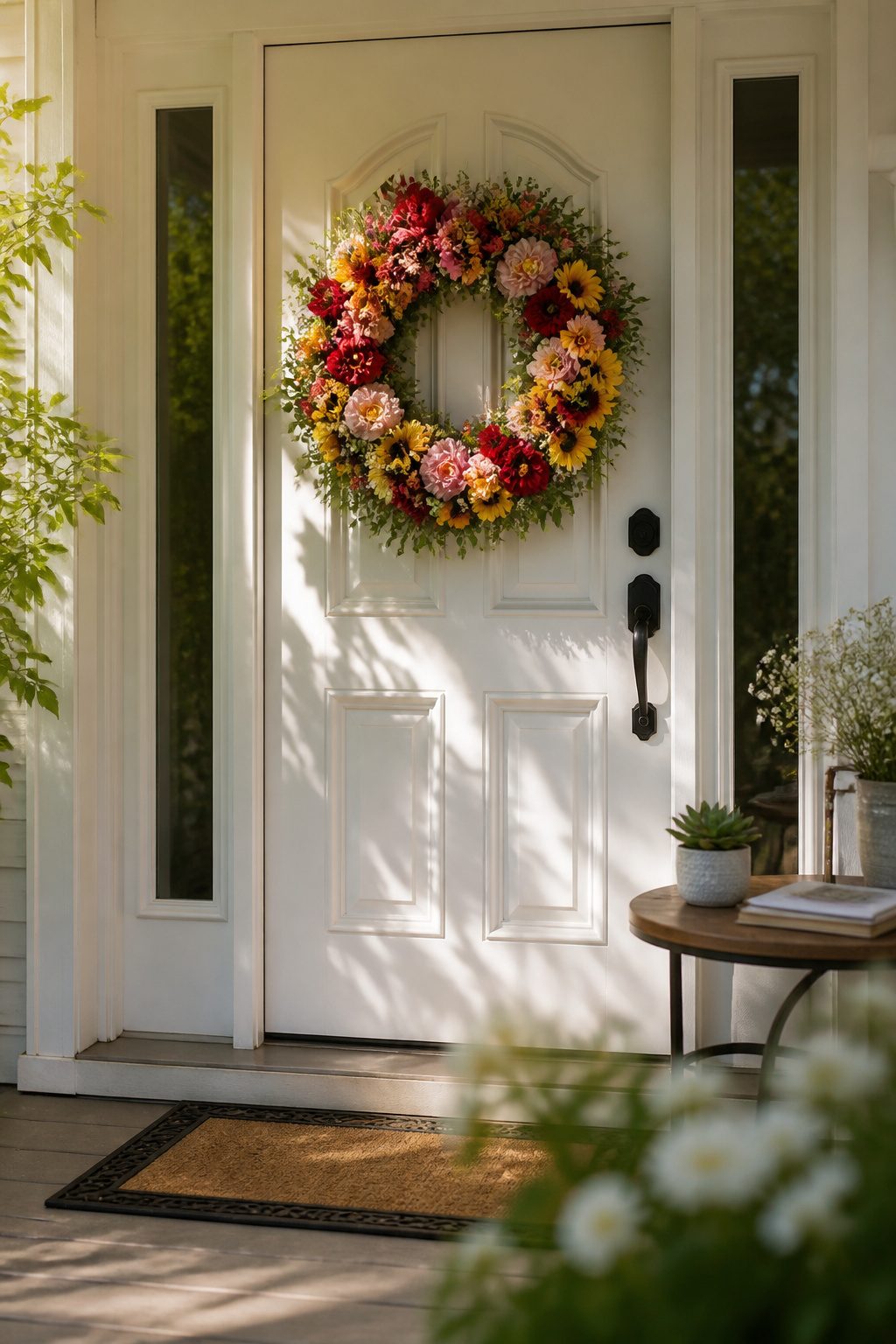
Generic floral wreaths promise the broadest color range and the lowest price tags, but that flexibility comes with uneven quality. Last spring I ordered two that looked identical online: one arrived with wired stems that bent cleanly and petals thick enough to survive a rain shower, the other with hot-glued blooms that shed in the box. The difference was in the stem construction, which product photos never show.
Before ordering, zoom in on the attachment points where flower meets base. Wired stems wrapped with floral tape hold up to reshaping; glued clusters flatten and fray. Check whether the wreath ships in a crush-proof box or a bag. The bagged one I received needed two days on a table to recover its round shape. For a weekend project, that delay matters more than the five-dollar savings.
Citrus Wreath
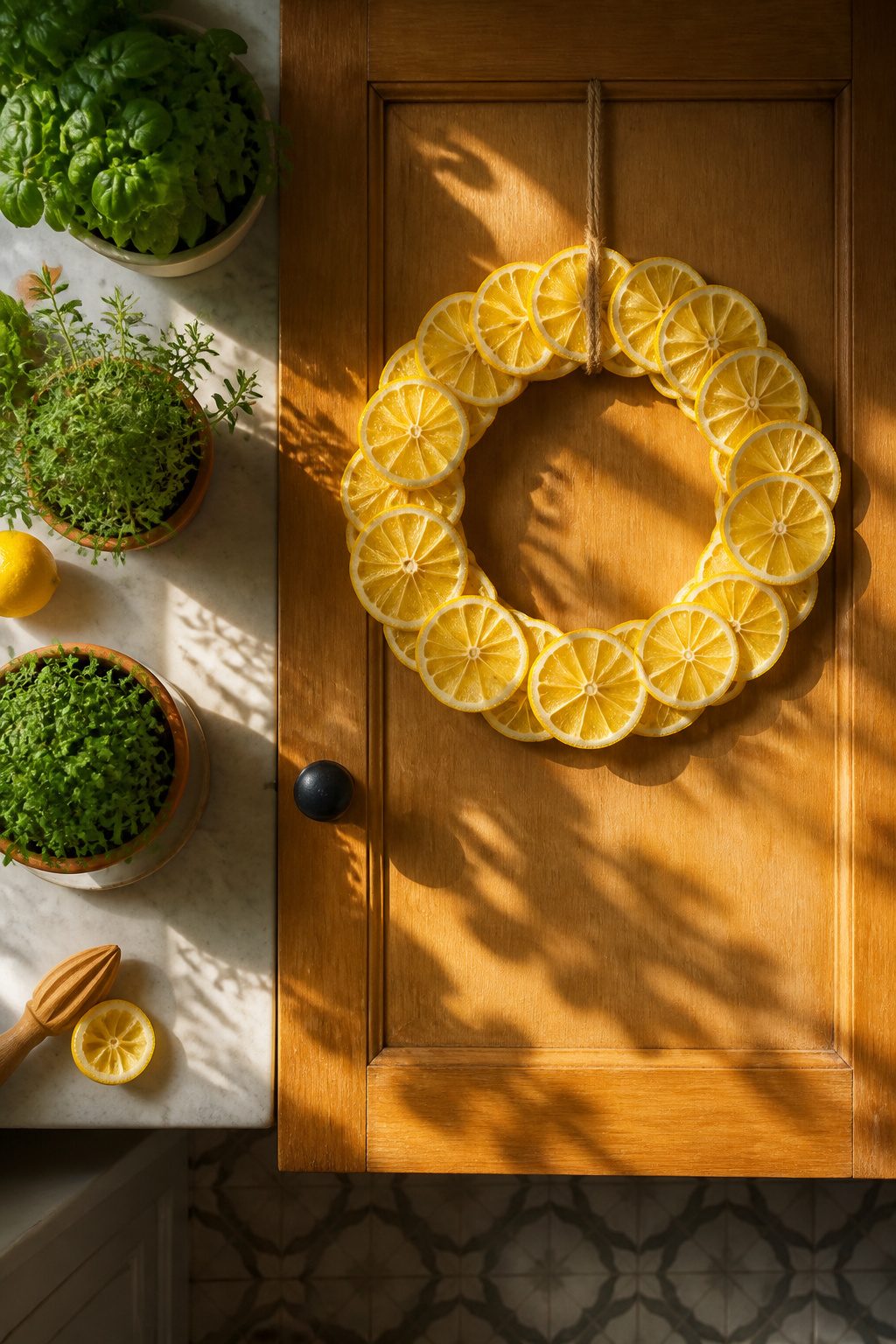
A citrus wreath reads kitchen door, not front door, and that distinction matters for where you hang it. Lemon slices wired to a grapevine base look cheerful against white cabinets or a pantry entrance, but the same wreath on a porch with brick or dark paint can feel like a category error, too bright and too specific for the spot.
The lemon-or-lime choice is mostly a matter of what else sits nearby. Lemon reads farmhouse; lime reads slightly more modern and a little less expected. Either way, dried citrus carries a shorter seasonal window than florals or greenery. The oils in the rind fade, the color dulls toward brown, and by late May the whole thing looks tired rather than fresh. Plan on six to eight weeks of looking right, then swap it out.
If you are making one yourself, the work is simple but slow: thin slices dried in a low oven for several hours, cooled completely, then attached with floral wire so they sit flat and do not spin. The grapevine base runs a few dollars, and a bag of lemons or limes is another five to seven. The time cost is the real expense, an afternoon of slicing and baking before you even start assembling. For a door that sees daily use from the kitchen to the garage, that effort feels proportionate. For a front door meant to greet visitors, a eucalyptus or mixed flower wreath gives you more weeks of looking intentional for roughly the same labor.
Materials for a DIY Spring Wreath
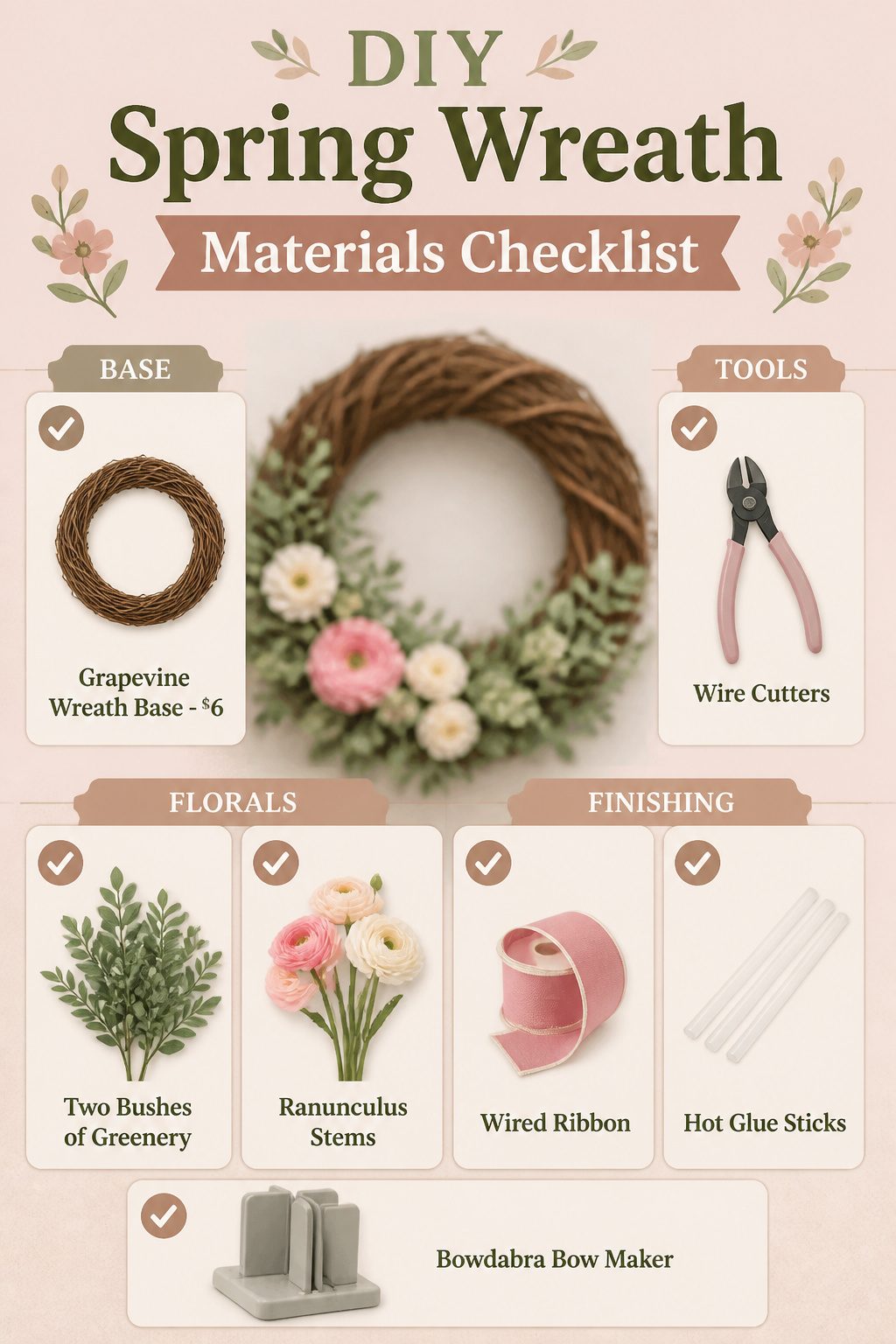
A grapevine wreath base runs about $6 at craft stores and holds up better than the foam rings that fall apart after one humid season. Wire cutters matter more than the brand of glue gun; the cheap pair from the hardware aisle cuts through faux stems cleaner than scissors and saves your ribbon edges from fraying. Two bushes of greenery fill a 14-inch base without looking sparse, and ranunculus stems bend where you need them if the wire inside is thick enough to feel through the coating.
The Bowdabra bow maker sits on every endcap from February through April, but wired ribbon shapes fine with your fingers and a short length of floral wire. What actually speeds the build is laying out stems before the glue gun heats; once that trigger starts, the glue cools fast and half-set placement is the mistake that makes wreaths look crowded on one side and bald on the other. Spend the extra two dollars on low-temp glue sticks if your door gets direct afternoon sun, since standard glue softens enough to let stems slip by Memorial Day.
Building a Grapevine Base Wreath
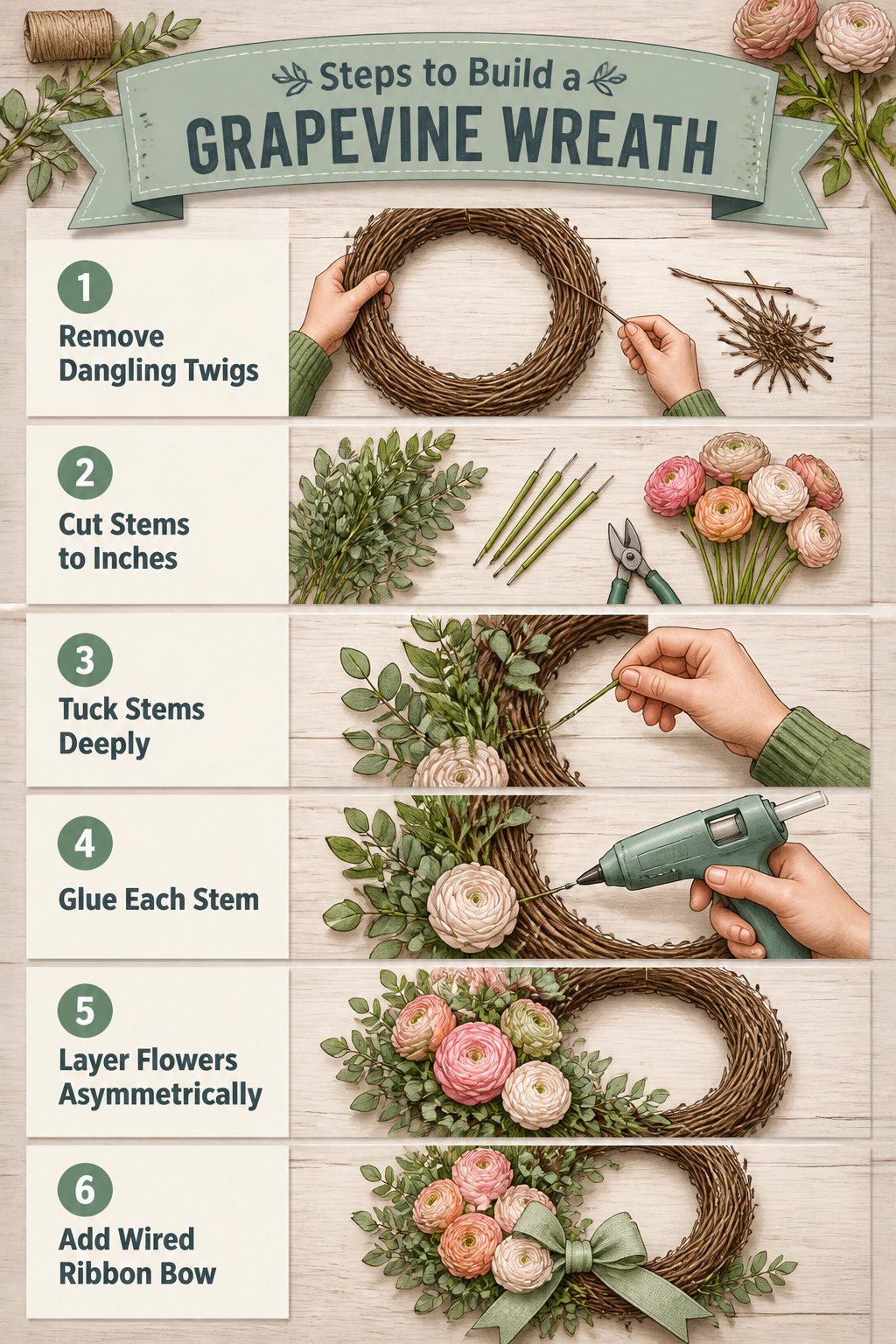
Grapevine wreaths start messy, and the loose twigs snag on everything if you skip this step. Pull off the dangling pieces until the frame feels solid in your hands. Two bushes of greenery and a handful of ranunculus stems, cut to leave a few inches of wire, are enough to fill a 14-inch base. Tuck the wire stems deep into the vines and hit each joint with hot glue; the glue sets fast, so work one stem at a time. Layer the flowers over the greenery, heavier on one side so the wreath reads as asymmetrical rather than round. A wired ribbon bow, shaped with a Bowdabra or by hand, covers the mechanics where the stems cluster. About $20 in materials and 30 minutes of active time gets you a finished piece. Hang it from a jute loop knotted at the top, or press a suction cup to the door if you would rather not drill.
Where a Wreath Works Best
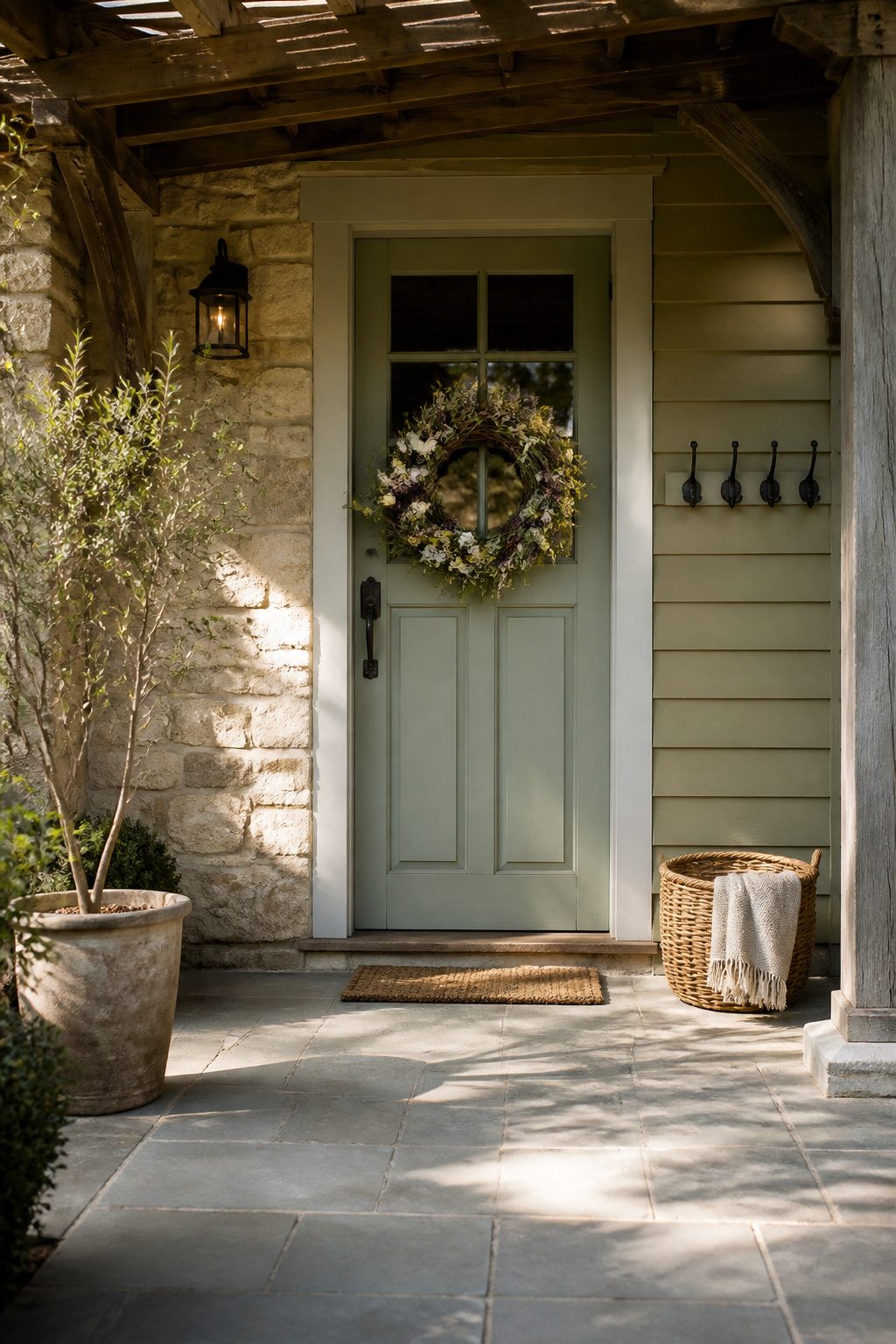
A jute loop tied to the back of the wreath is the simplest hanger, but the surface you’re pressing against matters more than the loop itself. On a painted door, a large suction cup with a hook saves you from holes, though heat and cold will pop it loose eventually. Command Strip wreath hooks hold better on exterior doors in my experience, and they peel off clean when the season changes.
Where you hang the wreath shapes how long it lasts. Direct sun fades faux florals faster than rain damages them, so a covered porch outlasts a door that faces south with no overhang. Moisture is the bigger threat for grapevine or dried bases; damp air swells the weave and can mildew the back before the front shows wear. Indoor spots like an entryway or above a mantel skip both problems entirely, which is why the wreath I gave my mother at her care facility still looks fresh six months later: climate-controlled air, no UV, and a Command hook that never had to fight weather.
Frequently Asked Questions
What flowers are best for a spring wreath?
Tulips, hydrangeas, and magnolias are the most reliable choices. Tulips carry early spring color without looking overgrown, hydrangeas build a full silhouette that reads from the street, and magnolia leaves bridge late winter into spring with neutral, glossy structure. Each solves a different door problem: tulips match color to brick, hydrangeas fill large frames, magnolias avoid seasonal rotation clutter.
How do you attach flowers to a wreath?
Tuck the wire stems deep into a grapevine base and secure each joint with hot glue. Leave a couple of inches of stem so the wire catches in the vines; cut too short and the glue carries all the weight. Work one stem at a time, since hot glue sets fast and half-set placement crowds one side while leaving the other bare.
What is the best way to hang a wreath?
A jute loop tied to the back is simplest, but the surface matters more than the loop. Command Strip wreath hooks hold better on exterior doors than suction cups, which heat and cold eventually pop loose. Direct sun fades faux florals faster than rain damages them, so a covered porch outlasts a south-facing door with no overhang.