
Fall bedroom decor ranges from a $6 washi-taped print to a $420 wool rug, and the single deciding factor is whether you actually sleep in the room or just photograph it. The articles that look magical in October tend to tangle, shed, or rot by November: maple branches drop leaves in four days, fairy lights die halfway through the season, and real pumpkins bring fruit flies to the nightstand. What survives is quieter. A 2,700 Kelvin bulb in a ceramic bedside lamp, a jute-and-wool blend sized to clear the door swing, a single terracotta pillow cover against existing taupe linens. The 2026 palettes lean toward moss green, cinnamon, and deep olive, but the rule from the rooms that worked was two colors, not seven.
1. Layered Bedding
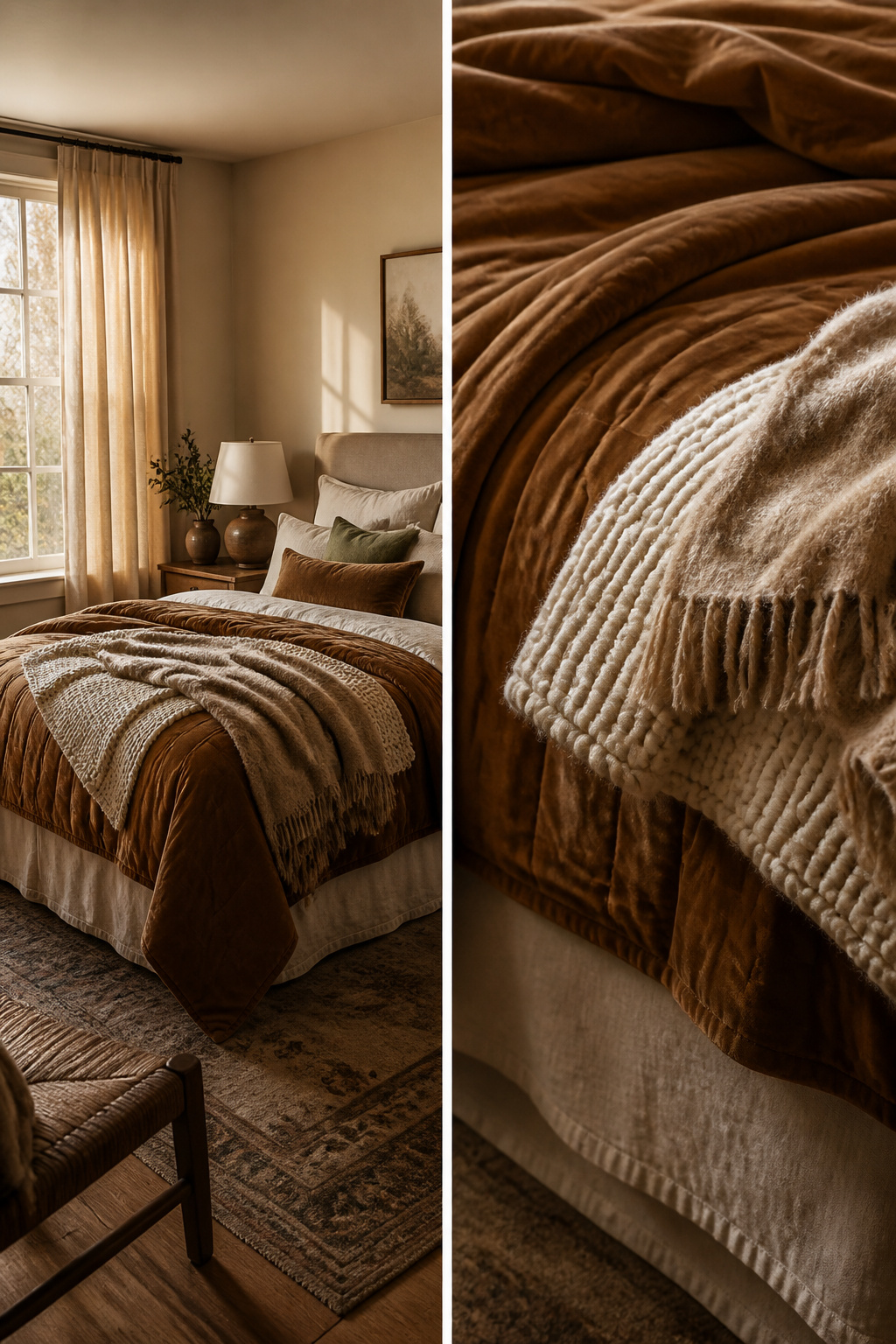
Breathable cotton and washed linen stay on my bed year-round, but the order changes once October hits. I start with those two as the base, add a velvet quilt once the nights dip below sixty, then keep a chunky knit throw and a soft wool blanket folded at the foot to grab based on how cold it actually feels. The wool comes up first most evenings; the knit is mostly for looks until January.
Five of the rooms I studied layered the same way, though some skipped the quilt and doubled up on throws instead. That works if you sleep warm, but a single layer of velvet against linen beats two thin throws for keeping heat in without the weight. Warm neutrals make the mixing easier: oatmeal, camel, chocolate brown, rust, olive green, ivory, soft charcoal. AKB Design Studio and Studio McGee both leaned that direction, and it reads as intentional rather than mismatched.
The mistake I made last year was buying a throw too small to tuck properly. A throw that barely covers the mattress looks like a towel. Size it to drape at least twelve inches over each side, or skip it and put the budget toward a better quilt.
2. Autumnal Colors in Pillows and Linens
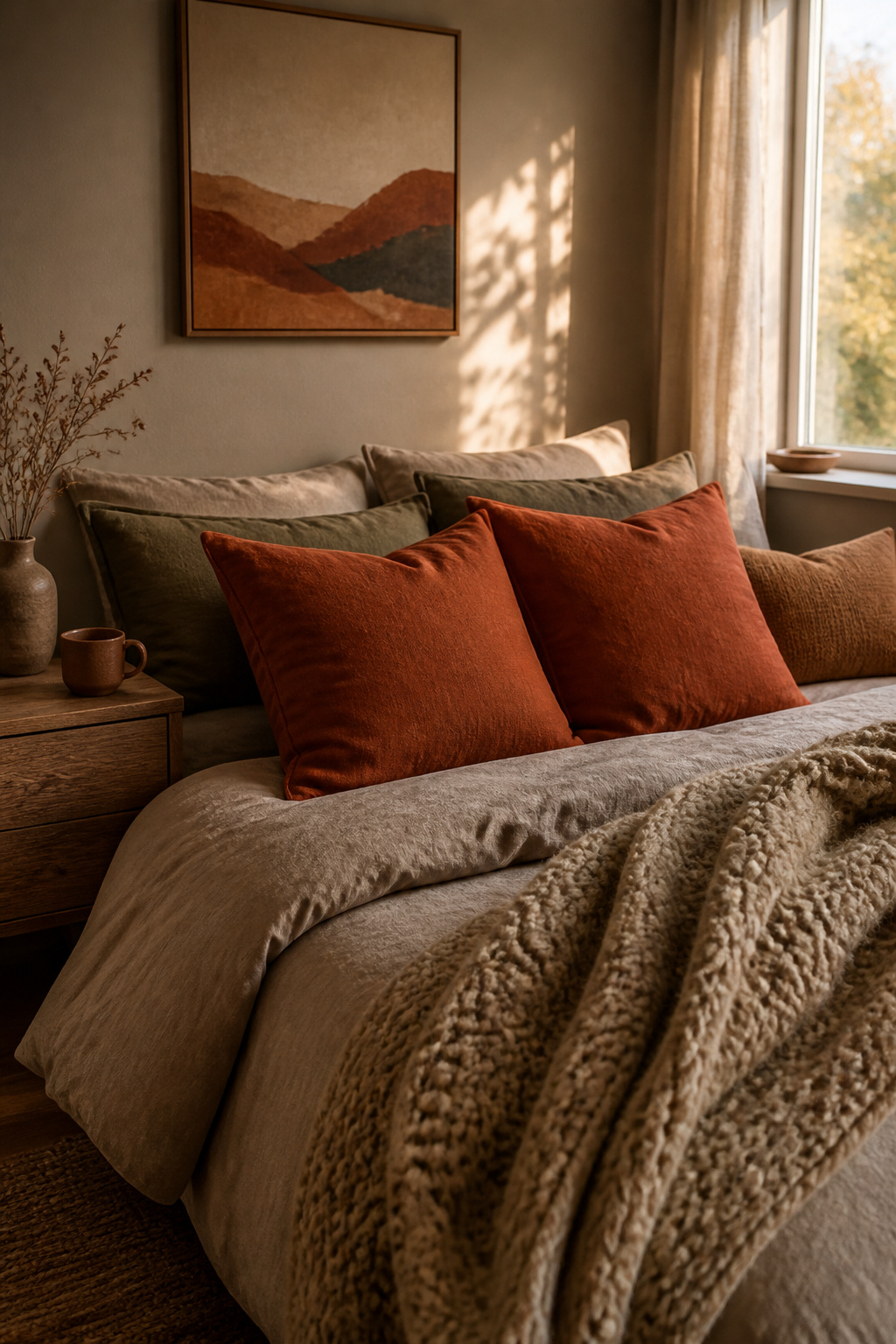
Moss green, cinnamon, terracotta, deep olive, walnut brown, caramel, warm taupe. The 2026 palettes lean into these seven, and the first mistake is trying to use all of them at once. I made that error two years ago, swapping in terracotta, olive, and caramel pillow covers together until the bed looked like a craft store exploded. Last fall I found a terracotta linen set at a small home goods shop in Portland, paid maybe $35 for two covers, and stopped there. Two colors, not seven, is the move that keeps a bedroom feeling layered rather than cluttered.
The swap itself costs almost nothing if you already own the inserts. Most standard shams run 20 by 26 inches, and cover sets in velvet, embroidered linen, or boucle run $25–$50 for a pair. I keep my summer covers in a labeled bin under the bed; the whole changeover takes ten minutes. The terracotta pair against my existing warm taupe duvet reads autumn without screaming it, and the combination survives past Thanksgiving in a way orange pumpkins never could.
3. Seasonal Candles and Diffusers
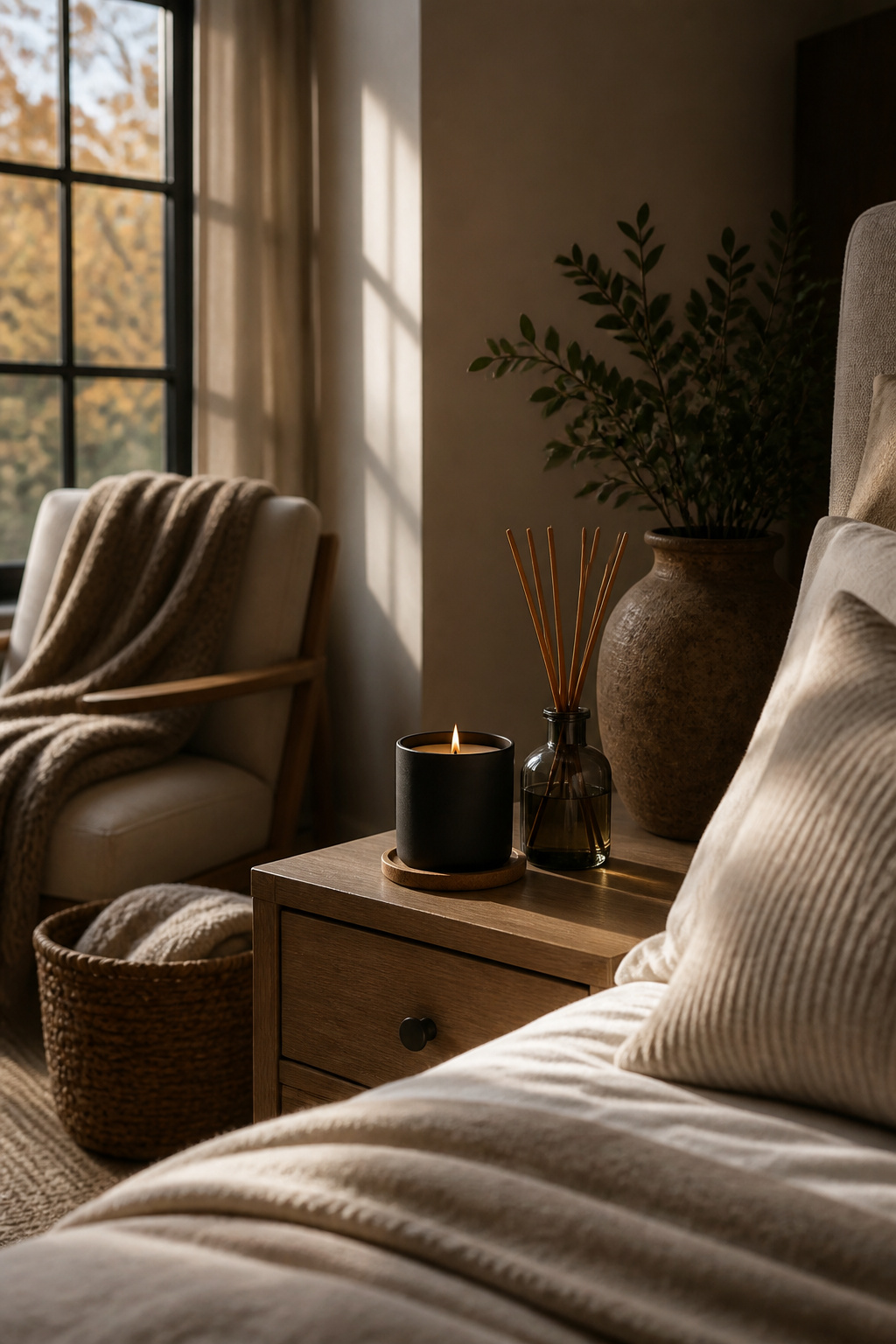
Scent is where fall bedroom decor either lands or overdoes it. The sources all name the same four families: pumpkin spice, mulled cider, cedarwood, and sandalwood. After burning through enough of them, the line is clearer than the marketing suggests.
Pumpkin spice belongs in the kitchen, not the bedroom. The grocery-store versions read as frosting, not atmosphere, and by hour two the sweetness turns cloying in a small room. I skip them entirely now. Mulled cider sits in the same danger zone: pleasant for fifteen minutes, then persistent in a way that fights sleep. Cedarwood and sandalwood are the keepers. They warm the air without announcing themselves, and they layer with actual fall weather instead of competing with it.
A 7.5 oz candle, burned a few hours at a time, lasts me about three weeks in a bedroom rotation. That is the size I buy now: large enough to throw scent to the corners, small enough that I am not committed to one fragrance for half the season. The limit is flame-off before sleep. A diffuser with a timer handles the last hour better than a candle I would need to remember, and cedarwood in particular works well at low strength, just enough to notice when you turn in.
4. Soft Lighting
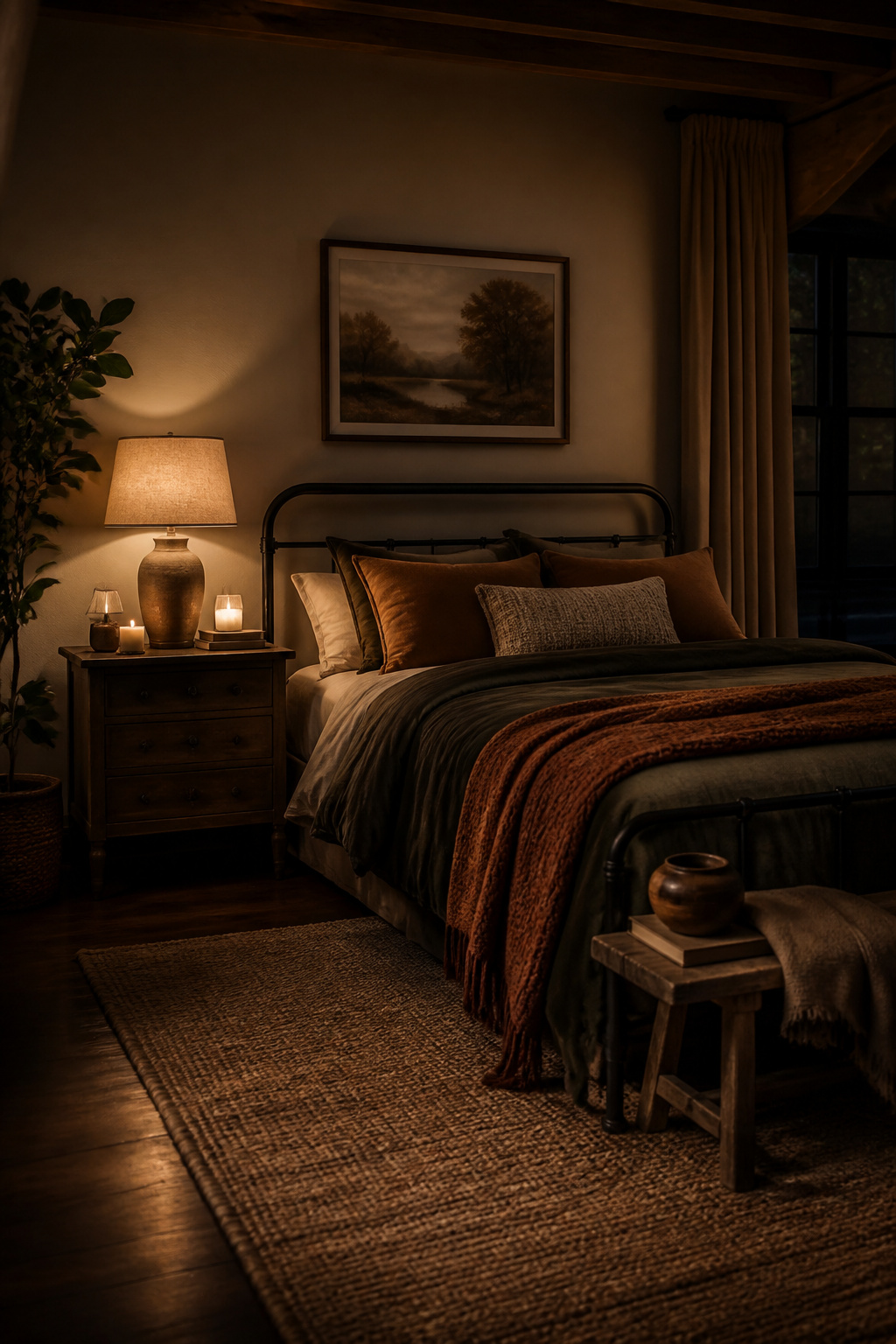
Six sources all pushed the same thing: skip the overhead fixture and build pools of light lower in the room. Bedside lamps, wall sconces, candles, and rechargeable accent lamps do the work instead.
I bought a $34 ceramic bedside lamp with a 2,700 Kelvin bulb last October. The warm tone makes the room feel smaller and safer in a way overhead light never manages. The rechargeable accent lamp on my dresser cost about the same and moves wherever I need it.
String lights were the advice I tried and returned. Maple leaf strands or fairy lights across the headboard look fine in photos, but in use they tangle, half the strand dies by November, and the plastic reads dorm room rather than grown-up calm. Candles and a second lamp on the windowsill replaced them, and the room feels steadier for it.
Swap out your basic fairy lights for these remote-controlled seasonal leaves. Whether you string them up across your headboard or snake them along your windowsill, there’s no doubt that these will add a cozy fall glow to your bedroom.
That $15.99 strand is still the popular pick, but for a bedroom you actually sleep in, solid fixtures you can dim beat seasonal gimmicks that fail mid-season.
5. Fall-Inspired Accents
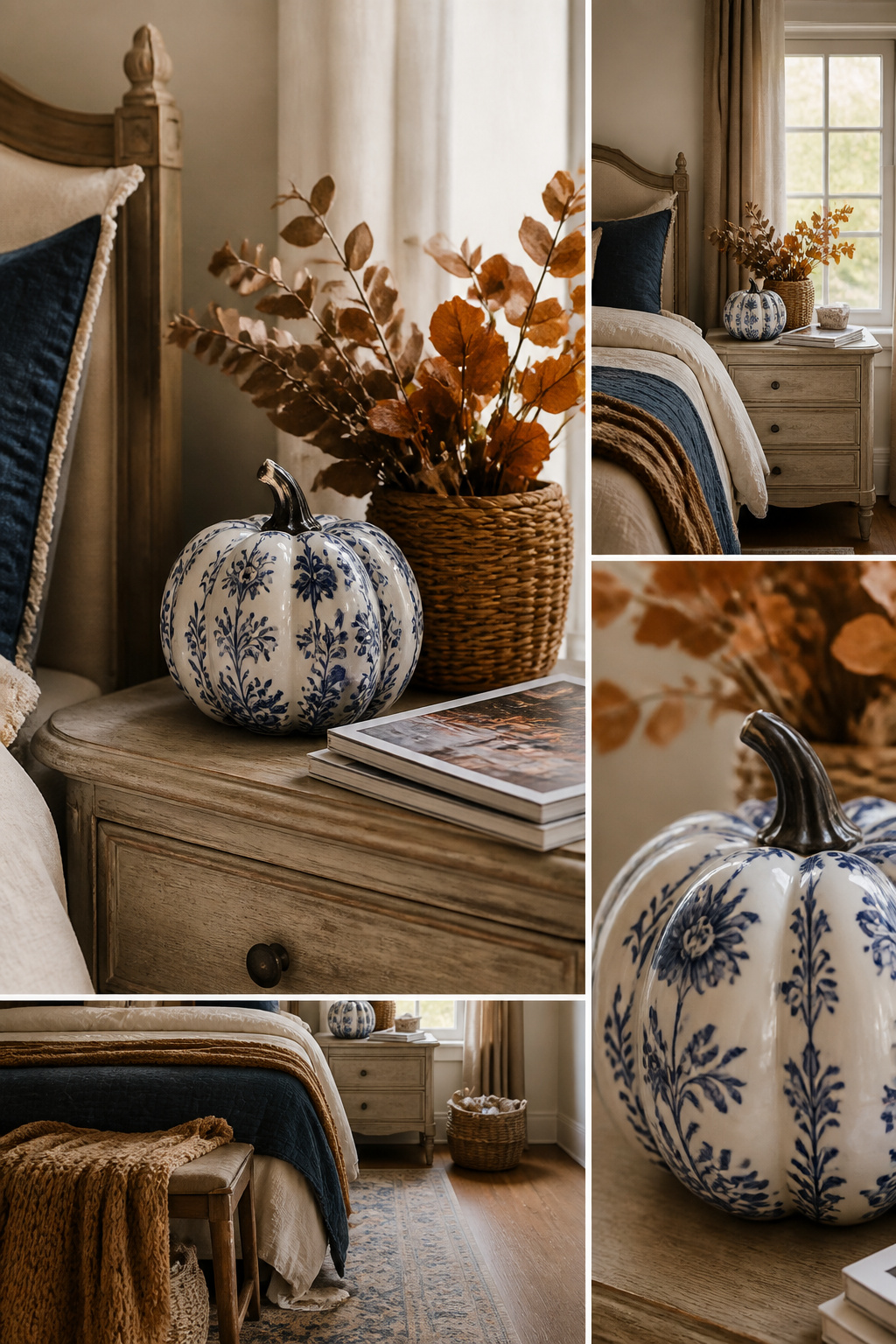
Ceramic pumpkins solve the problem real ones create. Three years ago I bought a small chinoiserie-style piece in blue and white, and it still sits on my nightstand each October without the soft spot or the fruit-fly phase that ended my previous attempts. The real pumpkins I tried, even the white ones from the local stand for a dollar, lasted maybe two weeks before the bedside table smelled like a compost bin.
Dried stems last if you arrange them like they grew that way. I clip eucalyptus or hydrangeas from the yard once the heads have turned dark and papery, then stand them in a wicker basket or a ginger jar at varying heights so nothing looks bundled for a craft fair. Three to five stems is the threshold where it reads intentional rather than leftover.
Storage is simple: the ceramic pumpkin and the basket go into one bin in November, the dried material gets composted. Each fall I replace the stems because even good dried branches shed and fade. The pumpkin comes back out, and the bedroom feels like fall again without the annual shopping trip for gourds that rot.
6. Textured Rugs
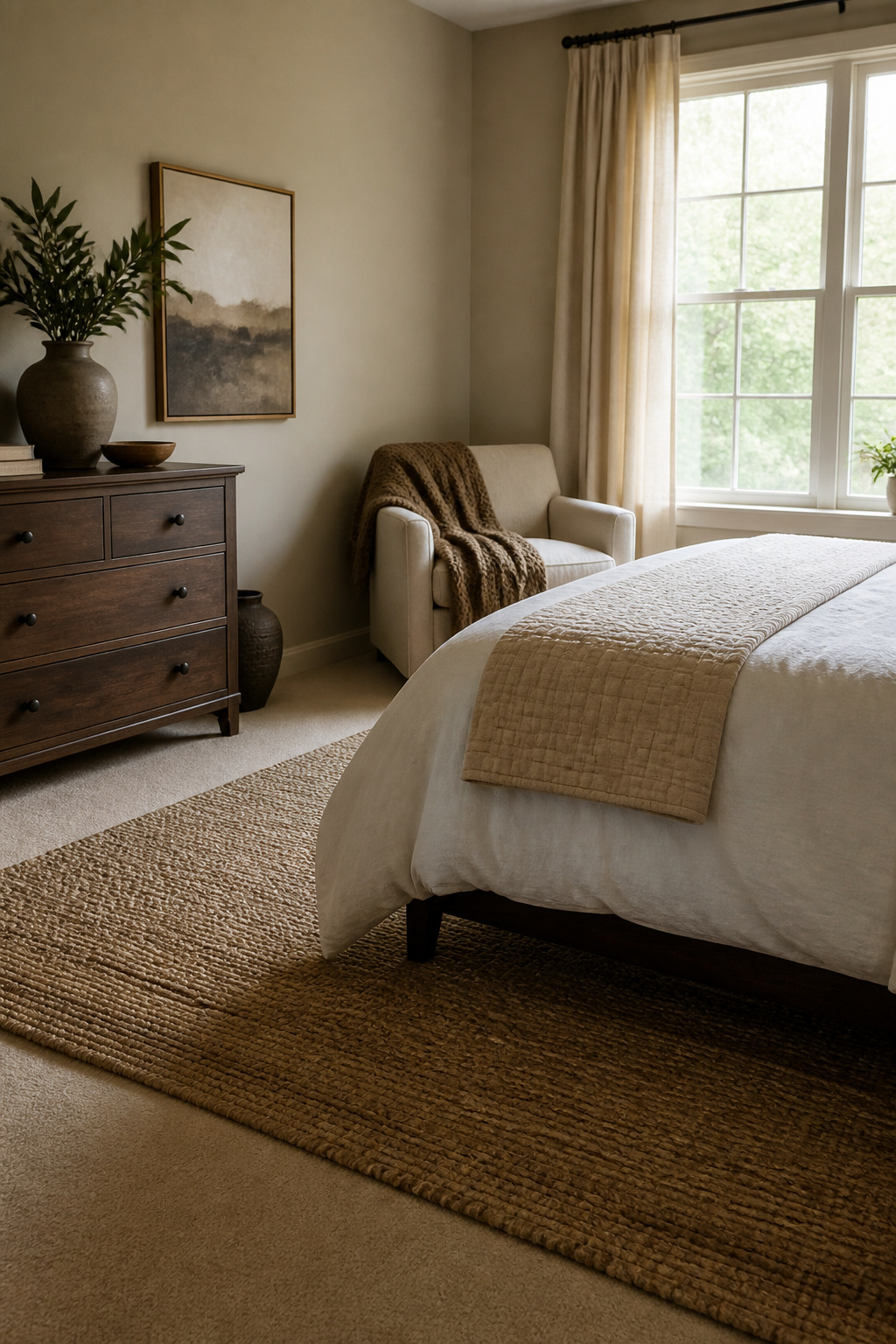
Wall-to-wall carpet does not solve the problem of a cold bedroom floor, which I learned the hard way after two winters of socks that never quite warmed up. The carpet in my rental is thin, low-pile stuff that looks beige and feels like packing material against bare feet in October.
Last October I laid a 5 x 8 jute-and-wool rug over the carpet near my bed, sized to clear the door swing and sit just past where my feet land in the morning. The jute gives it the rough, autumn texture I wanted; the wool keeps it from feeling like a doormat. I paid about $180 for it after shipping. The all-wool versions I almost bought ran $340–$420 for the same size, and the pure jute rugs I saw at $90 looked fine online but felt like straw matting in person. The blend was the compromise that actually worked.
It slides a little on wall-to-wall carpet, so a $12 rug pad underneath was non-negotiable. After that, it stayed put through winter.
7. Vintage and Rustic Elements
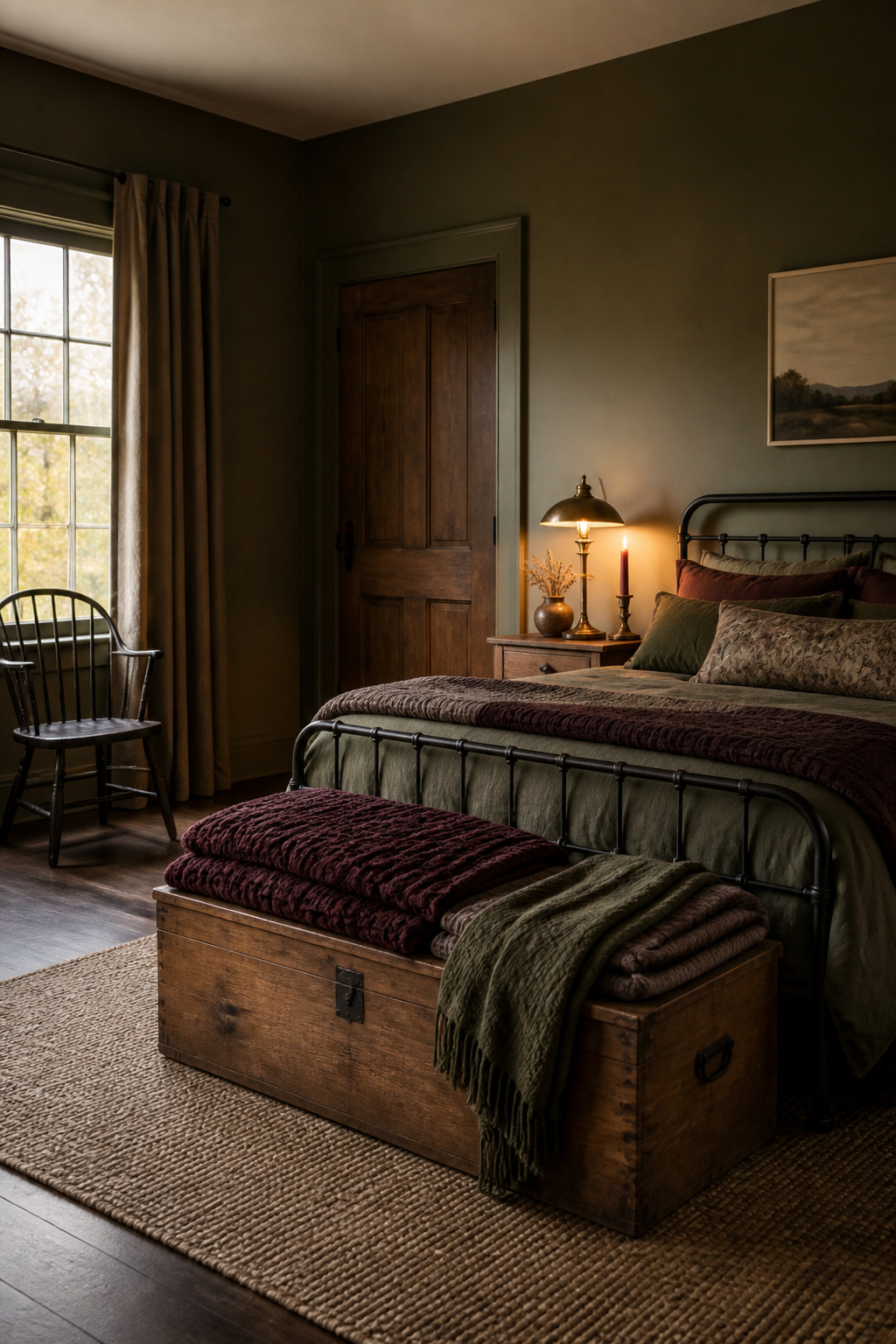
Vintage, on a real budget, usually means the brass lamp someone else already broke in for you. I found mine on Facebook Marketplace for $15; the patina was the selling point, not a flaw. Estate sales are another quiet source. A quilt I picked up last fall cost $12 and carries more warmth than anything I could have ordered new. The trick is stopping at one or two pieces. A single chipped ceramic bowl on the nightstand reads collected; three of them and the same shelf starts to look like storage you forgot to sort.
Brass candlesticks work the same way. Taper candles in rust or deep plum cast the right light for October evenings, and the metal itself adds that slightly worn, grandmillennial note without trying too hard. Weathered wood helps too, if you have the floor space. A pine chest at the foot of the bed, maybe $40–$50 at a local antique store, gives you a place to sit and pull on socks while it hides the extra blankets.
The real limit is one vintage piece per sightline. Mix each find with something newer and cleaner. New furniture tends to read flat; old furniture, piled together, reads cluttered. The balance is what makes the room feel inhabited rather than decorated.
8. Nature-Inspired Decor
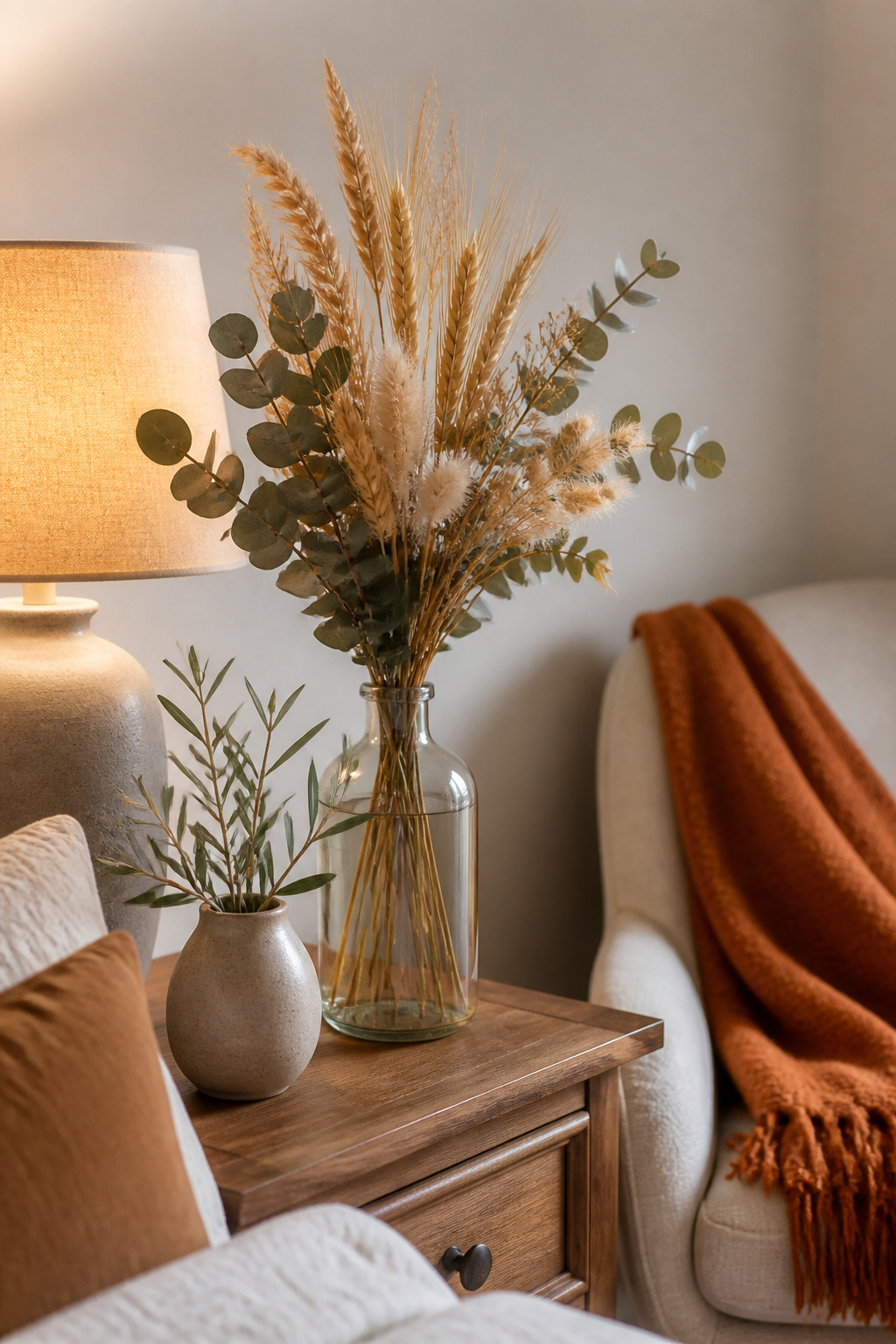
Branches and foliage are the fastest way to make a bedroom feel like fall, though the real kind comes with a learning curve. Last October I clipped a maple branch from my neighbor’s yard, vase and all, and the leaves started dropping inside of four days. The mess outweighed the look, so I switched to dried branches bought from a craft store. Those lasted the full season with no shedding.
Four natural elements keep coming up for fall bedrooms: branches gathered outdoors, dried hydrangeas, wheat stems, and olive branches. If you go the live route, expect about a week before leaves start dropping unless you condition the stems properly. Dried eucalyptus, wheat stalks, or pampas grass in a simple vase give the same warmth without the deadline. Display them in odd numbers, three or five stems, which reads as more intentional than a pair.
9. Cozy Reading Nook
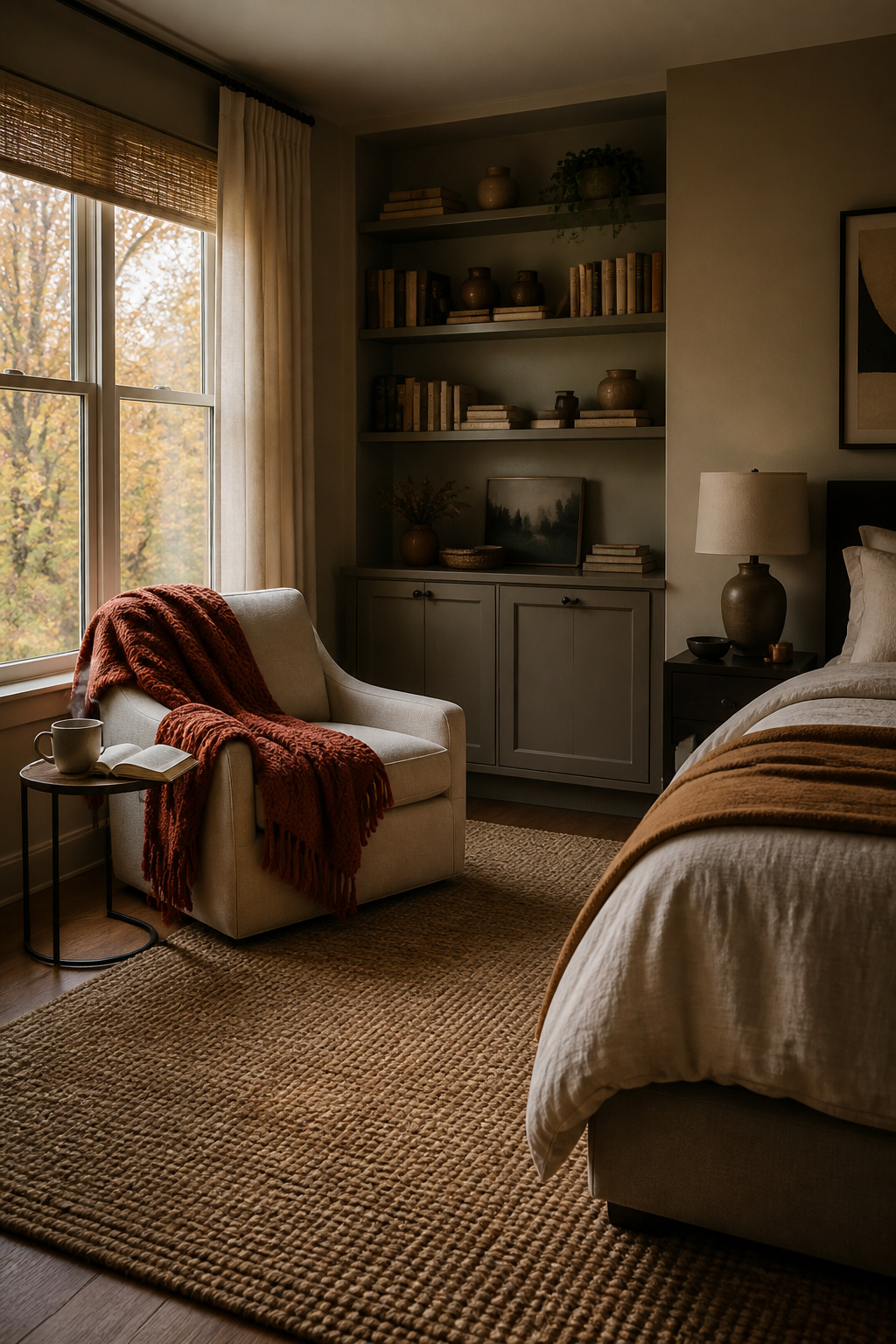
The corner by my bedroom window looked like the perfect spot for a reading nook last fall. I set up a folding chair, draped an Eddie Bauer Fleece Throw Blanket over it, and told myself I’d finally finish the stack of books on my nightstand. The clothes piled up within a week. A folding chair has no psychological weight; it invites laundry, not literature.
An upholstered chair changes that entirely. The sources all point to the same three pieces: an upholstered chair, a soft throw blanket, and a small side table. The chair matters most. Mine now is a low armchair I found secondhand, and the difference is almost embarrassing. The seat is deep enough that sitting down feels like a decision, not a pause. I still drape that same $18.37 orange and red fleece throw over the back, and I added a small side table just wide enough for a mug and a paperback.
I read there more evenings than not from October through December. The clothes still pile up sometimes, but now they land on the chair’s footrest, not the seat itself. Small victories.
10. Seasonal Wall Art
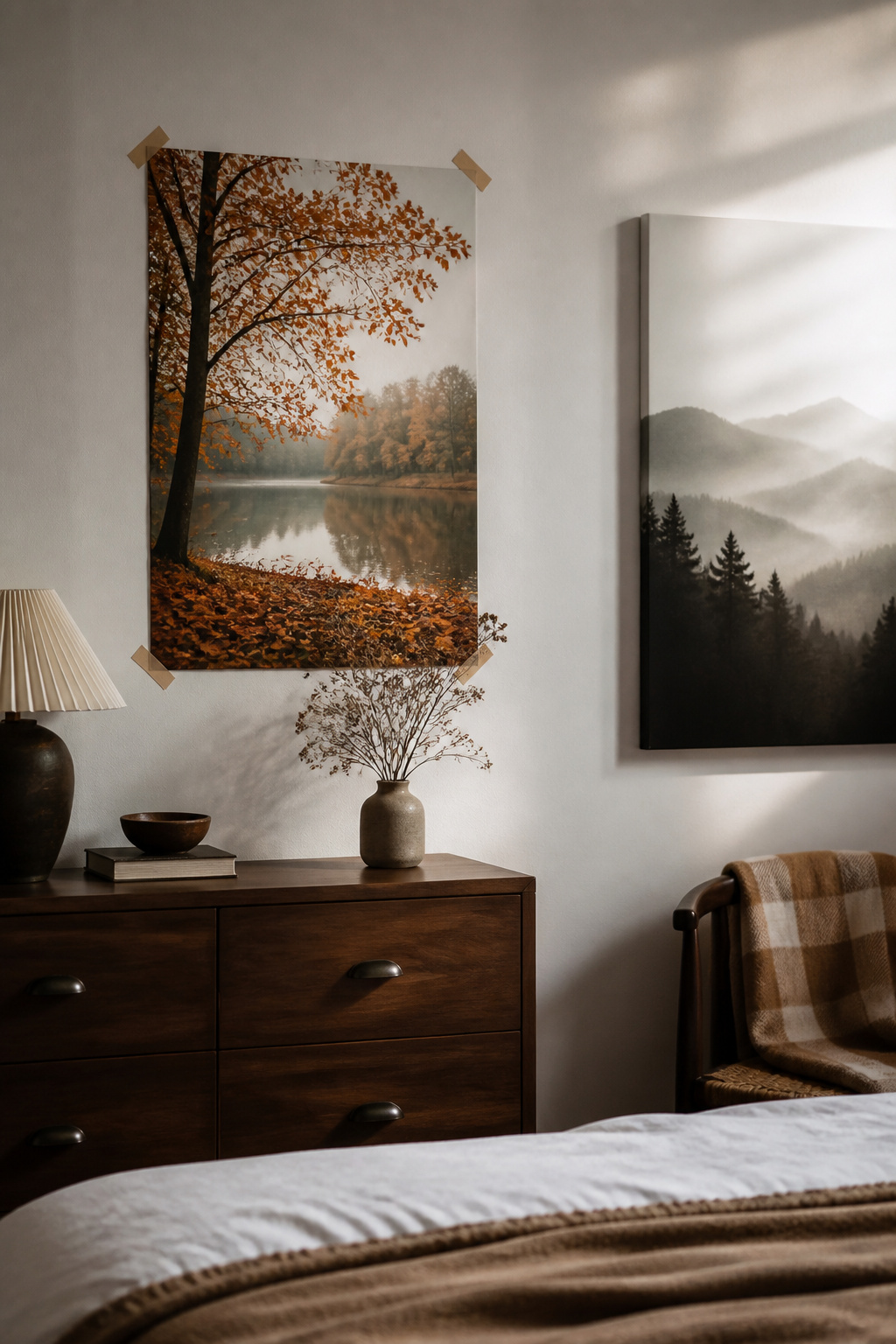
A $6 print from a local artist’s fall market hangs above my dresser right now, held up with washi tape in two vertical strips. The tape peels clean off rental paint, which matters more to me than the frame I do not own. I swap the print in November, but the black-and-white landscape poster beside it stays year-round. Something about its gray tones lets it read as winter bare branch or summer storm cloud depending on what else is in the room.
Washi tape costs under $4 a roll and holds for months if you run four inches top and bottom. I tried Command strips on textured walls once; the hook held, the paint did not. Prints really are the easiest seasonal shift, and the market find beats anything I have seen shipped for "fall ambiance" at ten times the price. The poster that stays up is the one I painted myself, loosely, after a tutorial I no longer remember. DIY large wall art sounds ambitious until you realize a muted landscape in acrylic takes an hour and reads expensive from across the room.
Capsule Decor
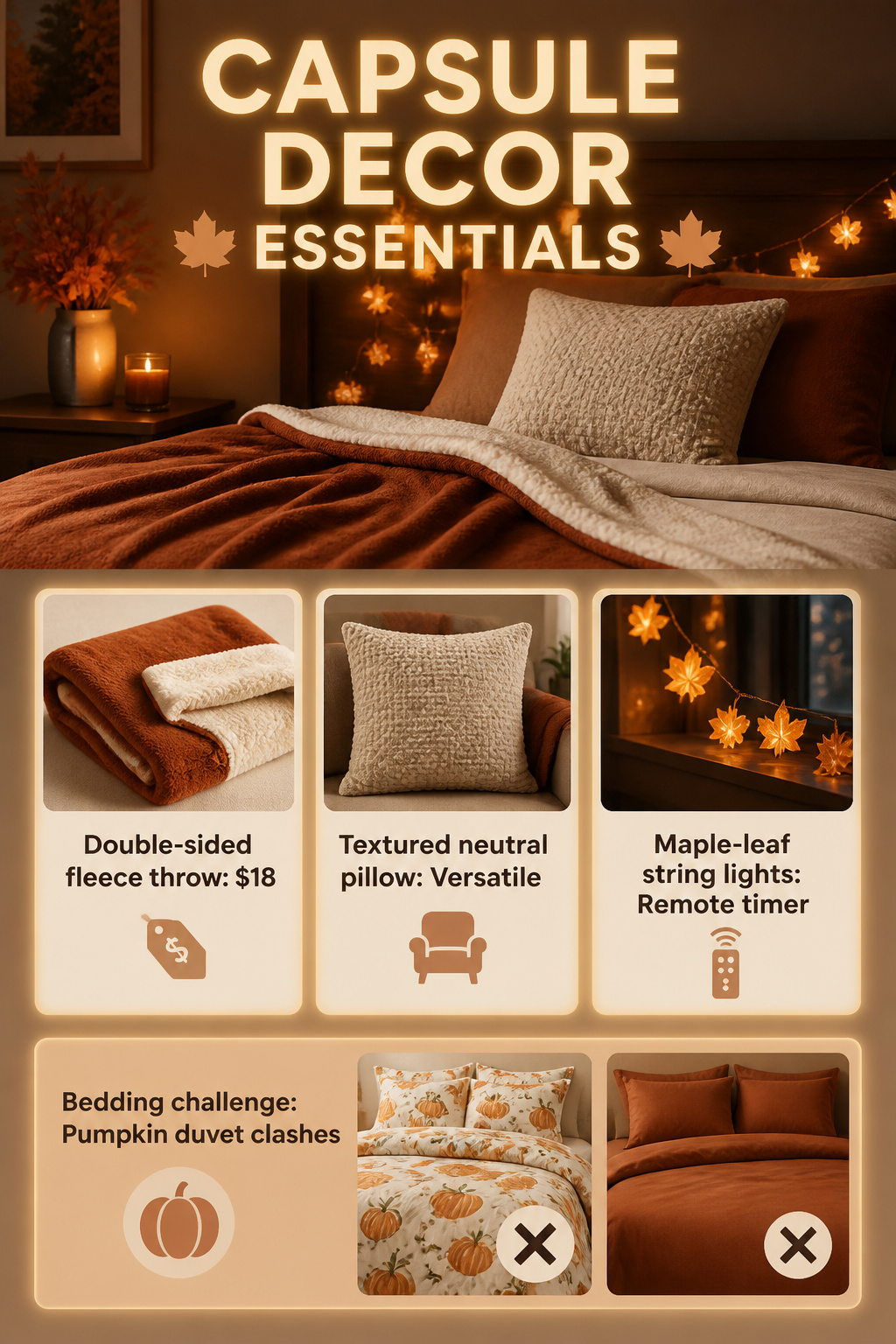
Two years ago I bought three cheap throws in rapid succession, and by January all three had pilled or frayed at the edge. That cycle ended when I came across the idea of capsule decor: a small set of pieces that carry across seasons rather than one-and-done fall buys.
The three that now stay out from October through February are a double-sided fleece throw in rust and cream, a textured neutral pillow that reads autumn without screaming it, and a set of maple-leaf string lights on a remote timer. The throw was $18, which felt steep against the $12 clearance blankets I used to grab, but it has survived three winters without shedding. The pillow and lights pull the same weight: the pillow works on the bed or a chair, and the lights shift from headboard to windowsill without looking out of place once the holidays pass.
What I still have not solved is bedding. A pumpkin-print duvet at $35 sounds capsule-ish, but the pattern turns Christmas morning into a visual clash, and the rust-toned solid sets I have tried read more dorm room than grown bedroom. For now I layer the throw over neutral linens and call it close enough.
DIY Elements
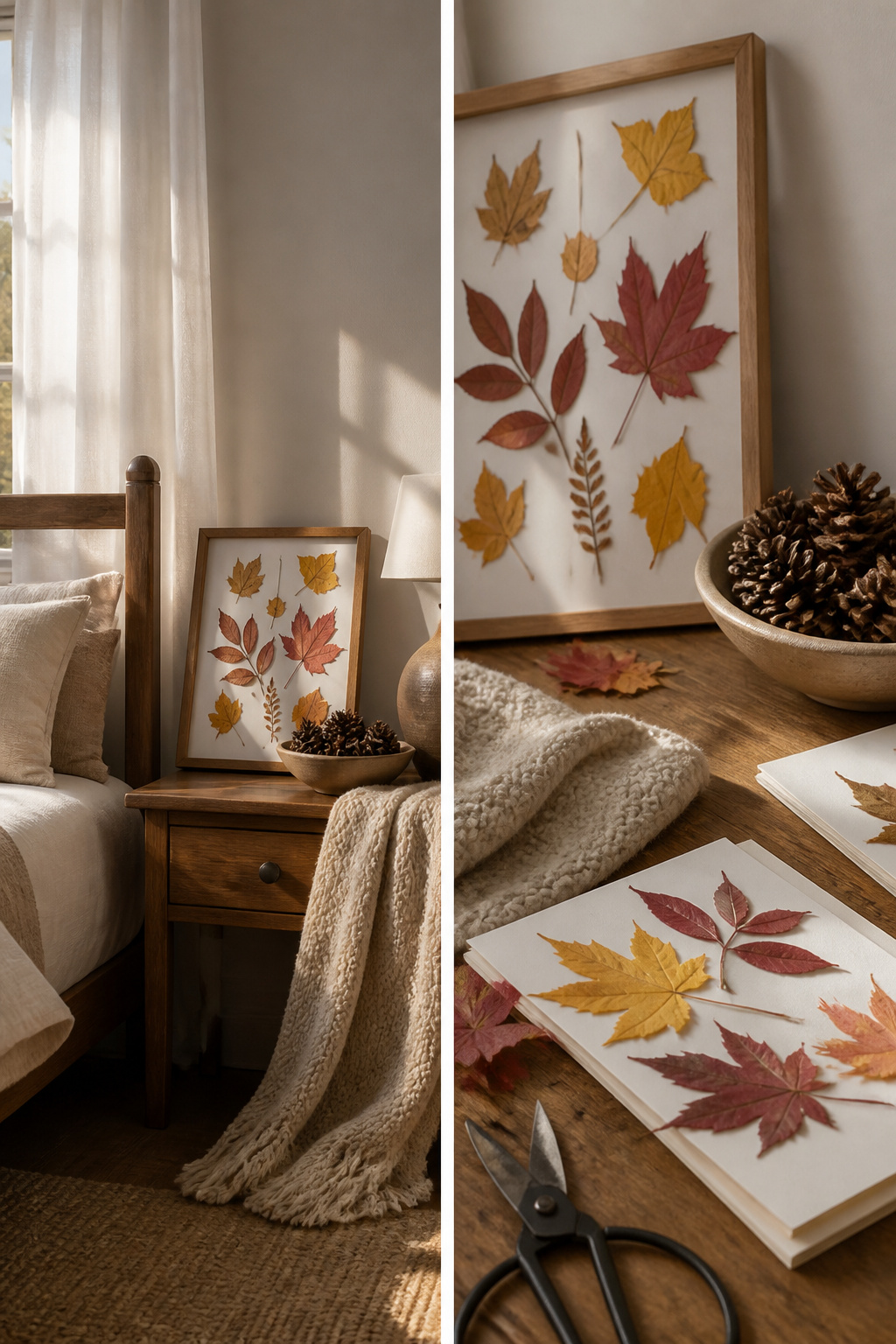
A yard-clippings arrangement on the nightstand sounds rustic until the stems rot and the water turns cloudy by Tuesday morning. I tried that route once, then switched to pressing leaves under heavy books for two weeks and sliding them into dollar-store frames. The watercolor I attempted last year went worse: the paper buckled, the ochre bled into the blue, and I spent an afternoon scrubbing a failed sunset off my desk. The pressed leaves, at least, dried flat and cost nothing but time.
Now I buy one handmade piece each season, usually from a local market or a small shop online, and let it carry the room. A single ceramic dish or a framed bit of real bark does the work of five half-finished projects, and the bedroom looks intentional instead of like a craft fair exploded. The faked part is simple: mass-market prints in similar tones, store-bought candles, a thrifted bowl of pinecones. No one walks in and asks which items I made myself, which is the point.
What Minimalist Fall Decor Looks Like
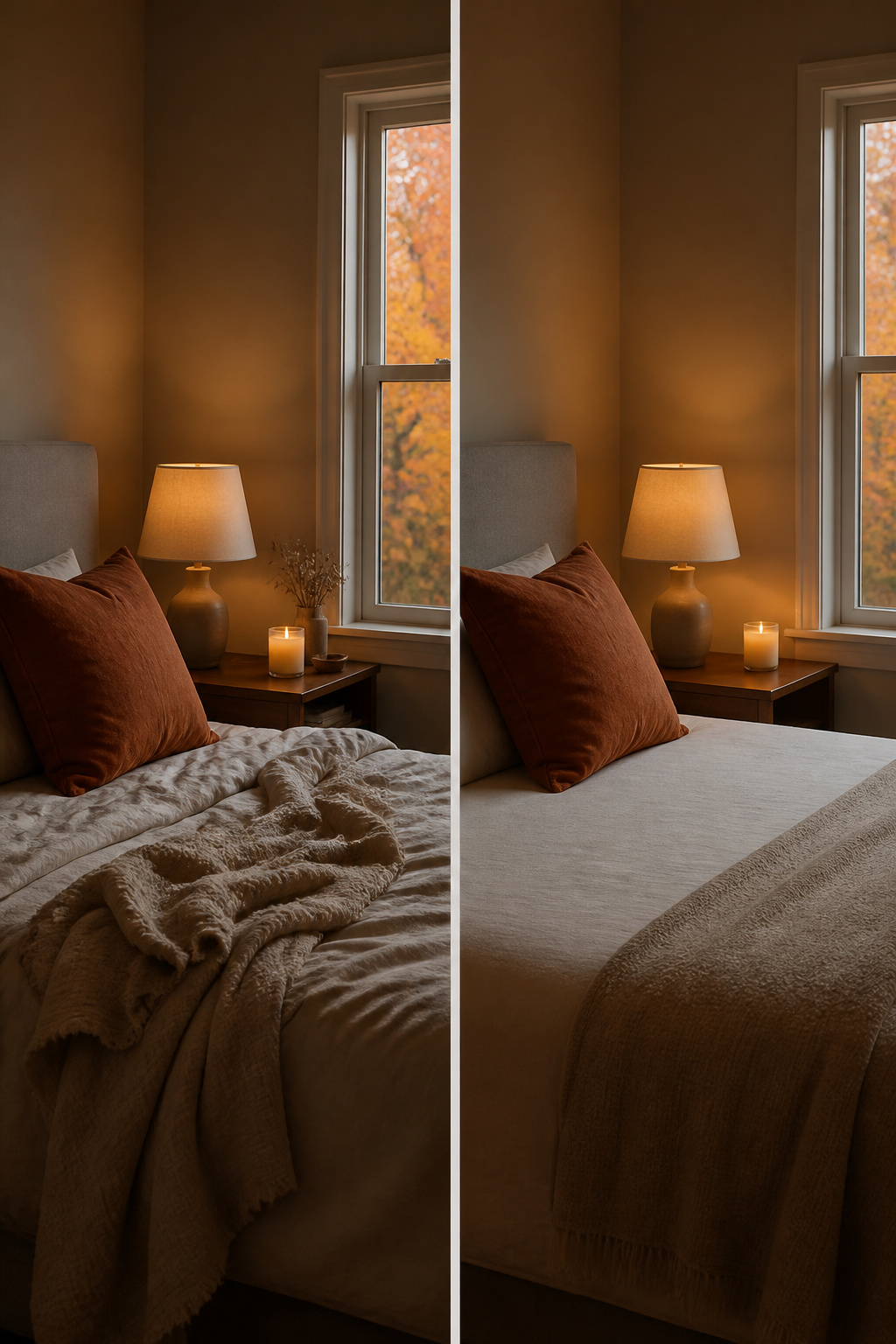
A lot of sources talk about minimalist fall decor, but most stop at the advice without showing what that looks like in an actual bedroom. The change that actually worked for me was swapping a single pillow cover and lighting one candle. That was it. The pillow went from a cool gray to a warm terracotta tone, and the candle sat on the nightstand with no tray, no garland, no pumpkin cluster around it. The room felt different by evening, and nothing went into storage when November ended.
The bulb in my bedside lamp already ran at about 2,700 Kelvin, which is the warm-white range that reads as cozy once the overhead light goes off. I did not buy a new lamp or a special bulb; I just stopped using the ceiling fixture after dark. Two pillow covers plus a candle plus existing warm light equals fall decor that survives a real budget and a weekend timeline. No "It’s Fall y’all" sign required, and nothing to declutter before the holidays roll in.
Color Theory for the Color-Shy

Most fall color guides name six shades and leave you to figure out how to use them without repainting walls or replacing every pillow. The result is usually a bedroom that looks like a harvest exploded in it.
My rule now is two colors, no exceptions. Last year I chose terracotta and olive, both in the same low-saturation range so they would read as warm rather than loud. Terracotta carried the visual weight through a throw and two pillow covers; olive came in as a smaller-scale pattern on a single lumbar pillow and a folded blanket at the foot of the bed. The pair stayed in balance because I kept their proportions uneven, about two to one.
Mustard was where I pushed my luck. I added a third pillow in a yellow-ochre stripe, thinking it would pull from the same autumn family. Within a week the bed looked like a color wheel exercise. The mustard sat forward visually and broke the quiet relationship between the other two. I moved that pillow to the living room, where it reads as a single accent against gray, and the bedroom settled back into something I could sleep in front of.
Storage Between Seasons

Under-bed bins are the only storage that has ever worked for my fall bedroom stuff, and the system took two years of failure to get right. The first mistake was hauling everything to the attic in July, where a box of cinnamon-scented candles melted into a single brown puddle against the roof sheathing. Heat ruins them faster than you’d guess; now anything with a wick or oil stays in the climate-controlled part of the house, flat in a bin with the lid snapped tight.
I own six identical clear bins that slide between the bed legs with an inch to spare. Each one holds a full season’s worth: throws, pillow covers, the ceramic pumpkin that weighs more than it looks. The trick I learned after losing a morning to opening three wrong bins is labeling with the month I last used the item, not what the item is. "November 2024" tells me faster than "amber glass votives" whether I actually want this thing again or if it is time to donate it.
The bins cost under fifteen dollars apiece, and swapping the contents takes about twenty minutes when the temperature drops. That is the real fall bedroom decor hack: not buying more, but knowing exactly where the good stuff already lives.
Frequently Asked Questions
How can I make my bedroom cozy for fall?
Start with layered bedding: breathable cotton or linen as a base, add a velvet quilt when nights drop below sixty, and keep a chunky knit throw and wool blanket folded at the foot of the bed. Build pools of soft light lower in the room using bedside lamps with 2,700 Kelvin bulbs, wall sconces, or rechargeable accent lamps instead of overhead fixtures. Finish with one or two seasonal accents, like a ceramic pumpkin or dried stems in a wicker basket, rather than cluttering every surface.
What colors are best for fall bedroom decor?
The 2026 palettes favor moss green, cinnamon, terracotta, deep olive, walnut brown, caramel, and warm taupe. The rule that keeps a bedroom from looking cluttered is two colors, not seven: let one carry visual weight through larger pieces like a throw and pillow covers, and use the second in smaller doses on a single lumbar pillow or folded blanket. Warm neutrals like oatmeal, camel, and soft charcoal make mixing easier and read as intentional rather than mismatched.
What are some easy fall decor ideas?
Swap in two pillow covers in a warm autumn tone, light one cedarwood or sandalwood candle on the nightstand, and stop using the overhead fixture after dark. The whole changeover takes about ten minutes and costs under $40 if you already own the inserts. Nothing goes into storage when November ends, and nothing competes with the holidays that follow.