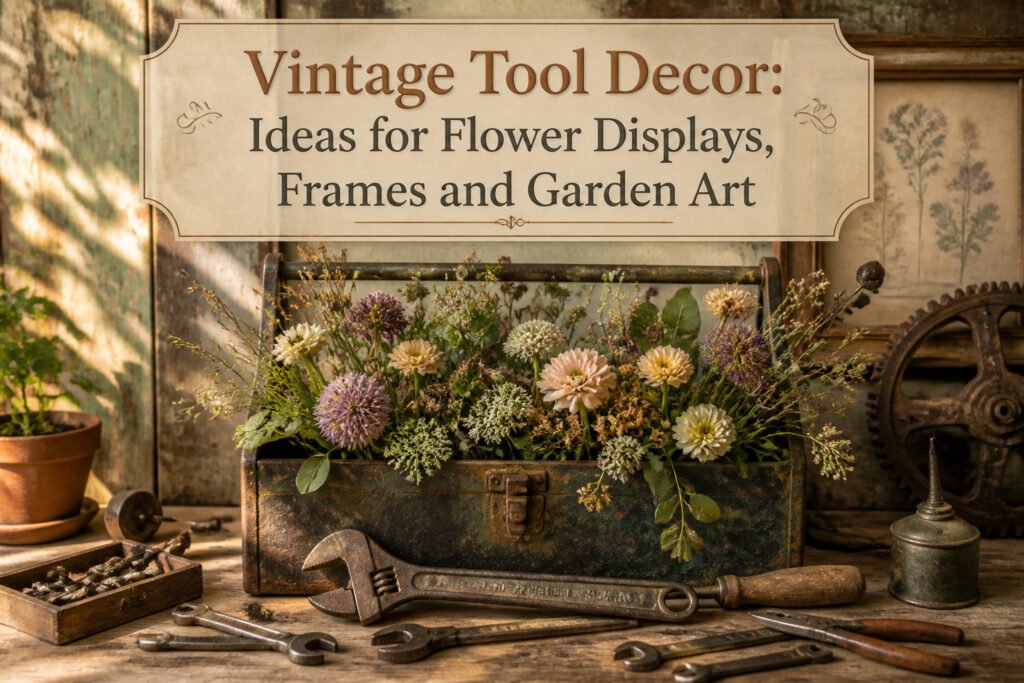
Vintage tool decor repurposes old hand tools, kitchen implements, and workshop hardware into functional wall art, floral arrangements, and garden sculptures. The catch is that weight and rust, the two things that make a tool seem unusable, are exactly what give it presence on a mantel or wall. A 10-inch adjustable wrench laid flat anchors dried alliums by its own heft, the jaw gripping stems without crushing while the handle drops the center of gravity low enough to survive a bumped shelf.
Vintage Tool Flower Display
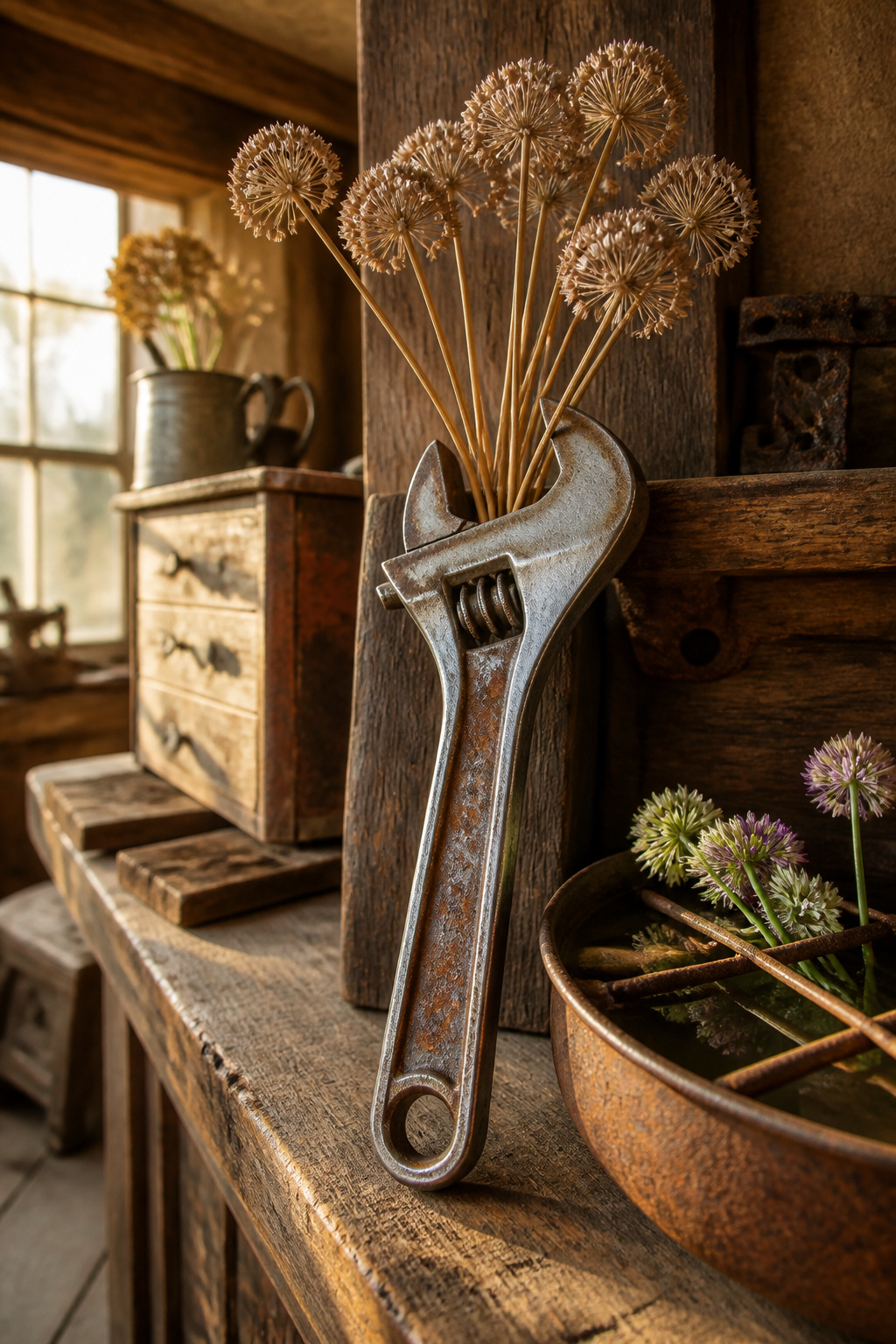
The heft of an old wrench or pair of pliers does what floral foam never could: the metal weight anchors stems against tipping, even when the arrangement runs tall. A 10-inch adjustable wrench laid flat becomes a base for three or four dried alliums; the jaw grips the stems without crushing, and the handle gives the whole piece a low center of gravity that survives a bump from a passing sleeve.
Fresh flowers work too, though water is the catch. A shallow pool in a rusted metal tray, with screwdrivers crossed underneath as a grid, keeps stems drinking while the tools themselves stay mostly dry. The patina that worried you when you found them in a garage box turns out to be the color story: that particular burnt orange-brown reads as terracotta against white walls, as near-black against pale wood. On a mantel or deep windowsill, where afternoon light hits the metal directly, the rust catches and glows like an intentional finish.
Shelves are trickier; the weight that helps on a mantel can strain a floating bracket. A solid shelf, or one with a lip, handles the load better and gives the tools enough clearance to read as sculpture even when the flowers have dried past their prime.
Rustic Tool Display Frame
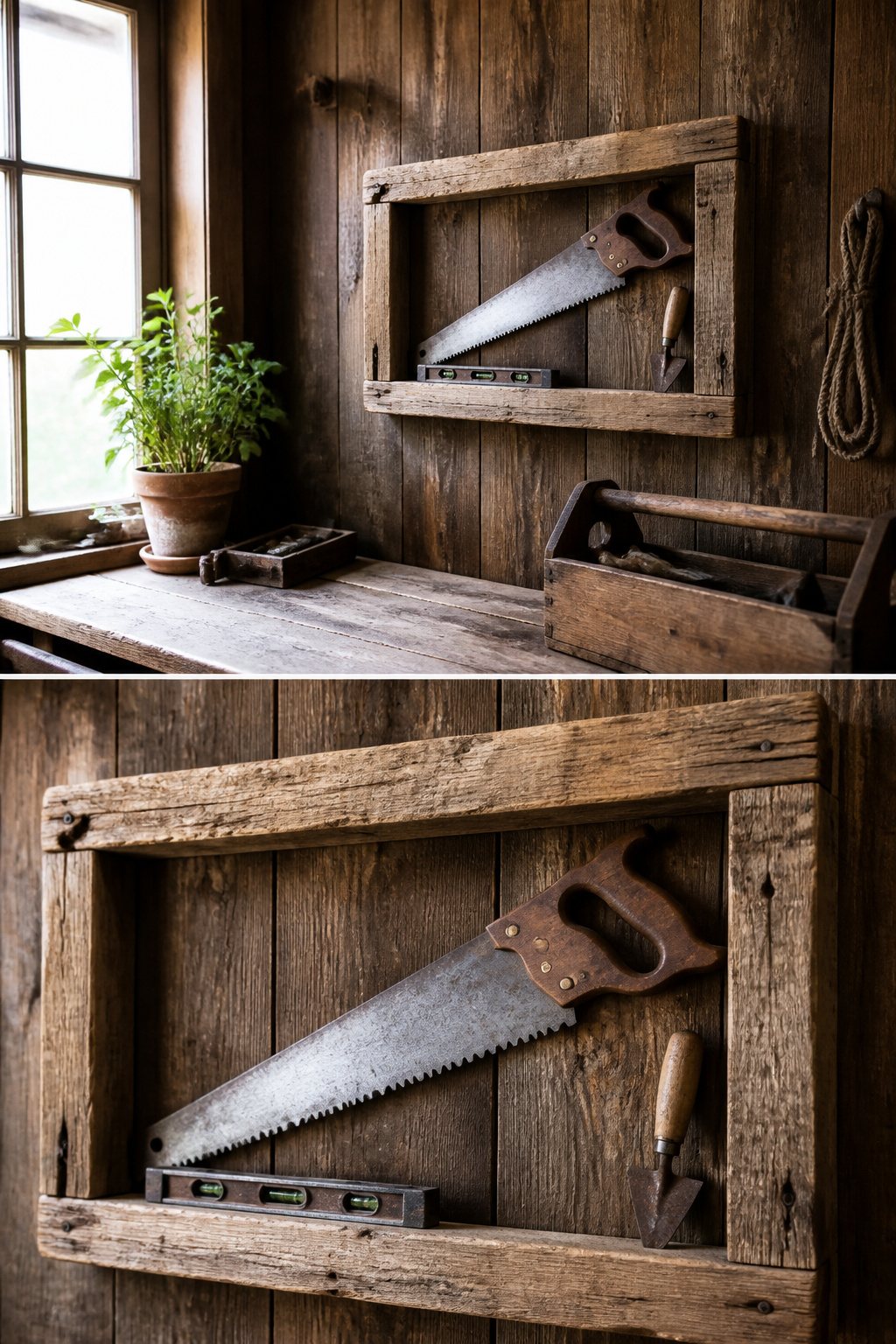
Pallet wood makes the cheapest, most honest frame for flat tools because the rough grain already matches the wear on a handsaw or level. I built mine as an open-backed box, 2 inches deep, with the slats left uneven at the edges so the whole thing looks found rather than built. A handsaw fits almost like a portrait if you lay it diagonally across the back panel; smaller tools, a trowel or a torpedo level, sit lower in the corners where their shapes balance each other.
Overnight in white vinegar takes off deep rust without stripping the dark patina that reads as age rather than neglect. Scrub with a wire brush after the soak, dry the metal thoroughly, and rub on a thin coat of mineral oil to keep it stable. A little surface wear left behind, some faint pitting or a ghost of the old maker’s stamp, gives the piece more character than a full restoration ever would. The sources disagree on how far to go: one stops at the vinegar soak and a light oiling, another adds boiled linseed oil to wood handles for color. For a wall display that never sees soil or moisture again, the simpler treatment is enough. The frame does the work of making the tools feel intentional; the tools themselves just need to look like they earned their rest.
Garden Art Features
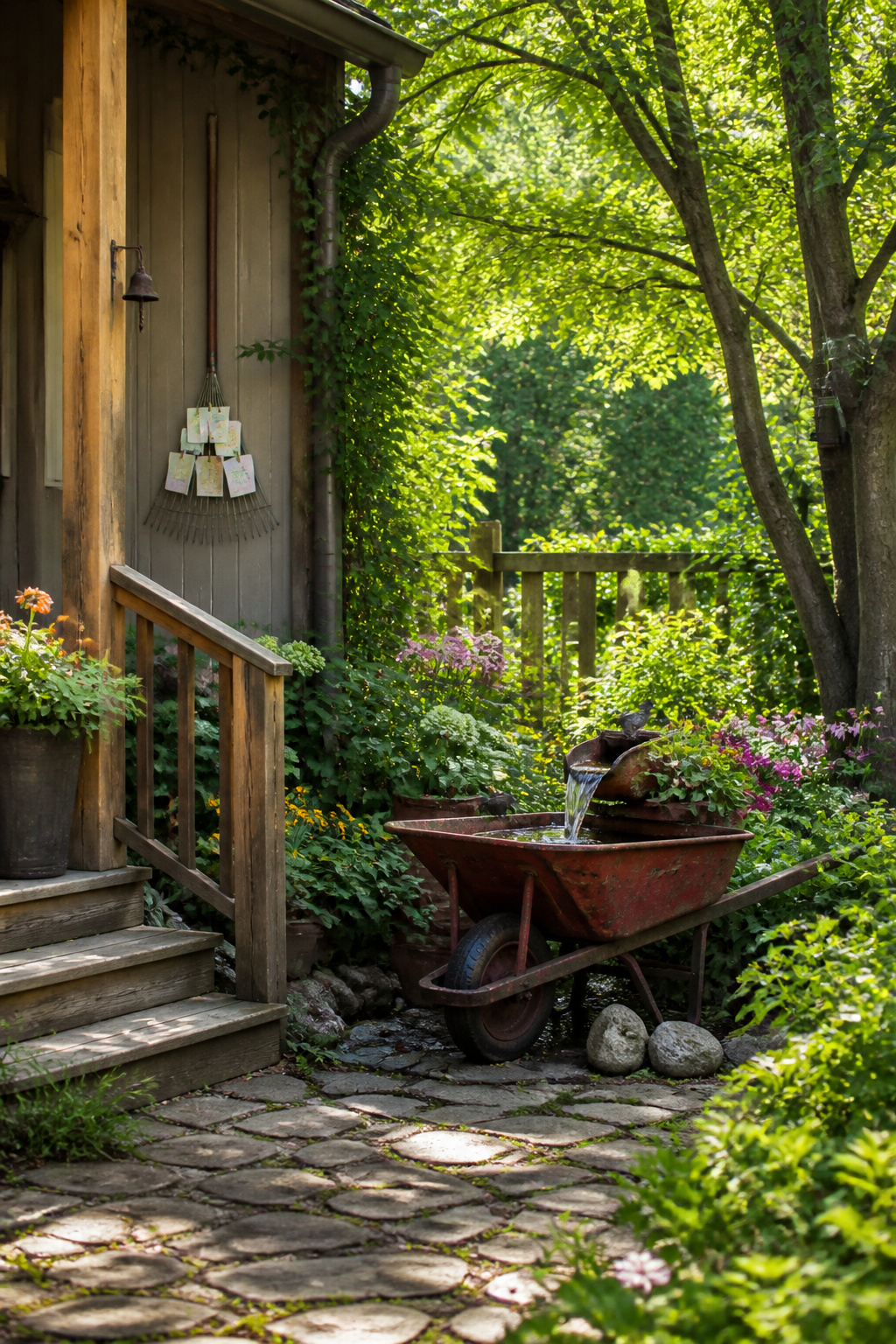
Two projects stand out for actual outdoor use because they solve real problems that indoor tool decor does not.
A wheelbarrow converted to a fountain works where a wall-mounted piece would rot. The metal tub already holds water, or at least it did once, and the rust that ruins it for hauling becomes the texture you want. A small submersible pump runs roughly $15–$30 at hardware stores, though the sources do not pin an exact figure, and the wheelbarrow sits on the ground so you are not drilling into siding you do not own. The water masks traffic noise and the basin draws birds without the standing-water mess of a shallow dish.
The rake hung tines-down as a Christmas card holder does a different job. Outdoors, the tines catch wind and rain if you load them with paper, so this belongs on a covered porch or in a shed where the charm is the point and the weather is not. The same shape indoors would read as cluttered; against barn wood or rough siding it looks intentional. I would skip the painted-ornament version some sources show and leave the rust, since fresh paint flakes outside and the whole point is the tool’s age.
Between these two, the fountain asks more of you and gives more back. The rake is fifteen minutes with a hook. Either beats a shovel head bolted to a fence post, which reads as decor from the road and disappears up close.
Functional Decor
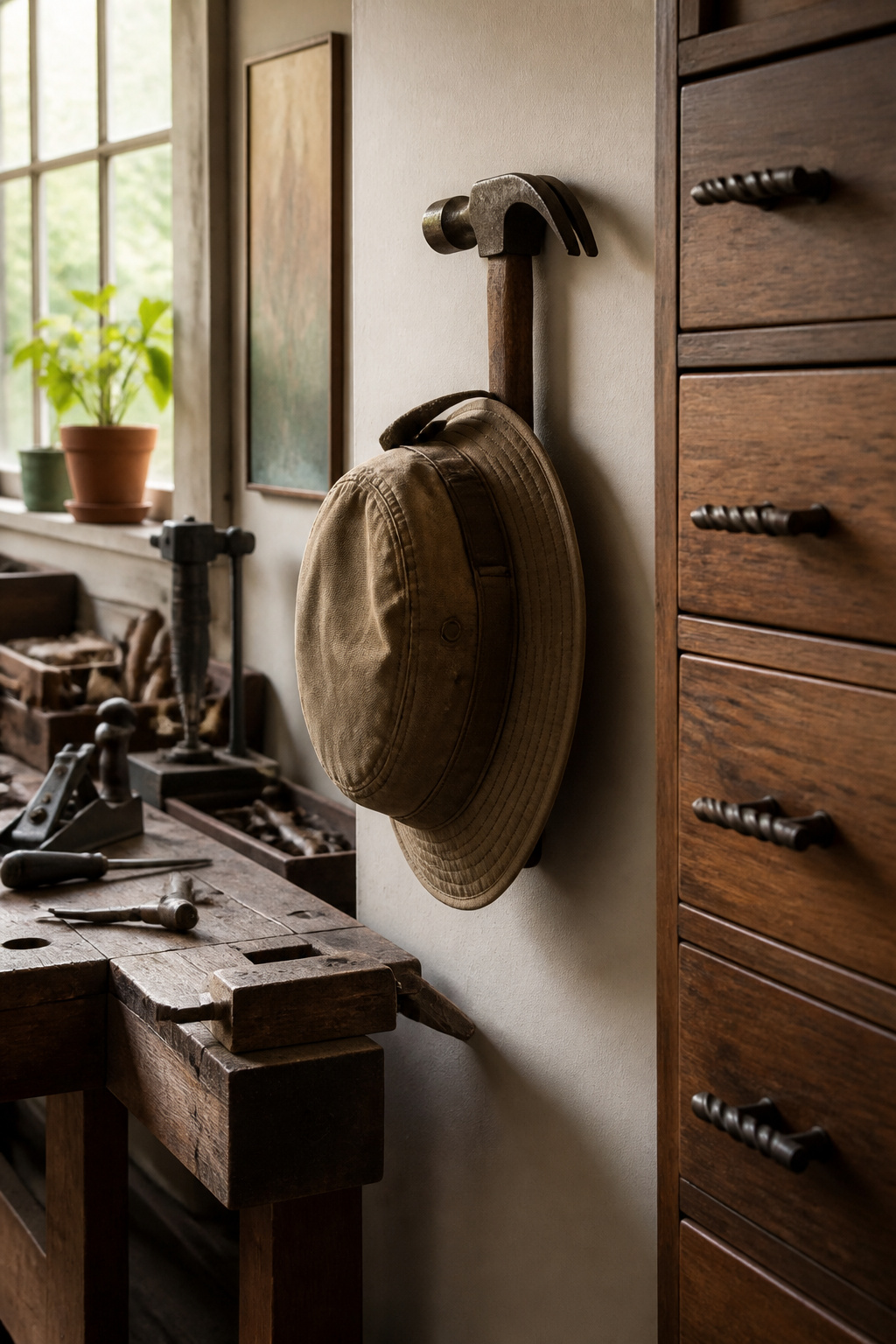
The best vintage tool decor never fully retires. An old hammer head, its claw still intact, mounts to a stud with a single lag bolt and holds a shop apron or a garden hat exactly where you can grab it. The weight feels right in your hand every time, and the rusted cheek faces the room like a small sculpture.
Drill-bit handles work as drawer pulls if the flutes run deep enough for fingers to find purchase. I have seen these paired with soft-close slides in a garage-workbench cabinet, the black oxide finish picking up the matte powder coat of the box below. The trick is spacing: two inches center-to-center matches most factory hardware, so the swap needs no new holes.
Wrench ends, the open kind, slip over a half-inch pipe clamped between two wall brackets. The jaw grips a towel or a loop of chain for hanging gloves. It is a towel bar that looks like a towel bar, but the metal remembers torque and the handle still fits a palm.
What separates these from pure wall art is the daily reach. A hook that only holds a wreath in December is decoration. A hook that catches your keys on Tuesday night is hardware that happens to look like something. The line between storage and display blurs only when the thing still works.
Mixed Media Sculptures
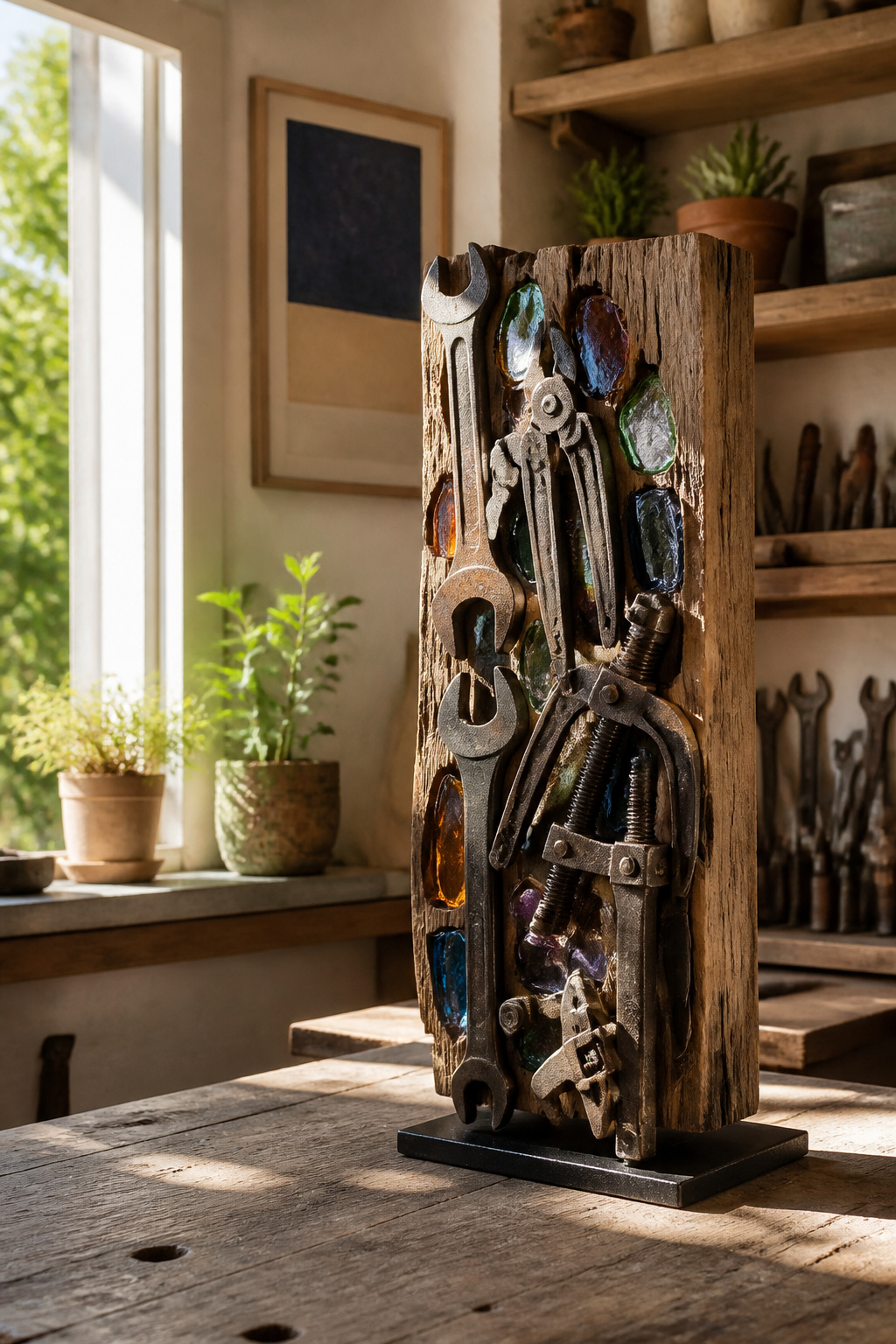
Welding gives mixed-media tool sculptures their permanence, but most weekend projects never need it. A drill, some bolts, and a piece of reclaimed wood will anchor a hammer head or a pair of pliers into a wall-mounted piece that reads as sculpture rather than storage. For freestanding work, the long handles of shovels, rakes, and hoes create natural vertical lines that carry the eye upward without any fabrication beyond a sturdy base. I have seen garden forks simply stacked and wired through their tines to a wooden block, the tines themselves becoming the gesture of the piece.
Where welding is within reach, old wrenches and gear pullers layer well with scrap glass or found metal into denser compositions. The tools already carry their own patina and wear marks, so the mix of materials reads as collected rather than cluttered. Bolting keeps the option to disassemble later, which matters if you are renting or if the piece outgrows its first spot. Wire threaded through gaps in pallet boards works too, though it sits flatter against the wall and reads more as arranged display than as sculpture with real depth. Paint can bridge the materials, acrylic or enamel over the whole surface to unify the palette, or left off entirely to let rust and wood grain do that work instead.
Keepsake Displays
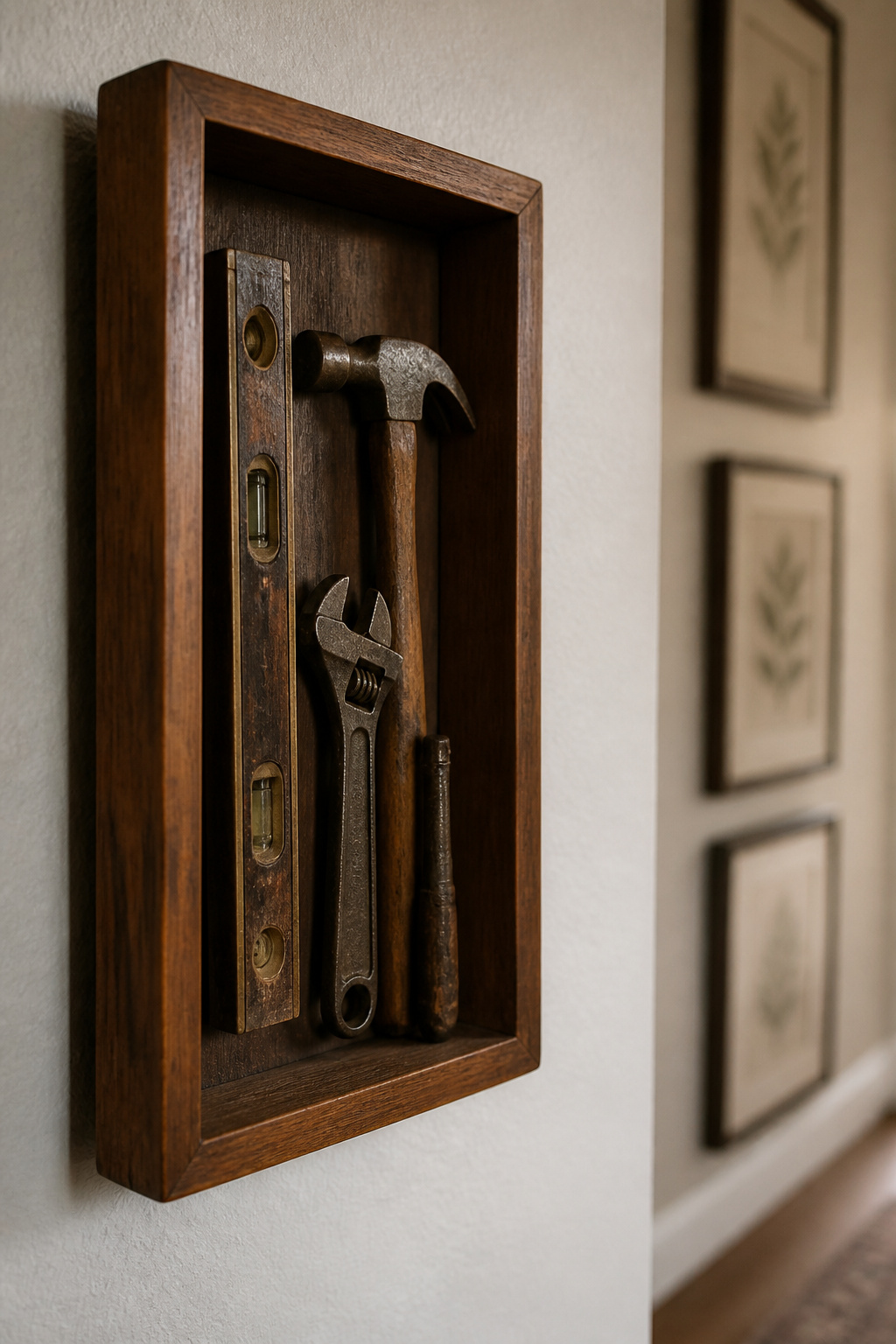
Shadow boxes keep family tools from turning into drawer clutter without pretending they belong in a museum. The worn wood on a grandfather’s level and the patina on a father’s wrench set carry the story; stripping that finish would erase the hours they spent in use. A typed card or a small photo tucked beside the tool does the labeling work. One approach is a short line about who owned it and what they built, enough that your kids or future generations know these are not just any old tools. Wire or a discreet screw from the back holds the piece in place, and the box itself can hang on either side of a bed or along a hallway you pass daily. The display stays honest that way: the scratches stay, the rust stays, and the card does not over-explain what the object already says.
Upcycled Kitchen Tool Art
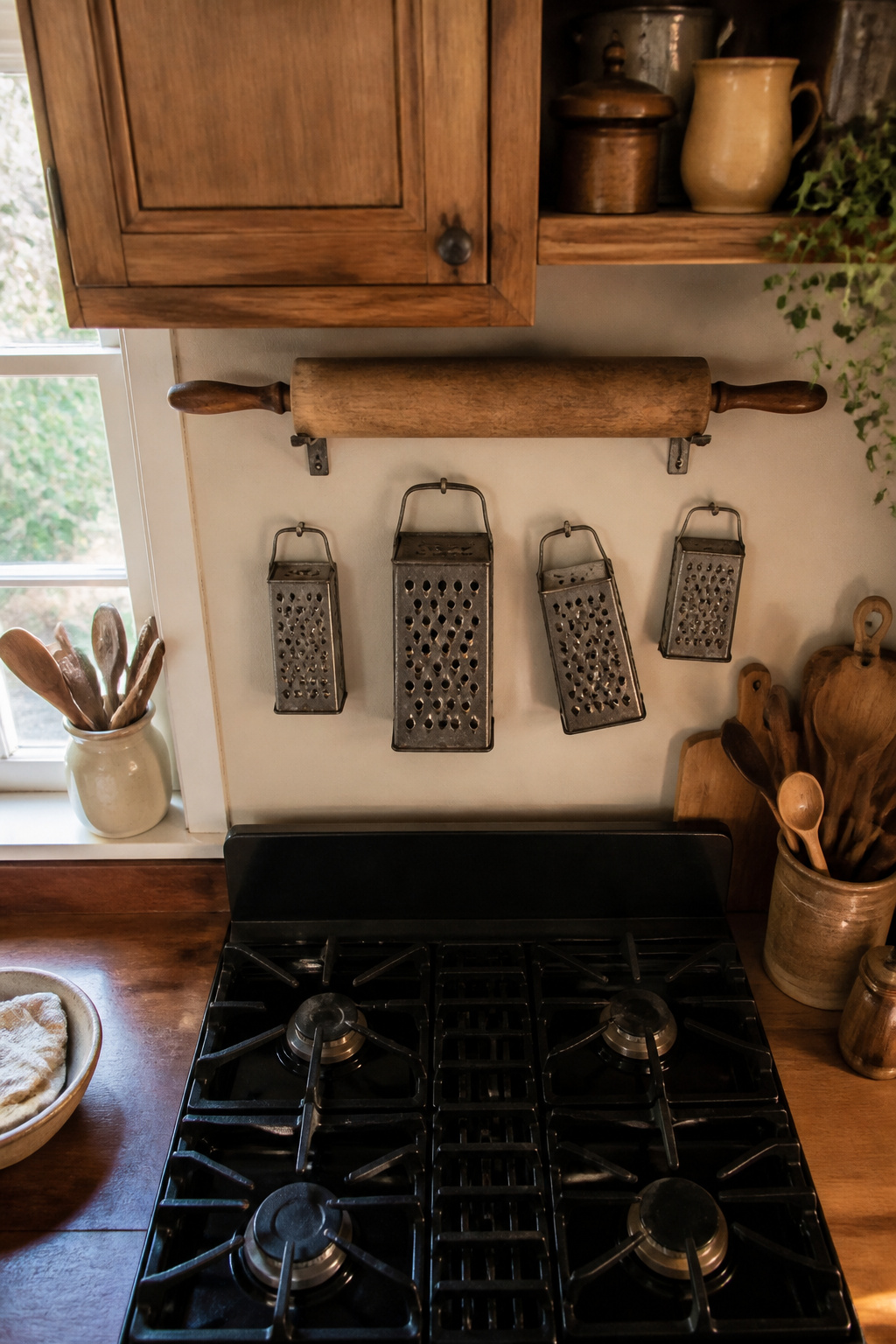
Kitchen tools make the easiest entry point into vintage tool decor because the chrome on an old grater or the patina on a wooden rolling pin has already survived decades of dishwater and steam. That factory finish means you can often skip the wire-brushing and oiling that workshop tools demand.
A rolling pin with worn handles turns into a single floating shelf with one L-bracket at each end, perfect for a narrow gap above the range where standard shelving looks crowded. Box graters hang flat against the wall by their own handle holes and catch light like perforated metal sculpture; grouping three at different heights reads as a deliberate gallery rather than a hardware store display. Whisks need more engineering, but a handful of mismatched sizes wired to a steel ring becomes a mobile that turns in the slightest air current over a breakfast bar.
The smaller scale is the real advantage here. A full-size handsaw dominates a wall; a rotary egg beater disappears unless you cluster it. That lets you build a collection piecemeal from estate sales and thrift bins without planning an entire room around one statement find. My own wall above the coffee maker started with one 1940s beater I hung with a finishing nail and a zip tie, then grew over two years as I spotted shapes I liked. The trick is keeping the hardware minimal so the tool, not the hanger, does the work.
Cleaning and Restoring Tools for Decor
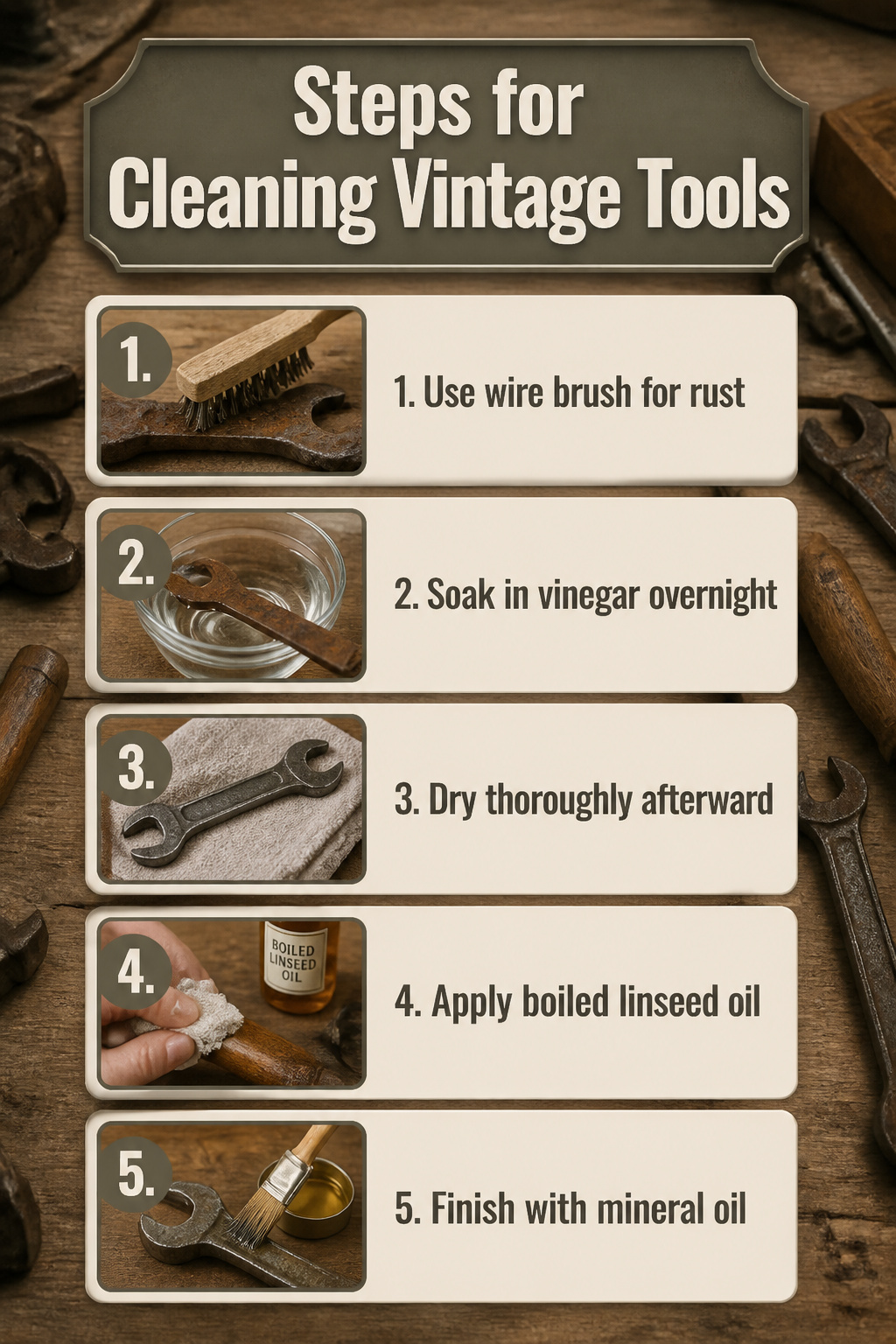
A wire brush or steel wool takes off loose rust and dirt without much drama. For heavier corrosion, an overnight soak in white vinegar does the work. I dry the piece thoroughly afterward, because any trapped moisture starts the rust cycle again.
The wood handles need boiled linseed oil, rubbed in after a light sanding. For the metal itself, mineral oil or linseed oil both work as a final protective coat. A light coat darkens the surface and preserves it without leaving the piece greasy to touch.
What I leave alone matters as much as what I clean. Complete removal of patina often strips the character that makes vintage tool decor interesting in the first place. A little rust or honest wear reads as history, not damage. The goal is stabilization, not restoration to factory-new.
Sentimental Value in Tool Displays
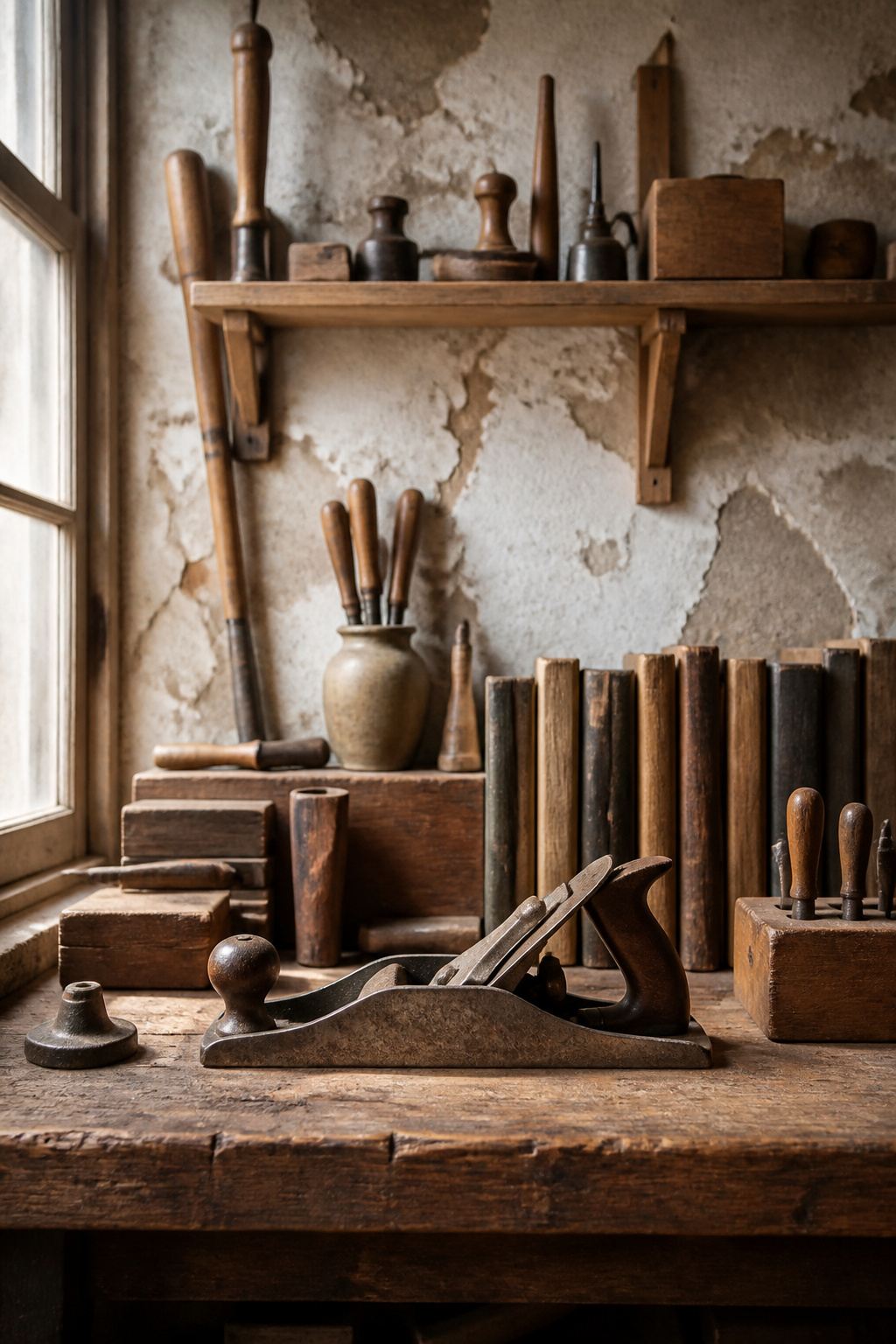
The emotional pull of vintage tool decor usually comes from someone else’s hands on the wood before yours. A display built from a husband’s grandfather’s old tools carries weight because the worn handles and rusted metal still seem to remember the work they did. That history is the point, but it can tip quickly into something that feels like a memorial rather than a living part of your home.
One or two meaningful pieces among neutral ones keeps the story present without turning a wall into a shrine. The grandfather’s hand plane or his level sits more naturally against a backdrop of anonymous flea-market finds that share the same patina but carry no biography. The contrast actually lets the inherited piece speak instead of drowning it in a cluster where every item demands its own eulogy.
A single row of mixed tools, most of them nameless, with one or two that you can name the owner of, reads as curated rather than inherited by default. The worn wood and rusted metal still signal history; the restraint signals intention.
Selling or Donating What You Do Not Keep

Not every rusty hand tool belongs on your wall. Some pieces have too much play in the joint, too much pitting, or simply no visual character worth framing. Sorting through a box of estate-sale finds last spring, I set aside about a third for other purposes. The ones in usable condition went to a local antique shop that buys hand tools by the lot, and to a community workshop where volunteers teach basic woodworking. The workshop took chisels and a brace-and-bit set; the shop paid modestly for a well-kept Disston saw. That single sale covered the enamel paint and reclaimed lumber for a wall-mounted trowel display I built the following weekend. Selling or donating what does not fit your project keeps the hobby self-funding and clears space for the next hunt.
Frequently Asked Questions
What can I do with old tools?
You can restore them for continued use, sell or donate the usable ones, or repurpose them into decor and art. Wrenches anchor flower stems, screwdriver handles become drawer pulls, and saw blades fit into rustic frames as wall pieces. Selling what you do not keep can also fund your next project.
How do I clean and restore old tools?
Scrub loose rust and dirt with a wire brush or steel wool, then soak overnight in white vinegar for deeper corrosion. Dry thoroughly afterward so trapped moisture does not restart the rust cycle. Rub boiled linseed oil into wood handles and apply a light coat of mineral oil to metal to preserve the surface without a greasy feel.
How can I display old tools as decor?
Mount flat tools in open-backed pallet-wood frames, arrange them in shadow boxes with a short label card, or hang them as functional hooks and towel bars. For flower displays, lay a heavy wrench flat so its jaw grips stems, or cross screwdrivers in a shallow tray as a grid for fresh blooms.